Skip to content

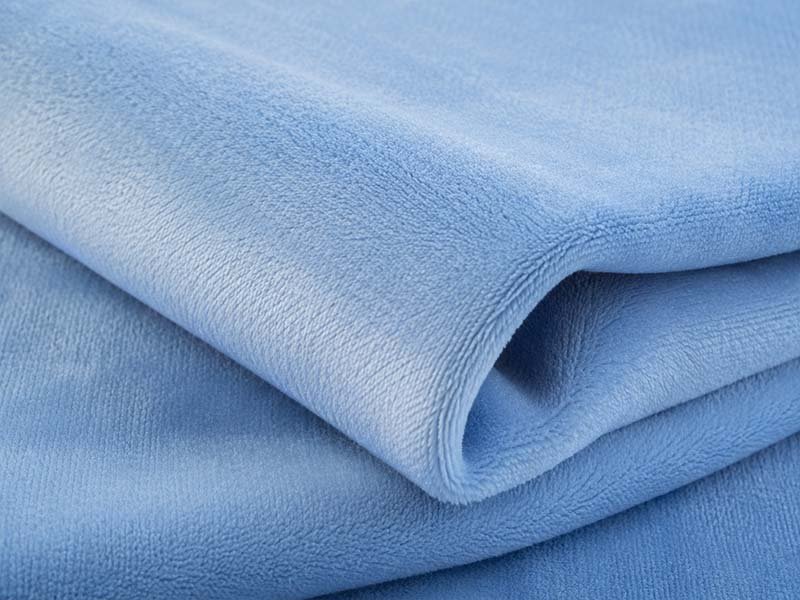
Choosing a plush fabric looks simple until the first sample reaches the sewing table. Two swatches can both be described as soft polyester plush, yet one may produce a clean, compact character face while the other makes the same pattern look wider, fuzzier, or less defined. Velboa sits in this practical middle ground. It is familiar enough to appear in stuffed animals, costumes, cushions, promotional products, and soft accessories, but its real value depends on much more than the word “Velboa” printed on a supplier label.
Velboa is generally a short-pile synthetic plush fabric, most commonly made from polyester. It has a smooth, dense, low-profile surface that helps seams, embroidery, printed details, and character outlines remain visible. It is widely used for stuffed animals and other soft products, but Velboa is not one universal specification; pile height, GSM, stretch, backing, finish, color, and handfeel can vary between suppliers.
That difference becomes obvious when a design moves from artwork to a three-dimensional product. A material that looks perfectly acceptable as a loose swatch may behave differently after cutting, sewing, embroidery, turning, stuffing, compression, and packaging. A face can widen, pile direction can create apparent shade differences, or a fabric that felt soft on the table can feel much firmer once stretched over a densely filled head. The useful question is therefore not simply, “What is Velboa?” It is, “Which Velboa will still make this product look and feel right after the sample becomes a production run?”
What Is Velboa Fabric?

Velboa is a short-pile synthetic plush fabric, usually polyester, with a smooth and relatively flat surface compared with long faux fur. Its controlled pile makes it useful where shape, embroidery, printed markings, and small visual details need to remain clear. Because construction, weight, stretch, backing, and finishing vary, Velboa should be treated as a fabric category rather than one fixed technical specification.
What Is Velboa Made Of?
Most Velboa used in commercial plush products is polyester-based. Polyester is practical because mills can produce it in many colors, surface finishes, pile effects, densities, and backing constructions while keeping supply relatively stable for repeat manufacturing. The same fiber family is also common in Minky, short plush, fleece, Sherpa, microfiber plush, and many faux-fur fabrics, which gives product teams a broad range of tactile and visual options without leaving the polyester category.
Fiber content, however, is only the first line of a useful fabric specification. Two materials can both be labeled 100% polyester and still behave quite differently in production. One may have a soft, flexible backing, while another is noticeably firmer. One can stretch across the width, while another remains more stable. A third may have stronger surface shine, making its color appear different when the pile direction changes under store lighting or photography.
That is why professional material records usually include more than composition. Pile length, GSM, usable width, elasticity, backing structure, color, supplier, MOQ, current availability, suitability for production, and possible substitutes all matter. Pufumi’s material-management system follows this broader approach and records these factors so fabric selection can be connected to sampling, BOM control, production, quality checks, and future replacement decisions.
For a brand developing a commercial plush product, the practical question is not whether Velboa contains polyester. The stronger question is whether the exact construction can deliver the intended silhouette, touch, decoration quality, cost position, and production consistency over the life of the SKU.
How Is Velboa Fabric Made?
Velboa is generally produced as a knitted synthetic fabric with a raised surface that is finished into a short and relatively dense pile. The knitted base provides the structure, while the raised fibers create the soft surface that gives Velboa its plush character. Mills can adjust yarn, knitting density, brushing, shearing, heat setting, and other finishing steps to produce different levels of smoothness, shine, pile direction, handfeel, and surface density.
This construction explains why Velboa behaves differently from woven cotton, felt, or long faux fur. Because the base is usually knitted, some versions have noticeable mechanical stretch. That elasticity can help a fabric wrap around curved heads and bodies, but it also means pattern orientation and filling pressure need to be controlled. A small difference in stretch can change the width of a face, the fullness of a muzzle, or the apparent size of a finished body after stuffing.
The pile also has direction. When fibers lie one way, the surface may appear darker or richer; when brushed or cut in the opposite direction, the same material can appear lighter. This is especially easy to notice on large facial panels, mirrored ears, arms, legs, or body sections photographed under directional lighting.
For that reason, Velboa is better understood as an engineered textile system than as a generic soft fabric. The base knit, pile, finish, and backing all influence how the final product performs once it becomes three-dimensional.
What Does Velboa Feel Like?
Velboa usually feels smooth, short-haired, and controlled rather than fluffy. Compared with long faux fur, the fibers sit much closer to the base, creating a compact surface that can feel slightly silky, suede-like, velvety, or similar to a traditional short plush depending on the supplier and finishing method. Basic grades may feel relatively simple, while better-finished versions can be noticeably smoother and more refined.
The word “soft” can be misleading when it is used without context. A loose swatch may feel pleasant in the hand, but the same fabric can feel firmer once stretched tightly over a stuffed head. Filling density changes the way the backing flexes, while curved surfaces change the way fingers move across the pile. A material chosen from a flat swatch should therefore be checked again on an actual sample before anyone decides that the finished product has the intended tactile quality.
Product positioning matters as well. A premium comfort plush, baby-oriented product, or high-touch gift may need a softer Minky or microfiber plush. A mascot, animal character, promotional plush, or structured retail product may benefit more from Velboa’s flatter and more controlled surface.
The goal is not to identify the softest fabric available. It is to select the surface that supports the product’s intended experience, shape, cost, and visual identity.
Is Velboa a Faux Fur Fabric?
Velboa is often placed in the broader family of synthetic fur or plush fabrics because its raised surface creates a soft, fur-like effect. In practical sourcing, however, it is useful to distinguish Velboa from the longer and more dimensional textiles commonly sold as faux fur. Velboa generally has much shorter pile, while faux fur may include visibly longer fibers, greater movement, stronger hair direction, and more pronounced surface depth.
That distinction affects design. Long faux fur can create realistic animal coats, manes, fluffy tails, fantasy creatures, and rich tactile effects, but it can also hide small embroidery, cover seams, change the apparent outline of a character, and require trimming around eyes or mouths. Velboa keeps the underlying pattern easier to see, which makes it more suitable for many stylized animals, simple mascots, and graphic characters.
Production also becomes different. Long fibers may get trapped in seams, create more cutting debris, need brushing after sewing, or recover slowly after compressed packaging. Short Velboa is generally easier to control in these areas, although pile direction and stretch still require attention.
Commercial terminology is not standardized perfectly across every supplier. A fabric may be marketed as Velboa, short faux fur, short plush, or microfiber plush. The approved material code, physical sample, pile specification, GSM, stretch, backing, and finished prototype are therefore more dependable than the product name alone.
What Are the Properties of Velboa?

Velboa is valued for its short pile, smooth appearance, visible detail, broad color availability, and practical production behavior. Its actual softness, GSM, stretch, density, backing strength, shine, and durability vary by construction. The most reliable way to evaluate it is to measure the specific fabric being considered and then confirm its performance on a sewn and stuffed sample rather than relying only on a supplier description.
How Short Is the Pile?
Short pile is one of Velboa’s defining visual characteristics, but there is no universal pile height that applies to every material sold under the name. Different mills can offer visibly different versions while using the same category label. A supplier’s product page may show a specific pile measurement, but that number should be treated as a specification for that particular material, not as an industry-wide rule for all Velboa.
The effect of pile length becomes increasingly important as plush size decreases. A surface that looks subtle on a 30 cm stuffed animal may begin to interfere with facial details on a 10 cm mini plush. Small noses, embroidered mouths, narrow ears, claws, fingers, symbols, and logos are particularly sensitive because even a few millimeters of visible fiber can change how those elements read from normal viewing distance.
Pile direction also needs control. Short fibers still reflect light differently depending on orientation, which means two adjacent panels can appear to be different shades even when they were cut from the same roll. Pufumi’s documented cutting controls therefore treat pile direction as information that belongs in patterns, cutting instructions, BOM records, and QC review rather than something left entirely to operator preference.
| Specification | What to Record | Practical Effect |
|---|---|---|
| Fiber composition | Supplier declaration | Supports material identification and documentation |
| Pile length | Actual supplier measurement | Influences detail visibility and surface depth |
| GSM | Grams per square meter | Affects weight, density, body, and cost |
| Fabric width | Usable production width | Influences marker efficiency and material consumption |
| Stretch | Lengthwise and crosswise | Affects shape and finished dimensions |
| Backing | Knit structure and firmness | Influences sewing stability |
| Nap direction | Approved cutting orientation | Controls apparent shade and surface consistency |
| Material code | Supplier and internal reference | Supports reorders and traceability |
How Soft Is Velboa?
Velboa can range from relatively basic to smooth and pleasant, but the category is not automatically softer than every alternative plush material. Fiber fineness, pile density, surface finishing, backing construction, brushing, and heat treatment all influence handfeel. That is why two Velboa swatches from separate mills can feel noticeably different even when both have similar colors and nominal weight.
Touch should also be assessed on a finished product rather than only on a loose material card. Once fabric is stretched across a three-dimensional shape, the pile sits differently and the backing carries more tension. A lightly filled body may feel soft and flexible, while a tightly filled head can feel substantially firmer. This difference matters when a product is sold on tactile appeal.
Brands developing premium gifts, baby-oriented plush, comfort products, or collector items may benefit from comparing Velboa with Minky, microfiber plush, or refined short-pile options. A promotional mascot or traditional stuffed animal may not gain enough commercial value from the softer alternative to justify additional cost, stretch, or supply risk.
The useful question is therefore not, “Is Velboa soft?” It is, “Is this specific Velboa soft enough for the target consumer, product position, and retail price?”
Does Velboa Stretch?
Many Velboa fabrics have some mechanical stretch because of their knitted construction, but the amount and direction vary. A fabric may stretch more across its width than along its length, while another may remain relatively stable in both directions. Stretch can also change slightly between material lots when knitting density, yarn, backing, or finishing conditions differ.
This matters because plush patterns are developed around expected fabric behavior. If the production fabric stretches more than the material used during sampling, a face can become wider, cheeks can look fuller, a narrow muzzle can expand, or a body can become slightly larger after stuffing. Embroidered features may also appear farther apart because the surrounding fabric expands in three dimensions.
Mirrored pieces require particular care. If the left and right sides are cut in different grain directions, one side may stretch more during filling, creating visible asymmetry even though the paper patterns are identical. The problem may be subtle on a single sample but more obvious when dozens of units are placed side by side.
Stretch should therefore be evaluated before patterns are frozen. Once the Golden Sample is approved, the production material should stay close to the same behavior rather than being substituted solely because another fabric has a similar color and surface appearance.
Is Velboa Durable?
Polyester Velboa is frequently selected because it can provide practical performance for everyday plush products, but durability should not be presented as an automatic guarantee. Finished toys may be exposed to seam stress, rubbing, repeated handling, packaging compression, transportation, cleaning, and contact with metal or plastic accessories. The actual demands depend heavily on the product type and use environment.
A shelf-display collectible may experience little washing but still needs to recover cleanly after being packed in a box. A plush bag charm can rub repeatedly against clothing, zippers, and bags. A child-focused stuffed animal may need closer attention to seam integrity, colorfastness, surface wear, labeling, and the testing requirements that apply to the finished product in its target market.
Decoration can change performance too. Dense embroidery may stiffen or distort a lightweight backing, while printing can alter handfeel and surface behavior. Repeated friction can affect the raised fibers even when the polyester itself remains structurally sound.
For that reason, durability should be assessed in the context of the finished construction. Color consistency, surface wear, seam behavior, dimensional stability, packaging recovery, and expected handling provide more useful information than a broad statement that “Velboa is durable.”
Is Velboa Good for Plush Toys?

Velboa can be a very practical fabric for stuffed animals, basic character plush, mascots, promotional programs, and designs that need a controlled short surface with visible embroidery and clear outlines. It is especially useful when shape definition, reliable manufacturing, and material cost need to stay balanced. It may be less suitable when exceptional softness, long fur, or highly dimensional texture is central to the product concept.
Pufumi’s own Fabric Library positions Velboa for animal plush, basic character plush, promotional products, flatter surfaces, and cost-conscious projects, while recognizing that selected Minky and premium short-pile materials can provide a softer or more luxurious tactile result. This reflects a broader manufacturing principle: material choice should follow the product, not the other way around.
Which Plush Toys Use Velboa?
Velboa works naturally in traditional stuffed animals because the short pile suggests softness without creating the visual bulk of longer fur. Bears, dogs, cats, farm animals, simple wildlife characters, mascots, promotional characters, educational products, and straightforward licensed designs can all use it effectively. It is particularly useful when the artwork depends on visible embroidery, simple color blocks, and a neat silhouette.
Product scale changes the decision. A larger 30 cm animal can tolerate several fabric options because the surface texture occupies a smaller proportion of the overall design. A 10 cm mini plush or keychain has much less room for uncontrolled fibers. On smaller products, pile can quickly obscure embroidered eyes, mouths, logos, narrow ears, fingers, claws, and costume details.
Velboa can also be combined with other fabrics rather than used across the entire product. A face may use Velboa for clarity, while the body uses faux fur for depth, fleece for clothing, or another short plush for a softer tactile contrast. Mixed-material construction is especially useful when one character contains both graphic and furry zones.
The best material map follows the visual function of each area. If clear facial expression, compact geometry, and production control are important, Velboa often deserves serious consideration.
How Does Short Pile Affect Shape?
Short pile allows the underlying sewn structure to remain visible. The pattern, seam placement, and stuffing therefore have a strong influence on the finished silhouette. A round head appears round because the panel geometry creates that volume, not because long fibers hide transitions between seams. This makes Velboa useful for stylized characters where cheeks, muzzles, forehead curves, ears, and body proportions need to remain easy to judge.
That same clarity can expose weak pattern engineering. Long fur sometimes hides a slightly uneven seam, small ridge, or inconsistent stuffing transition. Short Velboa is less forgiving. If the head panel creates an unwanted flat area, the cheek is overfilled, or a seam sits at the wrong angle, the problem may remain visible after finishing.
This is why material selection and pattern development should evolve together. The first prototype may reveal that a curve needs more volume, stuffing should be reduced around the mouth, or an eye needs to move a few millimeters to preserve the intended expression after the face becomes three-dimensional.
A Velboa sample that looks “too simple” is not always a fabric problem. Sometimes it is showing the pattern more honestly than a longer pile would.
Is Velboa Good for Embroidery?
Velboa often works well with embroidery because its short pile allows stitches to remain visible. Eyes, mouths, eyebrows, logos, lettering, symbols, scars, whisker marks, and other details are less likely to disappear into the surface than they are on long faux fur. This is especially useful for character products where small changes in facial expression can affect recognizability.
Embroidery quality still depends on the base construction. Dense stitches can pull the fabric inward, create puckering, or make the embroidered area noticeably stiffer than the surrounding plush. On a character face, even a small distortion can change eye shape or mouth curvature. Thread tension, stitch density, stabilizer, backing structure, hooping, and fabric direction all need to work together.
Testing should therefore use the actual production-intent material rather than an approximate polyester plush. An embroidered panel that looks correct while flat should also be sewn and stuffed, because the curved surface can change perceived eye spacing and feature position.
For licensed or highly recognizable characters, this step is particularly important. Approval should focus on the finished face rather than the embroidery file in isolation.
When Is Velboa Not Ideal?
Velboa is less suitable when exceptional tactile softness is the main reason a customer will value the product. Premium baby plush, comfort-oriented products, luxury gifts, or collector pieces positioned heavily around touch may benefit from selected Minky, microfiber plush, or refined short-pile fabrics that deliver a more immediately luxurious handfeel.
It is also not the natural choice for designs that depend on deep fur texture. Long-haired dogs, wolves, lions, furry fantasy creatures, plush animals with flowing tails, or characters whose silhouette includes visible hair movement may require faux fur in at least some areas. A uniformly flat Velboa surface could make these designs feel less dimensional than the concept art.
Fashion-oriented plush accessories create another exception. Bag charms, designer collectibles, and collaboration items may intentionally use velvet, boucle-like textures, metallic fabric, specialty fleece, or printed textiles to create a stronger visual identity at retail.
Velboa works best when the product needs controlled pile, visible details, clear geometry, stable manufacturing, and a balanced material cost. If the core experience is extreme softness, fur realism, or unusual fashion texture, another material may support the concept better.
How Does Velboa Compare With Other Fabrics?

Velboa is generally flatter and shorter than faux fur, often less plush-feeling than selected Minky, and sometimes close in function to other short-plush fabrics. None is universally better. Velboa often balances shape control, visible detail, practical manufacturing, and cost, while Minky emphasizes softness, refined short plush supports detailed characters, and faux fur creates stronger visual depth and fur realism.
Velboa vs Minky
Minky is often considered when softness and tactile appeal are central to the product. It is widely used for cuddly characters, baby-oriented products, comfort plush, premium gifts, and designs where touching the product is an important part of the retail experience. Its surface can feel finer and more luxurious than basic Velboa, although Minky itself also comes in many different weights, finishes, and quality levels.
Velboa usually gives a flatter and more restrained appearance. That can be useful for traditional stuffed animals, promotional products, embroidered characters, and designs where clean geometry matters more than maximum softness. Its more controlled surface can also make some high-volume programs easier to manage, particularly when embroidery, printing, or clear graphic areas are important.
The comparison should not be reduced to “Minky is premium and Velboa is economical.” A stable, well-finished Velboa may perform better than an unsuitable Minky if the design depends on precise shape. Conversely, a carefully chosen Minky can elevate a product whose value is strongly linked to touch.
The most reliable comparison uses the same critical pattern area in both materials. Shape, embroidery, photography, touch, cost, availability, and likely reorder stability can then be judged together.
Velboa vs Short Plush
Velboa and short plush can overlap considerably in supplier terminology, which makes material codes and measurable specifications important. “Short plush” is a broad commercial term, and different suppliers may use it for fabrics with different surface density, shine, elasticity, pile, and backing construction. In some markets, a material that looks close to Velboa may simply be grouped under a different category name.
Selected short-plush fabrics can provide a refined and compact surface that works well for anime characters, game characters, mascots, blind-box plush, mini collectibles, and keychains. These products often depend on precise facial embroidery and small-scale details that would be obscured by longer fibers.
Velboa can serve many of the same functions, especially when flatter appearance, familiar production behavior, and cost control matter. Some premium short-plush materials, however, may feel denser, smoother, or more refined than standard Velboa.
The safest comparison is material against material rather than category against category. Ask which option produces the better face, shows embroidery more clearly, holds shape more consistently, photographs closer to the artwork, and can still be sourced when the product returns for another production run.
Velboa vs Faux Fur
Velboa and long faux fur create very different visual effects. Faux fur provides depth, movement, and stronger realism. It is a natural choice for long-haired animals, manes, fluffy tails, furry monsters, zoo merchandise, and characters whose coat is part of their identity. Long fibers can create a premium visual effect that would be difficult to reproduce with Velboa.
That extra surface dimension also increases manufacturing complexity. Fibers may become trapped in seams, cover embroidered features, change apparent dimensions, create more debris during cutting, require trimming or brushing, and flatten during compressed packaging. Some products also need additional grooming before final inspection.
Velboa is more controlled. It keeps the underlying body shape readable and generally reduces the amount of trimming needed around graphic features. For stylized animals and characters, that can be a significant advantage.
Many strong plush designs use both. Faux fur can appear on a back, tail, mane, or chest, while Velboa or another short plush is used around the face, muzzle, feet, hands, and embroidered areas. A mixed construction can preserve both texture and character clarity.
Which Fabric Feels Premium?
Premium feel comes from more than fabric softness. Consumers notice surface density, color richness, weight, filling balance, embroidery quality, silhouette, finishing, and packaging. A product made from Velboa can still feel premium when the material grade, pattern, stuffing, decoration, and presentation are well executed.
Different fabrics do create different first impressions. Minky and microfiber plush can communicate softness immediately. Faux fur creates visible richness and depth. Velvet can feel fashion-oriented and polished. Refined short plush can make a character look clean and precise. Velboa usually offers a quieter balance between surface softness, detail visibility, manufacturing control, and price.
| Fabric | Surface Character | Strong Applications | Main Trade-Off |
|---|---|---|---|
| Velboa | Short, smooth, controlled | Animals, mascots, simple characters, promotional plush | Basic grades may feel less luxurious |
| Minky | Fine, soft, tactile | Baby plush, comfort products, premium gifts | Stretch and lot consistency need control |
| Short Plush | Compact, refined | Detailed characters, mini plush, keychains | Supplier terminology varies |
| Faux Fur | Long, dimensional | Realistic animals, furry characters, premium texture | More pile control and trimming |
| Velvet | Smooth with sheen | Fashion, gift, collector products | Directional shine and pressure marks |
| Fleece | Flat, soft, simple | Functional or value-focused plush | Less visual depth |
Pufumi’s internal material-selection records compare handfeel, color, pile length, GSM, elasticity, surface wear, MOQ, lead time, cost, documentation, supplier stability, and future reorder continuity before a final material is placed into the BOM. This type of comparison is more useful than choosing a fabric solely from its category name.
How Do You Choose Velboa for Plush Toys?
Choose Velboa by matching the exact material specification to the product rather than purchasing by name alone. Review pile length, GSM, stretch, backing, handfeel, color, surface finish, printing or embroidery compatibility, MOQ, lead time, documentation, and repeat-order stability. For important programs, physical swatches should be compared first and the preferred material confirmed through a sewn and stuffed prototype before bulk production.
Which Pile and GSM?
Pile should be selected according to product scale, facial detail, silhouette, and intended surface effect. Smaller products have less room for visible fibers before those fibers begin to interfere with design clarity. A pile that looks subtle on a large stuffed animal can obscure embroidered eyes or mouth lines on a mini plush, keychain, or small blind-box character.
GSM, or grams per square meter, gives a repeatable measurement of fabric mass, but it is not a direct quality or softness score. Two materials with similar GSM can have different backing thickness, pile density, surface finish, and elasticity. One may feel dense and stable, while another may feel softer but stretch more under stuffing pressure.
A useful selection process considers pile length, surface density, GSM, backing firmness, stretch recovery, shine, and handfeel together. These factors should then be checked on the finished sample rather than judged separately.
Commercial practicality matters too. A fabric that performs beautifully but has an unusually high MOQ, long lead time, or unstable availability can create problems for a program that needs seasonal replenishment. Once approved, the specification should remain linked to a material code and BOM so the next order is not based on memory.
Which Stretch and Backing?
Stretch directly affects pattern behavior. If a Velboa expands significantly across the width, a head panel can become wider after filling than the paper pattern suggests. This can create desirable roundness, but it can also widen faces, enlarge cheeks, move embroidered features, or reduce consistency when workers use different cutting orientations.
Backing determines how that stretch behaves during cutting and sewing. A more stable backing can provide predictable structure, while a lighter or more elastic construction may wrap around curves more easily. Neither is automatically better. The correct balance depends on the character design, product size, filling level, and amount of embroidery.
Rounded comfort plush may tolerate or even benefit from more elasticity. Compact mini characters, fitted costume panels, embroidered faces, and products with strict dimensional requirements often need greater control.
Consistency matters more than the absolute amount of stretch. If the Golden Sample is made with one stretch profile and bulk production uses another, the finished product may change even when the surface color looks identical. Replacement materials should therefore be checked for mechanical behavior as well as appearance.
How Should Color Be Matched?
Color matching on plush fabric is more complex than matching a flat printed surface because pile direction affects reflected light. The same Velboa can appear darker when viewed with the nap and lighter when viewed against it. This effect becomes more visible under studio lighting, retail lighting, direct daylight, and photography.
For licensed characters and defined brand colors, physical references are more dependable than monitor images. Pantone references, approved fabric swatches, customer color cards, or a signed sample can establish a clearer standard. The production team can then judge whether a new material lot falls within the expected visual range rather than working from a generic description such as “cream” or “light brown.”
Custom-dyed colors require additional planning. Dye-lot variation, lab-dip approval, material MOQ, color-development time, and future reorder continuity all matter. A long-running SKU needs a different approach from a one-time event product because the same color may need to be sourced months later.
Different surfaces also reflect color differently. Matte Velboa, shiny velvet, and long faux fur may all target the same color family yet never appear completely identical. Approval should therefore consider the complete material combination used on the product.
Do Printing and Embroidery Matter?
Printing and embroidery can change which Velboa specification is appropriate. Printed details need enough surface stability and a low enough pile for lines, markings, gradients, or textures to remain readable. A strongly directional or overly raised surface can reduce graphic clarity, while some print processes can also change handfeel.
Embroidery introduces mechanical stress. Dense stitching can stiffen a panel or pull the backing inward, creating puckering. On a character face, even a small change can affect expression. Testing should therefore use the intended fabric, thread, stabilizer, stitch file, and process conditions rather than a generic embroidery swatch.
Production sequence matters as well. Some parts may be printed before cutting, while embroidered panels are often processed after cutting so placement can be controlled. Registration, fabric stretch, and seam allowance all influence where the finished graphic sits once the product becomes three-dimensional.
A material is not truly approved simply because it feels good on a swatch. It needs to behave correctly after the decoration processes that the actual product requires.
What Should You Check Before Production?
Before production, Velboa should be checked against the approved swatch, Golden Sample, BOM, artwork, and production records. Color, pile direction, GSM, stretch, backing, handfeel, printing, embroidery, supplier batch, and material code should be verified. A fabric sold under the same commercial name is not automatically equivalent to the material used during sampling, especially on long-running products or repeat orders.
Is the Color Consistent?
Color should be inspected before large-scale cutting begins. Directional pile can create apparent shade changes even when the actual dye is consistent, so panels should be compared in the same orientation and under stable lighting. Large faces, bellies, mirrored ears, paired limbs, and other visually dominant sections are particularly sensitive because a rotated panel can stand out immediately after assembly.
Cutting plans should therefore respect nap direction rather than rotating pieces purely to improve marker efficiency. Saving a small amount of material does not help if the finished toy looks as though two different shades have been used on the same body.
An approved physical reference is more useful than a general color description. Bulk rolls can be checked against an approved swatch or Golden Sample, while material-lot information allows the team to trace any later complaint to a specific batch.
When several dye lots are needed for one production run, the team should review whether those lots are visually compatible before mixing them within the same SKU. Small variations that look acceptable separately can become much more obvious when products are placed side by side in retail cartons or photography.
Does the Fabric Match the Sample?
The approved sample is more than a visual reference for the character. It represents the combined effect of fabric, pattern, stuffing, embroidery, printing, accessories, sewing, and finishing. Incoming Velboa should therefore be compared against that complete reference rather than accepted simply because the roll label carries the same supplier name.
Important comparison points include color, pile, surface density, GSM, stretch, backing, handfeel, directional shine, and decoration performance. A later batch may still use the same commercial code while feeling slightly firmer or stretching differently. Those small changes can affect a stuffed product more than they affect a flat fabric roll.
| Checkpoint | Compare Against | Main Production Risk |
|---|---|---|
| Color | Approved swatch or Golden Sample | Visible shade drift |
| Pile | Approved fabric reference | Details become hidden or surface becomes flatter |
| GSM | Material specification | Handfeel and structure change |
| Stretch | Approved batch | Head or body dimensions shift |
| Backing | Approved material | Sewing behavior changes |
| Surface finish | Golden Sample | Unexpected shine or texture |
| Embroidery | Approved panel | Puckering or visual position drift |
| Material code | BOM | Incorrect substitute enters production |
Pufumi’s material-selection process records the final chosen material in BOM and material-lot documentation after candidate options have been evaluated for factors such as pile, GSM, handfeel, cost, lead time, and production risk. That type of traceability is especially useful when several SKUs share similar-looking fabrics.
Are Material Tests Required?
Testing requirements depend on the finished product, target market, intended age group, construction, accessories, claims, retailer requirements, and applicable regulations. A supplier document for a roll of Velboa does not automatically prove that a completed plush toy meets every requirement because the finished item contains many additional components.
A plush product may include filling, embroidery thread, printed areas, plastic components, metal parts, labels, coatings, garments, adhesives, electronics, or special packaging. Each can introduce different performance or compliance considerations. Material-level documents can support a project file, but finished-product obligations need to be assessed in the context of the actual SKU.
Performance checks can also be useful even when they are not strictly regulatory. Depending on the product, teams may review colorfastness, surface wear, seam behavior, dimensional stability, appearance after handling, or recovery after packaging compression. Large retail and licensed programs may add their own documentation or quality expectations.
The key is timing. Testing and documentation requirements should be identified during development, while there is still time to change materials or processes. Discovering a problem after thousands of units have already been packed can turn a manageable material adjustment into a serious launch issue.
Can the Same Fabric Be Reordered?
Repeatability becomes critical when a successful plush product stays on sale for several seasons. A supplier may discontinue a color, change yarn, alter the finishing process, adjust MOQ, or replace the original construction. The commercial name “Velboa” does not guarantee that a later roll will reproduce the fabric used in the first production run.
A strong reorder file therefore retains supplier name, material code, approved color, pile specification, GSM, backing description, stretch behavior, approved swatch, Golden Sample, historical production lot, and BOM version. This gives the team a real benchmark when material is reordered months later.
Pufumi’s documented reorder review for short plush and Velboa includes factors such as color, pile length, GSM, backing, handfeel, and colorfastness rather than assuming that an old material code will always perform identically.
If the original fabric is unavailable, a replacement should be evaluated against those records before bulk cutting begins. This is particularly important for licensed characters, long-running retail products, multi-SKU collections, and products that may be displayed side by side even though they were manufactured in different seasons.
Velboa remains a useful plush material because it solves a practical group of design and manufacturing problems well. Its short pile keeps many characters visually clean, embroidery remains readable, body geometry stays easier to judge, and manufacturers can often source it in a broad range of colors and constructions. At the same time, the word “Velboa” should never replace an actual material specification.
For brands developing custom plush, the best material decision comes from looking at the complete product rather than choosing from a fabric card in isolation. Artwork, product size, face detail, target handfeel, embroidery, printing, packaging, price position, expected quantity, and future reorder plans all influence whether Velboa is the right choice. When the fabric is confirmed through measurable specifications, physical swatches, sewn samples, BOM records, and controlled production, it becomes a dependable part of the product system rather than simply another soft material selected from a catalog.
Frequently Asked Questions
Is Velboa Fabric Polyester?
Most commercial Velboa used for stuffed animals and other soft products is made primarily or entirely from polyester, although individual suppliers may offer different constructions. Polyester is popular because it supports a wide range of colors, pile effects, finishes, and production volumes. The exact fiber composition should still be confirmed on the supplier specification or material declaration rather than assumed from the Velboa name alone.
Is Velboa Good for Stuffed Animals?
Velboa is often a good choice for stuffed animals that need short pile, clear body shapes, visible embroidery, and practical production performance. It works especially well for many bears, dogs, cats, mascots, simple characters, and promotional plush. Designs that rely on extremely soft touch or realistic long fur may benefit from Minky, microfiber plush, faux fur, or a combination of several materials.
Is Velboa Softer Than Minky?
Velboa is not generally considered softer than high-quality Minky, although the answer depends on the exact fabrics being compared. Minky is often chosen specifically for its fine and highly tactile surface, while Velboa usually has a flatter and more controlled feel. For a plush project, softness should be judged on an actual stuffed sample because backing, stretch, filling pressure, and surface density can change how the finished product feels.
What Is the Difference Between Velboa and Faux Fur?
Velboa normally has a much shorter and flatter pile than the materials commonly sold as long faux fur. This gives Velboa cleaner outlines and makes embroidery or printed details easier to see. Faux fur creates more depth and realism, which can be useful for long-haired animals, tails, manes, and furry characters, but it usually requires more attention to pile direction, trimming, seam cleaning, and packaging recovery.
Can Velboa Be Embroidered?
Yes, Velboa can work very well with embroidery because the short pile allows stitches to remain visible. Facial features, logos, symbols, and decorative lines can usually be read more clearly than on long fur. The embroidery should still be tested on the actual production fabric because stitch density, backing structure, thread tension, stabilizer, and fabric stretch can cause puckering or change the apparent position of details after stuffing.
How Do You Choose the Right Velboa for a Plush Toy?
The right Velboa should be selected by comparing pile length, GSM, stretch, backing, handfeel, color, surface finish, decoration compatibility, MOQ, lead time, and reorder availability. A physical swatch provides the first comparison, but a sewn and stuffed prototype gives much better information because it shows how the material behaves around curves, seams, embroidery, and filling. The approved specification should then be recorded in the BOM.
Can Velboa Fabric Change Between Production Batches?
Yes. Even when the supplier uses the same commercial name or material code, later batches can show differences in color, pile, surface finish, GSM, stretch, or handfeel because raw materials and production conditions may change. Repeat programs should compare new fabric with retained swatches, Golden Samples, and historical specifications before bulk production, especially when different batches may eventually appear side by side in the same retail program.