...
A reliable plush product development and manufacturing partner For brands Since 2007!

Free Plush Sample Program for Brands & Product Teams

Validate your plush concept before mass production with Pufumi’s professional sample development support. From artwork review and material selection to prototype refinement, we help brands, IP owners and retailers evaluate design feasibility, quality details and production possibilities before making larger commitments.

Free Sample Support | 58+ Designers & Pattern Engineers | 2,600+ Custom Designs Developed | Character Accuracy Review | Fabric & Craft Recommendation | Prototype Evaluation | Production-Ready Solutions
What “Free Plush Sample” Means at Pufumi

The program starts by reducing uncertainty before development money is committed. Free review and planning are separated clearly from physical prototype work that requires materials, pattern engineering and skilled sample labor.

Free Project Review

Submit your company information, artwork, target size, estimated quantity, target market and planned sales channel. Pufumi reviews whether the proposed plush is suitable for manufacturing, identifies obvious missing information and highlights design areas likely to influence structure, material choice, sampling or production cost before a formal prototype starts.

Free Sample Plan

For a suitable commercial project, Pufumi can outline the recommended sample path before physical development begins. The plan can identify the suggested sample type, required files, important engineering questions, expected development stages and items that may require separate materials, packaging, electronic modules or other project-specific work.

Physical Custom Prototype

A physical prototype requires real development work. Pattern creation, fabric preparation, cutting, embroidery or printing setup, sewing, stuffing, shaping and internal review cannot automatically be treated as a zero-cost giveaway. The required sample fee, if any, is confirmed from the actual design and agreed scope before development starts.

Production Credit Review

For qualified projects that proceed into an agreed bulk order, part of the sample fee may be credited according to the commercial terms confirmed in the quotation or PI. Credit is project-specific rather than an automatic website promise, so the amount, conditions and order requirements should be documented before sampling begins.

Who the Sample Program Is Designed For

Pufumi’s sample resources are intended for commercial plush programs where a prototype helps a team make a genuine sourcing, approval or production decision.

IP Owners & Licensees

Licensed character teams can use a prototype to evaluate facial accuracy, proportions, color interpretation, materials and signature details before approving a manufacturing partner. The sample also gives licensors a physical reference for structured feedback instead of relying only on renders or digital artwork during product approval.

Toy & Collectible Brands

Brands building ongoing product ranges need to know whether a supplier can reproduce the intended design, quality level and manufacturing logic across future SKUs. Sampling can test a core character, shared body structure, material direction or key construction standard before a wider collectible line moves into development.

Retail Brands

Retail programs often need product, packaging, barcode and market requirements aligned before committing to volume. A sample gives sourcing and merchandising teams a physical product to review while production assumptions, unit-pack direction and final commercial specifications are still flexible enough to change.

Game & Entertainment Companies

Unreleased characters, game skins, film assets and campaign merchandise often require confidential prototypes for internal or licensor approval. Pufumi can review the project under the appropriate confidentiality conditions and develop the plush from the authorized character version rather than using public reference images.

Licensing & Merchandise Agencies

Agencies managing several rights holders or merchandise programs can use samples to present engineering options, compare revisions and coordinate approvals with represented clients. Separate project codes, asset versions and approval records help keep different IP programs and final decision makers clearly separated.

Creator-Owned Commercial Brands

Creators with original characters and a commercial launch plan do not need to arrive with a complete factory-ready tech pack. Strong artwork, planned quantity, target size and a clear use case can be enough to begin project review before Pufumi helps structure the information needed for sampling.

Plush Products Suitable for Sample Development

Different plush structures require different validation priorities. Sampling is especially valuable when character accuracy, small-scale details, internal structures or functional components cannot be judged reliably from artwork alone.

Licensed Character Plush

Prototype review focuses on character recognition, face shape, head-to-body ratio, colors, costume and non-negotiable identity features. Licensed projects may also need structured approval before material or construction choices are frozen.

Game & Anime Plush

Hair, costumes, props and exaggerated digital geometry often require interpretation before they can become soft structures. Sampling helps determine which details become fabric panels, embroidery, appliqué or simplified three-dimensional components.

Mascot Plush

Mascots often depend on strong silhouettes, brand colors, uniforms and Logos. A prototype allows the team to check whether the physical product still communicates the original mascot identity after proportions and materials are adapted for plush manufacturing.

Collectible Plush

Collectible programs benefit from early control of size, proportion, finish and shared construction standards. A successful hero SKU can help establish development rules for additional characters without assuming every design can use exactly the same pattern.

Blind Box Plush

Mini size increases the risk of losing facial and costume details. Samples help determine which features remain readable, how hidden editions can share a production platform and whether packaging dimensions work with the actual finished product.

Plush Keychains & Bag Charms

Small bodies, metal hardware and hanging orientation need physical evaluation. Sampling confirms whether the character remains recognizable at reduced scale and whether rings, chains or clasps sit correctly when the product is actually suspended.

Weighted Plush

Weighted products require more than an exterior appearance sample. Insert weight, position, containment, filling distribution and final balance should be evaluated together so the product feels and sits as intended.

Interactive Plush

Sound, LED, recording, touch or motion functions need internal cavities, component placement, wiring, battery access and finished-product testing. Interactive samples usually require a longer and more technical development path than a basic plush prototype.

What a Custom Plush Sample Helps You Validate

A prototype should answer manufacturing questions before volume is committed. Its value comes from the decisions it makes possible—not from receiving one extra piece of merchandise.

Character Accuracy

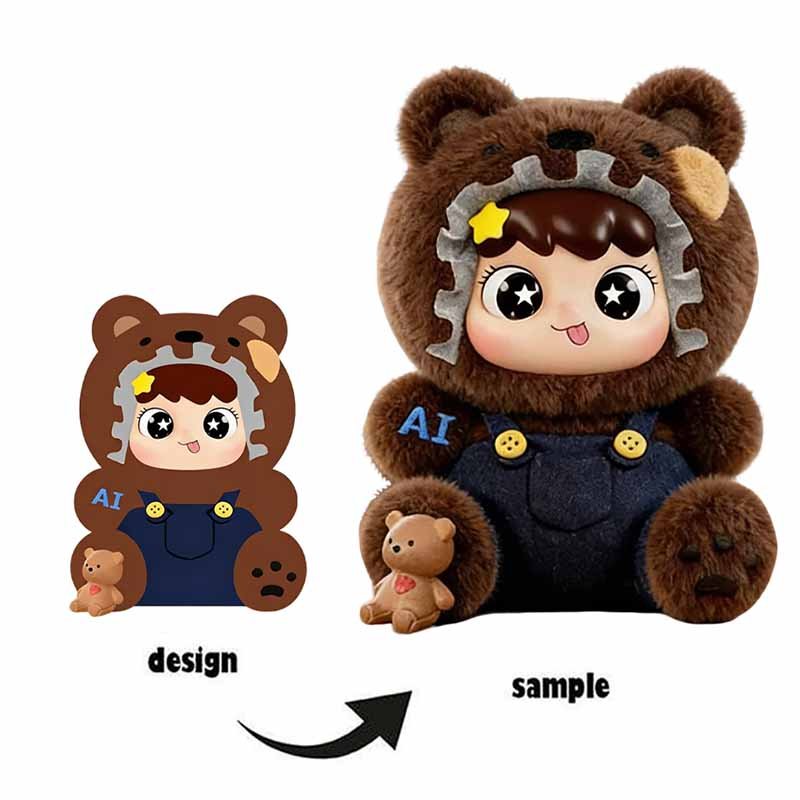
Check whether the physical face, silhouette, head size, limbs and posture still represent the approved artwork. Flat illustrations cannot fully predict how seams, fabric stretch and filling will affect the three-dimensional character, so physical review remains important for recognizable IP and mascot designs.

Material Feel

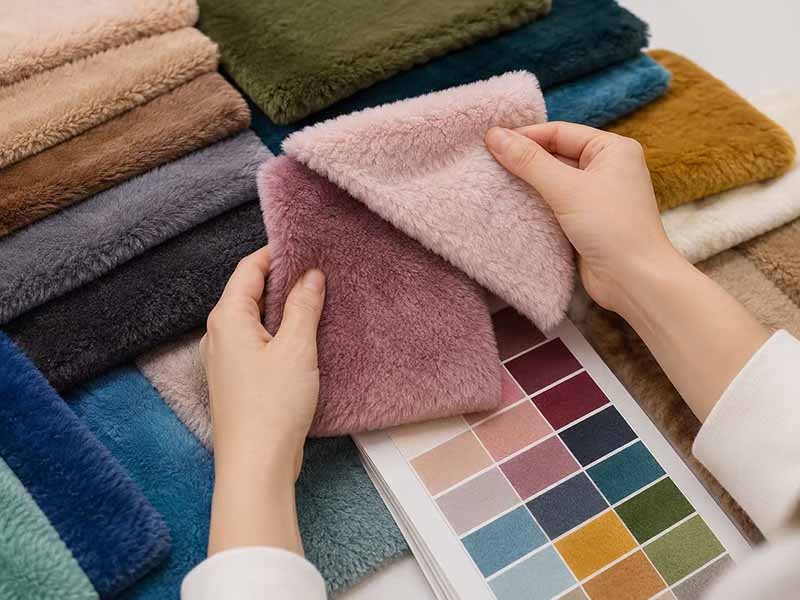
A fabric image cannot show pile density, stretch, softness or surface direction accurately. The sample lets the project team evaluate the real material in context and confirm whether the chosen fabric supports the intended product positioning and character appearance.

Embroidery & Surface Details

Eyes, mouths, Logos, prints and appliqué should be judged on the actual fabric and finished body. Embroidery may look correct on a flat test panel but shift visually after sewing and stuffing, especially around curved facial areas.

Filling & Shape

Stuffing affects softness, rebound, facial volume, body contour and posture. Sampling makes it possible to establish a physical handfeel and shape reference instead of asking production operators to interpret words such as “soft” or “firm” differently.

Accessories & Functions

Clothing, props, metal hardware, weighted inserts and electronic modules should be checked in the completed product. Correct components can still create problems when they alter balance, cover facial features, interfere with stuffing or sit incorrectly in actual use.

Packaging Fit

When packaging is included in the development scope, the approved plush can be tested inside the real packaging structure. Window position, box clearance, product orientation and compression should be reviewed against the physical sample rather than estimated only from drawings.

Keep IP Controls Active Through the Project Lifecycle

A custom prototype costs more per piece than a production unit because its purpose is development. The sample team creates and tests information that bulk manufacturing can later repeat efficiently.

A Prototype Includes Engineering Work Before Sewing Begins

Pattern development:

  • Artwork must be converted into cuttable fabric panels with real depth, seam allowance, volume and assembly logic. More complex characters, garments and accessories require more pattern work.

Material preparation:

  • Sample quantities of fabric, filling, thread, trims, hardware and special components may need to be sourced without the economies available in mass production.

Embroidery and print setup:

  • Eyes, Logos, graphics and costume details can require embroidery programming, print tests, color adjustment or positioning trials before they are ready for the prototype.

Sample labor:

  • Prototype sewing is performed for development and correction rather than production-line speed. Sample makers may need to assemble, reopen and reshape areas while engineering decisions are being validated.

Engineering review:

  • The finished V1 is checked against the artwork, dimensions, materials and intended product use. Problems are identified before the sample is sent for external review.

Special structures:

  • Weighted inserts, removable accessories, electronic modules, complex clothing or premium packaging can create additional development work and separate sample costs.

Pre-shipment inspection:

  • The prototype is reviewed before dispatch so obvious workmanship or specification issues are not knowingly sent as a formal evaluation sample.

The sample fee therefore represents development activity, not the retail value of one plush toy.

Free Plush Sample Application Process

The application process is designed to qualify the project before physical development begins. Each step reduces unanswered assumptions and leads toward a clearly defined sample scope.

1. Submit Company Information

Provide your company or brand name, website where available, business role and contact information. Pufumi first confirms that the request fits a commercial custom-plush manufacturing project rather than a one-off personal purchase.

2. Upload Project Files

Send the artwork, tech pack, character sheet, 3D model or existing product references you already have. A complete manufacturing file is helpful but not required for the first review.

3. Define Product Scope

Confirm the intended product type, target size, approximate SKU count, estimated order quantity and important features such as clothing, hardware, weighted structures or electronic functions.

4. Confirm IP Status

Indicate whether the artwork is original, owned, licensed or otherwise authorized for commercial development. Confidential or unreleased projects can establish the appropriate NDA path before sensitive assets are fully shared.

5. Complete Project Fit Review

Pufumi reviews design feasibility, materials, structure, expected manufacturing quantity, target market and available information. Missing items are identified before unnecessary sample work begins.

6. Receive a Sample Plan

The proposed path defines the sample purpose, main deliverables, information still required, estimated development timing and any physical sample, special-component or freight charges that apply.

7. Begin Sample Development

After scope, commercial terms and required inputs are confirmed, pattern engineering, materials, surface processes and physical prototype construction begin under a defined sample version.

8. Review the Sample

Evaluate the prototype against character, material, dimensional and functional requirements. Approved feedback enters a Revision Brief, PPS or Golden Sample route depending on the maturity of the project.

How Pufumi Reviews Sample Eligibility

The program prioritizes projects where a prototype can lead to a meaningful manufacturing decision. Early-stage concepts can still be reviewed, but they may need additional information before a physical sample starts.

Project SignalReady for Sample ReviewMay Need More Information
Company / BrandClear commercial identityPersonal or undefined use
ArtworkCharacter or product direction availableNo usable design reference
QuantityCommercial production intentionSingle-piece personal request
SizeTarget size or range definedNo dimensional direction
IP StatusOriginal or authorizedUnclear third-party character
Product ScopePlush category identifiedProduct still undefined
Sales RouteRetail, DTC, licensing, promotional, etc.No planned use
MarketTarget country or region identifiedMarket not considered
Launch TimingApproximate project scheduleNo commercial timeline
Bulk IntentionSampling supports a sourcing decisionPhysical sample is the only objective

A project marked “May Need More Information” is not automatically rejected. Pufumi may recommend a concept or feasibility review first so the sample team is not asked to solve undefined commercial and design decisions through trial and error.

Choose the Right Sample for the Decision

“Sample” can refer to several different development stages. Selecting the right type avoids paying for a fully finished prototype when the immediate question only concerns fabric, embroidery or structure.

Engineering Sample

An engineering sample focuses on three-dimensional interpretation, pattern construction, proportions and major structural questions. Materials may not always represent the final bulk supply in every detail. Its purpose is to prove whether the design can become the intended plush form before finer elements are locked.

Material & Craft Sample

A fabric swatch, embroidery test, printed panel, hardware sample or other partial mockup can resolve one critical question without making an entire plush. This route is useful when color, texture, Logo execution or a special process needs approval before a complete prototype proceeds.

Pre-Production Sample

The PPS is developed closer to the expected mass-production condition, using approved or production-intended materials, processes and components. It is an important point for confirming that the final specification can transfer from development into the actual manufacturing system.

Golden Sample

The Golden Sample is the final approved physical reference used to guide production and quality comparison. It should correspond with the released BOM, patterns, artwork, filling, accessories and packaging requirements rather than existing as an isolated sample with undocumented differences.

Turn Sample Feedback Into Clear Revisions

The first prototype does not need to be treated as a success-or-failure event. Structured review helps the development team understand exactly what should remain and what should change.

Review Against Specific Product Elements

Useful feedback can be separated into clear categories:

  • Expression: Eyes, mouth, eyebrow relationship and overall character emotion.
  • Proportion: Head-body ratio, limb length, ear size and major silhouette.
  • Dimensions: Finished height, width, depth and key product measurements.
  • Materials: Fabric type, pile, texture, color and handfeel.
  • Filling: Softness, body volume, facial shaping and posture.
  • Embroidery / print: Size, placement, thread color, line quality and artwork interpretation.
  • Accessories: Clothing fit, props, hardware, attachment and orientation.
  • Packaging: Product fit, window visibility, protection and presentation where included.

Pufumi can convert review comments into a Revision Brief so changes are tied to the correct sample version.

Responsibility also matters. If the prototype differs because Pufumi did not execute an already agreed specification correctly, the correction should be distinguished from a new client request.

Changes such as increasing the product size, replacing approved fabric, adding clothing, changing a licensed character after new licensor feedback, adding electronics or redesigning packaging can create new development work and may affect cost and timing.

Clear revision records prevent both sides from treating every change as the same type of “free revision.”

Keep Sample Fees, Credits and Freight Transparent

A clear sample policy is more useful than a broad “free sample” claim. Physical development, outside components and shipping should be identified before work starts.

Sample ItemPufumi Policy Direction
Initial Project ReviewNo-charge preliminary project review
Initial Sample PlanNo-charge sample-path planning for suitable projects
Physical Custom PrototypeQuoted according to design and development scope
Pattern DevelopmentIncluded or identified within the agreed sample scope
Special MaterialsReviewed according to sourcing requirements
Electronic ModulesProject-specific sample cost where applicable
Packaging PrototypeUsually evaluated separately from the plush prototype
Revision WorkDepends on cause and change scope
International CourierNormally calculated separately
Sample-Fee CreditMay apply to qualified bulk orders when written into quotation or PI

Pufumi does not use one fixed website rule to promise that every sample fee is refunded at a specific order quantity. Product complexity and commercial scope vary too widely.

Any production credit should therefore state the applicable conditions, amount or treatment in the formal project terms before sampling begins.

Turn the Approved Sample Into a Production Standard

The purpose of prototype development is not simply to produce one attractive sample. The approved result needs to become something production teams can reproduce and quality teams can inspect.

Move From Development Approval to a Controlled Golden Sample

A typical progression can follow:

  • Project Application
    Confirm company, product, quantity and manufacturing intention.
  • Engineering Sample
    Validate pattern, proportions, structure and overall character direction.
  • Sample Review
    Compare the prototype with artwork, target dimensions, materials and intended use.
  • Revision
    Apply clear changes through a controlled sample version rather than informal adjustments.
  • PPS
    Confirm the product closer to the intended production materials and manufacturing condition where the project requires a separate pre-production stage.
  • Golden Sample
    Approve the final physical reference for mass-production comparison.
  • Production File Package
    Synchronize the approved sample with the released pattern, BOM, embroidery or print files, filling specification, accessory instructions, packaging and QC criteria.
  • Mass Production
    Produce against the released standard instead of relying on the earliest prototype or original artwork alone.

For regular plush development, a first sample commonly falls around 7–12 working days once the necessary inputs and material direction are ready. Complex character structures can require around 12–20 working days, while electronic projects can extend to around 20–35 working days depending on module integration and testing.

The approved sample therefore becomes the bridge between design intent and controlled bulk production.

Trust, Compliance & Production Assurance

Confidence for global brands and complex plush programs

Pufumi evaluates each project according to its target market, age grade, materials, construction, labeling, and packaging requirements. Depending on the assigned production site and project scope, our team can support ISO 9001 quality-management documentation and coordinate testing to EN71, ASTM F963, CPSIA, REACH, and other applicable standards. Factory audits, certifications, and test reports are verified by issuing body, validity period, facility, and product scope, giving brands greater transparency from sample development through controlled production and delivery.


Frequently Asked Questions About Free Plush Samples

Pufumi offers a free initial project and sample-path review for suitable commercial projects. Physical custom prototypes are not automatically free because pattern work, materials and skilled sample labor are involved. Any physical-sample support or later production credit is confirmed according to the specific project terms.
The program is designed primarily for IP owners, licensees, toy and collectible brands, established retail or DTC brands, entertainment companies, merchandise agencies and creator-owned commercial brands preparing real production projects.
No. “Free sample” should not be interpreted as an unconditional free physical prototype for every inquiry. Pufumi first reviews the project and then confirms the appropriate sample scope, possible charges and any applicable production-credit arrangement before development begins.
Useful information includes company or brand identity, artwork, target product type, approximate size, SKU count, estimated production quantity, target market and launch timing. Material, packaging and technical specifications can be added where already available.
Regular plush samples commonly require around 7–12 working days after the required inputs and material direction are ready. Complex structures can require around 12–20 working days. Electronic and multi-component projects may require a longer development path.
Sample fees can cover pattern development, material preparation, embroidery or print setup, skilled sample labor, engineering review, special components and pre-shipment inspection. They represent product-development work rather than the unit value of one finished plush.
Qualified projects may receive a partial sample-fee credit when the commercial conditions are agreed. Any credit should be stated clearly in the quotation or PI, including the applicable order conditions, rather than assumed from a general website statement.
Revision scope depends on the project agreement. Corrections to an agreed specification should be distinguished from new requests such as size changes, different materials, added accessories, additional electronics or new licensor feedback that changes the approved design.
A sample helps both sides evaluate the product and manufacturing fit before bulk production. A bulk commitment should follow the agreed commercial process rather than be hidden inside the sample application. Any production-credit conditions are documented separately.
The approved product can proceed toward PPS or Golden Sample status, depending on the project. Pufumi then aligns the final physical reference with production files such as BOM, pattern, embroidery, filling, accessories, packaging and QC requirements before mass production release.

Apply for Your Plush Sample Plan

Send Pufumi enough information to understand whether a physical prototype is the right next step for your project. A complete tech pack is helpful but not required. Artwork, a character sheet, 3D model or clear product concept can be enough for an initial review when the commercial direction is already defined. Useful application information includes:
  • Company and brand name
  • Company website where available
  • Your project role
  • Product type
  • Artwork or product files
  • Target finished size
  • Number of SKUs
  • Estimated production quantity
  • Target sales markets
  • Sales channel
  • IP status
  • Material or functional requirements
  • Packaging requirement
  • Planned launch date
  • Purpose of the requested sample
You can also indicate whether you need a Custom Prototype, a Pre-Production Sample, or would like Pufumi to Recommend the Right Sample Path. Pufumi will review project fit first, identify missing information and clarify the physical sample, revision, freight and possible production-credit terms before development begins. The aim is to use sampling to reduce manufacturing risk and establish an approved product standard—not to create a promotional giveaway with unclear production intent.

Start Your Custom Plush Project

Plush Product Development & Manufacturing Support for Global Brands

Share your character artwork, product concept, target size, estimated quantity, destination market, launch timeline, packaging requirements, and any special functions or compliance needs.

Our project team will review your request and recommend a tailored development and manufacturing approach based on character complexity, materials, construction, sample requirements, production planning, packaging, and delivery schedule.

From Character Artwork to Retail-Ready Plush Products

Pufumi supports IP owners, entertainment companies, toy and collectible brands, lifestyle brands, and major retailers with structured plush product development and manufacturing.

Your artwork, unreleased characters, packaging files, target costs, and commercial information are handled as confidential project materials and are not used for other customer projects or public marketing without authorization.

Need Direct Assistance?

Seraphinite AcceleratorOptimized by Seraphinite Accelerator
Turns on site high speed to be attractive for people and search engines.