
Payment Methods for Custom Plush Manufacturing
Clear payment milestones help finance, procurement, and product teams control development spending, production commitments, inspection, and international shipment release.
- Sample and development costs are confirmed before prototype work begins.
- New bulk orders commonly follow a 30% deposit and 70% balance before shipment.
- Bank transfer is preferred for production orders, while approved alternatives may support samples or selected transactions.
- Every payment condition is recorded in a quotation, Proforma Invoice, purchase order, or contract before funds are transferred.
Payment Terms At A Glance
Sample Payment
Production Deposit
Balance Payment
Formal Documents
Separate Charges
Written Confirmation
Payments Aligned With Project Milestones
Development Starts & Deposit Releases Production
Formal development starts after the design scope, sample deliverables, relevant fees, and payment receipt are confirmed. A standard character sample may require artwork review, pattern engineering, material selection, embroidery setup, sewing, filling, shaping, and internal inspection. Required input: artwork, target size, quantity, market, age group, and packaging direction. Typical internal sample benchmark: 7–12 working days for ordinary samples. Complex structures, electronic functions, multiple outfits, or multi-SKU groups may require 12–20 working days. Timing begins after complete information, payment, and critical materials are available.
After the approved sample, final specification, quantity, packaging, and commercial conditions are confirmed, the production deposit releases bulk-order preparation. Pufumi converts the approved result into production files and coordinates approved materials across the manufacturing system. Materials are booked against the released BOM. Packaging files and labeling versions are checked. Production capacity is assigned according to product complexity. Long-lead fabrics, custom colors, metal accessories, or electronic modules are scheduled. Delayed deposit payment moves the material and production schedule accordingly.
Inspection Supports Balance & Payment Releases Shipment
Bulk completion does not automatically mean immediate shipment. The agreed inspection and packing activities must first be completed. Depending on the order, evidence may include product photographs, measurement results, quantity confirmation, functional checks, barcode verification, carton information, or a third-party inspection report. Finished products are compared with the approved sample and released files. Packaging, labels, barcodes, and carton marks are checked. Nonconforming items are separated and handled. Final shipment quantity and packing data are confirmed before the agreed balance milestone.
After the balance reaches the confirmed account, Pufumi proceeds with the agreed cargo-release arrangement. The exact action depends on the trade term and logistics plan, including factory pickup, export shipment, forwarder handover, or destination delivery coordination. Cargo may be released to the nominated forwarder. Shipping documents may be issued according to the transaction structure. Freight, duties, insurance, and destination charges follow the confirmed trade term. Payment delay can affect vessel space, courier booking, warehouse appointments, storage costs, and launch timing.
Inspection Supports Balance
Bulk completion does not automatically mean immediate shipment. The agreed inspection and packing activities must first be completed. Depending on the order, evidence may include product photographs, measurement results, quantity confirmation, functional checks, barcode verification, carton information, or a third-party inspection report.
- Finished products are compared with the approved sample and released files.
- Packaging, labels, barcodes, and carton marks are checked.
- Nonconforming items are separated and handled.
- Final shipment quantity and packing data are confirmed before the agreed balance milestone.
Payment Releases Shipment
After the balance reaches the confirmed account, Pufumi proceeds with the agreed cargo-release arrangement. The exact action depends on the trade term and logistics plan, including factory pickup, export shipment, forwarder handover, or destination delivery coordination.
- Cargo may be released to the nominated forwarder.
- Shipping documents may be issued according to the transaction structure.
- Freight, duties, insurance, and destination charges follow the confirmed trade term.
- Payment delay can affect vessel space, courier booking, warehouse appointments, storage costs, and launch timing.
Accepted Payment Methods For Global Plush Orders
Bank Transfer
Sample Payments
Platform Transactions
Other Approved Methods
What A Plush Sample Fee Covers
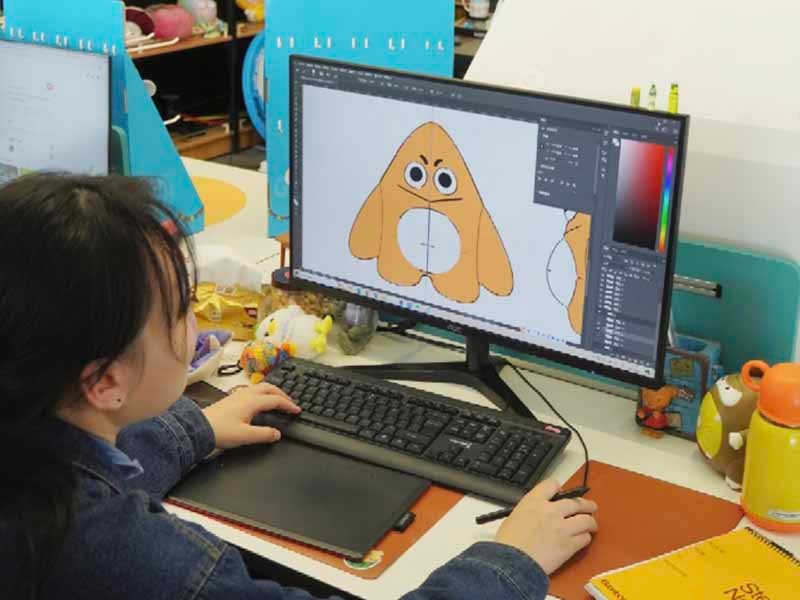
Development Work Behind A Custom Plush Prototype
- Embroidery programming for eyes, mouths, logos, badges, or clothing details.
- Printing setup for sublimation, screen printing, heat transfer, or positioned graphics.
- Trial sewing and filling to evaluate shape, expression, balance, softness, and posture.
- Internal review of dimensions, materials, facial features, construction, accessories, and presentation.
- Photographs and videos prepared for remote evaluation before international shipment.
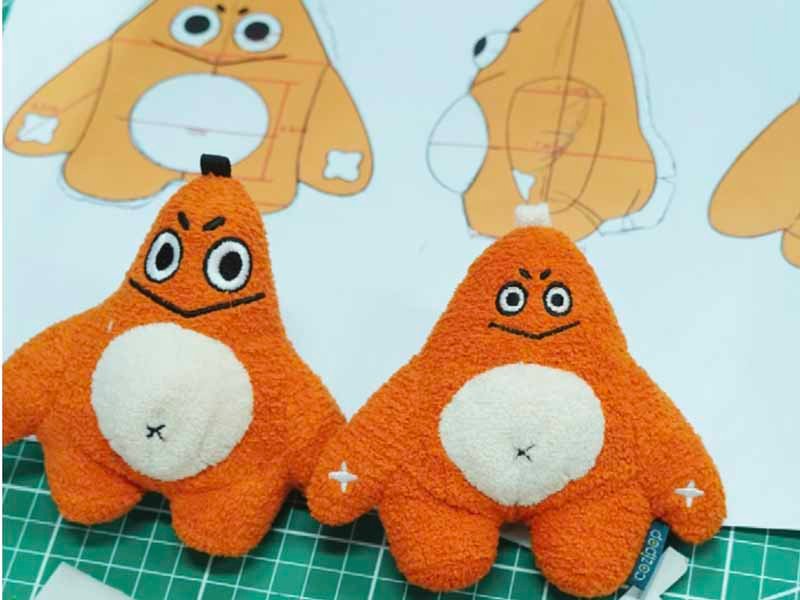
Revisions, Packaging Samples And Special Components
Revision cost depends on the reason for the change. When a sample does not follow an already confirmed brief, Pufumi takes responsibility for correcting the execution. When new artwork, changed dimensions, different fabrics, additional clothing, revised packaging, new functionality, or fresh licensor comments alter the approved scope, extra material, labor, programming, and development time may be required. Retail packaging often follows a separate sample path. Blind boxes, window boxes, gift boxes, display cartons, paper sleeves, inserts, hangtags, story cards, and collector cards may involve dielines, structural mockups, print proofs, trays, assembly tests, and packing trials. Packaging samples are normally evaluated separately from the plush prototype because product approval does not automatically approve package dimensions, print color, labeling, or protection. Electronic plush projects can add:
- Sound, recording, LED, sensor, or motion-module samples.
- Battery compartment and switch evaluation.
- Module placement and sound-output testing.
- Functional checks before and after final sewing.
- Packaging checks to prevent accidental activation.
International courier cost is normally quoted separately. Sample fee credit, partial deduction, or other treatment may be available when a qualifying bulk order is placed under the conditions stated in the quotation or PI. No automatic refund or deduction applies unless written into the commercial terms.
How Bulk Production Payments Are Structured
What The Production Deposit Activates
- Booking approved fabric, filling, embroidery thread, accessories, and labels.
- Ordering custom-dyed material or project-specific components.
- Confirming packaging quantities, print files, dielines, and assembly requirements.
- Reserving manufacturing capacity according to technical complexity.
- Releasing approved paper patterns, embroidery programs, BOM versions, and quality requirements.
- Coordinating external processes such as printing, metal parts, electronic modules, or packaging.
What Happens Before The Final Balance
Before the balance milestone, the order moves through production, process inspection, finishing, final inspection, packaging, and shipment preparation. Evidence supplied before payment depends on the approved quality plan and commercial agreement rather than a universal document package. A pre-shipment review can include:
- Finished-product and packaging photographs.
- Quantity, carton count, gross weight, net weight, and CBM.
- Measurement or workmanship inspection records.
- Barcode, FNSKU, hangtag, care-label, and carton-mark verification.
- Electronic function or accessory checks where applicable.
- Third-party inspection results when separately arranged.
- Packing list and proposed logistics documents.
The common balance condition requires payment before cargo or pickup documents are released. A delayed balance can affect scheduled pickup, ocean bookings, airfreight reservations, retail warehouse appointments, and delivery deadlines. Storage, rebooking, or other costs arising from delayed payment may need separate settlement. Established partners may request a different schedule, including milestone payments or approved credit terms. Such arrangements depend on financial review, order history, annual value, and risk control. They are not automatically available based only on company size or brand recognition.
Costs Beyond The Plush Unit Price
Sample Development
- The amount changes with product size, pattern-piece count, SKU quantity, clothing layers, accessories, and functionality.
- Sample price should not be compared directly with bulk unit price.
- Any possible sample-fee credit must appear in the quotation or PI.
Packaging Preparation
- Polybags and simple hangtags generally require fewer setup steps.
- Blind boxes, window boxes, gift boxes, and display cartons involve more structural and print preparation.
- Low packaging quantities can increase the per-unit share of tooling and setup.
- Packaged dimensions also affect master-carton quantity and freight volume.
Third-Party Testing
- Third-party laboratory fees are normally borne by the ordering party unless otherwise agreed.
- Pufumi can prepare samples, BOM details, labels, and supporting information.
- No universal testing price can responsibly cover every plush structure and sales market.
Special Materials
- Material payment may be required before the general bulk balance.
- Long-lead components can affect production dates.
- A design change after procurement can leave committed material unusable.
- Supplier conditions must be reviewed before approving the final commercial plan.
Freight And Duties
- EXW, FOB, CIF, DAP, and DDP carry different cost and responsibility boundaries.
- Import duties, taxes, destination charges, platform fees, storage, and appointment costs are not automatically included.
- Final freight requires confirmed packing data rather than an early product estimate alone.
Financial Charges
- The party responsible for each charge should be identified before payment.
- The amount reaching the receiving account must match the required net payment.
- An unexplained short payment can hold sample release, material booking, production, or shipment until the difference is resolved.
Commercial Documents Required Before Payment
| Commercial Item | Information To Confirm | Where It Should Appear |
|---|---|---|
| Product Specification | Product type, size, materials, filling, construction, embroidery, printing, accessories, functions, labels, and approved version | Quotation, PI, specification sheet, or contract |
| Quantity Structure | Total order quantity, number of SKUs, quantity per design, color, size, and packaging version | Quotation, PI, PO, and SKU list |
| Pricing | Unit price, development charges, packaging, tooling, testing, inspection, freight, and exclusions | Formal quotation and PI |
| Currency | USD, RMB, or another agreed currency, including exchange assumptions where relevant | Quotation, PI, and payment instruction |
| Payment Milestones | Sample payment, production deposit, balance timing, and any separately payable cost | PI, contract, or accepted PO |
| Trade Term | EXW, FOB, CIF, DAP, DDP, named port, named place, and the agreed logistics boundary | Quotation, PI, or contract |
| Production Timing | Schedule assumptions, material conditions, approval deadlines, deposit date, and expected production window | Project schedule, PI, or contract |
| Receiving Account | Account name, bank, currency, account number, SWIFT details, and payment reference | Official Pufumi PI or verified instruction |
| Quotation Validity | Normally 15–30 days unless another period is written, subject to material, exchange, and logistics changes | Formal quotation |
| Change Triggers | Quantity, size, fabric, color, packaging, function, market, testing, or delivery changes requiring review | Quotation notes, PI, change order, or contract |
How Pufumi Protects Payment Instructions
Pay Against Formal PI
Verify Account Changes
Match Business Entities
Retain Complete Records
Payment Planning Across Different Order Structures
Payment conditions reflect development work, material commitments, SKU complexity, production value, delivery structure, cooperation history, and the financial risk of each program.
| Order Structure | Common Payment Approach | Main Factors Requiring Review |
|---|---|---|
| Prototype-Only Project | Sample and applicable courier charges paid before development starts | Product complexity, sample stages, materials, embroidery, printing, electronic functions, packaging mockups, and delivery destination |
| New Bulk Order | Commonly 50% deposit after order confirmation and 50% balance before shipment | Total value, approved specifications, materials, packaging, production schedule, inspection method, and trade term |
| Multi-SKU Program | Deposit and balance structure supported by clearly defined SKU, material, packaging, and approval milestones | Quantity per SKU, shared components, custom colors, multiple packaging versions, testing coverage, and assortment control |
| Special-Material Order | Sample payment followed by material deposit or early component commitment where required | Custom dyeing, special pile, molded accessories, branded hardware, electronics, supplier MOQ, and material lead time |
| Split Shipment | Payment schedule confirmed against production completion and each agreed shipment release | Shipment quantities, freight bookings, storage, partial inspections, document release, and destination warehouse windows |
| Repeat Order | Standard terms or reviewed conditions based on updated quotation and cooperation history | Material availability, price changes, version comparison, packaging updates, previous payment performance, and delivery forecast |
| Annual Program | Contract-based milestones may be considered after commercial and credit review | Annual volume, forecasts, call-off schedules, material reservations, replenishment planning, financial approval, and risk allocation |
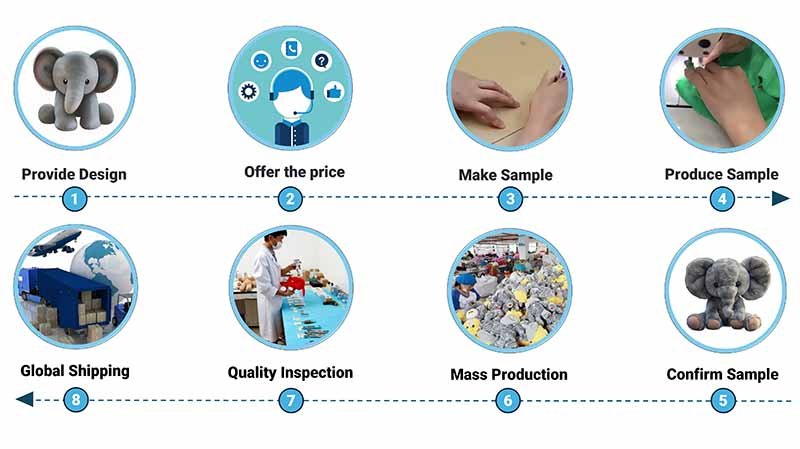
Multi-SKU Payment Planning Case
The figures below illustrate how payment, development, production, inspection, and shipment can be organized for a substantial multi-SKU retail plush program.
Four-SKU Retail Plush Program With 8,000 Units
An anonymized planning example involved four 20 cm character plush SKUs with 2,000 units per design, producing a total order quantity of 8,000 pieces. Each item required embroidered facial features, character-specific clothing, a printed hangtag, an individual polybag, and master-carton packing at 40 pieces per carton. The planned order therefore required approximately 200 master cartons before final carton optimization.
The project began with paid prototype development. The initial sample benchmark was 12 working days after complete artwork, payment, and key material confirmation. One revision round required another 8 working days. A printed packaging mockup was prepared over approximately 10 working days in parallel with final commercial review. Courier time and internal brand-approval time were tracked separately because neither forms part of factory sample production.
After product and packaging approval, the PI recorded:
- Four confirmed SKUs and 8,000 total pieces.
- Product, hangtag, polybag, and carton requirements.
- Sample and packaging-development charges already paid.
- A 50% production deposit.
- A 50% balance payable before shipment.
- A project-based bulk production benchmark of 35 days after deposit, material availability, and file release.
- Pre-shipment product, packaging, carton, and quantity checks.
- Freight quoted separately after final carton dimensions, weight, and CBM were confirmed.
Receipt of the production deposit released fabric, embroidery thread, clothing materials, labels, packaging, and manufacturing capacity. Final inspection required approximately two working days after packing completion. The balance was then paid against the agreed pre-shipment evidence. Cargo and shipping documents were released after cleared funds were confirmed.
The figures demonstrate a milestone structure rather than a universal quotation. Product complexity, approval speed, material supply, quantity, packaging, testing, inspection, and delivery route can alter both timing and payment requirements.
Payment Frequently Asked Questions
New bulk orders commonly follow a 30% deposit after order confirmation and a 70% balance before shipment. The balance must normally clear before cargo, pickup authorization, or shipping documents are released. Different terms may be considered for established partners, annual programs, or qualified large orders after financial and risk review. Every approved condition must appear in the PI, contract, or accepted purchase order.
The sample fee is normally paid before formal prototype development begins. Pufumi releases pattern engineering, material preparation, embroidery or printing setup, sample sewing, packaging mockup work, or special-component development after the applicable scope and payment are confirmed. Sample timing begins when the required design information, payment, and critical materials are available, not when an initial inquiry is received.
A partial sample-fee deduction may be available for qualifying bulk orders when the order value, timing, approved version, and other stated conditions are met. Deduction is not automatic. The amount, qualifying quantity, order deadline, and excluded charges must appear in the quotation or PI. Courier charges, packaging tooling, electronic modules, special materials, or newly requested revisions may remain separately payable.
The deposit releases material procurement, packaging preparation, supplier coordination, production scheduling, and approved project files. It may support fabrics, filling, embroidery thread, clothing, hardware, labels, electronic components, retail boxes, and factory capacity. Because many items are character-specific or brand-specific, cancellation or major changes after release can create committed costs that cannot easily be recovered or reassigned.
The final balance is commonly due after bulk production, agreed inspection, and packing are completed but before shipment. Pufumi can provide the pre-shipment evidence defined in the commercial agreement, such as photographs, inspection information, packing data, carton details, or third-party reports. Production completion alone does not waive the balance requirement. Funds must clear before cargo or documents are released.
Available methods include T/T bank transfer, PayPal for sample payments, Alipay, WeChat Pay, Western Union, WorldFirst, credit card, approved third-party payment, Escrow, Alibaba platform payment, Wise, freight-forwarder collection, or another compliant method confirmed by both parties. Bulk orders preferentially use bank transfer. Availability, fees, currency, limits, and receiving details must be confirmed before each transaction.
Not automatically. Third-party testing, laboratory services, international freight, duties, taxes, destination charges, platform costs, warehouse fees, insurance, and special delivery documents are normally reviewed separately unless the quotation clearly includes them. Freight also depends on final carton size, gross weight, CBM, route, trade term, and destination requirements. The PI should identify included and excluded amounts before payment.
Responsibility for sending-bank fees, intermediary-bank fees, receiving-bank fees, PayPal fees, credit-card charges, platform fees, settlement costs, and exchange differences must be agreed before payment. The required net amount should reach the receiving account. When a fee deduction creates a short payment, Pufumi may hold sample release, material booking, production, or shipment until the difference is resolved.
Terms may need revision when quantity, SKU count, dimensions, fabrics, packaging, target market, testing scope, electronic functions, delivery method, or schedule changes materially. Added development work or supplier commitments can also create a new payment milestone. Pufumi documents approved changes through a revised quotation, PI, purchase-order amendment, change order, or contract update before additional work proceeds.
Pause payment and verify the new instruction through info@pufumi.com plus a second established channel. Confirm the receiving company name, currency, bank, account information, SWIFT details, PI number, and reason for the change. Do not rely on one urgent email, an unfamiliar messaging account, or an edited attachment. Pufumi’s official PI remains the primary reference for receiving-account information.
Review Your Plush Order Payment Plan
Send the core commercial information before requesting a final payment arrangement. Pufumi will review the development scope, order structure, materials, packaging, inspection, target market, logistics boundary, and delivery schedule before issuing a quotation or PI. More complete information produces a clearer cost breakdown and reduces later revisions caused by missing SKU, packaging, testing, or freight requirements.
Please include:
- Company and brand name
- Product type and artwork
- Target size in centimeters or inches
- Number of designs, colors, and sizes
- Quantity per SKU and total quantity
- Sample, packaging, and testing requirements
- Sales market and intended age group
- Preferred currency and payment method
- Required trade term
- Destination country, port, or warehouse
- Target shipment or arrival date
- Any internal finance or contract requirements
Do not submit card numbers, banking passwords, or confidential payment credentials through the inquiry form. Official receiving information will be issued through a verified quotation, PI, or contract after project review.