...
A reliable plush product development and manufacturing partner For brands Since 2007!

Stuffed Animal Accessories Library

Turn Small Components Into Distinctive Plush Product Features

Explore a curated library of eyes, noses, clothing, trims, fasteners, hardware, sound components, labels and decorative details for custom stuffed animals. Pufumi helps product teams compare visual impact, structural compatibility and commercial application, making accessory decisions clearer before sampling, approval and production planning.

  • Character Detail Mapping: Match accessories with facial features, costumes, identities and signature design elements.
  • 58+ Development Specialists: Access practical input from Pufumi designers and experienced plush pattern makers.
  • Attachment Method Review: Compare sewn, embroidered, embedded, removable and reinforced accessory construction options.
  • Multi-SKU Component Control: Organize colors, sizes, materials and accessory versions across coordinated product collections.
  • Function-Ready Integration: Plan sound modules, lights, hardware and interactive parts around the plush structure.
  • Retail Identity Customization: Build stronger recognition through branded labels, trims, clothing and presentation details.

Explore the Complete Stuffed Animal Accessories Library
Move directly to the accessory family relevant to your character design, retail format, functional requirement, target age or product architecture.

Facial Components

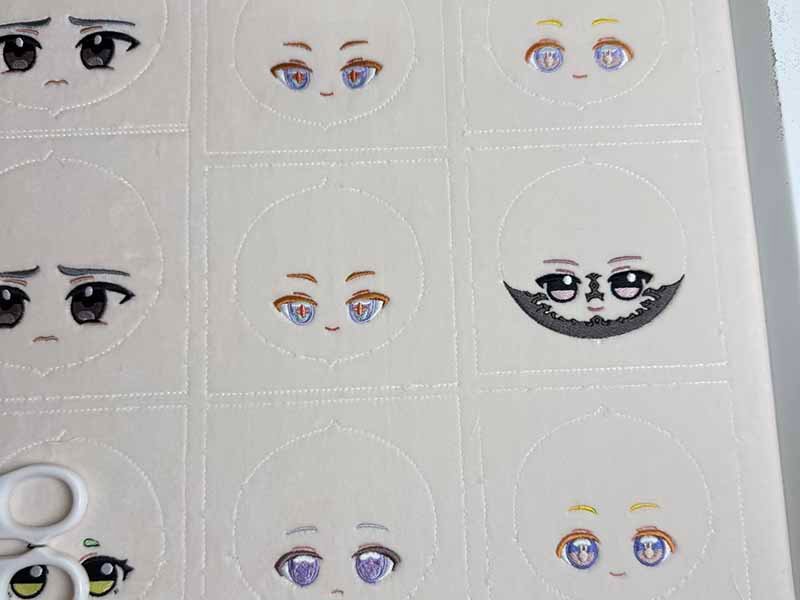
Compare embroidered, appliqué, printed and molded facial elements for different character styles and product sizes. Selection begins with visual recognition, but engineering also considers pile length, embroidery coverage, edge finish, attachment structure and intended age. Facial details are reviewed as part of the complete head pattern because eye spacing, nose projection and mouth position can change after filling and shaping.

Clothing and Costumes

Explore shirts, dresses, uniforms, jackets, capes, hats, shoes and layered outfits developed around the actual stuffed body. Clothing cannot be scaled from flat artwork alone. Body circumference, filling firmness, seam allowance, fabric stretch, opening position and dressing sequence determine whether a garment fits cleanly and remains stable during handling, packing and long-term display.

Character Props

Review soft tools, wands, miniature bags, badges, belts, wings, tails and recognizable character objects. Props are interpreted according to shape, user interaction, target age and packaging space. Sharp silhouettes may require softened geometry, while long or narrow props may need internal reinforcement, layered construction or attachment to more than one point.

Hanging Hardware

Compare split rings, swivel clasps, lobster clasps, ball chains, carabiner-style clips, D-rings, cord loops and hidden webbing anchors. Hardware is selected according to product weight, hanging angle, bag compatibility, plating finish and opening size. The visible clasp and the hidden load-bearing structure must be developed as one system.

Interactive Modules

Evaluate sound, recording, light, touch, motion, vibration and mechanical sensory functions. Module dimensions, speaker position, switch location, battery access, internal pressure and wiring protection can alter the plush pattern. Functionality is checked after filling, closure and packaging because performance may change once the module is enclosed inside the finished product.

Internal Components

Discover weighted pouches, magnetic pockets, flexible joints, support inserts, positioning webbing and removable module compartments. Internal components influence balance, posture, softness, washing instructions and production consistency. Although hidden from view, their exact dimensions, locations and closure methods must be documented in the approved sample and production specification.

Safety Planning

Review how small parts, magnets, cords, batteries, metal pieces and detachable accessories affect product classification and evaluation. Pufumi considers target age, intended use, sales market and product structure before finalizing an accessory. A commercial component name such as “safety eye” does not replace project-specific assessment or applicable third-party testing.

Custom Development

Develop exclusive costumes, branded hardware, molded parts, embroidered patches, character-specific props or integrated electronic systems. Fully customized components may require tooling, color matching, supplier sampling and higher material commitments. Pufumi reviews commercial value, visual importance, manufacturing risk and replenishment needs before recommending a custom development path.

Use the Library Across Product Development Teams

Accessory decisions become stronger when design, engineering, sourcing and compliance teams evaluate the same component from their respective responsibilities.

Design Direction

Creative teams can compare visual language, proportions, finishes and character relevance before artwork becomes a production specification. A crown, backpack, collar or metal charm may look convincing in an illustration but require simplification to remain balanced on a soft product.
  • Identify signature character details.
  • Separate decorative and functional elements.
  • Define fixed or removable parts.
  • Mark colors and finishes requiring approval.

Engineering Review

Pattern makers examine how each component connects to the plush shell, clothing or internal structure. The review covers seam location, load direction, reinforcement, filling pressure, movement and assembly order. Accessory placement is tested on the filled sample rather than an empty fabric shell.
  • Confirm attachment construction.
  • Check real-use orientation.
  • Protect high-stress seams.
  • Record critical dimensions.

Sourcing Control

Procurement planning separates standard parts, color-adjusted parts and fully tooled components. Similar-looking clasps or sound modules may differ in metal grade, spring performance, plating stability, battery configuration or long-term supply availability. Approved supplier references are linked to the project BOM.
  • Review material commitments.
  • Confirm finish tolerances.
  • Identify replacement options.
  • Plan repeat-order continuity.

Compliance Planning

Quality and compliance teams review whether the accessory creates detachable small parts, accessible sharp edges, cord hazards, battery-access concerns, chemical restrictions or labeling requirements. Pufumi supports material, structure, sample and document preparation for the agreed market and age group.
  • Define target age.
  • Confirm sales countries.
  • Identify applicable risks.
  • Prepare testing samples.

Compare Eyes Noses and Facial Detail Options

Facial components are selected according to character recognition, plush size, fabric pile, target age, production repeatability and the approved visual standard.

Embroidered Eyes

Embroidered eyes create controlled shapes without separate molded components. They work well for character plush, infant-oriented designs and small products where dimensional eyes would appear oversized. Thread density, stitch direction and underlay influence edge sharpness and fabric distortion.
  • Typical review range: approximately 4–45 mm.
  • Best on short or controlled-pile fabrics.
  • Suitable for gradients, highlights and stylized expressions.
  • Requires approved thread codes and embroidery files.
  • Dense areas may need stabilizing material behind the fabric.

Molded Plastic Eyes

Molded eyes create a dimensional reflection and can support realistic animals, stylized characters and larger products. Selection includes diameter, stem length, washer structure, surface gloss and color. Their commercial name does not confirm suitability for every use.
  • Common review range: approximately 6–35 mm.
  • Available in solid, transparent or layered effects.
  • Washer access must be controlled inside the head.
  • Fabric thickness influences stem and washer selection.
  • Age grading and structure require project-specific evaluation.

Special Effect Eyes

Glitter, holographic, transparent, printed and multi-layer eyes can strengthen collectible appeal. Reflective effects change under retail lighting, so evaluation should include front, side and display-box views. Printed iris alignment and surface protection require careful inspection.
  • Confirm appearance under several light angles.
  • Control left-and-right matching.
  • Review scratch resistance and print stability.
  • Match eye depth with head filling.
  • Archive approved appearance samples for replenishment.

Embroidered Noses

Embroidery supports flat, graphic or highly controlled nose shapes. It is useful where a protruding molded nose would interfere with packaging, cuddling or age positioning. Stitch direction can create smooth satin effects or textured surfaces.
  • Works well from mini plush to larger mascots.
  • Supports exact color references.
  • Avoids a separate attachment component.
  • Dense embroidery can stiffen the surrounding fabric.
  • Nose shape must be evaluated after head filling.

Molded Noses

Molded noses provide projection and tactile definition for animal characters. Shape selection should consider muzzle depth, washer placement and pressure from surrounding filling. A nose fitted too tightly can pull the fabric inward and change the expression.
  • Available in matte, gloss and textured finishes.
  • Custom tooling can reproduce distinctive geometry.
  • Stem length depends on fabric and internal layers.
  • Washer positioning must remain inaccessible.
  • Bulk inspection checks alignment, finish and security.

Mouth and Brows

Mouths, eyebrows and expression lines are commonly embroidered, appliquéd or integrated into seam construction. A movement of only several millimeters may change the perceived personality of a small plush face. Approved measurements therefore reference fixed pattern points.
  • Map positions from centerlines.
  • Confirm expression after filling.
  • Define thread color and stitch width.
  • Control symmetry and curve direction.
  • Link approved files to the correct SKU version.

Eyelashes and Hairlines

Lashes, brows and hairlines can use embroidery, felt, short fabric extensions or inserted strands. Thin protruding elements may curl, fray or disappear into long pile. The solution must remain visually clear after handling and packing.
  • Evaluate minimum visible width.
  • Select fray-resistant materials.
  • Reinforce inserted elements internally.
  • Check both profile and front views.
  • Avoid unsupported sharp or wire-like structures.

Applique Details

Applique creates flat color areas, cheeks, patches, markings and layered facial features. Materials may include felt, microsuede, short plush, woven fabric or synthetic leather. Edge finishing depends on scale and intended look.
  • Suitable for color blocking and graphic shapes.
  • Can reduce heavy embroidery coverage.
  • Requires controlled cutting accuracy.
  • Edge exposure may need satin stitching.
  • Material thickness affects facial softness and profile.

Printed Facial Details

Printing can reproduce gradients, fine graphics and complex color transitions unsuitable for conventional embroidery. Sublimation, heat transfer and other methods require material compatibility and durability evaluation.
  • Best for smooth, printable surfaces.
  • Fine detail depends on artwork resolution.
  • Position must follow pattern distortion.
  • Color should be approved on production material.
  • Rub, wash and aging requirements depend on intended use.

Develop Clothing Costumes and Headwear for Plush Characters

Garments are patterned around the filled plush body, allowing controlled proportions, clean layering, reliable attachment and repeatable fit across production quantities.

Shirts and Tops

Miniature shirts require enough ease to fit around the body without hiding important character proportions. Neck openings, sleeve widths and bottom hems are adjusted for filling firmness and arm position. Logos may be embroidered, printed, woven or applied as small patches. Fixed shirts reduce movement during handling, while removable shirts require openings and closures designed for repeated use.

Dresses and Skirts

Dresses combine visual silhouette with controlled waist placement and hem behavior. Gathered fabric can create volume but may overwhelm small bodies, while stiff materials may lift during packaging. Pattern development considers torso length, arm clearance and the intended front view. Layered skirts are tested for symmetry and consistent drape after the plush is packed and unpacked.

Character Uniforms

Uniforms often carry highly recognizable color blocks, badges, piping and structured details. Pufumi separates essential identity features from details too small for stable production. Panels, collars, pockets and insignia are mapped into patterns and process files. When several characters wear related uniforms, shared materials can improve consistency while independent sizes protect fit across different body structures.

Jackets and Coats

Jackets add material thickness around the torso and may change the apparent body proportion. Closures, lapels, cuffs and pocket details must remain readable without creating excessive stiffness. Fixed jackets can be integrated during assembly, while removable coats require extra ease and durable openings. Packaging trials confirm whether collars and sleeves recover properly after compression or boxed shipment.

Capes and Cloaks

Capes are visually simple but can twist, cover the face or pull the neck backward when fabric weight is not balanced. Attachment may use a sewn neckline, hidden tabs, hook-and-loop fastening or a decorative clasp. Length is evaluated in sitting, standing and hanging positions. Printed graphics and lining layers require alignment control across curved edges.

Hats and Caps

Headwear must follow the actual head circumference, ear position and hair structure. A hat may be fully sewn, attached at selected points or removable. Internal bands help maintain shape on rounded heads. Brims, peaks and crowns require enough support to remain recognizable without creating hard, uncomfortable structures. Bulk inspection checks angle, centering and left-right balance.

Shoes and Footwear

Plush shoes can be constructed as part of the foot pattern, permanently fitted over the foot or made as removable garments. Sole material, toe volume and opening size determine whether footwear looks proportionate. Standing products may need flatter soles or internal support. Decorative laces and buckles are simplified according to scale and intended age.

Scarves and Neckwear

Scarves, ties, neckerchiefs and collars add strong color and brand character with limited material use. Length, knot construction and loose ends require attention, especially for younger age groups. Fixed neckwear provides stable presentation, while removable pieces increase interaction and packing complexity. Printed patterns should be positioned so the visible front section matches the approved artwork.

Hair and Headpieces

Fabric hair, felt shapes, crowns, ears and decorative headpieces may combine pattern construction, embroidery and controlled attachment. Hair volume can alter head proportion and cover facial features. Pufumi maps layer order, seam positions and pile direction before sampling. Key pieces are reinforced from inside the head to reduce rotation, lifting or gradual loosening during handling.

Build Recognizable Props and Decorative Character Accessories

Props translate signature artwork into soft, durable and manufacturable forms while preserving character identity, balanced posture, safe construction and retail presentation.

Soft Tools

Hammers, brushes, microphones, cooking tools and similar objects can be constructed from layered fabric, light filling and embroidered details. Long narrow sections may bend or twist, so pattern grain, internal interfacing and attachment points are evaluated together.
  • Simplify very thin artwork lines.
  • Use soft geometry around corners.
  • Control tool angle against the body.
  • Check recovery after packaging.
  • Reinforce hand or body connection points.

Wands and Scepters

Wands and scepters create strong character recognition but often contain narrow shafts and decorative tops. Fully rigid inserts may conflict with the desired softness or age positioning. Layered textile construction, foam reinforcement or widened stylization can preserve the visual idea.
  • Confirm total accessory length.
  • Review tip shape and flexibility.
  • Support heavy decorative tops.
  • Prevent rotation in the character’s hand.
  • Test packaging pressure and bending recovery.

Mini Bags

Mini backpacks, handbags, satchels and pouches can be fixed decorations or functional compartments. Strap width, bag scale and opening construction should fit the character rather than follow human-product proportions directly.
  • Define fixed or removable use.
  • Reinforce narrow straps internally.
  • Align printed or embroidered logos.
  • Review usable opening dimensions.
  • Confirm bag position after filling and handling.

Badges and Patches

Badges can use embroidery, woven construction, printed fabric, felt, synthetic leather or soft molded materials. Their size must remain readable without stiffening the garment or plush shell.
  • Confirm artwork simplification.
  • Select suitable edge finishing.
  • Map exact placement dimensions.
  • Review wash and rub behavior.
  • Record approved color and orientation standards.

Bows and Ribbons

Bows and ribbons support gift, fashion and character themes, but shape stability varies with material thickness and edge finish. Small bows may require preformed loops or hidden stitches to maintain symmetry.
  • Select satin, grosgrain or textile alternatives.
  • Control knot size and loop balance.
  • Secure loose ends where necessary.
  • Check fraying and color transfer.
  • Confirm shape after carton compression.

Collars and Necklaces

Collars, chains and necklaces may be decorative, branded or functional. Flexible textile versions preserve softness, while metal or molded versions introduce weight and surface-contact concerns.
  • Review neck circumference and movement.
  • Prevent rotation into the rear position.
  • Avoid rough contact with plush fabric.
  • Evaluate detachable-part implications.
  • Inspect plating, edges and closure consistency.

Belts and Straps

Belts define costumes, carry miniature props or connect bags to the character. Their width, tension and buckle construction influence fit. A belt pulled too tightly can compress filling and distort the torso.
  • Match belt length to filled circumference.
  • Reinforce load-bearing straps.
  • Control buckle orientation.
  • Keep seam ends hidden.
  • Confirm color consistency across shared SKUs.

Wings and Tails

Wings and tails combine visual posture with structural load. Large pieces may require multiple attachment points or internal fabric anchors. Pile direction, filling amount and panel symmetry determine whether paired wings remain balanced.
  • Map root width and angle.
  • Reinforce through internal seams.
  • Define filling level.
  • Check movement during packing.
  • Review clearance from labels and hardware.

Seasonal Accessories

Holiday hats, festival ornaments, graduation pieces and event-specific decorations can create new editions without changing the entire plush body. Development still requires controlled fit, materials and packaging.
  • Preserve the approved base SKU.
  • Issue separate accessory BOM versions.
  • Define seasonal color standards.
  • Review packing and barcode changes.
  • Archive components for future seasonal replenishment.

Select Hardware for Plush Keychains and Bag Charms

Hardware decisions influence hanging direction, product weight, bag compatibility, surface durability, retail appearance and the hidden reinforcement required inside the plush body.

Split Key Rings

Split rings provide familiar key attachment and are available in several diameters, wire thicknesses and finishes. Ring size must match the cord, chain or fabric loop connecting it to the plush.
  • Common review range: approximately 20–35 mm.
  • Check opening tension and edge smoothness.
  • Match metal finish across all components.
  • Confirm ring weight against plush scale.
  • Inspect deformation and surface scratches during incoming control.

Lobster Clasps

Lobster clasps offer controlled opening and a refined accessory appearance. Opening width should fit expected bag rings or straps, while spring action must remain consistent across production.
  • Common body length: approximately 25–50 mm.
  • Review opening width under actual use.
  • Test spring return and gate alignment.
  • Confirm plating color and gloss.
  • Inspect contact points for sharp edges or burrs.

Swivel Clasps

Swivel clasps reduce twisting and help maintain a natural hanging orientation. Swivel freedom, joint clearance and body strength vary by design. Excessive looseness can create noise or an unstable visual presentation.
  • Check full rotation after assembly.
  • Confirm front-facing orientation.
  • Match clasp scale with plush weight.
  • Review joint wear and plating coverage.
  • Perform project-defined load and function checks.

Ball Chains

Ball chains provide a lightweight, flexible connection commonly used for mini plush and collectible items. Ball diameter and connector quality affect both appearance and security.
  • Common ball sizes: approximately 2.0–3.2 mm.
  • Check connector closure consistency.
  • Confirm chain length for the intended loop.
  • Avoid excessive chain exposure inside packaging.
  • Review age, use and detachable-part implications.

Carabiner Clips

Small carabiner-style clips offer easy attachment to larger loops, backpacks and display fixtures. Their shape supports fashion-oriented bag charms but may add noticeable weight.
  • Review external dimensions and opening width.
  • Check gate return and alignment.
  • Confirm finish resistance at contact points.
  • Evaluate metal weight against the product body.
  • Protect the plush surface from abrasion during packing.

D-Rings

D-rings distribute load across webbing or a sewn tab and can support detachable chains, straps or branded hardware systems. Ring dimensions must match webbing width and stitch construction.
  • Common internal width: approximately 10–30 mm.
  • Prevent webbing bunching inside the ring.
  • Reinforce the hidden anchor area.
  • Check weld, finish and dimensional tolerance.
  • Confirm ring orientation in the Golden Sample.

Cord Loops

Textile or elastic cord loops keep the finished item light and soft. Material selection depends on stretch, abrasion resistance, color matching and knot or seam construction.
  • Define finished loop length.
  • Secure ends inside reinforced seams.
  • Check stretch recovery where applicable.
  • Review colorfastness against light fabrics.
  • Test pull direction in the assembled product.

Hidden Webbing Anchors

A visible clasp is only as reliable as the structure hidden inside the plush. Webbing anchors spread load beyond a small seam area and help protect soft fabric from tearing.
  • Select webbing width for product scale.
  • Capture the anchor within structural seams.
  • Add reinforcement stitching where required.
  • Control anchor length and position.
  • Inspect the complete assembly under realistic hanging conditions.

Add Sound Light and Interactive Plush Functions

Interactive modules are engineered with the plush shell, internal cavity, controls, filling, power source, packaging and inspection plan from the beginning.

Sound Modules

Sound modules can play music, dialogue, animal sounds or licensed audio. Speaker position and surrounding filling strongly affect volume and clarity after closure.
  • Confirm audio file format and duration.
  • Define speaker direction.
  • Protect the activation button.
  • Keep filling away from the sound path.
  • Conduct a functional check after final packing.

Recording Modules

Recording systems allow personalized or programmable audio. Access to controls, recording duration and accidental activation require careful planning.
  • Define who records the message.
  • Protect record and playback controls.
  • Review battery replacement needs.
  • Confirm sound quality inside the plush.
  • Establish reset and inspection procedures.

LED Light Modules

LED modules can illuminate cheeks, hearts, stars or internal translucent areas. Fabric color, density and distance from the light source affect brightness.
  • Select suitable light color and intensity.
  • Create a controlled internal cavity.
  • Prevent hard edges from contacting the outer shell.
  • Confirm heat and power requirements.
  • Inspect light consistency in normal retail conditions.

Touch Sensors

Touch sensors trigger sound, light or motion when a designated area is pressed or touched. Sensor placement must feel intuitive and remain stable under filling pressure.
  • Mark the activation zone.
  • Prevent sensor movement.
  • Balance sensitivity with accidental triggers.
  • Confirm performance after repeated pressing.
  • Record sensor location in production files.

Motion Sensors

Movement-activated functions can respond when the plush is lifted, shaken or tilted. The module’s sensitivity must suit packaging, shipping and intended play.
  • Define the activation movement.
  • Prevent constant triggering in transit.
  • Secure the sensor’s orientation.
  • Review power consumption.
  • Test inside the completed and packaged product.

Vibration Modules

Vibration can support heartbeat, purring or sensory concepts. Module strength, noise and weight distribution influence the user experience.
  • Select vibration level.
  • Isolate the module from hard internal contact.
  • Keep the unit centered where required.
  • Review battery duration.
  • Check movement and sound after filling.

Squeakers

Mechanical squeakers create sound without batteries and are commonly activated by pressure. Their location must be easy to find without creating an obvious hard point.
  • Define activation pressure.
  • Position away from closure seams.
  • Secure against internal migration.
  • Confirm sound after filling.
  • Evaluate cleaning and age requirements.

Crinkle Materials

Crinkle film creates sensory sound through flexible internal layers. Shape, thickness and placement determine sound response.
  • Enclose edges within fabric pockets.
  • Prevent folding into hard corners.
  • Map the active area.
  • Confirm sound through the selected outer fabric.
  • Check consistency before final closure.

Engineer Internal Components for Stability and Function

Hidden components control balance, posture, sensory performance, accessory attachment and long-term consistency across commercial stuffed animal production.

Weighted Inner Pouches

Weighted pellets should be enclosed inside dedicated internal pouches rather than distributed loosely. Pouch dimensions, seam security, placement and surrounding protection affect balance and feel. Weight distribution is confirmed in the engineering sample before the final product weight is released.

Magnetic Pockets

Magnets can support detachable props, closures or interactive positioning. Each magnet requires controlled polarity, enclosure and placement. Magnetic components must be evaluated according to target age, intended market and applicable requirements before production planning proceeds.

Flexible Joints

Flexible or mechanical joints can add controlled movement to arms, legs or heads. Joint diameter, fabric clearance and internal positioning influence appearance and durability. Joint use also changes assembly order and inspection requirements.

Support Inserts

Foam, textile laminates and flexible support pieces can hold ears, hats, wings, soles or large flat structures in shape. Insert edges are rounded or enclosed to protect the outer shell and maintain a soft hand feel.

Module Pockets

Dedicated pockets keep sound, light and sensor modules in the correct position. Pockets can support assembly, replacement and wiring control. Their dimensions follow the approved module rather than a generic cavity size.

Positioning Webbing

Internal webbing stabilizes clasps, straps, tails, wings and other load-bearing elements. Webbing length and direction are mapped to structural seams so pulling force spreads through a larger area instead of concentrating on surface fabric.

Bottom Stabilizers

Sitting or standing characters may use shaped bottom panels, layered fabric or flexible internal bases. Stabilizers help manage posture without relying on excessive filling, which could distort facial or body proportions.

Compartment Linings

Internal linings separate electronics, weighted materials or replacement components from loose filling. Compartments reduce migration and help technicians confirm location during assembly and inspection. Closure construction is documented for repeat orders.

Choose Accessories by Product Function and Market

Use the matrix to compare application, material direction, attachment method, engineering risk and project-specific evaluation before approving an accessory.

Accessory TypeBest ApplicationsTypical MaterialsCommon AttachmentMain Engineering RiskKey Review
Embroidered EyesBaby plush, character plush, mini plushPolyester thread, backingDirect embroideryFabric distortion, expression shiftTarget age, pile length, file scale
Molded EyesAnimal plush, realistic designs, larger charactersABS or comparable molded materialStem and internal washerDetachment, misalignmentStructure, age grade, stem length
Plush ClothingAnime, mascots, dolls, licensed charactersKnits, woven fabrics, felt, synthetic leatherFixed sewing or removable closurePoor fit, twisting, bulkBody size, stretch, seam allowance
Soft PropsGame, film, mascot and collectible productsFabric, felt, foam, light fillingHand, body or garment attachmentBending, rotation, sharp silhouetteScale, stiffness, packaging
Metal ClaspsBag charms, keychains, fashion accessoriesZinc alloy, steel or aluminum componentsWebbing anchor or cord loopSurface wear, weak anchorWeight, finish, opening size
MagnetsDetachable props, paired charactersEnclosed magnetic componentsInternal pocket or layered enclosureAccess, separation, polarity errorTarget age, market, enclosure
Sound ModulesTalking plush, licensed audio productsElectronic module, speaker, switchInternal pocket and wiring pathReduced volume, trigger failureAudio, cavity, battery access
Weighted PouchesComfort, sensory and display productsFabric pouch, approved fill mediaEnclosed internal compartmentLeakage, poor distributionTotal weight, pouch seams, placement
Removable AccessoriesDress-up plush, gift sets, collectiblesTextile, molded or metal componentsHook-and-loop, snap or fitted garmentLoss, misuse, small-part riskAge, closure durability, replacement

Select the Right Accessory Development Path

Component availability, branding requirements, tooling, production quantity and replenishment plans determine whether a standard, modified or fully custom solution provides the strongest commercial result.

Standard Components

Standard components use existing dimensions, structures and commonly available finishes. They can reduce tooling work and shorten early sourcing when an available option fits the product’s scale and performance needs.
  • Suitable for conventional rings, clasps, basic sound units and common trims.
  • Final suitability still depends on attachment, age and market.
  • Approved samples establish the exact supplier reference.
  • Availability is reconfirmed before repeat production.
  • Standard does not mean interchangeable without validation.

Semi-Custom Components

Semi-custom development modifies a proven base through color, plating, size, printing, logo application, audio content or attachment configuration. It balances brand distinction with lower technical risk than a fully new component.
  • Useful for branded metal finishes and custom patches.
  • Color approvals require physical samples.
  • Supplier minimums vary by process and material.
  • Modified parts receive separate codes and BOM records.
  • Future availability is reviewed before production release.

Fully Custom Components

Fully custom development creates exclusive shapes, molds, costumes, mechanisms or electronic configurations. It offers greater visual control but introduces tooling, testing, supplier qualification and replacement planning.
  • Best for signature character elements.
  • Requires clear artwork and dimensional references.
  • Tool ownership and maintenance should be documented.
  • Sampling may include several specialist suppliers.
  • Commercial value must justify added cost and lead time.

Match Accessory Materials With Performance and Appearance

Material decisions affect visual quality, softness, structure, durability, color consistency, sewing behavior, inspection requirements and the total installed cost of each component.

Textile Materials for Clothing and Soft Props

Garments and soft props may use jersey, interlock, woven cotton, polyester fabric, felt, microsuede, synthetic leather, short plush or specialty decorative textiles. Selection begins with the intended appearance but must also account for thickness, stretch, fraying, print compatibility and miniature sewing behavior. A thin jersey can create a natural fitted shirt, yet uncontrolled stretch may pull logos or neck openings out of shape. Woven materials hold collars and uniforms more cleanly but can become bulky at small seams. Felt supports simplified shapes and exposed edges, while synthetic leather adds structure and a premium surface but may crease under carton pressure. Material approval should cover:
  • Color under production lighting.
  • Thickness and hand feel.
  • Stretch direction and recovery.
  • Shrinkage or heat sensitivity.
  • Edge-finishing method.
  • Embroidery or printing compatibility.
  • Rub and color-transfer risk.
  • Availability for future replenishment.
Pufumi reviews clothing materials on the filled sample because body firmness and garment tension can change the final appearance. Fabric selected for one size may not perform identically on a mini or large version.

Metal Materials and Surface Finishes

Plush keychains and bag charms commonly use steel, zinc-alloy or aluminum components depending on shape, weight, strength and finish. The metal specification must be reviewed alongside gate design, spring action, weld quality and the hidden anchor connecting the hardware to the product. Finishes may include nickel-like silver, gunmetal, black, gold-tone, rose-gold-tone, painted color or brand-specific plating. A finish approved from a digital image is insufficient because gloss, shade and coverage vary with material, polishing and plating process. Physical samples should be examined beside the selected fabrics and packaging. Inspection focuses on:
  • Dimensional tolerance.
  • Opening and closing function.
  • Swivel movement.
  • Surface scratches and pits.
  • Uneven plating.
  • Burrs and sharp edges.
  • Color difference between components.
  • Contact abrasion against the plush.
For fashion-oriented products, metal weight also affects how the item hangs on a bag. A visually premium clasp can overpower a small plush body, so scale and installed weight are confirmed during engineering sampling.

Molded and Printed Component Materials

Molded eyes, noses, buckles and decorative parts may use different plastic or elastomer materials according to hardness, transparency, surface detail and required attachment. Material names alone do not define safety or performance; the complete component, colorant, finish and use condition require evaluation. Transparent eyes may contain printed or layered effects. Printed alignment, internal bubbles, surface scratches and left-right matching become critical inspection points. Soft molded badges and patches can add relief, but thickness and edge design must remain compatible with sewing or bonding. Printed textiles and appliques introduce another set of controls:
  • Artwork resolution and line width.
  • Color profile and production substrate.
  • Pattern distortion after sewing.
  • Print position relative to seams.
  • Heat exposure during application.
  • Rub, flex and wash behavior.
  • Batch color comparison.
  • Approved limit samples.
Pufumi records the final material, supplier reference, finish and application process in the project BOM. A visually similar substitute cannot enter production without assessment and written approval. Request Material Review

Scale Accessories Across Mini Standard and Large Plush

Accessory dimensions cannot be enlarged or reduced by one percentage alone. Sewing limits, hardware weight, fabric thickness and visual recognition require size-specific engineering.

Mini Plush Requires Selective Detail Reduction

A character produced as a 10 cm keychain or 12 cm bag charm has limited surface area for clothing seams, appliqués, embroidery and props. A detail visible on a 25 cm plush may become unreadable or too stiff when proportionally reduced. Mini products often require:
  • Wider graphic lines.
  • Fewer clothing layers.
  • Combined embroidered details.
  • Softer or flatter props.
  • Reduced seam intersections.
  • Lighter hardware.
  • Simplified closures.
  • Larger relative attachment areas.
Seam allowance cannot shrink indefinitely. For miniature clothing, two panels may be combined, exposed edges may use selected finishing methods, and decorative pockets may become embroidery rather than separate sewn parts. Small hats often need partial attachment to remain centered. Miniature shoes may be integrated into the foot pattern rather than produced as separate garments. Embroidery files also require independent scaling. Dense artwork can stiffen a small face or garment, while very thin lines may disappear into the pile. Pufumi identifies the minimum character features needed for recognition and protects those features before adding secondary decoration.

Standard Plush Balances Detail and Production Stability

Products around 18–30 cm usually provide enough area for layered clothing, structured props, dimensional facial features and controlled hardware. Even within a standard range, body style changes how accessories fit. A wide sitting character and a narrow standing character cannot share the same shirt pattern solely because both measure 20 cm in height. Engineering review covers:
  • Filled chest and waist circumference.
  • Head circumference and ear clearance.
  • Arm position and sleeve opening.
  • Garment ease and layer order.
  • Prop length relative to body.
  • Hardware location and hanging direction.
  • Packaging clearance.
  • Accessory assembly sequence.
Standard products often become the reference SKU for a multi-size family. Pufumi first confirms the character language, material direction and attachment principles, then adapts those decisions to smaller or larger products. Each adapted size still receives a fit and proportion review rather than automatic scaling.

Large Plush Needs Weight and Support Control

Large mascots and display products can carry more visual detail, but accessories also become heavier and more vulnerable to sagging. A broad hat may collapse, a large cape may pull the neckline backward, and a long prop may bend under its own weight. Large-format development may require:

  • Wider internal anchors.
  • Multiple attachment points.
  • Foam or textile support layers.
  • Controlled filling zones.
  • Stronger garment seams.
  • Reinforced closures.
  • Larger packaging clearance.
  • Separate transport protection.

Component weight must be distributed through structural seams rather than a single surface stitch. Large clothing panels are reviewed for drape, shrinkage and color continuity. Props may need removable packaging positions to avoid deformation during freight. Final dimensions are checked after the product has rested following unpacking, allowing compressed filling and fabrics to recover. 

Control Sewing Construction for Accessory Stability

Accessory quality depends on pattern accuracy, seam placement, stitch selection, reinforcement and assembly order rather than decorative appearance alone.

Pattern and Seam Planning for Miniature Clothing

Miniature apparel requires controlled seam placement because every fold, seam allowance and closure occupies a larger percentage of the garment than on human clothing. Pufumi develops garments around the approved filled body rather than estimating fit from overall plush height.
Pattern planning considers:
  • Actual chest, waist and head dimensions.
  • Filling firmness and body compression.
  • Arm, ear and tail interference.
  • Fabric stretch and grain direction.
  • Layer order.
  • Opening and dressing sequence.
  • Visible and hidden seam positions.
  • Logo placement after assembly.
Seam allowances commonly fall within a narrow project-defined range according to fabric stability and garment scale. Excessive allowance creates bulky ridges; insufficient allowance increases fraying or seam failure risk. Small curves, cuffs and collars may need altered construction rather than direct miniaturization from a conventional garment pattern.
First-piece confirmation checks whether the garment remains centered, whether sleeves pull the arms, whether the neckline distorts the head-body relationship and whether the hem remains level. Approved pattern measurements are then recorded for production.

Stitch Selection and Edge Finishing

Stitch length, thread type and edge treatment are chosen according to fabric, load and visible appearance. A dense stitch may support a narrow edge but can perforate lightweight material. A long stitch may speed assembly yet allow fraying or visible gaps around curves.
Common construction directions include:
  • Turned seams for clean visible edges.
  • Overlocked or secured internal edges.
  • Satin-stitch finishing around appliqués.
  • Edge binding on structured accessories.
  • Hidden hand closure for selected openings.
  • Topstitching for shape and visual definition.
  • Bartack-style reinforcement at stress points.
  • Multiple passes around webbing anchors.
Thread colors are approved against both the accessory and plush body. High-contrast thread may be intentional on decorative uniforms, while hidden structural seams should remain unobtrusive. Stitching around printed fabric is planned to avoid cutting through essential artwork.
Production inspection examines skipped stitches, broken thread, loose ends, puckering, open seams, uneven hems and misaligned layers. Defects near load-bearing points receive higher attention than minor hidden cosmetic variation.

Reinforcement Around Hardware and Props

A metal clasp, wing, tail or prop can create concentrated force in a direction different from normal plush handling. Surface sewing alone may hold during sampling but gradually cut through fabric under repeated use. Pufumi links the visible attachment to a hidden reinforcement structure.
Reinforcement may include:
  • Webbing captured inside structural seams.
  • Layered backing fabric.
  • Wider seam-root construction.
  • Cross-direction stitching.
  • Internal anchor panels.
  • Multiple connection points.
  • Controlled stitch distance from fabric edges.
Load direction is tested in the orientation expected during use. A bag charm is hung from the approved clasp with the product facing naturally. A character prop is pulled along the direction a hand may apply force. A tail or wing is handled from several angles because twisting can stress stitches differently from straight pulling.
Reinforcement remains proportionate. Excessive layers can create a hard lump or distort filling. The engineering sample helps balance strength, softness and appearance before the production structure is released.

Assembly Order and Final Closure

Accessories may need to enter production before, during or after plush body assembly. The sequence influences access, accuracy and inspection. Internal anchors and electronics must be installed before final closure, while garments and external decoration may be fitted after shaping.
A controlled assembly order can include:

  1. Prepare accessory subassemblies.
  2. Inspect embroidery, printing and molded parts.
  3. Insert internal anchors or module pockets.
  4. Sew structural shell seams.
  5. Fill and shape the plush.
  6. Install or adjust external clothing.
  7. Attach props and hardware.
  8. Complete the final closure.
  9. Inspect position and function.
  10. Pack according to the approved presentation.

Final hand closures are positioned away from high-stress accessory roots where possible. Closure thread and stitch spacing are selected to remain secure without creating a visible ridge. A completed sample is reviewed from front, side, back and real-use positions before the construction sequence becomes the production reference.

Engineer Every Accessory Attachment for Real Use

Attachment methods are selected by accessory type, pulling direction, product structure, interaction level and inspection requirement rather than appearance alone.

Fixed Attachments Preserve Position and Presentation

Permanent attachment works well for signature hats, uniforms, badges, wings and props where stable retail presentation matters more than removability. Construction may use seam insertion, concealed hand sewing, multiple tack points or integration into the main shell pattern. A fixed accessory should be evaluated for:
  • Visual position after filling.
  • Pull direction during handling.
  • Fabric strain around the attachment.
  • Interference with labels or closures.
  • Packaging pressure.
  • Cleaning implications.
  • Repair accessibility.
  • Bulk-production positioning tolerance.
A hat attached only at the front may lift at the back after packing. A cape fixed tightly around the neck may compress the upper body. A prop sewn to one hand may rotate during transport. Pufumi reviews the complete product rather than accepting an isolated accessory sample. Position measurements use stable pattern references instead of relying only on visual judgment. For multi-SKU projects, each variation receives its own attachment map to prevent location drift between characters or sizes.

Removable Attachments Add Interaction and Additional Risk

Removable clothing, props and decorative pieces can support dress-up play, gift sets and collectible variation. The design also introduces loss, incorrect reassembly, closure wear and age-related considerations. Possible systems include:
  • Hook-and-loop areas.
  • Fabric loops.
  • Snaps.
  • Zippers.
  • Magnetic positioning.
  • Fitted garments.
  • Buttons or toggles.
  • Detachable metal clasps.
The closure must remain easy enough for intended use without releasing unintentionally. Hook-and-loop material can catch long plush fibers. Snaps require sufficient surrounding fabric reinforcement. Magnets need secure enclosure and project-specific evaluation. Small buttons or decorative fasteners may affect target-age planning. Pufumi tests removability on the complete sample, including repeated installation, garment alignment and packaging. Instructions, accessory counts and spare-part strategy may be required when several removable pieces are sold together.

Load-Bearing Attachments Protect the Plush Shell

Keychain and bag-charm hardware carries the full product weight and receives repeated movement. A secure design transfers force from the clasp through webbing or a structural anchor rather than relying on a narrow loop sewn only to the outer pile fabric. Review covers:
  • Product net weight.
  • Hardware weight.
  • Anchor direction.
  • Webbing width.
  • Seam capture length.
  • Reinforcement layers.
  • Hanging angle.
  • Project-defined load testing.
  • 100% visual and function checks where required.
The approved sample is suspended in the expected orientation to confirm whether the character faces forward, tilts or rotates. Hardware contact with the face, embroidered areas or delicate fabrics is also reviewed. Packaging may include a protective card, sleeve or fixed position to prevent the clasp from scratching the plush during shipment. Review Attachment Method

Turn Character Artwork Into Accessory Specifications

A controlled development process converts visual ideas into materials, dimensions, attachment instructions, samples, approval records and production-ready accessory files.

Asset Review

Pufumi reviews front, side and back artwork, character guidelines, color references and non-negotiable details. Missing views are identified before pattern work begins. Props, clothing, hardware and internal functions are listed separately so each component receives an owner, specification and approval path.
  • Confirm legal use of character assets.
  • Mark signature accessories.
  • Identify unclear construction areas.
  • Record target size and posture.
  • Separate visual and functional requirements.

Accessory Breakdown

Each visible element is classified as embroidery, appliqué, sewn textile, molded component, metal hardware, printed piece, removable item or internal module. The classification helps reveal which details can share processes and which require specialist suppliers.
  • Define component count.
  • Identify shared parts across SKUs.
  • Separate fixed and removable pieces.
  • Note tooling or custom-color needs.
  • Establish preliminary accessory codes.

Material Recommendation

Material options are compared for appearance, thickness, stretch, durability, sewing behavior, target age, market requirements and production stability. Alternative materials may be offered when artwork calls for a finish unsuitable for the intended scale.
  • Prepare swatches.
  • Compare good-better-best options.
  • Check color availability.
  • Review minimum production commitments.
  • Confirm replenishment feasibility.

Structure Planning

Pattern makers determine how accessories fit, move and connect. Internal anchors, module pockets, support layers and closure locations are included before the first sample is sewn.
  • Map seam and attachment points.
  • Confirm load direction.
  • Plan reinforcement.
  • Reserve internal space.
  • Protect the intended hand feel.

Prototype Development

The first integrated sample shows the accessory on the filled product. Photos, measurements and videos record fit, position, proportion and function. Feedback is converted into a structured revision brief.
  • Compare against artwork.
  • Measure critical dimensions.
  • Check real-use orientation.
  • Review packaging impact.
  • Record cost or timing changes.

Production Release

Approved materials, patterns, accessory references, embroidery files, attachment methods and inspection criteria are linked to the final SKU version. Production does not proceed from informal messages or outdated sample comments.
  • Approve Golden Sample.
  • Freeze active BOM.
  • Issue accessory drawings.
  • Release packaging files.
  • Define QC checkpoints.

Develop Approve and Control Accessory Samples

Sampling confirms visual accuracy, fit, attachment, function, packaging and production feasibility before materials and capacity are committed to mass production.

Accessory Mockup

An early mockup checks scale, silhouette and material direction before full integration. It can be useful for a complex hat, molded eye, custom clasp or signature prop requiring separate supplier development.
  • Standard accessory work may begin within the main prototype.
  • Custom tooling needs its own approval sequence.
  • Digital renderings support discussion but do not replace physical review.
  • Color and finish should be approved on intended materials.
  • The mockup receives a version reference.

Integrated Prototype

The accessory is installed on a filled plush sample so proportion, fit and interaction can be assessed accurately. Standard integrated prototypes are commonly evaluated within 7–12 working days after complete files, sample payment and key materials are ready.
  • Review front, side and back views.
  • Confirm garment fit.
  • Check prop position.
  • Measure hardware orientation.
  • Record all requested revisions.

Engineering Sample

Complex structures, electronics, weighted parts, standing support or load-bearing hardware may require an engineering sample. Development commonly requires 12–20 working days, depending on components and supplier preparation.
  • Validate internal cavities.
  • Test module placement.
  • Confirm reinforcement.
  • Review cleaning limitations.
  • Define production assembly order.

Revision and Approval

Feedback is organized by component, measurement, material, color, position and function. Multi-SKU sample groups commonly require 15–30 working days because shared and unique components must be reviewed together.
  • Consolidate comments.
  • Update version numbers.
  • Record approved changes.
  • Reassess cost impacts.
  • Confirm a formal freeze point.

Golden Sample

The Golden Sample represents the approved appearance, construction, accessories and packaging standard for production. Electronic and sensor projects may require 20–35 working days across module sourcing, integration and revisions.
  • Link the sample to the final BOM.
  • Seal or identify the production reference.
  • Archive photos and measurements.
  • Establish allowable limits.
  • Retain references for repeat orders.

Plan Accessory Safety Before Materials Are Ordered

Target age, intended use, sales market and product features determine the evaluation path for small components, magnets, batteries, cords and metal hardware.

Identify Risks During Product Definition

Safety planning begins before sampling because accessory decisions may change the structure, material list, labeling and test requirements. A removable button, magnetic prop or battery module cannot be added at the final artwork stage without reviewing the complete product again. The initial review records:
  • Intended age group.
  • Countries or regions of sale.
  • Toy, collectible or accessory positioning.
  • Fixed and detachable components.
  • Cord and loop dimensions.
  • Magnets and battery systems.
  • Accessible metal or molded edges.
  • Cleaning and maintenance method.
Terms such as “safety eye” describe a component category in the market but do not prove suitability for every product. Washer structure, surrounding fabric, accessibility and foreseeable use remain relevant. Pufumi supports risk identification, material documentation, sample preparation, labeling coordination and third-party testing arrangements. Final obligations depend on the product, market and responsible economic operator.

Control Small Parts Magnets and Battery Access

Accessories may become small parts if they detach, break or are intentionally removable. Review therefore covers both initial dimensions and the condition after foreseeable use or abuse. Decorative beads, bells, buttons, chain connectors and molded components require particular attention. Magnetic systems need controlled polarity, secure enclosure and documented placement. The risk is not limited to whether the magnet is hidden inside the plush. Enclosure seams, material wear and potential separation must be evaluated. Battery-operated products add further considerations:
  • Battery compartment access.
  • Tool-operated closure where required.
  • Battery type and polarity.
  • Wiring and insulation.
  • Switch accessibility.
  • Heat and short-circuit protection.
  • Replacement instructions.
  • End-of-life disposal information where applicable.
Electronic modules should not be approved solely through a supplier certificate. The complete integrated product, including battery access and enclosure, must follow the agreed evaluation plan.

Separate Factory Systems From Product Compliance

Factory audits, quality systems and material certificates can support supplier management, but they do not replace testing or documentation for a specific finished product. Likewise, a report for one eye, clasp or fabric does not automatically cover a new complete plush design. A controlled compliance file may include:

  • Product description.
  • Target age and market.
  • BOM and supplier references.
  • Material declarations.
  • Risk assessment.
  • Final test samples.
  • Third-party reports.
  • Label and warning artwork.
  • Traceability information.
  • Required certificates or declarations.

Pufumi does not describe every accessory as automatically compliant with all global markets. The project team defines a preparation path based on the final product. Brands and importers should confirm their legal responsibilities with qualified compliance professionals and accredited testing partners.

Inspect Accessories From Incoming Material Through Final Packing

Quality control follows the component from supplier receipt to assembly, function verification, final inspection and SKU-specific packaging.

Incoming Material Check

Incoming checks verify part number, dimensions, color, material reference, surface condition and supplier lot. Metal hardware is reviewed for scratches, plating gaps, burrs and gate action. Textile accessories are checked for shade, thickness, printing, embroidery and cutting quality.
  • Match approved references.
  • Separate similar components.
  • Record supplier lots.
  • Isolate nonconforming material.
  • Protect finishes during storage.

Size and Fit Check

Clothing and fitted accessories are compared against the approved filled sample and critical measurements. A garment can meet flat dimensions yet fit incorrectly because body filling, arm position or seam bulk changed.
  • Measure defined control points.
  • Check left-right balance.
  • Confirm opening clearance.
  • Review garment tension.
  • Compare against the Golden Sample.

Color and Finish Check

Color is examined across fabric, thread, printing, plastic and metal finishes. Different materials reflect light differently, so approval relies on physical combinations rather than screen values alone.
  • Use approved swatches.
  • Compare production lots.
  • Check plating consistency.
  • Review print clarity.
  • Control visible shade differences within sets.

Attachment Strength Check

Structural seams, webbing anchors and accessory roots are checked according to product-defined requirements. Evaluation follows expected pulling, twisting or hanging direction.
  • Inspect reinforcement layers.
  • Confirm stitch coverage.
  • Check seam opening.
  • Review anchor position.
  • Record failures and corrective action.

Functional Check

Clasps, swivels, snaps, zippers, sound modules, lights and sensors require operation checks. Critical interactive functions may receive 100% verification when specified in the quality plan.
  • Open and close hardware.
  • Confirm swivel movement.
  • Activate sound or light.
  • Check control location.
  • Recheck after final packaging.

Final Assembly Check

Final inspection confirms accessory count, direction, position, SKU identity, barcode, packaging and carton information. Pufumi’s reference AQL approach for applicable final inspection can use Critical 0, Major 2.5 and Minor 4.0, while critical functions may follow separate complete checks.
  • Prevent missing accessories.
  • Prevent mixed finishes.
  • Verify SKU separation.
  • Inspect packing presentation.
  • Reconcile quantities before shipment.

Control Accessories Across Multi-SKU Retail Programs

Accessory codes, BOM links, approved finishes, packing positions and version records protect complex collections from mixed components and repeat-order drift.

Build a Clear Accessory Coding System

Multi-SKU collections often share similar hats, clasps, badges or sound modules with small differences in color, size or artwork. Visual similarity creates risk during storage, assembly and packing. Pufumi assigns controlled references rather than relying on informal names such as “the blue clasp” or “the large hat.” A component record can include:
  • Accessory code.
  • Applicable SKU.
  • Material and supplier.
  • Color or plating reference.
  • Finished dimensions.
  • Attachment method.
  • Approved sample version.
  • Packing position.
  • Inspection requirement.
  • Replacement or reorder status.
Shared components are linked to every applicable SKU, while unique components remain separately identified. When a design changes, the revised part receives a version update and the previous reference is marked unavailable for production.

Prevent Mixing During Assembly and Packing

Accessory handling is planned around physical separation, labels and line-clearance procedures. Similar pieces can be stored in dedicated bins with product images and codes. Assembly instructions show orientation and position rather than only listing component quantity. Controls may include:
  • Separated work-in-process areas.
  • SKU-specific accessory kits.
  • First-piece approval.
  • Component-count verification.
  • Changeover line clearance.
  • Packing reference photographs.
  • Barcode and label confirmation.
  • End-of-run quantity reconciliation.
Blind-box or hidden-edition programs may require restricted access to edition identities while still maintaining exact internal control. Packaging teams follow approved ratio and coding documents without exposing confidential release information externally.

Protect Repeat Orders From Component Drift

Replenishment introduces risk when a supplier changes plating, fabric, audio hardware or internal dimensions. A part described with the same commercial name may no longer perform like the original approved component. Repeat-order preparation checks:

  • Active product version.
  • Approved accessory reference.
  • Supplier continuity.
  • Available raw materials.
  • Color and finish comparison.
  • Tool condition.
  • Updated regulatory information.
  • Packaging and barcode version.
  • Retained Golden Sample.
  • Previous quality records.

Any proposed substitution receives review before procurement or production. Pufumi keeps historical files but marks outdated versions so only one approved baseline enters production for each SKU and market configuration. 

Multi-SKU Accessory Development Case

A commercially realistic planning scenario shows how accessory engineering, sampling, quality control and retail preparation can be coordinated across several character SKUs.

Project Brief and Engineering Challenge

The following illustrative scenario reflects a common commercial configuration rather than a named client disclosure. A lifestyle character brand planned four 13 cm plush bag-charm SKUs for the United States, with 1,500 pieces per SKU and a total production quantity of 6,000 pieces.
  • One tailored fabric outfit.
  • One soft signature prop.
  • One embroidered front badge.
  • One swivel lobster clasp.
  • Two approved metal finishes across the collection.
  • An internal webbing anchor.
  • A branded hangtag and individual protective bag.
  • SKU-specific barcode and carton identification.
The main challenge was maintaining a consistent collection language while accommodating four different body shapes. One character had tall ears, one carried a wide prop, one wore a layered jacket and one used a cape. A single clothing block or attachment position could not fit every SKU. Pufumi’s engineering plan separated shared materials from independent patterns. Clasp dimensions and webbing construction remained common, while outfit patterns, prop anchors and packing positions were developed for each character. Critical dimensions included finished product height, garment chest width, prop angle, hardware loop exposure and packaged thickness.

Sampling Production and Quality Plan

The sample sequence used three controlled stages. The first integrated prototypes were reviewed around working day 10 after files and materials were ready. Engineering revisions addressed garment fit, front-facing hanging angle and prop reinforcement. A revised collection set was reviewed around working day 19, followed by final color, packaging and attachment confirmation around working day 27. Production planning targeted 35 days after approval, material readiness and formal release. The four SKUs were separated through individual accessory kits and component codes. Hardware and webbing entered incoming inspection before assembly. The quality plan included:

  • First-piece confirmation for every SKU.
  • Position checks for outfits, badges and props.
  • 100% clasp opening, swivel and orientation checks.
  • Verification of internal anchor placement before closure.
  • Barcode scanning in final packaging.
  • SKU reconciliation before carton sealing.
  • Final inspection using Critical 0, Major 2.5 and Minor 4.0 as the reference sampling framework.
  • Retained samples for future replenishment.

The scenario demonstrates why accessory programs require more than sourcing visible parts. Pattern fit, hidden reinforcement, version control, packaging and final reconciliation determine whether a multi-SKU collection remains stable at commercial volume. 

Apply Accessories Across Different Plush Product Programs

Accessory priorities change according to intellectual property, product format, retail channel, display method, intended use and long-term collection strategy.

Licensed IP Programs

Licensed projects require faithful costumes, signature props, controlled colors, copyright markings and formal approvals. Accessory files should follow character guidelines and version records. Pufumi supports asset review, samples, revision tracking and production references while limiting project information to authorized use.
  • Character-specific outfit development.
  • Signature-detail protection.
  • Approval logs and version control.
  • Confidential sample handling.
  • Repeat-order archives.

Anime and Game Plush

Anime and game characters often depend on layered hair, uniforms, weapons, badges and highly recognizable props. Small-scale interpretation requires selecting the strongest identity features without producing excessive stiffness or fragile detail.
  • Face and hair coordination.
  • Layered costume planning.
  • Soft weapon engineering.
  • Alternate skin or edition control.
  • Multi-character consistency.

Collectible Plush Series

Collectible collections use accessories to create rarity, price tiers and edition differences. Hidden variants may change hats, props, finishes or packaging while sharing the same base character.
  • Common and limited components.
  • Edition-specific coding.
  • Controlled packing ratios.
  • Collector-oriented finishes.
  • Launch-wave replenishment planning.

Fashion Bag Charms

Bag charms require proportionate hardware, premium surfaces and a natural hanging direction. Clothing, embroidery, metal finish and packaging should support fashion presentation rather than a generic children’s-toy appearance.
  • Lightweight scale.
  • Plating and scratch control.
  • Reinforced hanging structure.
  • Bag-contact evaluation.
  • Retail-ready presentation.

Global Retail Programs

Retail programs connect accessories with tags, barcodes, warning information, packaging, carton labels and warehouse handling. Each SKU and market version needs controlled identification.
  • Barcode and label coordination.
  • Secure packing positions.
  • Multi-market version control.
  • Carton-level reconciliation.
  • Replenishment consistency.

Destination Merchandise

Museums, attractions, parks, hotels and cultural destinations can use uniforms, location symbols, educational cards and seasonal accessories to strengthen local relevance.
  • Place-specific props.
  • Staff or guide uniforms.
  • Educational accessory cards.
  • Seasonal editions.
  • Long-term replacement planning.

Why Brands Develop Plush Accessories With Pufumi

Pufumi combines pattern engineering, accessory sourcing, integrated sampling, managed manufacturing and version control for complex commercial plush programs.

Experienced Development Team

Pufumi’s core Dongguan factory has more than 58 plush designers and pattern makers, with approximately half bringing over 15 years of relevant development experience. Their work covers 2D-to-3D interpretation, clothing patterns, props, attachment details, structural samples and production feasibility.
  • Character-focused pattern work.
  • Integrated accessory development.
  • Sample revision support.
  • Size-specific engineering.
  • Production-ready documentation.

Managed Manufacturing Resources

Pufumi operates under Shenzhen Oneier Technology Co., Ltd. and manages development and production through invested plush manufacturing resources in Dongguan and Foshan, supported by qualified specialists for hardware, electronics, printing, embroidery, packaging, testing coordination and logistics.
  • Core factory development control.
  • Specialist component sourcing.
  • Coordinated production planning.
  • Central project communication.
  • Controlled supplier references.

Complete Product Integration

Accessories are not reviewed as isolated catalog items. Pufumi evaluates their relationship with the plush pattern, filling, structure, posture, packaging, intended market and final inspection plan.
  • Accessory-to-body fit.
  • Hidden anchor engineering.
  • Integrated electronic cavities.
  • Packaging protection.
  • Golden Sample control.

Enterprise Project Control

Complex programs require more than skilled sewing. Pufumi manages files, sample versions, BOMs, approvals, SKU separation, QC records, packaging information and repeat-order baselines.
  • Structured RFQ review.
  • NDA-supported development.
  • Version and approval records.
  • Multi-SKU coordination.
  • Long-term replenishment support.

Trust, Compliance & Production Assurance

Confidence for global brands and complex plush programs

Pufumi evaluates each project according to its target market, age grade, materials, construction, labeling, and packaging requirements. Depending on the assigned production site and project scope, our team can support ISO 9001 quality-management documentation and coordinate testing to EN71, ASTM F963, CPSIA, REACH, and other applicable standards. Factory audits, certifications, and test reports are verified by issuing body, validity period, facility, and product scope, giving brands greater transparency from sample development through controlled production and delivery.


Frequently Asked Questions

Yes. Pufumi can develop custom clothing, soft props, embroidered patches, branded metal hardware, molded components and integrated sound or light systems. Feasibility depends on artwork, size, intended use, target age, sales market and planned quantity. Fully custom components may require tooling, supplier sampling, color approval and additional technical validation before production.

Pufumi can recommend existing hardware, trims, basic modules and commonly available materials when they suit the project. Standard components still require approval for size, finish, attachment and product suitability. Availability is reconfirmed before material purchasing because supplier specifications or inventory can change between production runs.

Both options are possible. Fixed accessories provide stable presentation and reduce loss, while removable accessories add interaction and collection value. Closure choice may include hook-and-loop material, snaps, fitted garments, magnets, fabric loops or zippers. Target age, misuse risk, closure durability and replacement planning must be reviewed before approval.

Clothing is patterned around the filled plush body. Pufumi measures chest, waist, neck, head, limbs and relevant clearances, then adjusts for filling firmness, fabric stretch, seam allowance and garment layers. A garment developed for one size or body shape should not be automatically applied to another SKU without a fit review.

Yes. Development may include custom shapes, logo pieces, plating colors, ring sizes, clasp configurations and attachment systems. Custom metal work can involve tooling and supplier production commitments. Physical finish samples, opening function, surface quality, installed weight and hidden reinforcement are reviewed before the component enters mass production.

Yes. Pufumi can integrate sound, recording, LED, touch, motion and other modules when the product structure supports them. Development covers module size, internal cavity, controls, battery access, speaker or light path, wiring protection and functional inspection. Electronic projects commonly need longer sampling than non-electronic products.

The review considers target age, intended use, sales market, accessibility, attachment and the condition of a component after foreseeable handling. A part being hidden or described as a safety component does not remove the need for assessment. Pufumi supports risk review, sample preparation and third-party testing coordination for the defined product.

Yes, when dimensions, colors, functions and attachment structures remain suitable. Shared accessories can reduce sourcing complexity and improve collection consistency. Every applicable SKU still needs fit, position and use verification. Shared components receive controlled codes, while size or finish variations remain separately identified in the BOM.

Provide front, side and back artwork where available, target product size, accessory references, colors, intended market, target age, quantity, packaging direction and required launch date. Mark fixed and removable items and identify signature details. STEP, 3D, AI, PDF and high-resolution image files can support review depending on the component.

Standard integrated prototypes commonly require 7–12 working days after complete information, sample payment and key materials are ready. Complex structures may require 12–20 working days. Multi-SKU programs commonly need 15–30 working days, while electronic projects can require 20–35 working days depending on module sourcing and revision rounds.

Build the Right Accessories for Your Plush Program

Send Pufumi your character artwork, product size, accessory references and commercial requirements for a structured feasibility review. Our team will evaluate materials, patterns, component sourcing, attachment methods, hidden reinforcement, sampling, target-age considerations, packaging and production conditions. Clear information helps us recommend a realistic development path and identify risks before sampling begins.

Please include:

  • Company and brand information.
  • Character artwork or 3D references.
  • Planned plush size and posture.
  • Required clothing, props or hardware.
  • Fixed or removable accessory preference. 
  • Number of SKUs and estimated quantity.
  • Target age and sales markets.
  • Packaging and barcode requirements.
  • Required arrival or launch date.
  • NDA request where confidentiality is required.

Start Your Custom Plush Project

Plush Product Development & Manufacturing Support for Global Brands

Share your character artwork, product concept, target size, estimated quantity, destination market, launch timeline, packaging requirements, and any special functions or compliance needs.

Our project team will review your request and recommend a tailored development and manufacturing approach based on character complexity, materials, construction, sample requirements, production planning, packaging, and delivery schedule.

From Character Artwork to Retail-Ready Plush Products

Pufumi supports IP owners, entertainment companies, toy and collectible brands, lifestyle brands, and major retailers with structured plush product development and manufacturing.

Your artwork, unreleased characters, packaging files, target costs, and commercial information are handled as confidential project materials and are not used for other customer projects or public marketing without authorization.

Need Direct Assistance?

Seraphinite AcceleratorOptimized by Seraphinite Accelerator
Turns on site high speed to be attractive for people and search engines.