About Pufumi — Your Enterprise Plush Development Partner
From Character Assets to Retail-Ready Plush Programs for Global Brands
Pufumi is a custom plush product development and manufacturing brand under Shenzhen Oneier Technology Co., Ltd with 18+years industry experience, Pufumi helps IP owners, entertainment companies, collectible brands, lifestyle brands, and retailers manage artwork review, pattern development, sampling, controlled production, quality inspection, packaging, compliance coordination, and global delivery. Our team supports complex characters, multi-SKU collections, licensed projects, and long-term replenishment programs with confidential project handling and structured execution.
- 58+ Plush Designers & Pattern Makers
- 18+ Plush Industry Experience
- Structured Sample Revision & Golden Sample Control
- ASTM F963, CPSIA, EN71 & REACH Testing Coordination
- Multi-SKU, Retail Packaging & Reorder Support
- Standard samples commonly require 7–12 working days, while complex character development generally requires 12–20 working days after project conditions are confirmed.
Why Pufumi Was Built
Pufumi was created to solve the development and production problems hidden between an approved character image and a retail-ready plush collection.
A Plush Development Partner, Not a Catalog Supplier
Pufumi is not positioned as a ready-stock plush wholesaler, a one-piece personalization platform, or a low-price promotional toy source. Our manufacturing system is designed for organizations with clear artwork, product objectives, sales channels, approval responsibilities, quality requirements, and realistic order plans.
We support custom character plush, licensed character programs, anime and game characters, brand mascots, collectible plush, blind box collections, plush keychains, bag charms, retail gift products, destination merchandise, and coordinated multi-SKU programs.
Development decisions consider character recognition, material behavior, structural stability, production repeatability, packaging requirements, target markets, and future reorders. That broader view helps protect the commercial value of the finished product rather than treating each order as an isolated sewing job.
Character fidelity
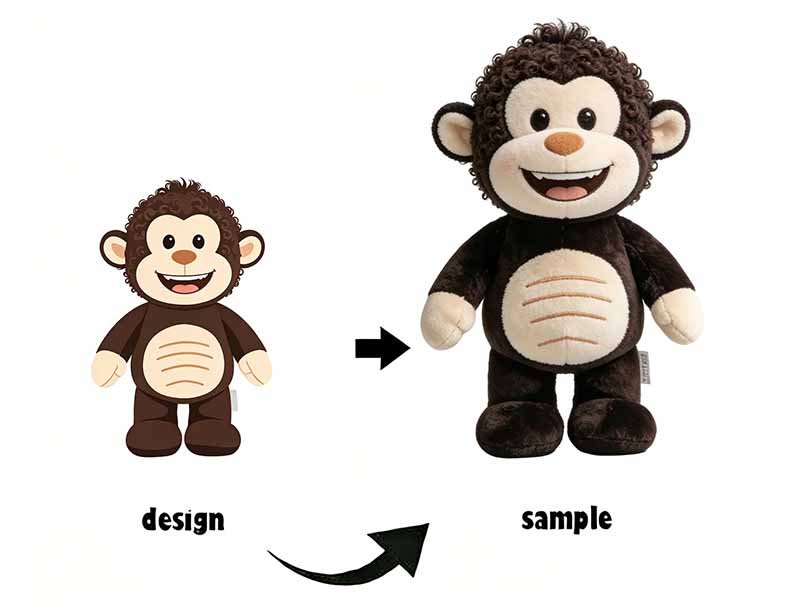
A recognizable face depends on head geometry, eye spacing, mouth position, silhouette, body proportion, fabric pile, filling pressure, and final shaping. Pufumi organizes design and pattern decisions around the character features that cannot be casually changed.
Engineering feasibility
Attractive artwork may contain thin limbs, sharp armor, floating accessories, narrow outlines, complex costumes, or surface effects that cannot be reproduced directly in soft materials. Our development team converts visual references into sewable panels, embroidery, appliqué, printing, supported parts, or simplified forms without losing essential identity.
Production consistency
A strong prototype has limited value when bulk production drifts in color, shape, filling, embroidery position, clothing fit, or packaging. Approved samples, BOM records, released files, first-piece checks, inline inspections, and retained references help control variation.
Commercial readiness
Retail programs need more than a finished plush body. Hangtags, woven labels, copyright lines, barcodes, retail boxes, blind boxes, carton ratios, warehouse labels, shipment documents, and market-specific information must align with the approved product.
Long-term value
Pufumi helps brands develop products capable of replenishment and extension. Material records, sample archives, revision history, packaging files, and repeat-order reviews reduce dependence on personal memory and make future production more controlled.
Production consistency
A strong prototype has limited value when bulk production drifts in color, shape, filling, embroidery position, clothing fit, or packaging. Approved samples, BOM records, released files, first-piece checks, inline inspections, and retained references help control variation.
Our working principles remain clear: legal authorization, honest representation, character fidelity, sound engineering, production stability, confidential project handling, and long-term cooperation.
A Managed Manufacturing Network
Different plush structures require different production resources. Pufumi assigns development, manufacturing, and specialist work according to complexity, confidentiality, volume, schedule, and technical requirements.
Dongguan Core Factory
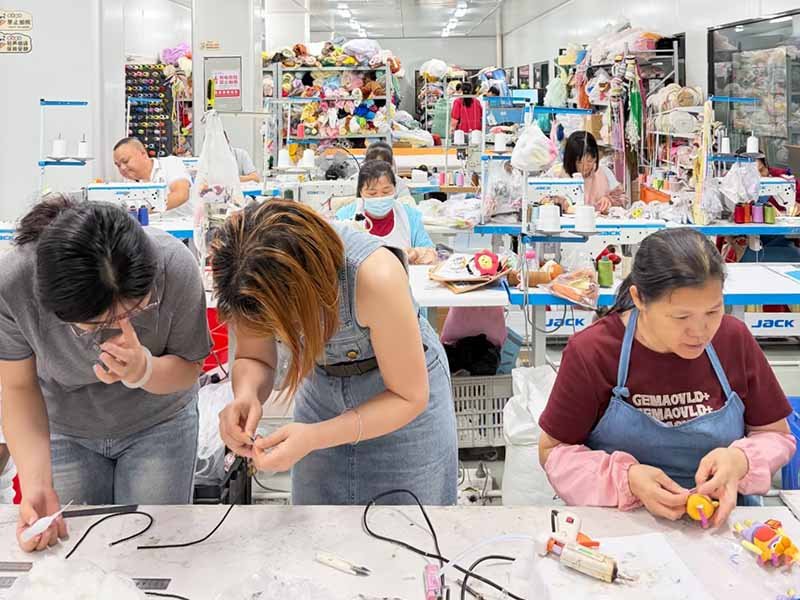
The Dongguan core factory supports complex characters, demanding sample revisions, pattern engineering, sensitive project information, detailed clothing, and long-term repeat programs. Experienced pattern makers and sample technicians work closely with project and quality teams before production release. The factory also provides the physical reference base for Golden Samples, pattern files, sewing instructions, and retained production samples.
Foshan Managed Capacity
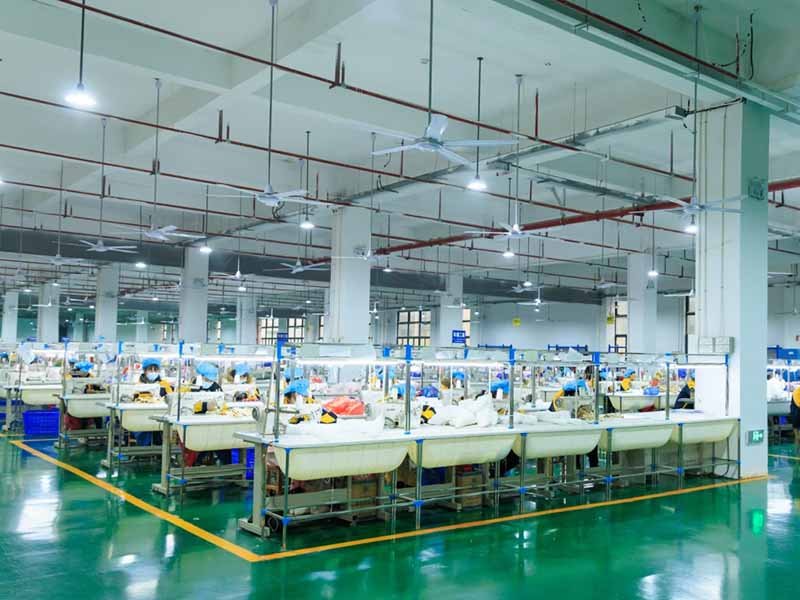
Invested and managed manufacturing resources in Foshan provide additional capacity and product matching for different plush formats, order sizes, schedules, and production requirements. Work is assigned according to confirmed capability rather than moved casually between factories. Project files, approved materials, inspection points, and release instructions remain under coordinated management when production resources are expanded.
Specialist Supply Partners
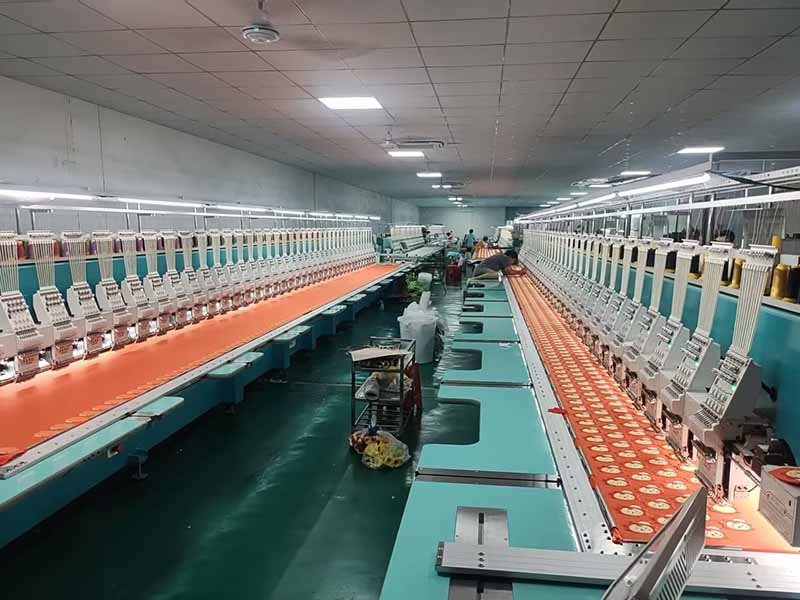
Certain processes are best handled by qualified specialists. Pufumi coordinates fabric suppliers, custom dyeing, embroidery, printing, molded parts, metal fittings, electronic modules, woven labels, retail packaging, independent laboratories, freight partners, and destination delivery providers. Supplier, batch, specification, and applicable SKU information are recorded so material or process changes can be reviewed before use.
The People Behind Every Program
Each plush program is supported by connected commercial, creative, engineering, manufacturing, quality, packaging, and delivery roles rather than a single sales contact working alone.
Project Management
Project managers organize the brief, target dates, approval roles, quotation assumptions, sample versions, production milestones, packaging requirements, and delivery plan. They connect brand teams with design, engineering, sourcing, production, quality, and logistics personnel. Change requests are recorded before implementation so schedule, cost, compliance, and material consequences can be reviewed clearly.
Character Design
Character specialists study front, side, and back views, facial expression, head-to-body proportion, color placement, clothing, accessories, and protected identity features. Their role is not limited to creating attractive drawings. They translate artwork, style guides, 3D references, and brand instructions into directions understood by pattern makers, sample technicians, embroiderers, and production teams.
Pattern Engineering
Pattern engineers determine panel geometry, seam location, seam allowance, fabric direction, internal support, filling access, attachment methods, and production tolerances. They decide whether a proposed shape can be cut, sewn, filled, inspected, packed, and reproduced efficiently. Complex heads, standing poses, narrow limbs, unusual tails, wings, and layered costumes receive additional structural review.
Sample Development
Sample technicians build prototypes, first-round samples, revision samples, engineering samples, pre-production samples, material samples, and Golden Samples. They work with physical fabrics, embroidery trials, filling levels, shaping methods, and accessory positioning. Each version is evaluated for appearance, dimensions, structure, hand feel, manufacturability, and readiness for the next approval stage.
Production Coordination
Production personnel manage material release, cutting, embroidery and printing flow, sewing order, filling, shaping, assembly, labelling, and packaging. Different lines can be selected for standard plush, complex character products, small keychains, clothing-heavy designs, retail box programs, or replenishment orders. Work allocation reflects product requirements instead of forcing every design through one generic line.
Quality and Delivery
Quality personnel inspect incoming materials, first pieces, work in progress, finished products, functions, labels, packaging, and shipment preparation. Packaging and logistics personnel verify barcodes, carton marks, packing ratios, carton measurements, warehouse instructions, and export documents. Problems are recorded with affected SKU, batch, quantity, cause, correction, and release status.
Plush Programs We Develop
Pufumi develops character-led, collection-led, brand-led, and retail-ready plush products for licensed properties, entertainment companies, toy brands, lifestyle labels, destination retailers, and long-term merchandise programs. Each product category is reviewed according to character fidelity, construction feasibility, materials, target size, production quantity, packaging, compliance requirements, and repeat-order potential.
Licensed Character Plush
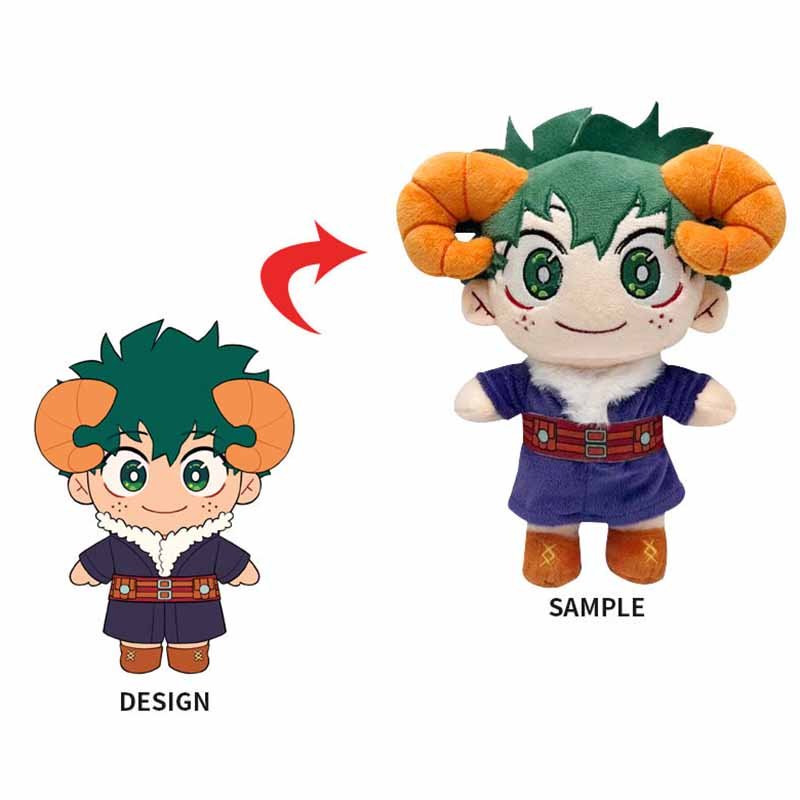
Licensed character plush requires controlled interpretation of approved artwork, style guides, protected colors, copyright information, and non-negotiable character features. Pufumi supports artwork review, pattern development, material matching, sample revisions, approval records, production files, label coordination, and consistent bulk manufacturing for authorized character merchandise programs.
Anime Plush
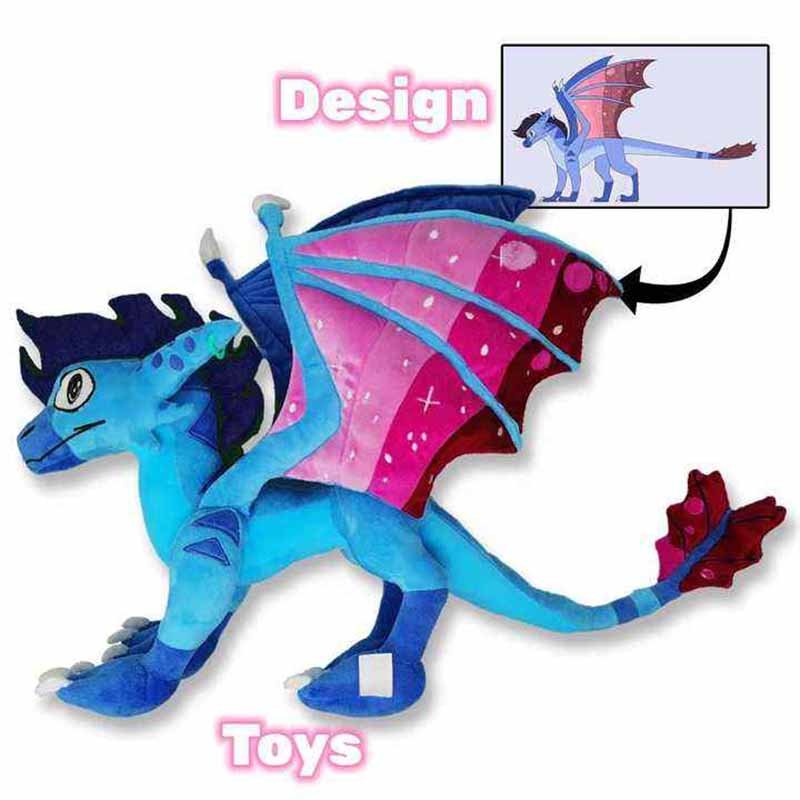
Anime characters often depend on highly recognizable hairstyles, facial expressions, costumes, accessories, and color combinations. Pufumi converts illustrated details into suitable embroidery, appliqué, printed fabrics, shaped panels, layered clothing, and supported components while preserving the visual features most important to fans and licensing teams.
Game Character Plush
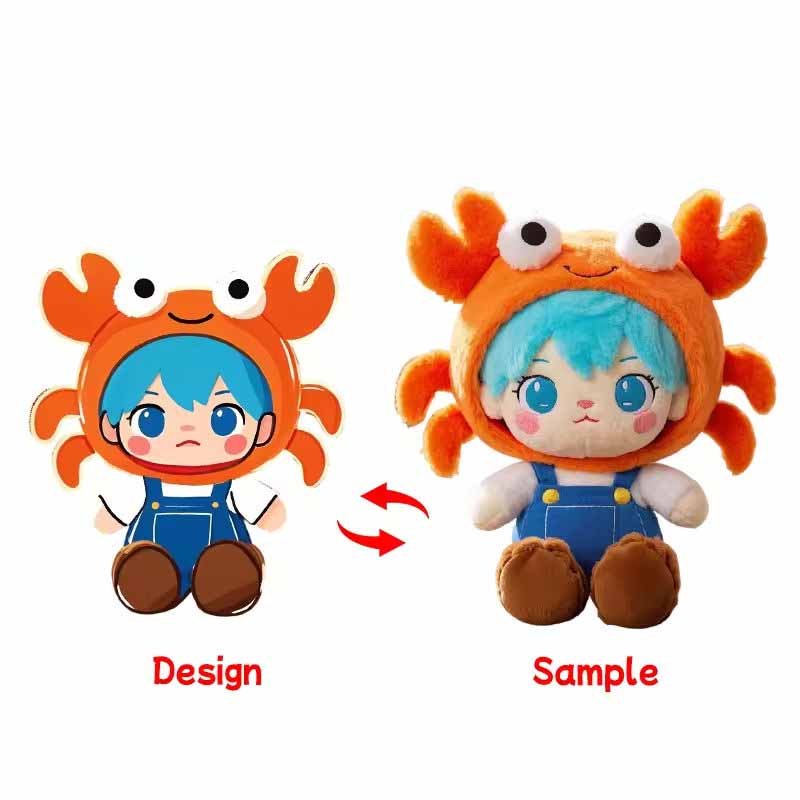
Game character projects can include playable characters, companion creatures, skins, pets, weapons, equipment, and in-game items. Development considers front, side, and back references, costume layers, unusual anatomy, removable accessories, color variants, fan expectations, launch schedules, and the potential to expand one character into a broader merchandise collection.
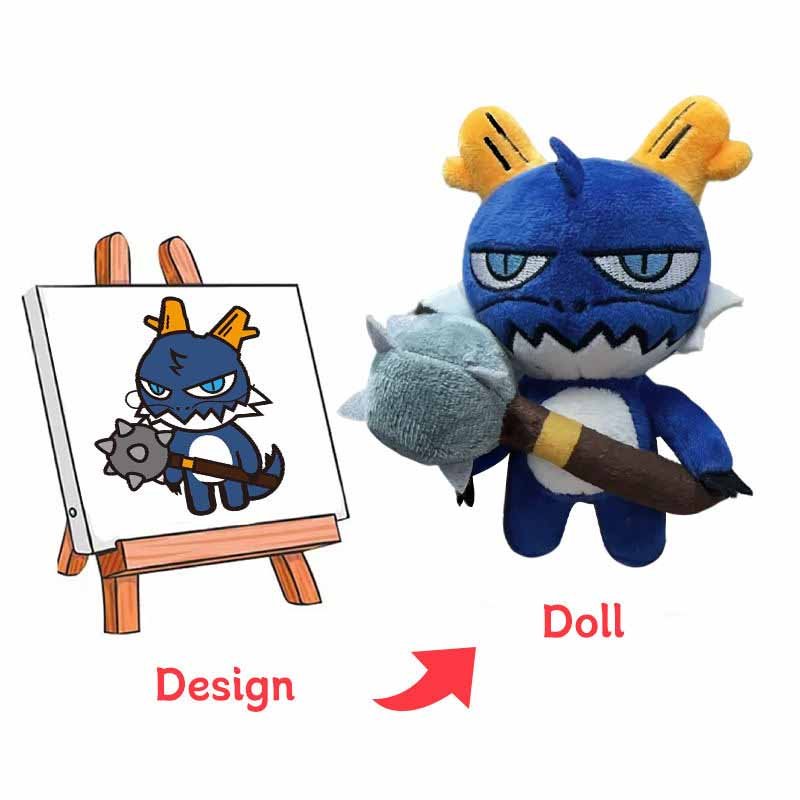
Animation Character Plush
Animation plush development focuses on silhouette, expression, proportions, movement cues, and signature visual details. Flat artwork is translated into three-dimensional fabric structures through proportion mapping, seam planning, embroidery positioning, filling control, and repeated physical review. Series consistency becomes especially important when several characters appear together at retail.
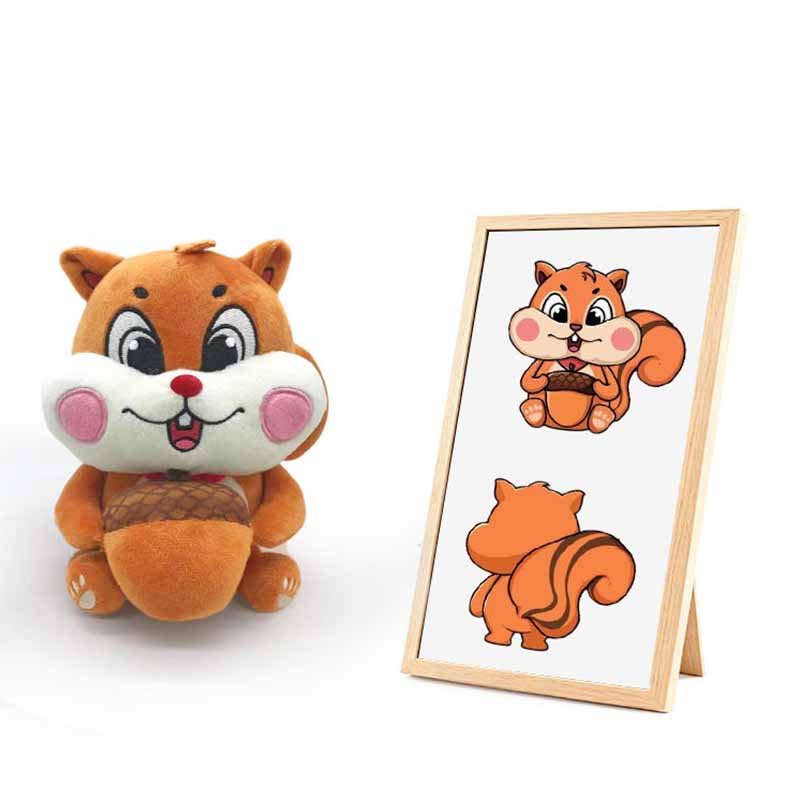
Film and TV Plush
Film and television plush may support theatrical releases, streaming launches, promotional campaigns, premieres, retail programs, or limited fan merchandise. Pufumi coordinates development timing, confidential project handling, character approvals, promotional packaging, production scheduling, and delivery planning around fixed release dates and market-specific launch requirements.
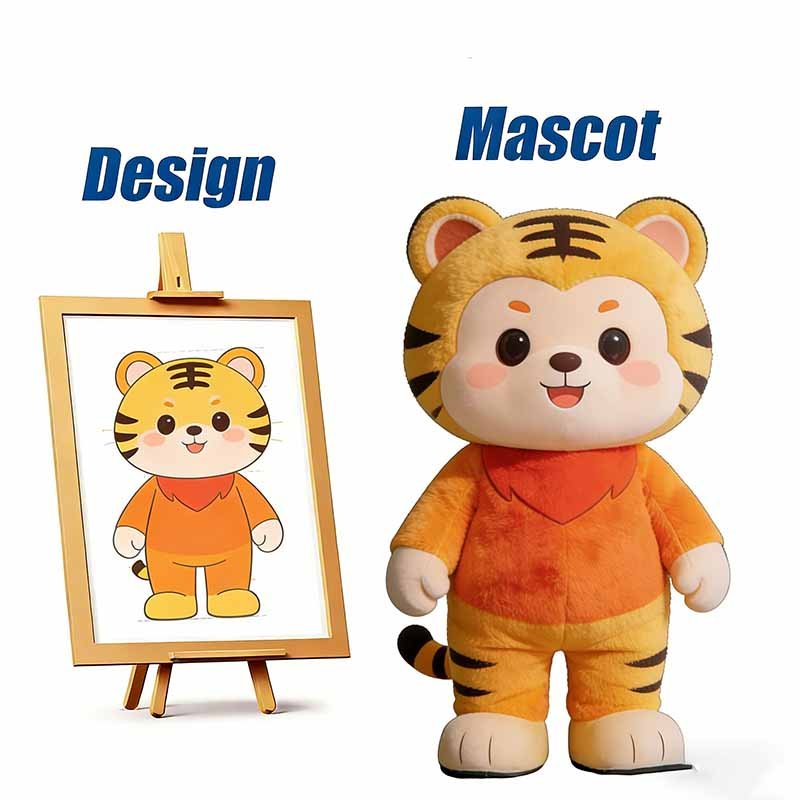
Mascot Plush
Mascot plush transforms a corporate, sports, university, event, technology, food, or community character into a physical branded product. Development emphasizes logo placement, brand colors, recognizable expression, costume details, pose, intended audience, retail or gifting use, and consistency between the original mascot artwork and the finished product.
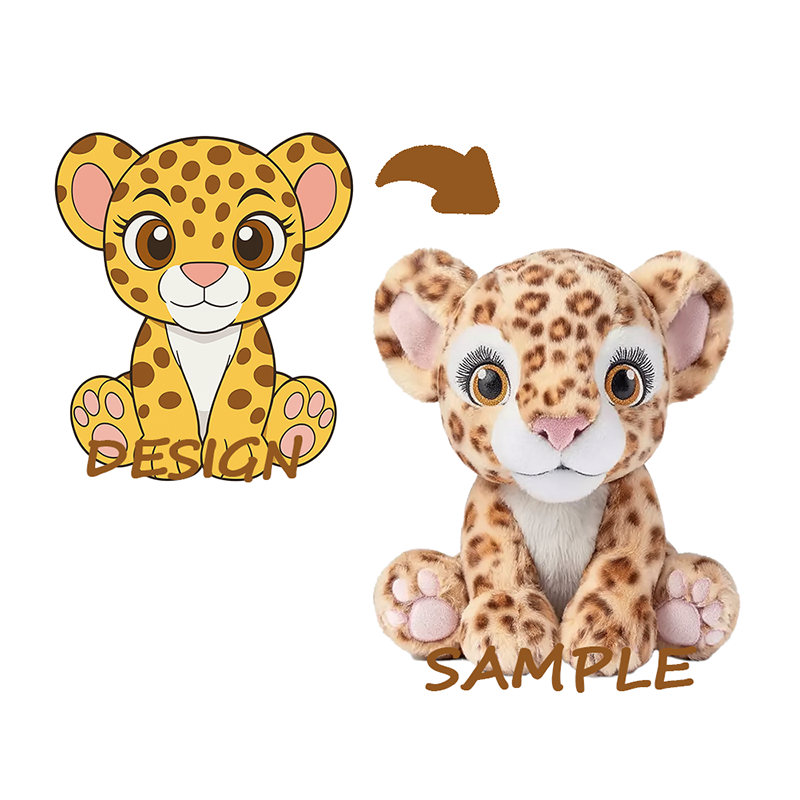
Creator-Owned IP Plush
Independent creators, artists, illustrators, content studios, and character owners often begin with strong visual identities but limited manufacturing documentation. Pufumi helps convert artwork into defined sizes, materials, pattern structures, sample stages, packaging directions, and scalable production files while maintaining controlled use of confidential and unreleased character assets.
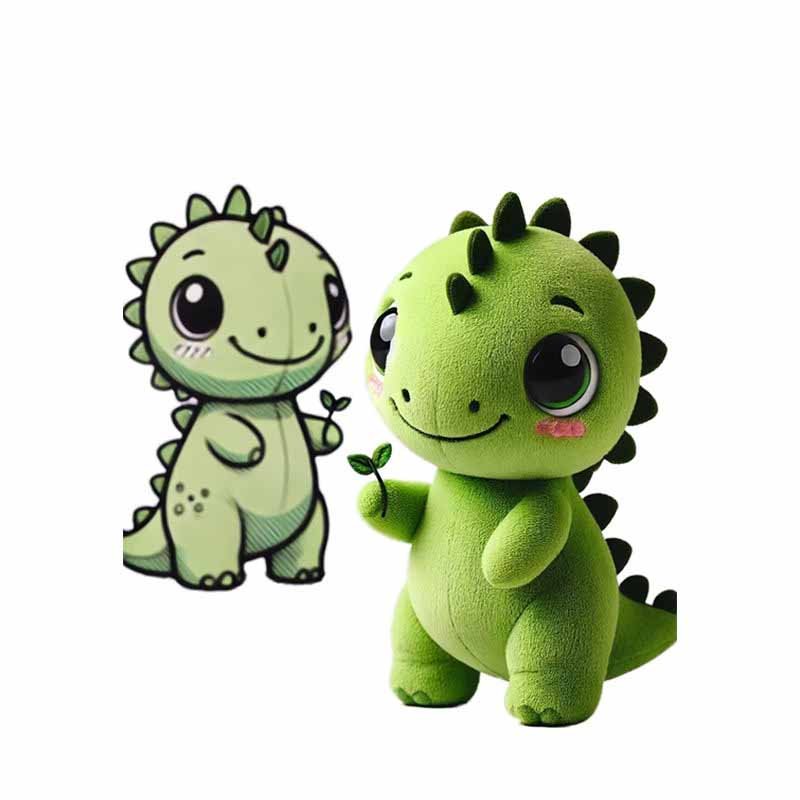
Collectible Plush
Collectible plush is developed around display value, material quality, controlled proportions, distinctive details, packaging experience, and series consistency. Projects may include character collections, designer plush, numbered releases, collector cards, display packaging, premium fabrics, decorative accessories, and long-term programs supported by repeat production and future character expansion.
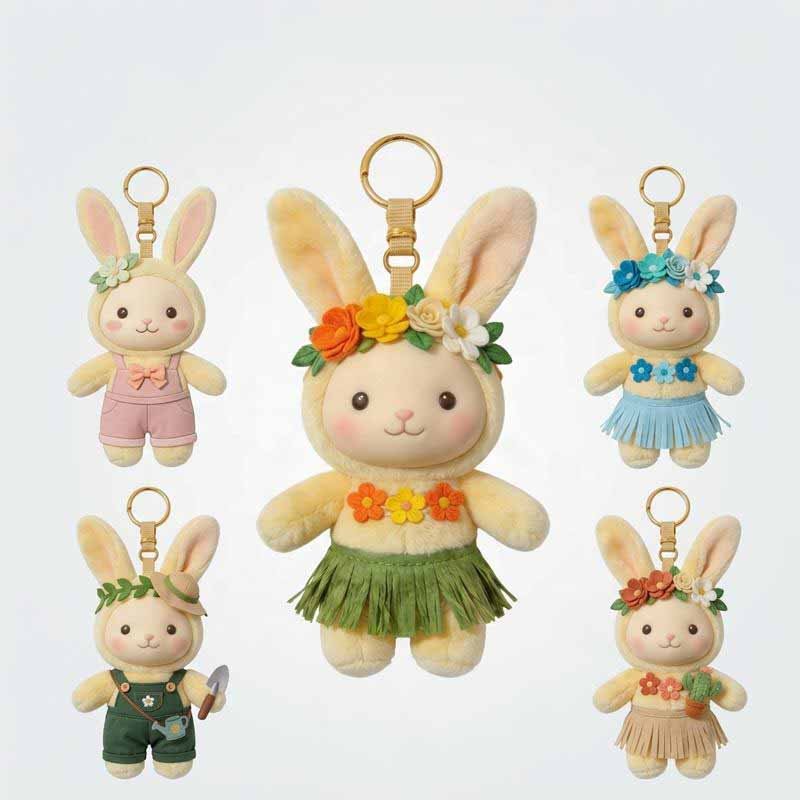
Blind Box Plush
Blind box plush requires coordinated product and packaging development across several characters, variants, or rarity levels. Pufumi supports SKU coding, sample comparison, sealed packaging, character-specific inserts, assortment ratios, hidden-edition handling, carton configuration, barcode control, and anti-mix procedures throughout production, packing, and shipment preparation.
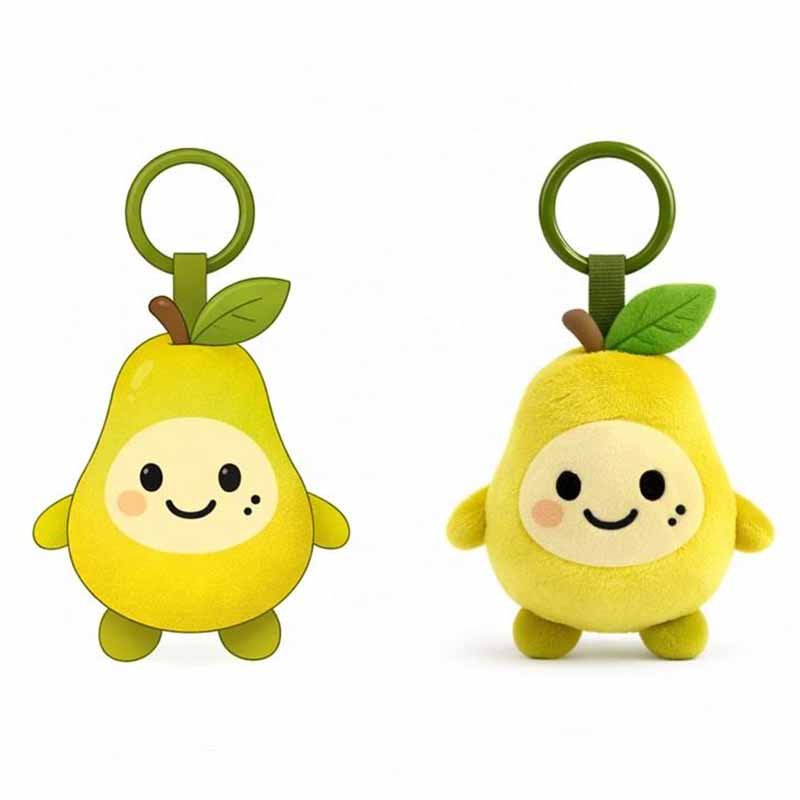
Mini Plush
Mini plush condenses a character into a smaller format without losing its strongest identifying features. Small dimensions create limits for seam curves, embroidery size, narrow limbs, clothing, and accessories. Pufumi evaluates which details should remain structural and which should become embroidery, printing, appliqué, or approved simplification.
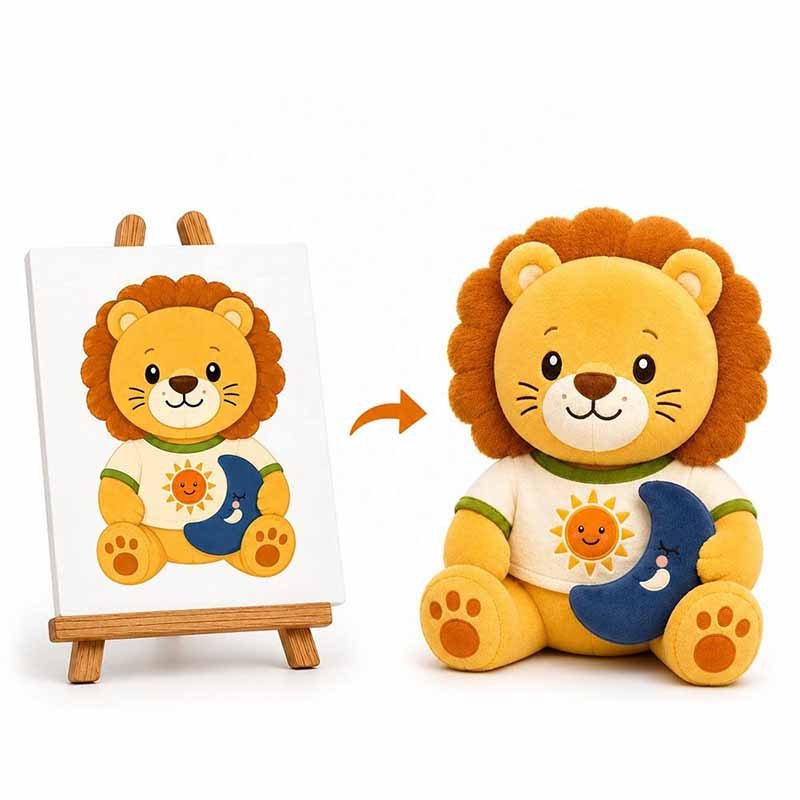
Limited Edition Plush
Limited-edition plush programs may use special colors, exclusive costumes, numbered labels, event packaging, collector cards, premium accessories, or market-specific designs. Production requires controlled quantities, separate SKU records, approved packaging versions, defined release files, and careful handling to prevent limited products from being mixed with standard editions.
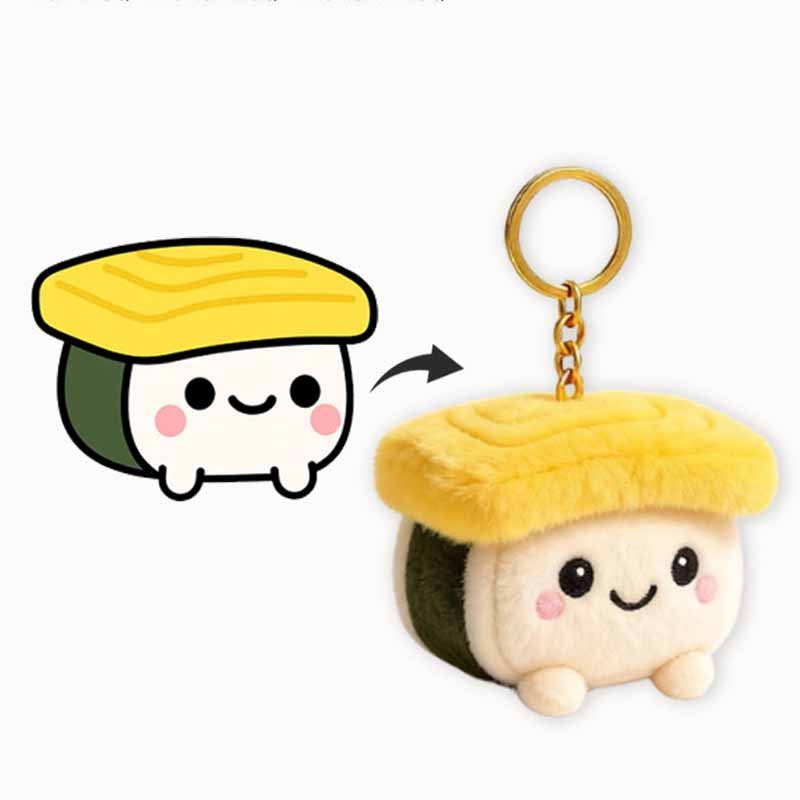
Plush Keychains
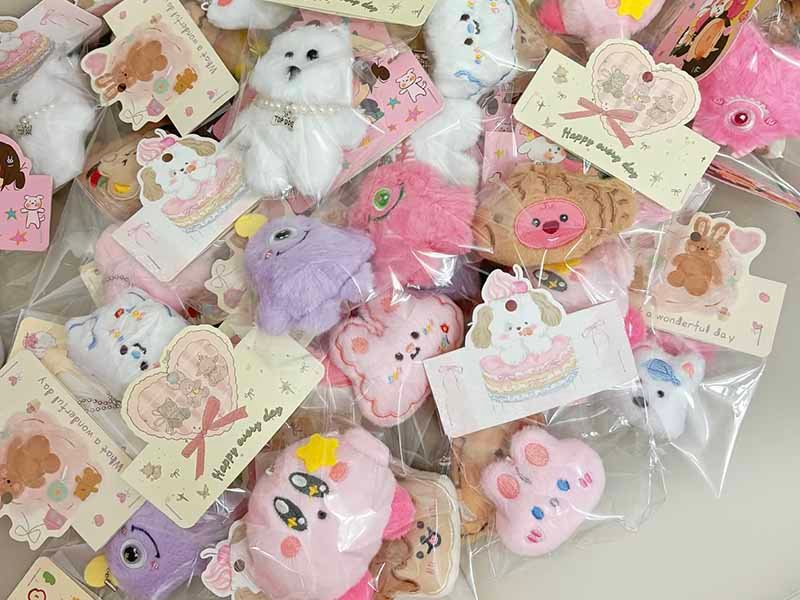
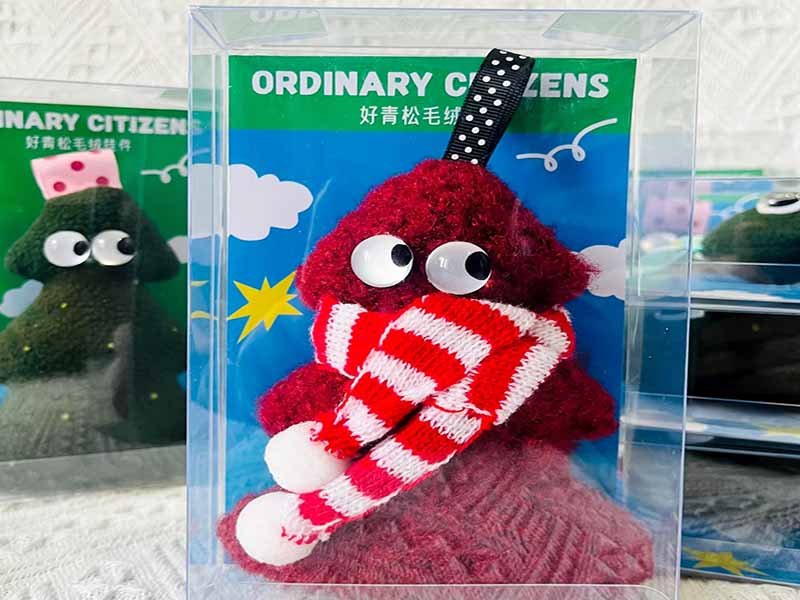
Plush keychains combine compact character development with attachment engineering. Pufumi reviews finished size, character readability, seam construction, hardware type, chain length, loop reinforcement, total weight, packaging, and pull-resistance requirements. Common commercial quantities begin around 1,000 pieces per design, subject to structure, materials, colors, and hardware.
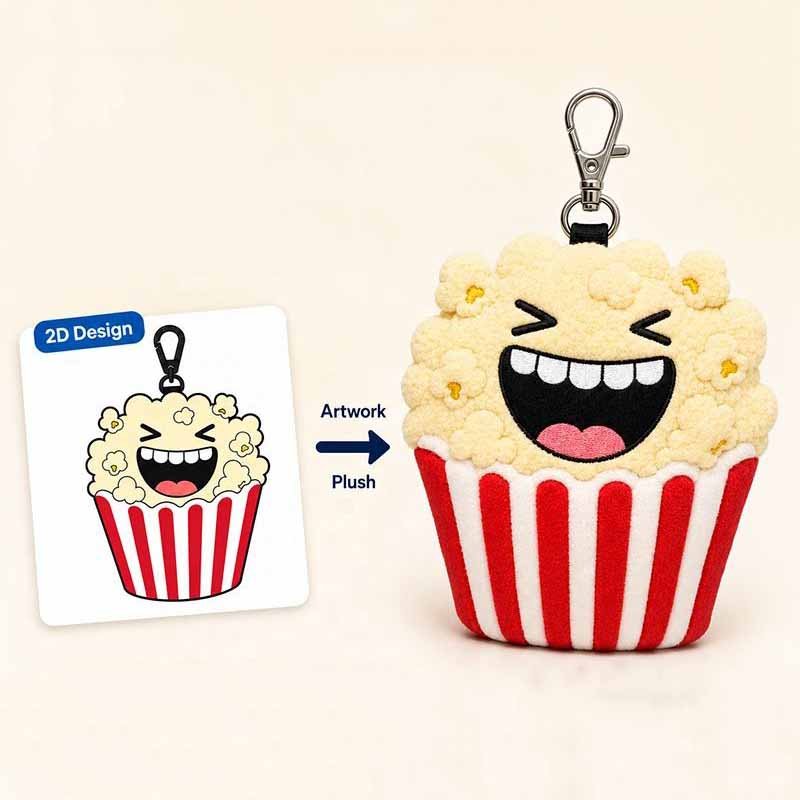
Plush Bag Charms
Plush bag charms connect character merchandise with fashion, accessories, lifestyle retail, and social-media presentation. Development considers visual impact at a small scale, soft sculpture quality, metal finishes, attachment position, balance, clothing or decorative elements, packaging presentation, and compatibility with handbags, backpacks, travel products, or seasonal collections.
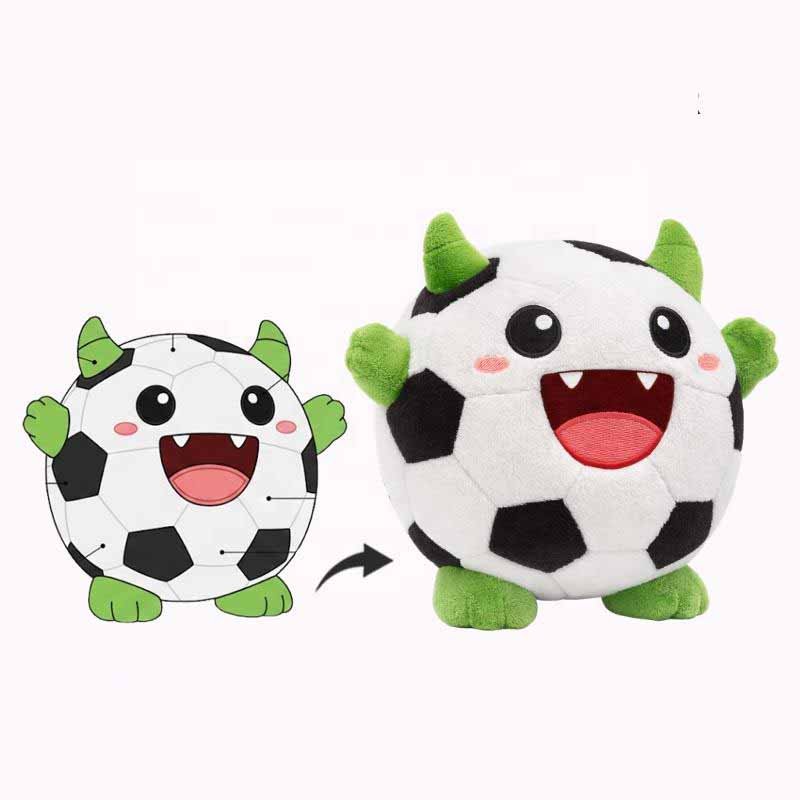
Brand Mascot Plush
Brand mascot plush turns a recognizable commercial identity into a product for retail, gifting, campaigns, memberships, store openings, employee programs, or collaborations. Pufumi aligns character expression, logo treatment, brand colors, materials, size, presentation, packaging, and distribution requirements with the wider brand system rather than treating the mascot as a generic toy.
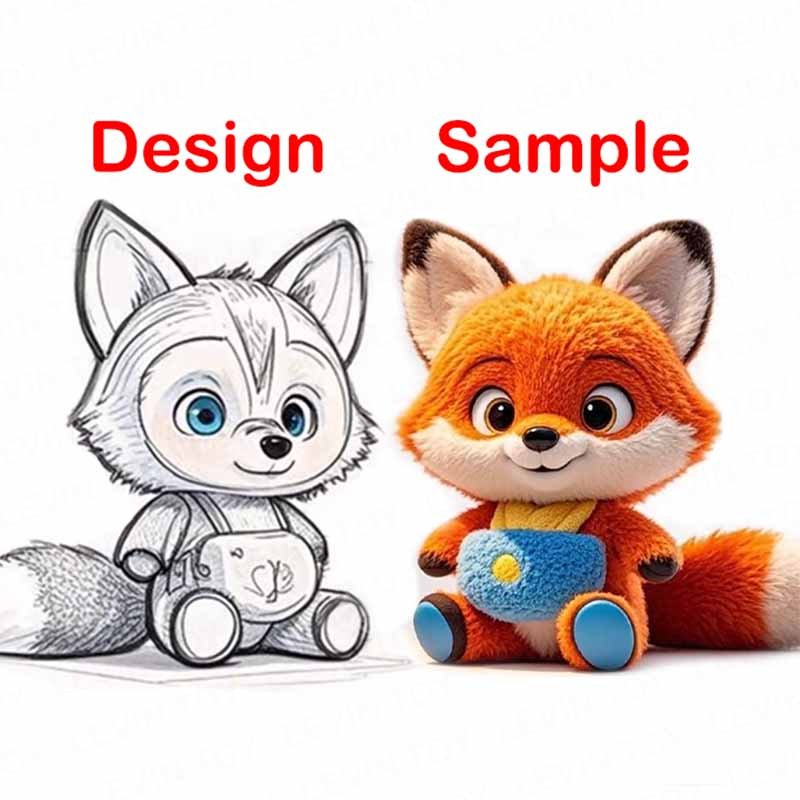
Fashion and Lifestyle Plush
Fashion and lifestyle plush can include character accessories, bag charms, mini plush, decorative figures, seasonal collaborations, gift-with-purchase products, and premium retail merchandise. Material texture, color, silhouette, hardware, stitching finish, presentation, packaging, and collection timing are developed to fit the visual language and price position of the brand.
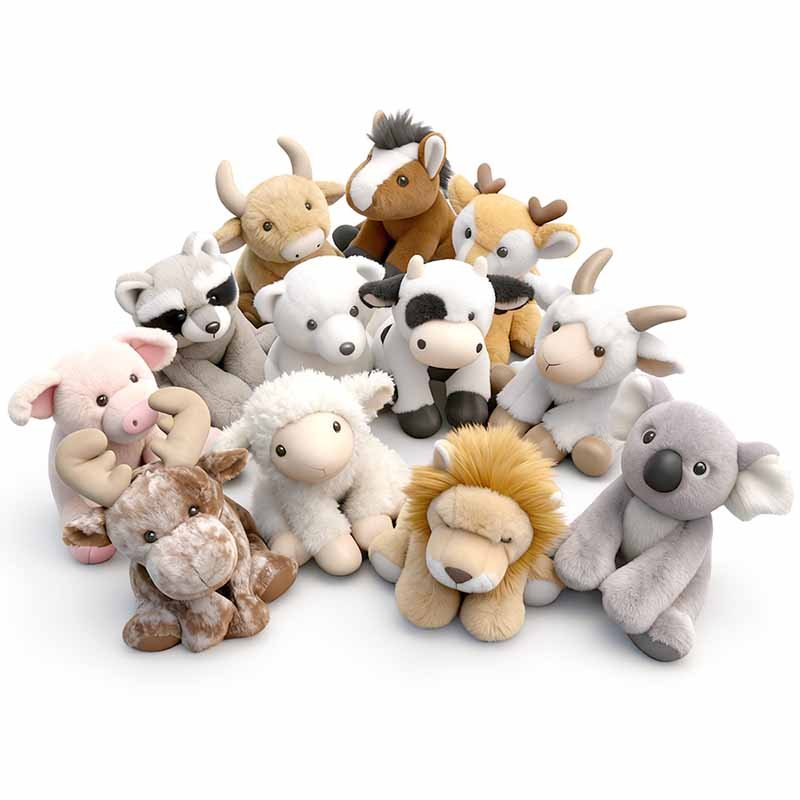
Destination Merchandise Plush
Theme parks, museums, zoos, aquariums, hotels, resorts, universities, and cultural destinations use plush products to extend stories, animals, mascots, landmarks, and local identity into retail merchandise. Pufumi supports exclusive designs, educational cards, destination branding, store-ready packaging, replenishment records, and multi-season product planning.
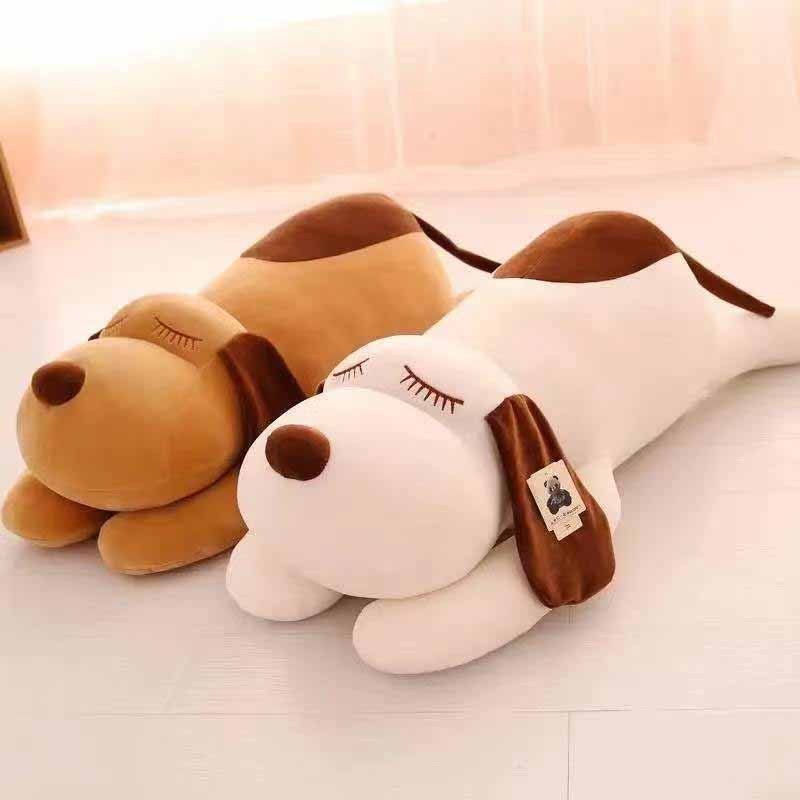
Retail-Ready Plush Products
Retail-ready plush combines the finished product with woven labels, care labels, hangtags, copyright lines, barcodes, polybags, paper sleeves, boxes, carton marks, warehouse labels, and packing instructions. Product development is coordinated with the intended retail channel so packaging, scanning, display, storage, shipment, and replenishment requirements are considered before production release.
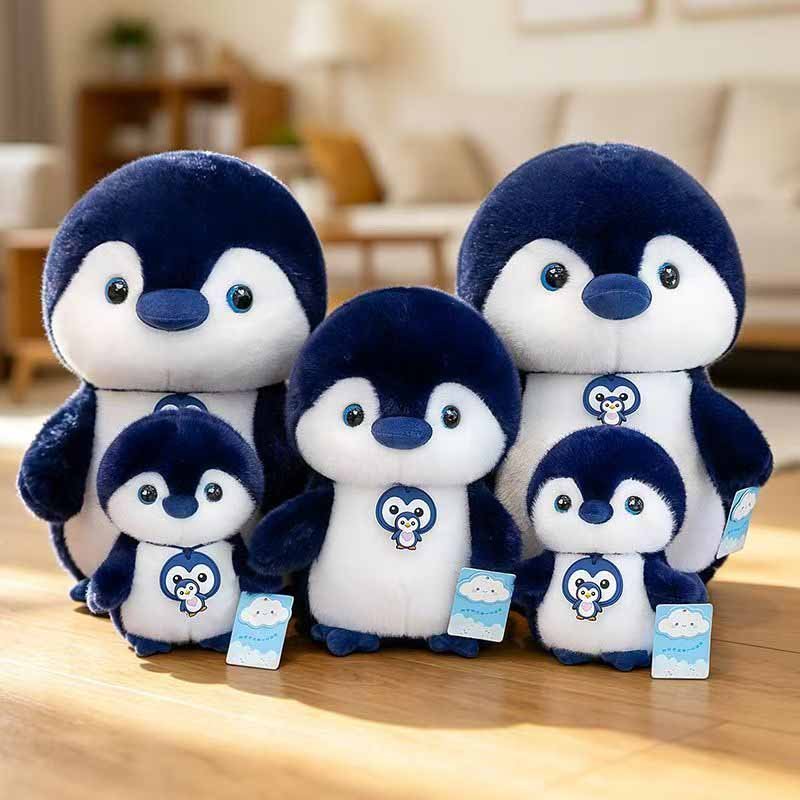
Multi-SKU Plush Programs
Multi-SKU programs can include several characters, sizes, colors, costumes, expressions, packaging versions, markets, or release waves. Pufumi manages separate artwork, patterns, embroidery files, BOM records, samples, packaging codes, barcodes, carton ratios, and approval status for each SKU while maintaining consistent scale, materials, quality, and collection presentation.
Materials and Craftsmanship
Materials Are Chosen for Appearance, Structure, and Repeatability
Fabric, filling, embroidery, printing, clothing, and accessories must match the character, intended use, target market, production scale, and approved commercial position.
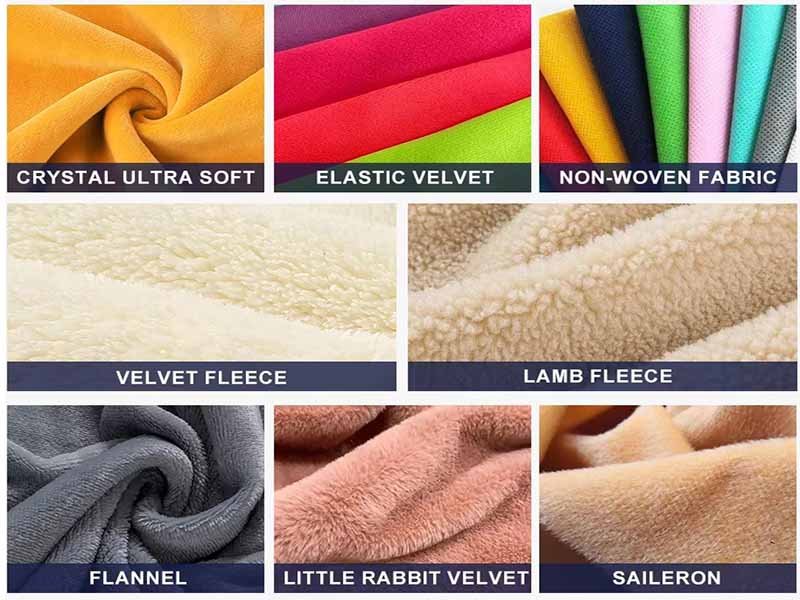
Plush Fabrics
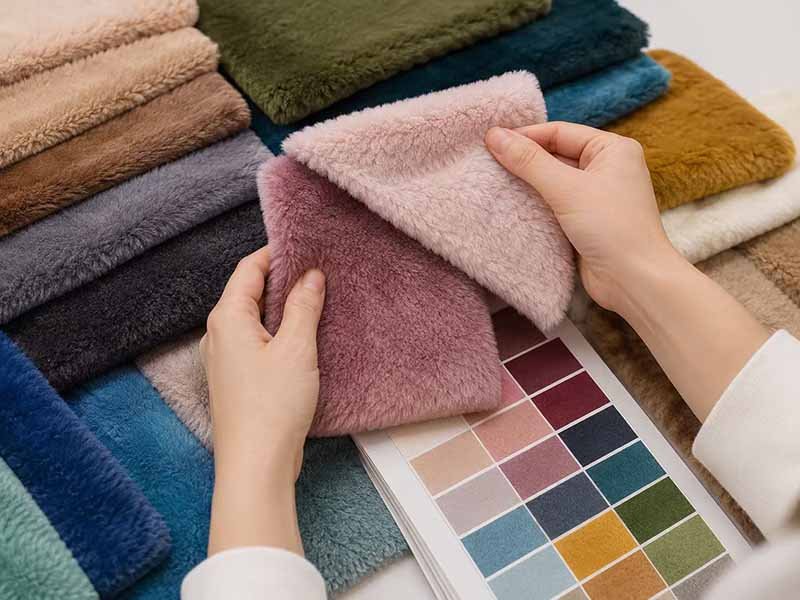
Available directions may include minky, short plush, longer-pile plush, fleece, sherpa, faux-fur effects, garment fabrics, and project-specific textiles. Pile height, density, stretch, direction, backing, color, and surface feel influence facial clarity, silhouette, sewing performance, handfeel, and cost.
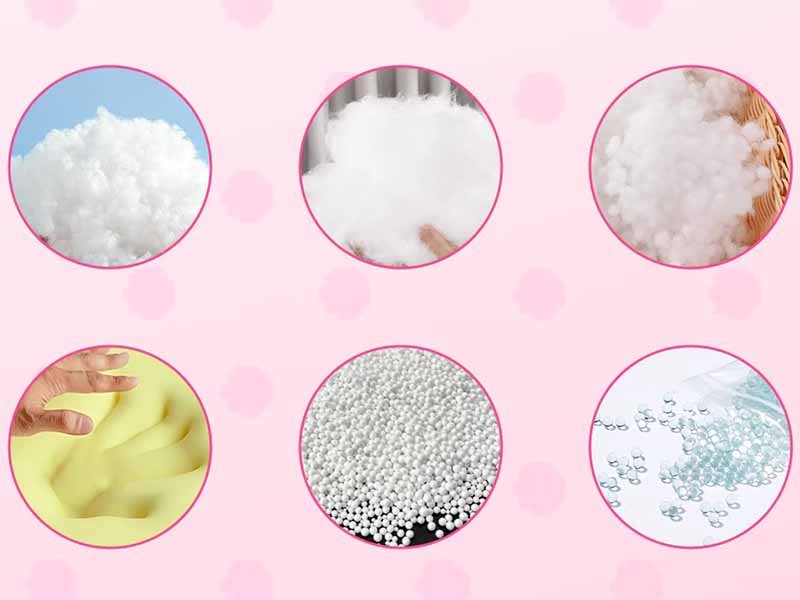
Filling Systems
Filling density affects softness, shape, sitting stability, facial volume, compression recovery, carton size, and product weight. Different body areas may require different filling control. Overfilling can distort patterns and seams, while underfilling can cause collapsed faces, weak posture, or inconsistent appearance.
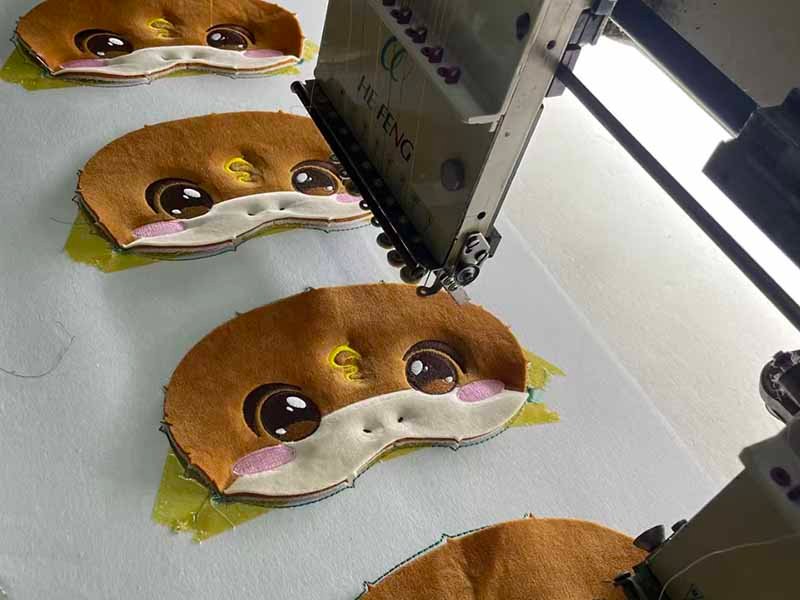
Embroidery Details
Facial embroidery, logos, symbols, and decorative details require approved thread colors, dimensions, stitch direction, density, placement, and first-piece confirmation. Small position changes can alter expression. Embroidery performance also depends on fabric stretch, pile length, backing, pattern shape, and production handling.
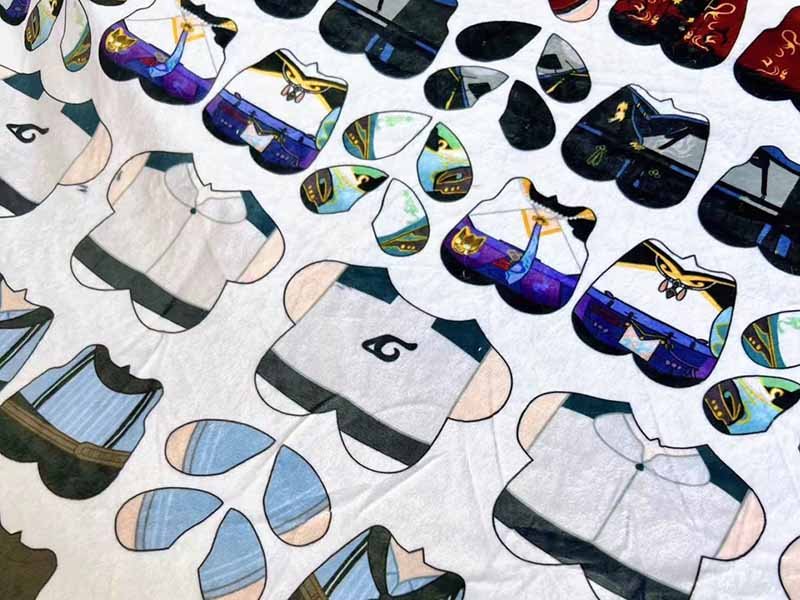
Printing Methods
Printed facial details, garments, textures, or decorative panels may use different methods according to fabric composition, color coverage, size, durability, handfeel, and order requirements. Trial printing and approved color references help reduce unexpected differences between screen display, sample output, and production batches.
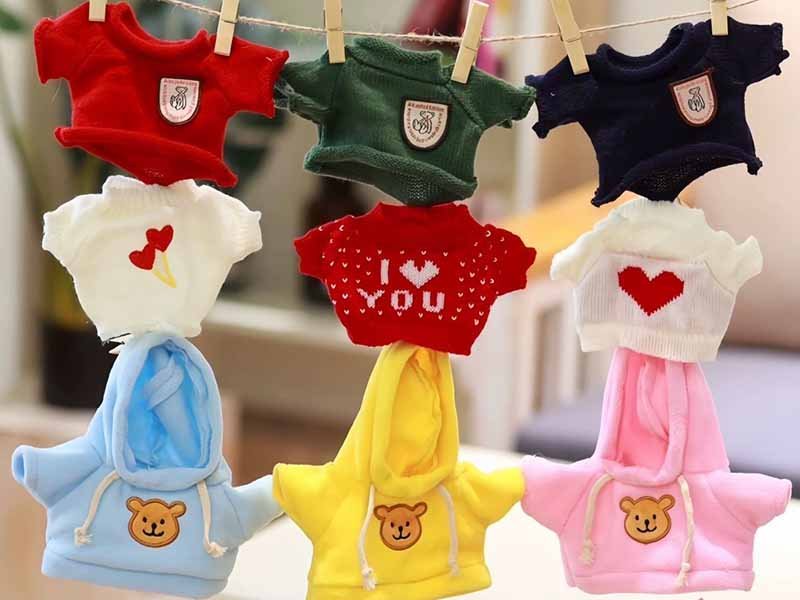
Character Clothing
Plush clothing is developed around the filled body rather than copied directly from human garment patterns. Fabric thickness, fit, fastening, sewing order, edge treatment, logo placement, removability, safety, and repeatability must be considered. Clothing components also belong in the BOM and quality requirements.
Added Functions
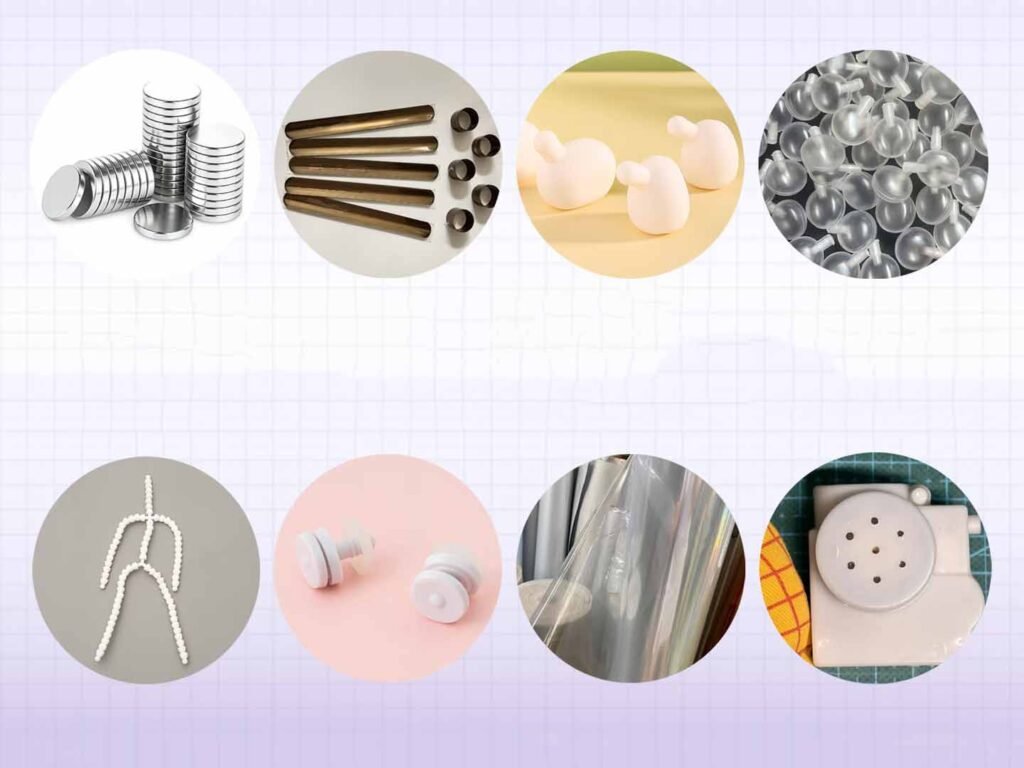
Key rings, chains, plastic accessories, metal parts, sound modules, recording devices, LEDs, sensors, and weighted components require defined installation, attachment, access, function checks, and packaging protection. Functional components are evaluated in relation to intended use, target age, construction, and testing scope.
Engineering the Character Before Cutting
Strong character fidelity begins before fabric reaches the cutting table. Visual decisions must be converted into measurable construction and controlled production instructions.
Turning Character Art Into Sewable Geometry
A digital character does not automatically become a workable plush pattern. Fabric thickness, seam curvature, stretch, pile direction, filling pressure, gravity, and soft deformation change the final shape. Pufumi evaluates the design as a three-dimensional sewn structure rather than tracing visible outlines.
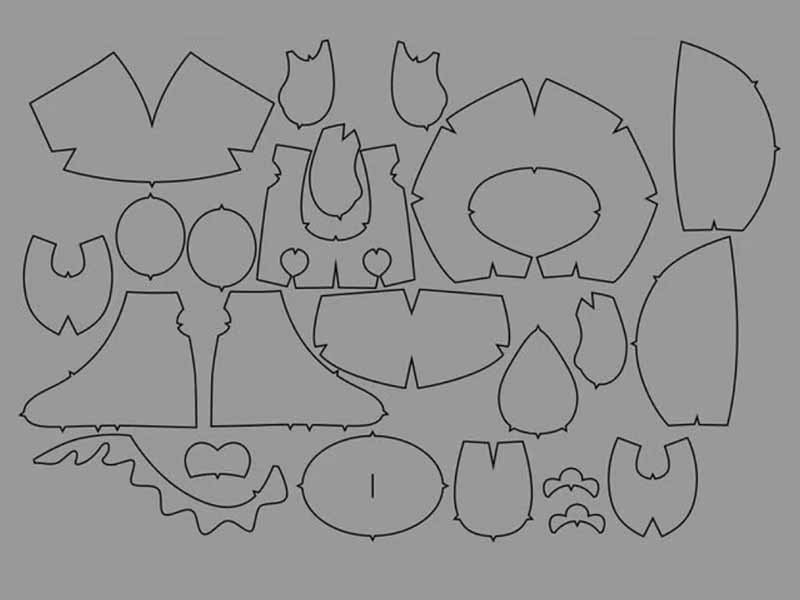
Proportion mapping
Head width, facial area, body length, limb length, ear height, tail position, and accessory scale are compared against the target overall size. Important ratios are recorded instead of relying only on total height.
Seam planning
Seam positions influence contour, symmetry, visual cleanliness, sewing access, and filling behavior. A seam map helps define where curved volume should form and where visible lines must be avoided.
Pattern piece control
Additional panels can improve volume, but unnecessary pieces increase sewing variation and cost. Pattern engineers balance shape accuracy with stable production and inspection.
Facial construction
Eye spacing, eyebrow angle, mouth curve, nose position, embroidery size, appliqué borders, and pile clearance are reviewed together. Small shifts can alter expression even when every individual component appears acceptable.
Filling distribution
Heads, cheeks, muzzles, bodies, limbs, and tails may require different filling densities. Distribution affects silhouette, balance, softness, standing or sitting stability, and packaging recovery.
Attachment engineering
Ears, wings, tails, clothing, metal fittings, plastic parts, and removable accessories need appropriate seam capture, internal reinforcement, or pull-resistance review.
Small-size simplification
Keychains, mini plush, and blind box products cannot retain every full-scale detail. The team identifies essential recognition features and converts secondary details into embroidery, printing, simplified panels, or approved omissions.
The engineering result becomes a connected set of pattern files, material specifications, construction notes, embroidery or printing files, dimensions, tolerances, and inspection points.
Sample Development With Defined Approval Gates
Sample timing depends on design readiness, material availability, structural complexity, revision scope, packaging, electronics, and the number of SKUs developed together.
| Sample Stage | Main Purpose | Typical Working Time | Approval Focus |
|---|---|---|---|
| Prototype | Validate volume, proportion, pose, and structural direction | Project-based | Overall concept, silhouette, size, and feasibility |
| Standard First Sample | Build the first complete sample using confirmed development direction | 7–12 working days | Face, proportion, materials, construction, and hand feel |
| Complex Character Sample | Develop intricate anatomy, costumes, accessories, or high-fidelity details | 12–20 working days | Character identity, engineering solutions, and critical details |
| Revision Sample | Apply consolidated comments from an approved feedback round | Commonly 5–10 working days per round | Recorded changes, remaining differences, and production feasibility |
| Multi-SKU Sample Set | Develop several connected characters, sizes, colors, or packaging versions | Project-based, commonly 15–30 working days | Series consistency, SKU differences, color, scale, and packaging |
| Pre-Production Sample | Confirm released materials, construction, labels, and packaging before bulk work | Based on final materials | Production readiness and file alignment |
| Golden Sample | Establish the physical reference for production, inspection, and repeat orders | After final approval | Complete approved appearance, construction, and packaging |
Timing begins after the project brief, sample fee, reference files, target dimensions, and critical material direction have been confirmed. Additional approval rounds, custom-dyed fabrics, molded parts, electronics, or incomplete artwork can extend the schedule.
Craftsmanship You Can Inspect
Reliable craftsmanship is visible in panel preparation, embroidery placement, seam construction, sewing order, filling control, attachment security, final shaping, and finishing consistency.
Controlled Material Cutting
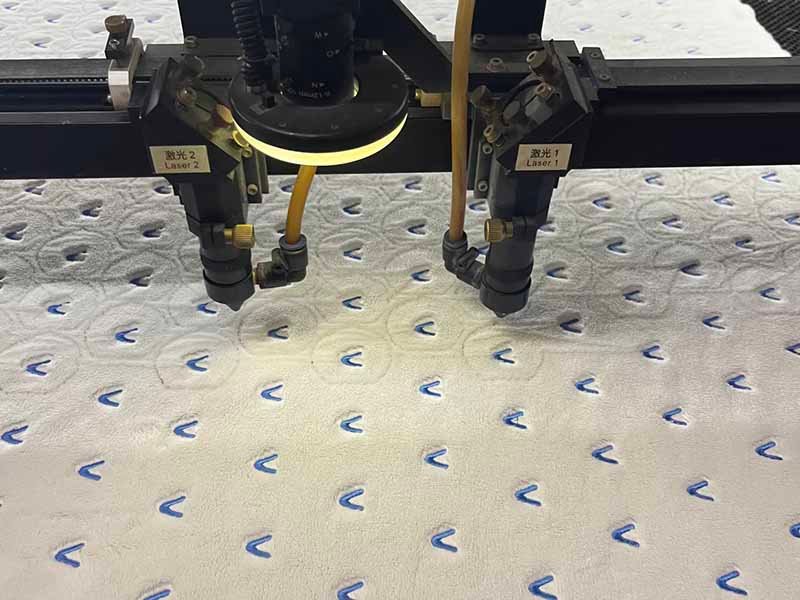
Cutting plans account for fabric direction, pile orientation, stretch, printed pattern placement, mirrored parts, seam allowance, and batch identity. Long-pile fabrics require careful marking because reversing a single panel can change shine and texture. Multi-SKU programs use separated cutting bundles and identification controls to reduce mixed characters, colors, sizes, or versions during later sewing operations.
Embroidery Positioning
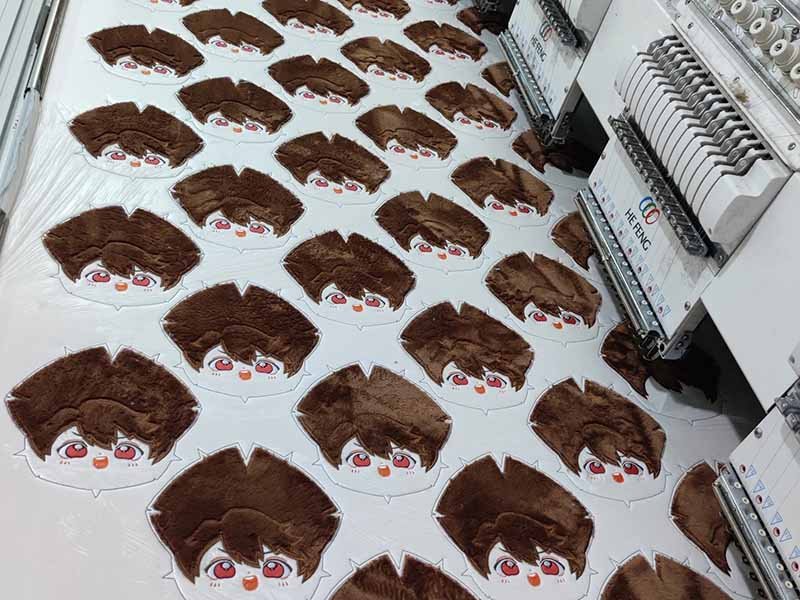
Facial embroidery is reviewed for thread color, stitch density, underlay, outline clarity, size, symmetry, fabric distortion, and placement against the approved face geometry. Embroidery trials may be needed before a full sample is assembled. A small vertical or horizontal shift in the eyes, brows, or mouth can change expression, making first-piece positioning checks especially important.
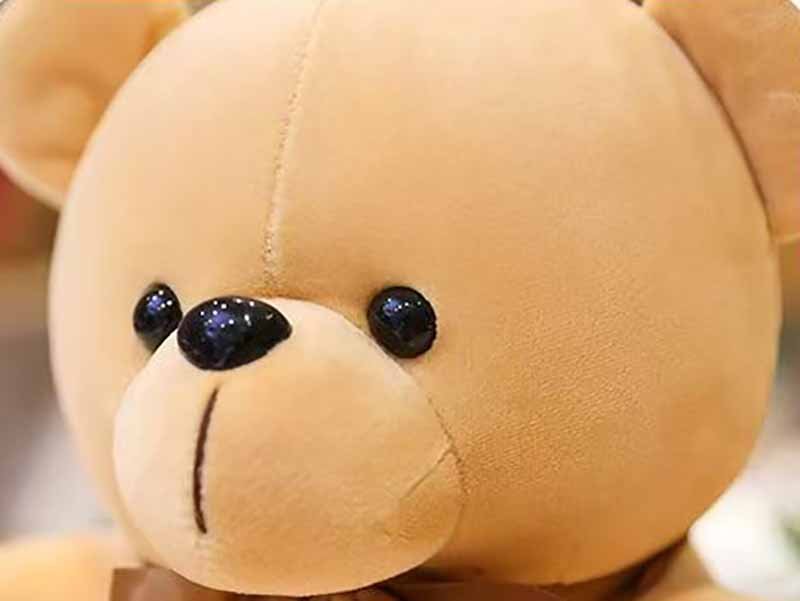
Seam Construction
Seam allowance, stitch density, thread selection, curved sewing control, backstitching, clipping, and reinforcement influence strength and final shape. Tight curves around muzzles, cheeks, fingers, feet, horns, and narrow limbs need controlled handling. High-stress points such as hanging loops, key rings, tails, wings, and removable clothing attachments may require additional seam capture or reinforcement.
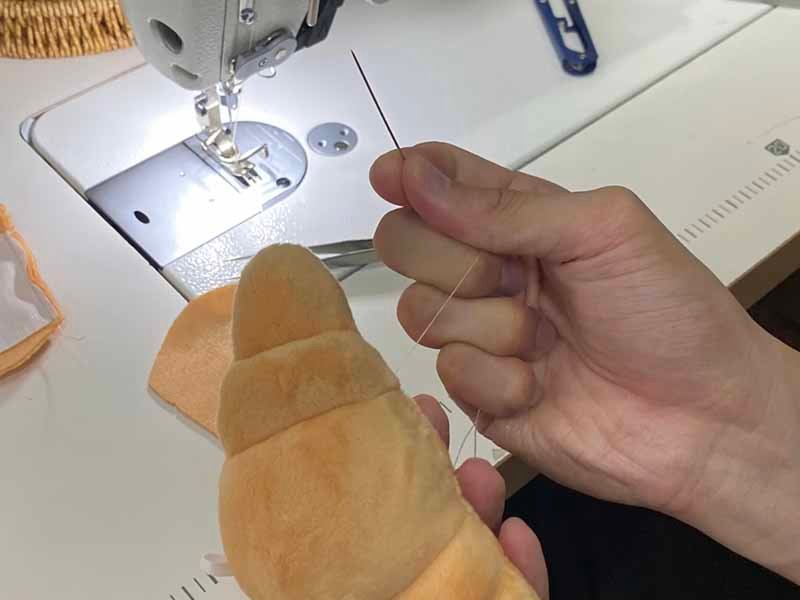
Sewing Sequence
Assembly order affects access, symmetry, contour, embroidery alignment, and the ability to turn and fill the product cleanly. Complex characters are not sewn as a random collection of panels. Teams follow an approved construction sequence connecting facial sections, head volume, body panels, limbs, clothing, accessories, filling openings, and final closure points.
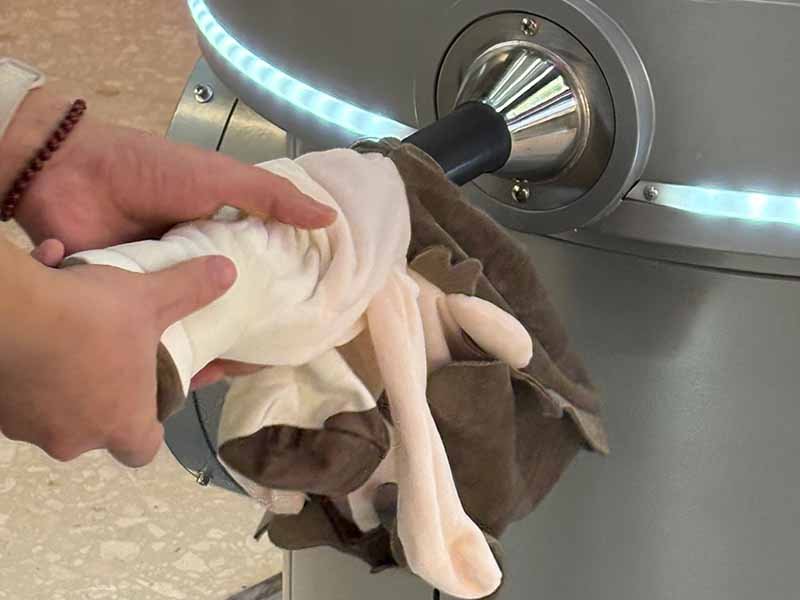
Filling and Shaping
Filling is controlled by product area rather than treating the entire plush as one cavity. Cheeks may need firmer support, while bodies may require a softer hand. Limb stiffness, head stability, seated balance, standing support, total weight, and compression recovery are checked. Final shaping includes massage, brushing, trimming, symmetry adjustment, and surface cleaning.
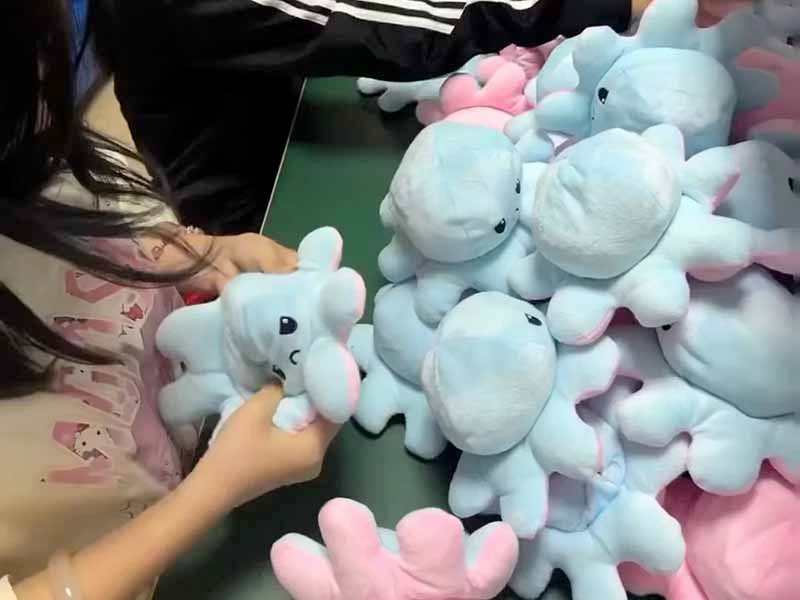
Components and Finishing
Plastic parts, metal hardware, key rings, chains, magnets, sound modules, labels, garments, and decorative accessories must match the approved specification and fixing method. Final finishing includes thread trimming, seam inspection, pile release, clothing alignment, label positioning, accessory checks, surface cleaning, and preparation for packaging. Critical components are verified before products enter sealed retail packs.
Production Control From Release to Packing
Bulk work begins only after product, materials, packaging, and quality references have reached an approved release status for the required SKU and market version.
File Release
Only released drawings, patterns, embroidery files, BOM records, packaging files, dimensions, and approved samples are used for formal production. Draft, superseded, and obsolete documents remain separated to reduce accidental use. Any later change enters a controlled review covering cost, schedule, materials, testing, packaging, and affected production quantities.
Material Booking
Fabric, filling, thread, hardware, labels, electronics, and packaging are booked against confirmed order quantities and supplier lead times. Standard materials may require several days, while custom-dyed fabrics can require approximately 20–35 days. Material MOQ, expected waste, backup quantities, batch consistency, and repeat-order availability are considered before production scheduling.
Incoming Inspection
Incoming checks review color, pile, GSM, width, hand feel, stretch, backing, filling condition, thread, hardware, labels, printed materials, and packaging. Results are connected with supplier and lot information. Materials outside agreed specifications are isolated for review rather than entering cutting, embroidery, sewing, or packing without a documented decision.
Cutting Control
Cutting bundles are organized by SKU, size, color, version, material lot, and production batch. Directional fabrics and printed panels receive additional orientation controls. First cut pieces can be checked against pattern dimensions before full cutting proceeds. Clear bundle identification helps prevent mixed pieces when several characters or packaging versions run in parallel.
Embroidery and Printing
Embroidery and printing begin from approved files and color references. Position, size, color, density, distortion, edge quality, and orientation are checked on first pieces. Printing also requires attention to absorption, pattern direction, registration, and hand-feel change. Approved first pieces become references for continued process inspection.
Sewing Assembly
Sewing lines follow approved construction order, seam instructions, reinforcement points, component positioning, and visual references. Line supervisors and quality personnel review early output before volume increases. Complex faces, narrow limbs, layered clothing, small accessories, and high-pile materials may be assigned to more experienced operators or specialized production lines.
Filling and Finishing
Filling weight, distribution, firmness, balance, shape, closure, brushing, trimming, and garment alignment are controlled against approved references. Products are checked after recovery because compressed fabric and filling can temporarily change appearance. Electronic or functional items receive relevant assembly and function checks before final packaging.
Packing and Shipment
Woven labels, care labels, hangtags, copyright lines, barcodes, FNSKU labels, polybags, boxes, assortment ratios, carton quantities, carton marks, and warehouse requirements are verified before sealing. Shipment files include commercial documents, packing information, carton data, and agreed inspection records. Factory completion dates remain separate from final warehouse arrival dates.
Safety and Compliance Support Matched to Market and Product
Plush product requirements vary according to the destination market, target age, product structure, materials, accessories, electronics, packaging, and sales channel.
Pufumi can support customers with bill-of-material preparation, sample coordination, material information, label details, packaging information, technical documentation, and communication with qualified third-party laboratories.
Relevant projects may require evaluation against standards or regulations associated with ASTM F963, CPSIA, EN 71, CE documentation, UK requirements, or other destination-market rules.
Testing scope should be confirmed for each project. Pufumi does not replace the legal responsibilities of the brand owner, importer, authorized representative, retailer, or laboratory. Clear responsibility boundaries help prevent unsupported compliance claims and allow test preparation to begin before production is completed.

















Retail-Ready Packaging Solutions
Labels, barcodes, packaging, cartons, and warehouse requirements are part of the product
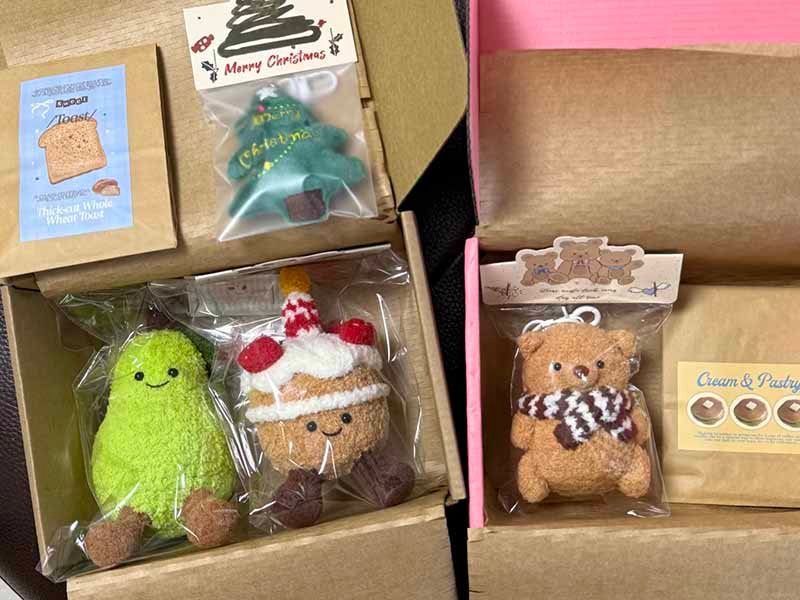
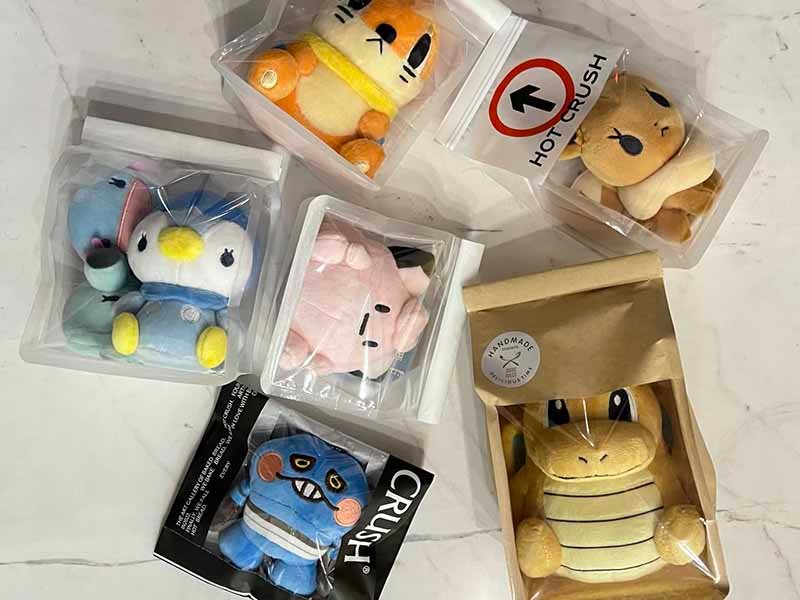
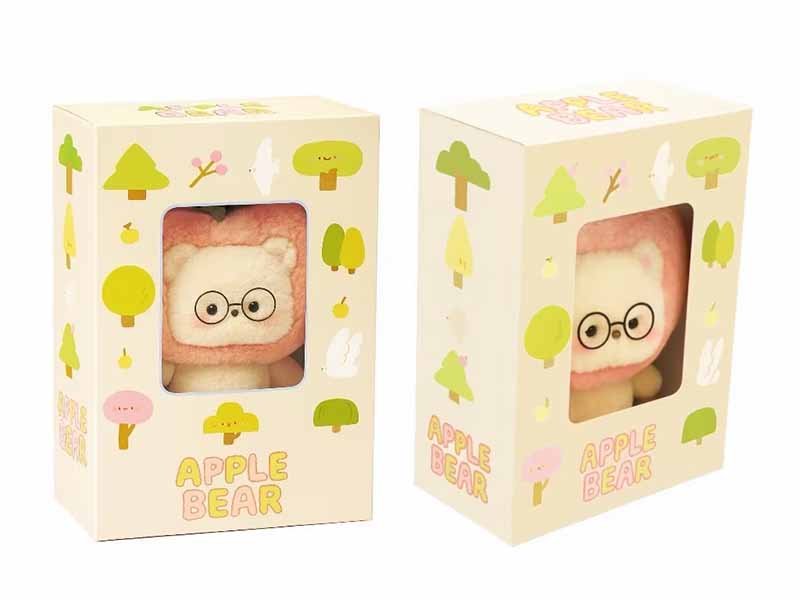
Pufumi supports individual polybags, paper sleeves, hangtags, woven labels, care labels, copyright information, retail boxes, blind boxes, window boxes, gift boxes, display packaging, master cartons, carton labels, and pallet requirements.
Retail projects may also require UPC, EAN, FNSKU, internal SKU labels, warning information, assortment ratios, country-specific packaging versions, or warehouse routing details.
Packaging is reviewed for product protection, visual presentation, barcode readability, packing efficiency, carton dimensions, and destination handling.
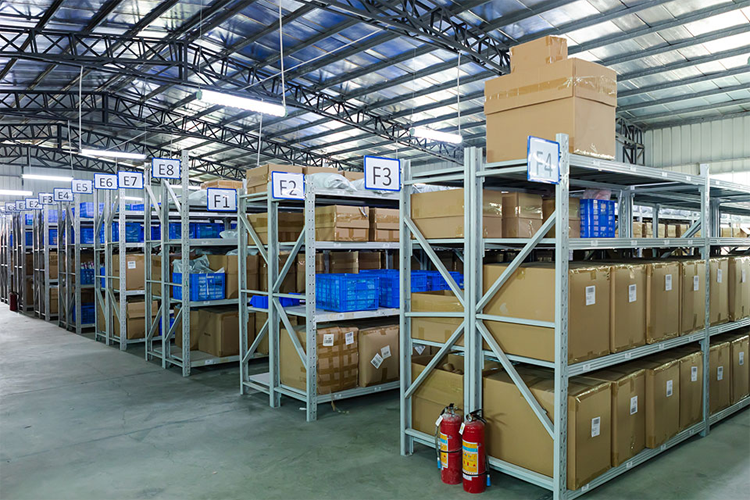
Amazon FBA, third-party logistics warehouses, retail distribution centers, theme park stores, museum shops, and subscription programs may each have different labeling and receiving requirements. Pufumi coordinates packing instructions before shipment rather than treating packaging as a final decorative step.

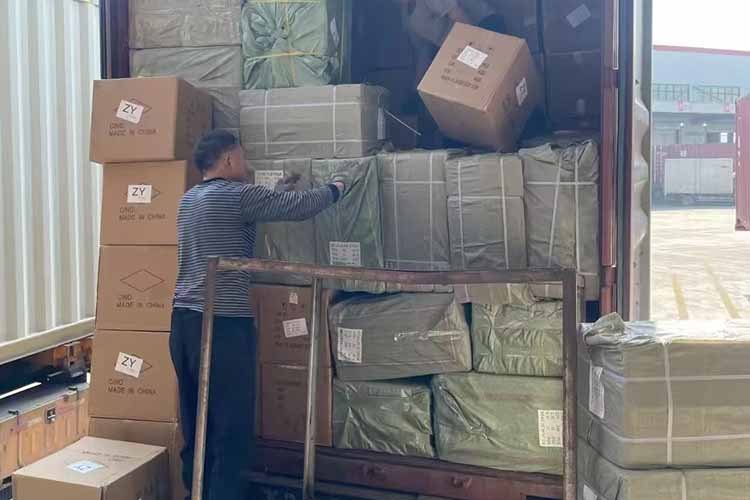
Global Delivery
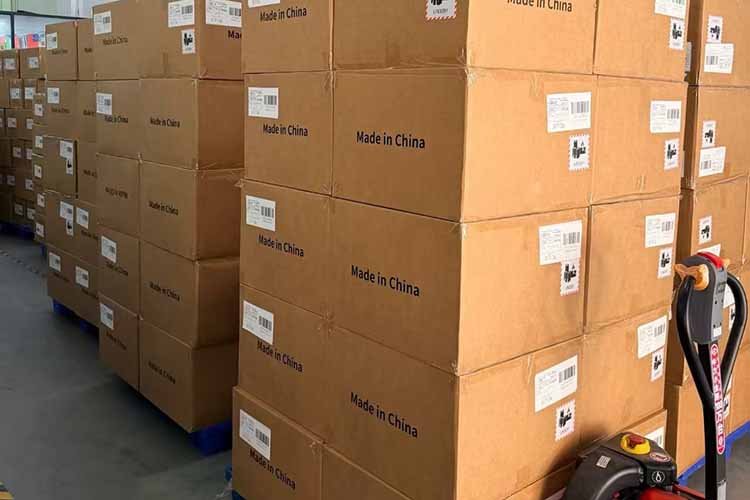
Pufumi supports international shipping through express courier, air freight, sea freight, customer-nominated forwarders, consolidated shipments, and selected destination-delivery arrangements.
Delivery planning considers the target warehouse arrival date rather than only the factory completion date. Sample approval, material preparation, production, inspection, packing, booking, export handling, transit time, customs procedures, warehouse appointments, and local delivery can all affect the launch schedule.
Split-shipment strategies may be considered when a smaller urgent quantity is required by air while the main order moves by sea. Carton size, compression, product recovery, CBM, weight, pallet configuration, and warehouse labeling also influence the delivery plan.
Final transport costs and timing depend on confirmed packing data, destination, trade terms, shipping method, and current logistics conditions.
| Delivery Method | Best Used For | Main Planning Factors | Pufumi Coordination |
|---|---|---|---|
| Express Courier | Samples, approval units, urgent small shipments | Chargeable weight, destination, customs documentation, delivery access | Sample inspection, packing, shipment documents, tracking coordination |
| Air Freight | Time-sensitive launches and medium-volume urgent goods | Weight, volume, airport handling, customs, destination delivery | Packing data, freight coordination, documents, destination information |
| Sea Freight | Larger commercial orders and planned replenishment | CBM, carton size, port schedule, customs, destination transport | Carton planning, loading data, shipment coordination, document preparation |
| Split Shipment | Launches requiring urgent initial stock | Air quantity, sea quantity, inventory priorities, separate documents | Priority selection, divided packing lists, shipment coordination |
| Amazon FBA | Products entering Amazon fulfillment centers | FNSKU, carton labels, shipment plan, carton limits, scanning | Label checks, carton records, shipment-plan support |
| 3PL Delivery | Brands using third-party warehousing | SKU labels, ASN, appointment, pallet rules, receiving windows | Packing lists, carton numbers, warehouse data coordination |
| Retail DC | Major retail distribution programs | Routing guides, PO references, SSCC, pallet height, appointments | Packing compliance, carton labels, delivery-file coordination |
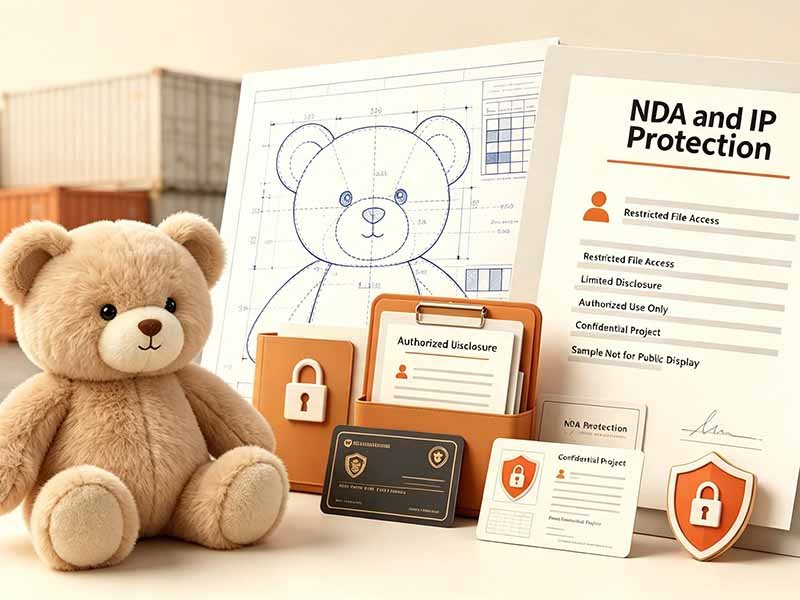
NDA and IP Protection
NDA control, restricted file access, limited disclosure, and authorized case use
Pufumi works with unreleased characters, licensing documents, packaging files, launch plans, target costs, sales-channel information, and other commercially sensitive materials.
Customers may provide their own NDA or request Pufumi’s standard NDA template. The agreement can cover artwork, logos, authorization files, packaging, sample photographs, product plans, quotations, quantities, supplier information, launch dates, customer identities, and commercial communication.
Before an NDA becomes effective, only the minimum non-sensitive information needed for initial evaluation should be submitted. After execution, the project can be classified as confidential and access restricted to the personnel required for commercial, design, engineering, sample, production, quality, testing, or delivery work.
Specialist suppliers receive only the information necessary to complete their assigned process and are expected to follow applicable confidentiality obligations. Confidential products are not published as cases, displayed publicly, or used in marketing without written permission.
Who We Work Wit
Built for Organizations With Real Product and Channel Requirements
Pufumi serves companies that need controlled development, responsible approvals, production consistency, retail preparation, and the ability to support future orders or product-line growth.
IP and Licensing
IP owners, licensors, licensing agencies, and brand-management organizations need accurate character execution, controlled artwork access, approval records, copyright information, version management, and clear responsibility boundaries. Pufumi supports licensed projects without manufacturing unauthorized third-party characters or logos.
Entertainment Companies
Animation studios, game companies, film and television teams, streaming content businesses, esports organizations, and creator-led properties often work around release dates, fan events, anniversaries, or product launches. Plush development must align with confidential assets, approval schedules, and commercial deadlines.
Toy and Collectibles
Toy companies, designer-toy brands, blind box businesses, gift brands, and collectible programs often manage several characters, sizes, packaging versions, and release waves. Pufumi helps organize samples, materials, SKU codes, assortment rules, carton planning, and reorder references.
Lifestyle Brands
Fashion, beauty, food, beverage, hospitality, and technology brands may use plush as mascots, bag charms, collaboration products, PR gifts, membership gifts, retail items, or event merchandise. Product appearance must match the brand rather than look like a generic promotional toy.
Destination Retail
Theme parks, museums, zoos, aquariums, universities, hotels, resorts, and tourism operators often require exclusive products with educational, location-based, or storytelling value. Products may also need durable retail packaging, compact carton planning, warehouse labels, and reliable replenishment.
Established Commerce
Mature DTC brands, Amazon businesses, subscription programs, major retailers, 3PL-supported businesses, and retail distribution programs need barcodes, carton data, packing instructions, warehouse labels, inspection records, and delivery planning that extends beyond the factory completion date.
Frequently Asked Questions
Pufumi is an enterprise plush product development and manufacturing brand operated by Shenzhen Oneier Technology Co., Ltd. We support artwork review, pattern engineering, sample development, revisions, production management, quality control, packaging coordination, testing preparation, delivery, and reorder management for established commercial projects.
Pufumi uses a coordinated operating structure. Shenzhen Oneier manages communication, project planning, commercial documentation, and supply-chain organization. A core Dongguan plush factory, established on March 26, 2007, supports development and production. Oneier-invested Foshan resources and qualified specialists provide additional process or capacity support when required.
The Dongguan core factory has more than 58 designers, pattern makers, sample makers, and development specialists. Around half have more than 15 years of relevant experience in plush design, paper-pattern development, sample construction, or production. Team assignment depends on character complexity, materials, scale, clothing, accessories, and function.
Please provide artwork, approximate size, quantity per design, number of SKUs, destination market, target age, packaging requirements, sales channel, target cost, and required arrival date. Complex characters benefit from front, side, and back views. Fixed colors, logos, garments, accessories, and licensed details should also be identified.
A quantity of 500 pieces is an important initial project-screening reference, but final MOQ depends on the product structure, number of designs, colors, sizes, materials, embroidery or printing requirements, accessories, electronics, packaging, and quantity per SKU. Multi-SKU programs are evaluated by individual SKU conditions, not total quantity alone.
Each sample version can record customer feedback, internal review, pattern changes, material changes, cost effects, timing effects, photographs, and approval status. Broad comments are converted into practical actions involving proportions, facial placement, colors, filling, clothing, accessories, labels, or packaging before the next version is produced.
Yes, when the customer owns the character or holds appropriate commercial authorization. Pufumi can support character interpretation, approval samples, copyright information, packaging versions, multi-SKU management, and controlled production. Unauthorized third-party characters, logos, sports marks, film properties, or brand assets are not accepted.
Yes. Customers may submit their own NDA or request Pufumi’s standard template. Before execution, sensitive artwork should be withheld or redacted. After confirmation, access can be restricted to personnel required for development and production. Confidential products are not published or displayed without written authorization.
Pufumi can help prepare BOM information, test samples, labels, packaging files, material data, product details, and communication required by qualified third-party laboratories. Applicable requirements depend on market, target age, construction, materials, accessories, and electronics. Legal responsibility remains with the relevant brand owner, importer, representative, retailer, and laboratory.
Yes. Support can include FNSKU labels, UPC or EAN barcodes, SKU labels, carton marks, packing lists, carton data, shipment plans, pallet requirements, routing-guide information, and warehouse delivery coordination. Final execution depends on the confirmed warehouse rules, shipping method, destination, trade terms, and required arrival date.
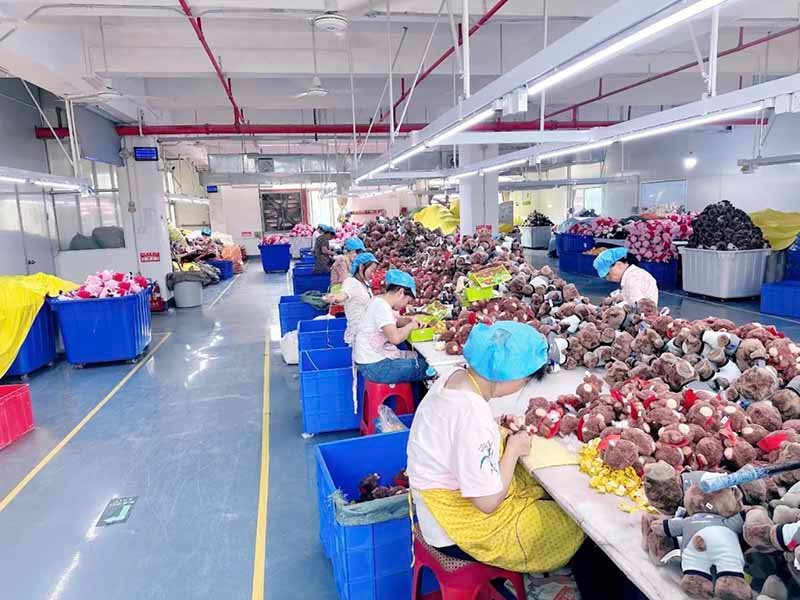
Let’s Build Your Next Plush Program Together
Pufumi is ready to support your next custom plush project through a coordinated system covering product development, sample management, controlled production, quality assurance, packaging, and global delivery. Whether your project involves licensed characters, collectible series, mascot programs, retail assortments, or new IP launches, our teams work together to provide clear, consistent, and well-managed execution. Contact us to begin a professional collaboration built around character fidelity, transparent communication, production reliability, and long-term supply support.