 Skip to content

Licensed IP Manufacturing Policy for Plush Products
A controlled framework for authorized plush development, confidential asset handling, licensor approvals, production release, and accountable global manufacturing.
- Authorized character, entertainment, game, sports, mascot, and branded plush projects enter development only after the submitting party and permitted product scope are understood.
- Sensitive files may be reviewed under NDA with Public, Internal, Confidential, or Restricted access controls.
- More than 58 designers and pattern makers.
- Regular samples generally require 7–12 working days; complex character samples commonly require 12–20 working days after development conditions are complete.
Licensed IP Manufacturing Policy at a Glance
Authorized Projects Only
NDA Before Disclosure
Need-to-Know Access
Approval-Gated Production
Controlled Manufacturing Partners
No Unauthorized Display
Who This Manufacturing Policy Is Designed For
IP Rights Owners
Licensed Brand Operators
Licensing Agencies
Entertainment Companies
Retail and Collectible Brands
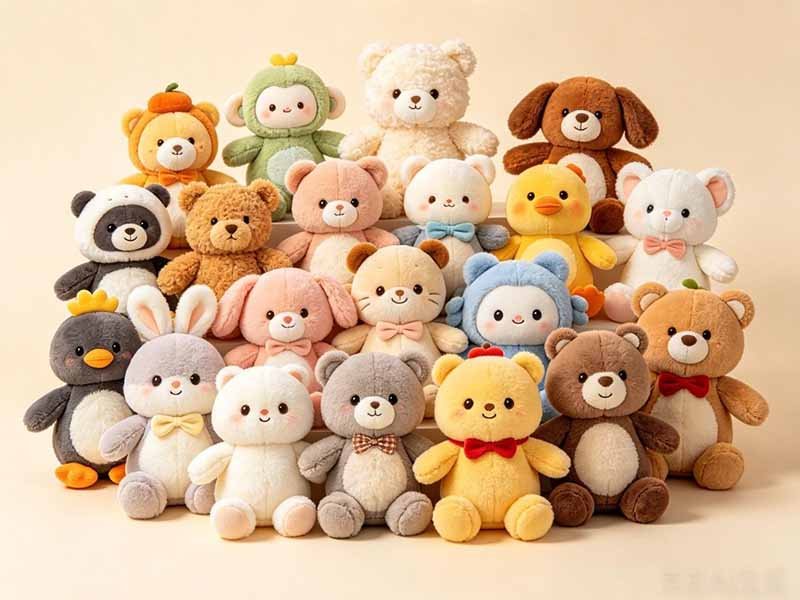
Licensed Plush Products Covered by the Policy

Core Character Plush

Mini Collectible Plush

Plush Keychains

Plush Bag Charms

Blind Box Plush

Retail-Ready Plush
Rights Confirmation Before Development and Manufacturing
Information Reviewed Before Project Acceptance
- Who owns the character, artwork, name, logo, and trademarks?
- Who has authority to appoint Pufumi?
- Which plush products are covered?
- Which countries and channels are authorized?
- When does the authorization begin and end?
- Which copyright and trademark statements are approved?
- Are specialist manufacturing partners permitted?
- Who provides final sample and packaging approval?
How Review Outcomes Are Managed
A clear rights position allows the project to proceed into feasibility review, quotation, sample planning, and approval scheduling. An incomplete position leads to a request for clarification rather than automatic rejection. For example, the organization may have valid rights but still need written confirmation that external manufacturing, blind-box packaging, or a new territory is permitted. Projects are declined when available information indicates obvious counterfeit activity, unauthorized replication, misuse of a protected logo, unexplained third-party artwork, or an instruction to bypass a known licensor approval requirement. Pufumi does not treat an online image, retail photograph, competitor sample, or informal verbal statement as sufficient authority. The review protects all parties. Rights owners reduce uncontrolled manufacturing risk, licensees avoid production outside their scope, and Pufumi avoids using protected assets without a reasonable basis. The policy governs Pufumi’s manufacturing acceptance process and does not replace legal advice or interpretation of a licensing agreement.
Licensed and Unlicensed Project Differences
Legal authority, asset origin, approval structure, packaging control, and production eligibility distinguish a licensed program from unauthorized copying or unclear third-party use.
| Review Area | Licensed IP Project | Unlicensed or Unclear Project |
|---|---|---|
| Rights Evidence | Rights owner, licensee, authorized agent, or appointed organization can explain its authority | Submitting party cannot explain ownership or permission |
| Asset Source | Official character files, approved logos, brand guides, packaging rules, or authorized references | Internet images, copied retail samples, screenshots, or altered third-party artwork |
| Product Scope | Plush category, accessories, packaging, territory, term, and channels are understood | No clear confirmation that the intended product or market is permitted |
| Approval Contact | Named licensor, brand, agency, or authorized approver | No identifiable person with authority to approve |
| Copyright Use | Approved copyright line, trademark symbol, legal name, and placement | Copyright or trademark information copied or invented |
| Confidentiality | Files are managed according to project sensitivity and written terms | File origin, disclosure rights, and handling expectations are uncertain |
| Production Release | Approved files and samples can be formally released | Production remains blocked while rights remain unclear |
| Pufumi Decision | Proceed, request clarification, or establish controlled conditions | Pause or decline the project |
How Pufumi Decides Whether to Proceed
Approved for Review
- Sensitive assets move through agreed confidentiality controls.
- Pufumi prepares feasibility questions and a sample path.
- Quotation remains conditional on final specifications.
- No bulk production is released during early review.
Additional Evidence Required
- Pufumi identifies the unresolved point.
- Only minimum necessary evidence is requested.
- Full contracts are not required through an open form.
- Engineering work remains limited until authorization is clarified.
Project Declined
- Protected files are not used for sampling.
- No production quotation is treated as approval.
- Supplied samples are not duplicated without authority.
- Declined projects are not repurposed for internal product development.
NDA Protection Before Sensitive File Disclosure
Before NDA Activation
- Submit a redacted overview.
- State whether the project is licensed.
- Identify the product category.
- Indicate whether an NDA is required.
- Avoid unrestricted public file links.
After NDA Activation
Once agreed confidentiality terms are active, the project can be designated Confidential or Restricted. Approved personnel may receive the detailed assets required for engineering, quotation, sampling, packaging, testing preparation, and production planning. Access is based on operational need rather than organizational seniority. A packaging partner may receive artwork and dieline information without receiving the full character bible. An embroidery partner may receive a controlled embroidery file without seeing launch plans, prices, or licensing terms.
- Use controlled transfer channels.
- Apply clear file names and versions.
- Limit access to assigned personnel.
- Record approved photography and display rules.
- Archive, return, restrict, or delete files as agreed.
Four Levels of Licensed Asset Confidentiality
Public Assets
- Public status must be confirmed rather than assumed.
- Publication remains limited to the approved purpose.
- Brand names and images cannot be reused for unrelated promotion.
- Public product images do not release confidential production files.
Internal Assets
- Access remains within relevant Pufumi functions.
- Internal documents are not used in public marketing.
- Commercial notes must be verified before becoming production facts.
- Internal status does not permit external supplier distribution.
Confidential Assets
- Access follows the Need-to-Know principle.
- Sharing is limited to assigned project roles.
- Review images may be watermarked.
- Photography and case publication require written permission.
- Closure treatment follows the project agreement.
Restricted Assets
Restricted assets cover highly sensitive projects such as unannounced entertainment characters, new game releases, film-related designs, fashion collaborations, exclusive retail launches, and complete licensing documents.
- Tighter access permissions are applied.
- Distribution lists remain intentionally small.
- Samples may require controlled storage and shipping.
- Public sample-room display is prohibited.
- Specialist partners receive only essential task files.
How Licensed Assets Move Through Pufumi
Controlled Receipt
Rights Status Review
Permission-Based Storage
Limited Project Access
Controlled Project Archive
Return or Deletion
File Status Controls for Licensed Production
Clear status labels prevent drafts, obsolete artwork, old embroidery files, and superseded packaging from entering sampling, printing, manufacturing, or inspection.
| File Status | Meaning | Permitted Use |
|---|---|---|
| Draft | Early working document for internal discussion or preliminary communication | Not permitted for formal sampling, purchasing, printing, production, or QC |
| For Review | Submitted to an authorized reviewer but not yet approved | Review and comment only |
| Approved | Accepted by the named approver for a defined purpose | May support the next stage, but not automatically released to production |
| Released | Current controlled version approved for the specified manufacturing activity | Permitted for sampling, purchasing, printing, production, or QC as stated |
| Superseded | Previously valid version replaced by a newer release | Archive only; prohibited for new production |
| Obsolete | Withdrawn, cancelled, or no longer valid | Prohibited; retained only when traceability requires |
Licensor Approval Workflow Before Production Release

Authorized Asset Review
- Input: authorized assets and brand rules
- Output: development brief and open-question list
- Approval owner: brand, licensee, agency, or licensor

Design Interpretation
- Input: reviewed character assets
- Output: plush interpretation plan
- Decision: proceed, revise, or request clarification

Prototype Submission
- Input: approved development direction
- Output: numbered prototype and review package
- Decision: revise or continue

Licensor Feedback
- Input: prototype review
- Output: revision log
- Control: one consolidated feedback window

Packaging Approval
- Input: approved product direction and market data
- Output: released packaging files
- Control: SKU and market matching

Production Release
- Input: approved production package
- Output: formal manufacturing release
- Control: freeze point and change management
Sample Development for Licensed Plush Programs
First Prototype
- Final materials may not yet be locked.
- Packaging is usually reviewed separately.
- Approval normally authorizes revision, not bulk production.
Revision Sample
- Typical revision rounds: one to three
- Common revision time: 5–10 working days per round
- New requests may affect cost and schedule
Pre-Production Sample
- Confirms BOM and process maturity
- Supports quality-standard preparation
- Identifies remaining manufacturing risks
- Requires formal approval before release
Golden Sample
- Stored under controlled conditions
- Compared during first-piece review
- Retained for repeat-order consistency
- Replaced only through formal change control
Material and Color Controls for Licensed Characters

Short-Pile Plush

Minky and Soft Velour

Medium-Pile Fabrics

Long-Pile Faux Fur

Felt and Structured Details

Color Approval System
Digital screens are not a reliable final color standard. Pufumi uses physical material swatches, supplier color cards, lab dips where needed, embroidery-thread samples, printed proofs, and approved references to establish production colors. The review should record material code, supplier, dye lot, surface direction, lighting conditions, and permitted appearance differences between fabric, thread, printing, plastic, and metal.
Structural Engineering Behind Character Fidelity
Silhouette and Proportion
Pattern and Seam Map
Pose and Balance
Appendage Construction
Accessory Integration
Packaging Compression
Sewing and Craft Controls for Licensed Plush

Cutting and Bundling

Embroidery Alignment

Stitch Density

Reinforced Load Points

Filling and Closure

Grooming and Final Shape
Controlled Use of Specialist Manufacturing Partners
Embroidery and Printing
- Minimum necessary files
- Controlled production version
- First-piece approval
- Confidentiality obligation
Materials and Dyeing
- Material specification
- Approved swatch control
- Batch identification
- Restricted commercial information
Packaging and Labels
- Separate packaging approval
- SKU-specific artwork
- Print-proof review
- Controlled waste handling
Testing and Logistics
- Sample identification
- Test-scope alignment
- Shipping-data control
- Destination verification
Authorized Quantity and Reject Material Controls
Authorized Production Quantity
Surplus Finished Products
Rejected Components
Disposal Records
Production Traceability and SKU Separation Controls
Project and SKU Coding
Material Identification
Cut-Part Bundling
Line Clearance
First-Piece Approval
Packaging Reconciliation
Quality Control Against Approved Licensed Standards

Incoming Material Inspection

Embroidery and Print Inspection

First-Piece Confirmation

In-Process Inspection

Final Product Inspection

Packaging and Shipment Check
Compliance and Responsibility for Licensed Plush
Product safety, testing, certification, IP approval, labeling, import responsibility, and market release require coordinated roles rather than one blanket compliance claim.
| Responsible Party | Core Responsibilities |
|---|---|
| Rights Holder or Licensor | Defines permitted intellectual property use, product scope, brand standards, approval authority, copyright wording, trademark presentation, and licensing restrictions |
| Licensee or Brand Operator | Confirms commercial authority, provides correct assets, identifies markets and age grading, coordinates licensor approvals, and communicates distribution requirements |
| Pufumi | Conducts manufacturing feasibility review, controls files and samples, develops production documentation, manages approved manufacturing, performs quality control, and prepares supporting information |
| Specialist Manufacturing Partners | Complete approved embroidery, printing, materials, accessories, packaging, electronics, or logistics operations under limited access and defined confidentiality requirements |
| Third-Party Laboratory | Performs agreed tests on identified samples according to the requested market and product scope, then issues reports to the applicable contracting party |
| Importer or Responsible Entity | Determines applicable legal obligations, reviews reports, issues or maintains required certificates, keeps records, completes declarations, and places compliant products on the target market |
The compliance path begins with target market, target age, product function, materials, accessories, packaging, and responsible entity. ASTM F963, CPSIA, EN 71, CE-related obligations, UK requirements, Canadian requirements, or other standards are evaluated according to product applicability. No single report automatically covers every design, market, age group, material change, or production version.
Licensed Plush Program Models
Four-Character Animation Program
- Sample program: 24 working days
- Revision rounds: two
- Bulk production: 36 days
- Packaging: hangtag plus individual bag
- Main risk: outdated facial artwork
- Control: version-locked embroidery and consolidated licensor feedback
Six-SKU Bag Charm Collection
- Sample program: 28 working days
- Revision rounds: two
- Bulk production: 42 days
- Packaging: branded card and sealed bag
- Main risk: SKU and card mixing
- Control: coded bundles, line clearance, and carton reconciliation
Retail Mascot Product Line
- Sample program: 30 working days
- Packaging development: 12 working days
- Bulk production: 40 days
- Main risk: proportion drift between sizes
- Control: shared character measurement map and separate Golden Samples
Frequently Asked Questions
Pufumi requires a reasonable basis showing that the submitting organization owns the relevant rights, holds a valid license, acts as an authorized agency, or has written authority to appoint a manufacturer. The exact evidence depends on the project. Full licensing contracts do not need to be uploaded through a public form.
A licensee may appoint Pufumi when its agreement or written authorization permits external manufacturing for the planned product, territory, channel, and period. Pufumi may request confirmation when manufacturing appointment, subcontracted processes, packaging use, or specific product categories are unclear.
Yes. A redacted brief can be used for the initial capability discussion. When unreleased artwork, character bibles, packaging, launch plans, complete authorization documents, or other sensitive information must be reviewed, confidentiality terms can be arranged before detailed disclosure.
Suitable early information includes product format, approximate size, estimated quantity, target market, target age, packaging type, expected delivery date, and a non-sensitive or redacted reference. Complete unreleased assets and full licensing contracts should remain withheld until secure review conditions are established.
Access is limited to assigned personnel who need the information for commercial review, project management, design, engineering, sampling, production, quality, packaging, testing coordination, or delivery. Restricted information receives tighter handling, and external partners receive only the minimum task-specific files.
Specialist partners may receive approved files required for embroidery, printing, materials, packaging, electronics, testing, or logistics. They do not receive unrestricted project archives. Relevant confidentiality terms, file versions, permitted use, and onward-sharing limits form part of Pufumi’s supplier coordination.
Changes to character proportions, expression, material, color, embroidery, printing, accessories, filling, packaging, copyright lines, logos, market labels, age grading, or tested BOM details may require renewed approval. Pufumi records the change and checks its effect on cost, timing, testing, and production release.
Only when written permission or an agreed publicity right allows it. Participation in sampling or production does not automatically permit website use, social-media publication, exhibition display, open sample-room display, client-name disclosure, or use of the project as a sales reference.
Surplus finished products, rejected toys, branded fabric, embroidered panels, hangtags, cards, boxes, and labels are reconciled and treated according to the project agreement. Options may include repair, approved retention, return, de-branding, controlled recycling, or documented destruction.
No. The policy explains Pufumi’s manufacturing acceptance, confidentiality, approval, production, quality, and information-control practices. Rights owners, licensees, importers, and their legal advisers remain responsible for interpreting agreements, confirming authority, and meeting market-specific legal obligations.

Trust, Compliance & Production Assurance
Confidence for global brands and complex plush programs
Pufumi evaluates each project according to its target market, age grade, materials, construction, labeling, and packaging requirements. Depending on the assigned production site and project scope, our team can support ISO 9001 quality-management documentation and coordinate testing to EN71, ASTM F963, CPSIA, REACH, and other applicable standards. Factory audits, certifications, and test reports are verified by issuing body, validity period, facility, and product scope, giving brands greater transparency from sample development through controlled production and delivery.











Start a Confidential Licensed IP Project Review
Share enough information for Pufumi to assess authorization status, product complexity, sample requirements, manufacturing feasibility, packaging, compliance preparation, and schedule without exposing restricted assets through an open form. An initial review normally begins within one business day after receiving a clear brief.
Recommended first-stage information:
- Company legal name and project contact
- Your role: rights owner, licensee, agency, brand, or authorized purchaser
- Rights holder or licensor name
- Authorization status and applicable product category
- Planned plush formats, sizes, and SKU count
- Estimated quantity per SKU
- Target markets and intended age group
- Packaging and copyright-marking requirements
- Required warehouse or launch date
- Whether an NDA is required before detailed disclosure
- A redacted brief or non-sensitive reference

