Custom Plush Manufacturing FAQs
From Manufacturing Foundations to an Enterprise Plush Development Brand
From character artwork and sample development to controlled production, retail packaging and global delivery, this FAQ center explains how custom plush projects work at Pufumi.
Is Pufumi the Right Partner for Your Project?
Pufumi is best suited to commercial projects that require more than basic sewing. We work with companies that need character interpretation, pattern engineering, sample approval, controlled mass production, branded packaging, compliance coordination and reliable reorders.
Projects That Fit Pufumi
Licensed character plush, game and anime plush, animation and entertainment merchandise, mascot plush, collectible plush, blind box plush, plush keychains, bag charms, retail-ready product lines and multi-SKU programs are all within our core development direction.
Pufumi is especially suitable when a project has original or legally authorized artwork, a defined sales channel, realistic production quantities, an internal approval process and the potential to become a repeatable product line.
Projects Outside Our Main Service Scope
Pufumi is not positioned as a one-piece personal gift platform, a stock-toy wholesaler or an ultra-low-price promotional supplier.
We do not accept clearly unauthorized characters, counterfeit brand products, unlicensed logos or projects where the customer cannot explain the source of commercial rights. Extremely low quantities, incomplete inquiries with no willingness to provide project information, and projects driven only by the lowest possible unit price may not be a suitable match.
Frequently Asked Question
About Pufumi and Our Manufacturing Model
Q1. Is Pufumi a custom plush manufacturer or a trading company?
Pufumi is a plush product development and manufacturing brand operated by Shenzhen Oneier Technology Co., Ltd. Shenzhen Oneier manages customer communication, project evaluation, product development, sample control, production planning, quality coordination, packaging and delivery.
Manufacturing is organized through Oneier-invested plush toy factories in Dongguan and Foshan, supported by qualified specialists for fabrics, dyeing, embroidery, printing, hardware, electronic modules, packaging, third-party testing and logistics.
We do not describe every specialist process as being completed inside one building. Our value is the controlled management of the entire project across the appropriate production resources.
Q2. Where are Pufumi plush products manufactured?
Pufumi’s principal plush manufacturing resources are located in Dongguan and Foshan, Guangdong, China.
The core Dongguan factory was established on March 26, 2007 and supports complex character development, pattern engineering, sample revisions and bulk plush production. Foshan manufacturing resources provide additional capability for different product categories, production schedules, order sizes and supporting processes.
The exact production route is selected according to product structure, confidentiality requirements, materials, workmanship, quantity, packaging and delivery schedule.
Q3. Who manages our project from inquiry to delivery?
Shenzhen Oneier acts as the customer communication and project management party for Pufumi projects. A project contact coordinates information between the customer and the relevant design, pattern, sourcing, production, quality, packaging and logistics teams.
The project is managed through defined milestones rather than informal chat messages alone. Important stages may include project briefing, sample quotation, sample approval, BOM confirmation, packaging approval, production release, inspection and shipping documentation.
The legal entity used for the contract, pro forma invoice, payment or export documentation is confirmed according to the specific order and trade arrangement.
Q4. What makes Pufumi different from a basic sewing factory?
A basic sewing factory may be able to cut and stitch an existing pattern. Pufumi is structured to help customers turn character assets and commercial ideas into scalable plush products.
This involves interpreting two-dimensional artwork, developing patterns, controlling character proportions, selecting suitable materials, documenting revisions, establishing an approved Golden Sample, managing multiple SKUs, coordinating packaging and preparing products for testing and delivery.
The core Dongguan factory has more than 58 plush designers and pattern makers, with approximately half of the team having more than 15 years of related development, design or pattern-making experience.
Plush Product Capabilities
Q5. What types of custom plush products does Pufumi develop?
Pufumi develops character-led, brand-led, collectible and retail-ready plush products.
Core directions include licensed character plush, entertainment IP plush, anime plush, game character plush, animation character plush, film and television plush, mascot plush, creator-owned IP plush, collectible plush, blind box plush, plush keychains, plush bag charms and multi-SKU retail programs.
We can also evaluate baby plush, interactive plush, weighted plush, destination merchandise, corporate mascot products and lifestyle-oriented plush accessories according to the target market, intended use and required production conditions.
Q6. Can Pufumi develop several product formats from one character?
Yes. One character can often be developed into a structured product family instead of remaining a single SKU.
Possible formats include a keychain version, mini collectible, core retail size, large display version, bag charm, blind box product, pillow, gift set or seasonal edition. However, each format requires its own engineering review because shrinking or enlarging a character changes pattern proportions, embroidery limits, accessory construction, filling behavior and packaging.
We help customers decide which format should function as the entry product, hero SKU, premium product, limited release or long-term replenishment item.
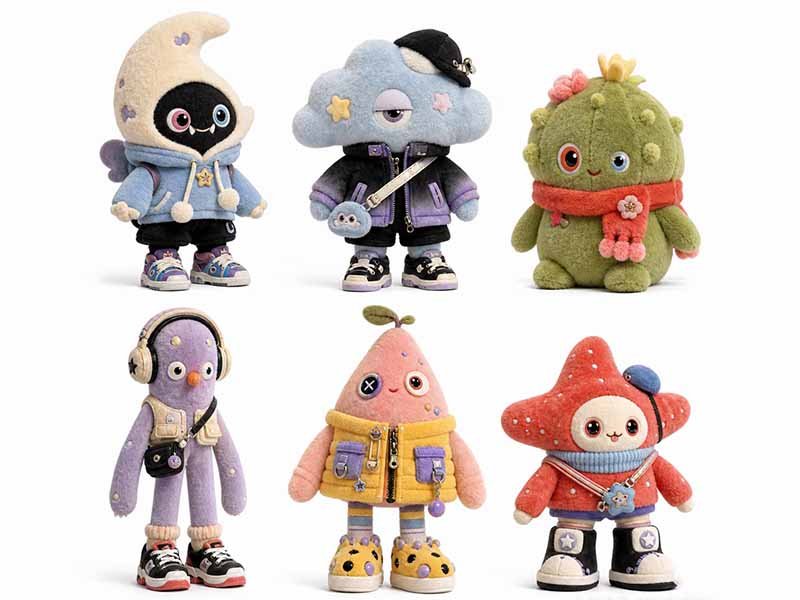
Q7. Can you manufacture a complete multi-character collection?
Yes. Pufumi can manage collections involving multiple characters, sizes, colors, accessories and packaging versions.
A multi-SKU program requires more than placing several purchase orders at once. Each SKU needs a unique code, approved artwork, sample version, BOM, material identification, packaging file, barcode and carton rule. Production and packing controls must prevent characters, accessories, inserts or labels from being mixed.
Blind box and collectible programs may also require defined assortment ratios, hidden-edition controls and master-carton packing rules.
Q8. Do you manufacture stock plush products for wholesale resale?
Pufumi’s main business is custom development rather than generic stock wholesale.
Our preferred projects begin with customer-owned or legally authorized artwork, a brand concept, an IP asset, a product brief or an existing reference product that requires further development. This allows us to create products aligned with the customer’s character identity, sales channel, packaging system and quality requirements.
Customers seeking large volumes of standard, unbranded stock animals may find a conventional wholesaler more suitable.
Minimum Order Quantities
Q9. What is the MOQ for a custom plush product?
MOQ depends on the product type, design complexity, number of SKUs, materials, color requirements, accessories and packaging.
As an internal project-screening reference, core plush products are commonly evaluated from around 500 pieces per SKU. Mini plush, plush keychains, bag charms and projects involving complex custom packaging are generally more stable from around 1,000 pieces per SKU.
These figures are evaluation starting points rather than unconditional promises. A formal MOQ is confirmed only after Pufumi reviews the design, dimensions, materials, packaging and production route.
Q10. Is MOQ calculated by total order quantity or by individual SKU?
MOQ is normally evaluated by individual SKU, design, color, size and packaging version rather than by total order quantity alone.
For example, an order containing ten characters with 100 pieces per character may total 1,000 units, but each design still requires separate pattern preparation, embroidery setup, cutting, sewing, quality references, labels and packing control. That structure may not be as practical as two designs with 500 pieces each.
Some materials or packaging can be shared across a collection, but this does not automatically remove the production requirements of each SKU.
Q11. Can several characters share one MOQ?
Sometimes, but only where the shared elements create real production efficiency.
Characters may be able to share fabric bases, filling, hardware, packaging dimensions or certain production processes. However, separate face embroidery, patterns, clothing, colorways and accessories still create independent setup requirements.
Pufumi reviews the full collection and may recommend adjusting quantities, simplifying selected structures, grouping shared materials or identifying one hero SKU with a higher volume. Any combined-MOQ arrangement must be confirmed in writing and should not be assumed before engineering review.
Q12. Can Pufumi support a pilot production run?
A pilot run can be evaluated for commercially meaningful projects, but it is not available for every design or material.
The feasibility depends on whether the pilot quantity can cover material purchasing, embroidery setup, cutting preparation, packaging and quality-control requirements. A pilot run may also carry a higher unit cost because fixed development and production setup costs are spread across fewer units.
For a multi-SKU project, it can sometimes be more effective to test fewer SKUs at a practical quantity rather than produce a very small quantity of every planned character.
Q13. Why do keychains, bag charms and mini plush sometimes require a higher MOQ?
Small products are not automatically simpler to manufacture.
Mini plush, keychains and bag charms often require precise embroidery, small pattern pieces, narrow sewing areas, hardware assembly and careful control of tiny visual details. Metal chains, clasps, cords and retail cards may also have their own supplier MOQs.
Because labor setup and component purchasing remain significant while each product uses less fabric, a higher quantity is often needed to achieve stable production and a commercially workable cost.
Artwork, Character Design and Plush Interpretation
Q14. What artwork should we provide?
The most useful artwork package includes front, side and back views, target dimensions, color references and notes identifying the character details that must not be changed.
Pufumi can review vector artwork, AI or PSD files, PDFs, style guides, turnaround drawings, 3D models, photographs and physical reference samples. Information about the intended age group, target market, quantity, packaging and launch date should be provided at the same time.
More complete input reduces assumptions and allows the development team to identify technical risks before the first sample is made.
Q15. Can you develop a plush product from only one front-view drawing?
Yes, a front-view drawing can be used for initial evaluation, but missing views require interpretation.
Pufumi may need to propose the side profile, back structure, body depth, tail position, clothing construction and hidden seams. These assumptions should be reviewed before or during sampling because a customer may imagine the unseen areas differently.
Where character fidelity is especially important, we recommend providing additional views or approving a plush interpretation sheet before pattern development. A single image is possible, but it normally requires more communication and may lead to additional revisions.
Q16. Can Pufumi make a plush product from an AI-generated image?
An AI-generated image can be used as a concept reference, but it should not be treated as a complete technical design.
AI images often contain inconsistent left and right sides, unclear back views, impossible attachments, changing details or textures that cannot be reproduced economically in fabric. Pufumi first reviews the image and identifies which visual elements can be translated into patterns, embroidery, printing, appliqué, accessories or clothing.
The customer must also confirm that the image and character can be used legally for the intended commercial project.
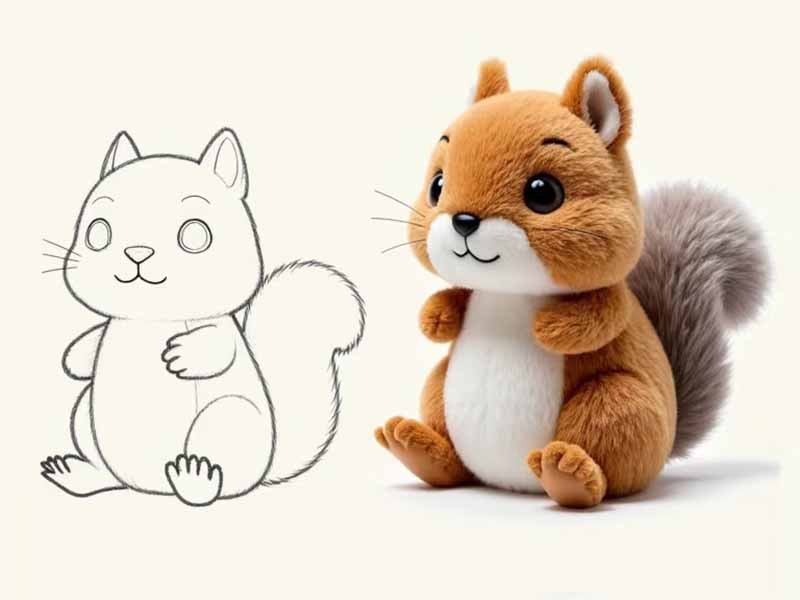
Q17. How do you convert a two-dimensional character into a three-dimensional plush product?
The development team separates the character into manufacturable volumes and surfaces. This includes the head, face, torso, limbs, ears, tail, clothing, hair and accessories.
Pattern makers then determine pattern pieces, seam placement, fabric direction, embroidery position, filling distribution and attachment methods. The goal is not to copy the flat drawing mechanically, but to preserve the character’s recognition from the front, side and common viewing angles.
The first sample verifies whether the engineering interpretation produces the intended expression, proportion, posture and hand feel.
Q18. How are colors, clothing and accessories approved?
Colors may be reviewed through Pantone references, fabric swatches, thread cards, printed samples or physical material samples. Screen colors alone are not sufficient because displays, lighting, fabric texture and dye lots can alter the appearance.
Clothing and accessories are reviewed for visual accuracy, attachment strength, production efficiency and product-safety implications. Removable items, long cords, hard components, small decorations and metal accessories may affect age grading, testing and packaging.
Final approved choices are recorded in the BOM and relevant production files.
Samples, Revisions and Production Approval
Q19. How much does a custom plush sample cost?
Sample cost is project-specific. It depends on character complexity, pattern development, size, materials, embroidery or printing, clothing, accessories, electronic functions and packaging mockups.
The fee covers development work rather than the value of one finished toy. It may include pattern creation, material sourcing, embroidery programming, trial production, sewing, filling, engineering review, internal checking and agreed revision work.
Pufumi provides the sample charge and its scope after reviewing the project brief. Shipping, special tooling, third-party testing and complex packaging may be quoted separately.
Q20. When does the sample-development period begin?
The sampling period begins only after the required project conditions have been met.
These usually include confirmed artwork or an agreed interpretation direction, target dimensions, expected quantity, sample-fee payment and availability of key materials or components. If important decisions remain open, the sample schedule cannot be measured accurately.
Pufumi confirms an estimated sampling window for the specific project. Simple designs using available materials may progress faster, while complex licensed characters, special fabrics, electronic modules or custom accessories require more time.
Q21. What is included in the first sample?
The first sample is intended to verify the primary design direction and manufacturing structure.
It normally allows the customer to assess overall proportion, face shape, expression, body structure, posture, material direction, embroidery, major clothing elements and general hand feel. It may not represent the final retail packaging or every final production detail unless those items were included in the sample scope.
The first sample is a development checkpoint. It should reveal what is working, what needs adjustment and whether the project can progress toward a production-ready version.
Q22. Can the sample be revised?
Yes. Sample revisions are a normal part of character-plush development.
Customer feedback is converted into a Revision Brief that identifies the requested change, the engineering action, possible cost impact and possible timing impact. Useful feedback is specific—for example, increasing head width, moving the eyes upward, reducing body length or changing the filling firmness.
Requests such as “make it cuter” or “make it more premium” must be translated into measurable changes before the sample team can execute them accurately. The number and cost of revisions are confirmed in the sampling agreement.
Q23. What is the difference between a prototype, PPS and Golden Sample?
A prototype is used to explore or verify the initial product direction. It may still contain materials, structures or details that require revision.
A Pre-Production Sample, or PPS, is developed after major specifications are settled and is used to confirm production readiness, materials, workmanship, labeling and other agreed details.
The Golden Sample is the final approved physical reference used together with the BOM, patterns, artwork and quality plan to control bulk production. Production should not be released based only on an early prototype when important details remain unapproved.
Q24. Can the sample fee be credited toward the bulk order?
This is evaluated project by project.
Whether part of the sample or development fee can be credited depends on the complexity of the development work, order value, number of sample versions and commercial agreement. Some development costs are one-time engineering expenses, while others may be treated differently when the bulk order is confirmed.
Any credit arrangement must be stated in the quotation, pro forma invoice or project agreement. It should not be assumed unless it has been confirmed in writing.
Intellectual Property, Licensing and Confidentiality
Q25. Do we need to own or license the artwork?
Yes. Customers must provide original artwork, own the relevant commercial rights or have valid authorization to use the character, logo, brand asset or other protected content.
Pufumi does not grant customers rights to third-party characters, sports logos, university marks, entertainment properties or artworks. The customer remains responsible for confirming the scope of its rights, including product category, territory, sales channel and licensing period.
Authorization documents may be requested when a project involves recognizable third-party intellectual property.
Q26. Can Pufumi reproduce a famous anime, game or film character without authorization?
No. Pufumi does not knowingly accept clearly unauthorized replicas, counterfeit characters, unlicensed brand logos or other projects with an obvious infringement risk.
The fact that a design is widely available online does not make it free for commercial production. The customer must be able to explain the origin of the artwork and its right to manufacture and sell the product.
This policy protects the customer, Pufumi, the production facilities and the legitimate rights holder.
Q27. Can Pufumi sign an NDA before we share our files?
Yes. An NDA can be arranged before the customer shares unreleased character assets, confidential product plans, packaging artwork, target costs or launch information.
The NDA should identify the parties, permitted use of information, confidentiality period, approved recipients and any project-specific restrictions. For large licensing programs, the customer may provide its own NDA for review.
Signing an NDA does not replace good file-management practices. Access to confidential project information should remain limited to the relevant project team and approved production partners.
Q28. How are unreleased project files protected?
Confidential character files, packaging artwork and commercial briefs should be stored in controlled project folders rather than in publicly indexed website media libraries.
Project materials are used only for evaluation, quotation, sampling, production, testing coordination, packaging, delivery and repeat-order management. They are not to be used for Pufumi-owned product development or shown to unrelated customers.
Access, file versions and external sharing should be limited according to project responsibilities. Customers with strict information-security requirements should state those requirements before submitting files.
Q29. Will Pufumi publish our product as a case study?
Only with appropriate customer permission.
Without authorization, Pufumi will not publicly disclose the customer’s name, character, logo, packaging, order quantity, pricing, testing report or launch date. Confidential projects may remain internal evidence used for process improvement without becoming public marketing material.
Where a customer permits limited disclosure, the approved scope should be clear. A project may be shown anonymously, after launch, with selected details removed, or only during a private supplier review under NDA.
Plush Fabrics, Filling and Material Selection
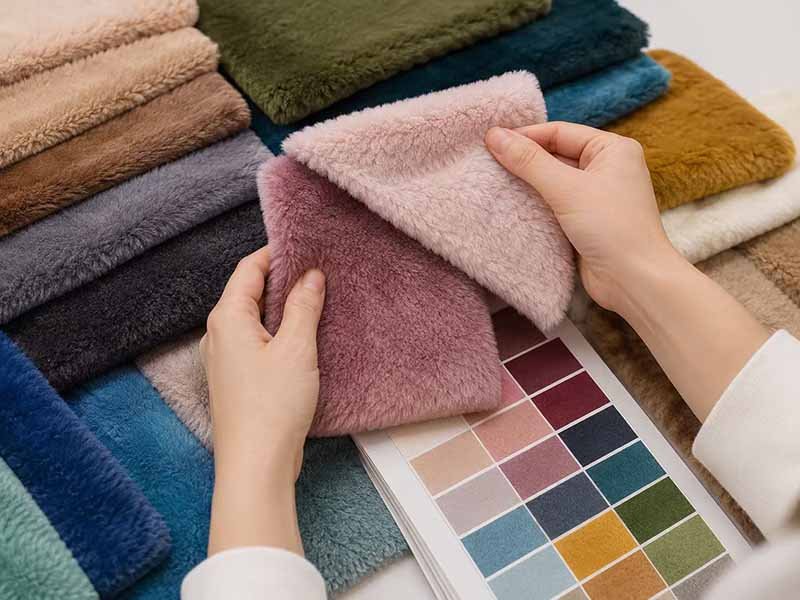
Q30. What fabrics are commonly used for custom plush products?
Common options include minky, velboa, short-pile plush, long-pile plush, faux fur, fleece, Sherpa, velvet, clothing fabrics and specialty surface materials.
The best material depends on the character’s visual style, required softness, pile length, embroidery visibility, durability, intended age group, target market, quantity and cost objective.
Long pile can create a rich texture but may hide facial embroidery. Very short pile can preserve details but may produce a different hand feel. Material selection should therefore be based on the whole product, not softness alone.
Q31. How does Pufumi select filling materials?
Filling is selected according to the required hand feel, shape support, product size, posture and internal structure.
A soft body may require a different filling density from a face that must retain a precise shape. Ears, tails, feet, weighted sections and electronic-module areas may also need different treatment.
The approved filling material, weight or control method is recorded in the BOM or quality reference. Stable filling distribution is important because inconsistent filling can change the expression, symmetry, sitting balance and overall perceived quality of the product.
Q32. Can Pufumi match a Pantone or brand color?
Pufumi can work toward an approved color target using Pantone references, physical samples, thread cards, fabric swatches or customer-provided standards.
An exact visual result must be assessed on the actual material because pile direction, surface reflection, dye lot, embroidery thread and lighting can change how a color appears. The same Pantone reference may look different on short plush, faux fur and printed fabric.
For critical brand colors, customers should approve a physical material sample or finished sample under an agreed viewing condition before bulk material is released.
Q33. Can you use recycled or lower-impact materials?
Recycled fabrics, recycled filling and lower-impact packaging options can be evaluated where they suit the product and target market.
Availability depends on color, texture, supplier documentation, material MOQ, lead time and required test scope. A recycled claim should be supported by appropriate supply-chain documents and must accurately describe the material or component being used.
The use of one recycled component does not automatically make the entire finished product certified or environmentally impact-free. Claims must remain specific and evidence-based.
Q34. How are materials controlled for repeat orders?
Approved materials are recorded by material name or code, color, supplier, construction and relevant project documents. Where practical, production lot information and reference swatches are retained.
Before a repeat order, Pufumi reviews whether the original material remains available and whether the new lot differs in color, pile, hand feel, backing or performance. If substitution is required, the customer should receive the proposed alternative for approval.
No supplier can guarantee that every textile lot will be visually identical forever, so controlled comparison and written approval are important for long-term products.
Quotations, Cost Drivers and Payment
Q35. What information is required for an accurate quotation?
A responsible quotation requires more than a picture.
Please provide the product type, finished size, number of SKUs, quantity per SKU, artwork, target market, intended age group, preferred materials, accessories, packaging requirements, testing expectations, destination and target delivery date.
A target cost or budget range is also helpful because it allows the team to propose realistic trade-offs without removing the character’s critical identity. Incomplete projects can still be evaluated, but the first price may remain indicative until the sample and specifications are confirmed.
Q36. What determines the unit price of a custom plush product?
The main cost drivers include finished size, fabric consumption, number of pattern pieces, sewing complexity, embroidery coverage, printing, clothing, accessories, hardware, electronic functions, filling volume, packaging and production quantity.
A small product can still be expensive if it has many tiny parts, complex embroidery or extensive hand assembly. A larger product with a simple shape may sometimes be more efficient.
Testing, special tooling, packaging development, freight and duties are not automatically included in the unit price unless the quotation states that they are included.
Q37. Why can the final bulk price change after sample development?
The first quotation may be based on artwork assumptions. Sampling reveals the actual material consumption, pattern-piece count, sewing time, embroidery stitches, filling requirement and accessory construction.
If the final approved sample uses different materials, added clothing, larger embroidery, reinforced attachments or upgraded packaging, the cost may change. Likewise, engineering simplification may reduce cost.
Pufumi should explain any adjustment before production release. The final production price must be based on the approved specifications rather than on an early image that no longer represents the finished product.
Q38. Does the quotation include packaging, testing and shipping?
Only the items stated in the quotation are included.
Standard product pricing may or may not include basic polybag packing, depending on the project. Custom hangtags, woven labels, blind boxes, gift boxes, testing, laboratory fees, international freight, duties, warehouse appointments and DDP services may require separate quotation.
Pufumi quotations should identify the currency, price validity, quantity assumption, packaging basis, testing assumption, trade term, payment milestones and price-adjustment conditions. Customers should compare total landed scope rather than unit price alone.
Q39. What payment terms and methods are available?
Payment arrangements are confirmed according to the sample stage, order size, customer profile, trade term and project risk.
Sample and development work normally begins after the applicable fee has been received. Bulk orders may require a deposit or other agreed payment milestone before materials and capacity are committed. The remaining payment condition is stated in the quotation, pro forma invoice or contract.
The accepted payment method, bank charges, currency and beneficiary information must be verified on the official document before payment. Changes to payment details should always be independently confirmed.
Production Lead Times and Multi-SKU Management
Q40. How long does bulk production take?
Bulk-production timing depends on order quantity, number of SKUs, material availability, embroidery or printing, product complexity, packaging and seasonal factory load.
Pufumi provides a project-specific schedule after the approved sample, BOM, packaging files and production conditions are confirmed. A simple repeat order using available materials may require less preparation than a new licensed collection with custom-dyed fabric and multiple retail boxes.
The relevant delivery date is normally the date the goods must reach the warehouse or market, not merely the date sewing finishes.
Q41. When does the production lead time officially begin?
Production timing begins after all required release conditions have been satisfied.
These may include the purchase order, agreed payment milestone, approved Golden Sample, final BOM, production artwork, packaging files, barcode data, labeling information, testing route and available materials.
If the customer changes the design, packaging, quantity or approval after production planning has started, the schedule may need to be recalculated. Pufumi should record major changes and explain their effect on cost and delivery.
Q42. How does Pufumi manage multi-SKU production?
Each approved product receives controlled references such as a project code, SKU code, sample version, BOM version, pattern version and packaging version.
Materials, embroidered panels, accessories, labels, inserts and cartons must be identified and separated. First-piece confirmation and in-process checks are performed against the correct SKU reference.
For mixed cartons or collectible assortments, the packing ratio and barcode relationship are verified before shipment. This reduces the risk of correct products being placed in the wrong packaging or sent under the wrong warehouse label.
Q43. Can Pufumi support launch-date or seasonal projects?
Yes, provided the project starts early enough and the approval process is realistic.
Pufumi can work backward from the required warehouse date and identify the critical path across artwork, sampling, approvals, material purchasing, testing, production, packaging and transport.
For urgent projects, a split-shipment strategy may sometimes be evaluated, such as sending an initial quantity by air and the main quantity by sea. Urgency does not remove the need for sample approval, safety review or accurate packaging data.
Q44. How are repeat orders managed?
Repeat orders are reviewed against the previous Golden Sample, BOM, material records, packaging files and quality information.
Pufumi confirms whether materials, components, labels, barcodes and customer requirements remain unchanged. Any modification should receive a new revision status rather than being introduced informally on the production floor.
Before a reorder, customers should also confirm destination, quantity, required delivery date and whether regulations or retail-channel requirements have changed. Controlled reorders help reduce quality drift and preserve the identity of long-running products.
Quality Control and Bulk Consistency
Q45. How do you keep bulk products consistent with the approved sample?
Bulk production is controlled using the approved Golden Sample together with the BOM, patterns, artwork, material references and quality requirements.
The Golden Sample alone is not enough if the supporting documents are unclear. Critical dimensions, embroidery placement, filling, accessories, labels and packaging must also be defined.
First-piece review and process inspections are used to identify variation before the whole quantity is completed. The goal is to reduce uncontrolled deviation, not to claim that textile products can be manufactured with mathematically zero variation.
Q46. What inspections are performed during production?
Quality control may include incoming-material inspection, cutting checks, embroidery and printing review, sewing inspection, filling and shaping checks, accessory verification, function checks, labeling review, barcode scanning, packaging inspection and final shipment inspection.
The exact inspection plan depends on the product and customer requirements. A basic plush product and an electronic licensed collectible will not have the same risk points.
Important issues are recorded so that corrective action can be taken and similar problems can be prevented in future production or reorders.
Q47. Does Pufumi inspect every finished product?
The inspection method is defined in the project quality plan.
Some critical points may require piece-by-piece checking, such as electronic function, correct SKU packaging, barcode placement, missing accessories or obvious appearance defects. Other characteristics may be checked through process controls, defined sampling or an agreed AQL inspection plan.
“100% inspected” does not mean every possible dimension and laboratory characteristic is retested on every product. The inspection scope should be clear so the customer understands what has been checked and how shipment acceptance is determined.
Q48. How are defective or nonconforming products handled?
Products that do not meet the agreed requirements should be identified, separated and reviewed rather than mixed into approved goods.
The team determines whether the issue can be corrected, requires replacement or indicates a broader process problem. Significant issues may lead to production adjustment, reinspection or corrective action before shipment.
Records can include photographs, defect descriptions, affected quantity, root-cause review and corrective action. The appropriate commercial resolution depends on the confirmed cause, contract terms, inspection evidence and extent of the issue.
Q49. Do you retain reference samples and quality records?
Pufumi uses sample and project archives to support production control, reorders and issue investigation.
Depending on the project, records may include the Golden Sample, Retention Sample, sample photographs, dimensions, BOM versions, material references, packaging files, inspection photographs and approval history.
Retention periods and the number of physical samples should be agreed for important long-term programs. These records reduce reliance on individual memory when staff, material lots or production dates change.
Product Safety, Testing and Market Compliance
Q50. Can Pufumi support plush products intended for the United States?
Pufumi can assist with product information and preparation for the applicable U.S. testing route.
The required scope depends on whether the product is classified as a toy or another type of product, its intended age group, materials, small parts, surface coatings, accessories and electronic functions. ASTM F963, CPSIA-related limits, tracking information and other requirements may apply.
Pufumi can coordinate test samples, BOM information, label details and communication with third-party laboratories. The responsible U.S. manufacturer or importer must confirm its legal obligations and certification responsibilities.
Q51. What are ASTM F963, CPSIA and the CPC?
ASTM F963 is the mandatory U.S. toy-safety standard incorporated into federal requirements for children’s toys. CPSIA includes additional requirements relevant to children’s products, including restrictions and testing obligations that may apply according to the product.
A Children’s Product Certificate, or CPC, is based on applicable test results and identifies the product and responsible certifying party. Pufumi can help prepare product and testing information, but the customer and its U.S. compliance parties must determine who is legally responsible for issuing and maintaining the certificate.
Q52. Can Pufumi coordinate EN71 testing for the European Union?
Yes. Pufumi can help prepare samples, material information, BOM details, labels and packaging documents for the applicable EU toy-safety assessment.
The exact EN71 parts and other requirements depend on the product design, intended age and materials. Testing alone is not the entire CE process. The responsible economic operators must also address risk assessment, technical documentation, the Declaration of Conformity, traceability, warnings and CE marking.
Pufumi supports the manufacturing and documentation inputs but does not replace the customer’s legal or regulatory advisers.
Q53. Does one test report cover every SKU and future order?
Not automatically.
The applicability of a report depends on whether the tested product and the new SKU share the relevant materials, structure, components, age grading and hazards. A different fabric, coating, accessory, electronic module, size or construction may change the required evaluation.
Repeat orders also require review when materials, suppliers or regulations change. Pufumi can help organize reports and component information, but the laboratory or responsible compliance party should confirm whether existing evidence remains sufficient.
Q54. Who pays for third-party testing?
Third-party laboratory fees are normally assigned according to the quotation or project agreement.
The customer may pay the laboratory directly, or Pufumi may coordinate payment and include the charge as a separate project cost. Additional fees may arise if retesting, extra samples, document translation, expedited service or corrective testing is required.
The testing budget should be discussed early because waiting until finished goods are ready can create avoidable cost and schedule risk.
Q55. Are all Pufumi products certified for every market?
No single certificate automatically covers every custom product and every destination.
Factory audits, quality-system certificates, material documents and product test reports have different owners, validity periods and scopes. A supplier material certificate cannot be presented as certification of every finished plush product. Likewise, a report for one SKU should not be expanded to unrelated designs.
Pufumi reviews compliance evidence by specific factory, document, product and project. Public claims should match the actual scope of the supporting records.
Private Label and Retail Packaging
Q56. Can Pufumi add our labels, copyright information and branding?
Yes. Projects can include woven labels, printed labels, care labels, tracking labels, copyright lines, brand logos, hangtags and other approved identification.
The customer should provide or approve all legal names, addresses, copyright text, warnings, model numbers and barcode data. Pufumi can help assess placement and manufacturing feasibility but should not invent legal wording on behalf of the customer.
Labels must be approved as part of the production file because an incorrect label can create compliance, licensing or warehouse problems even when the plush product itself is correct.
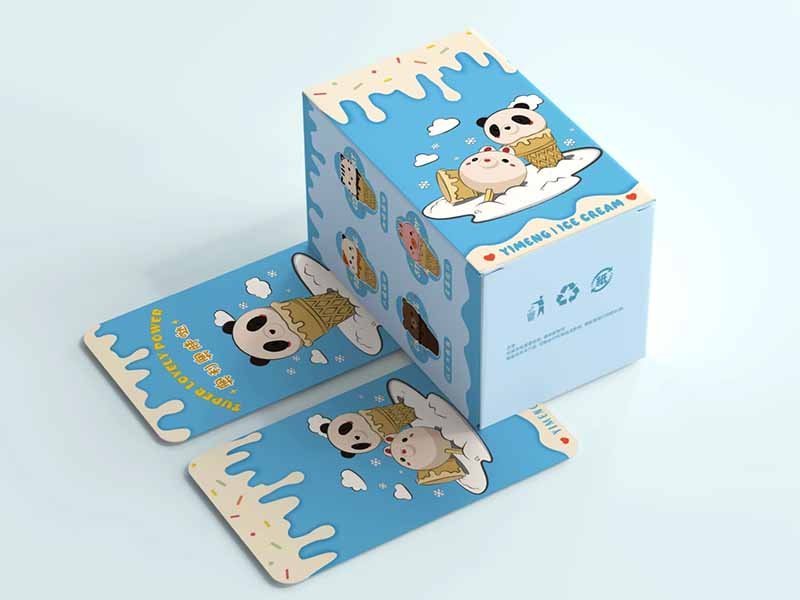
Q57. What packaging options are available?
Packaging can include polybags, paper sleeves, hang cards, blind boxes, window boxes, gift boxes, display boxes, inner trays, master cartons and pallet labels.
The correct format depends on the sales channel, product protection, visual presentation, sustainability objective, transport method and warehouse requirements. A collectible retail box has different structural needs from an e-commerce polybag or theme-park shelf product.
Custom packaging requires separate artwork and structural approval and may have its own MOQ, sampling cost and production schedule.
Q58. Can Pufumi apply UPC, EAN or FNSKU labels?
Yes. Customer-provided UPC, EAN, FNSKU or other warehouse labels can be incorporated into the approved packaging process.
The customer remains responsible for supplying valid barcode data and confirming which code belongs to each SKU. Pufumi can print or apply labels, verify placement and perform scanning checks according to the agreed process.
For multi-SKU projects, barcode control must be linked to the product, packaging version, carton label and packing list to reduce the risk of an otherwise correct product being rejected by the warehouse.
Q59. Does custom packaging have a separate MOQ?
Often, yes.
Printed boxes, molded trays, special paper, inserts and display packaging are produced through separate suppliers and may have minimum print quantities or setup charges. The packaging MOQ may be higher than the plush-product quantity.
Where practical, Pufumi can evaluate shared box structures, stickers, sleeves or other methods that preserve brand presentation while reducing unnecessary packaging inventory. Any solution must still protect the product and meet the target channel’s requirements.
Shipping, FBA, 3PL and Retail Delivery
Q60. What shipping methods can Pufumi coordinate?
Available routes may include express courier, air freight, sea freight, consolidated shipping and combined transport solutions.
The appropriate option depends on destination, carton volume, weight, required arrival date, budget, customs conditions and warehouse requirements. Plush products are often volume-sensitive, so carton design and compression strategy can materially affect freight cost.
The shipping plan should be based on final packing dimensions rather than an early product estimate.
Q61. Can Pufumi ship directly to Amazon FBA or a 3PL?
Yes, subject to the customer providing the correct shipment plan and receiving requirements.
Support may include FNSKU application, carton labels, carton data, packing lists, SKU separation, scan verification and coordination with the selected freight or warehouse partner.
For 3PL or retail distribution centers, additional requirements may include ASN data, pallet configuration, booking windows, routing guides, SSCC labels and proof of delivery. These requirements should be supplied before packing begins.
Q62. What trade terms can be evaluated?
Depending on the order and destination, Pufumi can evaluate terms such as EXW, FCA, FOB, DAP and other agreed arrangements.
Each term allocates transportation, customs, cost and risk differently. The quotation must identify the named place or port and clarify what is included.
The customer should not compare an FOB unit price with a DAP or landed quotation as though they cover the same service. Duties, taxes, customs brokerage, warehouse appointments and local delivery may remain outside the quoted scope.
Q63. Can Pufumi provide DDP delivery?
DDP feasibility can be assessed, but it cannot be guaranteed for every country, product, value or destination.
The route depends on local import rules, tax handling, product classification, required importer information and available logistics partners. Some marketplaces and retail warehouses also impose conditions that are separate from the shipping term.
Where DDP is not practical, Pufumi can help compare another route, such as FOB or DAP, while the customer or its importer manages the remaining destination responsibilities.
Preparing a Project for Evaluation
Q64. What should we prepare before contacting Pufumi?
A useful project brief should include:
- Company name and website
- Original or licensed artwork
- Product type
- Finished dimensions
- Number of SKUs
- Quantity per SKU
- Target market
- Intended age group
- Required launch or warehouse date
- Packaging expectations
- Testing requirements
- Destination
- Budget or target cost
- NDA requirement
The project does not need to be technically complete. However, commercial direction and basic quantities help Pufumi provide a useful response rather than a generic estimate.
Q65. What if our design or product specification is incomplete?
Pufumi can begin with partial artwork, a character concept, reference photographs or an early product brief.
The team identifies missing information and separates customer decisions from engineering decisions. For example, Pufumi may propose a material or attachment method, while the customer must approve the character expression, brand color, product size and commercial direction.
Incomplete input may require an interpretation stage before formal sampling. This is preferable to making hidden assumptions that later cause repeated revisions.
Q66. How early should we begin before the target launch date?
Start as early as possible, especially for licensed characters, multiple SKUs, custom-dyed materials, retail packaging or products requiring third-party testing.
The total timeline includes briefing, quotation, sampling, revisions, internal or licensor approval, material purchasing, packaging development, testing, production, inspection and international transport. Each stage depends on the previous approvals.
A target warehouse date should be provided at the beginning so Pufumi can identify the critical path and explain where delayed decisions could affect launch timing.
Our Services
Categories
Start Your Custom Plush Project
Share your character artwork, product concept, target size, estimated quantity, destination market, launch timeline, packaging requirements, and any special functions or compliance needs.
Explore Detailed Custom Plush Resources
Custom Plush Manufacturer
Learn how Pufumi manages artwork review, pattern development, sample approval, controlled production and retail-ready delivery for enterprise custom plush programs.
Character Modeling and Sample Development
See how two-dimensional character assets are translated into patterns, materials, embroidery and production-ready plush structures.
Licensed Character Plush
Explore development controls for character fidelity, style-guide review, approval versions, copyright labels and confidential IP projects.
Multi-SKU Plush Programs
Understand how Pufumi manages multiple characters, sizes, packaging versions, barcode relationships and collection-level packing rules.
Plush Materials
Compare common fabrics, filling structures, pile lengths, embroidery compatibility, color controls and repeat-order considerations.
Quality Control
Review incoming-material checks, first-piece control, process inspection, final inspection, nonconforming-product control and retention records.
Product Safety and Compliance
Understand how target market, intended age, construction and materials shape the testing and documentation route.
Retail Packaging
Explore woven labels, hangtags, blind boxes, gift boxes, barcodes, master cartons and warehouse-ready packaging.
Amazon FBA and 3PL Delivery
Review FNSKU, carton labels, scanning, packing data, shipment planning and third-party warehouse requirements.
IP Protection and NDA
Learn how Pufumi handles authorized artwork, unreleased product files, controlled access and case-study permissions.
Have a Project That Needs a Specific Answer?
Every custom plush project has different artwork, materials, quantities, approval requirements and delivery conditions. Send Pufumi the available information, and our team will organize the questions that must be resolved before sampling or quotation.
I Have Artwork or a Character File
Submit your design, target size and estimated quantity for an initial manufacturability review.
I Have Defined Product Specifications
Send the number of SKUs, quantities, materials, packaging, target market and delivery date for quotation review.
I Have a Complex or Multi-SKU Program
Request a structured review covering development stages, approvals, production controls, packaging and delivery planning.
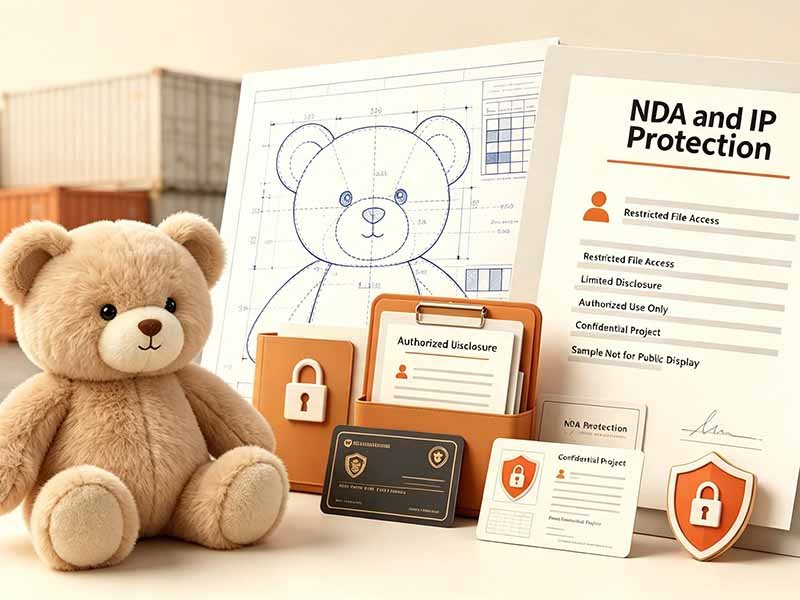
I Need Confidentiality Before Sharing Files
Request an NDA before providing unreleased character assets, licensing information or confidential packaging files.
Build Your Plush Program With Pufumi
Structured Development, Controlled Production and Global Delivery
Pufumi helps IP owners, toy brands, entertainment companies and retailers turn character ideas into retail-ready plush products.
Our service covers artwork review, pattern engineering, material selection, sample development, production control, branded packaging and delivery coordination. Each project follows clear checkpoints, from sample approval and Golden Sample confirmation to bulk inspection and shipment preparation.
Supported by Shenzhen Oneier-invested factories in Dongguan and Foshan, Pufumi is equipped for character plush, collectible series, mascots, keychains, bag charms and multi-SKU programs.
For seasonal launches, licensed collections and long-term product lines, Pufumi provides the documentation, consistency and reorder support needed to scale with confidence.