...
A reliable plush product development and manufacturing partner For brands Since 2007!

Custom Anime Plush Manufacturer for Licensed Character Programs

Capture anime character appeal in plush form with production-ready precision.

Factory-direct OEM/ODM anime plush manufacturing for licensed characters, collectible series, mascot merchandise, and retail programs — starting from 500 pcs per SKU, with 7–12 working day sampling and 25–45 day production.

Pufumi supports anime brands, licensors, distributors, and merchandising teams from artwork review and pattern development to embroidery, costume detailing, packaging, QC, compliance support, and international delivery, helping each character maintain consistent proportions, expressions, colors, and commercial quality from prototype to bulk production.

Engineering Anime Plush Beyond Basic Toy Production

Anime characters demand controlled interpretation of facial expression, hair geometry, body proportion, costume construction, accessories, and production consistency across every approved SKU.

Character Bible Review

Character files are reviewed before pattern development to identify signature facial features, proportion rules, color references, costume layers, accessories, and restricted changes. Non-negotiable details are recorded early, reducing unfocused revisions and helping design, embroidery, pattern, sewing, and quality teams work from the same visual priorities throughout development.

2D-to-3D Engineering

Flat artwork provides shape and color but rarely defines depth, side profiles, back construction, seam placement, or internal volume. Pattern engineers interpret these missing dimensions, determine panel geometry, compensate for fabric stretch, and establish a buildable structure that retains the intended silhouette after sewing, turning, stuffing, and shaping.

Controlled Sample Revisions

Each prototype stage answers a defined question. Early samples establish proportion and character direction; later revisions refine expression, hair, clothing, structure, materials, and packaging. Feedback is marked by version, location, measurement, and approval status, preventing old comments from entering a newer sample or production file.

Licensed Asset Control

Artwork, copyright lines, logos, packaging files, and unreleased character information are handled within the approved project purpose. Rights status, file version, access scope, and disclosure limits are recorded. Public use of project images, brand names, or product details requires separate authorization rather than being assumed from a manufacturing order.

Golden Sample Production

An approved sample becomes useful for production only after its visible features are converted into measurable instructions. Pattern versions, material codes, embroidery files, filling targets, accessory attachments, labels, packaging, and inspection points are released together, giving production teams more than a physical sample to copy.

Retail-Ready Delivery

Finished anime plush can be prepared with sewn labels, hangtags, copyright information, barcodes, polybags, retail boxes, collector packaging, carton marks, and warehouse labels. Product and packaging versions remain linked to the correct SKU, market, order, and shipment to reduce scanning, receiving, and replenishment errors.

Anime Plush Programs Built for Established Organizations

Pufumi supports organizations with licensed assets, structured approvals, defined distribution plans, meaningful order quantities, and long-term character merchandise development requirements.

IP Owners and Licensors

IP teams require more than an attractive prototype. Character identity, ownership boundaries, copyright placement, approved colors, sample gates, packaging versions, and public-use restrictions must remain controlled. Pufumi organizes development around approved assets and documented decisions, helping licensors review products without losing track of which file, sample, or packaging version is current.

Animation and Manga Studios

Studios often hold extensive visual references but limited manufacturing specifications. Pufumi converts model sheets, episode artwork, manga panels, turnarounds, and style guides into workable plush structures. Missing side and back details are identified before development, while design decisions remain aligned with character personality, visual landmarks, launch schedules, and internal creative approval.

Collectible Toy Brands

Collectible programs depend on coherent character proportions, defined price tiers, multi-SKU planning, controlled rarity, packaging consistency, and repeatable production. Pufumi supports core characters, secondary characters, bag charms, mini formats, limited editions, and premium versions while maintaining clear SKU differentiation and shared visual language across the collection.

Global Retail Programs

Retail programs require products that can be approved, tested, scanned, packed, received, displayed, replenished, and traced. Development therefore includes labels, barcodes, carton configuration, packaging protection, market versions, warehouse requirements, and repeat-order records. Product appearance remains important, but retail execution determines whether the collection can move reliably through the channel.

Anime Plush Formats for Complete Character Collections

Different sizes and formats serve different price points, channels, display methods, and fan behaviors. Each format receives its own proportion, construction, and packaging review.

Chibi Character Plush

Chibi products typically use enlarged heads, shortened limbs, simplified bodies, and carefully controlled facial placement. Common retail heights range from approximately 15 to 25 cm. Direct scaling from standard artwork rarely works because eye spacing, hair thickness, neck support, and seated balance must be recalculated for the compressed body structure.

Standard Anime Plush

Standard character plush commonly ranges from approximately 20 to 40 cm and provides enough surface area for expressive faces, recognizable hair, layered clothing, and signature accessories. This format often becomes the core SKU because it balances visual detail, shelf presence, packaging volume, manufacturing complexity, and accessible retail pricing.

Mini Collectible Plush

Mini plush commonly falls between approximately 8 and 15 cm. Small dimensions limit stitch detail, seam allowances, narrow limbs, and layered components. Successful mini development depends on deciding which character landmarks must remain visible, which details require enlargement, and which elements should be simplified without weakening recognition.

Anime Plush Dolls

Plush dolls can include fixed outfits, removable garments, shoes, hats, bags, capes, and decorative accessories. Body proportions must support dressing and handling without becoming bulky. Removable components also require age, attachment, packaging, loss prevention, and small-part considerations before garment patterns are approved.

Plush Keychains

Anime plush keychains commonly range from approximately 8 to 15 cm and combine character accuracy with hanging performance. The attachment point must connect to an internal reinforced structure rather than relying only on outer fabric. Product weight, hardware finish, hanging angle, packing position, and repeated movement all affect final construction.

Limited Editions

Limited editions may use exclusive costumes, metallic embroidery, numbered tags, collector cards, premium fabric, special accessories, or presentation boxes. Upgrades should remain visible and meaningful rather than adding hidden cost. Production quantities, replacement allowances, numbering control, packaging sequence, and replenishment restrictions require early definition.

Where Anime Plush Development Commonly Fails

Anime plush can lose character identity through small structural errors. Early engineering isolates the causes before they become repeated defects across several thousand finished pieces.

Expression Changes After Stuffing

Eye spacing, eyebrow angle, mouth position, cheek volume, and face width work together. A face may appear accurate as a flat embroidered panel but change once seams close and filling creates curvature. Pufumi reviews facial landmarks on the stuffed form, not only the embroidery file.
  • Facial centerline and eye line are marked.
  • Embroidery compensation is tested on actual fabric.
  • Filling distribution is adjusted around cheeks and forehead.
  • Approved facial measurements enter the QC checklist.

Hair Loses Its Shape

Anime hairstyles often include spikes, layered bangs, side locks, ponytails, buns, or contrasting sections that appear unsupported in two-dimensional artwork. Soft fabric naturally rounds sharp edges, while seam allowance and turning reduce small points. Pufumi separates visual hair masses into buildable panels and chooses where to use structured inserts, embroidery, appliqué, or fabric layers.
  • Front, side, and back views are compared.
  • Hair sections receive directional pattern labels.
  • Critical points are enlarged when sewing limits require compensation.
  • Final shaping instructions are recorded for production.

Costumes Become Too Bulky

A jacket, shirt, tie, belt, skirt, cape, and decorative trim may look light in artwork but create excessive thickness when every component uses folded fabric and seam allowances. Pufumi studies the visible hierarchy of the outfit and selects suitable construction for each layer.
  • Important edges remain physically layered.
  • Secondary lines may use embroidery or appliqué.
  • Hidden overlaps are reduced.
  • Body patterns are adjusted for fixed or removable clothing.
  • Packing tests check whether garments crease or shift.

Details Disappear at Scale

Small eyes, narrow fingers, thin ribbons, tiny emblems, and sharp accessories may not survive miniaturization. Attempting to reproduce every line often creates crowded embroidery, stiff panels, fragile attachments, or inconsistent sewing. Pufumi prioritizes the details fans use to identify the character and adjusts secondary elements to match the chosen size.
  • Minimum embroidery clarity is reviewed.
  • Narrow parts are widened where necessary.
  • Printed and stitched options are compared.
  • Simplifications are submitted for approval before sampling.

Define the Character Before Pattern Development

A controlled character brief records visual priorities before physical development begins, giving every team a shared basis for pattern, embroidery, material, sample, and approval decisions.

Preserve the Features Fans Recognize

Strong anime plush development starts by defining which visual elements carry character identity. A model sheet may contain hundreds of lines, yet fans often recognize a character through a smaller group of landmarks: face shape, eye expression, fringe pattern, color blocking, costume silhouette, signature accessory, or distinctive pose. These landmarks should be recorded before any pattern is cut.

  • Character identity: Personality influences physical interpretation. A confident character may require raised brows, an open stance, and firmer posture, while a shy character may use lowered eyes, a compact pose, and softer body shaping. Expression should not be treated as decoration added after structure is complete.
  • Proportion system: Head height, face width, torso length, arm position, leg length, and accessory scale need a defined relationship. When artwork includes several visual styles, the approved plush style must be selected before sampling.
  • Signature colors: Pantone references, approved digital values, fabric standards, and embroidery thread references should be separated. Screen color alone cannot control dyed fabric, pile direction, sheen, or stitched areas.
  • Outfit hierarchy: Major costume shapes, visible layers, logos, trims, fasteners, and removable parts are ranked by importance. Secondary elements can then be simplified intelligently rather than removed arbitrarily.
  • Restricted changes: Do-not-change instructions may cover eye shape, hair direction, symbol placement, copyright lines, garment color, or accessory orientation. These restrictions enter the project brief and approval record.

Pufumi can review front, side, back, expression, costume, color, and accessory references before preparing a development plan. Missing information is listed rather than guessed silently, allowing creative teams to approve the intended interpretation before sample labor begins.

From Flat Artwork to Sewable Plush Structure

Anime artwork must be translated into panels, seams, thickness, stuffing zones, attachments, and stable proportions before a repeatable physical product can exist.

Translate Shape Into Manufacturing Logic

A two-dimensional drawing contains no seam allowance, fabric stretch, internal volume, turning opening, filling route, or attachment reinforcement. Pattern development begins by separating the character into structural zones: head, face, hair, ears, torso, arms, legs, clothing, and accessories. Each zone is assessed for geometry, visible seams, material behavior, sewing access, and final shaping.

  • Silhouette planning: The outer profile is studied from the front, side, and back. Missing views are inferred and submitted for review where the interpretation could alter character identity. Pointed hair, hats, wings, tails, or oversized sleeves may require internal support or adjusted thickness.
  • Panel engineering: Every panel receives a name, orientation, mirrored-pair instruction, material code, grain or pile direction, and quantity. Facial panels also receive embroidery registration marks so expression remains aligned after sewing.
  • Volume compensation: Stretch fabrics expand differently from woven costume fabrics. Curved seams, head gussets, darts, and filling zones are adjusted so the completed product reaches the intended width and depth rather than merely matching a flat outline.
  • Assembly access: Small openings can make turning, stuffing, and accessory installation unreliable. Pattern engineers determine where parts can be sewn efficiently, which seams remain visible, and where closing stitches can be placed without damaging appearance.
  • Production repeatability: A sample pattern is refined into a released pattern set only after measurements, seam locations, embroidery positions, and construction methods are approved. Revision marks remain linked to the sample version that generated them.

The resulting structure should retain character recognition while remaining sewable, inspectable, packable, and repeatable across the approved quantity.

Control Anime Faces Through Embroidery and Filling

Facial accuracy depends on digitizing, fabric behavior, panel registration, sewing distortion, stuffing pressure, and final shaping—not embroidery artwork alone.

Engineer Expression on the Finished Form

Anime faces often contain few visual elements, making every millimeter more noticeable. Large eyes, narrow mouths, delicate brows, and clean face surfaces leave little room for positional drift. Pufumi evaluates expression across five linked stages: artwork mapping, embroidery digitizing, test stitching, panel sewing, and stuffed-form review.

  • Artwork mapping: Eye line, eye spacing, mouth center, brow position, and face centerline are dimensioned. Symmetrical artwork is checked for intentional asymmetry before digitizing begins.
  • Digitizing setup: Stitch type, density, underlay, pull compensation, thread direction, color sequence, and trimming points are selected for the actual face fabric. A file prepared for short-pile fabric may not perform correctly on stretchy or long-pile material.
  • Test stitching: Embroidery is tested on the production-intended fabric with suitable backing. Edges are inspected for puckering, sinking, thread gaps, distortion, and coverage. Thread colors are reviewed under controlled lighting against approved references.
  • Panel registration: Embroidered face panels carry cutting and sewing references. Cutting accuracy and seam allowance determine whether the face remains centered after assembly. Critical panels may require template checks before sewing.
  • Stuffed-form assessment: Filling can widen cheeks, raise the forehead, move the mouth visually, or change eye spacing. Filling order, amount, and distribution are adjusted around the face, and the approved result becomes the shaping reference.

Production inspection should compare the finished expression with the Golden Sample and defined landmarks. A flat embroidered component can pass inspection while the completed face remains incorrect, so facial checks must occur after final stuffing and shaping.

Structural Decisions Behind Recognizable Anime Plush

Hair, body proportion, pose, clothing, and accessories must work as one structure. Isolated design choices often create imbalance, excess bulk, or inconsistent production.

Hair Silhouette

Anime hair is treated as a series of controlled visual masses rather than one decorative layer. Front fringe, side locks, rear volume, ponytails, buns, and spikes may use separate panels with defined pile direction and assembly order.
  • Sharp points are adjusted for seam and turning limits.
  • Layer overlap is controlled to avoid excessive thickness.
  • Internal support is evaluated for tall or projecting shapes.
  • Final grooming and shaping instructions are recorded.

Head-to-Body Ratio

A character developed at 30 cm cannot simply be reduced to 12 cm. Seam allowances, embroidery size, fabric thickness, neck support, and costume layers consume a larger percentage of the small format.
  • Each size receives its own pattern review.
  • Eye and mouth details may require controlled enlargement.
  • Limbs may need increased width for reliable turning.
  • Head weight and neck stability are checked after stuffing.

Pose and Balance

Seated, standing, hanging, and display poses create different structural requirements. A seated plush needs stable hip geometry, while a standing design may require broader feet, internal reinforcement, or a supported display method.
  • Center of gravity is checked on the finished sample.
  • Limb positions are measured from fixed references.
  • Filling density is divided by body region.
  • Packaging is tested to prevent permanent pose distortion.

Layered Costumes

Costume construction balances visible depth with manufacturability. Every physical layer adds fabric thickness, seam allowance, manual positioning, and inspection work.
  • Fixed garments can share seams with the body.
  • Removable garments require dressing clearance.
  • Narrow trim may use embroidery or printed detail.
  • Color transfer, fraying, and edge finishing are reviewed.
  • Garment alignment enters final inspection.

Character Accessories

Hats, bags, weapons, wings, tails, ribbons, and badges are evaluated for appearance, use, attachment strength, age suitability, packing position, and replacement risk.
  • Decorative parts and load-bearing parts use different reinforcement.
  • Hanging components connect to internal support.
  • Soft interpretations are developed for sharp props.
  • Removable pieces require loss and small-part assessment.
  • Attachment direction is defined for inspection.

Materials Selected for Character Accuracy and Production Stability

Fabric and decoration choices affect facial clarity, silhouette, softness, color, seam visibility, embroidery quality, dimensional stability, and repeat-order consistency.

Short-Pile Plush Fabrics

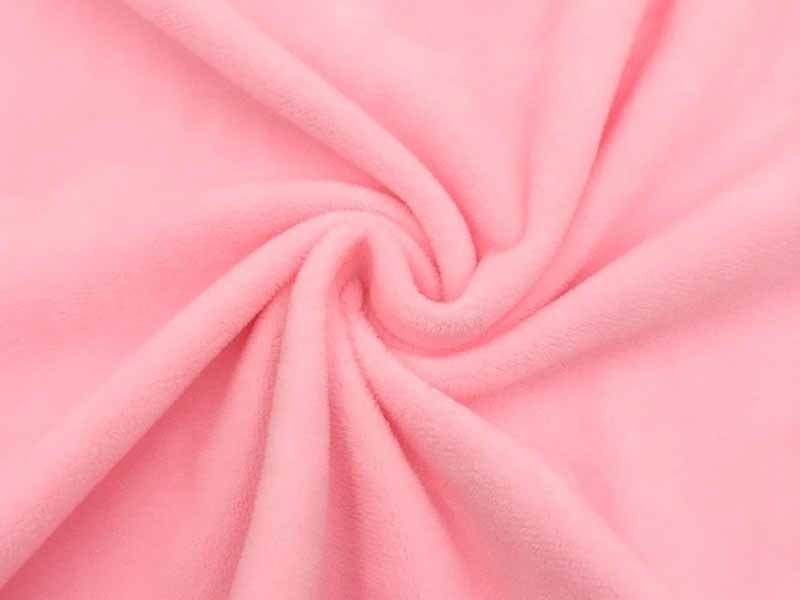
Short-pile fabrics keep face shapes, costume edges, and small embroidered details visible. They are often suitable for clean anime styling and mini collectibles. Selection considers pile length, density, GSM, stretch, sheen, backing stability, color availability, and seam recovery rather than relying only on a supplier’s commercial fabric name.
  • Suitable for precise facial embroidery.
  • Cleaner seam and appliqué definition.
  • Easier control of compact silhouettes.
  • Stretch must be measured before pattern release.
Minky and Velboa

Minky and velboa can produce a soft surface with controlled pile, but qualities vary significantly by supplier, weight, backing, stretch, and finishing. A material swatch is evaluated alongside the intended character color and embroidery method.
  • Useful for faces and rounded body forms.
  • Directional sheen may change perceived color.
  • High stretch can alter completed measurements.
  • Bulk lots require shade and hand-feel review.

Specialty Hair Fabrics

Longer-pile plush, faux fur, brushed fabrics, or layered textiles can support hair volume and texture. Excessive pile may hide seam lines, embroidery, and small color blocks, so hair fabric must suit the scale of the product.
  • Pile direction is marked on every pattern.
  • Cutting methods reduce trapped hair.
  • Seam grooming restores the finished outline.
  • Lot differences can affect height and appearance.

Costume Fabrics

Satin, tricot, felt, woven fabric, knit fabric, mesh, imitation leather, and printed textiles may be combined for anime clothing. Each material behaves differently during cutting, folding, sewing, and packing.
  • Fraying edges require suitable finishing.
  • Dark materials are reviewed for color transfer.
  • Stiff materials may distort the body.
  • Printed positions require registration control.
  • Layer thickness affects garment fit.

Embroidery and Appliqué

Embroidery creates durable eyes, mouths, symbols, logos, and costume lines, while appliqué can cover larger color areas with lower stiffness than dense fill stitching. Method selection considers size, fabric, curve, edge quality, stitch count, and production handling.
  • Test stitching uses production-intended fabric.
  • Small text is reviewed for legibility.
  • Appliqué edges require stable placement.
  • Thread and fabric colors are approved separately.

Filling Systems

Polyester fiberfill is commonly distributed by body zone rather than treated as one total weight. Face, head, torso, limbs, hair, and accessories may need different firmness to maintain shape and handling.
  • Filling order is specified.
  • Target weight is recorded by SKU.
  • Critical areas receive hand-feel references.
  • Overfilling is monitored for seam distortion.
  • Finished net weight supports packing data.

Anime Plush Sample Development Stages

Sample StageMain PurposeTypical FocusReference Timeline
Development ReviewConfirm feasibility before cuttingCharacter assets, size, pose, materials, costume, accessories, target market1–3 working days
V1 PrototypeEstablish the first physical directionOverall silhouette, head-to-body ratio, facial direction, hair volume, pose7–12 working days for standard complexity
Complex V1 PrototypeDevelop detailed constructionLayered hair, multi-piece outfits, shaped accessories, unusual materials12–20 working days
Revision SampleApply approved commentsFace placement, proportion, material, pattern, costume, filling, attachmentsCommonly 5–10 working days per focused revision
Engineering SampleVerify production methodSeam structure, attachment reinforcement, pattern repeatability, operation sequenceProject-based
Pre-Production SampleConfirm production-intended configurationFinal materials, colors, embroidery, labels, packaging, workmanshipProject-based
Golden SampleEstablish the production referenceApproved appearance, measurements, material codes, filling, packaging, QC pointsReleased after final approval
Packaging SampleVerify retail presentationBox size, insert, barcode, warnings, print, protection, carton fitCommonly 7–15 working days

Approval Gates Prevent Uncontrolled Production Changes

Every approval gate defines what has been accepted, who approved it, which version applies, and whether the project may proceed to the next stage.

Design Freeze

The design freeze confirms the intended character interpretation before final engineering. Approved views, pose, size, facial direction, hair structure, costume, accessories, and permitted simplifications are recorded. New design changes after this point are reviewed for their effect on pattern work, sample timing, cost, testing, packaging, and launch schedule.

Sample Freeze

Sample freeze occurs when the physical product is accepted as the reference direction. The approved sample receives an identification number and version. Measurements, photographs, notes, and remaining production adjustments are linked to the same record so a verbal approval cannot be confused with full production release.

Material Freeze

Material freeze confirms fabric, filling, embroidery thread, costume textiles, accessories, labels, and relevant finishes. Swatches or material samples are coded by supplier and specification. Substitutions require review because similar-looking materials can change stretch, shade, hand feel, sewing behavior, testing requirements, and finished dimensions.

Packaging Freeze

Packaging approval remains separate from product approval. Artwork, copyright lines, warnings, barcodes, inserts, bags, boxes, carton marks, quantity per carton, and market language must match the correct SKU. Print proofs and physical packaging samples may be approved at different points depending on complexity.

Production Release

Production begins only after the required product, material, packaging, quantity, delivery, and commercial conditions are released. The production file package becomes the controlled instruction set. Later modifications enter a change request rather than being introduced informally on the sewing line.

Protect Licensed and Unreleased Anime Assets

Rights confirmation, NDA handling, restricted file access, and controlled public use protect both the merchandise program and the reputation of every organization involved.

Rights Confirmation

Pufumi works with original artwork, owned properties, or assets used under valid authorization. Third-party anime characters, brand marks, university marks, sports symbols, and entertainment properties require a clear rights basis. Manufacturing activity does not create or transfer intellectual property ownership, and an uploaded image alone is not treated as full authorization.

NDA Process

A brand may provide its own NDA or request review of Pufumi’s standard agreement. Legal entity names, signing authority, protected information, permitted purpose, access scope, and confidentiality period should be clear. Full unreleased assets are not required before the agreed confidentiality process is completed.

Restricted File Access

Character files, packaging artwork, launch information, quantities, prices, test reports, and approval records are limited to personnel involved in evaluation and execution. Project files are separated from public media assets, while obsolete versions are retained or isolated according to the project record rather than circulated as current instructions.

Authorized Public Use

Manufacturing approval does not automatically permit marketing use. Product photographs, brand names, licensed characters, packaging, production quantities, launch dates, and testimonials are published only within the approved scope. Confidential programs may be discussed through anonymized information or under NDA when evidence is needed during supplier evaluation.

Build a Scalable Anime Plush Product Line

A coordinated product architecture creates clear price tiers, recognizable character families, efficient material use, accurate SKU control, and stronger opportunities for replenishment.

Entry Mini Plush

An entry-format mini plush offers an accessible price point and compact display footprint. Critical features are enlarged or simplified for 8–15 cm production. Packaging may use a sealed bag, header card, small retail box, or blind format according to channel and merchandising strategy.

Core Character Plush

The core SKU usually carries the strongest character recognition and broadest sales role. A 20–35 cm format often allows balanced facial detail, hair structure, clothing, and shelf presence. Core materials and colors may establish the visual standard shared by later extensions.

Premium Edition

Premium versions can use larger dimensions, complex outfits, additional embroidery, exclusive materials, display accessories, or presentation packaging. Upgrades should be visible from the front-facing retail view and meaningful to collectors rather than hidden inside construction with little perceived value.

Plush Bag Charm

Bag charms connect character merchandise with fashion and everyday carry. Product weight, hanging angle, hardware finish, attachment reinforcement, fabric abrasion, and package protection require dedicated review. A charm should look intentional on a bag rather than appearing as a reduced standard plush with a ring added.

Limited Release

A limited release may introduce an alternate outfit, event color, anniversary badge, numbered tag, or exclusive package. Quantity control, production allowance, number sequence, replacement policy, channel allocation, and whether replenishment is prohibited should be documented before production.

Seasonal Expansion

Seasonal products extend an established character without rebuilding the entire platform. Shared body patterns can support holiday costumes, convention editions, promotional collaborations, and later launch waves, provided changes remain clearly identified through SKU, material, packaging, and approval records.

Control Complex Programs From Brief to Replenishment

Large anime programs involve creative, licensing, engineering, procurement, quality, packaging, logistics, and retail teams. Milestone ownership prevents information from becoming fragmented.

Dedicated Coordination

A defined project contact organizes questions, approvals, cost changes, sample shipments, production milestones, and delivery information. Communication records are converted into structured project actions rather than remaining scattered across email, chat, spreadsheets, and verbal instructions.

Milestone Planning

Development, revisions, licensor approval, testing, material booking, packaging, production, inspection, freight, and warehouse arrival are placed on one reverse timeline. Dependencies are identified so artwork, packaging, material, and compliance work can proceed in parallel where appropriate.

Approval Tracking

Each approval records the item, SKU, version, date, approver, comments, and status. Pending, approved, rejected, superseded, and released files remain distinguishable. Approval tracking is especially important when creative, licensor, retailer, and regional teams review different parts of the same program.

SKU Governance

Every character, size, costume, market, barcode, and packaging version receives clear identification. Product files, samples, materials, labels, cartons, finished goods, and shipment records remain linked to the correct SKU, reducing mixed production and warehouse receiving errors.

Replenishment Planning

Repeat orders use archived product, material, packaging, and inspection records. Availability and material-lot changes are reviewed before confirmation. Stable core SKUs may follow a replenishment plan, while seasonal or limited editions retain separate release and discontinuation rules.

Anime Plush Manufacturing From Cutting to Packing

Each manufacturing stage has distinct anime-specific control points. Clear work instructions prevent approved character details from being lost during production.

Material Preparation

Fabric rolls, filling, embroidery thread, costume textiles, accessories, labels, and packaging are received by material code and lot. Incoming checks review shade, pile, stretch, visible defects, dimensions, hand feel, and file version before materials are issued to the relevant SKU.

Pattern and Cutting

Released pattern pieces carry version, panel name, direction, mirrored-pair instructions, quantity, and material assignment. Face panels, directional hair pieces, printed areas, and high-risk shapes receive additional checks. Cut components are bundled and labeled to prevent mixing among characters and color variants.

Embroidery and Printing

Production files define size, position, stitch sequence, thread color, backing, print location, and orientation. First pieces are compared with the approved reference before volume work continues. Facial embroidery receives tighter positional review because small shifts can change expression.

Sewing and Assembly

Panels are joined in a controlled sequence so facial alignment, hair layers, costume seams, and accessories remain accessible. Seam allowance, stitch density, reinforcement, and turning openings depend on the material and stress level of each location.

Stuffing and Shaping

Filling is distributed by body region rather than inserted only to a total weight. Head shape, cheeks, torso firmness, limb position, seated balance, and accessory support are compared with the Golden Sample. Overfilling is checked because it can widen seams and alter expression.

Costume Installation

Fixed or removable garments are fitted after the relevant body shaping stage. Alignment, closure position, trim direction, logo placement, wrinkles, and color transfer are inspected. Garments that shift during packing receive controlled folding or fixing instructions.

Finishing Inspection

Loose thread removal, seam grooming, surface cleaning, hair shaping, label confirmation, measurements, appearance, attachments, and function are reviewed. Nonconforming units are isolated for rework or disposition rather than returned silently to acceptable stock.

Packaging and Shipment

Approved packaging, barcode, copyright line, warning, insert, quantity, carton mark, and market version are matched to the finished SKU. Cartons are recorded by quantity and shipment lot so delivered products can be traced back to production and inspection records.

Sewing Details That Protect Character Accuracy

Anime plush sewing combines visual alignment with structural reliability. Seam construction changes according to fabric, panel size, stress direction, costume layer, and visible character detail.

Facial Panel Alignment

Face seams and embroidery must share the same centerline. Small differences in left-right seam allowance can rotate the completed face or change cheek width after stuffing.
  • Registration marks are checked before sewing.
  • Embroidered panels are compared with cutting templates.
  • Symmetry is reviewed after turning.
  • Face alignment is confirmed again after final filling.

Hair Layer Assembly

Hair panels often overlap in a defined sequence. Incorrect assembly can hide a fringe, reverse a side lock, shorten a spike, or create unwanted thickness.
  • Every hair piece receives an orientation reference.
  • Layer order is included in the operation instruction.
  • Pile direction is checked before joining.
  • Seam-trapped fibers are released during finishing.
  • High hair structures are reviewed for internal support.

High-Stress Seams

Arms, legs, tails, wings, hanging loops, garment openings, and accessory bases experience different loads. Reinforcement should follow expected use rather than applying one seam method everywhere.
  • Stitch type and thread match the material.
  • Load-bearing points may use hidden tape or internal patches.
  • Seam tests use defined direction and duration.
  • Failure mode is recorded as stitch break, seam opening, or fabric tear.

Small-Part Turning

Narrow fingers, thin limbs, ears, hair spikes, and costume details can become distorted during turning. Excessively small components also slow production and increase rework.
  • Minimum workable widths are reviewed during engineering.
  • Turning openings are placed away from key visual areas.
  • Curves and points receive controlled clipping.
  • Finished dimensions are checked after shaping.
  • Simplification is approved before production.

Closing Seams

Stuffing openings must allow controlled filling without leaving a visible closure in a focal area. Hand closures are reviewed for stitch spacing, thread match, puckering, exposed filling, and durability.
  • Closure location is defined in the pattern.
  • Filling is kept clear of the seam.
  • Thread ends are secured internally.
  • Surface pile is restored after closing.
  • Closing quality enters final inspection.

Costume Construction

Anime outfits may combine woven, knit, felt, satin, mesh, printed fabric, imitation leather, hook-and-loop tape, snaps, or elastic. Sewing methods are selected for each material.
  • Fraying edges receive suitable finishing.
  • Layer thickness is controlled at overlaps.
  • Printed graphics remain oriented.
  • Fixed outfits align with body landmarks.
  • Removable garments are tested for dressing clearance.

Quality Control From Materials to Final Cartons

Quality control follows the approved sample, released files, defined tolerances, material lots, production stages, packaging versions, and market-specific requirements.

Incoming Material Check

Fabric, thread, filling, costume textiles, accessories, labels, and packaging are checked before production. Shade, pile direction, weight, stretch, width, visible damage, print, hardware finish, and file version are reviewed. Rejected or uncertain materials are isolated rather than issued to production.

First Article Review

The first completed units from a production setup are compared with the Golden Sample and released instructions. Face position, overall measurements, hair structure, costume alignment, accessories, filling, labels, and workmanship are reviewed before the production team continues at full volume.

Embroidery Inspection

Facial embroidery and costume decoration are checked for position, size, thread color, stitch coverage, puckering, loose thread, skipped stitches, and distortion. Inspection includes both the flat panel and the completed stuffed product because stuffing can change the visual relationship between features.

In-Line Sewing Check

Process checks identify incorrect panels, reversed hair, uneven seam allowance, open seams, missing reinforcement, mismatched colors, and assembly errors before finishing. Early containment reduces the number of units requiring disassembly or extensive rework later.

Filling and Shape Check

Finished weight, regional firmness, head shape, cheek volume, posture, limb position, and sitting stability are compared with the approved reference. Total weight alone is insufficient because equal filling weight can be distributed differently and produce a visibly different character.

Attachment Inspection

Hanging loops, tails, wings, hats, bags, badges, garment parts, and decorative accessories are checked according to their intended use. Load-bearing components receive reinforcement and pull-oriented inspection, while decorative pieces are checked for position, security, appearance, and age-related risk.

Final Product Inspection

Final inspection reviews appearance, measurements, expression, hair, costume, workmanship, labels, accessories, contamination, loose threads, damage, and SKU identity. Inspection scope may combine full checks for critical items with sampling for defined workmanship and measurement characteristics.

Packaging Verification

Product version, packaging version, barcode, copyright line, warning, language, insert, bag, box, carton quantity, carton mark, and destination label are cross-checked. Barcode scans and packing records reduce the risk of correct products entering incorrect packaging.

Safety and Compliance Prepared by Market and Age

Compliance begins with product definition. Target market, intended age, structure, materials, accessories, packaging, and sales channel determine the applicable preparation and testing path.

Market Definition

Requirements differ across the United States, European Union, United Kingdom, Canada, Australia, Japan, Korea, and other destinations. The project brief should identify every intended market before labels, materials, packaging, and test samples are finalized.

  • United States programs may involve ASTM F963, CPSIA, tracking information, and a Children’s Product Certificate where applicable.
  • European programs may involve EN 71 requirements and CE-related responsibilities.
  • Additional destinations require separate review rather than automatic extension.

Intended Age

Age grading affects small parts, cords, removable clothing, attachments, warnings, testing, and product use. A collectible appearance does not automatically remove children’s-product obligations when the product is designed or marketed for children.
  • Intended users and foreseeable use are reviewed.
  • Removable accessories receive special attention.
  • Embroidered features may reduce hard-component risk.
  • Age statements must match product design and distribution.

Structural Safety

Seams, attachments, filling access, internal components, hanging loops, zippers, wires, and accessory points are evaluated according to product function. Warnings cannot replace a structural correction when a risk can reasonably be designed out.
  • High-risk seams are mapped.
  • Reinforcement is defined by load direction.
  • Accessible internal filling is prevented.
  • Sharp or rigid character props are softened or redesigned.
  • Small-part risks are evaluated after attachment testing.

Material Documentation

Material codes remain connected to suppliers, lots, specifications, and available supporting documents. Fabric, thread, filling, coatings, printing, accessories, packaging, and electronic components may require different declarations or test evidence.
  • Material substitutions enter change review.
  • Similar appearance does not prove equivalent compliance.
  • Test samples use production-intended materials.
  • Documentation scope is matched to the final SKU and market.

Labeling and Traceability

Product and packaging information may include responsible-party details, batch or production identification, country of origin, care information, warnings, copyright lines, age marks, and market language. Required information must remain readable and attached in the approved location.
  • Label artwork is version controlled.
  • Product and packaging data are cross-checked.
  • Multi-market language versions remain separate.
  • Production and shipment records support traceability.

Third-Party Testing

Pufumi prepares representative samples, BOM information, material records, labels, product details, and packaging information for qualified third-party laboratory coordination. Laboratory scope should match the final product rather than relying on a generic report from a different item.

  • Testing occurs at the appropriate approval stage.
  • Failures are reviewed by cause.
  • Corrective changes are re-evaluated.
  • Manufacturing support does not replace the legal responsibilities of the responsible company or importer.


Retail Packaging for Anime Plush Collections

Packaging protects character shape, communicates licensed information, separates SKUs, supports scanning, and prepares products for retail, e-commerce, warehouse, or collector delivery.

Hangtags and Labels

Hangtags can carry brand identity, character story, copyright lines, barcode, care information, and collection details. Sewn labels provide permanent information where required. Placement is reviewed so tags remain readable without obscuring the face, costume, or display pose.

Protective Polybags

Polybags protect surfaces and accessories during handling but require correct dimensions, closure, ventilation, warning assessment, and market review. Oversized bags allow movement and deformation, while tight bags can compress hair, faces, costumes, or projecting accessories.

Retail Display Boxes

Open-front, window, closed, and display-ready boxes are designed around the actual plush dimensions and pose. Inserts, ties, support cards, or molded trays may stabilize the character. Packaging tests check visibility, movement, abrasion, crushing, and efficient carton loading.

Collector Packaging

Collector boxes may include premium print, foil, embossing, magnetic closures, certificates, numbered cards, story cards, or display inserts. The packaging upgrade should reinforce edition value while protecting delicate hair, costume, and accessories during international transportation.

Barcode and SKU Control

UPC, EAN, FNSKU, internal SKU, assortment code, and carton labels must correspond to the correct character, size, costume, market, and packaging version. Barcode files are controlled, printed samples are scanned, and packing lines verify product-to-package matching.

Master Cartons

Carton dimensions, quantity, dividers, compression protection, marks, gross weight, and destination labels are planned from final packed samples. Multi-SKU assortments require clear packing ratios and carton identification so receiving teams can reconcile units without opening every carton.

Anime Plush MOQ, Cost, and Timeline Factors

MOQ, unit cost, sample scope, production time, and freight planning depend on SKU structure and manufacturing complexity rather than one universal product rate.

Project FactorManufacturing ImpactInformation Needed
Quantity Per SKUMaterial efficiency, setup cost, line planning, unit priceRequired units for each character and version
Product SizeFabric use, filling, labor, package volume, freightFinished height, width, depth, and pose
Number of SKUsSampling workload, material allocation, packing controlCharacters, colors, sizes, costumes, market versions
Pattern ComplexityCutting, sewing operations, assembly, rework riskFront, side, back, and accessory views
Facial EmbroideryDigitizing, stitch count, thread changes, positioningVector or high-resolution face artwork
Hair ConstructionPanel count, layering, support, shaping timeFull hair views and priority silhouette
Costume LayersFabric sourcing, sewing, dressing, alignmentFixed or removable outfit requirements
AccessoriesTooling, sourcing, reinforcement, assembly, inspectionMaterial, size, position, attachment method
Custom-Dyed FabricColor development, minimum dye lot, lead timePantone reference and required quantity
PackagingSampling, printing, inserts, carton efficiencyPolybag, retail box, blind box, or gift box
Target MarketMaterials, labels, test preparation, warningsCountries, age grade, sales channel
Required Arrival DateSampling plan, approval pace, freight methodFinal warehouse delivery date

Enterprise anime plush programs commonly begin from approximately 500 pieces per SKU, although shared materials, several characters, custom-dyed fabric, specialist accessories, or complex packaging can change the workable allocation. Standard production timing is confirmed only after the Golden Sample, materials, packaging, testing path, quantity, and delivery plan are approved.

Why Anime Programs Choose Pufumi

Pufumi combines character development, managed manufacturing, controlled project files, quality execution, retail preparation, and long-term replenishment support within one coordinated operating system.

Established Manufacturing Base

Pufumi is operated by Shenzhen Oneier Technology Co., Ltd. and supported by Oneier-invested manufacturing resources in Dongguan and Foshan. The core Dongguan factory was established on March 26, 2007, providing a long-standing base for pattern development, sampling, sewing, production, and quality management.

Experienced Development Team

The core Dongguan team includes more than 58 designers, pattern makers, sample technicians, and related development personnel. Approximately half bring more than 15 years of relevant experience, supporting complex character interpretation, pattern engineering, prototype refinement, sewing decisions, and production troubleshooting.

Product-Specific Line Planning

Different projects are matched to suitable development and production resources. Complex characters, mini charms, layered garments, standard plush, electronic products, retail packaging, and sample programs do not follow one identical line setup. Resource planning considers operation difficulty, staff skill, quality risk, and delivery sequence.

Controlled Project Files

Artwork, pattern versions, embroidery files, BOMs, measurements, material codes, sample approvals, packaging files, inspection points, and change records form one released production package. Older versions are separated from current instructions, reducing the risk of outdated details entering production.

Lot-Level Traceability

Fabric, filling, thread, hardware, labels, packaging, production lots, finished goods, cartons, and shipments can be linked through project and SKU records. Traceability supports issue containment, repeat-order comparison, material-change review, and more accurate investigation when a difference appears.

Long-Term Program Support

Development records remain useful after the first shipment. Core patterns, Golden Samples, material specifications, approved packaging, quality checkpoints, and SKU histories support replenishment, new character extensions, seasonal versions, size expansions, and later launch waves.

Anime Collection Program Example

A realistic four-SKU program demonstrates how character development, sample approval, production allocation, packaging, quality control, and delivery planning work together.

Illustrative 6,000-Piece Four-Character Program

The following figures represent an illustrative production scenario rather than a named or claimed client order. The structure shows how an established anime property could organize a commercial collection while preserving confidentiality and realistic manufacturing controls.

  • Program scope: Four anime characters developed at 22 cm finished height, with 1,500 pieces per SKU and a total quantity of 6,000 pieces. Every character shares the same general body scale but uses independent face embroidery, hair patterns, costume components, and barcode information.
  • Development inputs: Front, side, and back character views; facial artwork; color references; costume details; copyright requirements; target market; target age; packaging direction; quantity; and required warehouse arrival date.
  • Sample plan: Four V1 prototypes developed in parallel over approximately 15–20 working days because each character contains layered hair and fixed clothing. Two characters move to approval after one focused revision, while two require a second facial and hair adjustment. A pre-production sample confirms production-intended fabric, embroidery, sewn labels, hangtags, polybags, and carton marks.
  • Material strategy: Shared face and body fabrics improve lot consistency and purchasing efficiency. Character-specific hair and costume materials remain separately coded. Embroidery thread colors, trims, labels, and packaging are allocated by SKU.
  • Production controls: Each SKU receives an independent production lot, released pattern set, embroidery file, BOM, filling target, packaging version, and quality checklist. Face position, hair silhouette, outfit alignment, accessory attachment, finished dimensions, net weight, barcode, and carton quantity are checked.
  • Packing plan: Every unit receives a sewn label, branded hangtag, protective polybag, and SKU barcode. Master cartons hold one SKU only, simplifying warehouse receiving and replenishment.
  • Schedule model: After final approval and material readiness, a program of this structure may require approximately 30–45 days for production, followed by inspection, packing, and the selected freight method. The confirmed schedule depends on season, materials, packaging, testing, and destination.


Trust, Compliance & Production Assurance

Confidence for global brands and complex plush programs

Pufumi evaluates each project according to its target market, age grade, materials, construction, labeling, and packaging requirements. Depending on the assigned production site and project scope, our team can support ISO 9001 quality-management documentation and coordinate testing to EN71, ASTM F963, CPSIA, REACH, and other applicable standards. Factory audits, certifications, and test reports are verified by issuing body, validity period, facility, and product scope, giving brands greater transparency from sample development through controlled production and delivery.


Frequently Asked Questions

Front, side, and back views are preferred, together with facial artwork, color references, dimensions, pose, costume details, accessories, quantity, target market, intended age, packaging direction, and required delivery date. A Character Bible or model sheet helps identify non-negotiable visual features. Incomplete files can still be reviewed, but missing structural information may require interpretation and additional approval before sampling.

Yes, when the commissioning organization owns the artwork or holds suitable authorization to develop and manufacture the merchandise. Pufumi does not knowingly reproduce unauthorized anime characters, brand marks, game assets, film properties, sports marks, or other protected material. Rights status and permitted use should be clarified during project review.

Yes. A brand may provide its own NDA or request review of Pufumi’s standard form. Legal entity names, signing authority, protected information, permitted project purpose, and confidentiality period should be confirmed. Full unreleased character files are not required before the agreed NDA process is completed.

Enterprise programs commonly begin from approximately 500 pieces per SKU. Final MOQ depends on product dimensions, fabric availability, custom dyeing, embroidery, costume complexity, accessories, packaging, number of SKUs, and production allocation. Multi-character programs are reviewed by SKU rather than using only the total order quantity.

Standard prototypes commonly require 7–12 working days after complete files, sample payment, and key materials are confirmed. Complex hair, multi-layer costumes, unusual accessories, custom materials, or several characters may require 12–20 working days or a project-specific schedule. Revision timing depends on the scope of approved comments.

Many layered, pointed, curled, braided, tied, or multi-color hairstyles can be developed through panel engineering, fabric selection, appliqué, embroidery, controlled support, and final shaping. Extremely thin or floating artwork details may require adjustment. The goal is to preserve recognizable hair silhouette while creating a stable and repeatable structure.

Facial control combines approved embroidery files, panel registration, seam allowance, stuffing distribution, measurements, Golden Sample comparison, first-article review, in-line inspection, and final stuffed-form checks. Flat embroidery alone is not enough because filling pressure and seam construction can change eye spacing, face width, and mouth appearance.

Pufumi can assist with product definition, material records, BOM preparation, labeling, test samples, manufacturing documentation, and coordination with qualified third-party laboratories. Applicable requirements depend on target market, intended age, product structure, accessories, packaging, and sales channel. Final legal responsibilities remain with the relevant manufacturer, importer, or responsible economic operator.

Options include sewn labels, hangtags, polybags, header cards, open display boxes, window boxes, closed retail boxes, blind boxes, collector boxes, gift sets, inserts, barcode labels, carton marks, and warehouse labels. Packaging is evaluated for product protection, retail display, licensing information, scanning, carton efficiency, and destination requirements.

Major factors include quantity per SKU, size, panel count, embroidery stitch count, hair construction, costume layers, accessories, custom materials, packaging, testing, approval rounds, production season, and delivery destination. Accurate pricing requires enough information to understand the complete installed and packed product rather than only its finished height.

Start Your Anime Plush Program

Pufumi reviews anime plush projects for character accuracy, engineering feasibility, sample scope, production requirements, packaging, compliance preparation, and delivery planning. Send the information currently available; unknown details can be identified during the first review rather than estimated without a clear basis. Helpful project information includes:
  • Company name and project contact
  • Original or licensed IP status
  • Character artwork or model sheets
  • Number of characters and SKUs
  • Required finished sizes and poses
  • Estimated quantity per SKU
  • Facial, hair, costume, and accessory requirements
  • Target markets and intended age
  • Retail or collector packaging direction
  • Required warehouse arrival date
  • Existing quality, testing, or retailer requirements

Start Your Custom Plush Project

Plush Product Development & Manufacturing Support for Global Brands

Share your character artwork, product concept, target size, estimated quantity, destination market, launch timeline, packaging requirements, and any special functions or compliance needs.

Our project team will review your request and recommend a tailored development and manufacturing approach based on character complexity, materials, construction, sample requirements, production planning, packaging, and delivery schedule.

From Character Artwork to Retail-Ready Plush Products

Pufumi supports IP owners, entertainment companies, toy and collectible brands, lifestyle brands, and major retailers with structured plush product development and manufacturing.

Your artwork, unreleased characters, packaging files, target costs, and commercial information are handled as confidential project materials and are not used for other customer projects or public marketing without authorization.

Need Direct Assistance?

Seraphinite AcceleratorOptimized by Seraphinite Accelerator
Turns on site high speed to be attractive for people and search engines.