Skip to content

Custom Plush Keychain Manufacturer for Global Brands
- 58+ specialists preserve character identity at keychain scale.
- 80 embroidery machines sharpen tiny faces and logo details.
- Plush keychain programs are generally more stable from 500 pieces per SKU, depending on fabric, hardware, artwork complexity, and packaging.
- Secure rings, clips, and loops match different usage needs.
- Mini pattern engineering reduces bulk while keeping shapes stable.
- 35+ quality specialists inspect attachments, labels, and packing.
- Hanger cards and display-ready packs stay well coordinated.
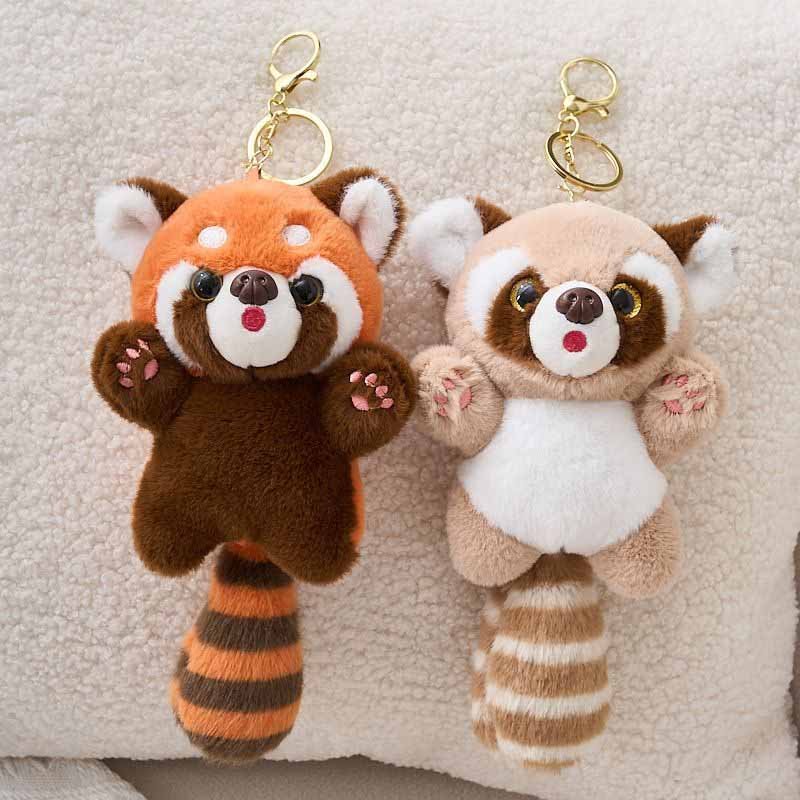
Key Plush Keychain Project Facts
Important commercial and engineering conditions are reviewed before quotation, helping brand teams compare development paths, identify cost drivers, and establish realistic approval schedules.
| Project Item | Pufumi Working Basis | Important Conditions |
|---|---|---|
| Recommended Order Scale | Commonly 1,000 pieces per SKU | Final quantity depends on shared materials, hardware, packaging, colors, and SKU allocation |
| Standard Sample Time | 7–12 working days | Begins after design information, sample payment, and essential material direction are confirmed |
| Complex Sample Time | 12–20 working days | Applies to layered costumes, detailed embroidery, special accessories, or difficult character proportions |
| Sample Shipping | Usually 3–7 working days by express | Customs, remote areas, holidays, and restricted materials may affect arrival |
| Production Schedule | Confirmed by project | Based on approved sample, material readiness, SKU count, packaging, testing, and required arrival date |
| Development Inputs | Artwork, dimensions, quantity, market, age grade, packaging, deadline | Incomplete information can be assessed, but missing views or specifications may require interpretation approval |
| Inspection Method | Multi-stage inspection and key-point checking | Includes material, cutting, embroidery, sewing, filling, shaping, hardware, packaging, and shipment checks |
| Confidential Projects | NDA available | Unreleased character files are handled through controlled project records and restricted access |
Plush Keychains Developed for Commercial Product Programs

Licensed Character Keychains

Anime Plush Keychains

Game Character Keychains

Mascot Plush Keychains

Collectible Keychain Series
A collectible series requires shared visual rules and accurate SKU control. Pufumi helps plan body platforms, character-specific faces, colors, costumes, hardware finishes, tags, backing cards, packaging, and launch waves. Shared construction can improve material efficiency, while separate patterns and embroidery files protect individual character features. Production coding and separated packing reduce the risk of mixed characters, labels, or packaging versions.

Promotional Event Keychains
Built for Established Brands and Product Teams
IP Rights Holders
- Character asset review
- Non-negotiable feature records
- Licensor approval tracking
- Confidential file handling
Entertainment Companies
- Release-date scheduling
- Multi-round sample feedback
- Product and packaging versions
- Launch shipment planning
Toy and Collectible Brands
- Multi-SKU architecture
- Shared component planning
- Character differentiation
- Reorder documentation
Lifestyle and Fashion Brands
- Material and hardware coordination
- Branded trim development
- Portable weight control
- Retail presentation
Global Retail Programs
- Barcode and SKU mapping
- Retail-ready packaging
- Carton and labeling control
- Replenishment records
Destination Merchandise Teams
- Destination-specific identity
- Portable souvenir formats
- Seasonal allocation
- Ongoing restocking
Small-Scale Character Engineering Without Losing Recognition
Translating Large Characters into Compact Plush Forms
Small plush engineering begins by identifying the visual features responsible for recognition. The outer silhouette, face shape, eye position, mouth direction, color blocks, hairstyle, costume outline, and signature accessory are ranked before patterns are created. A direct proportional reduction often produces thin arms, unreadable embroidery, crowded facial features, weak seams, and accessories too small to sew securely.
Pufumi restructures the design around the selected finished height. Eyes or facial marks may be enlarged slightly to remain visible. Limbs may need extra width for sewing and turning. Several costume layers may become a single printed, embroidered, or appliquéd surface. Tiny fingers, narrow straps, thin weapons, and sharp decorative elements may require soft redesign rather than literal reproduction.
The goal is not to preserve every line from the original artwork. The goal is to retain the features that make the character immediately recognizable when viewed at keychain scale.
Key engineering decisions include:
- Silhouette: The outer profile must remain readable from normal viewing distance.
- Face layout: Eye spacing, eyebrow angle, mouth position, and head shape are adjusted as one connected expression.
- Panel count: Excessively small panels are combined where separate sewing would reduce consistency.
- Costume hierarchy: Essential uniform shapes and brand marks are retained before minor decorative lines.
- Accessory conversion: Hard, thin, or sharp objects are redesigned as soft sewn, embroidered, or appliquéd components.
- Hanging orientation: The attachment point is positioned so the character faces outward rather than rotating sideways.
Building Independent Patterns for Every Size
A 6-centimeter keychain, a 10-centimeter mini plush, and a 20-centimeter core plush may share the same character standards, but they should not share one automatically scaled pattern. Fabric thickness does not reduce with product size. Seam allowances, embroidery thread, turning openings, woven labels, and attachment tapes also occupy a larger percentage of a small body.
Pufumi creates size-specific pattern, embroidery, material, filling, and hardware records. The first approved size can establish the visual language, but every additional size is reviewed separately for manufacturability and appearance.
The engineering team checks:
- facial feature visibility after filling;
- minimum workable panel dimensions;
- seam locations around eyes and costume edges;
- whether the head can support the selected hardware;
- whether the body remains balanced when suspended;
- whether packaging bends ears, hair, tails, or accessories;
- whether the selected filling produces shape without unnecessary weight;
- whether production tolerances remain visually acceptable at the chosen scale.
A small fixed deviation can create a large visual difference on a keychain. Eye placement, mouth angle, ear height, hardware position, and product weight therefore require their own measurement and inspection criteria rather than a general tolerance applied to every feature.
Choose the Right Plush Keychain Size
Size affects recognizable detail, sewing access, weight, attachment strength, packaging, unit cost, and perceived retail value. Final dimensions should follow the design rather than a generic template.
| Development Band | Suitable Uses | Engineering Priorities | Common Limitations |
|---|---|---|---|
| 5–7 cm | Simple mascots, icons, flat characters, compact giveaways | Bold silhouette, limited panels, large facial marks, lightweight hardware | Layered costumes, narrow limbs, readable text, complex three-dimensional accessories |
| 8–10 cm | Anime characters, branded mascots, tourism merchandise, collectible keychains | Face accuracy, body proportion, embroidery clarity, secure hanging direction | Very detailed uniforms, long hair sections, multiple removable accessories |
| 11–15 cm | Premium keychains, detailed characters, fashion accessories, display-oriented products | Layered materials, shaped limbs, costume construction, stronger hardware | Higher weight, larger packaging, increased fabric and labor requirements |
| Custom Size | Licensed programs, coordinated collections, special retail concepts | Product-specific patterns, tested attachment point, packaging compatibility | Requires full assessment of material, structure, hardware, cost, and shipping |
Fabrics Selected for Detail, Touch, and Stability

Short Plush

Minky Fabric

Velboa

Faux Fur

Fleece and Sherpa

Recycled Material Options
Surface Processes Designed for Small Character Details

Precision Embroidery
- Best for clean lines and tactile details
- Requires scale-specific digitizing
- Must be tested on the selected production fabric
- Facial approval uses the fully filled product

Printed Details
- Suitable for gradients and detailed color fields
- Placement tolerances must be defined
- Curved-surface distortion requires sample review
- Color results depend on fabric and process

Appliqué and Layering
- Useful for bold costume and facial shapes
- Reduces excessive stitch density
- Supports mixed textures and raised details
- Requires edge, alignment, and seam inspection
Hardware Options Matched to Real Use

Split Key Rings

Ball Chains

Lobster Clasps

Plastic Hooks

Cord and Elastic Loops

Custom Hardware Systems
Structural Details Behind a Reliable Plush Keychain
Engineering the Attachment Point and Hanging Direction
The attachment point is part of the plush structure. A small fabric loop sewn only into a surface seam may look acceptable in photographs but can become a weak point during repeated pulling, swinging, and everyday carrying. Pufumi evaluates the expected load direction, product weight, head-to-body ratio, hardware weight, loop material, seam position, reinforcement method, and internal anchor length. The hanging direction must also be approved. A character may face forward when placed on a table yet rotate sideways when suspended from a single point. Heavy heads, tails, backpacks, hats, hair, and metal accessories can shift the center of gravity. Moving the loop a few millimeters may improve orientation but can alter the silhouette or interfere with ears and hair. Structural development can include:
- Hidden reinforcement tape: Extends the load away from one narrow surface seam.
- Seam-integrated anchor: Secures the loop within a planned structural seam.
- Multiple-layer stitching: Supports higher-stress attachment areas.
- Internal load distribution: Reduces concentrated pulling against thin plush fabric.
- Hardware weight review: Prevents a clasp or chain from controlling the character’s posture.
- Suspended sample approval: Confirms appearance while hanging from a bag, display, or retail card.
Final inspection should evaluate the entire connection chain: plush seam, reinforcement, loop, intermediate ring, chain, clasp, and key ring.
Controlling Shape, Filling, Weight, and Balance
Keychains must remain light enough for carrying while retaining a readable three-dimensional shape. Excess filling can distort the face, spread embroidered features, stiffen the body, and increase stress on the attachment point. Insufficient filling can cause a collapsed head, uneven limbs, wrinkled surfaces, or weak shelf presentation. Pufumi defines filling by material type, target weight, density, regional distribution, softness, and acceptable variation. A large head may require firmer local support, while the body remains softer and lighter. Narrow limbs may need reduced filling to avoid twisting. Flat accessories may need light internal support to preserve their outline. Weight records should distinguish:
- plush body weight;
- filling weight;
- hardware weight;
- individual packaging weight;
- carton gross weight;
- shipping chargeable weight.
The approved sample is weighed and used as a reference alongside visual and handfeel checks. Production tolerances are established by feature importance. Total height, eye position, attachment angle, product weight, and hanging orientation may each need a different acceptance range. Packaging trials are completed with the full hardware system attached. Chains and rings should not press permanently into the face, bend ears, scratch printed surfaces, or create an untidy unboxing experience.
Sewing Details Controlled for Small Plush Products
Pattern Alignment
- Released pattern version only
- Pile direction marking
- Panel and SKU identification
- First-cut verification
Seam Allowance Control
- Area-specific seam standards
- Narrow-part construction review
- Reinforced stress points
- Process inspection before filling
Stitch Density
- Fabric-specific machine settings
- Thread tension checks
- Backtacking at critical points
- Skip-stitch monitoring
Facial Symmetry
- Eye and mouth location
- Ear height comparison
- Face seam centering
- Filled-product approval
Accessory Sewing
- Functional or decorative classification
- Hidden reinforcement where required
- Position templates
- Final-use inspection
Closing and Finishing
- Filling weight confirmation
- Secure closing seam
- Surface grooming
- Approved-sample comparison
Sample Development from Artwork to Approved Standard
Artwork Review, Pattern Development, and First Prototype
- overall proportion and silhouette;
- face and expression;
- material direction and color;
- construction feasibility;
- attachment position;
- hardware proportion;
- approximate handfeel and weight;
- major costume and accessory decisions.
Revision, Pre-Production Sample, and Golden Sample
Revision comments should be translated into measurable actions. “Make it cuter” or “the face feels wrong” is not sufficient for controlled development. Pufumi separates feedback into proportion, expression, material, color, filling, construction, costume, hardware, packaging, and workmanship categories. Each version receives a sample ID, date, material status, BOM version, modification record, and approval status. Typical revision actions include:
- moving the eyes or eyebrows;
- widening or shortening the face;
- adjusting head-to-body proportion;
- changing mouth width or angle;
- replacing a fabric with a shorter or denser pile;
- reducing filling around the cheeks;
- increasing attachment reinforcement;
- moving the hanging point to improve orientation;
- resizing the key ring or clasp;
- simplifying an accessory for production stability.
A pre-production sample should use formal or production-intended materials, embroidery files, construction, hardware, labels, and packaging direction wherever possible. It answers whether the approved design can be repeated under production conditions. The Golden Sample becomes the primary physical reference for production, inspection, photography approval, and repeat orders. It is connected to the released pattern set, embroidery files, measurements, BOM, workmanship notes, packaging specification, QC checklist, and version history. Production should not begin from an early concept prototype or an unrecorded sample. Any change after release must enter a documented review process so old files do not remain in circulation.
Sample Stages and Approval Responsibilities
A structured sample path reduces duplicated revisions, unclear feedback, unauthorized changes, and production decisions based on early prototypes or incomplete material specifications.
| Sample Stage | Main Purpose | Typical Inputs | Approval Result |
| Feasibility Review | Identify scale, structure, detail, hardware, material, compliance, and timing risks | Artwork, dimensions, quantity, market, age grade, packaging, required date | Development direction and quotation basis |
| V1 Prototype | Confirm silhouette, proportion, face, structure, and core product direction | Approved interpretation, initial materials, pattern and embroidery files | Consolidated revision list |
| Revision Sample | Verify defined changes and resolve remaining visual or structural issues | Marked feedback, measurement comments, material or hardware changes | Design approval or further revision |
| Engineering Sample | Validate difficult construction, attachment, special material, or accessory solution | Updated structure and formal technical direction | Engineering solution approved |
| Pre-Production Sample | Confirm production-intended materials, workmanship, labels, and packaging | Formal BOM, released files, packaging direction, QC standards | Production readiness approval |
| Golden Sample | Establish the final physical standard | Fully approved product and records | Production, inspection, and reorder reference |
Controlled Production from Released Files to Shipment

Project Kickoff

Material Preparation

Cutting and Bundling

Embroidery and Printing

Sewing and Assembly

Filling and Shaping

Final Inspection

Packing and Release
Multi-SKU Keychain Programs Without Mixing Errors
SKU Architecture
- Character and version codes
- Size and hardware records
- Packaging and market identifiers
- Approved status tracking
Shared Components
- Shared body evaluation
- Common hardware selection
- Material consolidation
- Packaging efficiency
Character Differentiation
- Series-wide visual rules
- Individual character landmarks
- Separate embroidery files
- Approved color references
Production Separation
- Coded material bundles
- Accessory kits
- Line clearance
- First-piece confirmation
Packing Ratio Control
- SKU-to-carton mapping
- Assortment ratio records
- Barcode verification
- Carton count confirmation
Reorder Continuity
- Golden Sample comparison
- Material batch review
- Packaging version check
- Reorder change control
Multi-Stage Quality Control for Plush Keychains
Incoming Materials
Cutting Inspection
Embroidery Inspection
Sewing Inspection
Filling Inspection
Hardware Inspection
Finished Product Inspection
Packaging and Shipment
Safety and Compliance Planned Before Production
Target Market Review
- Market and distribution channel
- Importer or responsible party
- Required language and labels
- Testing and document plan
Age Grade Assessment
- Intended age group
- Small-component review
- Misuse considerations
- Label and warning direction
United States Preparation
- Product-specific applicability
- Test sample preparation
- Material and supplier records
- Document coordination
European Market Preparation
- Final construction review
- Applicable test planning
- Label and document preparation
- Laboratory coordination
Attachment Risk Review
- Complete attachment chain
- Edge and finish review
- Structural holding method
- Finished-product assessment
Third-Party Testing Support
- Laboratory sample coordination
- Technical information support
- Corrective action follow-up
- Final report record















Retail Packaging Built Around the Sales Channel

Backing Cards

Header Bags

Retail Boxes

Display Packaging

Marketplace Packaging

Carton and Warehouse Packing
Global Delivery Planned from the Required Arrival Date
Express Sample Delivery
Air and Split Shipments
Sea, 3PL, and Retail Delivery
Plush Keychain Program Scenarios
Five-Character Retail Series
Licensed Event Keychains
Destination Souvenir Collection
Development Resources Behind Pufumi Keychain Programs
Core Factory Foundation
- Core plush development
- Sample and pattern work
- Main production processes
- Quality and project records
Experienced Development Team
- Character interpretation
- Size-specific pattern development
- Sample revision
- Production feasibility
Dedicated Sample Development
- Prototype and revision samples
- Engineering samples
- Pre-production samples
- Golden Sample archives
Managed Specialist Network
- Controlled external processes
- Approved supplier records
- First-off verification
- Unified project responsibility
Confidential Development for Authorized Character Assets
Authorized Asset Management
- Rights and asset review
- Approved-version control
- Copyright and trademark placement
- Public-case authorization boundary
NDA and Restricted File Handling
An NDA can be arranged before complete unreleased files are submitted. The request should identify the legal entities, signing representatives, project code, confidential information scope, permitted use, access boundary, and required signing schedule. A request is not treated as an executed agreement until both parties have completed the required process. After confidentiality arrangements are established, files are used only for project assessment, quotation, development, sampling, production, testing preparation, packaging, delivery, and reorder management. Unreleased files should not be stored in public website media areas, indexed by search engines, reused for other programs, or shown as marketing material without authorization. Controlled development records may include:
- character artwork and model sheets;
- product and packaging briefs;
- sample photographs and revision files;
- pricing and quantity information;
- laboratory reports and compliance documents;
- launch dates and market plans;
- approved production files and archived versions.
Frequently Asked Questions

Start Your Plush Keychain Manufacturing Project
- Front, side, and back artwork when available
- Non-negotiable character features
- Target plush height and total hanging length
- Estimated quantity for each SKU
- Preferred ring, chain, clasp, or hook
- Fabric, handfeel, and color references
- Embroidery, printing, appliqué, and accessory requirements
- Retail card, bag, box, barcode, or warehouse instructions
- Intended sales countries and age grade
- Required sample approval and delivery dates
- NDA requirements before confidential file submission