...
A reliable plush product development and manufacturing partner For brands Since 2007!

Custom Pet Plush Manufacturer In China

Turn pet photos, sketches, or character references into custom plush with carefully matched markings, proportions, fur texture, facial features, and signature details.

Pufumi supports brands, pet businesses, retailers, and promotional programs from pattern development and fabric matching to sampling, production, and QC. Standard prototypes typically take 7–12 working days, with photos and videos provided for review and 2–3 detail revisions commonly used to refine appearance before bulk production.

What We Mean by Custom Pet Plush

Pufumi manufactures pet-inspired plush products designed for human consumers, branded retail programs, gifting, collecting, and emotional keepsakes rather than toys intended for animal chewing.

Products We Manufacture

Our development work covers plush products created from pet photographs, breed references, animal illustrations, branded mascots, and retail collection concepts. Each program is engineered for repeatable production rather than treated as a one-off handmade sculpture. Suitable projects include:
  • Realistic dog and cat plush
  • Cartoon pet mascots
  • Breed-based retail collections
  • Pet memorial product lines
  • Pet plush keychains and bag charms
  • Veterinary or insurance brand mascots
  • Gift-box pet plush products
  • Multi-SKU seasonal pet collections
Materials, facial details, markings, posture, labels, packaging, testing preparation, and replenishment records can be developed around the intended market and sales channel.

Different Product Category

Chew toys, rope toys, squeaky products for animal use, feeding accessories, bedding, and bite-resistant dog toys require different materials, structural testing, hygiene considerations, and usage evaluations. They are not the focus of this manufacturing service. Pufumi’s pet plush programs are intended for:

  • Children, when age requirements are defined
  • Adult collectors
  • Gift recipients
  • Retail shoppers
  • Brand promotion and membership programs
  • Memorial and emotional keepsake collections

Clarifying the intended user at the RFQ stage prevents incorrect materials, construction methods, packaging claims, and compliance assumptions from entering development. 

Pet Plush Programs for Established Brands

Pet-inspired plush can support retail sales, brand recognition, emotional engagement, membership programs, and long-term product extensions across several commercial sectors.

Pet Product Brands

Pet-care brands can translate recognizable dogs, cats, or signature animal characters into core plush, gift sets, keychains, and seasonal editions. Development can align the plush with existing packaging colors, brand assets, store presentation, and online merchandising. A structured assortment may include one hero-sized plush, several breed variations, and smaller add-on products. Material records, approved samples, and packaging files support future replenishment without rebuilding the entire program from the beginning.

Food and Nutrition Brands

Pet food and nutrition companies often use animal mascots for loyalty gifts, retail promotions, trade events, subscription boxes, and social campaigns. The plush should reflect brand personality while remaining suitable for repeat production and distribution. Pufumi can evaluate mascot proportions, embroidered brand elements, packaging size, carton efficiency, and regional label requirements. Programs can also be divided into standard, premium, and limited versions for different promotional tiers.

Veterinary Healthcare Groups

Veterinary networks, animal hospitals, pharmaceutical companies, and wellness providers can use pet plush for educational programs, clinic retail, staff engagement, adoption support, and branded gifts. Product decisions may include embroidered eyes, washable surface materials, simplified accessories, age positioning, and clear labels. Where several clinic locations or markets are involved, packaging codes, carton marks, and replenishment files help maintain consistent presentation across the program.

Pet Insurance Services

Insurance and membership platforms can use custom pet plush as onboarding gifts, renewal rewards, referral incentives, campaign products, or recognizable brand mascots. A strong design should remain identifiable in photography, unboxing content, and social media. Pufumi can support mascot interpretation, logo placement, packaging inserts, member-specific kits, and production planning. Larger programs can be divided by dog, cat, or regional editions while sharing selected materials and packaging structures.

Retail and Gift Brands

Retailers and gift companies often need more than one pet design. A commercially useful collection may include popular breeds, mixed-breed representations, cats, seasonal styles, and gift-ready packaging. Pufumi can plan dimensions, price levels, shared materials, SKU codes, labels, barcodes, case packs, and carton marks. The goal is a collection that can be displayed, scanned, received, replenished, and expanded without losing the visual language that connects every design.

Memorial Product Companies

Pet memorial brands require sensitive design interpretation, recognizable facial features, controlled image handling, and clear approval stages. Programs may be based on standardized breed bodies with configurable colors or on several fixed designs derived from common pet profiles. Pufumi can support reference review, prototype development, feature mapping, material selection, packaging, and repeat production. Personal photos and unpublished information should remain within controlled project channels and never be reused without authorization.

Why Pet Plush Projects Lose Recognition

A pet can become visually generic when facial landmarks, fur boundaries, body proportion, and filling behavior are not converted into measurable production instructions.

Generic Facial Expression

A few millimeters of movement in the eyes, nose, or mouth can change an alert dog into a sleepy one or make a gentle cat appear stern. Front photographs alone may hide muzzle length, cheek volume, ear angle, and head depth. Pufumi reviews several views, records defining facial landmarks, and confirms which features must remain unchanged. Embroidery positions, pattern curves, stuffing density, and local trimming are then connected to the approved expression.

Moving Fur Markings

Chest patches, eye rings, muzzle stripes, paws, saddle markings, and tail tips can drift when color boundaries are interpreted only from photographs. Large areas may require separate fabric panels, while smaller areas may use appliqué, embroidery, or controlled printing. Pufumi maps each marking to specific pattern pieces and seam locations. The production file defines color codes, direction, boundary position, and acceptable visual variation before materials are released.

Unstable Body Posture

A sample may sit correctly before final filling but lean backward, twist at the neck, or spread at the legs after bulk stuffing. Posture depends on pattern geometry, limb attachment, filling sequence, material stretch, and weight distribution. Pufumi evaluates the intended pose during engineering, defines zoned filling requirements, and compares the first production unit with the approved sample. Standing or display products may require additional internal structural evaluation.

Bulk Appearance Drift

An attractive prototype is not enough when production instructions remain informal. Long-pile trimming, ear shaping, filling feel, whisker placement, and final brushing can vary from operator to operator. Pufumi converts the approved appearance into a released pattern, material list, embroidery file, trimming guide, filling standard, Golden Sample, and inspection checklist. First-piece confirmation and in-process checks help detect movement before an entire production lot reaches final inspection.

Custom Pet Plush Product Options

A pet concept can be developed across several formats, provided each size and product role receives an appropriate level of detail, structure, material, and packaging.

Core Pet Plush

Core plush products commonly range from 20 to 30 centimeters and provide enough surface area for clear facial embroidery, shaped muzzles, differentiated ears, body markings, and stable sitting poses. They work well as primary retail products, branded gifts, and hero items within a breed collection. Packaging may use a protective polybag, paper sleeve, open display box, or full retail box depending on fur length and channel requirements.

Realistic Pet Plush

Realistic designs place greater emphasis on muzzle depth, head profile, ear construction, body proportion, fur direction, color mapping, local trimming, and posture. Sizes of 25 to 40 centimeters usually provide more room for layered materials and shaped details. Realistic products are suitable for premium gifting, memorial collections, specialty retail, and higher-value display programs. More development time may be needed for material trials and facial revision.

Cartoon Pet Plush

Cartoon styles simplify anatomy while preserving recognizable breed or mascot features. A larger head, shorter body, simplified paws, and embroidered expression can improve softness, production stability, and visual impact. Cartoon pet plush works well for food brands, veterinary groups, insurance programs, family retail, and promotional campaigns. Designs can often share a base body while changing ears, colors, facial features, tails, clothing, or branded accessories.

Mini Pet Plush

Mini plush commonly ranges from 10 to 15 centimeters and serves as an accessible entry product, travel souvenir, subscription-box item, or counter-display purchase. Small dimensions limit muzzle depth, fur layering, and very narrow color boundaries, so the design must prioritize the strongest recognition points. Embroidery, short-pile fabrics, simplified tails, and clean silhouettes usually perform better than long fur or delicate three-dimensional accessories at this scale.

Pet Plush Keychain

Pet keychains commonly measure 7 to 12 centimeters, excluding the hanging hardware. Engineering must consider the visual weight of the ring or clasp, attachment strength, total hanging length, facial clarity, and surface wear. Compact designs often require embroidered eyes and simplified legs. Hardware plating, loop construction, pull testing, individual packaging, warning information, and retail display format should be confirmed before production files are released.

Pet Bag Charm

Bag charms combine pet identity with fashion accessory requirements. The product must look balanced when hanging, remain attractive from several angles, and avoid excessive weight. Fur texture, small clothing elements, embroidery, metal fittings, straps, and branded tags can be coordinated with a fashion or lifestyle collection. Common body sizes range from 9 to 15 centimeters, while total hanging length depends on the clasp and attachment design.

Pet Plush Pillow

Pet-shaped pillows provide a larger visual surface for bold silhouettes, printed markings, appliqué details, and comfortable filling. Formats may include head pillows, full-body cushions, flat illustrated pillows, or softly sculpted lounge products. Sizes commonly begin around 30 centimeters and can extend substantially larger. Packaging, dimensional recovery, compression, washable care instructions, seam strength, and carton volume become increasingly important as the product size grows.

Gift-Box Pet Plush

Gift-box formats combine a plush product with presentation elements such as a story card, memorial message, adoption note, certificate, accessory, or branded insert. The internal support must protect ears, fur, nose shape, and posture without creating excessive packaging volume. Box dimensions, insert tolerances, barcode placement, opening experience, carton quantity, and destination shipping conditions should be reviewed alongside the plush rather than after production is complete.

Choose the Right Pet Plush Style

Style direction determines how closely the product follows natural anatomy, how much detail can be retained, and how reliably the design can be manufactured.

Cartoon Style

Cartoon pet plush emphasizes warmth, instant recognition, and a clear brand personality rather than anatomical realism. Proportions may use a larger head, rounded body, compact legs, and simplified markings. The strongest features—such as floppy ears, a dark muzzle, a chest patch, or a curled tail—remain visible. Suitable for:
  • Brand mascots
  • Family retail
  • Promotional programs
  • Subscription boxes
  • Character-led campaigns
Short-pile fabric and embroidery usually support crisp expressions and repeatable production at smaller sizes.

Semi-Realistic Style

Semi-realistic development balances breed recognition with softness, durability, and commercial production. Head shape, muzzle length, ear position, body posture, and primary markings remain recognizable, while complex fur transitions or anatomy may be simplified. The style works well for broad retail collections because it offers stronger identity than a generic animal plush without requiring every natural detail to be reproduced. Suitable for:
  • Breed collections
  • Pet-care retail
  • Gift programs
  • Memorial product ranges
  • Premium brand mascots

Realistic Style

Realistic pet plush requires deeper reference study and more controlled engineering. Material pile, color boundaries, hair direction, facial depth, eye position, nose structure, ear construction, tail form, and posture all contribute to recognition. Multiple fabrics, local trimming, shaped filling, and additional sample rounds may be needed. Suitable for:
  • Premium memorial programs
  • Collector products
  • Specialty retail
  • High-value gifts
  • Detailed breed representations
Production files must convert visual judgment into repeatable instructions for bulk consistency.

References Needed for Accurate Pet Development

Clear reference material reduces assumptions during pattern engineering and allows defining characteristics to be identified before sample labor, materials, and embroidery files are committed.

Front Portrait

A straight front view helps establish eye spacing, forehead width, muzzle position, facial symmetry, chest markings, and the relationship between the head and body. The photograph should be well lit and taken near eye level. Wide-angle phone images taken too close to the nose may distort muzzle length, so an additional image from a slightly greater distance is useful for comparison.

Side Profile

A side view reveals information that cannot be judged from the front, including muzzle projection, forehead slope, chest depth, back shape, belly line, leg proportion, ear thickness, and tail attachment. For long-haired animals, a brushed profile and a natural profile may both be valuable. Pufumi compares the side structure with the chosen pose before defining pattern depth.

Rear View

Rear photographs help confirm back markings, tail color, tail volume, hind-leg position, ear backs, and transitions that may cross several pattern panels. They are especially important for breeds with saddle markings, contrasting tails, or strong rear-body features. A rear view also supports packaging decisions because broad tails or outward ears may increase the required internal box width.

Pose Reference

Standing, sitting, lying, or hugging positions create different engineering requirements. A clear pose photograph helps define leg angles, paw direction, body compression, head tilt, weight balance, and tail placement. The final plush may require small adjustments for stability or manufacturability, but the intended character of the pose should be agreed before the first pattern is cut.

Facial Close-Ups

Close photographs of the eyes, nose, mouth, eyebrows, whisker area, and muzzle markings allow more accurate feature mapping. Natural expression is preferable to images taken while the animal is panting, yawning, or turning sharply unless that exact expression is required. Several close-ups also help determine whether a detail is created through embroidery, appliqué, separate fabric, printing, or shaping.

Color References

Lighting can make the same fur appear warm, cool, dark, or washed out. Photographs taken indoors, outdoors, and near neutral light help distinguish actual coat color from camera effects. Where brand accuracy is important, physical swatches or approved color standards may be used. Screen images alone should not be treated as the final production color standard for fabric or printing.

How We Preserve Recognizable Pet Features

Recognition comes from protecting a limited set of defining landmarks and translating them into pattern, embroidery, material, filling, trimming, and approval instructions.

From Visual References to a Pet Landmark Sheet

Pufumi begins by separating defining features from details that can be simplified without losing identity. A Labrador, French Bulldog, Poodle, Ragdoll cat, or mixed-breed pet is not identified by color alone. Head width, muzzle length, eye spacing, ear position, forehead slope, chest depth, leg proportion, tail form, and habitual posture contribute to the overall impression.

The development team reviews front, side, rear, and close-up references before pattern work begins. Important observations can be recorded in a Pet Landmark Sheet:

  • Features that must remain unchanged
  • Features that may be simplified
  • Areas requiring material tests
  • Markings crossing multiple pattern pieces
  • Details that depend on trimming or embroidery
  • Questions requiring approval before sampling

The first recognition surface is normally the face. Eye centers, nose width, muzzle volume, eyebrow angle, mouth curve, and ear relationship are evaluated together. Correcting only one feature may not solve the expression if the surrounding proportions remain wrong.

Body recognition is handled separately. A deep-chested dog, compact bulldog, long-bodied dachshund, or fluffy cat requires different pattern geometry and filling distribution. The selected pose must also remain stable after stuffing and packaging.

Pufumi does not promise an impossible identical copy of a living animal. The objective is to preserve recognizable features through controlled interpretation, physical sampling, structured feedback, and an approved Golden Sample that can guide commercial production.

Fur Materials Selected for Shape and Detail

Material selection is based on coat appearance, tactile positioning, facial clarity, embroidery compatibility, production stability, trimming requirements, packaging recovery, and planned retail value.

Short Plush

Short plush supports clean silhouettes, visible embroidery, precise facial features, and stable pattern dimensions. It is well suited to cartoon designs, mini products, keychains, short-haired breeds, and areas requiring clear markings. Short pile also reduces the amount of trimming needed around eyes and mouths. Density, stretch, sheen, surface direction, and color availability should still be reviewed because two short-pile fabrics can produce noticeably different finished shapes.

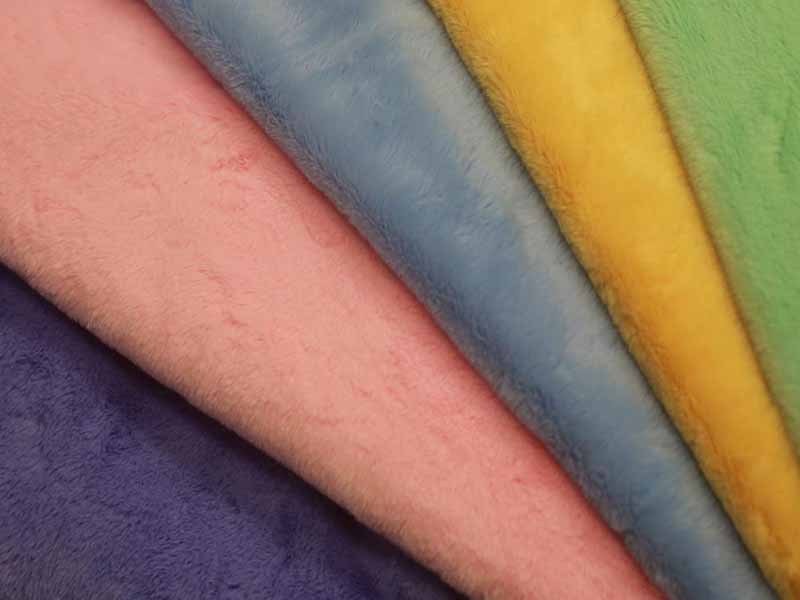
Minky Fabric

Minky offers a smooth, soft surface and works well for rounded cartoon styles, baby-positioned products, premium-feel mascots, and simplified pet collections. Its softness can enhance handfeel, but stretch may alter pattern dimensions or make narrow features appear fuller after stuffing. Embroidery stabilizers, seam direction, color continuity, and pressure marks during packaging should be evaluated before a final selection is approved.

Velboa Fabric

Velboa provides a short, defined surface suitable for animal shapes, broad retail programs, and designs requiring controlled cost without sacrificing clarity. It can support printed markings, embroidery, appliqué, and clean seam construction. Compared with thicker premium fabrics, velboa may feel flatter, but the material can be effective when crisp body form, repeatable production, and broad color availability are more important than deep pile.

Medium Faux Fur

Medium-pile faux fur adds visual depth while preserving more facial and body definition than very long fur. It is useful for Golden Retrievers, fluffy cats, spaniels, and semi-realistic designs. Pile direction must be marked on pattern pieces, and local trimming may be needed around eyes, muzzle, paws, and seam transitions. Brushing and shape recovery after packaging should be included in production instructions.

Long Faux Fur

Long-pile faux fur creates a rich appearance for shaggy dogs, long-haired cats, premium memorial products, and high-value retail pieces. The material can obscure embroidery, seams, facial contours, and narrow markings, so the pattern and trimming plan must compensate. Cutting loss, loose fibers, pile direction, hand finishing, packing volume, and batch continuity can also affect cost and delivery planning.

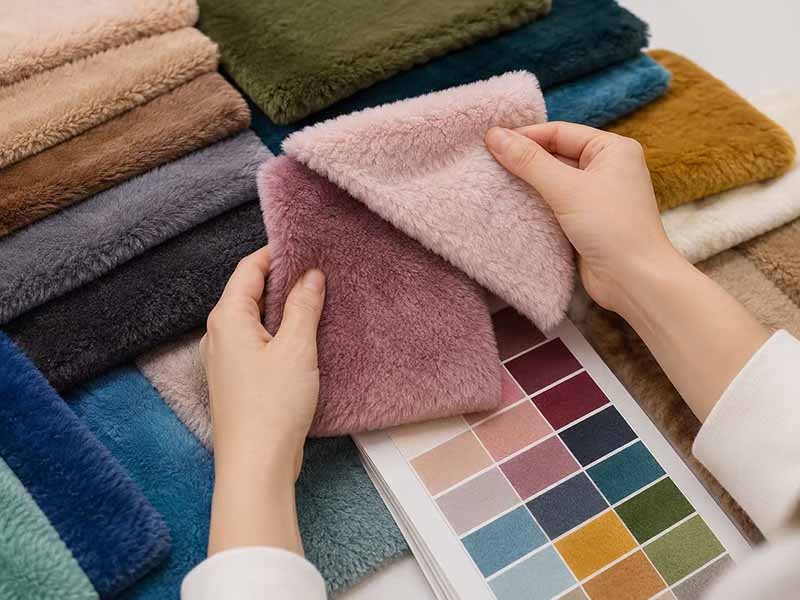
Textured Plush

Curly, sherpa-like, ribbed, or specialty textured plush can communicate distinctive coats and increase visual character. Textured fabrics are useful for poodles, doodles, lamb-like pets, winter editions, and stylized brand mascots. Fine facial details may require contrasting short-pile panels, embroidery windows, or local trimming. Texture scale should match product size; an oversized curl can overwhelm a small head or hide essential markings.

Engineering Pet Markings into Production

Coat markings must be converted from visual references into controlled pattern boundaries, artwork files, color standards, and inspection points that remain stable after sewing and filling.

Selecting the Right Method for Every Marking

Pet coats often combine large color areas, narrow facial stripes, soft transitions, irregular spots, dark ear tips, white paws, chest patches, eye rings, and tail markings. One decorative method rarely solves every feature.

  • Large, well-defined color areas are usually most stable when built into the pattern using separate fabric panels. The boundary then follows a planned seam and remains connected to the product structure. Pattern engineering must account for seam allowance, pile direction, stretch, and the way filling changes the visible curve.
  • Applique is useful for smaller, clean-edged shapes where a full pattern panel would create unnecessary complexity. The applique material, edge treatment, stitch density, position, and resistance to puckering should be tested on the chosen base fabric.
  • Embroidery works well for fine lines, small patches, freckles, eyebrows, mouth details, and sharply defined facial markings. Excessively dense embroidery can stiffen soft areas or distort curved panels, so stitch direction and backing require evaluation.
  • Printing may be appropriate for gradients, complex speckles, tabby patterns, or markings that would require too many sewn panels. Color, placement, surface feel, wash or rub performance, and distortion over curved filled surfaces must be tested physically.

For complex pets, Pufumi can create a Fur and Marking Map connecting each visible feature to a fabric code, artwork file, pattern piece, seam, or trimming instruction. The approved sample becomes the final visual reference for production and inspection.

Pose Engineering for Stable Pet Plush

Every pose changes pattern geometry, limb attachment, center of gravity, filling distribution, packaging dimensions, visual presentation, and the way the product recovers after transport.

Sitting Pose

A sitting pose is widely used for core dog and cat plush because it displays the face clearly and can stand on a shelf without external support. Engineering focuses on the base shape, rear-body volume, front-leg alignment, neck angle, and tail position. Zoned filling may be used to keep the body supportive while preserving a soft handfeel. Long legs or narrow bases require closer balance evaluation.

Standing Pose

Standing designs provide a more natural animal profile but require stronger control of leg length, joint angle, paw contact, body level, and internal stability. Small dimensional differences can cause rocking or leaning. Depending on product size and age positioning, the design may use firmer leg filling, internal fabric structures, or another reviewed support solution. Packaging must protect the legs from bending during transport.

Lying Pose

Lying pet plush is suitable for comfort products, realistic displays, pillows, and relaxed emotional positioning. Pattern development must manage body width, chest compression, head lift, leg placement, and the visibility of markings along the back. The pose may pack efficiently, but long ears, tails, or elevated heads still require support. Filling density should prevent the product from appearing flat or uneven.

Hugging Pose

Hugging products use elongated arms, curved paws, or a body shape designed to wrap around another product, package, person, or accessory. Attachment points and repeated handling loads become important. Facial placement must remain visible when the plush is in use. Where hook-and-loop, magnets, elastic, or other functional components are considered, age, market, strength, accessibility, and testing requirements must be reviewed.

Hanging Pose

Keychains and bag charms must look balanced while suspended rather than sitting on a flat surface. The hanging point, body angle, hardware weight, and center of gravity determine how the face is presented. Reinforcement is needed where the loop or fitting connects to the plush. Total hanging length, clasp operation, metal finish, product weight, and package display position should be included in the specification.

Display Pose

Premium or collectible pet plush may use a deliberately angled head, raised paw, curled tail, alert ears, or another expressive position. Such poses can strengthen recognition but require more controlled pattern pieces, filling zones, shaping, and inspection. A display pose should be judged from the intended viewing angle and retail position. The approved sample must show the final arrangement of every adjustable or hand-shaped feature.

Facial Details That Define the Pet

Pet recognition depends heavily on the relationship between eyes, muzzle, nose, mouth, eyebrows, ears, whisker zones, fur length, and the surrounding head shape.

Eye Construction

Embroidered eyes provide a soft, controlled solution and allow detailed color, highlights, eyelids, and expression lines. Plastic or safety-eye constructions create stronger depth but require age, attachment, material, and accessibility evaluation. Regardless of method, the eye centers must be positioned relative to the muzzle and forehead. Small placement changes can create a completely different expression after the head is filled.

Brow Expression

Eyebrows may be created through embroidery, appliqué, contrasting fur, local trimming, or shaped pattern pieces. Their angle strongly influences whether a pet appears alert, gentle, worried, sleepy, or playful. The approved direction should be recorded in artwork and compared after stuffing because curved panels can rotate or spread embroidered lines. Brow treatment should support the natural identity rather than exaggerate it unintentionally.

Muzzle Volume

The muzzle may be built as a separate three-dimensional component, shaped through head panels, or simplified into embroidery for very small products. Length, width, cheek transition, nose placement, and filling density must work together. A muzzle that is too short may erase breed identity, while excessive filling can push the mouth downward. Side photographs are essential for confirming the required depth.

Nose Design

Noses can use embroidery, soft sculpted fabric, molded components, flocked parts, or other approved constructions. Embroidery supports softness and clear control, while three-dimensional noses may improve realism. Size, width, color, surface finish, seam position, attachment security, and age requirements should be evaluated. Long facial fur may need trimming around the nose so the shape remains visible after final brushing.

Mouth Shape

A short embroidered curve, open fabric mouth, tongue, smile line, or sculpted lower jaw can change the emotional character of the plush. The mouth should be assessed after the muzzle is filled because panel tension may alter its angle. Dense stitching near curved seams can also cause puckering. Pufumi records approved thread colors, position, line width, expression, and any three-dimensional components in the production file.

Whisker Details

Whiskers and fine facial hairs can add realism but require careful material and age evaluation. Options may include embroidery, printed lines, short soft fibers, or omission when the feature creates unnecessary risk or instability. Long projecting strands can bend during packaging and vary during production. The design team evaluates whether the detail meaningfully improves recognition or whether a simpler visual treatment delivers a cleaner commercial result.

Sewing and Grooming Behind Pet Realism

Realistic appearance depends on controlled seam placement, pile direction, reinforced attachments, filling sequence, local trimming, brushing, shaping, and final removal of loose fibers.

Planned Sewing Sequence

A pet plush cannot be assembled reliably by following appearance alone. The production sequence determines whether panels can be turned correctly, facial embroidery remains aligned, limbs face the right direction, and high-stress components receive reinforcement before the body closes. Pufumi defines key subassemblies, main-body joining, limb and tail attachment, turning openings, filling order, and final closure requirements.

Controlled Pile Direction

Long and medium fur has a visible direction. Pattern pieces cut against the approved pile can make one side of the animal appear darker, flatter, or rougher than the other. Direction arrows should appear on released patterns and cutting markers. Mirrored pieces, ears, cheeks, legs, tails, and chest panels require particular attention because incorrect orientation may not become obvious until after sewing and brushing.

Reinforced Attachments

Ears, tails, hanging loops, legs, clothing, and accessories may receive repeated handling loads. Attachment construction is selected according to product size, intended use, material strength, and age positioning. Reinforcement can involve seam structure, backing fabric, multiple stitch lines, wider seam allowance, or redesigned attachment geometry. Strength must be achieved without creating a hard or visually bulky area that changes the approved appearance.

Zoned Stuffing

Correct total weight does not guarantee correct form. The face, muzzle, body, legs, base, and tail may need different filling densities. Stuffing order also affects distribution and posture. Pufumi can define target product weight, zoned handfeel, in-process shaping, and comparison with the Golden Sample. Bulk pieces are checked for both weight and visible form rather than accepted on a scale reading alone.

Local Trimming

Long fur can cover eyes, mouth embroidery, nose edges, paws, and important coat boundaries. Local trimming exposes these features and shapes the transition between facial and body areas. The trimming guide identifies areas to shorten, areas to retain, and areas requiring a natural gradient. Operators compare the finished result with the Golden Sample instead of making independent styling decisions on every unit.

Final Grooming

After filling and closure, the plush is brushed, shaped, checked for trapped seams, cleared of loose fibers, and arranged into the approved pose. Ears, tail, paws, muzzle, and coat direction are restored before packaging. Products compressed during packing may need recovery instructions. Grooming quality should be included in final inspection because a correctly sewn product can still look unfinished when fur and posture are not properly restored.

From Pet References to Approved Prototype

A controlled sampling path turns visual preferences into measurable decisions, prevents conflicting feedback, and establishes the files needed for reliable production and later replenishment.

A Sample Must Answer Defined Engineering Questions

Sampling begins after the project team confirms the intended user, target market, size, quantity, pose, style, materials, packaging direction, must-keep pet features, and approval contacts. A typical custom pet plush sample requires 7–15 working days after references and core materials are confirmed. Long-pile fur, custom printing, complex markings, special accessories, or several connected SKUs can require additional preparation.

The first prototype normally evaluates:

  • Overall silhouette
  • Head and body proportion
  • Muzzle depth
  • Ear and tail structure
  • Intended pose
  • Primary markings
  • Material direction
  • Basic facial expression

Feedback should be consolidated into one marked document rather than spread across unrelated emails, messages, and verbal comments. Each requested change is assigned to a sample version so approved decisions are not accidentally reversed.

A second sample may focus on facial refinement, material replacement, coat boundaries, embroidery, local trimming, filling feel, and posture. Where packaging strongly affects the product, a pre-production sample may include the released label, hangtag, box, insert, and packing method.

The final Golden Sample is not simply the most recent sample. It represents the approved appearance and should be connected with the released pattern, BOM, embroidery files, marking map, trimming guide, packaging specification, and inspection checklist. Production begins only after required commercial and technical approvals are recorded.

Controlled Production for Scalable Pet Plush

Commercial consistency depends on released files, qualified materials, controlled process stages, first-piece approval, inspection records, version management, and clear responsibility across the manufacturing network.

Production Managed Through Released Standards

Pufumi is an enterprise-level plush development and manufacturing brand operated by Shenzhen Oneier Technology Co., Ltd. Product development and production are managed through Oneier-invested plush resources in Dongguan and Foshan, supported by qualified specialists for materials, embroidery, printing, accessories, packaging, testing coordination, and international delivery.

The core Dongguan factory was established in 2007 and supports pattern engineering, sample development, sewing, filling, shaping, quality control, and bulk production. More than 58 designers and pattern specialists contribute to the development system, with roughly half bringing more than 15 years of plush development, design, or pattern-making experience.

Before production release, the project package may include:

  • Approved Golden Sample
  • Released pattern version
  • Material and color codes
  • Fur-direction map
  • Embroidery or printing files
  • Marking placement instructions
  • Target dimensions and weight
  • Zoned filling requirements
  • Trimming and grooming guide
  • Packaging and carton specifications
  • Inspection checklist

Production does not rely on one sample-maker’s memory. Materials are checked before use, the first completed production piece is compared with the approved standard, and process inspections review high-risk details while corrective action is still possible.

Standard bulk production commonly requires 20–30 days after sample, material, packaging, and production documents are approved. The confirmed schedule depends on SKU quantity, custom-dyed fabrics, printing, packaging, testing, peak capacity, and final delivery requirements.

Quality Control for Pet Likeness

Inspection StageMain ChecksTypical Records
Incoming MaterialsFabric code, color, pile length, direction, surface defects, embroidery thread, filling, hardware, labels, and packaging componentsIncoming inspection record, material lot record, color approval
Cutting and EmbroideryPattern version, mirrored pieces, pile direction, marking boundaries, embroidery size, position, thread color, puckering, and panel damageCutting bundle code, embroidery first-piece approval
Sewing and AssemblySeam allowance, stitch continuity, ear and tail direction, limb attachment, reinforcement, facial alignment, and open seamsIn-process inspection sheet, defect isolation record
Filling and ShapingProduct weight, zoned filling, muzzle volume, head shape, sitting balance, leg position, ear recovery, tail form, and overall handfeelWeight record, shaping comparison, first-piece approval
Final AppearanceEye spacing, nose position, mouth angle, coat boundary, symmetry, local trimming, loose fibers, dimensions, and comparison with the Golden SampleFinished-product inspection record, measurement sheet
Packaging and SKUBreed, colorway, hangtag, woven label, care label, barcode, box version, insert, case pack, carton mark, and destinationPacking checklist, barcode verification, carton record

Facial and marking inspections should use defined reference points rather than broad statements such as “looks good.” For example, eye centers can be checked against the head centerline, color boundaries can be compared with approved panel positions, and product height can be measured in the stated pose.

Critical, major, and minor defects are handled according to agreed inspection criteria. Nonconforming pieces are isolated, evaluated, corrected when possible, and reinspected before release. Functional or attachment-related checks may require full inspection when the project specification identifies them as high risk.

Safety Planning Starts with Age and Market

Product age, destination market, structure, accessible components, materials, functions, labels, and packaging must be defined before determining the relevant testing and documentation path.

Age Definition

A plush intended for children, babies, adult collectors, or promotional display may require different construction decisions and documentation. Age positioning affects small components, plastic eyes, projecting details, cords, accessories, filling, labels, and test planning. Pufumi asks for the intended age range during project review rather than assigning it after the sample is complete. Age claims must remain consistent across the product, packaging, instructions, and commercial documents.

Market Requirements

United States, European Union, United Kingdom, Canada, Australia, Japan, and other markets may apply different legal frameworks, test methods, labeling rules, importer responsibilities, and documentation requirements. No single statement covers every product and destination. Pufumi supports material review, BOM preparation, sample preparation, label coordination, and third-party testing communication based on the markets confirmed by the brand or importer.

Product Features

Embroidered eyes, plastic components, metal keychain hardware, removable clothing, magnets, electronic modules, weighted inserts, long cords, internal supports, printed surfaces, and specialty fillings can change the compliance path. Pufumi evaluates relevant structural and material risks during development and prepares requested information for qualified laboratories. Final legal responsibility, certificates, and market placement obligations remain with the responsible parties defined by applicable regulations.

Private Label Packaging for Retail Programs

Packaging must protect fur, ears, muzzle shape, posture, labels, and barcodes while supporting display, warehouse receiving, shipping efficiency, product identification, and later replenishment.

Protective Polybag

A polybag offers efficient protection against dust and handling, but bag dimensions, ventilation requirements, warning text, closure method, material thickness, and product compression must be reviewed. Long ears, long fur, raised tails, and three-dimensional muzzles may require extra space. Products should recover to the approved appearance after removal rather than remain flattened or distorted.

Paper Belly Band

A belly band provides branding and product information while leaving much of the plush visible and touchable. Band width, locking structure, print area, barcode location, pressure on the body, and movement during shipping need evaluation. The design works best when the product has a stable shape and the band does not crush long fur or cover essential facial features.

Hangtag System

Hangtags can carry brand identity, product name, breed story, care information, age guidance, legal text, barcode, and collection messaging. Size, paper weight, finish, folding, attachment point, and string or plastic fastener should match the retail channel. Attachment must avoid damaging the fur or creating an uncontrolled accessible component. Version control is essential for multi-SKU collections.

Woven Care Labels

Woven or printed sewn-in labels can identify the brand, material information, care instructions, country of origin, legal marks, or project codes as required. Label position should remain accessible without interrupting the product’s appearance. Text size, language, wash performance, edge softness, fold type, and SKU-specific information must be confirmed before the label order is released.

Open Display Box

An open-front box supports shelf presentation while allowing the face and texture to remain visible. Internal ties, paper supports, or shaped inserts may be used to stabilize posture. Box dimensions must accommodate fur volume, ears, tail, and accessories. Barcode location, hanging options, shelf depth, print protection, shipping marks, and case-pack efficiency should be reviewed with the retailer’s requirements.

Closed Retail Box

A closed box offers stronger protection, larger branding surfaces, controlled unboxing, and easier stacking. Windows can improve product visibility but introduce film, glue, scratch, and recycling considerations. Internal space should prevent facial compression without creating unnecessary freight volume. Box artwork, product version, barcode, warning text, opening direction, insert structure, and carton quantity must be approved together.

Premium Gift Box

Gift packaging may include a rigid box, magnetic closure, drawer structure, tissue, story card, certificate, message, or accessory. Premium presentation increases the need for precise fit, clean inserts, color consistency, and protection during transit. The packaging should support the emotional value of the pet product without making replenishment, storage, or international shipping unnecessarily complex.

Master Carton

Master cartons must protect packaged products through handling, stacking, and international transport. Specifications include carton dimensions, board grade, gross weight, case pack, internal arrangement, carton marks, SKU code, destination, and pallet or warehouse requirements. Multi-SKU programs require clear separation and labeling so a correct product is not placed inside the wrong retail package or shipping carton.

Build a Scalable Pet Breed Collection

Collection RoleExample FormatCommon SizeDevelopment FocusCommercial Function
Hero SKUSemi-realistic core dog plush25–30 cmStrong facial recognition, premium material, full markingsMain retail image and primary product
Entry SKUMini dog or cat plush10–15 cmSimplified body, clear embroidery, efficient packagingAccessible price point and impulse purchase
Add-On SKUPet keychain7–12 cmHanging balance, hardware strength, compact featuresCheckout, subscription, or bundle add-on
Premium SKURealistic long-fur pet plush30–40 cmLayered fur, local trimming, detailed pose, gift packagingHigher-value gift or collector product
Seasonal SKUHoliday pet edition18–25 cmShared base body, removable or sewn costume, seasonal boxLimited campaign or annual event
Gift SKUBoxed pet plush set20–30 cmStory card, insert, coordinated accessories, presentationMembership, memorial, or corporate gifting

A breed collection should not be created by changing only fabric color. Ear construction, muzzle length, head width, tail form, body proportion, markings, and posture may require different patterns. Some related designs can share internal structures or packaging dimensions, but only after visual and engineering review.

Commercial programs commonly begin at 500 pieces per design. Packaging, custom-dyed fabric, woven labels, printed materials, hardware, and other components may carry higher supplier minimums. A six-SKU collection therefore needs coordinated quantity allocation rather than independent purchasing decisions for every component.

Production coding can include project number, SKU, colorway, pattern version, embroidery version, label version, packaging version, and carton code. Cutting bundles, component kits, workstation identification, changeover clearance, barcode checks, and carton records help prevent mixed breeds, labels, or boxes.

Representative Six-Breed Pet Plush Program

A structured collection case shows how references, shared materials, design differences, sample approval, production coding, quality control, packaging, and delivery planning work together.

From Six Animal References to 7,200 Retail Units

A representative pet-care retail program included six pet designs: Golden Retriever, French Bulldog, Dachshund, Poodle, British Shorthair, and Ragdoll Cat. Each SKU was planned at 1,200 pieces, creating a total production quantity of 7,200 units. The core product height was 24 centimeters, with a shared retail price level and coordinated packaging system.

The original references showed six very different head shapes, ears, muzzles, tails, coat textures, and markings. Using one common body would have reduced development cost but weakened breed recognition. The engineering plan therefore used three shared structural platforms with SKU-specific head, ear, tail, facial, and marking components.

Key development decisions included:

  • Short plush for the French Bulldog and British Shorthair
  • Medium faux fur for the Golden Retriever and Ragdoll
  • Textured plush for the Poodle
  • Short plush with an elongated body pattern for the Dachshund
  • Embroidered eyes across all six designs
  • Fabric color blocking for large chest and muzzle markings
  • Local trimming around long-fur eyes and noses
  • Shared hangtag dimensions with SKU-specific artwork and UPC codes

The sample stage required two structured revision rounds. The first round focused on head proportion, muzzle depth, ear angle, and sitting balance. The second round refined eye spacing, chest markings, tail form, and local trimming. Approved development required 13 working days after material confirmation.

Bulk production was completed in 27 days following Golden Sample, packaging, and production-file approval. Each SKU used a separate cutting-bundle code, component kit, hangtag version, barcode, inner packing mark, and master-carton code. First-piece inspections compared facial landmarks, dimensions, filling, and markings against the approved samples.

The collection shipped in six clearly separated SKU groups. The project files retained material codes, patterns, embroidery artwork, packaging files, inspection records, and Golden Samples to support later replenishment and seasonal product extensions.

Frequently Asked Questions

Yes. Pufumi can evaluate front, side, rear, pose, and facial photographs and convert the defining features into a production-oriented design. Several clear images are recommended because one front photograph cannot show muzzle depth, body proportion, back markings, tail structure, or ear thickness. Development focuses on recognizable landmarks rather than promising an impossible identical copy of a living animal.

Provide a clear front portrait, both side profiles where possible, a rear view, close facial details, full-body pose images, and photographs showing important coat markings. Add the pet breed, desired style, target size, pose, must-keep features, intended age, sales market, quantity, packaging, and launch timing. Neutral lighting helps prevent incorrect material-color decisions caused by camera filters or indoor lighting.

Yes, after the markings are mapped to a suitable production method. Large areas may use separate fabric panels, medium clean-edged shapes may use appliqué, fine lines may use embroidery, and complex gradients may require printing. Boundaries crossing curved panels or seams must be evaluated after filling. Approved pattern pieces, artwork files, color codes, and the Golden Sample guide bulk production.

The best material depends on coat type, product size, facial detail, target handfeel, price positioning, trimming needs, and production stability. Short plush supports clean expressions and markings. Medium faux fur adds depth while retaining shape. Long faux fur suits shaggy breeds but requires stronger pile-direction, trimming, brushing, packaging, and inspection controls. Mixed-material construction may provide the most convincing result.

Commercial custom programs commonly begin at 500 pieces per design. Final minimums depend on fabric, custom colors, printing, embroidery, woven labels, boxes, metal fittings, SKU allocation, and supplier component requirements. A multi-SKU collection should be planned as one coordinated program so shared materials and packaging can be used efficiently without creating uncontrolled inventory or fragmented component orders.

A standard pet plush sample commonly requires 7–15 working days after references, size, materials, and core construction are confirmed. Complex long-fur designs, custom printing, multiple connected SKUs, special accessories, or additional engineering samples may need more time. The sample schedule should include review and revision time rather than measuring only the days required to sew the first prototype.

Pufumi connects the approved Golden Sample with released patterns, material codes, embroidery or printing files, fur-direction instructions, filling requirements, trimming guides, packaging files, and inspection checklists. Incoming material checks, first-piece confirmation, process inspection, finished-product inspection, SKU verification, and packing checks help identify drift before shipment. Long-fur grooming and facial landmarks receive specific visual controls.

Yes. Embroidered eyes are often selected for softness, detailed expression, color control, small product sizes, and designs where accessible rigid components are unsuitable. Plastic or three-dimensional eye constructions may provide greater depth but require attachment, age, material, and testing evaluation. Eye method should be chosen during design development because it affects panel construction, facial shape, embroidery stabilization, and final expression.

Pufumi can coordinate polybags, paper bands, hangtags, woven or printed care labels, retail boxes, gift boxes, inserts, barcodes, case packs, and master cartons according to confirmed channel requirements. Packaging is reviewed alongside the product because compression, internal support, fur recovery, barcode versions, carton quantity, and warehouse receiving requirements can affect product presentation, freight volume, and delivery accuracy.

The Custom Pet Plush Manufacturer service focuses on pet-inspired products made for human consumers, branded retail, gifting, collecting, and memorial programs. Chew toys, rope products, squeaky toys for animal use, feeding accessories, and bite-resistant dog products involve a different material, hygiene, structural, usage, and testing path. Such products should not be evaluated under the same development assumptions.

Trust, Compliance & Production Assurance

Confidence for global brands and complex plush programs

Pufumi evaluates each project according to its target market, age grade, materials, construction, labeling, and packaging requirements. Depending on the assigned production site and project scope, our team can support ISO 9001 quality-management documentation and coordinate testing to EN71, ASTM F963, CPSIA, REACH, and other applicable standards. Factory audits, certifications, and test reports are verified by issuing body, validity period, facility, and product scope, giving brands greater transparency from sample development through controlled production and delivery.


Start Your Custom Pet Plush Project

Send enough information for Pufumi to assess product feasibility, design complexity, material direction, sample stages, packaging, compliance preparation, quantity planning, and delivery timing. A complete drawing is helpful but not required when clear pet photographs and a defined commercial objective are available. Please include:
  • Company name, website, country, and business email
  • Pet type, breed, or branded animal concept
  • Front, side, rear, pose, and facial reference files
  • Cartoon, semi-realistic, or realistic style direction
  • Required size and number of SKUs
  • Quantity per design, beginning from 500 pieces
  • Intended age group and destination markets
  • Preferred materials, markings, accessories, or hardware
  • Packaging, labels, barcodes, and warehouse requirements
  • Target launch date and delivery destination
  • Features that must remain recognizable
  • NDA or controlled file-handling requirements

Start Your Custom Plush Project

Plush Product Development & Manufacturing Support for Global Brands

Share your character artwork, product concept, target size, estimated quantity, destination market, launch timeline, packaging requirements, and any special functions or compliance needs.

Our project team will review your request and recommend a tailored development and manufacturing approach based on character complexity, materials, construction, sample requirements, production planning, packaging, and delivery schedule.

From Character Artwork to Retail-Ready Plush Products

Pufumi supports IP owners, entertainment companies, toy and collectible brands, lifestyle brands, and major retailers with structured plush product development and manufacturing.

Your artwork, unreleased characters, packaging files, target costs, and commercial information are handled as confidential project materials and are not used for other customer projects or public marketing without authorization.

Need Direct Assistance?

Seraphinite AcceleratorOptimized by Seraphinite Accelerator
Turns on site high speed to be attractive for people and search engines.