Skip to content

Case Studies of Plush Products | Pufumi Development & Manufacturing
From Character Assets to Production-Ready Plush Collections
Explore how Pufumi approaches demanding plush development and manufacturing programs:
- Project quantities from 500-piece launches to multi-SKU production runs.
- Product sizes ranging from mini bag charms to large display plush.
- Development paths covering artwork review, pattern engineering, prototypes, revisions, production approval, packaging, and delivery.
- More than 58 designers and pattern makers.
- Documented controls for materials, embroidery, stitching, filling, labels, cartons, testing preparation, and repeat orders.
What Our Plush Case Studies Demonstrate
Design Translation
Engineering Decisions
Production Control
Retail Delivery
Explore Plush Product Case Studies
Artwork to Plush

Character Fidelity

Fabric Selection

Structural Engineering

Stitching Control

Surface Craftsmanship

Multi-SKU Programs

Quality and Compliance
Quality cases record problems discovered during material inspection, sample development, production, packing, or final inspection. Compliance cases begin with target market, age grading, product features, small parts, labels, and testing preparation. Corrective actions are supported by revised files, reinspection records, retained samples, and third-party laboratory coordination where required.

Packaging and Delivery
Projects Across Global Brand Categories
IP Owners
Entertainment Companies
Collectible Brands
Lifestyle Brands
Global Retailers
Destination Retail
How Every Pufumi Case Is Documented
Project Profile
- Organization category
- Product and SKU scope
- Market and channel
- Quantity and timing
Original Input
- Available artwork
- Missing views
- Color references
- Required approvals
Core Challenge
- One defined problem
- Observable project risk
- Commercial consequence
- Clear acceptance criteria
Engineering Record
- Pattern version
- BOM revision
- Process notes
- Critical dimensions
Evidence Package
- Development images
- Approved sample
- QC records
- Packaging evidence
Final Status
- Approval status
- Production status
- Delivery status
- Reorder readiness
From Artwork to Production-Ready Plush
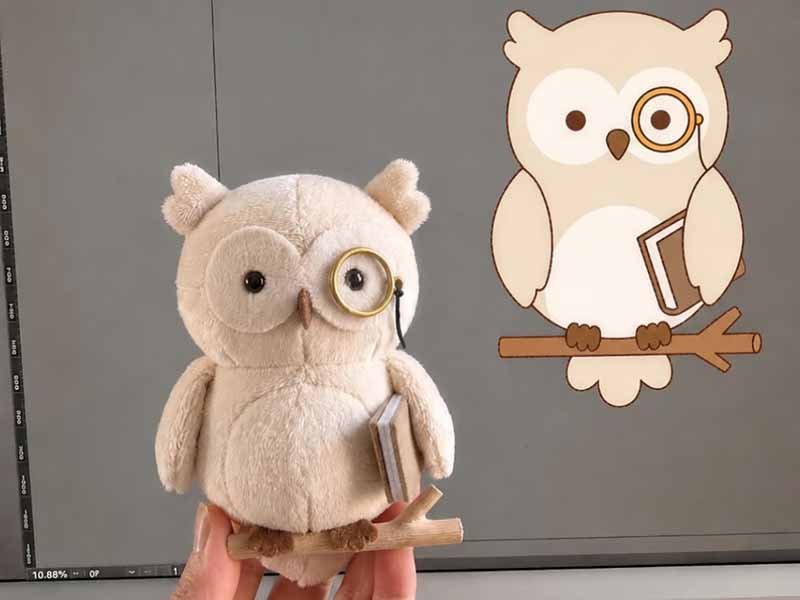
A North American entertainment merchandise team supplied one front illustration, a color reference, and a planned retail height of 24 cm. The initial order covered 1,500 pieces of one character, followed by two possible companion SKUs. No side view, back view, seam map, or material specification was available.
The development team first separated fixed character features from areas requiring interpretation. Eye spacing, ear angle, forehead width, body color, chest marking, and tail shape were classified as recognition-critical. Side depth, rear construction, sitting balance, seam placement, and filling distribution required engineering proposals.
A proportion sheet established the 24 cm overall height, 10.6 cm head width, 7.8 cm body width, ear angle, limb length, and seated footprint. Twelve main pattern pieces and six small detail pieces were created. Short plush was selected for the face to preserve embroidery clarity, while a slightly longer material added depth to the body.
The first prototype showed excessive side depth and a forehead that appeared too rounded after filling. Pattern curvature was reduced, the center face seam was shifted, and the head filling sequence was divided into cheek, forehead, and rear zones. A second prototype also adjusted the tail base so the product could sit without leaning.
The approved sample was converted into a pattern package, BOM, embroidery file set, measurement chart, filling reference, sewing notes, and Golden Sample record. Bulk production began only after written approval of the front, side, rear, and seated views.
Project Record
- Product height: 24 cm
- Development versions: 2 prototypes plus production approval sample
- Order quantity: 1,500 pieces
- Main pattern pieces: 12
- Development period: 16 working days
- Production period: 32 days after material release
- Final status: approved, produced, packed, and archived for extension SKUs


Improving Character Fidelity Through Sample Revisions
An Asian game merchandise program involved a 20 cm seated character plush with a highly recognizable face, layered hair panels, embroidered eyes, and a removable fabric accessory. The confirmed order was 3,000 pieces, but the first prototype did not carry the expression shown in the original model sheet.
The main issue was not workmanship alone. The eye centers were 3 mm too far apart, the mouth curve was too deep, and the cheek volume became uneven after filling. Hair panels also lifted away from the face because the seam line followed the flat artwork rather than the filled head surface.
Revision work began with an overlay comparison between the character file and same-angle prototype photographs. The eye embroidery file was repositioned, the mouth width was reduced by 2.5 mm, and the head side panels were reshaped to control cheek projection. Two internal hand-stitch anchors were added beneath the front hair layer, preventing the panel from lifting while keeping the attachment invisible.
The filling method also changed. Instead of filling the head as one open cavity, operators followed a three-zone sequence: face support, side balance, and rear completion. A finished head weight range was added to the production file so facial shape could be checked alongside visual references.
The revised prototype passed front, 45-degree, side, and seated comparison reviews. Production inspection used a transparent face-position template and Golden Sample photographs at fixed camera angles.
Measured Revision Record
- Overall height: 20 cm
- Eye-center adjustment: 3 mm inward
- Mouth-width reduction: 2.5 mm
- Sample versions: V1, V2, and production approval sample
- Order quantity: 3,000 pieces
- Inspection focus: eye position, cheek symmetry, hair attachment, seated balance
- Final status: approved for licensed merchandise production
Selecting Fabrics for Shape, Touch, and Detail
A European collectible brand planned a four-character plush series, with 1,200 pieces per SKU and a finished height of 18 cm. The creative direction required a soft premium feel, clear facial embroidery, controlled body shape, and consistent color across the collection.
Four candidate materials were compared before pattern development moved forward:
| Material Option | Pile Length | Approximate Weight | Main Advantage | Main Limitation |
|---|---|---|---|---|
| Short Velboa | 1–2 mm | 180–220 gsm | Clean contours and embroidery | Less luxurious hand feel |
| Minky Plush | 2–3 mm | 220–280 gsm | Soft touch and stable surface | Slight directional sheen |
| Microfiber Plush | 1.5–2.5 mm | 240–300 gsm | Dense, refined finish | Higher material cost |
| Faux Fur | 8–12 mm | 320–420 gsm | Strong visual texture | Covers small seams and details |
Initial trials showed that faux fur reduced facial clarity and made the 18 cm body appear larger than the approved silhouette. Short velboa kept the design accurate but did not provide the intended tactile impression. A dense minky was selected for the body, while short plush was used around the face and embroidered areas.
Color review was performed on actual production materials rather than digital screens alone. The same color appeared darker when the pile direction changed, so cutting directions were marked on pattern files. Embroidery samples were stitched on the selected face fabric and reviewed after filling, since surface tension altered the perceived eye shape.
A shared material system was created across all four SKUs, reducing unnecessary dye-lot variation. Unique character colors remained separately coded in the BOM.
Project Record
- Collection: 4 SKUs
- Quantity: 4,800 pieces
- Product height: 18 cm
- Materials compared: 4
- Final construction: two coordinated plush fabrics
- Material approval period: 8 working days
- Production period: 38 days after approval
Engineering Stable Plush Structures and Profiles
A resort merchandise program required a 32 cm animal mascot that could sit upright on retail shelving while remaining soft enough for handling. The planned quantity was 2,500 pieces. Early mock-ups leaned backward, the front legs rotated outward, and the head gradually dropped after several hours of display.
The structure was reviewed as a balance problem rather than solved by adding excessive filling. The body pattern was divided into front, side, base, and rear support sections. A wider oval base increased the seated footprint from 10.5 cm to 13 cm. Two internal fabric partitions controlled filling movement between the chest and lower body, while the neck opening was narrowed to improve head support.
Front-leg seams were redirected so the limbs rested parallel to the body instead of opening outward. Seam allowance was increased around the neck and sitting base, while small curves around the paws retained a narrower allowance for clean turning. A lightweight internal fabric support was tested, but rejected because it created a stiff hand feel.
Filling was specified by zone. The head used a controlled medium density, the neck received firmer support, the body remained softer, and the lower base received additional filling to stabilize the sitting position. Operators followed a sequence card rather than filling by visual judgment alone.
A four-hour display test was used during sample approval. The mascot had to remain seated without external support, maintain head angle, and show no visible twisting at the legs.
Structural Record
- Finished height: 32 cm
- Seated footprint: 13 cm
- Main body pattern pieces: 14
- Internal partitions: 2
- Order quantity: 2,500 pieces
- Sample versions: 3
- Production period: 35 days
- Final status: stable seated profile approved


Controlling Stitching Across Complex Plush Shapes
A licensed character order included 5,000 pieces of a 16 cm plush bag charm with narrow arms, curved ears, a small turning opening, and a reinforced hanging loop. Small dimensions increased sewing difficulty because slight seam variation changed the face shape and limb symmetry.
The sewing plan divided seams by function. Standard body seams used an allowance of approximately 5 mm, while narrow curves used 3–4 mm to reduce bulk after turning. Areas beside the hanging loop used additional reinforcement and a wider internal support patch. The final closing seam was positioned beneath the body where it remained visually discreet and accessible for inspection.
Trial production identified three recurring risks: puckering around the ears, uneven arm length, and loop movement during filling. Curve clipping guidance was added for the ears, limb pairs were bundled and sewn together by size group, and the loop was fixed with a temporary positioning stitch before the main reinforcement operation.
The hanging assembly included a fabric loop, internal reinforcement patch, box stitch, and pull-check requirement. Metal hardware was attached only after the sewn loop passed inspection. Operators received actual-size reference samples and photographs showing correct ear direction, seam smoothness, limb balance, and closing-stitch appearance.
Finished units were checked for exposed thread ends, open seams, trapped pile, twisted limbs, and inconsistent hanging direction. Random destructive checks were also used to examine the internal loop attachment.
Sewing Record
- Product height: 16 cm
- Order quantity: 5,000 pieces
- Main seam allowance: approximately 5 mm
- Narrow curve allowance: 3–4 mm
- Reinforced hanging points: 1 per unit
- Production period: 30 days
- Main checks: symmetry, seam closure, loop strength, hardware orientation
Refining Embroidery and Decorative Craftsmanship
A cosmetics brand developed a 22 cm mascot plush with embroidered facial features, a chest logo, fabric appliqué, and a small printed accessory. The planned order was 2,000 pieces. The original logo contained thin lettering and narrow spacing that could not remain readable at the proposed embroidered size.
Artwork digitization began by separating essential brand elements from details too fine for stable stitching. The chest logo was enlarged from 28 mm to 34 mm, narrow letter gaps were opened, and thread direction was adjusted to prevent distortion. Three embroidery density trials were produced on the selected plush fabric rather than on flat backing material alone.
Facial embroidery was reviewed after the front head panel had been stretched over a sample form. Flat embroidery pieces can look correct before assembly but change once the head is filled. Eye position templates were therefore linked to pattern registration marks, helping maintain expression during production.
The appliqué edge was tested with satin stitching and a turned-edge construction. Satin stitching produced a cleaner lightweight result and was selected after washing and handling checks. The printed accessory used a separate color proof and first-piece review before the full batch was released.
Production controls included approved embroidery files, thread color codes, stitch-position templates, first-off samples, lot comparison, trimming standards, and finished-product review against the Golden Sample.
Craftsmanship Record
- Product height: 22 cm
- Order quantity: 2,000 pieces
- Embroidery trial versions: 3
- Logo width: adjusted from 28 mm to 34 mm
- Surface techniques: embroidery, appliqué, and printing
- Development period: 14 working days
- Production period: 31 days


Reducing Cost Without Losing Character Identity
A multi-channel toy brand planned a 25 cm mascot plush at 6,000 pieces. The original concept contained 29 pattern pieces, two custom-dyed fabrics, three appliqué layers, an embroidered costume panel, a separate fabric accessory, and a rigid retail box. The estimated landed structure exceeded the target range.
Cost review began by protecting six non-negotiable features: face shape, eye style, signature ears, primary body color, costume symbol, and seated silhouette. Every remaining element was classified by visual importance, construction complexity, material requirement, and packaging impact.
Hidden rear panels were combined, reducing the main pattern count from 29 to 23 pieces. One small decorative layer was converted from separate appliqué to embroidery. The removable accessory became fixed because independent movement was not required for the retail concept. Two similar body fabrics were replaced by one approved material with different pile directions, preserving visual separation without maintaining a second custom dye lot.
The rigid box was replaced by a printed open-front display carton with an internal support card. The new format maintained retail presentation while reducing empty volume and carton weight. Compression was not used because the mascot’s ear structure showed slow recovery after packing tests.
A revised prototype confirmed that the protected character features remained intact. Updated BOM, labor routing, packing specification, and carton configuration were approved before production.
Optimization Record
- Finished height: 25 cm
- Order quantity: 6,000 pieces
- Pattern pieces: reduced from 29 to 23
- Custom-dyed materials: reduced from 2 to 1
- Packaging: rigid box changed to display carton
- Sample versions: 2 optimization rounds
- Production period: 42 days
Managing Licensed Multi-SKU Plush Collections
An entertainment licensing program required six character SKUs across two formats: 12 cm plush keychains and 26 cm core plush. The launch included 9,000 pieces in total, separate packaging artwork for both formats, and different carton allocations by destination.
The project began with a SKU architecture matrix. Shared attributes included official color references, copyright lines, label dimensions, primary materials, and core facial construction. Unique attributes included embroidery files, hair panels, costume components, hardware, and packaging artwork. Every item received a SKU code, sample version, BOM revision, packaging code, and carton mark reference.
The 12 cm keychains used simplified costume details but retained the eyes, mouth, hairstyle, primary colors, and signature symbol required for character recognition. Hanging loops and metal hardware were proportioned separately rather than copied from the larger plush. The 26 cm versions used layered clothing, more dimensional hair structures, and fuller body shaping.
Production controls addressed mixing risks. Cut pieces were bundled by SKU, embroidery panels carried temporary identification, changeovers required line clearance, and unique accessories were issued in controlled quantities. Packing teams scanned or visually verified item code, hangtag, packaging code, and carton destination before sealing.
Licensor approvals were recorded separately for product samples, packaging layouts, and copyright information. Only approved versions entered production.
Program Record
- Character SKUs: 6
- Product formats: 2
- Total quantity: 9,000 pieces
- Packaging versions: 12
- Carton destinations: 3
- Development period: 28 working days
- Production period: 48 days
- Final status: multi-destination program completed


Scaling Approved Samples Into Stable Production
A global lifestyle brand approved a 28 cm plush after two development revisions and placed an order for 8,000 pieces. The primary production risk was gradual deviation from the approved sample during cutting, embroidery, sewing, filling, and finishing.
Before production, Pufumi prepared a Golden Sample package containing the approved physical sample, pattern version, BOM, material codes, color references, embroidery files, measurement chart, filling range, seam notes, labels, packaging files, and critical defect examples. Obsolete versions were marked as invalid and removed from active production folders.
Incoming materials were checked for color, pile direction, hand feel, width, visible defects, and batch identification. Embroidery first pieces were reviewed before the full quantity proceeded. Cutting bundles remained linked to material lot and production lot. Sewing teams received enlarged photographs for face alignment, limb orientation, seam smoothness, and accessory positioning.
A first completed production unit was reviewed against the Golden Sample before regular output continued. In-process checks focused on facial symmetry, body dimensions, stitch closure, filling balance, accessory attachment, and label accuracy. Finished-product inspection added appearance, dimensions, weight, workmanship, packaging, barcode, carton quantity, and carton-mark review.
Retained samples from the production lot were archived with the project files, supporting future replenishment comparison.
Production Record
- Finished height: 28 cm
- Order quantity: 8,000 pieces
- Approved sample versions: 3
- Main measurement points: 11
- Material lots recorded: 4
- Production period: 46 days
- Inspection stages: incoming, first-piece, in-process, final, packing
- Final status: delivered and archived for repeat production
Resolving Quality Risks Before Shipment
A 4,500-piece plush order entered final inspection with three recurring defects: uneven embroidered eye height, incomplete closing seams, and inconsistent sitting balance. Shipment was not released while the issues remained open.
The inspection team separated isolated defects from possible system errors. Eye-height variation was traced to a positioning template used without a stable pattern registration point. Closing-seam problems were concentrated among newly assigned operators. Sitting imbalance came from inconsistent filling distribution between the body base and rear panel.
Corrective action began with a revised embroidery positioning template linked to pattern notches. A first-piece approval step was repeated for the affected embroidery lot. Closing-seam operators received retraining using accepted and rejected samples, followed by increased in-process checks. The filling workstation added a zone sequence and separate body-base weight reference.
Completed units from the affected lots were segregated. Products were rechecked, repaired where permitted, and inspected again before returning to accepted inventory. Defect records included project code, SKU, lot, issue type, quantity, root cause, correction, corrective action, reinspection result, and closure status.
Packing resumed only after the approved release condition was met. Updated control points were added to the production file for future orders.
Quality Record
- Order quantity: 4,500 pieces
- Issues identified: 3
- Lots isolated: 2
- Corrective areas: embroidery, closing seam, filling
- Reinspection: completed before packing release
- Documents updated: positioning template, work instruction, QC checklist
- Final status: corrective action closed and shipment released


Preparing Plush Products for Safety Compliance
A European children’s retail program involved a 30 cm plush with embroidered facial features, attached fabric clothing, a soft internal sound module, and printed retail packaging. The confirmed order was 3,500 pieces. Target age, market, product function, labels, and battery access required review before final testing samples could be prepared.
The project began with product classification and a feature-risk list. Embroidered eyes avoided detachable plastic eye components. Clothing attachments, seams, internal module enclosure, battery compartment access, small components, filling, printed materials, care information, and warning placement were reviewed against the intended market path.
Materials were recorded in the BOM with supplier references, colors, use locations, and available documentation. The sound module was evaluated separately from the soft body structure. Access points were designed so the internal module could not become exposed during expected handling. Test samples were produced from intended production materials and approved construction rather than early visual prototypes.
Pufumi coordinated preparation of samples, BOM information, material records, label layouts, product photographs, and project documents for the appointed third-party laboratory. Final legal responsibility, applicable requirements, and market documentation remained subject to the product, target market, responsible economic operator, and laboratory assessment.
Packaging artwork was not printed in bulk until warning text, age information, responsible-party details, and required markings were confirmed.
Compliance Preparation Record
- Product height: 30 cm
- Order quantity: 3,500 pieces
- Functional module: internal sound unit
- Target market: European retail
- Review areas: mechanical, material, module, label, packaging
- Laboratory samples: prepared from intended materials
- Final status: production released after documentation review
Packaging Plush Products for Retail Delivery
A museum retail program required 2,400 pieces of a 27 cm animal plush packed for direct delivery to a distribution center. Early packaging trials used a standard polybag and loose master-carton packing. After transport simulation, ears folded inward, hangtags shifted behind the product, and the front facial profile became compressed.
Three packing options were compared: standard bag packing, moderate compression, and an open-front display carton. Full compression produced efficient carton volume but required excessive recovery time. The display carton protected presentation but increased freight volume beyond the program target. A shaped backing card with a protective bag provided the best balance.
The backing card controlled ear position, kept the hangtag facing forward, and reduced movement inside the master carton. Product dimensions, packed dimensions, units per carton, carton orientation, gross weight, carton strength, and outer marks were recorded. Pack-out photographs showed the approved sequence for ears, limbs, hangtag, bag closure, and carton arrangement.
Barcode artwork was checked against the assigned SKU before printing. Finished packing inspection confirmed product identity, hangtag, barcode, quantity, carton mark, carton condition, and destination code.
Packaging Record
- Product height: 27 cm
- Order quantity: 2,400 pieces
- Packaging options tested: 3
- Final pack: protective bag plus shaped backing card
- Units per carton: 24
- Carton configuration: 100 cartons
- Packing and delivery period: 12 days after production
- Final status: distribution-center pack prepared and shipped


Maintaining Consistency Across Repeat Orders
A collectible brand returned for a second production run of five plush bag-charm SKUs, twelve months after the initial 7,500-piece order. The reorder quantity was 10,000 pieces. During the interval, one fabric color had changed availability, a metal clasp finish had been updated, and packaging artwork required a new responsible-party address.
Reorder preparation started with the original Golden Samples, retained production samples, approved BOM, pattern files, embroidery versions, packing specification, inspection records, and previous shipment photographs. Old files were not copied into production automatically. Every material, accessory, label, packaging element, and market detail was checked for change.
The unavailable fabric color was reviewed against the retained sample under controlled lighting. Three alternatives were compared for color, pile, weight, softness, and embroidery behavior. One substitute was approved after a confirmation sample. The updated clasp underwent attachment and appearance checks before being added to the revised BOM.
Packaging files received a new version code, while obsolete artwork was marked invalid. The repeat production file identified unchanged specifications, approved substitutions, revised packaging, and additional inspection points.
First-piece review compared new production against both the Golden Sample and retained bulk sample. Color, face shape, filling, hardware position, hangtag, packaging, and carton configuration were checked before regular production continued.
Reorder Record
- SKUs: 5
- Initial order: 7,500 pieces
- Repeat order: 10,000 pieces
- Interval: 12 months
- Material substitutions reviewed: 3
- Packaging revision: 1
- Production period: 44 days
- Final status: repeat order completed with updated archive
Plush Case Results at a Glance
| Case ID | Organization Profile | Product | Quantity | Primary Challenge | Main Evidence | Final Status |
| CS-01 | Entertainment Merchandise | 24 cm Character Plush | 1,500 | Missing side and rear design | Proportion sheet, patterns, V1/V2 samples | Produced |
| CS-02 | Game Merchandise | 20 cm Character Plush | 3,000 | Facial likeness | Overlay review, revised embroidery, filling guide | Approved |
| CS-03 | Collectible Brand | Four-SKU Plush Series | 4,800 | Fabric and color consistency | Swatches, embroidery trials, material codes | Produced |
| CS-04 | Resort Retail | 32 cm Animal Mascot | 2,500 | Sitting stability | Pattern revisions, filling zones, display test | Delivered |
| CS-05 | Licensed Merchandise | 16 cm Bag Charm | 5,000 | Sewing and hanging-loop control | Seam guide, reinforcement record, inspections | Produced |
| CS-06 | Cosmetics Brand | 22 cm Mascot Plush | 2,000 | Logo and surface detail | Digitized files, thread trials, first-off approval | Delivered |
| CS-07 | Toy Brand | 25 cm Mascot Plush | 6,000 | Cost structure | Revised pattern count, BOM, packaging trial | Produced |
| CS-08 | Entertainment Licensing | Twelve Product Variants | 9,000 | Multi-SKU and approval control | SKU matrix, approval log, pack verification | Completed |
| CS-09 | Lifestyle Brand | 28 cm Core Plush | 8,000 | Bulk consistency | Golden Sample, QC records, retained samples | Delivered |
| CS-10 | Collectible Brand | Five-SKU Reorder | 10,000 | Material and artwork changes | Reorder comparison, revised BOM, new PPS | Completed |
The Manufacturing System Behind Each Case
Project Management
Core Factory Control
Managed Production Resources
Specialist Partners
Frequently Asked Questions
Published cases must be supported by development files, approved samples, production records, inspection evidence, packaging information, or delivery documentation. Details may be anonymized when client identities, characters, quantities, artwork, or commercial information remain confidential. Representative configurations are clearly separated from named public projects.
Many projects involve licensed IP, unreleased products, confidential artwork, private pricing, or restricted retail information. Pufumi follows the approved disclosure scope for each project. Without written authorization, names, logos, character images, reports, quantities, launch dates, and other sensitive details are withheld or anonymized.
Relevant records may be shared through controlled review when confidentiality, project relevance, and authorization permit. Available materials can include sample photographs, material comparisons, inspection formats, process records, packaging examples, or anonymized development documents. Restricted client assets cannot be disclosed to unrelated organizations.
Each revision records the sample version, identified issue, requested change, engineering interpretation, modified pattern or process, updated materials, photographs, approval status, and next action. Revision records remain linked to the physical sample and production files, reducing confusion between old and current versions.
One clear illustration can support an initial feasibility review, but production development usually requires decisions about side depth, back construction, scale, posture, materials, colors, seams, accessories, and non-negotiable features. Pufumi can prepare interpretation proposals for missing areas before pattern development begins.
Fabric selection considers pile length, weight, density, stretch, softness, sheen, color, cutting direction, embroidery compatibility, shape control, supply stability, MOQ, and lead time. Candidate materials are compared against the product’s size, character details, use scenario, channel, packaging, and target positioning.
Production is controlled through the Golden Sample, approved pattern, BOM, embroidery files, dimensions, filling references, workmanship notes, packaging files, first-piece review, in-process inspection, finished-product inspection, and retained samples. Critical appearance and structural points receive additional inspection guidance.
Pufumi can support product classification review, material records, BOM preparation, testing samples, labels, packaging files, product photographs, and third-party laboratory coordination. Applicable requirements depend on product features, age grading, target market, and responsible legal parties. Testing and certification claims are not made before formal review.
Packaging support can include individual packs, hangtags, retail boxes, blind boxes, gift packaging, barcodes, carton quantities, carton marks, pack-out instructions, recovery tests, and warehouse checklists. Requirements are developed from supplied channel manuals and confirmed project specifications.
Send available artwork, character views, dimensions, quantity, SKU count, intended market, age group, materials, packaging direction, target arrival date, reference samples, approval requirements, and known concerns. AI, PDF, PNG, PSD, CDR, 3D files, photographs, and written briefs can support initial review.

Trust, Compliance & Production Assurance
Confidence for global brands and complex plush programs
Pufumi evaluates each project according to its target market, age grade, materials, construction, labeling, and packaging requirements. Depending on the assigned production site and project scope, our team can support ISO 9001 quality-management documentation and coordinate testing to EN71, ASTM F963, CPSIA, REACH, and other applicable standards. Factory audits, certifications, and test reports are verified by issuing body, validity period, facility, and product scope, giving brands greater transparency from sample development through controlled production and delivery.













Start Your Plush Case Review
Share your product concept, current development stage, and the main issue requiring manufacturing review. Pufumi will assess the brief against relevant experience in character translation, fabric selection, pattern engineering, sample revisions, sewing, embroidery, filling, quality control, safety preparation, packaging, multi-SKU production, logistics, or repeat-order management.
For a focused evaluation, include as much of the following information as available:
- Company, brand, or licensed property
- Product type and intended use
- Character artwork, sketches, 3D files, or reference samples
- Required sizes and SKU quantity
- Estimated order quantity, normally from 500 pieces per confirmed configuration
- Target market, age group, and sales channel
- Preferred fabrics, filling, accessories, or electronic features
- Branding, labels, packaging, and barcode requirements
- Sample approval process and required decision makers
- Target delivery date and destination
- Current sample, production, quality, or packaging concerns
- IP ownership or authorization status
Confidential artwork can be reviewed under an appropriate NDA process. Project files are used only for evaluation, development, production, testing coordination, packaging, delivery, and authorized repeat-order management.