 Skip to content

Plush Engineering Development Company | Pufumi
Turn character artwork, 3D models, and product concepts into engineered plush ready for approval, production, retail launch, and repeat orders.
- Supported by 58+ plush designers, pattern engineers, sample makers, and development specialists, with approximately half bringing more than 15 years of relevant experience.
- Standard first-sample development commonly requires 7–15 days after the required files, sample payment, and key materials are ready.
- Each revision cycle commonly requires 5–10 days, depending on pattern, material, embroidery, accessory, and structural changes.
- Engineering outputs can include approved patterns, BOM records, workmanship notes, embroidery files, packaging specifications, and quality checkpoints.
Engineering Outcomes Built for Commercial Plush Programs
Manufacturable Plush Structure
Controlled Character Fidelity
Production-Ready Documentation
Scalable Project Control
What Is Plush Engineering Development?
Plush engineering development converts visual ideas into manufacturable soft-product structures through feasibility analysis, pattern development, material engineering, prototyping, revision control, and production documentation.
The Engineering Layer Between Artwork and Manufacturing
Plush engineering development is the technical process of transforming character artwork, brand assets, 3D models, concept sketches, or physical references into soft products that can be sampled, approved, manufactured, inspected, packed, and reproduced.
Artwork communicates appearance, but production requires additional answers. A front-view character does not define head depth, back construction, limb thickness, center of gravity, seam placement, filling access, internal support, fabric direction, or how small details should be manufactured. Engineering resolves those missing decisions before they become expensive sample or production problems.
The work normally begins with a feasibility review covering design, structure, materials, crafts, estimated cost, packaging, timing, and target-market requirements. A pattern engineer then separates the form into numbered panels with defined materials, colors, quantities, grain direction, pile direction, and SKU relationships. Samples validate proportion, expression, balance, handfeel, attachments, and production access.
Engineering continues after the first prototype. Feedback must be translated into measurable revisions, such as moving an eye upward by 3 mm, reducing a mouth width, adjusting head volume, changing fabric stretch, or redistributing filling. Once the approved appearance and construction are stable, the pattern set, BOM, surface-process files, workmanship notes, packaging direction, and quality requirements are released for production.
The final objective is not merely a good-looking prototype. The objective is a plush product whose approved identity can be repeated across a production batch, multiple SKUs, later replenishment orders, and future product-line extensions.
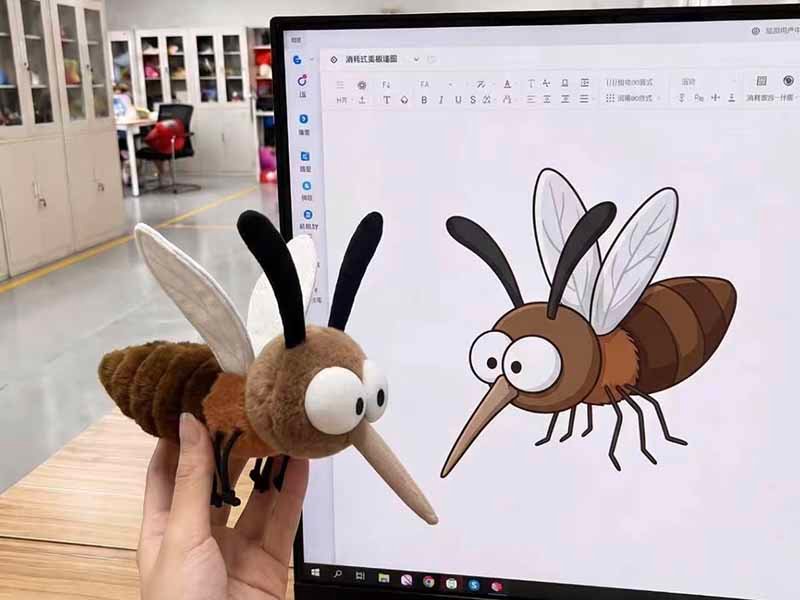
Plush Products Engineered for Complex Brand Programs

Licensed Character Plush

Collectible Plush Series

Plush Bag Charms

Brand Mascot Plush

Retail-Ready Plush

Functional Plush Products
Why Plush Concepts Fail During Development
Missing Dimensional Information
Expression Changes After Filling
Material Changes the Shape
Samples Cannot Scale
Determine Your Artwork Readiness Before Sampling
Ready for Development
- Clear character views
- Target size and quantity
- Defined market and age
- Identified approval contact
Ready With Clarifications
- Missing secondary views
- Unconfirmed fabrics or crafts
- Undefined packaging direction
- Clarifications required before pattern release
Early Concept Only
- Concept evaluation first
- Product format must be defined
- Key dimensions remain open
- Development scope requires confirmation
Pufumi’s Eight-Stage Plush Engineering Method
Asset Review
Commercial Framing
Feasibility Engineering
Pattern Development
Prototype Development
Revision and Approval
Controlled Production
Archive and Reorder
What Our Engineering Feasibility Review Covers
The review identifies manufacturability, unresolved risks, required decisions, and the correct development route before extensive pattern work, material purchasing, packaging investment, or formal testing begins.
| Review Area | Engineering Questions | Typical Output |
|---|---|---|
| Character Design | Which visual features define recognition? Which details may require adaptation? | Protected-feature list and interpretation notes |
| Product Structure | Can the product sit, stand, hang, move, or support internal components as intended? | Structure direction and identified risks |
| Pattern Complexity | How many panels, layers, openings, or difficult curves may be required? | Preliminary pattern strategy |
| Material Behavior | Will pile, stretch, thickness, grain, or surface finish change the shape? | Candidate material directions |
| Craft Execution | Should details use embroidery, printing, appliqué, paneling, or separate parts? | Recommended process map |
| Cost Drivers | Which features increase labor, material usage, tooling, packaging, or testing cost? | Cost-impact priorities |
| Timing | Which approvals, materials, sample rounds, tests, or packaging steps control the schedule? | Preliminary critical path |
| Compliance | What market, age classification, structure, and feature information is required? | Initial compliance preparation path |
From Two-Dimensional Artwork to Three-Dimensional Plush
Character interpretation protects visual identity while defining depth, volume, pose, surfaces, and manufacturing methods that are absent from flat artwork or isolated digital renders.
Engineering the Missing Third Dimension
Pufumi begins by identifying the character’s primary recognition view. For many character products, the front view carries the most important facial shape, eyes, mouth, color blocks, proportion, and signature elements. Those features receive priority while side, back, and depth information is developed.
Thickness is then assigned to the head, muzzle, body, arms, legs, ears, tail, clothing, and accessories. Excessive head depth can change the face after filling, while insufficient body depth may make a seated product unstable. Side profiles are reviewed together with the front, not added after the main pattern has already been completed.
Details are classified by manufacturing method. Hats, shoes, wings, tails, bags, bows, and dimensional props may require independent soft structures. Eyes, mouths, blush, stripes, symbols, and small logos may use embroidery, printing, appliqué, or fabric paneling. Process selection depends on scale, fabric surface, desired handfeel, durability, and visual importance.
Scale changes the engineering decision. A 4-inch keychain, 6-inch mini plush, 10-inch core product, and 18-inch display product should not use an identical detail plan. Small formats require stronger prioritization of essential features, while larger formats can support layered garments, shaped accessories, and more dimensional construction.
For complex programs, Pufumi can create a Plush Interpretation Sheet covering front, side, back, thickness, posture, materials, crafts, and non-negotiable features. Approval of the interpretation direction reduces ambiguity before pattern cutting begins.


Pattern Engineering Defines the Final Plush Form
Patterns translate approved visual direction into numbered panels that control volume, seams, material direction, assembly, filling behavior, production consistency, and later repeat-order accuracy.
Turning Character Geometry Into Sewable Panels
Pattern engineering separates a complete plush form into head, face, muzzle, body, arms, legs, ears, tail, wings, clothing, footwear, props, and accessory panels. The number and shape of panels affect facial volume, body posture, limb thickness, visual symmetry, sewing difficulty, material usage, and production stability.
Each production pattern should carry a traceable identity. Pufumi records the pattern number, part name, material, color, quantity, left or right orientation, pile direction, grain direction, applicable SKU, and version. Multi-SKU programs connect pattern records to BOM and product codes so similar characters or sizes do not accidentally exchange panels.
Curved seams determine three-dimensional form. A small change in a forehead curve may influence eye angle; a muzzle curve may change the mouth expression; a body gusset may change sitting balance. Pattern review therefore considers the assembled volume rather than evaluating each flat panel independently.
Fabric behavior must also be built into the pattern. Stretchy materials may expand after filling, dense backing may resist tight curves, and long pile may hide seams while obscuring small features. When a material changes substantially, the original pattern may require validation or adjustment rather than automatic reuse.
Engineering also considers production access. Narrow limbs, deep internal corners, layered garments, and restricted turning openings can be achievable for one sample but inefficient or inconsistent across volume production. Pufumi evaluates sewing sequence, turning access, embroidery timing, filling openings, closure positions, and final shaping during development.
The approved pattern set becomes part of the production file package and must remain synchronized with the approved sample, BOM, embroidery files, and workmanship requirements.
Structural Details Engineered for Real Product Use
Balance and Posture
- Sitting and standing stability
- Head-to-body weight balance
- Hanging orientation
- Transport recovery
Shape Support Zones
- Local filling zones
- Interfacing or foam
- Panel-based shaping
- Recovery inspection
Attachment Engineering
- Load direction
- Reinforcement method
- Interaction frequency
- Inspection requirement
Functional Internal Space
- Module dimensions
- Protected cavity
- Access location
- Final functional test
Fabrics and Filling Selected by Engineering Performance

Short Pile and Minky
- Clear facial features
- Controlled stretch direction
- Embroidery compatibility
- Approved physical swatch

Long Pile Fabrics
- Panel-specific pile direction
- Facial trimming plan
- Packaging recovery
- Shade consistency

Specialty Surface Materials
- Surface construction
- Sewing behavior
- Process compatibility
- Evidence documentation

Filling and Handfeel
- Regional filling distribution
- Softness and support
- Left-right consistency
- Recovery after compression
Surface Crafts Chosen for Visual Accuracy
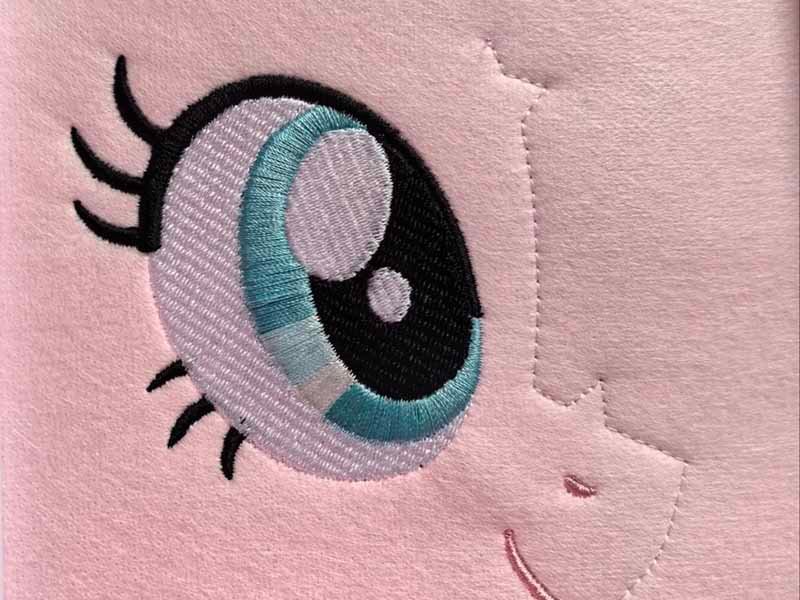
Embroidery Development

Printing Development

Applique and Paneling

Accessories and Hardware
Sewing Engineering Controls Shape and Durability
Sewing specifications turn pattern geometry into stable three-dimensional products by controlling seam sequence, allowance, thread, curved construction, reinforcement, closure, turning, and defect prevention.
Sewing Details That Protect the Approved Form
A plush pattern only achieves its intended shape when sewing follows the correct sequence and specification. Pufumi defines panel identity, seam relationship, assembly order, opening position, turning direction, thread code, reinforcement requirement, and closing method for critical areas.
Curved facial seams require careful control because tension variation can change forehead width, muzzle volume, cheek symmetry, and eye orientation. Narrow limbs and small ears require sufficient turning access without creating an oversized closure. Clothing layers must avoid unnecessary seam bulk that may distort the body underneath.
Load-bearing areas receive additional attention. Bag-charm loops, chain attachments, tails used as handles, wings, heavy accessories, and removable elements may require reinforced internal layers, hidden webbing, repeated stitching, or modified seam placement. Reinforcement is matched to the real load direction rather than applied as a decorative extra.
Closing seams are planned where they remain accessible for filling and inspection while staying visually controlled. Fill openings must allow regional filling distribution without damaging embroidery, clothing, or internal modules. After closure, the area is checked for exposed thread, uneven tension, trapped pile, leakage risk, and visible shape distortion.
Production instructions identify critical seams and common failure modes such as skipped stitches, open seams, puckering, panel mismatch, trapped pile, asymmetric assembly, and incorrect part orientation. First-off units and in-line inspections verify that sewing behavior matches the approved sample and released workmanship standard before the full batch advances.

Sample Development With Defined Approval Stages
V1 Prototype
- Overall silhouette
- Character expression
- Structure and balance
- Major material direction
Revision Sample
- Measured modifications
- Updated pattern or crafts
- Version-to-version comparison
- Recorded approval
Engineering Sample
- Structural validation
- Functional validation
- Production access
- Risk verification
PPS and Golden Sample
- Formal BOM direction
- Packaging confirmation
- Production reference
- Quality reference

Revisions Converted Into Measurable Engineering Actions
Clear revision records prevent subjective comments, conflicting instructions, lost approvals, uncontrolled cost changes, and outdated files from entering later sample or production stages.
From Visual Feedback to Controlled Sample Improvement
Comments such as “make it cuter,” “the face feels mature,” or “the body looks wrong” communicate a reaction but do not define an executable action. Pufumi reviews the entire character relationship and converts visual feedback into measurable changes.
A younger expression may require increasing head proportion, widening the face, adjusting eye spacing, reducing body length, lowering filling pressure, or modifying the mouth curve. A single facial feature is not changed in isolation without checking its relationship to eyebrows, cheeks, muzzle, and head volume.
Revision Briefs can record Sample ID, version, date, affected section, current condition, requested change, engineering action, reason, material impact, pattern impact, cost impact, lead-time impact, responsible team, and approval status. Examples include moving eyes upward by 3 mm, reducing mouth width by 15 percent, shortening a garment edge, increasing tail volume, repositioning a hanging loop, or reducing body filling.
Material revisions receive additional review because changing pile length, stretch, thickness, or backing can alter dimensions and embroidery appearance. Structural changes may also affect packaging, testing, quotation, and production sequence.
Before the next sample begins, comments from all reviewers are consolidated into one approved revision direction. After completion, Pufumi compares the new sample against both the revision list and the entire character rather than checking changed points only. Approved versions are linked to updated patterns, embroidery files, BOM records, photographs, and production documentation.
Production Files Behind a Repeatable Plush Product
Approved Pattern Set
- Panel identity
- Material assignment
- Direction control
- Released version
Bill of Materials
- Complete component list
- Supplier and material codes
- Approved substitutions
- Lot traceability
Workmanship Instructions
- Sewing sequence
- Filling and shaping
- Attachment instructions
- Defect prevention
Surface Process Files
- Unique file identity
- Formal size
- Position reference
- Approved color standard
Quality Control Plan
- Critical checkpoints
- Measurement standards
- Inspection method
- Nonconformance action
Packaging Specifications
- Retail presentation
- Product protection
- Scan and label control
- Carton identification
From Approved Sample to Stable Production
Production control converts the Golden Sample into material, process, quality, packaging, traceability, and release standards that can be applied across an entire manufacturing batch.
Scaling the Approved Product Without Losing Its Identity
- Production should begin only when the applicable patterns, BOM, materials, embroidery or printing files, accessories, labels, packaging, and quality criteria carry released status. Draft files and informal chat instructions cannot serve as production standards.
- Material lots are verified against approved references before cutting. Fabric records may include code, color, pile length, GSM, width, supplier, dye lot, roll number, arrival date, and inspection result. Pile direction and grain are marked during panel layout to prevent shade, touch, or dimensional inconsistency.
- First-off units verify that production cutting, embroidery, printing, sewing, filling, assembly, and finishing can reproduce the approved direction under actual line conditions. Any systematic difference is investigated before the full batch continues. Skilled manual reshaping should not be used to hide a pattern, filling, or process problem.
- Regular production commonly requires 25–45 days after approvals, materials, packaging, and production files are ready. Material purchasing may require 7–35 days, testing may require 7–20 days, and international transport may require 7–45 days depending on route and mode. A launch plan should therefore count backwards from the required warehouse date rather than from the intended factory start date.
- Production lots remain connected to material lots, line records, inspection results, finished-goods lots, packaging versions, shipment batches, and retention samples. The system supports complaint investigation, controlled replenishment, material updates, and later SKU extensions without relying on individual memory.

Quality Control Built Around Engineering Risks

Incoming Material Inspection
- Material identity
- Color and surface
- Batch status
- Release decision

First-Off Verification
- Approved pattern version
- Formal materials
- Line setup
- Corrective action before scale

In-Process Inspection
- Cutting checkpoints
- Embroidery checkpoints
- Sewing checkpoints
- Assembly checkpoints

Shape and Filling Control
- Filling distribution
- Left-right symmetry
- Approved handfeel
- Compression recovery

Final Lot Inspection
- Product version
- Packaging version
- Lot acceptance
- Shipment release

Traceability and Retention
- Batch-linked records
- Isolated nonconformance
- Retention Sample ID
- Reorder comparison
Safety and Compliance Considered During Engineering
Age and Market Classification
- Intended age
- Intended use
- Sales market
- Product features
United States Preparation
- Applicable-rule review
- Representative test sample
- Material and component records
- CPC support information
European Union Preparation
- Safety assessment
- Applicable standards
- Technical documentation
- CE marking preparation
Product-Specific Risk Review
- Structure risk
- Chemical and material risk
- Functional risk
- Labeling and packaging risk
Multi-SKU Engineering Program
A representative North American character merchandise program demonstrates how artwork interpretation, controlled revisions, shared engineering standards, production files, and batch controls support a coordinated plush collection.
Eight Character SKUs Engineered for a 12,000-Piece Launch
The program included eight character plush SKUs at 1,500 pieces per SKU, creating a total production quantity of 12,000 pieces. Each character shared a common collection language while retaining different facial expressions, ears, clothing, colors, and signature accessories.
The brand supplied front artwork and selected style references. Side depth, rear construction, clothing overlap, tail position, and several accessory details required engineering interpretation. Pufumi established a shared head-to-body proportion system, material palette, embroidery language, SKU structure, and packaging grid before individual patterns were finalized.
First prototypes were developed within the normal 7–15-day development range after the required materials and information were ready. Two revision rounds followed. Facial changes included controlled eye-position adjustments, reduced mouth width, revised cheek volume, and modified head filling. Clothing edges, tail thickness, accessory angles, and hanging-label positions were also refined.
Production files included individual pattern sets, BOM versions, embroidery files, workmanship notes, packaging specifications, and QC checkpoints. Shared materials were assigned unique lot records, while each character retained separate SKU, sample, production-batch, and packaging identities.
During production, panels were bundled by SKU, accessories were prepared in identified sets, first-off units were approved by character, and line clearance occurred during SKU changes. Packaging and carton records prevented mixed characters, mixed barcodes, and older packaging versions.
The final program was completed as a coordinated assortment rather than eight unrelated orders, creating a controlled foundation for repeat production, additional characters, and future size extensions.

Basic Sampling VS Engineering Development
Selecting a partner requires evaluating how creative interpretation, documentation, revisions, materials, quality, production transfer, and repeat orders are controlled—not simply comparing sample appearance or unit price.
| Evaluation Area | Basic Sample-Making Approach | Pufumi Engineering Approach |
| Artwork Review | Begins sewing from available images | Identifies missing views, protected features, scale, structure, and unresolved decisions |
| 2D-to-3D Work | Relies mainly on sample-maker interpretation | Records front, side, back, thickness, pose, and production methods |
| Pattern Control | Patterns may remain informal | Numbered, version-controlled patterns linked to SKU and BOM |
| Material Selection | Chooses visually similar fabric | Reviews pile, GSM, stretch, grain, craft response, supply, and batch continuity |
| Sample Feedback | Uses broad visual comments | Converts feedback into measurable Revision Briefs |
| Production Transfer | Uses the approved sample as the main reference | Releases pattern, BOM, workmanship, process, packaging, and QC documents |
| Multi-SKU Control | Manages each item separately | Connects shared standards with separate SKU, sample, batch, and packaging identities |
| Quality Planning | Inspects finished goods mainly at the end | Uses incoming, first-off, in-process, final, functional, and packaging checkpoints |
| Compliance Preparation | Discussed after development | Market, age, structure, materials, and functions considered before final sampling |
| Repeat Orders | Depends on previous staff and available materials | Reviews archived versions, material lots, production records, and retained samples |
Trust, Compliance & Production Assurance
Confidence for global brands and complex plush programs
Pufumi evaluates each project according to its target market, age grade, materials, construction, labeling, and packaging requirements. Depending on the assigned production site and project scope, our team can support ISO 9001 quality-management documentation and coordinate testing to EN71, ASTM F963, CPSIA, REACH, and other applicable standards. Factory audits, certifications, and test reports are verified by issuing body, validity period, facility, and product scope, giving brands greater transparency from sample development through controlled production and delivery.













Frequently Asked Questions
Pufumi can review character turnarounds, AI or PDF artwork, vector files, 3D models, character bibles, brand guides, annotated sketches, photographs, physical references, packaging concepts, and existing samples. Clear front, side, and back views produce stronger starting information. Early concepts can still be evaluated, but formal sampling may require additional interpretation and specification work.
Yes, an initial review can begin from a clear front image. Side thickness, rear construction, limb depth, tail position, clothing overlap, and hidden details must then be clarified or interpreted. Pufumi documents those decisions before releasing formal patterns, helping prevent unrecorded assumptions from becoming permanent sample or production errors.
A standard first sample commonly requires 7–15 days after required files, sample payment, and necessary development materials are ready. Complex structures, custom-dyed fabric, new hardware, electronic modules, extensive clothing, special printing, or several related SKUs may require additional time. A project-specific schedule is confirmed after feasibility review.
Each revision receives a Sample ID, version, change list, responsible team, and approval status. Standard revision cycles commonly require 5–10 days. Comments are converted into measurable actions affecting pattern, material, embroidery, filling, accessories, or packaging. Approved updates are transferred to related engineering files rather than remaining only in messages.
Core plush programs are commonly evaluated from 500 pieces per SKU. Mini plush, keychains, bag charms, custom-dyed materials, electronic functions, and complex packaging are often more stable from 1,000 pieces per SKU. Final MOQ depends on product size, structure, materials, surface processes, packaging, testing, and supplier minimums.
Not automatically. A prototype may use temporary materials or focus mainly on proportion and structure. Production normally requires formal material direction, released patterns, BOM, surface-process files, packaging, labels, quality standards, and the appropriate approved sample stage. Complex programs may require an Engineering Sample, PPS, or Golden Sample before release.
The originating brand retains its rights to supplied artwork and authorized assets. Pufumi uses project files only for evaluation, quotation, development, sampling, production, testing coordination, packaging, delivery, and agreed reorder management. Unauthorized third-party characters, logos, or protected assets are not accepted for production.
Pufumi can review an NDA before sensitive files are transferred. Controlled email, restricted cloud storage, project codes, versioned filenames, access permissions, watermarked materials, sample controls, and minimum-necessary sharing with specialist partners support confidential development. Public use of names, characters, packaging, quantities, or images requires authorization.
Bulk consistency is managed through the Golden Sample, released patterns, BOM, material lots, surface-process files, first-off approval, in-process checks, filling and shape control, final inspection, packaging verification, batch records, and retention samples. Soft products allow reasonable manufacturing tolerances, so critical features and acceptable boundaries should be defined before production.
No responsible manufacturer should guarantee automatic approval before reviewing the finished product, intended age, market, structure, materials, functions, and applicable requirements. Pufumi supports design review, BOM preparation, sample configuration, material records, labeling information, technical-file inputs, and third-party testing coordination. Legal certification responsibilities depend on the product and responsible market entity.

Turn Your Concept Into Production-Ready Plush
Send your character artwork, 3D model, design brief, or existing sample for an initial engineering review. Useful information includes the intended product type, dimensions, pose, SKU quantity, order quantity, target market, intended age, material direction, functional features, packaging, target cost, and required warehouse date. Pufumi will review the available information and identify the next development stage. The response may include clarification questions, feasibility concerns, recommended product structure, required sample stages, material directions, expected development timing, and information needed for formal quotation. Please prepare:
- Company and project name
- Artwork or reference files
- Product dimensions and pose
- Number of SKUs
- Quantity per SKU
- Target market and age
- Materials, functions, and accessories
- Packaging requirements
- Target warehouse date
- NDA or confidentiality requirements

