Skip to content


Polar fleece is one of those fabrics that feels familiar long before most people understand how it actually works. It appears in jackets, blankets, winter accessories, pet products, pillows, soft toys, character clothing, promotional merchandise, and countless other products. Its appeal seems simple: it feels soft, looks warm, weighs relatively little, and is usually easier to care for than many natural insulating materials. Yet two fabrics sold under the same “polar fleece” description can behave very differently once they are cut, embroidered, sewn, stuffed, washed, compressed into packaging, or reordered months later.
Polar fleece fabric is a soft knitted textile, usually made from polyester, with a mechanically raised surface that creates a fine insulating pile. The pile traps air, giving the material warmth without excessive weight, while polyester contributes relatively quick drying and durable everyday performance. Polar fleece is widely used in apparel, blankets, accessories, and selected plush products, with performance varying by GSM, density, finishing, stretch, and surface construction.
The useful question is therefore not simply whether polar fleece is “good.” A 180 GSM fleece and a dense 300 GSM fleece can share the same basic name while producing completely different results. One may be ideal for a small plush scarf or appliqué panel, while another creates unnecessary bulk around a miniature seam. Understanding those differences helps product developers choose fabric based on the finished product rather than on a supplier label alone.
What Is Polar Fleece Fabric?
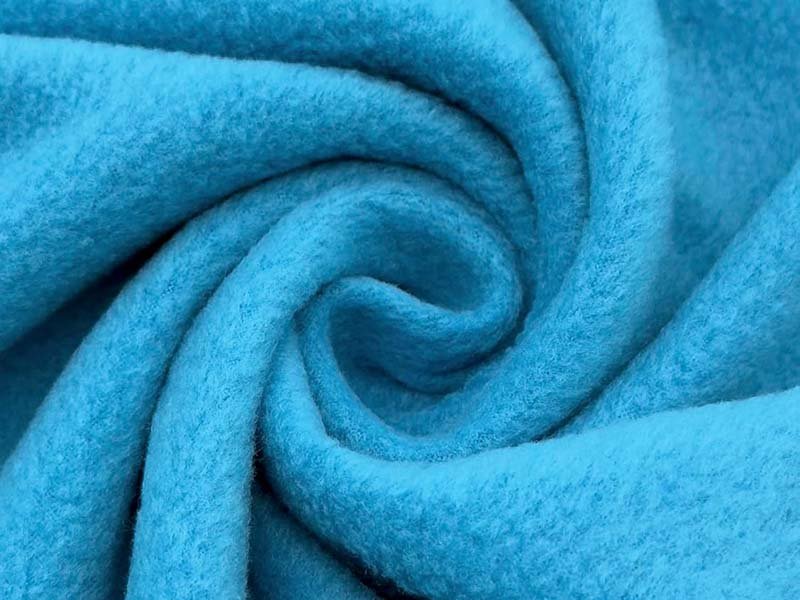
Polar fleece is a synthetic knitted fabric designed to create softness and insulation through a raised surface. Most modern versions use polyester, although recycled-polyester and blended constructions are also available. Its recognizable fleece texture is created through knitting and mechanical finishing rather than by using natural wool fibers. The final performance depends on fiber content, fabric weight, density, brushing, stretch, surface stability, and any additional finishing.
What Is Polar Fleece Made Of?
Most commercially available polar fleece is produced primarily from polyester. Polyester works well for fleece because the fibers are durable, relatively dimensionally stable, quick to dry compared with many highly absorbent natural fibers, and suitable for mechanical raising that produces a soft surface. Some products are labeled 100% polyester, while others may contain recycled polyester or additional fibers, so the actual composition should always be checked on the material specification instead of inferred from the words “polar fleece.”
The distinction between the fiber and the fabric construction is important. Polyester tells you what the fibers are made from; fleece describes how those fibers are turned into a particular textile structure and surface. A smooth polyester jersey, a woven polyester shell, and a brushed polyester fleece may share similar fiber chemistry but perform very differently. For commercial product development, composition alone therefore tells only part of the story.
A useful fleece specification normally records composition together with GSM, usable width, color reference, surface finish, stretch direction, handfeel, material code, and approved physical sample. When a product is reordered later, those references help determine whether a newly supplied fabric genuinely matches the original rather than simply carrying the same generic description.
Is Polar Fleece Natural or Synthetic?
Polar fleece is generally synthetic and should not be confused with sheep’s wool, even though both materials are associated with warmth and softness. The word “fleece” originally has a natural-fiber association, but in modern textile manufacturing it is also widely used to describe brushed or raised synthetic fabrics. Conventional polar fleece therefore does not require wool fibers to achieve its characteristic soft and insulating surface.
This distinction matters when evaluating care, sourcing, fiber labeling, sustainability claims, and product positioning. Wool fibers naturally have crimp and complex surface structures, while polyester fleece gains most of its loft and insulating character through textile construction and finishing. Synthetic fleece can also offer relatively predictable color reproduction, broad commercial availability, and compatibility with common cutting, embroidery, sewing, and appliqué processes.
Synthetic does not automatically mean lower quality. A carefully engineered polyester fleece can have excellent handfeel and long-term performance, while a poorly produced fleece may pill, stretch, shed, or change appearance quickly. Quality depends on the entire material construction, including yarn, knitting stability, raising, finishing, density, and manufacturing control.
Is Polar Fleece the Same as Polartec?
Polar fleece and Polartec are closely connected historically, but they are not interchangeable terms. Polar fleece is widely used today as a general fabric-category description, while Polartec is a specific textile company and technology brand associated with the early development and commercialization of modern synthetic fleece materials.
The distinction becomes important during sourcing. A quotation that says “polar fleece” does not automatically mean the fabric is a genuine Polartec article. Generic fleece can be produced by many mills and may vary considerably in fiber quality, GSM, stretch, pile structure, pilling performance, moisture behavior, color consistency, and durability. When a branded material is specifically required, the exact fabric article and sourcing documentation need to be verified.
For ordinary custom-product development, it is usually more useful to evaluate the physical fabric than to rely on the general category name. A supplier description can identify the material family, but the approved swatch, technical specification, and finished prototype are what establish whether a particular fleece is suitable for production.
How Is Polar Fleece Made?
Polar fleece is typically made by knitting polyester yarn into a stable base fabric and then mechanically brushing or raising one or both surfaces. This treatment lifts fibers from the knitted structure and creates the soft pile associated with fleece. Further finishing can influence pilling resistance, softness, surface uniformity, static behavior, shedding, appearance, and moisture performance, which explains why similar-looking fleece fabrics can perform quite differently.
How Does Brushing Create the Fleece Surface?
Before raising or brushing, a fleece fabric looks much closer to an ordinary knitted textile than the finished material most consumers recognize. Mechanical finishing lifts fibers from the yarn structure, creating thousands of fine fiber ends at the surface. This increases apparent volume, changes handfeel, and gives the material its familiar soft, slightly fuzzy appearance without requiring a proportionate increase in actual fabric weight.
The amount and style of brushing influence the finished product. A relatively low-profile fleece can preserve seam definition, embroidery, appliqué edges, and printed details more clearly. A more heavily raised surface can feel warmer and visually fuller, but small graphic details may become less distinct. For miniature products, even a few millimeters of extra surface loft can noticeably affect visual proportions.
Brushing can also create subtle directionality. Fibers lying in different directions reflect light differently, so two panels cut from the same color may appear slightly lighter or darker under strong lighting. This is why experienced cutting teams pay attention to fabric orientation even when working with short fleece rather than obvious long-pile faux fur.
How Does the Pile Provide Warmth?
Polar fleece provides warmth largely because its raised structure traps air. Air held within the fabric and around the lifted fibers slows heat transfer, creating an insulating layer without requiring the material to become extremely heavy. This relationship between trapped air and low mass explains why fleece became so widely used for mid-layers, blankets, casual winter clothing, and other products where warmth and comfort matter.
For plush products, thermal insulation is rarely the main technical reason for choosing fleece, but the same structure influences consumer perception. A raised fleece surface feels cozy and visually warm, which can complement winter characters, holiday collections, pillows, pajamas-themed plush, resort merchandise, and lifestyle-oriented soft products. Texture therefore contributes both physical and emotional value.
More pile is not automatically better. A heavily raised surface may hide small eye details, soften narrow embroidery, or make a tiny character appear less defined. A fabric that looks excellent on a large blanket can overwhelm a small collectible. Pile height needs to be judged against the scale and visual complexity of the finished product.
What Do Anti-Pilling and Recycled Options Change?
Anti-pilling fleece is designed to reduce the formation of small fiber balls caused by repeated friction. Pilling performance depends on fiber quality, yarn construction, knitting density, brushing intensity, finishing, and the conditions under which the finished product is used. The phrase “anti-pilling” should therefore be interpreted as an intended performance improvement rather than a guarantee that the fabric will never show any surface change.
Recycled fleece addresses a different issue. It uses recycled polyester feedstock rather than relying entirely on virgin polyester. Recycled content can support specific material policies or sustainability programs, but it does not automatically determine softness, pilling resistance, durability, color stability, or overall quality. Those characteristics still depend on the actual textile construction and finishing.
When recycled fleece is specified for a commercial project, useful controls include the recycled-content percentage, supplier documentation, material code, GSM, color, handfeel, lot information, and certification status when certification is required. Pufumi’s documented material-management approach also requires recycled-content claims to be supported by appropriate supplier or certification records rather than relying on unsupported environmental wording.
What Are the Key Properties of Polar Fleece?

Polar fleece is valued for a combination of softness, useful insulation, relatively low weight, breathability, quick-drying behavior, flexibility, and practical everyday durability. These properties vary substantially with GSM, pile structure, density, fiber quality, and finishing. Standard fleece should not automatically be described as waterproof, windproof, low-shedding, or permanently anti-pilling unless the individual material has been engineered and verified for those characteristics.
Is Polar Fleece Warm and Breathable?
Polar fleece is generally warm relative to its weight because the raised pile traps insulating air while the knitted structure still allows a degree of airflow and moisture vapor movement. This combination helps explain its popularity as a mid-layer material. Unlike a dense impermeable barrier, ordinary fleece does not need to completely block airflow in order to provide a useful feeling of warmth.
Fabric weight influences thermal performance, but it does not provide a direct mathematical measure of warmth. A 300 GSM fleece cannot simply be described as 50% warmer than a 200 GSM fleece because density, pile height, yarn construction, airflow, and finishing all influence actual insulation. Two fabrics with similar GSM can therefore feel noticeably different when worn or handled.
In plush products, thermal performance is usually less important than tactile and visual comfort. A fleece-covered character can immediately suggest softness, winter, warmth, sleep, or relaxation. That emotional association may be commercially useful for seasonal merchandise, soft home products, character pillows, and lifestyle collections even when the product itself is not intended to provide insulation.
Does Polar Fleece Dry Quickly or Resist Water?
Polyester fleece generally dries relatively quickly because polyester fibers absorb limited amounts of water internally compared with many natural fibers. Water can still remain between fibers and within the fabric structure, but it can often evaporate efficiently once the material is exposed to moving air and normal drying conditions. This quick-drying characteristic is one reason fleece became common in outdoor and active-use clothing.
Quick drying is not the same as waterproofing. Standard fleece can become wet, and water may pass through its knitted structure. A water-repellent treatment can improve resistance to light surface moisture, but that is different from a true waterproof membrane or coated textile. Commercial descriptions should keep these claims separate.
For finished plush products, care performance must be assessed across the whole construction. Filling, embroidery, labels, electronic modules, adhesives, metal accessories, printed components, weights, or cardboard elements can all change appropriate cleaning methods. The fact that an outer fleece shell dries relatively quickly does not automatically mean the entire finished item can be machine washed or immersed.
How Soft, Durable, and Shed-Resistant Is It?
A well-made polar fleece can provide a comfortable surface and good everyday durability, but performance differs significantly between fabric grades. Fiber quality, yarn construction, knitting density, brushing, finishing, and abrasion exposure all affect whether the surface remains smooth or begins to pill, flatten, mat, or shed loose fibers during use.
Pilling and shedding should also be treated as separate behaviors. Pilling occurs when surface fibers become entangled into small visible balls, usually through friction. Shedding means fibers or fiber fragments separate from the textile. A material can perform well against one problem and less well against the other, so a simple “anti-pilling” description cannot answer every durability question.
The intended product matters as much as the fabric. A plush collectible kept mainly on a shelf receives limited abrasion, while a bag charm attached to a backpack can rub against clothing, zippers, desks, vehicle interiors, and other surfaces for hours. Material evaluation should therefore match the real use environment instead of applying one durability requirement to every fleece product.
| Property | What It Means in Practice | Key Variables to Check |
|---|---|---|
| Warmth | Raised pile traps insulating air | GSM, pile height, density, construction |
| Breathability | Air and vapor can move through the knit | Density, coating, lamination |
| Drying | Polyester usually retains relatively little internal moisture | Thickness, finishing, finished-product construction |
| Pilling | Small fiber balls may form through friction | Yarn quality, brushing, abrasion exposure |
| Shedding | Loose fibers or fragments may leave the surface | Fiber quality, finish, intended use |
| Stretch | Knit structure may expand under load | Direction, recovery, density |
| Surface direction | Brushing can change shade and reflection | Cutting orientation, pile consistency |
Which Polar Fleece Weight Should You Choose?

The correct polar fleece weight depends on the finished product rather than the assumption that heavier fabric means higher quality. Lightweight fleece can reduce seam bulk and improve flexibility, while heavier fleece provides more body and a fuller tactile impression. GSM should be evaluated together with density, thickness, stretch, pile height, embroidery compatibility, product size, and manufacturing behavior before a material is approved.
What Does GSM Mean for Polar Fleece?
GSM means grams per square meter and measures the mass of one square meter of fabric. A fleece specified at 220 GSM therefore has a nominal mass of approximately 220 grams per square meter under the relevant measurement conditions. GSM provides a useful numerical reference for comparing materials, but it does not directly describe thickness, warmth, softness, density, or overall quality.
Two 220 GSM fleece fabrics can behave very differently. One may use a compact knit with a short, dense surface, while another may have more loft and a softer raised pile. Stretch, fiber fineness, knitting density, brushing, and finishing can also produce very different handfeel even when the measured weight is similar.
For plush development, GSM affects seam bulk, turning of small parts, stuffing behavior, embroidery appearance, packaging volume, and fabric consumption. Pufumi’s documented material-selection records therefore consider GSM alongside handfeel, elasticity, pile characteristics, wear behavior, supply stability, cost, and repeat-order suitability rather than treating weight as a standalone quality grade.
What Do Micro, 100, 200, and 300 Mean?
Micro, 100, 200, and 300 are well-known fleece categories associated particularly with Polartec’s product system, where they broadly represent increasingly substantial fleece constructions. They are useful for understanding relative positions within that branded range, but they should not be treated as a universal numbering standard that every textile mill or fleece supplier follows.
Generic manufacturers may instead describe fleece using terms such as lightweight, mid-weight, heavyweight, 180 GSM, 220 GSM, or 300 GSM. For sourcing purposes, the exact GSM and physical sample are usually more reliable than a category name. A “200 fleece” offered by an unrelated mill should not automatically be assumed to have the same specifications or performance as Polartec 200.
The best practice is to compare the supplier’s specification with the finished product requirement. Small components need lower bulk, while large soft products can accommodate more thickness. Numbering systems help organize a material range, but approved physical construction remains the real manufacturing reference.
| Fleece Category | Approximate Market Position | Typical Development Consideration |
|---|---|---|
| Micro / very light | Often below about 150 GSM | Linings, miniature clothing, lightweight accessories |
| Lightweight | About 150–200 GSM | Flexible parts, appliqué, character garments |
| Mid-weight | About 200–300 GSM | General soft goods, larger plush areas, pillows |
| Heavyweight | Around 300 GSM and above | Blankets, substantial soft goods, winter products |
These GSM bands are broad commercial reference ranges rather than universal standards. Fabric construction, finishing, supplier specifications, and the approved physical swatch should always take precedence over a general weight category.
Is Lightweight or Heavyweight Fleece Better?
Neither lightweight nor heavyweight fleece is automatically better. Lightweight fabrics usually create less bulk when seams are folded, stitched, and turned, which can be an important advantage for miniature arms, ears, clothing, bag charms, keychain bodies, or narrow appliqué pieces. A fabric that appears thin on a swatch can become surprisingly bulky once four or more layers meet around a small seam intersection.
Heavier fleece can provide more body and a richer tactile impression in larger products. It may suit pillows, blankets, larger mascots, winter merchandise, and designs in which substantial softness is part of the intended experience. However, increasing GSM without adjusting the pattern can change curves, seam behavior, and finished dimensions.
Embroidery provides another trade-off. A denser fabric can support stitches well, but a higher pile may partially cover delicate details. A lightweight fleece may produce crisp embroidery but sometimes requires additional stabilization. The most reliable decision comes from sewing the proposed fabric into the real product geometry rather than judging weight from a fabric card alone.
How Does Polar Fleece Compare with Other Fabrics?

Polar fleece generally has a flatter and more controlled surface than Sherpa or long faux fur, while creating a warmer and softer appearance than ordinary smooth woven fabrics. Microfleece is usually lighter, Minky often offers a finer plush surface, and wool comes from an entirely different natural-fiber system. No single material is universally superior because each offers a different balance of texture, bulk, detail clarity, durability, cost, and manufacturing behavior.
How Is Polar Fleece Different from Microfleece?
Microfleece is generally positioned at the lighter, finer end of the fleece family. It offers the recognizable softness of fleece while keeping bulk relatively low, making it useful for layering, lightweight garments, linings, and small soft-product components. The lower surface profile can also help embroidery, appliqué, and narrow construction details remain easier to see.
In small plush products, those differences become significant. A light microfleece may work effectively for scarves, hats, inner ears, costume parts, flat accessories, and appliqué because multiple folded layers remain manageable. A heavier polar fleece can create a more substantial feeling but may consume too much internal space in a miniature component once seam allowances are included.
Microfleece should still be evaluated for stretch and body. Very light fabric may show filling irregularities more clearly or distort when stuffed if the knit has substantial elasticity. A thin fabric is therefore not automatically easier to engineer. The most suitable construction balances low bulk with enough stability to hold the intended shape.
How Is Polar Fleece Different from Sherpa and Minky?
Sherpa, Minky, and polar fleece can all be soft polyester-based fabrics, but their surfaces communicate very different product styles. Sherpa usually has a highly textured, curly, wool-like appearance. It can create strong winter, lifestyle, teddy, or cozy-home associations, but that texture may obscure small embroidery or make precise facial features harder to read.
Minky generally has a smoother, finer short-pile surface and is widely associated with premium plush, baby-oriented soft goods, blankets, and character products. It can create clean facial areas and a polished soft-toy appearance, especially when the design depends on rounded forms and clear embroidery. Polar fleece usually appears more visibly textile-like and functional than Minky while remaining flatter and more controlled than Sherpa.
For plush development, these differences affect more than aesthetics. Surface height influences embroidery visibility, seam definition, handfeel, photography, and perceived value. Replacing Minky with fleece solely because the colors look similar can change the visual identity of a character even when both materials are made from polyester.
How Is Polar Fleece Different from Wool?
Conventional polar fleece is usually made from synthetic polyester, whereas wool is a natural animal fiber. Wool fibers contain natural crimp and a complex surface structure that contributes to insulation, moisture behavior, and characteristic handfeel. Polar fleece achieves loft and insulation mainly through knitted construction and mechanical raising, creating a completely different textile system even when the two materials feel similarly warm.
Commercial sourcing considerations also differ. Polyester fleece can often provide broad availability, predictable industrial production, reproducible colors, and relatively simple integration with common plush-manufacturing processes. Wool may be more appropriate for artisan products, natural-material collections, heritage concepts, luxury positioning, or projects where the fiber story itself is an important part of the product.
Neither should be presented as universally superior. A mass-produced character accessory and a premium natural-fiber collectible have different objectives. The correct material is the one that supports the product’s visual identity, care requirements, price structure, labeling, intended use, and manufacturing scale.
| Material | Typical Surface | Detail Clarity | Relative Bulk | Common Plush Relevance |
|---|---|---|---|---|
| Polar fleece | Soft, brushed, fairly even | Good | Low–Medium | Simple bodies, clothing, pillows, appliqué |
| Microfleece | Fine, low-profile fleece | Good–High | Low | Mini parts, garments, lining |
| Sherpa | Curly, wool-like texture | Medium–Low | Medium–High | Winter and lifestyle characters |
| Minky | Smooth, fine short pile | High | Low–Medium | Character faces, premium soft-touch products |
| Wool | Natural fiber texture varies | Variable | Variable | Specialty and natural-material collections |
Is Polar Fleece Good for Plush Products?
Polar fleece can work very well for plush products when a design needs softness, a relatively flat surface, manageable bulk, and clear graphic or color-block details. It is particularly useful for simple characters, pillows, clothing, accessories, appliqué, and seasonal merchandise. It is less suitable when long fur, highly realistic animal texture, extremely smooth premium surfaces, or very fine miniature details are central to the design.
Which Plush Products Suit Polar Fleece?
Polar fleece works best when softness is important but long pile is unnecessary. Suitable applications include simple character bodies, plush pillows, seasonal merchandise, mascot accessories, character garments, hats, scarves, flat comfort products, inner ears, appliqué panels, and large color-block areas. Its relatively controlled surface can also allow larger embroidered eyes, simple mouths, and recognizable graphic details to remain visible.
Product size plays a major role in suitability. A 25 or 30 cm character can usually accommodate greater fabric thickness than a 6 cm collectible or bag charm. Small products magnify seam bulk, because even a few millimeters of additional material can noticeably change facial proportions, limb thickness, or the amount of internal space available for filling.
Fleece is less suitable when the design depends on realistic long animal fur, glossy pile, extremely smooth premium facial surfaces, or complex tiny markings. In those situations, faux fur, Minky, short plush, velvet, printed fabric, or another specialty textile may deliver better results. Fleece should be treated as one useful material option within a broader fabric library rather than as a default solution for every plush project.
What Specs Matter for Plush Manufacturing?
Professional plush production requires more than writing “polar fleece” on a bill of materials. A reproducible specification should define the variables that directly affect cutting, sewing, appearance, quality, and future reorders. Composition, GSM, usable width, stretch, surface direction, color, handfeel, pilling behavior, shedding, embroidery compatibility, certification requirements, material code, and supplier information are all useful control points.
Fabric direction deserves particular attention. Even relatively short fleece can show subtle shade differences when brushed fibers point in opposite directions, and knitted fabric often stretches more across one axis than another. If mirrored face panels are cut in inconsistent directions, they can expand differently during stuffing or appear to have different colors under strong lighting.
Pufumi’s documented manufacturing approach requires fabric grain and pile-direction information to be transferred into pattern files, cutting instructions, BOMs, and QC checks where those factors affect the finished product. The objective is to keep color appearance, handfeel, shape, and dimensional stability consistent from sample approval into production.
How Is Bulk Consistency Controlled?
Bulk consistency begins with the approved sample rather than at final inspection. Once a plush prototype has been approved, the fabric needs to remain connected to a controlled material reference, pattern version, embroidery file, filling level, accessories, and packaging specification. The approved fleece can be recorded through a material code, supplier reference, physical swatch, color standard, nominal GSM, finish, and relevant lot information.
Cutting direction and sewing handling then need to remain consistent. Stretchy knitted fabric can distort when excessive tension is applied during sewing, while inconsistent orientation can make mirrored parts behave differently under the same filling pressure. Stuffing also changes the surface dramatically. Overfilling can widen the body, distort embroidery, and create hard handfeel; underfilling can create wrinkles and weak contours.
Repeat orders create another important checkpoint. A later roll described as the “same fleece” may still differ slightly in shade, brushing, density, stretch, or handfeel. Comparing replacement material against a retained approved sample before bulk cutting is much less costly than discovering a mismatch after finished units have already been assembled.
Pufumi’s material library includes fleece as one option among Minky, short plush, long-pile fabrics, Sherpa, and other textile categories, and its documented material-selection process evaluates factors such as GSM, handfeel, elasticity, wear behavior, supply stability, and repeat-order suitability before a material becomes a production reference.
Conclusion
Polar fleece earned its place in modern textiles because it solves several problems at once: it can feel soft and warm without becoming excessively heavy, it works with familiar industrial sewing processes, and it can be produced in a wide range of weights, surfaces, colors, and recycled-polyester options. Those advantages explain its use in clothing and blankets, but they also make it relevant to selected plush and soft-product applications.
The most important lesson is that “polar fleece” is only the beginning of a material decision. GSM, surface finish, pile height, stretch, pilling behavior, direction, color consistency, embroidery compatibility, and future availability can matter more than the generic fabric name. A material that works beautifully on a 40 cm pillow may be unsuitable for a 7 cm collectible, while a lightweight fleece that looks ordinary on a roll may become exactly the right fabric for a character scarf, appliqué, seasonal mascot, or simple plush body.
For a brand developing custom plush products, the safest approach is to compare actual fabrics on the intended product rather than choosing from photographs or category names alone. A good manufacturing partner should be able to explain not only what a fabric is called, but how it will behave during pattern development, embroidery, sewing, filling, packaging, bulk production, and future reorders. That is where material knowledge becomes product-development knowledge.
Frequently Asked Questions
Is polar fleece made from polyester?
Most conventional polar fleece is made primarily or entirely from polyester, although blended and recycled-polyester versions are also available. Polyester provides durability, relatively quick drying, and compatibility with the brushing processes used to create the fleece surface. The exact composition should still be confirmed from the supplier specification, especially when fiber labeling, recycled-content claims, certification requirements, or specific product-market regulations are involved.
Is polar fleece waterproof?
Standard polar fleece is not waterproof. Its knitted structure can allow water to pass through, although polyester fibers themselves absorb relatively little water and the fabric can dry comparatively quickly. Some fleece products receive water-repellent treatments or are combined with membranes, but those constructions should be evaluated separately. A quick-drying fleece should never be marketed as waterproof unless the specific material and finished construction support that claim.
What GSM is best for polar fleece?
There is no single GSM that is best for every polar fleece application. Lightweight constructions around 150–200 GSM can reduce bulk and work well for garments or small components, while mid-weight fabrics around 200–300 GSM provide more body for general soft goods. Fabrics around 300 GSM and above are commonly associated with heavier applications. These ranges are approximate, and density, pile, stretch, and product scale remain equally important.
Does polar fleece pill over time?
Polar fleece can pill when surface fibers are repeatedly exposed to friction, although the degree varies significantly with yarn quality, knitting density, brushing, finishing, and product use. Anti-pilling constructions are designed to reduce visible fiber-ball formation, but they should not be interpreted as permanently immune to surface wear. Products exposed to constant rubbing, such as bag charms or frequently handled accessories, usually require greater attention to pilling performance than decorative display items.
Is polar fleece warmer than regular fleece?
“Regular fleece” is too broad a term to make a reliable warmth comparison because fleece fabrics vary widely in GSM, density, pile height, construction, and finishing. A heavier polar fleece will generally provide more insulation than a very light fleece when other factors are similar, but fabric weight alone does not determine warmth. The amount of air trapped within the structure and the ability of the material to resist airflow also influence thermal performance.
Is polar fleece good for making plush toys?
Polar fleece can be an excellent material for selected plush toys, especially simple characters, pillows, clothing, appliqué, seasonal products, and designs that benefit from a soft but relatively flat surface. It is not the best choice for every project. Highly realistic animals, extremely smooth premium character faces, or miniature designs with very fine details may perform better with Minky, short plush, faux fur, velvet, or other specialized materials.
Can polar fleece be made from recycled materials?
Yes. Polar fleece can be produced using recycled polyester, including fiber derived from recycled polyester feedstocks such as post-consumer PET. However, recycled content should be verified through supplier documentation or appropriate certification when a formal environmental claim is made. Recycled fleece should also be evaluated for color, handfeel, GSM, supply consistency, lead time, and repeat-order availability just as carefully as conventional polyester fleece.