Skip to content

A plush product no longer has to stay on a child’s bed or sit unnoticed in a toy aisle. It may hang from a premium handbag, appear beside a computer during a video call, become the hidden character in a blind-box series, or sell out after a short unboxing clip spreads across social platforms. Adult consumers are changing who buys plush and what makes a plush product worth owning. Softness still matters, but it now competes with character recognition, collectibility, display value, emotional comfort and the ability to express a personal taste or fandom.
The biggest kidult plush trends for 2027 are likely to include licensed and fandom-led characters, ugly-cute collectibles, nostalgic reinterpretations, mini plush bag charms, blind-box series, premium tactile materials and comfort-focused sensory products. The strongest products will combine emotional value with clear character identity, camera-friendly details, credible scarcity and a product range that supports entry, core, premium and limited editions.
These are forecasts rather than guaranteed outcomes, so the best clues come from changes already visible in 2024, 2025 and early 2026. Circana reported strong growth in adult toy spending, while licensed products and collectibles continued to take a larger share of major toy markets. Picture two plush products placed on the same 2027 retail shelf. One is soft but generic. The other has a face people recognize from across the room, a texture they want to touch, a story they want to share and several related editions they want to collect. The gap between those products explains where the real opportunity begins.
What Is Driving Kidult Plush Growth?

Kidult plush is growing because adults increasingly use toys as collectibles, comfort objects, fashion accessories, decor and expressions of fandom. The strongest demand comes from products that provide more than softness: they offer recognizable characters, satisfying textures, display value, social visibility and a reason to return for another purchase. Recent adult toy spending suggests a lasting market shift rather than a brief novelty.
Who Are Kidult Plush Consumers?
The term “kidult” covers a broader audience than a simple age label suggests. It includes dedicated collectors who keep original packaging, gaming fans buying merchandise from a favorite world, fashion-conscious consumers decorating handbags, and adults who want a comforting object on a desk or sofa. These people may purchase the same plush product, but they judge value differently. A collector may focus on edition details and accuracy, while a lifestyle customer may care more about color, texture and how naturally the product fits into an everyday setting.
Age alone is therefore a weak product brief. A stronger approach looks at behavior. Does the customer display products, carry them or keep them sealed? Do they follow a specific IP, artist or character universe? Do they prefer one premium item or several affordable miniatures? Are they purchasing for themselves, a partner or another fan? These questions influence the right size, packaging, price level, material and release strategy more directly than a broad label such as “adult audience.”
Global market data supports this wider view. Circana reported that recipients aged 15 and older represented nearly one-fifth of global toy sales in 2025, and spending from this age group had more than doubled compared with 2020. That does not mean every adult is becoming a serious toy collector. It means play, collecting and character ownership are becoming normal parts of adult consumer culture. The commercial opportunity is to serve distinct adult behaviors instead of placing mature packaging around an ordinary children’s product.
Why Do Adults Buy Plush?
Adults rarely buy plush for only one reason. A product can represent a favorite character, provide emotional comfort, decorate a room and act as a conversation starter at the same time. This flexibility gives plush an advantage over many rigid collectibles. It can be displayed, held, carried, photographed, gifted and integrated into daily routines without losing its identity as a character product.
Nostalgia remains a major driver, but it is not limited to direct childhood memory. Some consumers reconnect with characters they personally knew, while others discover older visual styles through streaming, gaming, fashion revivals and social media. A product can therefore feel nostalgic because of its color palette, packaging, silhouette or cultural reference even when the customer never owned the original item. This helps established properties reach younger adults while allowing new brands to borrow the emotional warmth of an earlier era without copying a protected character.
Comfort is equally important, but it should be developed through product choices rather than vague wellness language. A calm expression, rounded shape, pleasant surface and appropriate filling level can make a plush reassuring to hold. A small charm may provide comfort through familiarity and constant visibility, while a larger weighted product may create a more physical sense of presence. The most durable concepts choose one primary role – fandom, collecting, fashion, humor or comfort – and let the remaining features strengthen that role.
Is Kidult Plush a Lasting Market?
The evidence increasingly suggests that adult toy buying is becoming part of the market’s long-term structure. In the United States, adults were among the fastest-growing toy recipient groups during 2025, and Circana reported that consumers aged 18 and older generated 35% of total industry growth through April 2026. Licensed products, collectibles and tactile formats also continued to perform strongly, all of which align naturally with character plush, mini collectibles and sensory products.
The lasting opportunity should not be confused with guaranteed success for every trend. Viral characters, specific color palettes and packaging formats can rise and fall quickly. Long-term demand is more likely to remain around durable needs: emotional connection, recognizable character design, tactile satisfaction, social identity and the pleasure of completing or expanding a collection. A brand that understands these motivations can adjust its visual style without rebuilding its entire commercial logic each season.
Price pressure will still matter. Adult consumers compare plush with figures, apparel, accessories, home decor and other discretionary purchases. They may accept a higher price when the character accuracy, fabric, packaging or edition value is obvious, but they are also quick to reject a product that feels repetitive or cheaply finished. Circana reported a movement toward mid-tier and premium price bands in early 2026, while weaker entry-level products faced greater pressure.
| Market indicator | Reported direction | Relevance to kidult plush |
|---|---|---|
| Adult toy spending | Strong growth across major markets in 2025 and early 2026 | Confirms that adults are a meaningful recipient group |
| Licensed products | Roughly one-third or more of global toy sales in recent Circana reporting | Supports character- and fandom-led plush development |
| Collectibles | Double-digit growth in major 2025 market reporting | Supports series, blind-box and limited-edition strategies |
| Social commerce | Growing influence on toys, hobbies and collectibles | Rewards camera-readable designs and portable formats |
| Premium price bands | More resilient than weak entry-level products in some markets | Raises the importance of visible material and design value |
The market figures above draw on recent Circana reporting, which placed the global toy market at approximately $123 billion in 2025, identified recipients aged 15 and older as nearly 20% of sales, and reported strong growth in licensed products, collectibles and adult purchasing.
Which Plush Styles Will Lead 2027?

The leading plush styles for 2027 are likely to include licensed characters, ugly-cute creatures, nostalgic reinterpretations, premium lifestyle designs and visually simple food or object characters. The strongest products will pair an immediately readable silhouette with a distinct personality, tactile interest and a clear use case. Generic cuteness will become harder to defend as collectors expect more original character language and stronger product stories.
Will Ugly-Cute Plush Stay Popular?
Ugly-cute plush is likely to remain visible because it stands apart from the polished symmetry that once dominated mass-market character design. Awkward teeth, uneven eyes, oversized ears and unusual proportions can make a character feel humorous, vulnerable or strangely relatable. Adult consumers often respond to controlled imperfection because it appears more individual than a generic smiling animal, especially when the expression suggests a recognizable mood or personality.
The phrase “controlled imperfection” is important. A successful ugly-cute character still needs a disciplined design system. Eye spacing, mouth shape, body proportion and color blocking should remain consistent across sizes, packaging and future variants. Random distortion may attract attention for a moment, but it rarely creates a character that can support multiple releases. The most memorable products look unusual for a reason, and their signature features remain readable from a shelf, a phone screen and a small product photograph.
Manufacturing places practical limits on the style. A digital illustration can include narrow teeth, tiny pupils and complex mouth lines that become crowded when converted into a 10-centimeter plush. Long-pile fabric may hide embroidery, while separate teeth or claws can introduce assembly and testing questions. Product teams should identify the two or three visual features that carry recognition and simplify everything else. The goal is not to reproduce every line of artwork but to protect the character’s emotional identity in fabric.
HKTDC’s 2027 toy forecast identifies plush and ugly-cute figures as a prominent collectible direction, linking their appeal with emotional comfort, decoration and expressions of personal taste.
Are Nostalgic Characters Returning?
Nostalgic characters will remain important, although the strongest releases will reinterpret familiar assets instead of reproducing old products without change. Adult consumers often want recognition and novelty at the same time. They may appreciate an accurate face combined with updated fabric, a new scale, modern packaging or a collaboration that gives the character a believable reason to return.
Nostalgia can take several forms. Direct nostalgia reconnects customers with a character they personally remember. Cross-generational nostalgia allows parents, younger fans and older collectors to share one property. Aesthetic nostalgia uses retro colors, package shapes and early-digital graphics without relying on a specific childhood memory. Anniversary nostalgia creates a natural release point around a game milestone, film reissue, character birthday or brand archive.
Licensed development adds control requirements that original characters may not face. Style guides can govern proportions, approved colors, clothing details, copyright wording and logo placement. Several parties may review samples before production, and a visually appealing sample can still be rejected if it changes a non-negotiable feature. Successful nostalgic programs protect the details that trigger recognition while using materials, size, accessories or packaging to create a product that feels current rather than merely reproduced.
Licensed toys accounted for 35% of global toy sales in Circana’s first-half 2025 reporting, while licensed sales increased 17%. These figures help explain why established entertainment, gaming, sports and character properties remain central to future plush planning.
Which Aesthetics Will Feel Premium?
Premium plush is usually created through disciplined choices rather than decorative overload. Adult consumers notice whether the fabric, expression, shape and package belong together. A product with fewer but better-controlled elements may feel more valuable than one covered with accessories that shift, wrinkle or compete with the face. Clean eye placement, balanced filling and a stable silhouette often contribute more to perceived quality than an impressive list of techniques.
Material selection sends an immediate signal. Dense short-pile fabric can support clean embroidery and refined contours. Selective long-pile areas can add richness but may require trimming around facial features. Stretch materials create a satisfying squish yet may soften a sharply defined body. Garments, woven labels and removable accessories can add storytelling value, although they also introduce fit, seam, color-transfer and component-loss risks that must be considered before the retail price is set.
Premium value should be connected to a visible benefit. A larger size may improve display presence. Better fabric may improve hand feel. Layered embroidery may add depth without hard components. A weighted base may help a character sit correctly, while numbered packaging can strengthen collection value. The central question is not how to make a product look expensive. It is what the customer can see, feel or experience that justifies the higher price and remains consistent in bulk production.
| Design direction | Likely product effect | Main development risk |
|---|---|---|
| Dense short-pile fabric | Cleaner embroidery and sharper contours | May feel less cuddly than longer pile |
| Selective long-pile accents | Richer texture and visual contrast | Can obscure eyes, seams and small markings |
| Layered embroidery | Adds depth without rigid parts | High stitch density can stiffen fabric |
| Weighted lower body | Improves sitting stability and holding feel | Adds freight weight and seam stress |
| Removable clothing | Supports variants and storytelling | Creates fit, loss and assembly risks |
| Numbered premium packaging | Strengthens collector perception | Requires accurate print, SKU and edition control |
How Will Collectibility Shape Plush?

Collectibility will shape plush through coordinated series, surprise formats, rarity levels, limited editions and planned product waves. The most durable collections will make every regular design worth owning instead of relying on one rare character. Strong programs combine visual consistency with meaningful variation, accurate internal SKU control and a release rhythm that encourages repeat purchasing without exhausting collectors.
Do Blind Boxes Still Drive Demand?
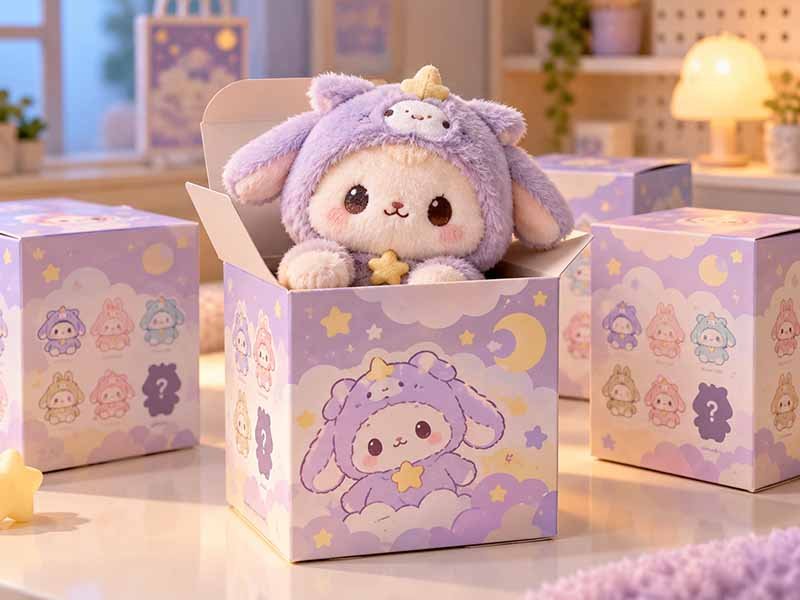
Blind boxes will remain commercially relevant, but customers are likely to become more selective about what counts as a satisfying surprise. The format works because it combines an accessible purchase, uncertainty, collection completion and social sharing. Opening the package becomes part of the product experience, which is especially useful for mini plush, pendants and bag charms that can be revealed quickly on camera and carried immediately after opening.
The format weakens when most customers want only one design. A series with one highly desirable hero and several weak supporting characters may generate an early spike, followed by disappointment and unwanted duplicates. Every regular edition should therefore feel complete enough to receive without regret. Differences in expression, color, costume or character story need to be meaningful, even when the products share a common body structure for manufacturing efficiency.
Operational control must be tighter than the customer experience suggests. Similar characters can be mixed during embroidery, assembly, collector-card insertion or packaging. Hidden-edition ratios can be packed incorrectly, and the correct plush may be placed in the wrong printed bag or carton. Separate SKU codes, controlled packing stations, ratio verification and carton maps are essential. The unboxing should feel random to the customer, but no production step should depend on chance.
More than half of U.S. parents surveyed by The Toy Association reported buying a blind-box product for themselves or their children during the previous year, indicating that surprise-driven purchasing has moved well beyond a small collector niche.
How Do Limited Editions Create Value?
A limited edition creates value when the reason for limitation is clear. It may be tied to an anniversary, collaboration, event, location, season or fixed production quantity. The restriction should feel connected to the story rather than applied as a label after the design is complete. Adult collectors often compare release histories, so unclear or repeatedly changing scarcity claims can weaken trust even when the product itself is attractive.
Different scarcity models create different business effects. A numbered edition provides the clearest quantity limit but leaves little flexibility when demand exceeds expectations. A time-limited preorder allows production to follow an order window. A retailer-exclusive color can support a commercial partnership but increases SKU and packaging complexity. Event editions create meaningful souvenirs, although their value drops sharply if the delivery schedule misses the event or the packaging lacks a clear connection to the occasion.
The product should contain a visible difference that collectors can understand. A special fabric, costume, embroidery, accessory, colorway or package can make the edition feel intentional. A new hangtag alone may not justify a large premium. Limited products also work best beside stable core items. The core product gives new customers an entry point, while special editions reward attention without making the entire line depend on urgency and fear of missing out.
Which Series Structures Work Best?
The most manageable series share a clear design system. Characters may use a common body proportion, material family or packaging format while varying in ears, expressions, costumes, colors and accessories. Shared construction reduces development complexity, but excessive reuse can make the range look like simple color changes. Each character should have a recognizable role in the collection and enough visual difference to create preference, trading and discussion.
A practical first wave often includes one hero character, several core characters, one more unusual personality design and an entry format such as a charm or mini. Premium and limited versions can follow after the brand has evidence of which characters, sizes and price points are working. Launching too many unrelated structures in the first wave divides demand and increases the chance of fabric, package and inventory problems before the collection has built a stable audience.
Series development also needs room for future stories. Wave 1 should stand on its own, but later releases can introduce secondary characters, seasonal costumes, larger scales or location-specific versions. Product planning should distinguish evergreen products from temporary releases. An always-available hero builds recognition and gives new customers a reliable entry point, while limited drops create occasional excitement. When availability and scarcity are balanced, collecting feels like participation rather than pressure.
| Series role | Typical format | Commercial purpose | Key control point |
|---|---|---|---|
| Hero SKU | Core-size lead character | Advertising and instant recognition | Face, silhouette and character accuracy |
| Entry SKU | Keychain, charm or mini | Accessible first purchase | Detail clarity and attachment strength |
| Core SKU | Main series characters | Stable volume and collection building | Consistent scale and shared design language |
| Personality SKU | More unusual secondary character | Conversation and social sharing | Distinctiveness without breaking the series |
| Premium SKU | Larger or richer version | Gifting and higher perceived value | Material, finishing and packaging |
| Limited SKU | Seasonal, event or numbered edition | Urgency and collector attention | Clear edition rules and SKU separation |
Are Plush Charms Becoming Fashion Items?

Plush charms are becoming fashion and lifestyle accessories because they make characters visible in everyday public life. Consumers can attach them to handbags, backpacks, keys or cases, creating a lower-priced and more portable alternative to traditional plush. Successful designs require more than simply shrinking a larger toy: they need simplified details, balanced weight, dependable hardware and an attractive hanging position.
Why Are Bag Charms Growing?
Bag charms allow consumers to express fandom and personality without changing an entire outfit. A character attached to a handbag is easy to notice, photograph and replace, making the format suitable for seasonal styling, collecting and gifting. It can function as a toy, fashion accessory, licensed product and entry-price collectible at the same time, which allows brands from entertainment, apparel, food, beauty and lifestyle categories to use the same basic format for different commercial goals.
Portability also increases organic exposure. A standard plush usually stays at home, while a charm moves through offices, campuses, transport systems and social spaces. The customer becomes part of the product’s visibility. This is particularly valuable for original characters that still need recognition, although it also raises the standard for appearance because weak hardware, a sideways-hanging face or a distorted attachment point will be visible every day.
The format reaches people who may not describe themselves as toy collectors. Someone who would not purchase a large stuffed character may accept a small charm as a styling detail or gift. This broadens the audience, but it also changes expectations. Hardware finish, overall weight, color coordination and the way the character hangs from different bag shapes need to be reviewed alongside traditional plush concerns such as embroidery and seam strength.
The Toy Association describes bag charms, clip-on minis and related collectibles as personal badges that communicate fandom, humor and aesthetic identity for adults as well as younger consumers.
Which Mini Formats Will Matter?
Plush keychains, bag charms, zipper pulls and hanging minis may look similar in product photographs, but they experience different types of use. A keychain is exposed to repeated movement and contact with hard objects. A fashion charm can be larger and more decorative but should not become uncomfortable or damaging to the bag. A zipper pull receives direct pulling force, while a collectible hanging mini may prioritize visual detail more than heavy daily handling.
Small-scale development requires simplification. A large character may include layered clothing, individual fingers, complex hair and several accessories. On a mini version, those elements can become difficult to cut, turn, sew and fill consistently. Embroidery may become too dense, narrow limbs may twist, and long pile can cover the expression. The strongest mini versions preserve the face, silhouette, signature color blocks and one or two iconic details rather than forcing every original element into a limited surface area.
Attachment design should be reviewed while the product is hanging from an actual bag, not only while it lies on a sample table. The face should remain visible, the body should not rotate into an awkward position, and the fitting should not pull the head or seam out of shape. Hardware also needs to be proportionate. An oversized clasp can dominate the character, while a delicate fitting may not provide enough durability for repeated use.
How Does Fashion Influence Plush?
Fashion influences plush through color, texture, hardware, scale, collaboration and release timing. A recognizable character can remain consistent while changing garments, fabrics or accessories to coordinate with a broader collection. Faux fur, boucle-like surfaces, washed textures, metallic accents and restrained colors can move a product closer to lifestyle merchandise, but each material still needs to be assessed for shedding, seam behavior, embroidery clarity and repeat-order consistency.
Hardware becomes part of the visual language instead of a purely functional component. The color and finish of a ring, clasp or chain can change the perceived quality of the product. Seasonal releases also fit naturally in this category. The same character can wear a winter scarf, sports jersey or collaboration outfit, although frequent minor changes can create fatigue. Each new version should offer a different styling use, story or material experience rather than a nearly identical shade.
Social platforms influence proportions and presentation. A charm that looks refined in person may disappear in a vertical video when its eyes are too small, contrast is weak or its signature feature faces away while hanging. Development teams should review products at close-up unboxing distance, hand-held styling distance and full-bag distance. Camera visibility should support physical appeal, not replace it. A viral clip may drive the first purchase, but material quality determines whether the product remains on the bag.
Circana reported that TikTok Shop represented 3% of U.S. e-commerce sales in early 2026, with toys, hobbies and collectibles ranking as its third-largest category. This illustrates how social commerce can influence the visibility and sales momentum of compact, demonstrable products.
How Will Comfort and Sensory Features Evolve?
Comfort and sensory plush will evolve through more deliberate combinations of texture, filling, weight, scent and gentle interaction. Products that offer a clear tactile experience are likely to attract adults seeking screen-free comfort. Added features must be specified carefully because fragrance, weighted materials, stretch fabric and electronic components can affect manufacturing consistency, packaging, transport, testing and long-term use.
Are Softer Textures More Important?
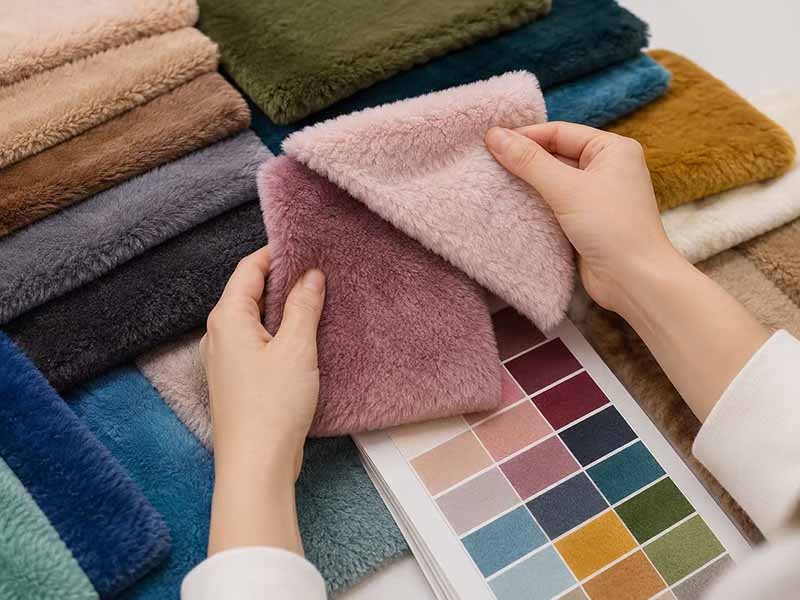
Texture is becoming a product feature rather than a background material choice. Adult customers compare the hand feel of plush with blankets, cushions, apparel and other lifestyle products. The surface needs to support the product’s intended emotion and visual identity. A calm comfort character may benefit from a warm medium pile, while a detailed collectible face may need a dense short pile that keeps embroidery and contours visible.
Softness is not one simple quality. Pile length, density, fiber fineness, stretch, backing and filling level all influence the experience. A long-pile fabric can feel luxurious but hide small facial details. Stretch material can create a satisfying squish yet allow the body to spread. Short pile can look refined and photograph cleanly but feel less warm. Different parts of one character may therefore use different materials, with shorter pile around the face and more tactile fabric on the body.
Filling needs equal attention. Underfilling can make a face collapse and reduce display quality, while overfilling may harden the product and distort seams. The correct level depends on whether the plush is intended for display, squeezing, sleeping or holding. Product teams should define the desired feel in practical terms and physical references. “Very soft” is too vague for consistent sampling; a description such as “softly filled body with a firmer face and stable seated base” is far more useful.
The Toy Association’s Cozy Culture research identifies growing interest in tactile, low-tech and human-centered products that provide a break from constant digital stimulation.
Will Weighted Plush Grow?
Weighted plush is likely to remain attractive because added mass changes the way the product feels during use. It can help a small character sit securely on a desk or give a larger product a more substantial holding experience. Weight should be distributed according to the intended function. A display plush may need most of the mass in the lower body, while a lap product may require a broader and more even distribution.
Internal weighted materials need secure containment. Pellets or beads should not migrate into narrow limbs, create visible lumps or place excessive pressure on one seam. A separate inner pouch can control placement but adds another component and sewing operation. The total weight also affects sample freight, production shipping and retail fulfillment. A product that feels satisfyingly substantial in person may become commercially difficult if it moves into a less efficient shipping band.
The target market and intended age should be defined before development. Materials, seams, warnings and testing expectations may differ according to structure and claims, and an adult-oriented visual style does not automatically remove all compliance questions. Weighted features work best when they support the character and use case. A rounded sleeping animal or lap-sized comfort product may feel natural, while a delicate standing figure can lose its intended balance and shape.
Will Scented Plush Grow?
Scented plush is receiving more attention because fragrance can create memory, atmosphere and product storytelling. A gentle vanilla note may fit a bakery character, while a botanical scent may support a nature-themed collection. The strongest concepts connect the fragrance with the character rather than using scent as an unrelated novelty. The feature needs to make the product world feel more complete, not simply provide another point for the package.
Control is the main challenge. Scent intensity changes during storage, transport and use, and consumers have very different tolerances. A fragrance that seems subtle in a large sample room may feel overwhelming in a bedroom or office. Development teams should determine whether the scent is contained in a removable insert, internal sachet, treated component or packaging element. Permanently applying fragrance to the full fabric can create more difficult questions around consistency, cleaning and longevity.
Scent also affects communication and material compatibility. Customers should understand that the product is fragranced before purchase, and claims about duration should remain realistic. Fragrance materials may interact with adhesives, printing or packaging during long storage. For many programs, a removable or replaceable fragrance component offers more flexibility because the character continues functioning after the scent fades and scent-sensitive consumers have greater control over the experience.
HKTDC’s 2027 forecast identifies scented and multisensory toys as an emerging product direction across plush and several related toy categories.
Do Interactive Features Add Value?
Interactive elements add value when they deepen the character rather than distract from it. A gentle sound, removable costume, reversible expression or hidden pocket can create attachment without turning the plush into a complicated electronic device. Many adult consumers are attracted to plush because it is tactile and screen-free, so interaction can be mechanical, sensory or emotional rather than digital.
Simple features may include swappable accessories, magnetic costume elements, poseable ears, reversible faces and pockets containing story cards or keepsakes. Electronics need a stronger reason. Sound modules, lights and movement can support a recognizable character behavior, but they also change weight, washability, transport and after-sales requirements. A module needs a secure location and activation method that does not deform the product or create an unpleasant hard area.
The development question should begin with the character rather than the technology. What interaction would make this plush feel more present? The answer may be a sound, but it may also be a carefully weighted body, an expressive reversible face or a memorable fabric combination. The most effective feature is the one customers naturally demonstrate to another person because it feels connected to the character’s personality.
Sensory-driven toy products recorded particularly strong momentum in early 2026, with Circana reporting triple-digit growth for squishy toys in both dollar sales and units through April.
How Should Brands Build a 2027 Plush Line?
Brands should build a 2027 plush line by choosing one clear audience and product promise, then creating a controlled mix of hero, entry, core, premium and limited SKUs. Concepts need testing for both consumer appeal and manufacturing consistency. Approved samples, materials, packaging, quality standards and reorder records should be established before the collection expands into many characters, sizes or seasonal waves.
Which Trend Fits the Brand?
A trend should strengthen an existing brand identity rather than replace it. A fashion label may have a natural reason to develop a plush bag charm, while a gaming property may benefit from accurate character collectibles. A museum shop may gain more from educational character cards and destination-specific storytelling than artificial rarity. The right direction begins with what the audience already values and how the product will enter daily life.
Channel fit matters as much as visual appeal. A premium department store, online fandom shop, museum retailer and blind-box chain expect different product sizes, packages, prices and replenishment patterns. The same character can be adapted for several channels, but the product role should remain clear. A mini charm may act as an impulse purchase, a core plush may build recognition, and a numbered edition may serve an event or collector release.
Manufacturing feasibility should be considered before the collection becomes visually complicated. A detailed character may work at 25 centimeters but lose recognition at 9 centimeters. A premium-looking long pile may hide the face, and a hidden edition may use a fabric that is difficult to separate during packing. Trends should act as filters, not instructions. Licensing, nostalgia, sensory features and collectibility show where attention is moving, but the final product still needs a believable reason to belong to the brand.
How Should the SKU Mix Work?
A manageable assortment normally includes different product roles rather than many equal-priority designs. The hero SKU carries the main identity, an entry product lowers the barrier to purchase, core SKUs provide stable volume, and premium or limited versions create higher-value moments. The exact mix depends on the channel, but customers should understand the differences between products without needing to study a technical specification or compare several nearly identical listings.
The assortment must be evaluated at the individual SKU level. A large total order may still be inefficient when it is divided across too many characters, colors, sizes and package versions. Pufumi’s documented project-screening reference begins around 500 pieces, while the actual MOQ varies with construction, number of SKUs, color, materials, packaging and process complexity. The more versions a line contains, the more carefully each component and packing ratio must be planned.
A focused first collection usually produces clearer information than a wide launch. One strong character developed as a core plush, mini charm and limited edition can reveal demand by format and price. Once the market response is clearer, secondary characters and seasonal variations can be introduced with less inventory risk. SKU planning should also leave room for replenishment. Evergreen products support recognition, while limited products create occasional attention without turning the entire business into a sequence of short sales windows.
How Should Brands Test Demand and Production?
Consumer testing and manufacturing testing answer different questions. A design can be popular in a survey but difficult to reproduce, while a technically excellent sample may receive little market interest. Early concept testing can compare characters, expressions, colors and expected retail prices. Physical sampling then tests size, hand feel, facial accuracy, structure and packaging. A limited retail release or preorder can show whether positive comments convert into actual purchases.
Questions should be specific. Asking whether people like a product often produces polite but weak feedback. Asking which version they would purchase, what they expect to pay, where they would use it and which detail they remember provides more useful information. Production review should focus on repeatability. The team needs to determine whether the face relies on manual shaping, whether fabric pile changes the expression and whether accessories stay aligned after filling and packing.
Pufumi’s core factory resources include more than 58 plush designers and pattern makers, with around half having more than fifteen years of development, design and pattern-making experience. That kind of experience is most valuable before production, when an eye position, seam or accessory can still be changed without affecting thousands of finished products. A pre-production sample should use the intended materials, construction and packaging so that approval represents the real manufacturing target rather than an idealized prototype.
How Should Packaging and Reorders Be Planned?
Packaging is part of the product experience for adult collectors. Some customers keep it, photograph it or include it in a display. Others expect compact materials and easy disposal. A blind-box product needs concealment, tamper control and accurate ratio management. A premium character may need a window box or gift package, while a bag charm may work best with a well-designed hanging card that protects the product and keeps the face visible.
Packaging also carries operational information. Product name, SKU, barcode, copyright wording, care information, warnings and carton assignment need to match the correct item. Multi-SKU collections are especially vulnerable to wrong collector cards, incorrect barcodes and mixed carton ratios. Package artwork should be reviewed as carefully as the plush because an error can prevent retail receiving or require time-consuming rework even when the product itself is correct.
Reorder planning should begin before the first shipment. Fabrics can be discontinued, color batches can vary and production teams can change. A dependable record normally includes the approved Golden Sample, bill of materials, pattern version, embroidery files, color references, filling requirements, package artwork and inspection criteria. Pufumi’s long-term process uses Golden Samples, material records, BOMs, version control and reorder-difference checks to reduce drift. A viral launch can create the first order, but accurate records and stable replenishment create the product line.
A successful kidult plush product in 2027 will not be defined by one color, fabric or character type. It will be defined by how naturally it fits into adult life. People may carry it, display it, collect it, photograph it, gift it or return to it for familiarity and comfort. Licensed characters will remain powerful because fandom provides an existing connection, while original characters can compete when they establish a distinctive visual language and avoid copying the surface of a viral success.
Blind boxes and limited editions will continue to support repeat purchases, but only when regular designs remain desirable and scarcity is credible. Bag charms will extend plush into fashion and public life. Tactile, weighted, scented and interactive products will gain attention when their features are purposeful and controlled. The deeper change is that adult plush can no longer be treated as a children’s toy placed in darker packaging. Adult customers notice material quality, character accuracy, edition logic, packaging and whether the brand behaves consistently after the first launch.
The next successful collection may begin with a simple sketch, but that sketch must survive pattern engineering, material selection, sampling, approval, production, packaging and replenishment. Trends can reveal where attention is moving, yet disciplined execution determines whether a product remains valuable after the first social-media spike. Brands that combine an ownable character, a clear product role and a reliable development system will be better positioned to build a lasting plush line rather than a single fashionable item.
What is kidult plush?
Kidult plush refers to soft character products designed, marketed or commonly purchased for teenagers and adults rather than only for young children. The category includes licensed character plush, designer collectibles, blind-box minis, bag charms, comfort plush and premium display pieces. Adult customers may buy them for fandom, nostalgia, decoration, fashion, emotional comfort or collection completion. The term describes the consumer behavior and product positioning, not one fixed size, material or visual style.
Will kidult plush still be popular in 2027?
Current market signals suggest that kidult plush will remain commercially important in 2027, although individual characters and visual trends may change. Adult toy spending, licensed merchandise and collectibles showed strong momentum in major markets during 2025 and early 2026. The lasting opportunity comes from emotional connection, character recognition, tactile value and collectibility. Brands should avoid assuming that every viral plush will remain popular and should test demand before committing to a large assortment.
Which kidult plush styles are likely to trend in 2027?
Likely directions include licensed and nostalgic characters, ugly-cute creatures, premium neutral designs, mini plush charms, blind-box collections and sensory comfort products. Food and object characters may also remain popular when they have a distinctive personality rather than a generic smiling face. The strongest designs will be readable on a phone screen, recognizable without packaging and practical to reproduce at the planned size, price and production volume.
Are plush bag charms only a short-term fashion trend?
Plush bag charms may experience changes in character style and scale, but the format has reasons to last beyond one season. It gives consumers an affordable and portable way to show fandom or personal taste, and it creates public visibility that a home-based plush cannot. Long-term success will depend on comfortable weight, durable hardware, clear hanging orientation and character designs that still look attractive after repeated use rather than only in launch photography.
Are blind-box plush products still worth developing?
Blind-box plush can be worthwhile when every regular edition has genuine appeal and the series is supported by accurate SKU, ratio and packaging control. The format encourages repeat purchasing and social sharing, but it can frustrate customers when one hero character is much stronger than the rest or when duplicates feel like poor value. A brand should define the series structure, rarity system, carton ratios and future waves before approving the first production order.
How can a brand choose the right plush trend for 2027?
A brand should choose a trend that matches its existing audience, visual identity, sales channel and production capabilities. A fashion company may be suited to a charm, while a gaming property may benefit from accurate character collectibles and a lifestyle brand may prefer a sensory comfort product. The concept should also have room to expand into several useful formats. A trend is valuable when it strengthens the brand’s own identity rather than making the product look like a copy of a current bestseller.