Skip to content

Your Trusted Multi SKU Plush Program Manufacturer
Coordinate every character, size, edition, and launch as one controlled program.
- 58+ specialists maintain character consistency across every SKU.
- Six sample lines support parallel development and approvals.
- 28 core lines coordinate phased multi-SKU production schedules.
- Unique SKU codes prevent component and packaging mix-ups.
- Manage 6–24 planned SKUs through one structured program matrix covering character, size, format, quantity, packaging, market, and launch wave.
- Golden Samples and BOMs lock every approved version.
- 35+ quality specialists verify ratios, labels, and cartons.
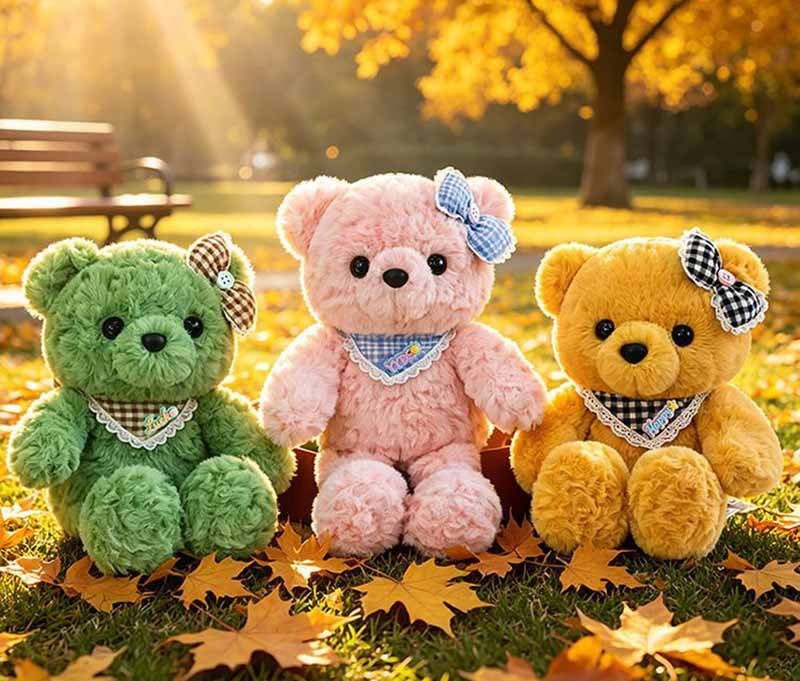
One Plush Program With Every SKU Under Control
SKU Architecture
Parallel Sampling
Controlled Files
Material Coordination
Anti-Mix Production
Repeat-Ready Records
Built for Complex Plush Portfolios and Retail Programs
IP Owners
Collectible Brands
Global Retailers
Entertainment Companies
Lifestyle Brands
Distribution Networks
Multi-SKU Plush Products Developed Under One Program

Character Collections

Multi-Size Plush

Plush Bag Charms

Plush Keychains

Retail Plush Editions

Gift and Limited Editions
Where Multi-SKU Plush Programs Commonly Lose Control
Collection Style Drifts
- Establish a collection reference before parallel development.
- Define shared proportions, materials, craftsmanship, and packaging rules.
- Record intentional exceptions for unique character features.
- Compare samples as a group, not only one by one.
Feedback Reaches Wrong Versions
- Assign a unique SKU and version to every review item.
- Consolidate comments into one controlled record.
- Mark approved, under-review, and obsolete files clearly.
- Release only the approved version for production preparation.
Quantity Planning Becomes Distorted
- Classify hero, core, support, and limited SKUs.
- Review material and packaging minimums by item.
- Share components only where design and quality remain suitable.
- Schedule later waves when first-launch quantities lack commercial logic.
Similar Components Get Mixed
- Use component kits and SKU-labeled bundles.
- Separate work-in-process areas by item and batch.
- Verify first articles after every style change.
- Complete line clearance before the next SKU enters production.
Packaging Does Not Match
- Link packaging files directly to the finished SKU.
- Verify barcode content and readable scan quality.
- Compare product, label, packaging, and carton identifiers.
- Reconcile packed quantities against released production quantities.
Repeat Orders Drift
- Preserve approved samples and current production packages.
- Record original materials and approved alternatives.
- Review changes before replenishment materials are booked.
- Update version history whenever a controlled change is accepted.
Build the SKU Architecture Before Sample Development Begins
A structured matrix connects commercial planning with engineering, sourcing, packaging, production, and replenishment before several individual styles create conflicting requirements.
| SKU Dimension | Decisions Required | Manufacturing Impact |
|---|---|---|
| Character | Hero, core, supporting, limited, seasonal | Pattern set, face file, outfit, accessories |
| Product Format | Standard plush, mini plush, charm, keychain, cushion | Structure, attachment, filling, packaging |
| Size | Compact, standard, large, display format | Pattern scale, detail level, material use |
| Color or Outfit | Core color, seasonal color, special costume | Fabric lot, embroidery, component separation |
| Packaging | Polybag, hangtag, retail box, display carton | Artwork, barcode, carton size, pack-out |
| Target Market | United States, Europe, United Kingdom, other regions | Label, warning, documentation, testing path |
| Launch Wave | Core launch, seasonal release, limited drop, replenishment | Material booking, scheduling, inventory planning |
A SKU master should include item number, character, size, product format, approved sample ID, BOM version, packaging version, order quantity, carton quantity, market, and release status. Commercial teams can then review the assortment while engineering and production teams work from the same controlled structure.
Allocate Quantities Around Each SKU’s Commercial Role
Hero SKUs
- Highest planned quantity
- Broadest retail distribution
- Strong replenishment priority
- Reference for shared standards
Core SKUs
- Balanced commercial quantity
- Shared collection components
- Ongoing assortment role
- Planned repeat availability
Supporting SKUs
- Selective channel placement
- Lower forecast than core items
- Careful unique-material review
- Possible second-wave scheduling
Limited Editions
- Fixed released quantity
- Dedicated edition identification
- Separate component reconciliation
- Controlled final balance
Hidden Editions
- Restricted internal information
- Anonymous production codes
- Defined case-pack ratio
- Final three-way reconciliation

Information Needed for an Accurate Program Review
Character Assets
Proposed SKU List
Size and Format
Quantity by SKU
Market and Age
Packaging and Timing
How a Multi-SKU Plush Program Moves Forward
Program Brief
Feasibility Review
SKU Architecture
Material Planning
Sample Development
Review and Revision
Approval and Release
Production and Inspection
Shipping and Replenishment
Keep Collection Unity Without Losing Character Identity
Establish a Shared Collection Language
A plush collection should feel related before a logo or package is visible. Shared language normally begins with proportion, facial treatment, material character, filling firmness, stitch quality, color logic, accessory scale, and packaging structure. Pufumi establishes these relationships through a master specification and approved reference styles rather than relying on verbal descriptions such as “make every character similar.”
Proportion control: Head width, eye position, body length, limb thickness, and sitting balance can follow a common family while allowing natural character differences. Mechanical scaling is avoided because a small charm and a standard plush require different pattern and embroidery adjustments.
Face craftsmanship: Eye style, mouth treatment, highlight size, thread texture, and facial placement establish strong family recognition. Embroidery files remain SKU-specific, yet density, edge quality, and thread finish can follow shared workmanship expectations.
Material language: The same fabric family may be used across several bodies, while long-pile fur, printed textiles, clothing, or special textures appear only where character recognition needs them. Shared material does not mean identical material everywhere.
Filling and posture: Agreed firmness, sitting angle, head support, and limb position help the lineup appear coherent. Filling weight alone cannot define form; distribution and internal space shape the final silhouette.
Packaging grid: Box proportions, typography zones, character-name placement, color coding, barcode fields, and collector information follow one visual system. Different package sizes remain recognizable as one retail family.
Protect Every Character’s Non-Negotiable Features
Collection consistency should never erase the features fans and brand teams use to identify each character. Before pattern development, Pufumi records the silhouette, expression, color blocks, hair, ears, horns, wings, tail, costume, emblem, accessory, or pose elements considered non-negotiable.
Silhouette priority: Outer shape is often more important than small internal decoration. Ears, head shape, hair mass, body width, and limb direction receive pattern attention before secondary graphic detail.
Expression mapping: Eye distance, eyebrow angle, mouth curvature, cheek volume, muzzle projection, and stuffing pressure interact. Embroidery placement is reviewed again after filling because curved surfaces can alter the intended expression.
Signature colors: Approved physical color references provide a stronger standard than uncalibrated screens. Fabric pile and light direction can change perceived shade, so color is assessed under agreed lighting and across adjacent collection items.
Costume engineering: Clothing is developed around the stuffed body rather than flat illustration dimensions. Seam allowance, fastening, mobility, embroidery, print placement, and dressing sequence affect appearance and assembly.
Unique accessories: Bags, hats, crowns, weapons, tools, wings, or removable items receive dedicated construction and attachment review. Small decorative elements may need embroidered, appliquéd, stuffed, molded, or securely sewn alternatives depending on scale and age grading.
A final lineup review compares all approved samples together. Individual approval remains essential, but group review reveals proportion, color, material, and packaging differences invisible during isolated inspection.
Parallel Sampling Without Losing Control of Any Version

Develop Reference SKUs Before Expanding the Full Range
A multi-SKU program does not always benefit from producing every first sample simultaneously. When several products share a body shape, face technique, material family, clothing system, or packaging structure, one to three reference SKUs can resolve the highest-risk decisions before related styles are completed.
Reference selection should represent the hardest construction, the most important hero character, and any product format carrying unique engineering risk. A standard plush may confirm body proportion and fabric behavior, while a mini charm confirms small-scale embroidery and hanging construction. A boxed edition can verify packaging dimensions and retail presentation.
A reference sample review covers silhouette, size, expression, fabric, stretch response, filling, stability, sewing, embroidery, accessories, labels, and packaging fit. Approved decisions are converted into shared rules, not copied blindly. Related SKUs still receive independent pattern and appearance development because character features and product scale alter construction.
For a 6–12 SKU collection, sample development may be divided into waves:
- Wave 1:One to three reference styles for collection standards.
- Wave 2:Core characters using approved shared decisions.
- Wave 3:Limited, specialty, large, electronic, or packaging-sensitive items.
- Wave 4:Final pre-production samples using confirmed bulk materials.
An individual first sample commonly requires around 7–15 working days once design decisions and available materials are ready. A multi-SKU schedule depends on complexity, number of parallel pattern makers, fabric availability, approval speed, packaging readiness, and revision scope. Program timing should therefore be confirmed against the released SKU list rather than multiplied from one sample estimate.

Convert Feedback Into Controlled Sample Revisions
Sample feedback must describe the observed difference, requested outcome, priority, affected SKU, affected version, and approval owner. Comments such as “make it cuter,” “face feels wrong,” or “body is too soft” are translated into measurable or visually comparable actions.
A controlled review may include:
- Reduce eye distance by 3 mm.
- Raise mouth embroidery by 2 mm after filling.
- Increase cheek filling without changing head circumference.
- Shorten ear seam by 5 mm while preserving the tip angle.
- Change body fabric from 2 mm pile to 1.5 mm pile for clearer shape.
- Reduce accessory thickness to improve sitting balance.
- Move hangtag loop away from the visible face area.
- Increase box depth by 8 mm to avoid compressing the muzzle.
Every revision receives a new status. V1 validates the first engineering interpretation. V2 or V3 resolves appearance and structural comments. The pre-production sample verifies materials, craftsmanship, labels, and packaging close to bulk conditions. The Golden Sample becomes the production and inspection reference after formal approval.
Feedback affecting shared collection rules is reviewed across related SKUs. A change to eye style, filling firmness, label placement, or packaging grid may require controlled updates to several items. A character-specific change remains isolated. Clear distinction prevents one correction from creating unintended changes across the range.
Control Every Approval by SKU, File, and Version
Approval records separate product appearance, engineering, packaging, barcode, labels, and market information so one accepted visual cannot accidentally release unrelated files.
| Control Field | Required Record | Why It Matters |
|---|---|---|
| Program and SKU | Project code, item number, character, format, size | Identifies the exact product |
| File or Sample ID | Pattern, embroidery, artwork, sample, packaging ID | Connects comments to the correct object |
| Version | V1, V2, PP, approved, obsolete | Separates current and replaced records |
| Feedback Source | Brand, licensor, design, quality, retail team | Preserves decision ownership |
| Approval Scope | Appearance, structure, material, packaging, barcode | Prevents partial approval becoming full release |
| Approver | Named authorized role | Confirms decision authority |
| Status | Draft, review, revise, approved, released, obsolete | Controls manufacturing use |
| Date and Notes | Decision date, conditions, exceptions | Maintains traceability |
Approval should never depend only on email subject lines, instant messages, or unmarked images. A packaging visual may be approved while the barcode remains pending. A plush appearance may be accepted while bulk material or sewn-label wording still requires confirmation. Production release occurs only after the required approval fields are complete.
One Complete Production Package for Every Plush SKU
Build a SKU-Level Bill of Materials
The bill of materials should describe what enters one finished retail unit, not merely list “plush fabric, filling, tag, and box.” A strong BOM connects every material and component to a specification, color, location, supplier reference, quantity, unit, and version.
A complete plush BOM may include:
- Main body fabric by fiber, construction, pile, weight, stretch direction, and color.
- Contrast fabric for muzzle, ears, paws, hair, clothing, or appliqué.
- Filling type and target distribution by head, body, limbs, tail, and accessories.
- Embroidery thread codes for eyes, mouth, logo, clothing, and decorative lines.
- Printed fabric, transfer, screen print, sublimation, or direct embroidery reference.
- Sewing thread, elastic, hook-and-loop, snap, zipper, cord, and reinforcement tape.
- Metal or plastic rings, chains, clips, swivel hooks, buckles, or safety connectors.
- Sewn label, care label, brand label, copyright label, and tracking information.
- Hangtag, barcode sticker, collector card, polybag, box, insert, display carton, and master carton.
- Shared, dedicated, approved-alternative, and restricted-use status.
Shared materials are identified at program level, but consumption remains calculated per SKU. Two characters may use the same fabric while requiring different cutting yield because of body shape, pile direction, pattern size, or appliqué placement. Packaging material also remains SKU-linked even when the box structure is shared, since artwork and barcode content differ.
BOM revisions follow approved changes. A substitute fabric, revised thread color, new hardware plating, changed tag, or updated carton cannot enter production through an informal note. The current BOM version must match the production release and inspection checklist.
Release a Production-Ready File Package
The production package converts the approved product into repeatable factory instructions. Each SKU receives a controlled set containing:
- Approved sample identification and approval date.
- Current paper pattern set with piece names and grain or pile direction.
- Embroidery, print, and appliqué files with size, color, and placement.
- Finished measurement specification and tolerance.
- Stitching, seam allowance, turning, reinforcement, and closing requirements.
- Filling weight guidance and distribution notes.
- Accessory, clothing, attachment, and assembly sequence.
- Sewn-label, hangtag, barcode, and packaging placement.
- Unit packaging, inner carton, master carton, and assortment instructions.
- Critical quality points and inspection method.
- Released BOM, artwork versions, and market destination.
Photographs and diagrams should show difficult details such as ear angle, muzzle projection, eye position, embroidery orientation, clothing alignment, tail attachment, keychain loop reinforcement, or packaging posture. Written instructions alone may leave too much room for interpretation.
The released package is reviewed during first-article production. If manufacturing reveals a necessary adjustment, engineering records the change and confirms whether reapproval is required. Updated files receive a new version before broader production continues. Stable production depends on controlled instructions, approved references, and clear change authority rather than the experience of one individual operator.
Plan Fabrics and Colors Across the Full Collection
Share Materials Where the Product Benefits
Shared body fabrics can create strong collection unity and improve material coordination, especially when several characters use similar color families, surface textures, or retail positioning. Shared filling, sewing thread, labels, hardware families, and packaging structures may also reduce unnecessary fragmentation.
Material sharing begins with technical compatibility:
Pile length: Short pile around 1–3 mm supports clear facial embroidery, clean silhouettes, and compact products. Medium pile creates softer visual depth but may cover seam lines or small appliqué edges. Long pile works for furry animals or expressive textures but requires stronger consideration of pile direction, trimming, embroidery visibility, and cutting loss.
Fabric density and backing: Higher-density construction can improve coverage and handfeel, but weight, stretch, needle penetration, and seam behavior must remain suitable. A soft surface with a weak backing may distort during filling or create seam stress.
Stretch direction: Stretch affects finished dimensions, facial placement, and pattern stability. Shared fabric does not guarantee identical finished size when SKU shapes and stuffing pressure differ.
Embroidery compatibility: Dense embroidery can stiffen lightweight fabric, create puckering, or pull the face inward. Stabilizer, stitch density, thread tension, and embroidery sequence should match the selected textile.
Supply continuity: Core collection materials should have a realistic replenishment path. Special fabrics may be appropriate for limited editions while exposing ongoing SKUs to unnecessary discontinuation risk.
Shared material decisions are recorded in the program material matrix. Batch allocation then keeps related SKUs together where visible color continuity matters.
Protect Character-Specific Colors and Textures
Signature colors, hair textures, clothing, metallic details, printed patterns, and specialty surfaces may need dedicated materials. A forced common fabric can weaken character recognition even when it improves purchasing efficiency.
Color approval should use physical fabric or thread references whenever possible. Screen displays vary, and plush pile changes perceived shade according to direction and lighting. Review should consider:
- Standard lighting condition.
- Face and body color relationship.
- Adjacent characters in the collection.
- Embroidery thread against fabric.
- Clothing or appliqué contrast.
- Package artwork beside the finished product.
- Difference between brushed and compressed pile.
Color lots are identified and allocated. When one visible body color appears across several SKUs, production planning can keep the same lot within the release where available. A replenishment order may require a new lot, so comparison against retained references is completed before cutting.
Special finishes also require process planning. Printed gradients need repeat alignment and distortion review after filling. Metallic or lurex thread may feel harder and perform differently around tight facial curves. Faux fur needs pile-direction markings on every pattern piece. Velboa, minky, crystal super-soft, faux rabbit fur, fleece, and knitted clothing materials each influence seam appearance, stretch, filling, and final dimensions.
Material recommendations should therefore be presented as suitable options with clear visual and manufacturing consequences, not as a universal hierarchy of “standard” and “premium.”
Separate Every SKU From Cutting Through Final Packing
Cutting and Embroidery Identification
Pattern pieces should show:
- SKU or style number.
- Part name and quantity.
- Left, right, front, or back orientation.
- Pile or grain direction.
- Fabric and color code.
- Cutting batch.
- Embroidery or print requirement.
- Bundle quantity.
Embroidery panels remain linked to the correct file version and thread-color sequence. First embroidery pieces are checked for dimensions, position, density, edge quality, tension, thread shade, and fabric distortion. A correct file can still create an incorrect result when the hoop position, fabric orientation, stabilizer, or thread loading changes.
Completed panels are returned to the identified cut bundle. Embroidery quantities, rejected panels, replacement panels, and issued quantities are recorded so production does not create unexplained shortages or excess pieces.
Sewing, Filling, and Assembly Control
Sewing instructions define seam type, allowance, stitch length, thread, reinforcement, turning opening, attachment construction, and closing method. Needle spacing is not automatically made as dense as possible. Excessive density may cut weak backing or create puckering, while loose spacing may reduce seam stability.
High-risk areas receive dedicated treatment:
- Bag-charm and keychain attachment loops.
- Thin necks, horns, ears, tails, and limbs.
- Clothing closures and removable accessories.
- Internal pockets or component enclosures.
- High-stress turning and closing seams.
- Heavy or large plush support areas.
Component kits can combine the exact ears, tail, clothing, labels, hardware, and accessories required for one product unit or sewing batch. Kitting reduces operators selecting parts from several similar bins. Workstations display current SKU instructions and approved visual references.
Filling is controlled by distribution as well as weight. Two units with equal total filling can show different face shape, body circumference, sitting angle, and firmness. Head, muzzle, body, limbs, and accessories may need separate guidance. First filled units are reviewed before the production quantity continues.
Line clearance occurs during a SKU change. Remaining components, labels, tags, cards, hardware, work-in-process, and finished units from the earlier style are counted and removed. The next style enters only after materials, files, machine programs, and identification have been checked.
Packaging and Final Reconciliation
Finished products enter packaging only after final product inspection. Packaging stations receive an approved pack-out reference showing product orientation, brushing, accessories, label visibility, hangtag position, barcode, unit packaging, inserts, box, display carton, and master carton.
Verification should follow one uninterrupted identity chain:
Product SKU → sewn label → hangtag → barcode → collector card → retail box → display carton → master carton → packing list
Barcode validation includes number comparison, artwork version, print quality, placement, and scan readability. Similar packaging requires stronger visual differentiation at the workstation. Old artwork, replaced labels, and obsolete boxes remain physically separated from released materials.
Mixed cases or blind-box ratios use documented loading instructions. Operators pack by defined sequence or controlled internal code. Supervisors reconcile planned inputs, completed packages, rejected products, rework, unused cards, and remaining packaging. Final carton audits confirm item number, quantity, assortment, destination, carton mark, and carton count.
Accurate multi-SKU production is therefore achieved through repeated identification and reconciliation, not through one final check after all products are already boxed.
Quality Control by SKU, Batch, and Approved Standard
Inspection plans connect incoming materials, process checkpoints, finished appearance, packaging accuracy, and carton reconciliation to the exact SKU and released production reference.
| Inspection Stage | Main Checks | Multi-SKU Control |
|---|---|---|
| Incoming Materials | Fabric, color, backing, thread, hardware, labels | Allocation by SKU and material lot |
| Embroidery First Article | File, size, thread, position, tension, distortion | Unique file ID and approved panel |
| Cutting and Bundling | Pattern, quantity, pile direction, color, part identity | Bundle label and batch record |
| Sewing Process | Seam allowance, stitch, alignment, reinforcement | SKU instruction and process sample |
| Filling and Assembly | Weight, distribution, shape, balance, attachment | Approved profile and component kit |
| Finished Product | Expression, dimensions, workmanship, accessories | Golden Sample comparison |
| Unit Packaging | Label, tag, barcode, card, box, orientation | Product-to-package reconciliation |
| Carton Audit | Quantity, assortment, carton mark, destination | Final SKU and shipment balance |
Inspection frequency should reflect risk. Facial embroidery, hanging attachments, internal enclosures, removable accessories, limited-edition parts, barcodes, and mixed-case packing require stronger control than routine decorative details.
Final inspection records should identify item number, production batch, inspected quantity, findings, rework status, accepted quantity, packaging version, and shipment release. Internal checks support production control but do not replace required third-party laboratory testing for regulated markets.
Match Every Plush to the Correct Retail Package
Build an Item-Level Packaging System
Each SKU should have a packaging specification covering every visible and functional layer. A coordinated range may share a structural package while carrying different artwork, character names, item numbers, barcodes, language versions, warnings, or edition marks.
The controlled hierarchy may include:
- Sewn label:Brand identity, material content, care, copyright line, tracking information, or required market wording.
- Hangtag:Character name, collection story, logo, product information, barcode, and legal text.
- Unit bag:Product protection, ventilation where applicable, warning, suffocation text, recycling marks, and item label.
- Retail box:Product orientation, window, fixing method, artwork, barcode panel, warning area, and opening experience.
- Collector card:Character identity, edition, series number, or story content.
- Display carton:Retail presentation, unit count, assortment, opening direction, and shelf footprint.
- Master carton:Item number, quantity, gross and net weight, dimensions, destination, handling marks, and carton sequence.
Packaging dimensions are developed with finished-product tolerances. A tight belly band or insert can distort a soft product when filling variation changes circumference. A window box may compress the face, flatten ears, create glare, or allow product movement. Pack-out trials use products close to bulk condition rather than only an unfilled pattern model.
Packaging approval remains separate from product approval. Structural approval, graphic approval, barcode approval, label approval, and final pack-out approval may involve different teams and timing.
Control Barcodes, Versions, and Carton Accuracy
A multi-SKU collection may contain nearly identical packages differentiated only by character artwork and barcode. Packing accuracy therefore requires more than a visual glance at the front panel.
Barcode control includes:
- Number assigned to the correct SKU.
- Symbology required by the retail channel.
- Quiet zone and contrast.
- Printed size and resolution.
- Scan verification.
- Placement away from folds, windows, seams, or curved areas.
- Consistency across artwork, sticker, master file, and packing list.
Packaging materials enter the station under released item codes. Obsolete packaging is removed or blocked. Product and package identity are confirmed before sealing. Where several market versions exist, language and warning panels receive separate verification.
Master cartons should not combine SKUs unless an approved mixed-case plan exists. Mixed cases define exact quantities, loading sequence, internal dividers, label content, and total ratio. Blind-box cases may use confidential internal codes while exterior consumer packaging remains visually uniform.
Final reconciliation compares:
- Bulk production release quantity.
- Accepted finished-product quantity.
- Packaged quantity by SKU.
- Rejected or reworked quantity.
- Unused labels, cards, and boxes.
- Carton quantity and assortment.
- Packing-list quantity.
The result is a retail unit whose plush, label, barcode, package, and carton all describe the same item.
Define Compliance by Product, Age, and Market
Build the Compliance Path Before Final Engineering
- Is the item classified and marketed as a children’s toy, collectible, decorative product, keychain, cushion, or electronic product?
- Does it contain small parts, removable clothing, cords, loops, magnets, batteries, sound modules, pellets, weighted filling, metal hardware, or accessible plastic components?
- Is the face embroidered, printed, appliquéd, or assembled from attached parts?
- Can seams, enclosures, attachments, or accessories become accessible during expected use and abuse?
- Does the packaging contain required warnings, age information, importer details, tracking information, or market language?
Control Safety-Critical Construction Across Every SKU
- Embroidered facial features: Embroidery can reduce separate attached facial parts, yet thread density, backing, edge quality, and skin contact still require workmanship control.
- Seam construction: High-stress seams, turning openings, hanging loops, tails, ears, limbs, and accessory attachments receive suitable seam allowance, stitching, reinforcement, and process checks. Hand pulling alone is not a defined strength method.
- Small components: Buttons, molded eyes, charms, zipper pulls, bells, snaps, and decorative hardware require review against age grading, accessibility, attachment, and use conditions.
- Internal enclosures: Pellets, weighted media, electronic modules, batteries, or sound components may require separate inner bags, reinforced seams, access control, and defined inspection.
- Cords and loops: Length, placement, accessibility, and attachment are evaluated according to product type and intended age.
- Material records: Fabric, filling, thread, coatings, printing, plastics, metals, and packaging components are recorded so testing samples represent the released production configuration.
- Change control: A revised fabric, coating, ink, hardware plating, electronic component, or accessory can alter the compliance basis. Substitution therefore requires review before production use.
Keep Reorders Aligned With the Approved Plush Program
Preserve the Approved Manufacturing Standard
- Golden Sample and approval record.
- Current paper pattern set.
- Measurement specification and tolerance.
- Embroidery, print, and appliqué files.
- Released BOM.
- Fabric, thread, hardware, and component references.
- Filling and assembly instructions.
- Packaging artwork and pack-out standard.
- Barcode and label records.
- QC checklist and prior inspection findings.
- Production batch and material-lot history.
- Approved changes and obsolete versions.
Expand the Collection Without Breaking Its Identity
New characters, formats, sizes, seasonal editions, and market versions can be added to an existing program more efficiently when collection rules and production references remain clear.
Expansion begins by separating inherited decisions from new engineering:
Inherited standards: Proportion language, face style, common fabric family, filling feel, logo placement, sewn-label structure, packaging grid, barcode area, and QC presentation.
New decisions: Character silhouette, expression, color, hair, clothing, accessories, size, function, unique material, package dimensions, compliance-sensitive features, and forecast.
A new bag charm cannot simply use a reduced standard-plush pattern because attachment construction, weight, facial scale, seam allowances, and hardware balance differ. A large edition may require internal support and divided filling zones. A new market version may retain the product while changing labels, warnings, language, barcode, or packaging documentation.
Replenishment priorities should also follow commercial performance. Hero SKUs may require forecasted material reservation. Seasonal editions may close after a defined period. Limited items should not be reproduced without a new authorized release. Supporting characters may move into a later production wave.
Program archives allow the assortment to grow while preserving established identity and reducing repeated decisions across future development.
A Ten-SKU Retail Plush Program
Collection Structure and Development Plan
The program contained 10 character SKUs with a combined commercial order of 7,400 pieces. Two hero characters were allocated 1,200 pieces each, five core characters received 700 pieces each, and three limited characters received 500 pieces each.
The range shared one 22 cm sitting format, one principal short-pile body fabric family, common filling, a unified embroidery style, and one packaging grid. Every character retained a separate head pattern, facial embroidery file, color allocation, costume, accessory set, item number, barcode, and character card.
Development began with three reference samples:
- One hero character with the most important facial proportions.
- One character carrying the most complex clothing construction.
- One limited edition using specialty embroidery and an accessory.
The reference styles established body balance, filling feel, eye treatment, mouth workmanship, label position, clothing scale, and packaging posture. Seven related characters then entered development using the approved shared standards while retaining independent patterns and files.
Three structured review rounds were completed over 24 working days. Major corrections included a 4 mm eye-spacing adjustment on two characters, reduced cheek filling on one style, revised ear angles on three styles, a simplified appliqué edge on one costume, and an 8 mm increase in retail-box depth to prevent face compression.
Every sample was photographed from front, side, back, and seated views. Comments were issued by SKU and version. Approved appearance did not automatically release packaging or barcode files.
Production, Sewing, and Packaging Control
Bulk preparation created 10 SKU production packages containing pattern sets, embroidery programs, BOMs, measurements, workmanship notes, filling guidance, label files, packaging files, and QC checkpoints.
The main body fabric was booked as one coordinated color family, while character-specific hair, clothing, appliqué, and accessory materials remained separately allocated. Visible shared colors were assigned from controlled lots where available.
Cut parts were bundled by SKU and cutting batch. Embroidered face panels carried file and item identification. Clothing and accessories were prepared as SKU kits before assembly. The production area used separate work-in-process locations for each item.
Sewing control focused on:
- Facial panel alignment.
- Ear and tail angle.
- Costume positioning.
- Reinforced accessory attachments.
- Consistent turning openings.
- Controlled closing seams.
- Sitting balance after filling.
First filled units were reviewed before the broader quantity continued. Filling distribution was adjusted by character rather than applying one identical weight. Characters with larger heads required stronger neck support, while narrow bodies needed lower abdominal filling to preserve the approved seated posture.
The collection used two packaging versions: a standard retail box for seven core and hero styles, and a premium box with metallic artwork and collector card for three limited styles. Box structures shared the same packaging grid, but every SKU carried a separate barcode and character artwork.
Packaging stations followed a product-to-box verification card. Finished units, sewn labels, hangtags, collector cards, barcodes, retail boxes, master cartons, and packing lists were reconciled by SKU.
Inspection, Delivery, and Replenishment Records
Bulk production was completed in 32 calendar days after final material and production release. Inspection was performed during embroidery, sewing, filling, final finishing, packaging, and carton loading.
Critical checkpoints included:
- Facial embroidery size and position.
- Fabric and costume color allocation.
- Ear, tail, and accessory orientation.
- Seam quality at clothing and attachment points.
- Filling profile and seated balance.
- Product dimensions.
- Sewn-label and hangtag identity.
- Barcode scan verification.
- Character-card match.
- Retail-box version.
- Master-carton item and quantity.
Final carton reconciliation confirmed 7,400 accepted and packed retail units across the 10 released SKUs. Each carton carried one item number except approved mixed promotional cartons prepared under a separate packing instruction.
The program archive retained 10 approved samples, 10 production file packages, shared-material references, packaging artwork, barcode records, inspection criteria, and revision history.
The two hero styles were marked for forecasted replenishment. Three core styles were identified for a second production wave. Limited editions remained closed unless a new written release authorized additional quantity. A future mini-plush extension could inherit the collection’s facial style, material palette, packaging grid, and character coding while receiving new small-scale patterns and embroidery files.
Why Pufumi for Complex Multi-SKU Plush Programs
Program-Level Planning
- SKU roles and launch waves are identified.
- Shared and unique components are separated.
- Reference samples resolve collection-wide decisions.
- Packaging and market versions enter the plan early.
- Replenishment priorities remain visible from the first release.
Structured Sample Control
- V1 verifies engineering direction.
- Revisions address defined differences.
- Pre-production samples confirm released materials.
- Golden Samples support bulk inspection.
- Obsolete samples remain clearly separated.
SKU-Level Documentation
- One released package per SKU.
- Controlled shared-material matrix.
- Separate product and packaging approval.
- Current and obsolete file status.
- Traceable approved changes.
Production Anti-Mix Control
- SKU-labeled bundles.
- Component kits.
- Separated work-in-process.
- Line clearance during style changes.
- Product-to-package reconciliation.
- Final carton audit.
Retail and Compliance Readiness
- Market-specific information review.
- Packaging version control.
- Barcode scan verification.
- Material and BOM records.
- Third-party laboratory coordination.
- Shipment documentation support.
Repeat-Order Continuity
- Golden Sample archive.
- Material continuity review.
- Current packaging confirmation.
- Change-control process.
- Forecasted hero-SKU planning.
- Controlled collection expansion.
Trust, Compliance & Production Assurance
Confidence for global brands and complex plush programs
Pufumi evaluates each project according to its target market, age grade, materials, construction, labeling, and packaging requirements. Depending on the assigned production site and project scope, our team can support ISO 9001 quality-management documentation and coordinate testing to EN71, ASTM F963, CPSIA, REACH, and other applicable standards. Factory audits, certifications, and test reports are verified by issuing body, validity period, facility, and product scope, giving brands greater transparency from sample development through controlled production and delivery.















Frequently Asked Questions
A multi-SKU program contains several related products managed under one commercial and manufacturing structure. SKUs may differ by character, size, color, outfit, format, packaging, market, or launch wave. Each item requires its own identification and production records while sharing selected collection standards, materials, packaging architecture, or replenishment planning.
Quantity planning considers both the full program and each individual SKU. Material ordering, embroidery setup, cutting, packaging printing, and production changeovers may create item-level requirements. Hero, core, supporting, limited, and hidden editions can receive different allocations. A final plan is confirmed after reviewing the SKU matrix, materials, packaging, and forecast.
Yes, where fabric, filling, thread, labels, hardware, or packaging structures meet every product’s design and technical requirements. Shared materials may improve consistency and coordination. Signature colors, textures, clothing, accessories, or specialty finishes remain dedicated where character identity or product function requires a separate specification.
Yes. Parallel development works best after sample priorities and reference styles are defined. One to three reference SKUs may resolve shared proportions, materials, facial craftsmanship, and packaging before related styles are completed. Every sample still receives an individual SKU, version, feedback record, revision status, and approval reference.
Comments are recorded against the specific project, SKU, sample or file ID, version, feedback source, requested change, approval scope, status, and date. Product appearance, packaging, barcode, labels, and market information may require separate approvals. Obsolete versions remain archived but are blocked from production release.
SKU identification begins with material allocation, cutting bundles, and embroidery panels. Component kits, work-in-process separation, production cards, first-article checks, and line clearance continue through sewing and assembly. Packaging stations verify the product, sewn label, hangtag, barcode, card, box, master carton, and packing-list identity.
Yes. Every retail item can carry its assigned UPC, EAN, or other required code. Barcode control includes number verification, artwork version, print quality, size, quiet zone, placement, and scan testing. Product, packaging, carton, and packing-list records must all reference the same released item number.
Limited editions receive defined quantities, dedicated item identification, separate components, packaging records, and final material reconciliation. Hidden editions may use confidential internal codes and controlled case ratios. Packed quantities are compared with production inputs, rejects, rework, remaining products, unused cards, and unused packaging before the batch closes.
Yes, but market requirements must be defined by SKU. Product structure may remain common while sewn labels, warnings, languages, barcodes, packaging, importer details, documentation, or testing paths differ. Material or component changes between versions may also affect compliance evaluation, so every released market configuration requires clear records.
Pufumi retains approved samples, current patterns, embroidery files, BOMs, material references, packaging files, inspection criteria, and revision history. Before a repeat order, material availability, dye lots, artwork, labels, barcodes, and required changes are reviewed. Reconfirmation may be recommended after long gaps or material substitutions.

Start Your Multi-SKU Plush Manufacturing Program
Share the project information required for a structured feasibility, sampling, production, packaging, and delivery review. Pufumi evaluates the proposed assortment as one coordinated program while preserving item-level engineering and approval control.
Please provide:
- Character artwork or product references
- Proposed number of SKUs
- Product formats and finished sizes
- Estimated quantity for each SKU
- Hero, core, limited, or seasonal roles
- Target countries and intended age groups
- Packaging, barcode, and retail requirements
- Required arrival date and launch schedule
- Existing samples, specifications, or compliance documents
- NDA requirements for confidential assets