Skip to content

Comfort plush is no longer a narrow category defined by a soft toy placed on a child’s bed. By 2027, the strongest products will sit between toys, collectibles, lifestyle accessories, sleep companions, room decor, travel objects, and emotionally meaningful character merchandise. A single character may appear as a desk-sized mini, a bag charm, a long-body sleep companion, a weighted lap plush, and a premium collector edition. That breadth creates opportunity, but it also raises the standard for development. Softer fabric alone is not enough when consumers expect a product to feel good, hold its shape, fit a routine, and still look distinctive in a photograph.
The biggest comfort plush trends for 2027 will be weighted and sensory formats, ultra-soft sleep companions, portable mini plush, washable modular products, calming character design, and collectible product families. Demand will be shaped by screen fatigue, adult toy purchasing, emotional attachment, gifting, fandom, and the desire for physical products that feel personal. Successful designs will combine comfort with safety, durability, honest claims, and retail-ready engineering.
The Toy Association’s 2026 “Cozy Culture” trend already points toward low-tech, sensory, and comforting play experiences, while Circana’s 2025 results show continued growth in adult toy spending, licensed products, and collectibles. Those signals suggest that comfort and collectibility are increasingly overlapping rather than competing ideas. The product that wins in 2027 will not simply be the one that feels soft for ten seconds. It will be the one that becomes part of a person’s daily environment and still feels right months later.
What Is Driving Comfort Plush Demand in 2027?
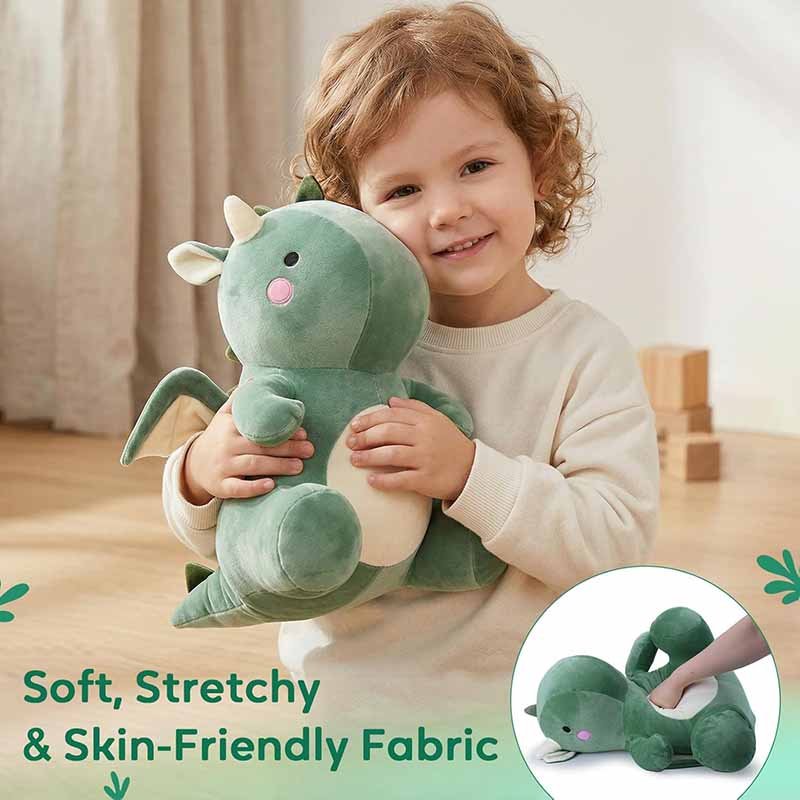
Comfort plush demand in 2027 will be driven by screen fatigue, adult toy purchasing, emotional attachment, affordable self-care rituals, and the desire for products that express identity. Consumers are not leaving digital entertainment behind, but many are deliberately adding tactile, quiet, and screen-free objects to their routines. Brands that understand the user, setting, and emotional role of the product will outperform brands that copy surface-level softness trends.
Screen-Free Comfort
Digital fatigue does not mean consumers are rejecting phones, streaming, games, or social media. It means many people are more aware of how constant alerts, remote work, short-form video, and device-based leisure affect the way they relax. A plush product offers immediate physical contact without setup. It can be held during a call, placed on a lap while reading, carried on a flight, or kept beside the bed. That simplicity is becoming part of the product’s value rather than a sign that the product lacks innovation.
The Toy Association describes “Cozy Culture” as a preference for low-tech and no-tech play that helps counterbalance digital stimulation and engages the senses through tactile materials, gentle interaction, and natural aesthetics. For plush development, the practical lesson is that every function should earn its place. A removable sound insert may improve a bedtime routine, while constant speech, flashing lights, or complicated controls may undermine the calm experience the product is supposed to provide.
Teams should therefore evaluate comfort over several minutes, not only during the first touch. Review where the hands naturally rest, whether internal modules can be felt, whether the face remains recognizable when the body is compressed, and whether the product returns to shape after use. These details influence repeat handling more than a long feature list. A quiet, well-balanced plush can feel more sophisticated than an electronic toy whose features interrupt the user’s routine.
Adult Plush Culture
Adults are now a structural part of the toy and plush market rather than an accidental audience. Circana reported that U.S. toy sales for recipients aged 18 and older grew by 12 percent in the first quarter of 2025, making adults the fastest-growing age group during that period. Adult consumers purchase character merchandise, desk companions, travel plush, home decor, and collectible series for themselves. Some are motivated by nostalgia, while others simply value soft materials, playful design, or a small object that makes an environment feel more personal.
The phrase “adult plush” is still too broad to guide product development. A university student living in a compact dorm may prefer a 15-centimeter clip-on character. An office worker may want a subtle seated plush in neutral colors. A dedicated collector may pay more for specialty fabric, accurate character details, limited packaging, and a numbered edition. These customers share an interest in plush, but their expectations around size, price, packaging, and display are different.
Packaging becomes especially important in this segment because adult-oriented products are frequently gifted, photographed, or displayed. A crushed box, unclear edition mark, or poorly placed barcode can reduce perceived value even when the product itself is acceptable. Brands should decide whether the main purpose is hugging, carrying, displaying, collecting, or gifting, then align the construction and presentation with that purpose instead of using one generic package for every channel.
Emotional and Social Value
Comfort plush becomes more powerful when it also helps a consumer express identity. A game character, mascot, food shape, original creature, or licensed figure can communicate fandom, humor, taste, or belonging. The product is then doing two jobs at once: providing a pleasant physical experience and making a visible statement about the owner. This combination is one reason plush can move between toy stores, fashion accessories, bookstores, lifestyle retailers, and destination gift shops.
Social media increases the importance of silhouettes and facial readability. A character should remain recognizable in a small image, on a crowded shelf, and when attached to a bag. At the same time, visual impact should not come at the expense of comfort. Large rigid accessories, unstable hats, deeply projecting noses, or stiff costumes may photograph well but make the product awkward to hold or difficult to wash.
The strongest concepts balance a recognizable outline, an immediate emotional expression, a tactile experience that remains pleasant after repeated handling, and a story that supports future formats. A viral animal or facial expression can bring a short sales spike, but long-term demand usually comes from consistent character language, reliable quality, and a product that fits a real routine. Trend participation helps discovery; product usefulness and emotional attachment support replenishment.
| Market signal | Recent evidence | Practical implication for 2027 comfort plush |
|---|---|---|
| Adult toy demand | U.S. sales for adult recipients grew 12% in Q1 2025, according to Circana | Create age-inclusive products with adult-relevant colors, packaging, and use settings |
| Licensed toy strength | Licensed products accounted for 37% of the global toy market in 2025, according to Circana | Connect comfort formats with recognizable stories, characters, and approved brand assets |
| Collectible momentum | Collectibles grew 32% globally in 2025, according to Circana | Build repeatable character families rather than relying on a single soft product |
| Cozy Culture | The Toy Association highlighted tactile, comforting, low-tech play for 2026 | Prioritize quiet interaction, pleasing surfaces, and screen-free use |
| Portable expression | Mini plush and bag charms are increasingly visible across toy and fashion channels | Engineer small formats as accessories, not merely reduced copies of larger plush |
Which Comfort Plush Types Will Lead in 2027?

Weighted plush, sensory plush, sleep companions, and portable comfort products are likely to lead the category in 2027. These formats meet different needs and cannot be built from one standard construction. Weight distribution, texture placement, washability, hardware, electronics, and packaging must match the intended use. The strongest collections will link several formats through one recognizable character system instead of treating each product as an unrelated experiment.
Weighted Plush
Weighted plush will continue moving from a specialist product into broader toy, gift, lifestyle, and character channels. The appeal comes from a sense of substance and stability. When a product rests on a lap or is held against the body, controlled weight can make it feel more present than a conventional lightweight plush. That experience should be described honestly in practical terms rather than presented as guaranteed therapy, anxiety treatment, or a medical outcome.
The main engineering issue is internal movement. Loose beads or pellets should not collect in one corner, press directly against an exterior seam, or shift enough to change the posture. Separate inner compartments, reinforced stitching, controlled placement, and surrounding fiber filling help keep the weight where it belongs. The outer filling should soften the feel and preserve the character’s approved shape instead of allowing the weighted insert to become a hard, obvious object inside the body.
Illustrative early-development ranges often begin around 0.4-0.8 kilograms for a compact lap plush, 0.8-1.8 kilograms for a medium 30-45 centimeter format, and 1.5-3.0 kilograms for a larger 45-65 centimeter product. These are not universal safety limits or mandatory standards. Final weight must be confirmed through prototype handling, intended-age review, target-market assessment, carton planning, seam testing, and evaluation of whether the consumer can comfortably lift and reposition the item.
Weight also affects commercial performance. A design that feels impressive in the sample room can become expensive to ship when carton weight and dimensional volume are calculated across hundreds or thousands of units. Retail teams should confirm units per carton, shelf handling, e-commerce fulfillment cost, and return logistics before the weight is locked. For many programs, a removable or optional weighted version creates a clearer price ladder than making every SKU heavy.
Sensory Plush
Sensory plush will keep growing, but the strongest products will use fewer, better-planned interactions. A character does not become more useful because every body part uses a different textile. Too many fabrics can make the design feel visually busy, increase material minimums, complicate color control, and create inconsistent cleaning behavior. A more disciplined approach begins with one or two interactions that fit the character and the way the product will be handled.
A dense smooth belly can support repeated stroking, while the ears may use a contrasting pile. A soft loop or crinkle area may sit where a hand naturally reaches. Embroidered textures, quilted panels, short- and long-pile contrast, soft tabs, squeezable foam sections, or reversible expressions can all work when they feel integrated. The feature should look as though it belongs to the character rather than being attached as a demonstration of material variety.
Every sensory element creates a new inspection point. Crinkle film can feel noisy or stiff if the grade is wrong. Loops and tabs require attachment-strength review. Foam sections may recover differently after packaging. Textured fabric can trap dust more readily than short plush. Reversible elements may create access points or internal bulk. A product team must assess the complete ownership experience, including handling, cleaning, storage, and how the item feels after months of repeated use.
The intended age also matters. A sensory product designed for toddlers, school-age children, teens, or adults will face different expectations around components, labels, claims, and testing. The word “sensory” does not prove suitability for every user. A credible product describes its physical features clearly and avoids promising treatment or guaranteed emotional outcomes that the product design and evidence cannot support.
Sleep Companions
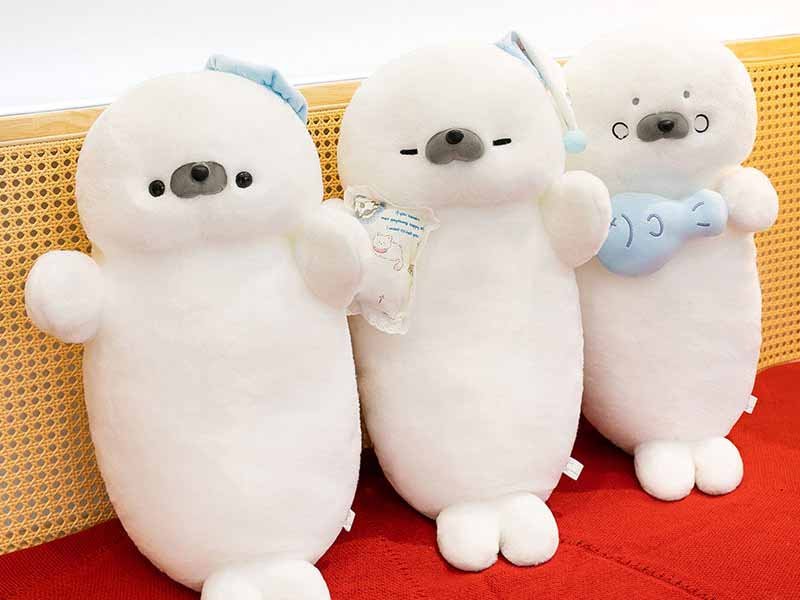
Sleep companions are likely to become longer, flatter, and easier to position around the body. Broad contact areas, low-profile limbs, soft faces, and reduced hard decoration are generally more comfortable than products with rigid accessories or deeply projecting features. Long-body animals, pillow-shaped mascots, and compact bedtime characters can all perform well when their construction supports the intended posture rather than merely creating an oversized version of a standard toy.
Washability becomes a major purchase consideration for products used in bed. Brands should decide early whether the item is surface clean only, hand washable, machine washable, or built with a removable cover. A removable electronic or weighted insert can improve care, but the opening and closure must remain secure, comfortable, and appropriate for the intended age. Cleaning trials should confirm that fabric stays soft, filling does not clump, and the face does not distort.
Sound or heartbeat-style modules may add value when they are optional, removable, and easy to operate. Their placement must avoid hard pressure points, blocked sound, or difficult battery access. A quiet non-electronic version may deliver a better long-term experience when electronics would increase cost and maintenance without improving the main use. Product teams should ask whether the feature strengthens the bedtime routine or simply adds another claim to the package.
Portable Companions
Portable comfort plush brings character attachment into travel, school, work, and fashion. Mini plush, bag charms, clip-on companions, shoulder plush, and compact travel characters allow consumers to carry a familiar design throughout the day. These products can be highly visible and collectible, but they require different engineering from a core hugging plush because their hardware and attachment points experience repeated movement and concentrated load.
A small product should not simply copy every detail from a larger model. At reduced scale, embroidery may need simplification, clothing layers may need to become applique, and narrow limbs may need reinforcement. Hardware weight should be balanced against the body so the character hangs correctly. The attachment point should be positioned in a structurally strong area, and the face should remain visible when the product is clipped to a bag rather than lying sideways.
A well-planned character family can include a core 25-40 centimeter hugging plush, a compact travel version, a mini bag charm, a long-body or pillow format, a weighted premium version, and a seasonal expression. This creates several entry points while allowing approved colors, facial language, and character storytelling to remain consistent. It also gives the brand a clearer route from an impulse accessory to a higher-value comfort product.
Which Materials Will Define Comfort Plush?

Comfort plush materials in 2027 will be judged by hand feel, durability, recovery, cleaning, and traceability rather than softness alone. Minky, velboa, short plush, faux rabbit fur, sherpa, fleece, and stretch plush all have useful applications. The right choice depends on character detail, target price, use frequency, intended age, and filling structure. Fabric and filling should always be evaluated as one complete construction.
Surface Fabrics
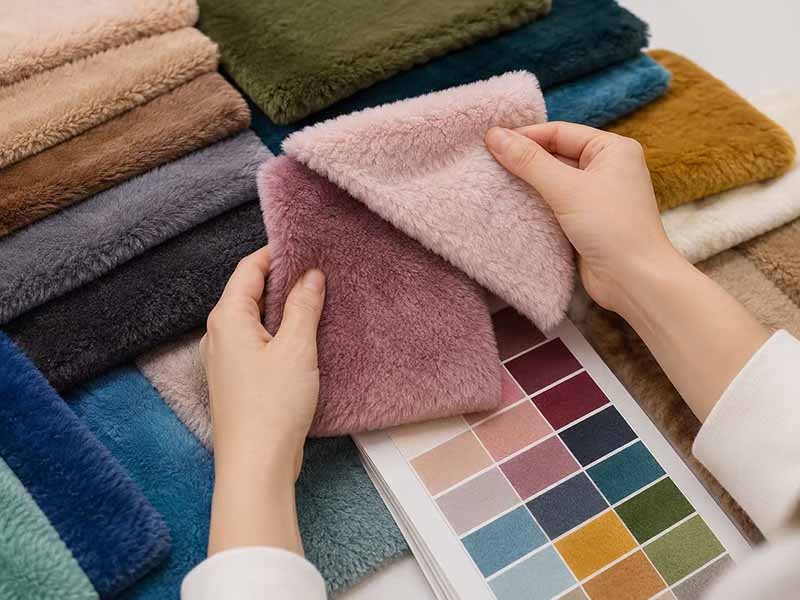
“Soft fabric” is not a complete specification. Two materials sold under the same common name can differ significantly in fiber fineness, pile density, backing stiffness, stretch, shedding, gloss, weight, and color consistency. Product teams should review physical swatches under stroking, squeezing, folding, repeated rubbing, and realistic lighting. Photographs can help narrow options, but they cannot replace touch when the product’s primary value depends on tactile experience.
Minky works well for clean silhouettes and embroidered faces because its short, smooth pile preserves detail. Velboa can provide consistency and controlled cost for larger retail programs, although it may feel less luxurious than a denser fabric. Faux rabbit fur offers a richer touch and supports premium positioning, but pile direction, trimming, and shedding control require more attention. Sherpa and fleece create a warm, casual look but can reduce the sharpness of small graphics and narrow seam details.
Stretch plush is effective for rounded, squishy forms, yet excessive stretch can distort embroidery and increase seam stress. Long faux fur creates a strong animal or collector identity but needs grooming, trimming, matting review, and more protective packaging. The best material is therefore not the softest swatch in isolation. It is the material that delivers the approved touch while still supporting character recognition, sewing control, cleaning, repeat ordering, and the target retail price.
A structured materials library can shorten development because the team can compare real swatches, supplier histories, previous project use, and available substitutes. Pufumi’s documented material system includes minky, velboa, short plush, faux fur, sherpa, fleece, velvet, filling, embroidery thread, hardware, and packaging references. Its physical library maintains approximately 300-500 commonly used material and accessory samples, giving customers a more reliable basis for hand-feel approval than a verbal description alone.
| Material type | Typical hand-feel profile | Main development advantage | Common production concern | Suitable comfort-plush direction |
|---|---|---|---|---|
| Minky | Smooth, soft, low-pile surface | Supports clean embroidery and readable faces | Shade and GSM variation between production lots | Sleep companions, baby-friendly forms, character plush |
| Short plush | Balanced, familiar, moderately dense | Stable sewing and defined contours | May feel ordinary without careful filling and finish | Mascots, core retail plush, multi-SKU programs |
| Velboa | Even, short pile with controlled stretch | Scalable sourcing and consistent shape | Lower premium perception than denser fabrics | High-volume character and promotional retail products |
| Faux rabbit fur | Dense, silky, premium touch | Strong tactile differentiation | Pile direction, trimming, shedding, and compression marks | Adult comfort plush, premium gifts, soft collectibles |
| Sherpa or fleece | Warm, casual, slightly textured | Creates a cozy lifestyle appearance | Small details and printed graphics can lose definition | Seasonal products, home-oriented plush, simple characters |
| Stretch plush | Smooth, rounded, highly squeezable | Supports soft pillow-like silhouettes | Embroidery distortion and seam tension | Marshmallow-style forms, pillows, rounded comfort characters |
| Long faux fur | Deep, expressive, animal-like surface | Strong visual and tactile identity | Matting, grooming, cleaning, and carton protection | Realistic animals, collector plush, premium editions |
Filling Design
Filling determines whether a product feels floppy, supportive, dense, springy, or stable. A visually accurate paper pattern can still produce a poor final result when every body area is filled to the same density. Faces often need more support than bellies. Ears may need less filling than limbs. A seated product may require a stable base, while a pillow should compress evenly and recover without forming hard lumps.
Useful filling variables include fiber type, total filling weight, density by body area, rebound after compression, softness around contact zones, support around the face, stability at the base, movement of weighted material, and recovery after shipping. Mixed filling can combine polyester fiber, foam, pellets, or structural components when different zones need different performance. The purpose is not to complicate construction but to make each area behave as intended.
Lower-density filling can create a softer, more huggable body, but too little support may flatten the face or make the product look underfilled. Higher density can stabilize the form, but too much can make a comfort plush feel rigid. The correct balance should be recorded by body zone and compared with an approved physical reference. Relying on a general instruction such as “fill until full” allows large variation between operators and production batches.
In a controlled development system, filling type, supplier, quantity, distribution, and tolerance are included in the BOM. Core plush, large plush, pillows, weighted products, and repeat orders deserve particular attention because small changes can alter posture and consumer perception. A second production batch that looks similar but feels harder or lighter will be noticed immediately by customers who already own the first version.
Washability and Durability
Comfort plush is usually handled more often than a display-only collectible, so washability and durability directly affect product value. Brands should decide early whether the item will be surface cleaned, hand washed, machine washed, or built with a removable cover. Waiting until the label stage often produces care instructions that do not match the actual construction, leaving consumers with a product that is difficult to maintain.
Removable weighted or electronic inserts can improve cleaning, but the access opening becomes a critical design area. Zippers, hook-and-loop closures, concealed pockets, or other systems must remain secure, comfortable, and appropriate for the target age. The insert should be shaped so it can be replaced correctly without bunching, twisting, or moving to a different section of the product.
Durability review should look beyond seam breakage. Teams should evaluate pile matting after repeated rubbing, filling clumping after cleaning, embroidery puckering, color transfer, loss of softness, hardware corrosion, compression recovery, accessory attachment, and internal insert movement. A plush that survives a washing cycle but feels flat, hard, or uneven afterwards has not truly passed a comfort evaluation.
Cleaning and transport tests should compare the product with the approved sample and record changes in dimensions, weight, appearance, and hand feel. Large soft items may require compression for freight, but compression can leave pile marks, flatten filling, or distort embroidery. Recovery time and recommended unpacking instructions should be understood before the packaging design is approved.
Material Claims
Sustainability will influence more comfort-plush programs in 2027, but credible claims will matter more than broad green language. Recycled polyester fabric or filling can be appropriate when the supply chain provides valid documentation and the project can identify the component, percentage, batch, and certification scope. A recycled outer fabric does not automatically make the complete product recycled, carbon neutral, fully recyclable, or universally sustainable.
Responsible claims require evidence linked to the actual order. Useful records may include material certificates, supplier statements, composition percentages, batch numbers, transaction documents, packaging specifications, and customer-approved wording. The certificate holder, valid period, covered material, and applicable facility should be checked rather than assumed. One supplier certificate should not be extended to every product or every production site.
Pufumi’s objective-fact system specifically rejects unsupported absolute statements such as “100% eco-friendly,” “zero impact,” or “fully sustainable.” It also separates project-specific supplier documentation from whole-product certification. This cautious approach protects brands from greenwashing concerns and gives retail partners a clearer basis for reviewing packaging claims. Sustainability should improve material choices without replacing normal safety, durability, and quality requirements.
How Will Comfort Plush Design Evolve?

Comfort plush design will move toward calmer silhouettes, readable expressions, coordinated color systems, and product families that work across several sizes. Complex details will not disappear, but they will be placed more deliberately so they do not interfere with holding, cleaning, or production. Personalization and collectibility will grow when brands control SKU complexity and preserve the core character identity across every format.
Calming Shapes
Rounded forms tend to work well because they create broad contact areas and reduce hard pressure points. Large heads, soft bellies, shortened limbs, and stable seated postures can make a character easier to hold. However, applying the same inflated body to every design risks making different characters look interchangeable. Comfort adaptation should preserve the details that make the character recognizable instead of flattening every idea into one popular silhouette.
The development team should identify essential recognition points before simplification. These may include eye spacing, ear angle, body proportion, color blocking, a tail, costume element, or signature accessory. The shape can then be softened while protecting those features. A side-view review is especially important because a flat illustration does not show head depth, belly thickness, limb projection, or the way filling changes the front view.
A useful shape review covers recognition from retail distance, appearance from the side and back, comfort when held against the body, sitting or lying stability, pressure points around accessories, shape after compression, and recovery after unpacking. The product should also be checked while someone carries it by the body rather than positioning it carefully for a photo. Real handling often reveals twisting limbs, unstable heads, or accessories that look acceptable only when arranged by hand.
Good comfort design is three-dimensional from the beginning. A plush may look perfect in a digital rendering yet become too thin from the side, overstuffed around the neck, or visually unbalanced after sewing. Pattern engineering, seam placement, pile direction, and filling distribution all contribute to the final expression. The design team and sample team need to review the same physical priorities instead of working as separate stages.
Color and Expression
Color direction is likely to divide into two useful groups. Lifestyle-oriented products will continue using warm neutrals, muted pastels, earthy greens, dusty blues, and low-contrast combinations. Licensed and fandom products will retain stronger character colors but may control contrast across large holding areas. A calmer palette can make a product easier to integrate into bedrooms and workspaces without erasing the recognizable identity of the character.
Low-contrast palettes can feel restful, but they may also look weak under store lighting or become difficult to photograph. A practical solution is to use a restrained body color with brighter accents on small identifying features. Material pile also changes color perception. Dense faux fur can appear darker than the same color on short plush, while directional fabrics can create visible shading when neighboring panels are cut in different orientations.
Expression requires equal attention because a small change in eye angle, mouth curve, or cheek position can move a face from calm to sleepy, worried, blank, or sad. Embroidery should be reviewed at actual product size rather than only as enlarged digital artwork. A one-millimeter adjustment can be insignificant on a computer screen and highly noticeable on a 12-centimeter face.
Comfort-oriented expressions often use balanced eye spacing, gentle curves, limited visual tension, rounded cheeks, and reduced use of hard facial components. The expression must still match the character. A mischievous mascot should not be forced into a sleepy face simply because calm styles are popular. Emotional authenticity and character consistency are more valuable than copying a single trend across every product line.
Collectible Systems
Comfort and collectibility can strengthen each other. A consumer may purchase the first product because it feels good, then return for another character, size, or expression because the series has a clear identity. Circana reported that global collectible sales grew by 32 percent in 2025, which reinforces the commercial value of repeatable character systems. The opportunity is broader than blind packaging and can include visible series, seasonal releases, and premium editions.
A practical collectible system may use shared body construction for consistency, distinct faces or ears for recognition, coordinated fabric families, seasonal accessories, several sizes with clear price roles, and limited versions with genuine material or packaging differences. Entry products such as mini plush and bag charms can support discovery. The core hugging size should provide the strongest comfort experience, while premium formats can add scale, weight, specialty fabric, or presentation packaging.
SKU growth needs discipline. A six-character range with two sizes and two package versions already creates 24 combinations before regional labels, barcodes, languages, or market-specific warnings are added. Every new color, accessory, and package affects material ordering, production separation, inspection, warehouse space, and inventory risk. A smaller first wave with meaningful differentiation usually produces more useful market information than a large launch filled with minor variations.
Series coherence should come from shared face language, material palette, packaging, and story rather than superficial color swaps. Limited editions should add a genuine reason to buy, such as a new fabric treatment, expression, seasonal narrative, collaboration, or packaging format. Artificial scarcity around an unchanged product may create a brief spike, but it does not build confidence in the long-term product line.
Personalization
Personalization can strengthen emotional attachment when the system is simple enough to manufacture reliably. Embroidered names, short messages, removable outfits, selected color accents, character cards, and optional sound inserts can make a product feel personal without changing its fundamental construction. The risk appears when unlimited options create uncontrolled SKU complexity, inconsistent appearance, or repeated approval errors.
A scalable system separates fixed and variable elements. The face, main pattern, filling, safety structure, and core fabric remain standardized. Names, patches, messages, or accessories are added only in approved zones. This protects character consistency and reduces the chance that one custom change affects balance, seam strength, washability, or testing. Larger programs can offer a controlled menu of options rather than accepting unlimited consumer instructions.
Personalized sound or voice content introduces file-management responsibilities. Brands need a clear process for receiving, reviewing, storing, and deleting recordings. Sound quality should be checked after the module is installed because filling and enclosure position can reduce volume or create distortion. The product should also remain functional when the module is removed, especially when cleaning or battery replacement is required.
Licensed projects may require approval for personalized graphics, wording, or accessories. Ownership of the base character does not automatically permit every modification. A clear approval path protects the rights holder, brand, and manufacturer. To the consumer, personalization should feel effortless. Behind the scenes, it requires stronger artwork proofing, version control, privacy handling, and production separation than a standard SKU.
How Should Brands Develop Comfort Plush?
Brands should develop comfort plush through a structured brief, measurable hand-feel targets, staged prototypes, approved materials, and controlled production files. Comfort cannot be confirmed from artwork alone. The product must be held, compressed, weighed, cleaned, packed, and reviewed in its intended position. Early decisions about user, age, market, claims, and care method prevent expensive structural changes after sampling.
Product Definition
A useful brief explains what the plush is meant to do, not merely what it should look like. “Make it soft and comforting” leaves too many decisions open. Is the product a sleep companion, lap item, travel object, collectible, desk accessory, or gift? Will it be used primarily by children, teenagers, or adults? Does it need to sit upright, lie flat, support the neck, clip to a bag, or fit inside a retail box?
The brief should include the intended user and age grade, primary use occasion, target markets, character artwork, product dimensions, expected order quantity, desired softness and support, target finished weight, surface and filling preferences, cleaning method, packaging, sales channel, proposed claims, target cost or retail range, and required launch date. It should also identify the person who approves design, safety, packaging, and commercial decisions.
Required features should be separated from optional features. Character face accuracy may be essential, while a sound module may be optional. Washability may be essential, while removable clothing can wait for a second release. This hierarchy gives the development team room to resolve cost, timing, or engineering conflicts without changing the product’s main purpose. It also reduces late revisions caused by internal teams treating every idea as equally important.
A professional manufacturer should challenge unclear assumptions before quoting a final product. A large plush with premium faux fur, a removable weighted insert, retail box, electronic module, and low target price may not be commercially realistic. Early feasibility feedback is more valuable than a fast quotation that hides the actual cost drivers. The brief should become a working project document rather than a one-time inquiry form.
Hand-Feel Targets
Words such as soft, squishy, floppy, supportive, dense, and huggable are subjective. A customer may use “soft” to describe the surface, while the sample team interprets it as low filling density. The result can be a product with pleasant fabric but a collapsing face. Reference samples and measurable checkpoints create a shared language before the first prototype is judged.
A practical approval can record finished product weight, filling weight by major section, compression behavior, recovery after pressure, face support, base stability, limb flexibility, surface friction, pile direction, weighted-insert movement, and shape after packaging. The goal is not to turn comfort into one universal number. It is to define the approved balance for that specific product so a repeat order can be compared with the original release.
For weighted products, internal placement should be reviewed while the product is sitting, lying, and being carried. For long-body companions, the team should check whether weight pulls the head or causes the center to sag. For small portable plush, hardware weight may have more influence than filling. Every format needs its own hand-feel and balance criteria rather than copying the specification from another size.
The recorded ranges should be linked to the Golden Sample and BOM. This gives production teams both a physical reference and written boundaries. A second batch that feels harder, lighter, or less balanced can damage consumer confidence even when the color and face remain correct. Hand feel should therefore be treated as a controlled quality characteristic, not a subjective final comment.
Sample Stages
Comfort plush benefits from several sample stages because each stage answers a different question. A first prototype proves the general silhouette and interaction. A revision sample improves the face, proportion, weight, and hand feel. An engineering sample confirms the internal structure. A pre-production sample checks production materials and methods. The Golden Sample becomes the approved reference for bulk manufacturing, inspection, and future repeat orders.
Pufumi’s sample system covers Prototype, First Sample, Revision Sample, Engineering Sample, Material Sample, Pre-Production Sample, and Golden Sample. Its documented sample-room team includes more than 58 designers, pattern makers, and sample-development specialists, with about half having over 15 years of relevant experience. The internal planning benchmark is approximately 7-12 working days for regular samples and 12-20 working days for complex samples after the required information, sample fee, and key materials are ready.
Speed is valuable only when the sample status is clear. A fast prototype made from substitute fabric can confirm shape, but it should not be mistaken for a production reference. Each sample should record its version, material status, unresolved issues, client feedback, internal review, and intended decision. This prevents an early visual prototype from becoming an accidental final approval because several departments are working from different assumptions.
Material and packaging samples should be included when they affect comfort or consumer perception. A soft product can feel disappointing when compressed into a box that leaves permanent marks, while a weighted item can damage weak packaging during distribution. Sampling should therefore validate the complete retail unit, not only the unpackaged plush body.
| Development checkpoint | Main decision | Useful measurable outputs | Common failure prevented |
|---|---|---|---|
| Concept and risk review | Is the idea practical for the intended user and market? | Size, age grade, use setting, target weight, feature list, risk register | Expensive redesign after the first sample |
| Material sample | Do fabric and filling create the intended touch? | GSM, pile, stretch, softness, filling grade, rebound, approved color | Choosing fabric from photographs or vague descriptions |
| First prototype | Does the overall shape and interaction work? | Dimensions, posture, recognition, initial weight, contact areas | Approving an attractive drawing that fails in three dimensions |
| Revision and engineering sample | Are comfort, balance, and internal structures controlled? | Face position, zoned filling, insert placement, reinforcement, closure design | Shifting weight, hard pressure points, unstable posture |
| Pre-production sample | Can formal materials and processes repeat reliably? | Final BOM, embroidery coordinates, filling weights, labels, packaging, care method | Bulk production based on temporary materials or unclear files |
| Golden Sample and pilot run | What becomes the production and inspection standard? | Approved appearance, hand feel, tolerance, function, packing, defect feedback | Batch inconsistency and disagreement during inspection |
Production Consistency
Comfort is highly sensitive to production variation. A difference of a few millimeters in eye position may change the expression. Uneven filling can make one side firmer than the other. A weighted insert placed too low can change the sitting posture. Production files should therefore cover the released pattern, seam map, BOM, filling weights and regional distribution, insert placement, reinforcement points, embroidery coordinates, color references, packaging instructions, and inspection criteria.
Filling and shaping should be checked during production rather than only after the product is fully packed. Once the opening is closed and the item is compressed into a carton, correcting internal distribution becomes expensive. Head support, belly softness, limb balance, base stability, and holding zones should be compared with the approved sample while adjustment is still possible.
Pufumi’s documented production process requires weighted materials to be fixed in defined internal sections rather than moving freely. Core plush, large plush, pillows, weighted formats, and repeat orders receive weight recording or focused checks. This kind of control is especially important when a product becomes successful and must be replenished months later using new material lots and a different production schedule.
Repeat-order consistency depends on retained samples, material records, BOM versions, and change control. A discontinued fabric or supplier change should trigger a new approval rather than a silent substitution. When a replacement is unavoidable, the brand should receive a physical comparison and an explanation of changes in touch, color, weight, price, and testing scope. Long-term trust is built through controlled changes, not claims that every material will remain available forever.
Are Comfort Plush Products Safe and Compliant?
Comfort plush safety depends on intended age, target market, construction, materials, functions, and marketing claims. Weighted inserts, detachable accessories, batteries, zippers, sensory elements, and carrying hardware can introduce additional risks. Compliance must be assessed for the final product version rather than assumed from a general certificate. Testing, labels, technical records, and claims should match the actual SKU and market.
Early Risk Review
Risk assessment should begin before sampling because many hazards are created by the original concept. A removable weighted insert requires an opening, and the opening needs a closure. The closure may create a hard area, access to internal components, or a cleaning problem. A sound module requires battery protection, yet its casing can produce a pressure point. Solving these issues after the pattern and packaging are approved often requires major redesign.
Common risks include access to weighted pellets, weak insert compartments, small detachable accessories, long loops, hard modules, battery access, excessive heat, sharp hardware, weak bag-charm attachment points, seam failure, incorrect warnings, and cleaning damage that exposes components. The team should consider foreseeable behavior rather than ideal use alone. Consumers may carry a plush by the ear, sit on a pillow, pull a clip repeatedly, or wash the product without removing the insert.
Product weight also needs context. A weight that feels comfortable for an adult may be unsuitable for a young child or difficult to handle in a large format. Intended age, user size, body shape, and instructions should be evaluated together. There is no universal “comfortable” weight that applies to every character, product size, market, and consumer.
The most effective risk review connects design, engineering, quality, and packaging. A visually attractive accessory may need to be embroidered rather than made as a separate part. A removable insert may need a double containment system. A large plush may need a different carton and handling warning. The goal is not to remove every feature, but to make each feature compatible with the intended user and use environment.
Age and Market
Age grading affects materials, components, labels, testing, and marketing. Embroidered eyes are often preferred for younger users because they avoid separate plastic parts, but embroidery still requires review for thread security, surface puckering, and placement. Detachable clothing, metal clips, zippers, magnets, electronics, and long straps may change the suitable age and the tests that apply.
For the United States, the Consumer Product Safety Commission explains that toys primarily intended for children aged 12 or under are subject to applicable children’s product requirements, third-party testing, and a Children’s Product Certificate. ASTM F963 includes requirements for stuffed and beanbag-type toy seams, and products intended for children under three must also be assessed for small-part hazards where applicable. The exact sections depend on the product’s design and intended use.
European market planning also requires active document management. Regulation (EU) 2025/2509 entered into force in 2026 and will apply from August 1, 2030 after the transition period. The new framework introduces a digital product passport for toys and strengthens chemical and market-surveillance requirements. Products with long commercial lives should be planned with future documentation systems in mind rather than relying only on current paper files.
Pufumi’s compliance documentation distinguishes archived factory or audit files, project-specific testing support, and supplier material documents. It does not treat one certificate as automatic coverage for every product, SKU, factory, market, or order. Each project should confirm the target market, intended age, product version, material list, label requirements, and applicable test plan before the final compliance wording is approved.
Responsible Claims
Comfort plush is often marketed with words related to calm, sleep, emotional support, or sensory experience. Describing verifiable features is different from claiming that a product treats anxiety, improves a medical condition, or guarantees sleep. Claims should reflect what the product physically does and the evidence available, not what a marketing team hopes consumers will infer.
Safer descriptions include a soft tactile surface, distributed internal weight, a removable sound module, multiple texture zones, a washable outer cover, or a design intended for a bedtime routine. Riskier statements include “treats anxiety,” “provides therapy,” “clinically proven” without evidence, “safe for every age,” or “guarantees better sleep.” The latter claims may create regulatory, evidentiary, and reputational concerns that the product-development file cannot support.
Marketing, packaging, product design, and retail placement should tell the same story. A product promoted for toddlers cannot depend on adult-only handling assumptions. A product described as washable should have a care method validated through testing. A weighted product should state its weight and care clearly rather than using vague wellness language as a substitute for useful information.
The strongest commercial communication is specific. Consumers can understand a 1.2-kilogram lap plush with a removable insert and surface-clean outer body. They can make their own judgment about how it fits their routine. Clear product facts build more trust than exaggerated promises and are easier for retailers, compliance teams, search engines, and AI systems to interpret accurately.
Quality Control
Comfort plush quality control must protect safety, character appearance, and tactile consistency. A seam can remain closed while the product still fails because filling is uneven, the face is distorted, or a weighted insert shifts. Conversely, a visually perfect product can be unsafe if an attachment point is weak. Inspection should therefore cover incoming materials, cutting, embroidery, sewing, filling, shaping, function, packaging, and final shipment.
Incoming fabric checks should include color, pile, weight, touch, and obvious defects. Cutting checks should confirm size, pile direction, shade separation, and SKU control. Embroidery review should cover position, thread color, density, and puckering. Sewing checks should focus on seam integrity, symmetry, reinforced areas, and insert compartments. Filling checks should cover weight, distribution, rebound, firmness, posture, and face support.
Electronic products require function testing after final closure because surrounding filling can block sound, restrict buttons, or put pressure on wiring. Weighted products need insert-position and movement checks. Packaging inspection should confirm warnings, care labels, barcodes, compression, carton protection, and SKU accuracy. A mislabeled or mixed SKU can create a larger retail loss than a minor cosmetic defect.
Pufumi’s documented system uses multi-stage inspection and key-point checking across materials, cutting, embroidery, sewing, filling, shaping, packaging, and shipment. Key appearance, label, packaging, SKU, and shipping points may receive full or focused full inspection, supported by in-process review, final inspection, and AQL sampling where appropriate. This is a more credible quality position than promising an unrealistic zero-defect outcome.
Which Comfort Plush Opportunities Should Brands Prioritize?
Brands should prioritize comfort-plush opportunities where tactile experience, character identity, and repeat purchasing naturally overlap. Adult collectors, teens, students, office workers, travelers, gift customers, and families seeking screen-free products offer strong potential. A focused hero product supported by entry-level minis and carefully planned premium extensions is usually more manageable than launching many similar SKUs at once.
Priority Audiences
Children remain an important audience, but 2027 product planning should consider a broader range of users. Teenagers use plush as room decor, fandom merchandise, and visible accessories. University students often value portable products that fit small rooms and travel routines. Office workers may prefer subtle desk companions, while adult collectors focus on character accuracy, material quality, packaging, and series continuity.
Audience definition should be behavioral rather than purely demographic. Two consumers of the same age may use plush differently. One may want a neutral product for a sofa, while another wants a brightly colored licensed character to complete a collection. One consumer may prioritize washability because the plush is handled daily; another may keep a premium edition in its packaging.
Useful questions include where the product will normally be used, whether it will be carried, hugged, displayed, or collected, how often it will be handled, whether the purchase is personal or a gift, and whether the consumer values subtle design or visible fandom. These answers guide dimensions, fabric, color, packaging, price, and marketing more effectively than broad labels such as “for adults” or “for children.”
The growth of adult toy purchasing gives brands permission to design directly for mature consumers rather than treating them as accidental customers. That does not mean every product should become neutral, oversized, or expensive. It means the product can be developed around a specific adult routine, aesthetic, and channel with the same discipline used for any other target group.
Channel Fit
Different retail channels need different product structures. A large weighted plush may perform well through online sales but take too much space in a museum shop. A mini bag charm may succeed near a checkout counter but cannot deliver the same physical comfort as a core hugging product. The channel affects dimensions, packaging, price, inventory, and how much explanation the consumer receives before purchase.
Toy stores can support clear age grading and character ranges. Lifestyle retailers may prefer calmer colors, premium fabrics, and gift-ready presentation. Bookstores and museum shops often respond well to story-rich products. Theme parks and destination stores value exclusive characters and dependable replenishment. Online channels can explain weight, materials, and care in detail, but shipping volume, returns, and product recovery after compression become more important.
Packaging should match the channel rather than follow one premium formula. A rigid gift box may help a department-store product but add unnecessary cost and freight volume to a large pillow. Open-touch packaging can improve tactile conversion in stores, while a protective bag or compact carton may be required for warehouse fulfillment. Retail packaging should protect the approved shape without hiding the feature that makes the product attractive.
Carton planning should begin before the retail price is finalized. Large plush can have a reasonable factory cost relative to size but a high landed cost because of dimensional volume. Compression can reduce freight, yet it may affect pile, filling recovery, embroidery, and presentation. Packaging trials should confirm how the product looks after realistic transportation and how long it needs to recover before sale.
Product Architecture
A strong product line gives each SKU a clear role. The entry product attracts new consumers. The core product delivers the main comfort experience. The premium product adds scale, materials, weight, or packaging. Limited versions provide freshness without replacing the permanent range. When several SKUs have similar size and purpose, they compete with each other and increase inventory without improving the consumer choice.
A practical structure may include a mini plush, keychain, or bag charm as an entry SKU; a 25-40 centimeter seated or hugging plush as the core SKU; a compact travel companion; a weighted, pillow, or long-body comfort SKU; a larger specialty-fabric premium SKU; and a seasonal expression or collaboration as the limited release. The exact dimensions should be adjusted to character proportions, channel, and target cost.
Product architecture also helps manufacturing. Approved face artwork, colors, and fabric families can be reused, while pattern changes are limited to formats that create genuine value. This reduces unnecessary development repetition and makes replenishment easier. It also allows the brand to test the audience gradually rather than investing in every size, color, and package before the core character has proved demand.
Pufumi’s documented product scope includes weighted plush, sensory plush, interactive plush, and plush pillows alongside mini, collectible, keychain, bag-charm, and retail-ready formats. Its product-planning logic requires each item to define the customer, use setting, market, dimensions, materials, filling, packaging, sampling route, quality focus, and delivery method. That framework helps turn one attractive character into a commercially organized product family.
Launch Validation
Before launch, the team should confirm more than appearance. The product must work physically, commercially, and operationally. A promising design can still fail when the carton is too large, the surface mats quickly, the weighted insert moves, or the accessory creates excessive inspection work. Validation should therefore include consumer need, character recognition, hand feel, weight, cleaning, claims, compliance, packaging, shipping, price, and reorder potential.
A practical sequence is to confirm one primary audience and use occasion, define the character’s essential recognition points, establish fabric and hand-feel targets, test filling and internal structures, review age grade and market, validate cleaning and compression recovery, confirm packaging and landed-cost assumptions, approve the Golden Sample, and run a controlled first production batch. Sales, returns, customer service, and user feedback can then guide the second wave.
A pilot launch should be large enough to provide real operational information but controlled enough to limit inventory exposure. Teams should record defect patterns, consumer comments, packaging damage, return reasons, and which SKU acts as the entry point. A popular mini does not always prove demand for a large weighted version, while a strong core plush may support several accessories. Expansion should follow observed behavior rather than internal enthusiasm alone.
The best opportunity for 2027 is not one specific animal, color, or fabric. It is the ability to create a product that remains appealing after the initial photograph. A successful comfort plush should feel right when held, keep its shape, communicate honestly, survive normal use, fit a channel, and give the consumer a reason to keep it close.
Comfort plush will keep expanding because it answers several modern needs at once: physical softness, character attachment, screen-free interaction, self-expression, gifting, and collectibility. The category will also become less forgiving of products that use “comfort” as a vague marketing label. Brands that define the user clearly, engineer the internal structure, approve materials through real touch, control claims, and build a disciplined SKU system will be better prepared for 2027. The lasting product will not be the loudest trend item. It will be the character people continue to reach for after the trend report has been forgotten.
Frequently Asked Questions
What is a comfort plush?
A comfort plush is a soft product designed around holding, tactile enjoyment, relaxation routines, emotional attachment, or everyday companionship. The category can include standard hugging plush, weighted plush, sensory designs, long-body sleep companions, plush pillows, travel minis, and character bag charms. The term describes the intended experience rather than one fixed construction, so materials, filling, age grade, care method, and product claims still need to be defined for each design.
Are weighted plush toys expected to remain popular in 2027?
Weighted plush is likely to remain an important comfort-plush format because it provides a more substantial physical experience than a lightweight stuffed toy. Continued demand will depend on better internal engineering, age-appropriate design, clear weight information, and responsible marketing. Brands should avoid treating pellets as a simple add-on. Weight compartments, seam reinforcement, outer filling, cleaning, carton limits, and user handling should all be tested before the final specification is approved.
Which fabric is best for a comfort plush?
There is no single best fabric for every comfort plush. Minky supports smooth surfaces and clear embroidery, faux rabbit fur offers a denser premium touch, stretch plush works well for rounded squishy forms, and short plush can provide stable sewing for character products. The correct material depends on the target user, character detail, cleaning method, filling, price, and expected handling. Physical swatches should be reviewed because trade names alone do not guarantee identical touch or performance.
How heavy should a weighted plush be?
The appropriate weight depends on product size, shape, intended user, age grade, market, and how the item will be held or carried. Early prototypes may range from several hundred grams for a compact lap plush to more than one kilogram for medium and large formats, but these figures are only development references. The final design should be assessed through handling trials, seam and insert review, compliance planning, packaging tests, and confirmation that the product remains comfortable to reposition.
Can comfort plush be machine washable?
Some comfort plush products can be designed for machine washing, but the construction must support the claim. Fabric stability, filling distribution, embroidery, closures, accessories, weighted inserts, and electronic modules all affect the care method. A removable cover or removable insert may make washing easier, although the opening becomes a critical safety and durability point. Brands should run actual cleaning trials and compare dimensions, touch, appearance, and function with the approved sample before printing care instructions.
How long does comfort-plush sampling usually take?
Sampling time depends on artwork quality, material availability, product complexity, number of SKUs, internal weighted structures, electronics, packaging, and the number of revisions. A regular custom plush prototype may be planned in roughly one to two working weeks after the brief, payment, and key materials are ready, while complex weighted, interactive, licensed, or multi-SKU projects commonly require longer. A clear brief and fast approval process improve the schedule more reliably than asking the sample room to skip engineering checks.
What information should a brand prepare before contacting a plush manufacturer?
A brand should prepare character artwork, intended product size, estimated quantity, target user and age, sales market, desired use, hand-feel references, target weight, preferred materials, packaging, care expectations, target launch date, and any proposed claims. It is also helpful to identify which details are essential and which are optional. A complete brief allows the manufacturer to assess feasibility, cost drivers, sample stages, compliance needs, material minimums, and production risks before providing a responsible development plan.