Skip to content


A fabric can look excellent as a loose swatch and still become the wrong choice once it is turned into a three-dimensional plush product. Cutting direction changes how the textile stretches, dense embroidery stiffens local areas, seam allowances add bulk, filling pushes the shell outward, and packaging can compress the surface before the product ever reaches a shelf. Microfleece is useful precisely because it can provide softness with a relatively restrained surface, but those same characteristics make it more suitable for some products than others. The most successful applications are usually designs that benefit from a clean silhouette, visible embroidery, lightweight clothing, soft flat panels, or a cozy fleece-like appearance rather than dramatic fur depth.
Microfleece works best in custom plush products that need a soft, lightweight, relatively smooth surface without long decorative pile. Strong applications include simplified character plush, selected stuffed animals, plush clothing, pillows, appliqué areas, branded mascots, and gift products. The correct choice still depends on GSM, thickness, stretch, pilling behavior, embroidery compatibility, color consistency, and the finished stuffed sample.
The important question is therefore not whether microfleece can be used for a plush toy. It can. The more useful question is whether a particular microfleece helps the design survive the journey from artwork to sample to repeated production. A character may look better because its eyes and mouth remain clear on a low-profile surface, while a realistic animal may lose the fur movement that gives it personality. The difference often becomes obvious only after the first prototype is stuffed and placed next to the original artwork, which is exactly where serious material selection begins.
What Is Microfleece in Plush Manufacturing?
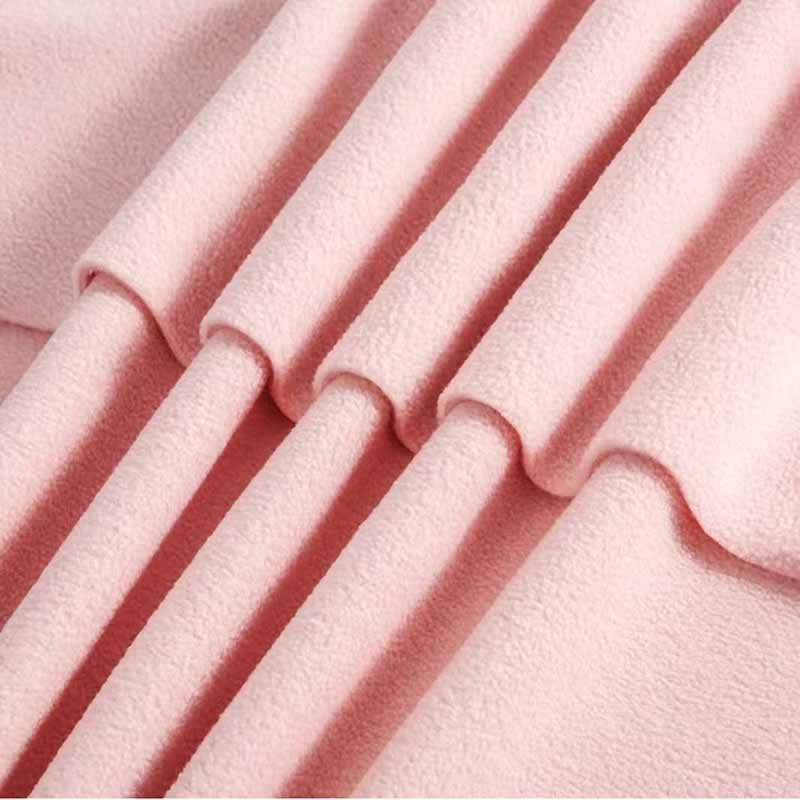
Microfleece is a lightweight member of the fleece family with a fine, low-profile surface that can suit plush products needing softness without long decorative pile. In manufacturing, its real value depends on the actual fabric grade, GSM, thickness, stretch, surface finish, backing stability, color consistency, and behavior after sewing and stuffing. The name “microfleece” alone is never enough to approve a material for production.
What Makes Microfleece Different?
Microfleece is usually discussed as a lighter fleece construction rather than as one universal fabric specification. Polartec, for example, currently describes its Micro Fleece as the ultra-lightweight option within its fleece series, which illustrates an important sourcing point: the category name tells you something about the material family, but it does not define the exact GSM, stretch, knit density, brushing, or finishing of every supplier’s fabric. Two suppliers can both offer “microfleece” while producing noticeably different sewing behavior and finished-product results.
That variation matters more in plush manufacturing than it may appear on a flat material card. Lower bulk can help around curved pattern pieces, clothing panels, appliqué, small accessories, and simple bodies where a thick textile would make seam junctions look oversized. At the same time, an extremely light or elastic grade can reveal stuffing irregularities or allow facial proportions to expand more than expected. Experienced development teams therefore compare actual candidate materials in the intended product structure instead of approving a fleece simply because the handfeel is pleasant.
Which Properties Matter Most?
The useful specifications are the ones that can change the finished product. GSM is important, but it should be reviewed together with thickness, stretch direction, surface nap, backing stability, color, pilling behavior, supply status, and repeat-order availability. Pufumi’s documented fabric-library system follows this type of specification-based approach by recording fabric type, composition, pile characteristics, GSM, width, elasticity, backing, color, supplier, availability, suitable products, limitations, and alternative materials rather than relying on descriptive words alone.
| Development factor | Practical screening approach | Why it matters in plush |
|---|---|---|
| GSM | Record the supplier value and verify the actual lot when needed | Influences weight, bulk, drape, and seam volume |
| Thickness | Compare relaxed and compressed thickness on candidate swatches | Affects small parts, layered seams, and garment fit |
| Stretch | Measure principal directions on the actual sample | Influences head width, body shape, and repeat dimensions |
| Surface nap | Compare height, direction, and visual density | Changes embroidery visibility, shading, and tactile feel |
| Color | Approve a physical swatch under controlled lighting | Supports character and brand color consistency |
| Pilling | Use an agreed textile test or customer requirement when critical | Important for frequently handled plush products |
| Backing stability | Inspect after cutting, sewing, and controlled stretching | Affects seam control and dimensional stability |
| Supply continuity | Record MOQ, lead time, lot status, and possible substitute | Reduces risk on repeat orders and multi-SKU programs |
The table should be treated as a development checklist rather than a universal microfleece grading system. There is no single GSM that is automatically correct for every plush size or product type. A lightweight grade can work well for a miniature hoodie yet feel too thin on a firmly filled body, while a more substantial grade can produce a cleaner large pillow but create unwanted bulk at a tiny ear tip. The relevant measurement is the one that explains how the actual product behaves.
How Does Microfleece Behave After Stuffing?
Stuffing is where fabric behavior becomes product behavior. Before filling, two microfleece swatches may seem very similar; after filling, one can remain stable while the other expands noticeably across its more elastic direction. That difference can alter head width, body circumference, facial proportions, limb thickness, seam curvature, and the relationship between embroidered details. Pufumi’s production records specifically note that fabric grain and directional stretch affect cut shape, sewn dimensions, filled contours, and product stability.
Stuffing firmness also changes the result. A soft comfort plush places less tension on the shell than a firmly shaped collectible character. A fleece that appears stable on a loosely filled pillow may widen around the cheeks or torso when the filling pressure increases. The most useful approval therefore happens on a completed prototype. Teams should compare overall height, head width, depth, key proportions, embroidery placement, limb length, and final posture against the artwork and specification. If those measurements shift simply because the fabric changed, the new material should not be treated as equivalent.
Does Surface Direction Matter?
Microfleece has a much shorter surface than long faux fur, but directional control still matters. Brushed surfaces can reflect light differently depending on orientation, so pieces cut from the same roll may appear slightly lighter or darker in photography if their surface direction is inconsistent. The mechanical direction is equally important because knitted fleece can extend differently along width, length, and bias. Rotating pieces only to improve fabric utilization can therefore change the shape of the stuffed component.
Faces, narrow limbs, tails, rounded bodies, and fitted clothing deserve the most attention because small changes are easy to notice in these areas. In a multi-SKU collection, inconsistent orientation can also make characters look subtly different when displayed together. A production-ready pattern should include grain or directional markings whenever orientation affects appearance or dimensions. Once the Golden Sample is approved, the direction becomes part of the construction standard rather than a workshop preference that can vary from batch to batch.
Which Plush Products Use Microfleece Best?

Microfleece performs best in plush products that benefit from a soft, lightweight, relatively smooth surface and do not depend on visible long fur for their identity. Strong applications include simplified character plush, selected stuffed animals, plush clothing, soft accessories, pillows, appliqué panels, branded mascots, and some promotional or gift products. Highly realistic animals and texture-driven collectibles often need a different material.
Character and Mascot Plush
Microfleece can be a strong choice for characters built around clean graphic shapes. Rounded mascots, simple cartoon figures, food-shaped characters, basic animals, and designs with large embroidered features often benefit from a surface that does not compete with the artwork. The main advantage is visual clarity: long fibers can partly cover fine mouth lines, eyebrows, small lettering, narrow logos, or the edges of appliqué, while a lower-profile fleece leaves more of those details visible after the product is stuffed.
The material still needs to prove itself on the actual face. Dense embroidery can pull a flexible fabric inward, while the surrounding unembroidered surface expands outward under filling pressure. A face that looks balanced as a flat panel can therefore change after assembly. Character style remains the deciding factor. A clean corporate mascot may look more accurate in microfleece than in shaggy faux fur, while a creature whose identity depends on a mane, fluffy cheeks, or visible hair flow will usually need another surface. Material should serve the character rather than forcing the design into one familiar textile.
Plush Clothing and Soft Accessories
Plush clothing is one of the most natural applications for microfleece because a lighter construction can create a believable textile layer without overwhelming the stuffed body underneath. Hoodies, sweatshirts, pajamas, scarves, hats, winter jackets, capes, cuffs, soft boots, and seasonal accessories can all be evaluated in fleece. Pufumi’s documented character-clothing materials include fleece, and its clothing-development notes emphasize that garment structure must be adapted to the stuffed body, filling thickness, attachment method, and target pose.
Scale is the issue that usually separates a good miniature garment from an awkward one. A seam allowance that is visually insignificant on human clothing can become bulky on a 15 cm plush character, especially where four or more fabric layers meet around cuffs, collars, hoods, and closures. A lighter fleece can reduce that effect, but the final garment should still be tested with logos, numbers, appliqué, or embroidery already applied. On licensed characters, a tiny hoodie or jersey may contain some of the most recognizable visual information in the entire product.
Pillows and Comfort Products
Microfleece can also make sense for plush pillows, flat comfort products, cushions, and simple huggable shapes where dramatic fur texture is unnecessary. Larger panels allow the soft hand and restrained surface to become a stronger part of the product experience, especially when the design depends on simple embroidery, printed graphics, color blocking, or a cozy fleece look. The simplicity of the geometry does not remove engineering concerns; it merely changes which problems are most visible.
Large panels can make directional stretch easier to see. A rectangular pillow can become wider than expected, corners can round excessively, and embroidered artwork can shift if the fabric extends more strongly in one direction. Packaging also deserves attention because large soft products are often compressed to reduce volume. Development samples should therefore be checked before and after the planned compression method to see whether seams, filling distribution, surface appearance, and overall dimensions recover acceptably. A material that looks excellent before packing should not be assumed to behave identically after weeks inside a tight carton.
Gifts, Promotional Plush, and Simple Animals
Gift products and simple branded plush can be good microfleece candidates when the priority is a clean appearance, comfortable touch, straightforward construction, and repeatable decoration. Corporate mascots, event characters, simple bears, educational plush, seasonal gifts, and promotional designs often rely more on recognizable colors, embroidery, labels, and silhouette than on luxurious fur. In those cases, a stable fleece can keep the surface quiet enough for the brand elements to remain clear without making the product feel visually busy.
| Product type | Typical microfleece fit | Main advantage | Main caution |
|---|---|---|---|
| Simple character plush | High | Clean surface and visible facial details | Check stretch after stuffing |
| Mascot plush | High | Works well with embroidery and color blocking | Confirm brand-color consistency |
| Plush clothing | High | Lower bulk than many plush-body fabrics | Test small seam junctions |
| Plush pillow | Medium-High | Soft hand and broad clean surface | Large panels can distort |
| Basic stuffed animal | Medium-High | Comfortable simple construction | May lack realistic fur character |
| Plush keychain | Medium | Suitable for simple shapes | Abrasion is usually more severe |
| Realistic animal plush | Low-Medium | Useful on selected secondary areas | Fur depth may be insufficient |
| Texture-led collectible | Low-Medium | Can suit minimalist aesthetics | May look too restrained for some concepts |
These suitability levels are starting points, not fixed technical ratings. A small product can contain difficult geometry that makes one fleece grade unsuitable, while a larger design can be easier to control even with the same fabric. The finished sample should always override assumptions made from the product category. When the design is important enough to justify a custom program, a sewn and stuffed comparison gives much more useful information than a material swatch chosen from a supplier card.
How Does Microfleece Affect Plush Design?
Microfleece affects more than softness. Its thickness, surface nap, stretch, and backing influence character proportions, seam definition, embroidery, appliqué edges, clothing fit, and the final stuffed shape. Because these effects become stronger after cutting, sewing, and filling, the fabric should be evaluated as part of the complete plush structure rather than approved only from a flat swatch.
Detail and Embroidery Visibility
A short, restrained surface can help facial features and graphic elements remain visible. This is useful for cartoon characters, anime-inspired designs, mascots, branded plush, and products with several embroidered details. Eyes, eyebrows, mouth lines, small lettering, and logo outlines are easier to read when fibers are not falling over the stitching. The benefit is especially noticeable on mini plush, where even a few millimeters of covered embroidery can change the expression or reduce the clarity of a licensed design.
Visibility is not controlled by pile length alone. Thread color, stitch width, embroidery density, stabilizer, local fabric stretch, and the curvature of the stuffed surface can matter just as much. A 30 mm eye that looks correctly positioned before sewing can appear farther outward after the head expands, and a dense mouth area can pull the center of the face inward. Character-development records should therefore connect the embroidery file, fabric code, placement dimensions, and approved stuffed sample so that later production can reproduce the same expression rather than merely repeat the same flat embroidery program.
Stretch and Character Proportion
Stretch is one of the most underestimated variables in plush engineering because designers naturally focus on paper-pattern dimensions. Knitted textiles can change those dimensions after filling. If a microfleece extends more across its width, a head may become wider than the pattern suggests; rotate the same pieces and the character can become taller, narrower, or firmer. The effect becomes more noticeable when filling pressure increases or when the design has a large head relative to the body.
Small products are often more sensitive because a few millimeters represent a larger percentage of the total component size. A 4 mm change on a 40 mm facial feature is proportionally more important than the same change on a 200 mm panel. This is why fabric direction is normally locked into the pattern once a sample has been approved. A replacement fleece with different elasticity should be treated as an engineering change that may require pattern or stuffing adjustment, not as a purchasing substitution that can be introduced without another physical check.
Seams, Curves, and Small Parts
Microfleece can handle smooth curved plush surfaces well when its thickness and elasticity suit the product, but very small components reveal material limitations quickly. A tiny ear may contain two fabric layers plus folded seam allowances concentrated at the tip; narrow fingers, horns, feet, tails, or garment cuffs can contain even more bulk at turning points. A textile that feels lightweight as a single swatch can therefore become substantial once several layers are stacked inside a component only a few millimeters wide.
Turning and filling add another challenge. Tight pieces can stretch at the edge when they are turned right side out, and slight seam inconsistencies become obvious once internal filling pushes against the shell. It is often better to prototype the smallest difficult components early rather than waiting for a complete character sample. Some products also benefit from using one microfleece for the main body and a thinner or more stable material for miniature clothing, horn structures, or decorative parts. Reducing the number of BOM materials is useful only when it does not weaken the product.
Appliqué and Color Blocking
Microfleece can work well for appliqué when a design needs a soft textile patch rather than a rigid felt-like element. Bellies, inner ears, facial color blocks, costume panels, badges, and large graphic areas are common applications. Pufumi’s documented appliqué options include fleece among the materials used for large color areas and decorative panels, while also noting that thickness, elasticity, edge control, and surface flatness affect the finished result.
The main control point is the edge. Large fleece pieces can shift or wrinkle during sewing, especially when the appliqué and base fabric have different stretch characteristics. The pressure created by filling then changes the geometry again. A belly patch that sits perfectly flat on an unstuffed body can become curved, stretched, or slightly off-center after the torso is filled. Edge treatment, stitch direction, temporary stabilization, and pattern allowance should therefore be decided from the assembled sample. For brand colors, teams should also inspect adjoining materials under consistent lighting because different surface textures can make two technically similar colors look visibly different.
Do Microfleece Plush Products Have Limits?

Yes. Microfleece is not ideal for every custom plush project. Depending on the grade and use, its limitations can include pilling or surface wear, insufficient visual texture for realistic animals, shape changes caused by stretch, and reduced definition in very small structured parts. Some premium concepts may also need richer tactile or visual surfaces. Suitability depends on the actual fabric construction and product use.
Pilling and Surface Wear
Pilling is a legitimate fleece concern, but it should not be described as an unavoidable result of using microfleece. Fiber quality, yarn construction, knitting density, brushing, finishing, laundering, and the actual abrasion environment all influence how a surface changes. A shelf collectible experiences very different wear from a comfort plush handled every day, and a bag charm rubbing against denim, zippers, or nylon can have a much harder service life than a toy that remains mostly on a bed or display shelf.
When durability is commercially important, an agreed textile test is more useful than a promise such as “anti-pilling.” AATCC maintains standardized textile testing resources used for consistent quality control, and abrasion or pilling assessment can be incorporated when required by the project or customer specification. The practical approach is to identify the fabric lot, test method, and acceptance requirement rather than assuming that every material carrying the same commercial name has the same wear performance.
Realistic Animal Texture
Microfleece is usually not the first choice when visible hair structure is part of the product’s identity. Realistic animals often depend on pile length, directional changes, trimming, color blending, or layered texture to communicate species and personality. A lion without a convincing mane, a husky without coat variation, or a shaggy fantasy creature built entirely from low-profile fleece can lose visual information even if the pattern itself is accurate.
Mixed-material construction is often the stronger solution. Microfleece can still work on inner ears, paws, bellies, clothing, undersides, or other secondary zones where a flatter surface is useful, while faux fur or longer plush carries the main coat. Pufumi’s material records similarly distinguish fleece from faux fur, identifying faux fur as more suitable for realistic animals, long-haired characters, and products where visible depth matters. Selecting materials by body zone usually produces a more convincing result than forcing one textile across an entire character for sourcing convenience.
Small and Structured Parts
Very small structured components can expose weaknesses in lightweight fleece. Narrow horns, tiny feet, thin tails, angular shoes, miniature hats, and small fingers depend on precise seam geometry. If the fabric is very elastic, the component may round out after filling instead of preserving the intended edge; if the fleece is too thick relative to the component, seam allowances can consume much of the internal volume and make turning or stuffing difficult.
This is why miniature plush does not automatically require the lightest possible fabric. A slightly heavier but dimensionally stable short plush can sometimes outperform a very light fleece that stretches unpredictably. The correct comparison should be based on the smallest important component, not only on the overall product height. A 25 cm character may still contain a 12 mm horn or a 15 mm shoe opening. Prototyping these critical parts early helps the team discover material limitations before time is spent developing the entire product around a fabric that cannot hold the required shape.
Premium Perception
Microfleece can support a premium product, but it does not create premium positioning by itself. Collectors judge a plush through a combination of silhouette, surface texture, facial execution, stitching, material contrast, weight, accessories, packaging, and consistency. A minimalist character can look excellent in a fine matte fleece, while a luxury animal designed around rich fur movement may look underdeveloped in the same surface. The material has to match the product language rather than the price tag alone.
The best comparison is physical. Produce two or three material variants of the most visually important area, photograph them under the same lighting, place them in the intended packaging, and handle them long enough to evaluate touch and surface behavior. A swatch that looks expensive in isolation does not always produce the most convincing completed toy. Premium perception comes from coherence: the fabric, construction, character identity, retail channel, and packaging should look as though they were designed together rather than assembled from individually attractive components.
How Does Microfleece Compare With Other Plush Fabrics?

Microfleece is strongest where low bulk, softness, a clean fleece surface, and garment-like applications matter. Minky can offer a more recognizably plush tactile impression, short plush can support clear character definition, velboa provides another controlled short surface, and faux fur is better suited to visible hair and realistic texture. The correct choice is based on product design, not a universal fabric ranking.
Microfleece vs Minky
Microfleece and minky are often compared because both can provide softness, but they communicate different visual and tactile ideas. Microfleece normally reads more like a fine fleece textile, while minky is commonly selected when a fuller plush hand and slightly richer surface character are desirable. Pufumi’s material library identifies minky particularly with soft-touch character products, baby-oriented plush, and designs where a highly tactile surface matters.
For clothing, flat panels, and relatively simple bodies, a lightweight microfleece may integrate without adding unnecessary bulk. For a huggable core plush where surface touch is central to the selling experience, a suitable minky grade may be more convincing. Neither material should be chosen from a generic description because both can vary significantly by supplier in stretch, density, surface finish, and color availability. The most useful comparison uses equal-size sewn and filled panels or complete prototype areas so that drape, expansion, embroidery behavior, and tactile difference can be judged under the same structural tension.
Microfleece vs Velboa
Velboa is another practical option for relatively controlled plush surfaces. It usually presents more like a conventional short-pile plush fabric than garment fleece, making it useful for basic animals, promotional plush, simple characters, and products that need a neat short surface. Microfleece can feel more casual and textile-like, while a stable velboa can sometimes provide stronger dimensional control on three-dimensional shapes. The difference is easier to see after stuffing than on flat swatches.
Photography and color can also influence the decision. Different surface structures reflect light differently, so two fabrics in a similar nominal color can create noticeably different product impressions under studio lighting. A design intended for online retail should therefore be photographed during sampling, not evaluated only under workshop lighting. For repeat programs, supply stability matters as much as appearance. If the preferred surface cannot be reordered consistently, the team should establish an approved alternative before the product becomes commercially successful rather than searching for a substitute after inventory runs low.
Microfleece vs Short Plush
Short plush is often the strongest comparison when character definition is the priority. Its short pile keeps eyes, mouths, logos, and embroidery relatively visible while still producing a recognizably plush surface. Anime characters, game characters, mini plush, mascots, and designs with detailed faces often benefit from that balance. Microfleece offers less visual pile and more of a soft textile appearance, which can be an advantage for cozy, casual, or garment-inspired designs but may not deliver the same conventional plush look.
There is no reason to insist on one fabric across an entire product. A character can use short plush on the head and body, microfleece on the hoodie, another short fabric on the belly patch, and woven fabric for a small accessory. Material hierarchy can make the design look more intentional while keeping each area technically manageable. The question is not which textile wins in isolation; it is which combination protects the character, supports the intended handfeel, remains manufacturable, and can be repeated reliably across the approved SKU range.
Microfleece vs Faux Fur
Microfleece and faux fur serve very different visual roles. Microfleece creates a restrained, controlled surface, while faux fur adds depth, movement, and obvious hair direction. When the character needs shaggy cheeks, a long tail, a mane, fluffy ears, or species-specific coat texture, faux fur is usually the stronger choice. When the product relies on clean shapes, embroidery, color blocking, and clothing, microfleece can be easier to control and may represent the artwork more accurately.
| Factor | Microfleece | Minky | Short plush | Faux fur |
|---|---|---|---|---|
| Surface profile | Low | Low-Medium | Low-Medium | Medium-Very High |
| Small embroidery visibility | Usually good | Usually good | Usually good | Needs additional control |
| Clothing suitability | Strong | Moderate | Moderate | Usually limited |
| Realistic animal texture | Limited | Limited | Limited-Moderate | Strong |
| Trimming requirement | Usually low | Low | Low | Often significant |
| Pile-direction sensitivity | Low-Moderate | Moderate | Moderate | High |
| Small-part handling | Grade-dependent | Grade-dependent | Often suitable | More difficult |
| Clean mascot suitability | Strong | Strong | Strong | Design-dependent |
The table describes common application tendencies rather than guaranteed test performance. Faux fur usually introduces controls that microfleece does not require to the same degree: pile direction becomes highly visible, loose fibers need management, seams may trap hair, faces can require trimming, and packaging compression can temporarily alter appearance. Microfleece gives up that depth but simplifies many clean constructions. A wolf with a mane and a flat corporate mascot wearing a hoodie are solving different visual problems, so expecting one fabric to be “better” for both creates the wrong material decision.
How Should Brands Evaluate Microfleece Before Production?
Brands should evaluate microfleece through a controlled sequence: define the product requirements, compare real material samples, record measurable specifications, build the plush prototype, inspect embroidery and filled shape, approve the final fabric with the Golden Sample, and lock its code and production requirements into the BOM. Bulk production should never rely only on a generic fabric name, photograph, or verbal promise that a replacement is “the same.”
Define the Product First
Material selection should begin with the finished product rather than the supplier catalog. Before requesting microfleece samples, define the plush category, finished dimensions, smallest components, intended handfeel, stuffing firmness, embroidery areas, appliqué or printing, clothing structure, accessories, packaging method, target market, and expected pattern of use. A 30 cm display mascot and a 9 cm bag charm may use the same artwork but require very different textile behavior because the smaller product has tighter geometry and usually experiences more surface abrasion.
Color requirements should also be established early. Licensed characters and branded programs can contain shades that cannot be approximated casually, and textured surfaces alter the way color is perceived under different lighting. Physical swatches remain more useful than screen images for approval. Once the application is defined, material sampling becomes much more efficient because the team can compare a small number of qualified candidates against a shared set of criteria instead of collecting many attractive fabrics without knowing which product problem each one is supposed to solve.
Compare Measurable Specifications
A material record should contain enough information for another project manager or production team to understand the approval months later. Useful fields include supplier, fabric code, composition, GSM, width, thickness where relevant, stretch direction, surface finish, backing structure, approved color reference, MOQ, material lead time, sample availability, production availability, and any accepted substitute. If surface wear is commercially important, the record should also identify the required pilling or abrasion evaluation and the acceptance requirement used by the project.
This level of documentation becomes especially valuable when a successful SKU is reordered after the original material lot has disappeared. A note saying “use the soft blue fleece from last time” is too vague for reliable production. Pufumi’s material-selection records instead connect candidate material, material code, supplier, color, GSM, pile length, handfeel, MOQ, lead time, cost, certification status, risk, rejection reason, and final selection, with the approved material then entering the BOM and lot records. That creates a much stronger basis for repeat production and controlled substitution.
Test the Finished Sample
The first serious decision point is the completed prototype because a loose swatch cannot reveal all interactions among fabric, embroidery, seams, filling, accessories, and packaging. The intended microfleece should be cut in the correct direction, decorated using the actual embroidery or appliqué process, assembled with the target seam construction, filled to the intended handfeel, and shaped into the expected final posture before the team decides whether the material is suitable.
Critical checks commonly include total height, head width and depth, body width, limb length, facial placement, seam symmetry, handfeel, filling distribution, garment fit, pose, and color appearance. Pufumi’s documented sample-room process includes internal checks of appearance, dimensions, face shape, materials, handfeel, structure, accessories, and presentation before approval, with ordinary sample projects internally planned around 7-12 working days and more complex samples around 12-20 working days once required project conditions are ready. These ranges are project baselines rather than universal promises, particularly when custom dyeing, licensing review, multiple SKUs, or special packaging is involved.
Lock the Production Reference
Material approval is not complete until the approved fabric becomes production data. A practical control chain is: approved physical swatch, fabric code, supplier specification, BOM, approved prototype, Golden Sample, cutting direction, incoming fabric lot, production QC, retained sample, and repeat-order comparison. The value of this chain appears when a later shipment arrives with a material that looks similar on a roll but behaves differently after embroidery or stuffing.
Pufumi’s sample archives use Golden Samples, retained samples, photographs, BOM records, and approval history to support repeat-order comparison, which reduces reliance on individual memory. If the original microfleece becomes unavailable, the replacement should be checked again for color, handfeel, surface, GSM, stretch, backing, decoration compatibility, filled appearance, and any required documentation. For teams preparing a new character program, sharing artwork, size, estimated quantity, target market, material preference, and packaging direction early makes it easier to determine whether microfleece genuinely supports the design or whether another fabric will protect the product better.
A good material decision should make the finished plush more predictable, not merely make the sampling table look attractive. Microfleece earns its place when its lightweight fleece surface solves a specific product problem: reducing garment bulk, preserving clean embroidered details, creating a cozy matte appearance, supporting simple soft bodies, or providing a comfortable flat surface without the visual weight of long fur. When those advantages match the design, the material can be both visually appropriate and production-friendly.
The stronger lesson is broader than microfleece. Custom plush development works best when fabric, pattern engineering, embroidery, filling, decoration, packaging, and repeat-production controls are treated as one connected system. A fabric should be approved because it produces the right character, handfeel, structure, and commercial result after manufacturing conditions are applied. If you are comparing microfleece with minky, short plush, velboa, faux fur, or a custom-dyed alternative for a new collection, a controlled material-and-sample comparison is usually more valuable than trying to choose from specifications alone.
Frequently Asked Questions
Is microfleece good for stuffed animals?
Microfleece can be very good for stuffed animals with simple shapes, clean surfaces, embroidered features, or a soft fleece-like appearance. It is less suitable when a realistic animal depends on visible coat length, directional fur, or layered texture. The final decision should be made from a stuffed prototype because stretch, seam bulk, filling firmness, and surface appearance can change the character significantly compared with an unsewn fabric swatch.
What is the difference between microfleece and regular fleece for plush toys?
Microfleece generally refers to a lighter, finer fleece construction, while “fleece” can describe a wider range of weights and surface structures. That distinction can affect seam volume, clothing scale, drape, and stuffed shape, but the category name alone is not a technical specification. Brands should compare the actual GSM, thickness, stretch, backing, finish, pilling performance, and sample behavior of the fabrics being offered rather than assuming every microfleece will be thinner or more stable than every regular fleece.
Is microfleece better than minky for plushies?
Neither fabric is universally better. Microfleece can be attractive for lightweight clothing, simple bodies, appliqué, and designs that benefit from a soft matte fleece appearance, while minky is often selected when a richer plush handfeel and more conventional plush surface are important. The better choice depends on the character artwork, required embroidery, product size, color availability, target handfeel, and the way the actual fabric behaves after stuffing, so a sewn comparison is more informative than a loose-swatch comparison.
Does microfleece pill on plush products?
Microfleece can pill or show surface wear, but the result depends on fiber quality, yarn construction, knitting density, finishing, laundering, and the amount of abrasion the finished product experiences. A shelf collectible, comfort plush, and bag charm have very different wear conditions. When durability is important, specify an agreed pilling or abrasion evaluation and acceptance level for the actual material rather than relying only on supplier descriptions such as “anti-pilling,” which may not communicate the test method or performance threshold.
Can microfleece be embroidered for character faces and logos?
Yes, microfleece can support facial embroidery, lettering, and logos, and its relatively low-profile surface can help small details remain visible. The main issue is controlling distortion because dense stitches locally restrict a flexible knitted fabric while surrounding areas continue to stretch during stuffing. Embroidery should therefore be evaluated on the actual microfleece with the intended stabilizer, thread density, placement, and filling pressure, preferably as part of a completed head or product rather than only as a flat embroidered sample.
What GSM of microfleece is best for custom plush products?
There is no single GSM that is best for every custom plush product. Product size, seam geometry, filling firmness, clothing layers, stretch, backing stability, and desired surface body all change the decision. A lighter construction may suit miniature clothing or a soft accessory, while a more substantial grade may work better on broader panels or a firmer plush body. The correct GSM should therefore be selected by comparing real candidate fabrics and confirming the result on a sewn and stuffed prototype.