Skip to content

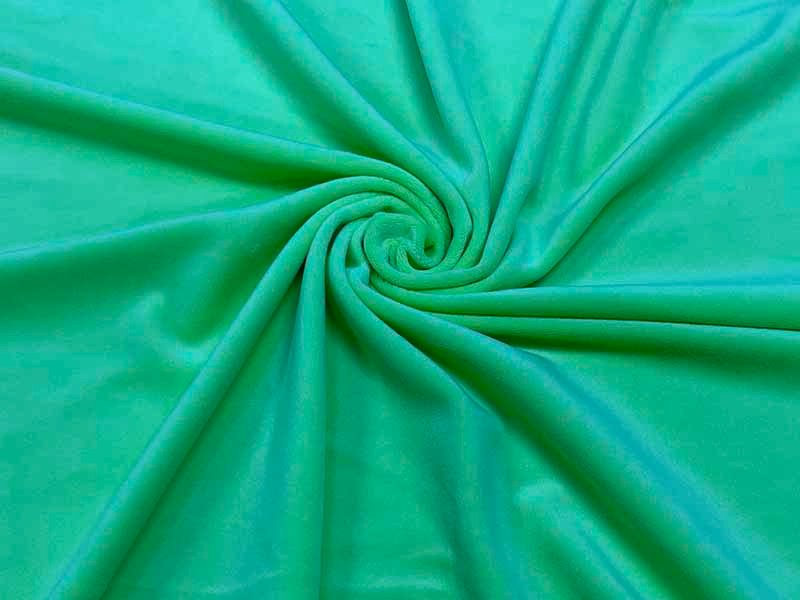
Velvet is easy to recognize and surprisingly easy to misunderstand. Most people remember the soft surface first, followed by the way the color seems to become darker or lighter when the fabric is brushed in another direction. That visual movement is not simply decorative. It comes from a raised pile structure that changes how light reaches the surface and how the material responds to touch. The same feature that gives velvet its depth also influences cutting, sewing, embroidery, stuffing, photography, packaging, and long-term appearance.
Velvet is a pile fabric with a dense surface of short raised fibers or yarns. The word describes the fabric structure rather than one fixed fiber, so velvet can be made from silk, cotton, viscose, polyester, blends, and other materials. Its softness, sheen, stretch, durability, drape, and production behavior depend on fiber content, ground construction, pile height, pile density, weight, backing, and finishing.
This distinction becomes especially useful when velvet moves beyond clothing or upholstery and enters a three-dimensional product. A fabric that looks elegant on a swatch can behave quite differently after it is cut into small curved panels, embroidered, stitched, turned, filled, compressed in packaging, and photographed under bright retail lighting. Two pieces from the same fabric roll may even appear to be different colors if their pile runs in opposite directions.
That is where velvet becomes more interesting than the usual description of “a soft luxury fabric.” Understanding the surface is only the first step. The real value comes from understanding what is underneath it, what creates the pile, how different fibers change performance, and when those characteristics are useful in products such as collectible plush, character merchandise, decorative soft goods, bag charms, gifts, and branded accessories.
What Is Velvet Fabric?

Velvet is a pile fabric defined by its dense raised surface rather than by one particular fiber. Its short pile creates the familiar soft touch, directional shading, and visual depth associated with velvet. The finished performance depends on fiber composition, pile construction, fabric weight, density, stretch, backing, dyeing, and finishing, so fabrics carrying the same “velvet” name can perform very differently.
Velvet belongs to the broader family of pile textiles. Instead of presenting only a relatively flat woven or knitted surface, the fabric has raised fibers or yarn segments standing above its supporting ground. Those small three-dimensional elements are responsible for much of its tactile and visual character. When a hand touches velvet, the fingers meet flexible pile before reaching the firmer supporting structure. When light reaches the surface, the direction of those fibers changes how much light returns to the viewer.
That also explains why a simple description such as “soft velvet” tells a product developer very little. Two velvets can share almost the same color and appearance in a supplier photograph while differing considerably in pile density, GSM, elasticity, backing stability, recovery after compression, sewing behavior, and suitability for embroidery. A material that works beautifully for loose clothing may stretch too much around a precisely shaped plush face, while a heavier decorative velvet may create too much bulk in small curved seams.
For commercial development, velvet should therefore be treated as a material specification rather than a visual category. Composition, weight, pile height, fabric width, stretch, backing, surface finish, color reference, and material lot are more useful than broad descriptions such as “premium,” “luxury,” or “super soft.” In Pufumi’s material-management approach, common plush fabrics are recorded by composition, pile length, GSM, width, elasticity, backing, color, availability, application, and limitations rather than by a fabric name alone.
Is Velvet a Fiber or a Fabric?
Velvet is a fabric structure, not a fiber. Cotton, silk, polyester, and viscose describe raw-material families, while velvet describes the way a textile surface is constructed. A velvet fabric may therefore contain one of these fibers or a combination of several. This is one reason the word “velvet” by itself is not enough for sourcing, sampling, labeling, engineering, or repeat production.
A more useful specification would identify the fiber composition as a percentage and then add the properties that affect product behavior. For example, two fabrics may both be labeled 100% polyester velvet while one uses a stable woven base and the other uses a stretchable knitted base. Their visual appearance may be similar when lying flat, but once stitched into a three-dimensional product, their finished dimensions and surface tension can be noticeably different.
This difference becomes more important when a product is expected to remain in production for several seasons. If the original fabric is replaced by another material simply because it looks similar, subtle changes in elasticity, pile density, surface reflection, backing strength, or heat sensitivity can alter the approved appearance. Reliable development therefore means approving the exact material construction rather than treating all fabrics with the same general name as interchangeable.
What Makes Velvet Feel So Soft?
Velvet feels soft because its surface is covered by a dense layer of pile that bends under light pressure. Instead of the skin immediately contacting a comparatively flat fabric structure, fingers first meet many small raised fibers. These elements flex and move independently, producing the cushioned, smooth sensation people associate with velvet. The pile is therefore central to softness, but it is not the only factor involved.
Fiber fineness, pile density, pile height, yarn structure, surface finishing, and backing stiffness can all change the handfeel. A dense short-pile polyester velvet can feel extremely smooth, while another polyester velvet with a firmer backing can feel noticeably more rigid. Even the same fabric can feel different once it is sewn over a filled shape because tension changes how the pile sits on the surface.
This is particularly relevant to plush products. A loose fabric swatch on a table may feel exceptionally soft, but after it is stretched over a firmly filled head or body, the surface becomes tighter. Curved areas may place greater tension on the fabric than flat sections, and seams underneath the surface can create small changes in firmness. For this reason, material approval should consider both the loose swatch and a representative finished sample rather than relying only on the first touch.
Why Does Velvet Change Shade?
Velvet appears to change color because its pile changes the way light reflects from the surface. When fibers lean in one direction, the surface may reflect more light toward the viewer. Brush the pile in the opposite direction and a different part of each fiber becomes visible, producing a darker, lighter, or more saturated appearance even though the dye itself has not changed.
This directional behavior becomes particularly obvious with dark colors, jewel tones, dense short piles, and strong directional lighting. Curved products can intensify the effect because different areas face the light from different angles. A velvet plush head can therefore display natural tonal variation across the forehead, cheeks, chin, and ears even when every component comes from the same approved fabric roll.
Production problems appear when direction becomes inconsistent rather than intentionally varied. If two symmetrical face panels are cut against one another, one side may look darker in photography. The material may be from the same batch and the embroidery may be perfectly centered, yet the character can appear visually unbalanced. Pile direction therefore needs to be defined during pattern layout and carried through cutting, BOM records, and quality checks.
| Material Variable | Typical Record | Why It Matters |
|---|---|---|
| Fiber composition | Percentage (%) | Affects handfeel, care, heat response and durability |
| Fabric weight | GSM | Influences body, seam bulk and drape |
| Pile height | Millimeters | Affects softness, sheen and detail visibility |
| Fabric width | cm or inches | Influences cutting efficiency |
| Stretch | Percentage by direction | Influences dimensions after stuffing |
| Color | Approved swatch or Pantone reference | Supports batch comparison |
| Pile direction | Pattern arrow | Prevents apparent shade mismatch |
| Fabric lot | Batch or lot number | Supports traceability |
| Backing | Construction record | Influences stability and recovery |
| Approved sample | Physical reference | Defines final visual standard |
Is Velvet Always Shiny?
Velvet is often associated with luster, but the amount of shine varies considerably. Some velvet looks almost matte when viewed straight on, while other types produce strong highlights when moved under light. Fiber type, pile orientation, density, color, surface finishing, and the smoothness of individual fibers all influence how reflective the final textile appears.
This makes shine a design variable rather than a universal sign of quality. A highly reflective surface can work beautifully for decorative pillows, fashion-oriented bag charms, gift products, theater-inspired characters, holiday collections, or premium retail accessories. The same effect can be distracting when a character depends on flat graphic colors and a highly consistent appearance in product photography.
Before approving a velvet, it is useful to examine it under several lighting conditions instead of only under showroom lights. Natural daylight, warm indoor lighting, cool LED lighting, and direct photography lights can produce noticeably different results. Because many plush and collectible products are first encountered through e-commerce images, the way velvet photographs can be just as important as the way it looks when held in the hand.
What Is Velvet Made Of?

Velvet can be made from silk, cotton, viscose or rayon, polyester, other synthetic fibers, and blends. “Velvet” identifies the pile structure rather than one fixed raw material. Fiber content influences softness, sheen, strength, maintenance, dyeing behavior, heat sensitivity, and price, while pile density, ground construction, fabric weight, backing, and finishing further determine how the fabric performs.
The historical association between velvet and silk is so strong that many people still assume real velvet must contain silk. Modern manufacturing is much broader. Polyester velvet is now common in commercial textiles because it can be produced in many colors, weights, stretch levels, finishes, and surface effects. Cotton and viscose-based versions remain useful when designers need a different drape, handfeel, visual depth, or material story.
Fiber choice matters, but it should never be evaluated by prestige alone. Silk may provide beautiful drape and natural refinement, yet it may be unnecessarily delicate or expensive for a product intended for repeated handling. Polyester may be easier to source consistently, but two polyester velvets can behave very differently because one is knitted, one is woven, one stretches strongly, and another is highly stable.
A fabric should therefore be selected by working backward from the finished product. Product size, geometry, handling frequency, embroidery, packaging, expected repeat orders, and target retail environment can all influence which fiber and construction make the most sense. For plush development, the most useful material is usually the one that achieves the intended visual and tactile effect while remaining controllable through sampling and production.
Is Velvet Made from Silk?
Velvet can be made from silk, and silk velvet has a long history in luxury textiles because fine silk fibers can create remarkable depth, softness, drape, and light reflection. Historical examples helped establish velvet’s reputation as an expensive and prestigious surface. Modern velvet, however, does not need to contain silk, and many widely used commercial velvet products are made from other fibers.
For three-dimensional soft products, pure silk velvet is usually a specialized choice. The material must tolerate cutting, curved sewing, turning, decoration, stuffing, brushing, packaging, shipping, and handling. If the product is expected to be reordered several months later, sourcing consistency also matters. A material can be visually beautiful yet commercially inconvenient if the exact construction becomes difficult to reproduce.
Silk velvet therefore makes the most sense when the material itself contributes meaningful value to the design. A limited decorative edition, luxury presentation item, high-end fashion collaboration, or special collector product may justify the choice. For broader commercial production, other velvet constructions may provide a better balance between appearance, durability, repeatability, and cost.
Is Polyester Velvet Common?
Polyester velvet is common because polyester gives textile mills considerable flexibility in color, pile effect, density, backing, stretch, finishing, and price. It can be engineered into stable woven velvet, knitted velvet, stretch velvet, crushed surfaces, embossed textures, high-luster finishes, and more subdued short-pile materials.
This range makes polyester velvet particularly relevant to manufactured plush and soft accessories. It may work for collectible characters, decorative pillows, bag charms, branded gifts, seasonal products, character clothing, accent panels, fashion collaborations, and smooth stylized plush. The correct version depends on the product rather than the fiber name alone.
The main risk is assuming all polyester velvet is equivalent. A thin stretchy construction can distort around firm filling, while a heavy stable construction can create unnecessary seam bulk in a miniature character. A strongly reflective finish may look attractive in a fabric book but make a small face appear inconsistent under studio lighting. Material selection should therefore compare the actual fabric under the same conditions expected in production.
Which Fibers Can Make Velvet?
Velvet may use natural fibers, regenerated cellulosic fibers, synthetic fibers, or blends. Silk is valued for refined drape and natural depth, cotton can provide a fuller and often less reflective hand, viscose can create softness and pronounced luster, while polyester supports a wide range of scalable commercial constructions.
Blending fibers allows mills to balance different properties, but the result should still be judged by measurable behavior. A blend may improve softness, dimensional stability, stretch, care, color development, or cost, yet a more complicated composition does not automatically make a fabric better. The right combination depends on what the product needs to do.
Another point often overlooked is that the visible pile and the supporting ground do not always behave identically. Even when one composition is listed prominently, the textile structure can influence performance just as strongly as the fiber itself. For repeat production, complete material records—including supplier, fabric code, composition, color, finish, lot reference, and approved sample—help prevent a future “similar” replacement from producing a different result.
Does Fiber Content Change Velvet Performance?
Fiber content changes how velvet responds to moisture, heat, friction, dyeing, handling, cleaning, and long-term wear, but those characteristics are modified by construction and finishing. It is possible for two velvet fabrics made from the same fiber to differ more in actual use than two fabrics made from different fibers because pile density, GSM, backing, stretch, and finish can have a large influence.
Product geometry should therefore guide the decision. A large decorative pillow may tolerate heavier velvet because its seams are relatively simple and its panels are broad. A 10-centimeter collectible character may need a finer, thinner construction because facial curves, small ears, short limbs, and narrow seam allowances leave less room for bulky material.
The same principle applies to stretch. Controlled elasticity can help velvet wrap smoothly around curved shapes, but excessive stretch can alter finished dimensions. Eye spacing, head width, body height, or limb length may shift after stuffing if the fabric extends unevenly. Instead of asking for a universal “best velvet,” developers should define the performance requirements of the product and then select the fabric that satisfies them.
How Is Velvet Fabric Made?

Traditional velvet is produced by creating a supporting ground fabric together with additional pile yarns that form a raised surface. In face-to-face weaving, two fabric layers can be woven together and connected by pile yarns before being cut apart. Modern velvet can also use knitted or other constructions, followed by shearing, brushing, dyeing, crushing, embossing, and additional finishing.
The surface people recognize as velvet is only one part of the structure. Underneath it sits a supporting ground that provides dimensional stability, while additional pile elements create the texture above. The relationship between these two parts affects stretch, seam control, recovery, thickness, and how the material reacts when it is formed around three-dimensional shapes.
Traditional manufacturing methods can be technically complex because pile height and density need to remain consistent across the fabric. Once the pile is created, the surface may be sheared to a more uniform length, brushed to organize the nap, dyed, heat treated, embossed, crushed, or otherwise finished. Each process can change the final appearance and handling behavior.
Modern fabrics broaden the category further. Knitted velvet can provide more elasticity than traditional woven structures. Some constructions are designed for apparel, others for interiors, accessories, toys, or decorative applications. Understanding the base construction therefore helps explain why one velvet is easy to shape while another resists tight curves or stretches unpredictably.
How Is the Velvet Pile Created?
In classic woven velvet, pile yarns are built into the textile structure rather than simply glued or sprayed onto the surface. One important manufacturing method produces two ground fabrics at the same time, with pile yarns connecting the upper and lower layers. A cutting process separates those connecting yarns, leaving a raised pile surface on each fabric.
The final appearance depends on many production variables, including yarn fineness, pile density, pile height, ground construction, fiber type, shearing accuracy, brushing, dyeing, and finishing. Small changes in any of these can alter softness, shade, durability, and surface recovery.
Modern velvet is not limited to one process, so the construction should be confirmed when performance matters. A knitted base may help the material conform around rounded forms, but additional stretch can also cause dimensional variation after filling. A stable woven ground can help preserve pattern geometry, yet it may require more careful seam shaping around complex curves. Neither is universally better; suitability depends on the geometry and intended feel of the product.
How Does Cut Pile Affect the Surface?
Cut pile creates the dense field of exposed fibers that gives velvet its distinctive softness and light response. When these raised elements are short and uniform, the surface can appear very smooth and controlled. Longer, more mobile, or less densely packed pile produces a different visual texture and can influence how clearly embroidery and seam lines remain visible.
For small plush characters, this becomes an engineering issue rather than a purely aesthetic one. Very long pile may partially hide fine eye embroidery, narrow mouth lines, small logos, or tiny applique details. A shorter pile can preserve sharper facial definition, although a highly reflective finish may still compete visually with delicate stitching.
Seams also interact with pile. Fibers can become trapped inside the seam allowance during sewing, creating a narrow flattened line after the product is turned. Gentle grooming can help release the trapped pile and improve continuity. Pressure from folding, clips, packaging, or prolonged compression can produce similar marks, so the ability of the pile to recover should be evaluated before approving a material for large-scale production.
How Does Pile Direction Affect Appearance?
Pile direction is one of the most important controls in velvet cutting. On ordinary non-directional fabric, pattern pieces can sometimes be rotated to improve cutting yield. With velvet, rotating pieces may reverse the nap and change the way those panels reflect light. The saving in fabric can therefore create a much larger visual problem later.
Major pattern pieces should carry a clear pile-direction rule, particularly on faces, bodies, ears, arms, legs, tails, clothing, belly panels, and symmetrical accessories. This is especially important for character products because people naturally notice asymmetry in faces. A reversed panel may make one cheek appear darker despite identical dyeing and dimensions.
The same issue becomes more obvious when multiple finished units are viewed together. A slight directional inconsistency may be difficult to notice on one product but obvious when twenty identical plush characters are lined up under retail lighting. Pufumi’s documented process treats pile direction as a pattern, cutting, BOM, and quality-control variable rather than leaving the decision to individual cutting operators.
How Do Finishing Methods Change Velvet?
Finishing can dramatically change how velvet feels and looks. Brushing can organize the pile into a smoother direction, shearing can create more consistent height, crushing deliberately creates irregular reflection, and embossing presses selected areas into decorative patterns. Additional thermal, mechanical, washing, or chemical treatments can modify softness, sheen, stretch, stability, and recovery.
These changes also affect downstream manufacturing. Dense embroidery compresses pile around the stitched area and can create a different reflection from the surrounding surface. Heat-applied decorations need to be evaluated carefully on synthetic velvet because temperature can alter fibers or finishes. Printed details may also interact differently with various pile densities and treatments.
Packaging is another important test. A fabric may look flawless immediately after brushing but develop marks when pressed against a box, polybag, insert, strap, or neighboring product during shipping. Material selection therefore needs to consider what happens after production, not merely how the textile looks when it first leaves the fabric supplier.
Which Types of Velvet Are Common?

Common velvet categories include silk velvet, cotton velvet, polyester velvet, viscose velvet, stretch velvet, crushed velvet, embossed velvet, and specialty finishes. Some names describe fiber content while others describe mechanical behavior or surface treatment, so categories often overlap. A reliable specification should identify composition, base construction, pile, weight, stretch, finish, color, and intended application.
Velvet terminology can become confusing because suppliers, retailers, designers, and factories may classify fabric in different ways. Polyester velvet identifies fiber content, stretch velvet describes mechanical behavior, and crushed velvet describes surface treatment. A single material can therefore legitimately belong to more than one category.
This is why material names are most useful when combined with technical information. “Blue velvet” provides very little guidance for product engineering. A description such as “polyester knitted stretch velvet, short pile, approved navy shade, controlled nap direction” gives designers, pattern makers, purchasing teams, and quality inspectors much more useful information.
The main categories below are helpful starting points rather than rigid standards. Within every type, weight, pile, backing, stretch, and finish can still vary significantly.
| Velvet Type | Classification Basis | General Character | Main Development Question |
|---|---|---|---|
| Silk velvet | Fiber | Refined, fluid, rich luster | Does the product justify its handling and cost? |
| Cotton velvet | Fiber | Fuller hand, often quieter sheen | Is weight and flexibility suitable? |
| Polyester velvet | Fiber | Broad commercial range | Which exact construction is approved? |
| Viscose velvet | Fiber | Soft and often highly lustrous | How well does the pile recover? |
| Stretch velvet | Behavior/construction | Flexible and conforming | Is stretch controlled by direction? |
| Crushed velvet | Finish | Irregular highlights and shade | Is visual variation intentional? |
| Embossed velvet | Finish | Pressed surface pattern | Will texture survive handling and sewing? |
What Is Silk Velvet?
Silk velvet is one of the most historically recognized forms of velvet and remains associated with luxury because of its fine surface, fluid drape, rich color depth, and sophisticated reflection. Its appeal is particularly strong in fashion, ceremonial textiles, decorative interiors, heritage pieces, and products where the material itself contributes to perceived value.
For contemporary manufactured products, silk velvet should be treated as a specialized option rather than a universal benchmark. A fabric must survive its complete product journey, including cutting, stitching, assembly, packaging, transportation, handling, and possible replenishment. A material can be beautiful yet impractical if supply continuity or manufacturing stability is poor.
In plush development, silk velvet may make sense for limited decorative editions, high-end collector pieces, or premium collaborations where its material story is important. For general production, a more scalable velvet construction may deliver the desired visual effect with greater consistency. The decision should be based on the finished product rather than the assumption that the most expensive fiber automatically creates the best result.
What Is Cotton Velvet?
Cotton velvet often has a fuller, more textile-like character and may appear less glossy than highly reflective filament-based velvet. Its visual warmth can work well in decorative soft goods, home-oriented products, traditional-style gifts, character clothing, pillows, and selected accent panels.
The category still contains considerable variation. Weight, backing, pile density, finishing, flexibility, and shrinkage behavior can differ by supplier and construction. A cotton-based fabric that performs beautifully on broad upholstery panels may be too heavy for the narrow curves of a small plush character.
For three-dimensional products, the smallest and most difficult component is often the most useful test. If a material can sew cleanly around a small ear, curved cheek, narrow arm, or compact accessory without excessive bulk or puckering, larger panels are usually less challenging. Evaluating only a rectangular swatch can hide these problems until late in development, when changing the material becomes more expensive.
What Is Polyester Velvet?
Polyester velvet covers one of the broadest ranges of modern velvet materials. Depending on construction, it can be stable or stretchy, matte or glossy, smooth or crushed, thin or substantial. This flexibility makes it relevant to apparel, interiors, accessories, branded merchandise, and many types of plush products.
For product developers, the variety is both an advantage and a source of risk. Two suppliers can offer 100% polyester velvet that looks nearly identical in digital photographs while one stretches heavily and the other remains stable. One may recover quickly from compression, while another retains visible marks. One may handle embroidery cleanly, while another allows pile to interfere with small stitches.
The best way to manage this category is to link the approved fabric to a physical sample, supplier reference, construction details, color standard, and material code. Pufumi’s material documentation follows a similar approach, recording factors such as composition, GSM, pile length, elasticity, backing, color, supplier status, application, and limitations.
What Are Crushed and Stretch Velvet?
Crushed velvet and stretch velvet describe different aspects of a material. Crushed velvet is mainly about surface appearance. The pile is intentionally moved in irregular directions, producing broken highlights and shadows across the fabric. The variation is part of the design rather than a defect.
Stretch velvet is mainly about flexibility. Its construction allows the material to extend more readily, which can help it conform around rounded heads, bodies, fitted character clothing, and soft accessories. The challenge is controlling how much it stretches and in which direction.
If two symmetrical pattern pieces are cut with different grain orientation, one may extend more strongly after stuffing. A head can become wider, an arm longer, or a face less symmetrical even though the paper patterns are identical. Stretch percentage and recovery should therefore be considered together.
Crushed velvet creates the opposite type of challenge. Because irregular shading is intentional, perfectly uniform reflection should not be expected. The design team needs to decide whether that visual movement supports the character before production begins.
How Does Velvet Compare with Similar Fabrics?
Velvet, velour, velveteen, minky, and velboa can all have soft raised surfaces, but they differ in base construction, pile character, stretch, sheen, handfeel, durability, and production behavior. For plush development, similar appearance in a photograph is not enough. Materials should be compared by physical samples, specifications, sewing tests, embroidery response, compression recovery, and supply consistency.
Material names can be especially confusing in the plush industry because “plush” itself can describe a finished stuffed product, a tactile quality, and certain textile constructions. Supplier photographs further blur the differences because short pile, dense pile, and soft knitted surfaces can look similar on a screen.
Real differences become more obvious after manufacturing starts. One fabric may stretch easily around a rounded head but change dimensions under stuffing. Another may hold shape well but create bulk around small seams. A long or fluffy surface may feel wonderfully soft while hiding embroidery. A reflective short pile may display fine stitching but show strong directional shading.
Rather than choosing from names alone, compare materials according to the requirements of the final product. Surface feel, character style, realism, durability, photography, embroidery, packaging, target retail environment, and repeat sourcing all influence which fabric makes the most sense.
How Is Velvet Different from Velour?
Velvet and velour can appear similar because both present a soft raised surface, but velour is commonly associated with more flexible knitted constructions, while traditional velvet is strongly associated with dense pile woven structures. Modern textile naming is not perfectly consistent, so the technical sheet and physical sample remain more reliable than the name.
In practical terms, velour can offer useful stretch and conformity around rounded shapes. That flexibility can be beneficial on soft accessories or certain character forms, but it can also introduce dimensional changes after stuffing. Eye spacing, head width, body proportions, and limb length can shift if the pattern does not account for stretch.
Velvet can provide a denser, more directional surface with strong visual depth. Its pile may require tighter control during cutting because reversed nap becomes visible under lighting. Neither material is automatically better. If a supplier suggests replacing one with the other, a sewn and stuffed sample is a much safer approval method than comparing the fabrics only in flat photographs.
How Is Velvet Different from Velveteen?
Velveteen is another pile textile that can resemble velvet, especially when viewed from a distance. Traditional constructions differ in the way the pile is formed, and that difference can affect flexibility, drape, density, surface character, and the way the fabric behaves during sewing.
For consumers, the distinction may be minor. For a pattern maker, it can become important. A compact, firm material can hold geometry well but create more seam bulk. A softer and more flexible construction may drape smoothly but need greater control during sewing or stuffing.
Small prototypes reveal these differences quickly. Instead of testing only a large flat swatch, use the material on a curved cheek, narrow ear, small limb, or another difficult part of the intended product. Examine seam roll, fraying, pile trapped in seams, surface tension, embroidery clarity, and compression recovery. Materials that appear similar on the table can produce very different three-dimensional results.
How Does Velvet Compare with Minky?
Minky is widely used in modern plush manufacturing because many versions combine a very soft hand with knitted flexibility and a friendly, approachable appearance. Velvet creates a different visual language. Minky often feels cuddly and casual, while velvet can appear smoother, more decorative, richer, or more fashion-oriented.
For a child-friendly character or comfort-focused plush, minky may better support the desired tactile personality. A collectible bag charm, lifestyle collaboration, premium mascot, decorative character, or fashion-related accessory may benefit more from velvet’s directional depth and refined short pile.
Embroidery is another useful comparison. Deeper minky pile can partly hide very fine stitches, while some short velvet surfaces allow sharper facial details. Strong velvet sheen can still compete visually with small embroidery, so the decision cannot be made from pile length alone.
The character should lead the choice. A fabric should support the product’s visual identity rather than being selected because it happens to be fashionable or familiar.
How Does Velvet Compare with Velboa?
Velboa is a short-pile synthetic textile frequently associated with toys, costumes, printed animal surfaces, and decorative soft goods. Compared with velvet, it often reads more clearly as a conventional toy or animal-type material, particularly when printed with spots, stripes, or other fur patterns.
Velvet usually creates a smoother, more directional, and sometimes more sophisticated surface. It may work well for solid colors, fashion-related products, collector designs, decorative plush, and premium gifts. Velboa can be a better starting point when short faux-fur character, printed markings, or a more familiar stuffed-animal appearance is needed.
The decision does not have to be either-or. Many well-engineered plush products use multiple fabrics strategically. A character might combine velvet on the main body, minky on the face, velboa on a patterned belly, and longer faux fur on a tail. Material zoning allows each surface to solve a different visual or tactile problem instead of forcing one fabric to perform every role.
Is Velvet Good for Plush Products?
Yes. Velvet can work very well for collectible plush, decorative characters, premium gifts, bag charms, branded collaborations, pillows, character clothing, and smooth short-pile designs. Its main production considerations are pile direction, stretch, embroidery response, compression marks, shade consistency, seam behavior, and packaging. The best results come from selecting and testing a specific velvet against the actual product design.
Velvet can be an excellent plush material when it is chosen for a clear reason. The strongest applications are usually products that benefit from a smooth short pile, rich color depth, controlled surface texture, or a fashion and decorative influence. Collectible characters, limited editions, bag charms, lifestyle collaborations, branded gifts, plush pillows, and character clothing are natural candidates.
Problems often begin when velvet is selected simply because it is described as “premium.” A premium-looking material can still be the wrong construction for a small character, a highly compressed shipment, a heavily embroidered face, or a product expected to withstand frequent handling. The material should support the geometry, touch, visual identity, decoration, packaging, and replenishment plan of the finished item.
Pufumi’s material guidance includes velvet among candidate plush materials and identifies it as suitable for premium gifts, collectible plush, branded collaborations, home-related products, and projects requiring refined sheen, while also noting the need to manage directional appearance, pressure marks, shade differences, and packaging protection.
Which Plush Products Suit Velvet?
Velvet performs particularly well when the design needs visual richness without the long, furry appearance of faux fur. Collectible characters can benefit because a short pile preserves clean silhouettes and allows body shapes to remain visible. Bag charms and fashion-oriented plush accessories can use velvet to connect naturally with apparel, handbags, beauty products, and premium retail environments.
Decorative pillows, branded mascots, seasonal gifts, limited editions, character clothing, and selected home products also suit velvet well. The fabric can create a richer presentation than a completely flat textile while remaining short enough for precise cutting and decoration.
Realistic animals may require a different approach. A lion, wolf, long-haired dog, or other species often depends on mixed fur lengths and natural hair flow. Velvet can still appear in selected zones, but long plush or faux fur may communicate realism better. The strongest decision therefore begins with a specific visual objective such as “smooth short pile,” “deep jewel-tone color,” “fashion accessory feel,” or “clear embroidered face” rather than the vague instruction to make the product look expensive.
How Does Velvet Affect Plush Appearance?
Velvet can make a three-dimensional plush product appear more sculptural because the pile creates natural gradients of light and shadow. Rounded cheeks, heads, bellies, arms, ears, and feet each face the light differently, so the material can produce visual depth without adding printed shading or complicated surface decoration.
That same feature needs control. Reversed pile panels can appear to belong to different dye lots. Firm stuffing can change surface tension and reflection. Tight seams can flatten the pile into visible tracks, while dense embroidery may create a halo where the surrounding fibers are compressed.
The face is normally the most sensitive area because people notice symmetry quickly. If left and right facial pieces have different pile directions, the expression may appear uneven despite correct pattern dimensions. Pufumi’s production guidelines specifically identify facial zones as sensitive to pile direction because inconsistent nap can create apparent color differences and affect how embroidery is perceived.
Photography should therefore form part of sample approval. A product that looks attractive in hand may behave differently under direct studio lighting, which matters when the majority of first impressions happen on retail websites and social platforms.
What Should You Check Before Choosing Velvet?
Material selection should begin with the end use and then work backward. A specification sheet is useful, but the numbers need to be interpreted in relation to product size, pattern geometry, stuffing pressure, decoration, packaging, and expected use. There is no universal GSM or pile height that makes velvet suitable for every plush item.
| Check | Recommended Record | What It Helps Evaluate |
|---|---|---|
| Composition | Fiber percentage | Fiber system and care behavior |
| Fabric weight | GSM | Body, drape and seam bulk |
| Pile height | mm | Touch and detail visibility |
| Stretch | % in both main directions | Dimensional stability |
| Width | cm or inches | Cutting utilization |
| Color | Approved swatch/Pantone | Batch consistency |
| Pile direction | Pattern instruction | Shade control |
| Embroidery | Actual sewn test | Detail clarity |
| Seam behavior | Prototype | Puckering and bulk |
| Compression | Before/after photos | Packaging recovery |
| Fabric lot | Lot number | Traceability |
| Supply status | Supplier confirmation | Repeat-order feasibility |
A small bag charm and a large pillow should not be judged using identical material targets. Likewise, a fabric intended for dense facial embroidery needs a different test from one used mainly on a large plain body panel. Testing should reproduce the real product conditions wherever possible.
Pufumi’s material-selection records use similar dimensions, including material code, supplier, color, GSM, pile length, handfeel, MOQ, lead time, certification, risk, rejection reason, and final selection. The principle is simple: the more important a fabric is to the finished appearance, the more precisely it should be documented before bulk production.
How Is Velvet Controlled in Production?
Velvet control begins when the fabric arrives, not after sewing is complete. The received material should be checked against the approved swatch for color, handfeel, surface appearance, construction, and any project-specific requirement before large quantities are cut. Material lot information is useful when several rolls or repeat orders are involved.
Pattern direction is the next major control point. Directional components should carry clear arrows, and cutters should avoid rotating visually sensitive pieces simply to improve material yield unless the design has already approved that variation. Faces and symmetrical panels normally need the strictest consistency.
During sewing, operators need to watch for trapped pile, feeding differences, stretch distortion, edge shifting, and excess thickness at seam intersections. After turning and filling, the surface may require gentle grooming so pile trapped around seam lines is released. Embroidery should be checked against the approved sample because dense stitching can change local reflection.
Bulk inspection also benefits from viewing several units together under consistent lighting. Problems that are easy to miss on one product become much clearer across a group. Packaging should then be treated as the final production operation. If a velvet plush is compressed or packed tightly, unpacking trials can confirm whether the pile returns to its approved appearance after transport.
For repeat orders, keeping the approved fabric code, color reference, pile direction, physical sample, pattern files, embroidery files, filling requirements, BOM, packaging method, and material records together provides a much stronger basis for reproduction than relying on individual memory. The main fabric is a critical BOM item because it influences touch, color, pile, outline, embroidery appearance, and overall product positioning.
Conclusion
Velvet earns its distinctive reputation from a fairly simple idea: a dense raised pile changes the way a textile feels and interacts with light. From there, however, the material becomes much more varied. Silk, cotton, viscose, polyester, woven grounds, knitted grounds, stretch constructions, crushed surfaces, and embossed finishes can all produce different versions of velvet, each with its own strengths and limitations.
For everyday fabric selection, understanding composition and pile structure is usually enough to avoid the most basic mistakes. For manufactured plush products, a deeper level of control becomes worthwhile. Pile direction, GSM, stretch, backing, embroidery response, seam behavior, compression recovery, photography, material lots, and repeat sourcing can all influence the final result.
When these variables are considered early, velvet stops being a temperamental decorative fabric and becomes a controllable product-development material. It can give a collectible character a richer surface, make a bag charm feel closer to fashion merchandise, add depth to branded gifts, or give decorative plush a more refined presence. The important decision is not simply whether to use velvet, but which velvet construction best supports the product that needs to be made.
Frequently Asked Questions
Is velvet a natural or synthetic fabric?
Velvet can be natural, synthetic, regenerated, or blended because the word refers mainly to the pile structure rather than one specific fiber. Traditional luxury velvet was strongly associated with silk, while modern velvet may use cotton, viscose, polyester, or combinations of fibers. Checking the fiber-content label or technical specification is the only reliable way to know what a particular velvet contains, since appearance alone cannot confirm whether the material is natural or synthetic.
Is polyester velvet good quality?
Polyester velvet can be very good quality, but fiber content alone does not determine quality. A useful evaluation also considers pile density, pile height, backing stability, GSM, color consistency, surface recovery, shedding, stretch, finishing, and sewing behavior. High-quality polyester velvet can provide a smooth hand, rich color, stable commercial supply, and attractive appearance, while poorly constructed material may crush easily, distort, shed, or show inconsistent pile regardless of its fiber label.
What is the difference between velvet and velour?
Velvet and velour both have raised, soft surfaces, but traditional velvet is strongly associated with dense pile woven structures, while velour is commonly produced with knitted constructions that offer more flexibility and stretch. Modern textile naming can vary, so physical samples and technical specifications are more useful than the name alone. For manufactured products, stretch, dimensional stability, pile direction, embroidery performance, and recovery often matter more than the terminology used by the supplier.
Does velvet fabric stretch?
Some velvet stretches substantially while other velvet has very little elasticity. Stretch depends mainly on the base construction and fiber system rather than the pile appearance itself. Knitted stretch velvet can conform well around curves, while stable woven velvet may hold dimensions more predictably. For products such as plush characters, stretch should ideally be measured in both main fabric directions because uneven elasticity can affect head width, body proportions, facial symmetry, and finished dimensions after stuffing.
Can velvet be used for plush toys?
Yes. Velvet can be well suited to collectible plush, bag charms, decorative characters, branded gifts, pillows, character clothing, and products that need a smooth short-pile surface with rich color depth. The fabric should be tested for pile direction, seam behavior, stretch, embroidery clarity, compression recovery, packaging marks, and repeat sourcing. Realistic furry animals may still benefit more from longer plush or faux fur in areas where natural-looking hair flow is important.
Is velvet difficult to sew?
Velvet can require more control than ordinary flat fabric because pile direction, surface movement, stretch, and seam compression may affect the finished appearance. Pattern pieces need consistent nap orientation, and some constructions can shift during sewing. Pile may also become trapped in seam allowances and require gentle grooming afterward. The difficulty depends greatly on the specific velvet, so testing a curved prototype with the real seam allowance and filling level gives a more useful answer than judging a loose swatch.
Does velvet get damaged by compression?
Velvet can develop visible pressure or pile marks when folded, tightly packed, stacked, or compressed for extended periods. The severity depends on pile type, density, fiber, finishing, temperature, packaging pressure, and recovery characteristics. Some marks disappear after gentle brushing or resting, while others remain visible longer. For velvet plush or decorative products, a packaging trial is valuable because a fabric that looks excellent immediately after production still needs to arrive with an acceptable surface after transportation and storage.