Skip to content


The next generation of sensory plush will not be defined by how many textures, sounds, inserts, and electronic features can be added to one toy. It will be defined by how naturally a product fits into everyday life. A child may squeeze a soft character while reading. A teenager may carry a textured mini plush on a backpack. An adult may keep a weighted companion on a desk or sofa. In each case, the product succeeds because its physical response feels deliberate, comfortable, and easy to understand.
Sensory plush in 2027 will be shaped by purposeful tactile contrast, controlled squeeze response, improved weight distribution, portable comfort formats, removable functional inserts, and restrained smart interaction. The strongest products will connect one clear sensory experience with appealing character design, practical cleaning, age-appropriate safety, retail-ready presentation, and repeatable manufacturing rather than adding features simply to appear innovative.
This shift creates both opportunity and risk. A product can look excellent in a concept image and still disappoint when the textured fabric feels rough, the weighted insert moves to one side, or the sound module becomes difficult to activate after stuffing. The brands that stand out in 2027 will be the ones that think beyond the first impression. They will ask what happens after the hundredth squeeze, the first wash, the second production run, and the first customer review that compares the promise on the packaging with the experience inside it.
What Will Define Sensory Plush in 2027?
Sensory plush in 2027 will be defined by a deliberate physical response rather than softness alone. A successful product will give the user a clear reason to touch, squeeze, hold, stroke, warm, cool, listen to, or carry it. The experience must remain recognizable after repeated handling and must be supported by suitable materials, internal construction, cleaning instructions, safety assessment, and consistent production.
Purposeful Sensory Design
A product becomes meaningfully sensory when the user can identify a consistent action and response. A ribbed belly creates directional friction under the fingertips. A bean-filled paw produces gentle movement and pressure. A foam-supported center offers resistance before returning to shape. A weighted base helps a seated character remain stable on a lap or tabletop. These experiences are different from decorative fabric changes because they affect how the product is handled.
The most productive design briefs describe four things: what the user does, what the product does in response, where the interaction occurs, and how that response will be controlled during production. “The belly should compress gradually when squeezed with one hand and return without distorting the face” gives a development team something that can be sampled and checked. “Make it relaxing” does not provide enough information to select materials, adjust patterns, or approve a finished sample.
Small construction decisions often determine whether the intended sensation survives mass production. A squeeze zone placed too close to an embroidered face may pull the eyes out of position. A textured panel may feel soft as a loose fabric swatch but become firm after embroidery backing and seam assembly are added. A weighted insert may feel balanced in the first sample but move differently when the surrounding filling density changes.
Sensory design therefore needs to be developed as part of the complete plush structure. The product shape, paper pattern, seam position, fabric stretch, filling density, internal bags, accessories, and packaging pressure all influence the final experience. Treating the sensory function as a late-stage decoration usually creates a product that looks convincing but feels inconsistent.
Comfort Beyond Novelty
Novelty can attract attention quickly, especially when a plush product uses an unusual animal, food shape, color combination, or social-media-friendly expression. However, novelty alone rarely explains why someone continues using a product after the initial excitement fades. Long-term appeal comes from whether the product remains pleasant to touch, easy to carry, comfortable to hold, and visually attractive after repeated handling.
This distinction is important when evaluating trends. A dessert-shaped squishy plush may become popular because its appearance is surprising, but the lasting product opportunity may be the slow compression, rounded geometry, muted color palette, and soft outer surface. The theme may change next season, while the sensory system can be reused across new characters and collections.
Brands can plan more effectively by separating the visible theme from the underlying sensory platform. The theme includes the character, expression, color, costume, and cultural reference. The sensory platform includes filling behavior, fabric contrast, weight placement, and interaction. A proven platform can support seasonal editions, licensed characters, limited releases, and new colorways without requiring the complete internal structure to be redeveloped each time.
Comfort should not be confused with medical treatment. A brand can accurately describe a product as weighted, soft, squeezable, warming, tactile, or designed for quiet handling. Claims that a plush cures anxiety, treats a diagnosed condition, or produces a guaranteed therapeutic result require evidence and regulatory consideration beyond ordinary toy or lifestyle product development.
From Niche to Mainstream
Sensory plush is expanding because the needs behind it are not limited to one age group. Children may use tactile plush for exploration, imaginative play, or familiar comfort. Teenagers may choose a small character that combines fashion, fandom, and something satisfying to touch. Adults may purchase a weighted companion, desk plush, or comfort pillow because it fits naturally into work, travel, rest, or collecting.
The design language should change with the intended audience. Products for younger children may use obvious touch zones, bright contrast, simple cause-and-effect elements, and embroidered facial details. Teen and adult products often work better with quieter colors, subtle texture differences, refined character styling, discreet weighting, and packaging that feels appropriate for a lifestyle accessory or collectible.
This wider market does not mean one design should attempt to serve everyone. A bright activity plush with several flaps and crinkle elements may suit a younger user but feel visually childish to an adult collector. A heavy lap companion may work well at home but be unsuitable as a portable bag accessory. Clear audience definition helps the development team make better decisions about size, weight, fabric, packaging, and communication.
The strongest mainstream sensory products will not need to label themselves loudly as “sensory.” Their value will be visible through the experience: a character that sits securely in the hand, a surface that invites repeated stroking, or a body that gives satisfying resistance when squeezed. The function will feel integrated into the product rather than attached as a separate selling point.
Which Tactile Features Will Lead?

The leading tactile features will create clear, durable differences that are easy to recognize through touch. Short and long pile combinations, ribbed fabric, quilting, bean-filled sections, soft embroidery, slow-squeeze cores, and movable filling zones will remain practical choices. Products with fewer well-developed textures are more likely to feel intentional and survive production than designs crowded with unrelated tactile details.
Fabric Contrast
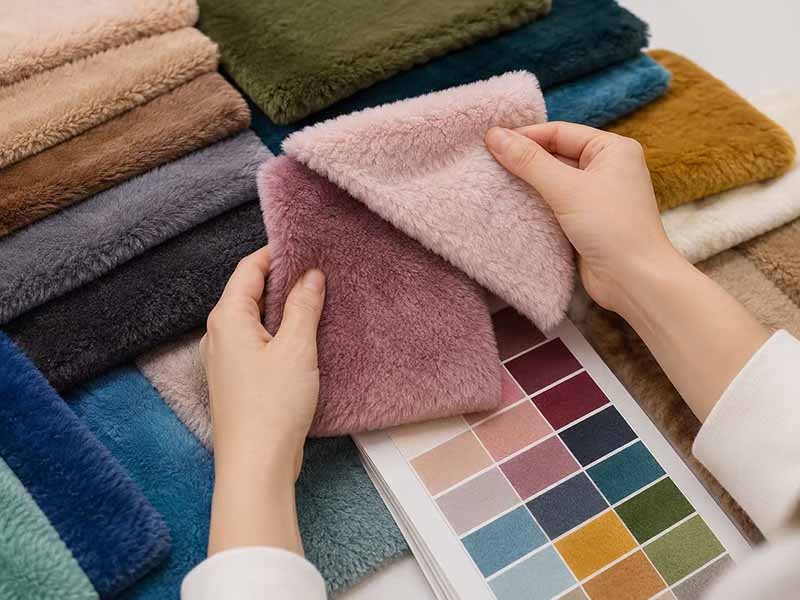
Touch contrast works when two surfaces behave differently under the fingers. Changing only the fabric color may improve the visual design, but it does not automatically produce a sensory difference. A short-pile body paired with longer-pile ears creates clear stroking contrast. Ribbed knit beside smooth velour creates raised lines and friction. Sherpa beside flat minky creates a noticeable change in density, warmth, and surface depth.
Pile direction can also be used intentionally. Brushing a plush fabric with the nap usually feels smoother, while brushing against it creates resistance and may change the visible shade. If the direction is not controlled during cutting, two pieces made from the same material can appear and feel different. Pattern files should therefore mark the intended nap direction, especially on visible faces, ears, bellies, tails, and matching left-and-right components.
Every fabric choice also creates production trade-offs. Long pile is pleasant for stroking but can hide embroidery, collect lint, and make small facial details harder to control. Ribbed fabric produces a clear texture but may stretch around curved seams. Dense sherpa can feel warm and substantial, yet its seam allowances may become bulky. Smooth material presents clean embroidery but reveals uneven stuffing and seam puckering more easily.
Physical swatches should be reviewed after any planned processing. Embroidery backing, lamination, heat transfer, printing, washing, and quilting can change the original hand feel. A material that feels soft before assembly may become firmer once stabilized. For repeat orders, the material record should include supplier, fiber composition, pile length or surface structure, weight, color reference, nap direction, and approved batch samples.
| Tactile feature | Main sensation | Specification to record | Common production risk |
|---|---|---|---|
| Long and short pile | Strong stroking contrast | Pile length, fiber, nap direction | Shedding or hidden facial details |
| Ribbed fabric | Raised directional texture | Rib spacing, stretch, panel direction | Distortion around curved seams |
| Quilted area | Repeated soft relief | Stitch spacing, backing, filling layer | Uneven height or stiffness |
| Soft embroidery | Localized raised detail | Thread type, density, backing | Scratchy or overly firm surface |
| Bean-filled zone | Movable pressure | Inner bag size, fill weight, position | Leakage or filling migration |
| Smooth velour panel | Low-friction touch | Fabric weight, stretch, surface finish | Visible puckering or marks |
Controlled Squish
Squishy plush will become more refined as product teams pay closer attention to the full compression cycle. Users notice how the body responds during the first squeeze, how resistance builds, whether the filling moves away from the hand, how quickly the product recovers, and whether the original silhouette returns. A product can feel soft yet still perform poorly if its face collapses or its body remains permanently creased.
Loose polyester filling produces a familiar, huggable feel, but repeated squeezing may move the material away from frequently handled areas. Foam can create slower recovery and stronger resistance, although density, thickness, odor, aging, and heat retention need to be reviewed. Mixed filling allows different sections to perform different jobs: supportive filling in the head, softer fiber around the body, and a defined foam or particle structure in the main squeeze zone.
The most useful approval method combines a physical reference sample with written specifications. The record can identify filling material, weight by body area, foam type, insert dimensions, and intended recovery behavior. Production workers cannot reproduce descriptions such as “slightly softer than the last sample” reliably unless they have both a reference and measurable controls.
Testing should reflect real handling rather than only the first showroom impression. A development sample can be compressed repeatedly, left under pressure, packed in the proposed carton, unpacked, and observed for recovery. The team should check whether the fabric wrinkles, the seams rotate, the face changes, or the internal structure creates a hard edge. This simple process often reveals problems before they become expensive production complaints.
Interactive Surfaces
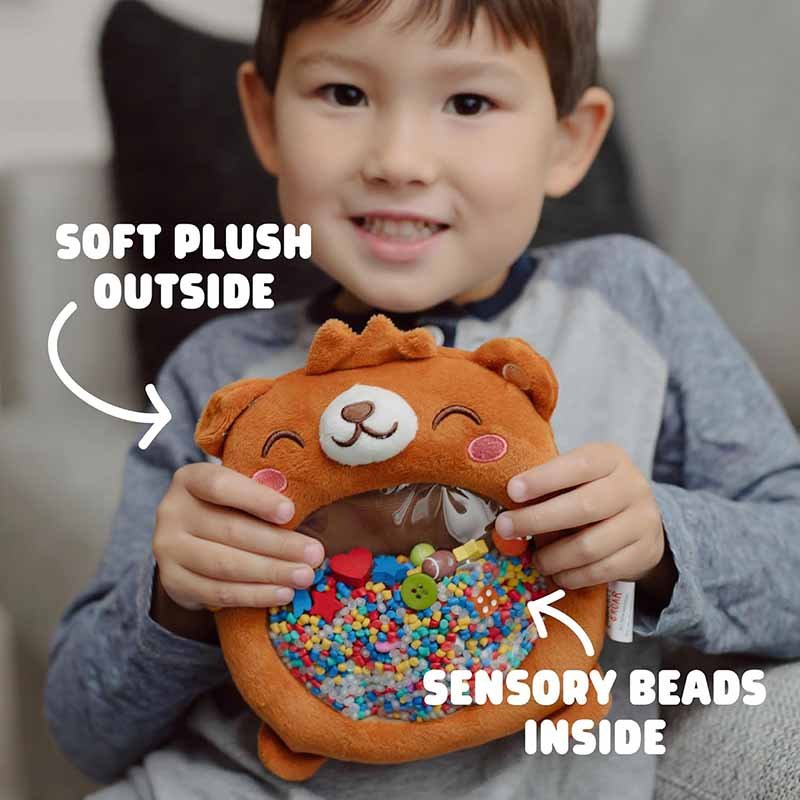
Low-tech interaction remains valuable because it gives immediate feedback without charging, software, applications, or electronic failure. A crinkle ear responds to pressure. A reversible panel changes texture and appearance. A bead channel encourages tracing. A flap, loop, pocket, or textured tail provides a simple repeated hand movement. These features can add engagement while keeping the product quiet and easy to understand.
The most successful surfaces usually have one clear action. When one ear is expected to crinkle, pull, open, store an accessory, and trigger a sound at the same time, the construction becomes crowded. More components mean more seams, reinforcement, inspection points, and possible failure modes. A simple feature can feel more satisfying when its placement and response are carefully developed.
Interaction should follow natural handling. A feature intended for squeezing should be placed where the hand reaches easily without twisting the product. A tracing channel should not cross a thick seam. A reversible panel needs enough open surface to move smoothly. A loop used repeatedly needs attachment strength appropriate to the product size, expected force, and intended age.
For children’s products, every interactive element must also be reviewed as a possible access point. Pull tabs, zipper components, snaps, beads, cords, hard inserts, and liberated filling can create hazards when incorrectly secured. The relevant assessment depends on the actual construction, target age, and sales market rather than the general label “sensory toy.”
Durability Through Repetition
A tactile feature is only useful when it remains recognizable after repeated handling. Long pile may mat, ribbed fabric may stretch, printed texture may wear, and bean-filled zones may flatten or migrate. Product teams should consider what the feature feels like after weeks of use rather than approving only a new sample that has been handled for a few minutes.
High-contact zones deserve stronger construction and closer inspection. If users are expected to rub one patch repeatedly, the material edge and surrounding seam need to withstand that action. If a tail is intended for fidgeting, its attachment should be reinforced through the internal structure rather than relying only on an outer seam. If a reversible panel is repeatedly turned, its backing and border should remain comfortable.
Cleaning also changes tactile performance. Some fabrics become rougher after washing, while others lose loft or dry unevenly. Mixed-material products may react differently within the same wash cycle. The care method should therefore be considered during material selection and verified on completed samples, not added to the label after production is complete.
A durable sensory product often looks simpler than an early concept. Removing one weak feature can improve comfort, washability, and production stability. In practice, a well-made plush with three distinct tactile experiences usually creates more lasting value than a crowded design containing eight surfaces that do not age consistently.
How Will Weighted Plush Evolve?

Weighted plush will evolve through better distribution, safer internal containment, clearer intended use, and more practical cleaning. The category is moving beyond simply increasing total weight. Successful products will control where the weight sits, how much it moves, how the outer body remains comfortable, and how users carry, store, clean, heat, or cool the product without compromising its structure.
Weight by Use
The correct weight format depends on where and how the product will be used. A lap companion needs a wide base and a center of gravity that keeps the product stable. A hugging plush needs weight that feels integrated into the torso rather than like a hard bag inside a soft shell. A shoulder format requires balanced sections that do not swing unexpectedly. A travel product needs enough sensory presence without becoming inconvenient to carry.
Total finished weight does not explain the full experience. Two products with the same weight can feel completely different when one concentrates most of the mass in the belly and the other distributes it through the paws and lower body. The shape, thickness, and location of the internal compartments influence pressure, posture, seam stress, and how the plush moves when lifted.
A useful specification separates the finished product weight from the weighted-material weight. It should also record the number of compartments, material type, compartment dimensions, position, allowable movement, seam construction, surrounding filling, intended orientation, and cleaning method. These details allow the development team to compare samples and identify the source of any difference in feel.
Brands should avoid copying a competitor’s headline weight without considering dimensions, body shape, intended age, and use. There is no universal number that suits every plush. The most responsible approach is to establish a starting concept, review physical samples, assess the finished product, and coordinate applicable safety and labeling requirements for the target market.
Zoned Distribution
Zoned weighting divides the heavy material into controlled sections. A seated animal may use a weighted base for stability, lighter weight in the front paws for touch, and ordinary soft filling around the chest for hugging. A lap plush may use two or three flatter compartments to spread pressure more evenly. A shoulder format may divide weight between the left and right sides.
The main advantage is consistency. Freely moving particles may collect in one corner, change the product’s posture, place additional stress on a seam, and create a different feeling each time the plush is moved. Controlled compartments keep the center of gravity closer to the approved sample and reduce the chance of one area becoming unexpectedly hard.
More compartments do not always produce a better product. Every division adds stitching, handling time, weight checks, and possible variation. The strongest engineering solution uses the fewest zones needed to achieve the intended distribution. Complex internal structures should provide a clear functional benefit rather than existing only to make the specification appear more advanced.
Development samples should be examined upright, flat, tilted, carried, squeezed, dropped, and unpacked after simulated transportation. Inspectors can confirm the finished weight, compartment position, seam condition, sitting balance, and whether any hard edge can be felt through the surrounding filling. These observations are often more valuable than reviewing the total weight alone.
| Weighted-plush control | What should be recorded | Reason it matters |
|---|---|---|
| Finished product weight | Approved range and measurement method | Controls overall handling and logistics |
| Weighted-material weight | Weight per internal compartment | Maintains the approved sensory response |
| Compartment position | Pattern reference and placement diagram | Prevents shifting posture and pressure |
| Inner-bag construction | Material, seam type, closure method | Reduces leakage and access risk |
| Surrounding filling | Type and weight by zone | Prevents hard edges from being felt |
| Cleaning method | Surface clean or removable cover process | Protects the insert and outer body |
| Packaging orientation | Position inside retail and shipping packaging | Reduces movement and deformation |
Removable Inserts
Removable inserts can improve cleaning and extend a product line. A washable outer shell may hold a weighted, warming, or cooling insert. Several characters can also share a common internal platform, allowing the brand to introduce seasonal covers, licensed versions, or replacement shells without redesigning every functional component.
The access system is the most sensitive part of the structure. Zippers, hook-and-loop fasteners, snaps, pockets, and concealed openings need to be assessed for comfort, unintended access, durability, and detachable parts. The closure should not create a hard point against the user, and the insert should fit securely in the intended position without rotating or folding.
A removable design also needs clear use instructions. Users should understand whether the insert can be washed, heated, cooled, or replaced, and whether the outer shell can be used separately. If the insert has a specific orientation, the product should make correct installation obvious. Complicated instructions often indicate that the design itself needs further simplification.
Removability is not automatically safer than a permanent construction. It introduces access and closure risks that may not exist in a fully enclosed product. The decision should be based on the intended age, cleaning expectation, sales channel, and functional benefit. A removable insert is most valuable when it solves a real use problem rather than serving only as a marketing feature.
Cleaning and Long-Term Use
Cleaning is one of the most important factors in weighted plush because the internal materials may not tolerate normal machine washing. Weighted particles, foam, warming inserts, sound modules, and reinforcement layers can react differently to water, detergent, spinning, and heat. The care method should be defined before the sample structure is approved.
A permanently enclosed weighted product may require surface cleaning, which is simple for the manufacturer but may be less convenient for the user. A removable cover can improve hygiene, although the access opening and insert installation become additional quality points. The selected method should match how often the product is expected to be handled and where it will be used.
The outer fabric should be tested after the intended cleaning process. It may shrink, lose pile height, change color, become rougher, or dry unevenly. Seams can also twist when different materials shrink at different rates. A complete care test should examine appearance, hand feel, weight distribution, closure performance, odor, and shape after drying.
Brands should communicate care limitations clearly rather than hiding them in small print. A product marketed for frequent everyday comfort will disappoint users if it is difficult to maintain. Cleaning is not a secondary packaging detail; it is part of the product experience and should be reviewed alongside weight, touch, and appearance.
Are Multi-Sensory Features Going Mainstream?

Multi-sensory features will become more visible, but mainstream success will favor focused, understandable functions. Heat, cooling, sound, scent, vibration, and touch response can add real value when each feature has a clear use and can be tested independently. Products overloaded with unrelated functions may become difficult to clean, costly to manufacture, harder to document, and less reliable in everyday use.
Heat and Cooling
Heat and cooling are most practical when delivered through removable inserts rather than permanently integrated throughout the entire plush body. This allows the outer character to remain soft and potentially washable, while the functional component can be inspected, warmed, cooled, or replaced separately. The same basic exterior may support standard, weighted, and temperature-based versions.
Temperature performance depends on the entire structure rather than the insert alone. Thick fabric and dense filling can reduce heat transfer, while thin sections may create uneven hot or cold areas. Cooling inserts may introduce condensation. Repeated warming can affect odor, flexibility, seam strength, and the insert material. Every method has different handling and testing requirements.
The development process should verify the permitted heating or cooling method, duration, surface temperature, insertion direction, closure strength, leakage resistance, and condition after repeated cycles. The team should also examine whether the outer fabric becomes damp, changes color, develops odor, or feels hard around the functional area.
Packaging language should describe the physical feature accurately. “Removable warming insert” is clear and understandable. Claims that the product treats pain, anxiety, sleep disorders, or other medical conditions require a different level of evidence. Honest functional language protects both the consumer and the brand.
Sound and Scent
Sound works best when it supports the character or comfort experience without dominating it. A short breathing rhythm, heartbeat-style sound, gentle nature loop, recorded phrase, or simple response to touch can deepen attachment. Excessive volume, long repetitive tracks, or controls that are difficult to reach may quickly turn a comforting feature into a source of frustration.
A sound-producing plush needs defined module placement, activation force, speaker direction, volume, battery access, wiring protection, and individual function checking. Filling can muffle the speaker, press against a button, or change the body shape around the module. The internal structure should protect the electronics without creating a hard area that is uncomfortable to hold.
Scent is more subjective. A fragrance that one person finds pleasant may be overwhelming to another. Permanently treating the main fabric or filling can make washing, storage, and scent-free product options more difficult. Removable scent inserts offer greater flexibility because the user can remove, replace, or avoid the feature.
The packaging should clearly state whether the product contains fragrance, how long the effect is expected to last, and whether it can be removed. Brands should avoid assuming that scent automatically creates relaxation. The best approach is to offer a clear choice and allow the physical plush experience to remain enjoyable without the fragrance.
Smart Plush Limits
AI-enabled plush attracts attention because a soft character can feel more socially present than a speaker or screen. Potential functions include conversation, storytelling, memory, voice recognition, touch response, and connections to digital content. However, the emotional appearance of intelligence can create expectations that the software and product may not be able to meet.
The physical engineering challenges begin before the software is considered. Microphones need clear sound paths. Speakers must remain audible after filling. Sensors need predictable activation. Circuit boards and wiring require protection from pressure, impact, moisture, and repeated handling. Battery compartments must be secure while remaining serviceable by the appropriate user.
The commercial questions are equally important. Brands should decide what happens when the service is unavailable, whether the product remains useful without an account, what information is collected, who controls the settings, and how updates or end-of-service changes will be communicated. A connected plush is not finished when the factory shipment leaves; it may require ongoing technical support.
For many 2027 projects, limited local interaction may be more practical than open-ended cloud conversation. Touch-triggered responses, preset stories, offline audio, simple recording, and optional application features can deliver interaction while reducing privacy, support, and reliability concerns. Smart features should make the plush easier to enjoy, not turn a simple comfort product into a complicated technology service.
Modular Product Families
Modular development allows a brand to create several sensory versions around one recognizable character platform. A standard plush, weighted version, warming version, sound version, and portable mini can share visual language while using different internal structures. This creates a coordinated range without forcing every product to contain every feature.
The approach works best when shared and unique components are identified early. The face, main fabric, embroidery files, and packaging style may be shared. Internal patterns, filling specifications, closures, labels, and testing paths may differ. Assuming that all versions are identical except for one insert can create late changes in balance, posture, cost, and compliance.
A modular family should also have a clear price and use hierarchy. The standard plush can provide the simplest entry point. A tactile or portable version can offer a lower-cost extension. Weighted, warming, or interactive products can occupy higher price positions when their features are genuinely useful and well executed.
This structure gives consumers a reason to choose the format that fits their routine rather than asking one product to do everything. It also gives brands a more manageable way to test demand, expand successful characters, and control inventory across different levels of complexity.
Which Consumers and Formats Will Grow?
Growth will come from products designed for a specific person and moment rather than a generic sensory audience. Children, teenagers, adults, collectors, travelers, desk workers, and gift purchasers interact with plush differently. Portable minis, lap companions, comfort pillows, collectible characters, weighted animals, and discreet tactile accessories will succeed when the sensory function matches the user’s environment and daily routine.
Kidults and Collectors
Adults purchase plush for nostalgia, fandom, display, gifting, self-expression, affordable enjoyment, and physical comfort. This audience should be treated as a genuine product group rather than an afterthought. A sensory feature can strengthen the appeal, but the design still needs the visual quality, packaging, and finishing expected from a lifestyle accessory or collectible.
Adult-focused sensory plush should not simply enlarge a preschool design. Refined colors, controlled texture, premium-feeling materials, accurate licensed characters, discreet weighting, and stable display posture are often more suitable. Packaging may need to protect the product while still presenting it attractively for gifting or shelf display.
Quality expectations can also be demanding. Adult purchasers notice irregular embroidery, visible closing seams, mismatched fabric color, uneven weight, weak metal hardware, or a hard insert that can be felt through the body. A product sold as both collectible and sensory needs to perform well in both areas.
Series planning creates additional opportunity. The same character can appear as a desk-size tactile plush, a weighted home version, a portable charm, and a limited premium edition. Each format should have a clear use and price role. A coordinated series encourages collection without making every SKU feel like a superficial size change.
Different Sensory Profiles
Sensory preference varies widely. Some users enjoy pressure and weight, while others avoid heavy products. Some prefer long fur and repeated stroking; others choose smooth surfaces that do not trap lint. Sound may feel comforting to one person and irritating to another. A product cannot honestly promise the same emotional result for everyone.
Brands can respond by describing the physical profile clearly. “Slow-squeeze body,” “weighted seated base,” “long-pile stroking ears,” “quiet bean-filled paws,” and “removable sound module” give consumers useful information. These descriptions are more credible than broad promises that a product will automatically calm every user.
A collection can be organized around primary interactions:
- Stroke:contrasting pile lengths, directional fur, or smooth and ribbed surfaces.
- Squeeze:foam or mixed filling designed for controlled compression.
- Hold:soft seams, broad body contact, and balanced fiber filling.
- Ground:stable weight positioned in the base, lap area, or lower body.
- Fidget:simple loops, flaps, reversible panels, or movable bead channels.
- Listen:controlled audio with clear activation and an accessible off function.
- Warm or cool:a removable insert with validated handling instructions.
Not every character needs every function. One design may focus on stroking, another on squeezing, and another on weight. The collection can remain visually unified while giving each product a distinct purpose. This makes consumer choice easier and gives each SKU a stronger reason to exist.
Portable Formats
Portable sensory plush combines touch, character identity, fashion, fandom, and daily visibility. Bag charms, clip-on minis, keychain plush, pocket companions, palm-size mascots, and wearable characters can move between toy, accessory, gift, and collectible categories. Their appeal comes from being present during ordinary routines rather than remaining at home.
Small size creates difficult engineering trade-offs. There is less space for internal bags, foam cores, sound modules, seams, and closures. A small increase in weight can change how the product hangs. Oversized hardware may dominate the character, while undersized components may feel weak or fail during use.
The strongest portable products usually focus on one compact sensation. A bean-filled base, ribbed thumb patch, reversible ear, dense squeeze center, or one long-pile area can provide a clear interaction without overcrowding the product. Adding weight, sound, scent, and several textures to one small charm often creates more problems than value.
The attachment point should be engineered as part of the internal structure. Pulling force needs to be distributed into the body rather than relying only on a small external loop. Hardware selection should reflect the finished product weight and intended use, and the hanging direction should be confirmed after the actual filling and accessories are installed.
Home and Desk Companions
Home and desk formats offer more space for controlled sensory design. A desk companion can use a stable base, palm-sized squeeze zone, quiet texture, and an expression that remains visible from the front. A home comfort plush can provide a broader hugging area, softer seams, balanced filling, and removable functional inserts.
The environment affects design priorities. Desk products should remain stable, avoid noisy features, and fit around keyboards, notebooks, or small shelves. Home products can be larger but need to consider storage, cleaning, carton volume, and compression recovery. A product that feels impressive in a showroom may become inconvenient if it occupies too much space or arrives badly deformed.
These formats also support character storytelling. A desk plush may represent focus, humor, companionship, or a brand mascot. A larger home product may become part of a bedroom or living-room setting. Packaging and photography should show the intended context so consumers understand the scale and use before purchasing.
The most effective products feel like they belong in the environment rather than appearing as ordinary toys placed there. Shape, posture, color, and sensory function should work together to make the product comfortable to use and visually appropriate when it is not being handled.
How Should Brands Develop Sensory Plush?
Brands should begin by defining the user action and converting it into measurable construction requirements. A reliable development process includes feasibility review, material trials, engineering samples, age and market assessment, pre-production approval, controlled manufacturing, and repeat-order records. The sensory promise should appear consistently in the design brief, approved sample, bill of materials, quality plan, packaging, and final inspection.
Engineering Samples
Any feature that changes pressure, balance, movement, temperature, sound, access, or cleaning should be validated through an engineering sample. This includes foam cores, weighted bags, mixed filling, warming inserts, cooling inserts, crinkle layers, electronic modules, touch sensors, removable covers, internal pockets, pull tabs, and multi-material tactile panels.
An appearance sample can show the character, but it may not answer the most important functional questions. Does the face distort when the belly is squeezed? Can the weighted insert rotate? Does the product lean to one side? Can the user feel a hard edge? Is the speaker muffled by filling? Does the closure remain hidden during handling?
A structured sample path may include an initial sample, revision sample, engineering sample, pre-production sample, and approved production reference. Not every simple product requires the same number of stages, but complex sensory features should not move directly from a visual prototype into bulk manufacturing.
A useful development brief should include the intended user, target age, main sensory action, target market, finished dimensions, estimated quantity, cleaning method, packaging format, non-negotiable character details, and intended launch date. These inputs allow the manufacturer to identify structural, cost, testing, and delivery risks before expensive commitments are made.
Age and Market Rules
Age grading should be established before fabrics, filling, accessories, openings, electronics, and packaging are finalized. The same zipper, loop, particle filling, sound module, or removable insert can have different implications depending on whether the product is intended for a young child, an older child, a teenager, or an adult collector.
Sensory plush may require attention to accessible filling, small parts, seam strength, cords, loops, straps, closures, sound level, battery access, heating instructions, chemical requirements, tracking information, and care labels. The exact assessment depends on the actual construction and intended market, not simply on the product being soft.
Target market matters alongside age. Products sold in the United States, European Union, United Kingdom, Canada, Japan, or other regions may require different labels, documentation, testing paths, import responsibilities, and packaging information. A report prepared for one configuration or market should not automatically be assumed to cover another version.
Manufacturers can assist with bills of materials, samples, labels, technical information, and test coordination, but the responsible brand, importer, laboratory, and legal manufacturer need to confirm the applicable requirements. Clear responsibility at the beginning of the project reduces delays and avoids last-minute changes to materials, warnings, or packaging.
Repeatable Production
Sensory feel must be converted into production data. An approved physical sample is essential, but it cannot replace written specifications. Samples can become compressed, age, absorb moisture, or be interpreted differently by workers. The production file should describe the materials and internal structure in a way that can be repeated after several months.
Useful records include fabric references, pile direction, filling materials, filling weight by zone, foam specification, weighted-material type, inner-bag dimensions, compartment location, seam construction, module position, closure details, approved colors, packaging arrangement, and inspection tolerances.
| Development gate | Evidence required | Main risk controlled |
|---|---|---|
| Product definition | User, action, age, market, intended use | Feature without a clear purpose |
| Material review | Physical swatches and composition records | Incorrect feel or unstable sourcing |
| Engineering sample | Internal structure and function record | Shifting weight or blocked modules |
| Pre-production approval | Final BOM, labels, packaging, specifications | Unapproved changes before production |
| Golden reference sample | Approved appearance and sensory response | Subjective production interpretation |
| Bulk inspection | Weight, seams, function, position, packaging | Batch inconsistency |
| Repeat-order review | Retained sample, lot records, substitutions | Shape, color, or hand-feel drift |
The inspection plan should match the claim made to the customer. A weighted plush needs checks for finished weight, compartment weight, insert position, seam integrity, balance, and hard internal edges. A slow-squeeze product needs checks for compression, recovery, wrinkling, and final shape. A sound plush needs function checks for activation, volume, speaker output, battery access, and wiring protection.
Product Evidence
Strong sensory products are supported by evidence that connects the concept to the finished shipment. Useful evidence includes material swatches, sample revision records, filling-weight sheets, internal-structure photographs, approved function videos, bills of materials, test reports, inspection checklists, packaging approvals, and retained production samples.
This documentation becomes especially important during repeat orders. Materials may have been discontinued, a supplier may have changed, or production may move to a different line. A controlled substitution process should explain what is changing, why the change is necessary, and whether the sensory experience, appearance, safety, cost, or delivery schedule will be affected.
The purpose is not to create unnecessary paperwork. It is to protect the small details that consumers actually feel. A weighted paw positioned slightly too high, a foam core with a different recovery rate, or a ribbed panel cut in the wrong direction can change the product even when it still looks acceptable in a photograph.
For complex projects, working with a development partner that understands patterns, fillings, materials, function modules, packaging, and production control can prevent the sensory idea from being diluted between design and manufacturing. The most useful early conversation is not simply about price; it is about what the user should feel and how that experience will be preserved at scale.
Conclusion
Sensory plush in 2027 will be less about adding more features and more about choosing the right physical experience. Tactile contrast, controlled squeezing, stable weight, portable formats, modular inserts, and restrained interaction all have commercial potential, but only when they are matched to a clear user, use situation, and product structure.
A successful sensory plush may appear simple from the outside. It could be a soft character with a weighted base, a small companion with one ribbed touch zone, or a rounded plush that returns slowly after being squeezed. Behind that simplicity is careful work involving fabric selection, pattern engineering, filling control, internal containment, care instructions, safety review, packaging, and inspection.
Brands that treat these elements as one connected product system will be in a stronger position than those that chase every visible trend at once. The goal is not to make the most complicated plush on the shelf. It is to create a product that feels good during the first touch, remains reliable after repeated use, and can be reproduced without losing the experience that made it appealing in the first place.
Frequently Asked Questions
What Is a Sensory Plush Toy?
A sensory plush toy is a soft product designed to provide a recognizable physical experience through touch, pressure, movement, sound, temperature, scent, or simple interaction. It may use contrasting fabrics, weighted sections, bean-filled areas, foam squeeze cores, crinkle materials, or removable inserts. The term describes the product’s physical features and should not automatically be treated as a medical or therapeutic claim.
Which Sensory Plush Features Will Be Popular in 2027?
The strongest features are likely to include contrasting pile lengths, ribbed touch zones, slow-squeeze bodies, stable weighted bases, removable warming or cooling inserts, portable tactile charms, and quiet low-tech interactions. Smart functions may also appear, but products with one or two clearly executed experiences will usually be easier to understand, maintain, manufacture, and position than products overloaded with unrelated features.
Are Weighted Plush Toys Safe for Children?
Weighted plush safety depends on the product’s age grading, total weight, internal containment, seam strength, access points, materials, instructions, and intended use. A design suitable for an older child or adult should not automatically be marketed for babies or young children. Brands should define the target age early and work with qualified testing and compliance professionals to assess the specific product and target market.
What Materials Work Best for Sensory Plush?
There is no single best material because the choice depends on the intended sensation. Short minky and velour create smooth surfaces, long pile supports stroking, ribbed knit creates directional texture, sherpa provides dense warmth, and quilted panels create soft relief. Materials should be evaluated after embroidery, backing, washing, compression, and sewing because those processes can change the final hand feel.
How Are Weighted Plush Toys Manufactured?
Weighted plush usually contains one or more internal bags filled with suitable weighted material. These bags are positioned and secured before the surrounding soft filling is added. The manufacturing file should record the finished weight, weight per compartment, insert position, inner-bag construction, surrounding filling, seams, and cleaning method. Bulk inspection should confirm that the approved weight distribution and posture remain consistent.
Can Sensory Plush Include Sound, Heat, or AI Features?
Sensory plush can include sound, warming or cooling inserts, touch sensors, recording modules, and limited AI interaction. Each feature adds requirements related to internal space, power, access, cleaning, durability, privacy, software support, and applicable safety rules. For many brands, removable or offline functions are more practical than permanent connected systems because they reduce complexity while preserving the core plush experience.