Skip to content

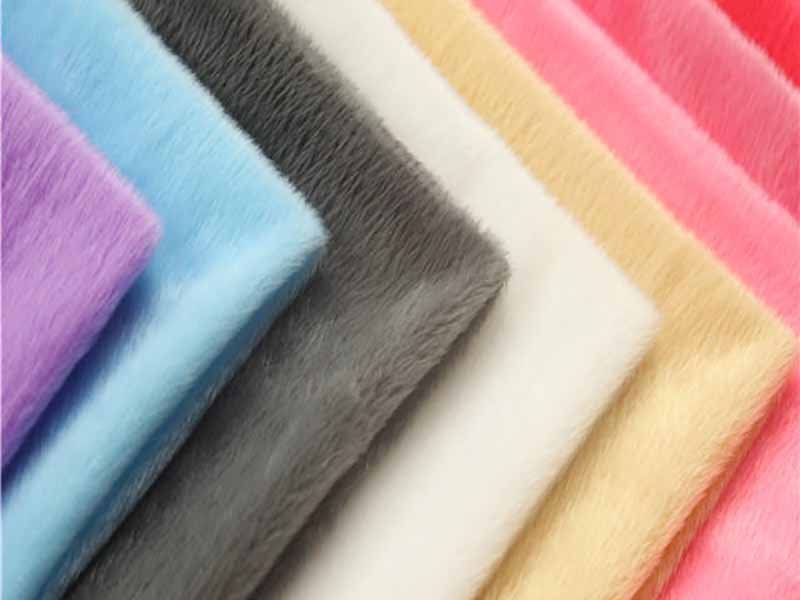
A plush fabric can feel exceptionally soft when a development sample first arrives and still become a poor commercial choice after repeated handling. The surface of a bag charm may constantly rub against denim and coated handbags, a cuddle plush may spend hours against clothing and bedding, while a plush pillow may experience repeated pressure and friction every day. In all of these cases, pilling is not simply a cosmetic laboratory issue. It can change how customers perceive softness, cleanliness, durability, and overall product quality after the product has entered normal use.
Plush fabric pilling is tested by exposing representative fabric specimens to controlled rubbing or tumbling and then visually evaluating the surface. Common methods include Martindale, Random Tumble, and Pilling Box testing. Results are usually assessed by comparing tested specimens with reference standards, while pilling, fuzzing, matting, shedding, pile flattening, and other surface changes should be distinguished rather than treated as one defect.
The difficult part is rarely putting a piece of fabric into a machine. The real challenge is deciding what should be tested, which method fits the material, what rating is acceptable, and whether the fabric used in mass production is still the same material that was originally approved. Many expensive fabric problems begin much earlier than the complaint itself—often at the moment a material was selected because it “felt nice” without anyone asking how that surface would look after hundreds or thousands of contacts.
What Is Plush Fabric Pilling?
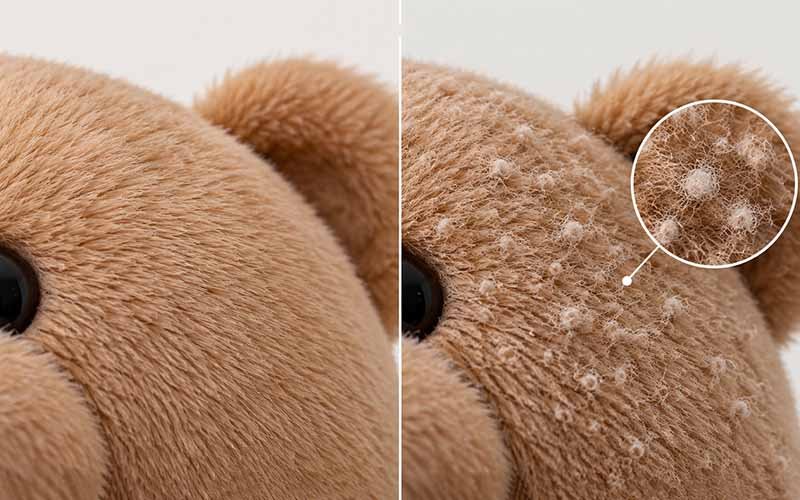
Plush fabric pilling occurs when loose or protruding fibers become entangled through repeated friction and remain on the surface as small fiber balls. Plush materials may also develop fuzzing, matting, shedding, pile flattening, or clumping, so a correct quality judgment begins by identifying the actual type of surface deterioration instead of describing every visible change as pilling.
What Causes Plush Fabric to Pill?
Pilling usually develops through a sequence of fiber movement rather than one sudden failure. Repeated rubbing brings loose fiber ends toward the fabric surface. Some fibers break away completely, while others remain anchored to the yarn, knit structure, or backing. Those retained fibers can twist around neighboring fibers until a visible pill forms. The rate of this process depends on fiber characteristics, pile construction, backing stability, finishing, fabric density, and the type of friction the finished product experiences.
For plush development, fiber content alone is not a reliable predictor. Two polyester fabrics can perform very differently even when their composition labels look almost identical. A dense short plush with a stable backing may retain a clean appearance much longer than a heavily brushed fleece made from the same general polymer. Pile length also changes the appearance of deterioration. Short surfaces can reveal pills quickly, while longer pile may hide small pills but develop tangling, clumping, or matting first. GSM helps describe fabric mass, but a heavier material is not automatically more resistant to pilling because density, fiber length, finishing, backing, and surface construction still matter.
How Is Pilling Different from Fuzzing?
Fuzzing happens when fibers rise or loosen across the surface without necessarily forming clearly defined balls. The fabric begins to look hairy, cloudy, or less clean, and this change can sometimes appear before conventional pills become obvious. On short plush, velboa, fleece, and microfiber surfaces, fuzzing can have a greater visual impact than a few isolated pills because it affects a much larger percentage of the visible product.
The difference matters when evaluating branded plush products. A dark character body with a smooth surface may show slight fuzzing very clearly under retail lighting, especially around embroidered eyes or logos. By contrast, a textured fabric may visually hide similar fiber movement. Quality records are therefore more useful when they describe the actual change—such as broad fuzzing, local pills, texture loss, or color-contrast fibers—instead of simply writing “fabric surface failed.” Consistent lighting, pile direction, and comparison with an untreated reference sample also make visual judgments more repeatable.
Is Matting the Same as Pilling?
Matting is different from pilling because the pile fibers become compressed, tangled, or grouped together instead of forming discrete surface balls. This is common on sherpa, curly pile, long faux fur, high-loft plush, and products that experience prolonged compression. A matted surface can lose much of its original premium appearance even when traditional pill formation is limited, so a low pill count does not automatically mean the surface remains attractive.
The issue becomes especially important for realistic animal plush, large stuffed animals, plush pillows, and products shipped in tightly packed cartons. A long-pile surface can leave production looking excellent yet arrive at retail flattened or clumped if packaging pressure is too high or recovery is poor. Cleaning can introduce another variable because hand washing, spot cleaning, or consumer grooming may change pile separation. For these materials, surface durability should be judged by looking at matting, pile recovery, clumping, directional consistency, and grooming response together rather than relying on pilling alone.
How Is Pilling Different from Shedding?
Shedding means fibers detach from the fabric, while pilling usually involves fibers that remain partially anchored and become entangled on the surface. A fabric can shed significantly without developing many pills, or it can pill while releasing very little loose fiber. Long-pile faux fur, lower-density constructions, weak pile anchoring, and freshly cut edges are among the areas where visible loose fiber can require extra attention during material assessment and production.
This distinction affects corrective action. If a simple rubbing check leaves a noticeable amount of loose fiber on the hand, the team may need to investigate finishing, brushing, backing, pile anchoring, cutting debris, or post-cut cleaning. If the fibers remain attached but begin to form small balls under repeated friction, pilling becomes the more relevant performance concern. Consumers may describe both problems as “the fabric is coming apart,” but manufacturing teams need a more precise diagnosis because the material solution, inspection method, and supplier discussion can be very different.
Which Pilling Test Should You Use?

There is no single pilling test that is automatically correct for every plush fabric. Martindale, Random Tumble, and Pilling Box methods create different mechanical actions, so the method should be selected according to fabric construction, expected product use, customer requirements, and the applicable ASTM, ISO, retailer, or laboratory procedure rather than chosen only because a certain machine is available.
What Is the Martindale Pilling Test?
The Martindale approach uses controlled repeated rubbing to evaluate how the appearance of a fabric changes under friction. It is widely used for comparative textile evaluation because specimens are exposed to a repeatable mechanical action rather than being rubbed casually by hand. ASTM D4970/D4970M and ISO 12945-2 are commonly associated with Martindale-style pilling assessment, although the exact procedure, equipment settings, specimen preparation, and reporting should always follow the specified standard or laboratory protocol.
For plush development, the method becomes particularly useful when several candidate materials appear almost identical during normal sample review. Three short-plush fabrics may have similar colors, prices, and first-touch softness, yet controlled rubbing can reveal meaningful differences in fuzzing, pill formation, or loss of surface definition. A useful record therefore includes more than the word “Martindale.” It should identify the fabric code, lot, standard or procedure, specimen orientation, test stage, visual rating, photographs, and any additional observations. Without those details, a test result becomes much harder to reproduce during a repeat order.
What Is the Random Tumble Test?
Random Tumble testing exposes fabric specimens to irregular multidirectional movement inside a chamber. Instead of rubbing the surface along one controlled path, the specimens move and make repeated contact from changing directions. ASTM D3512/D3512M and ISO 12945-3 are commonly referenced for this type of pilling evaluation, and the method is often relevant to woven, knitted, and certain napped fabrics where irregular surface contact provides useful comparative information.
This movement can reveal a combination of pilling, fuzzing, and general surface disturbance, which is useful because real plush products rarely experience friction from only one direction. A bag charm can contact denim, leather-like bag surfaces, jackets, desks, and other accessories throughout the day. Even so, laboratory tumbling should not be treated as a perfect reproduction of consumer use. A finished product may have seams, embroidery, hard accessories, or attachment points that create highly localized wear. Standardized fabric testing and finished-product handling checks therefore work best as complementary tools rather than competing ones.
Which Test Is Better for Plush Fabric?
The better method is the one that matches the material construction and the question the quality team is trying to answer. Martindale testing can be useful when controlled comparative rubbing is important. Random Tumble can provide valuable information when a napped or knitted fabric is expected to experience irregular surface disturbance. Pilling Box methods may be appropriate for selected constructions or when specifically required by a customer, laboratory, retailer, or technical specification.
| Decision Factor | Martindale | Random Tumble | Pilling Box |
|---|---|---|---|
| Surface action | Controlled repeated rubbing | Random multidirectional movement | Repeated tumbling in a box |
| Typical use | Comparative surface-change testing | Pilling and fuzzing under irregular movement | Standardized pilling, fuzzing, and matting assessment |
| Plush relevance | Useful for many short and structured plush surfaces | Useful for certain fleece and napped constructions | Suitable where the selected specification calls for it |
| Main limitation | Test conditions must be clearly documented | Not ideal for every fabric structure | Applicability should be confirmed before testing |
| Best decision use | Compare candidate materials | Compare irregular surface response | Follow customer or laboratory requirements |
The table should be treated as a practical selection guide rather than a substitute for the full test standard. A project with a customer-defined test method should follow that requirement consistently. When no method has been specified, the manufacturer, quality team, and testing laboratory should agree on the appropriate procedure before testing begins so that an unfavorable result is not followed by a method change simply to obtain a better number.
Is One Test Suitable for Every Plush Fabric?
No single method can represent the full variety of materials sold under the broad label “plush fabric.” A dense velboa, soft minky, heavily brushed fleece, curly sherpa, short microfiber plush, and long faux fur can all be used in stuffed products, but the way their surfaces change under friction is different. Long pile may mat or tangle before obvious pills form, while fleece may develop recognizable fuzzing and pill clusters much earlier.
Product use adds another layer. A collector plush kept mainly on a shelf faces very different conditions from a keychain attached to a backpack. A plush pillow experiences broad repeated body contact, while a bag charm receives concentrated, unpredictable rubbing. Mature material evaluation therefore often combines standardized fabric testing, controlled internal comparisons, and finished-product handling checks. The point is not to create the largest possible test file. The point is to identify the performance risks that actually matter for the intended product.
How Do You Test Plush Fabric Pilling?
A reliable plush fabric pilling test begins with representative material, traceable fabric information, controlled specimen preparation, proper conditioning, an agreed test method, and consistent visual assessment. After exposure, the tested surface should be compared with appropriate references and the original material, while pilling, fuzzing, matting, shedding, and pile flattening are recorded separately whenever they appear.
How Do You Prepare the Specimens?
The most important rule is to test the material that represents actual production. A showroom swatch may have come from a different mill batch, finishing run, or dye lot, so it should not automatically stand in for bulk material. Each specimen should ideally connect to a fabric code, supplier, composition, color, pile length, GSM, backing type, lot or roll number, and the SKU or product family in which the material is expected to be used.
Pile direction deserves particular attention because plush surfaces can be highly directional. Two specimens cut in opposite orientations may reflect light differently, feel different, and sometimes respond differently during friction testing. Orientation should therefore be controlled rather than left to chance. If several fabric lots are involved, the team should decide whether a representative lot is enough or whether high-risk batches require separate verification. Good specimen preparation may seem less important than the equipment itself, but weak comparisons often begin before the machine is turned on.
How Should Samples Be Conditioned?
Conditioning reduces the influence of temporary environmental and storage differences before testing. Textile surfaces can respond to humidity, temperature, compression, transport, and recent unpacking, and plush materials with high loft or directional pile can look especially different immediately after being removed from tight packaging. The conditioning requirements of the selected test method should therefore be followed rather than replaced with an informal factory routine.
Visual assessment conditions also matter. Velvet-like plush, minky, and faux fur can appear lighter or darker depending on pile direction and illumination. The original untreated specimen should remain available for comparison, and tested pieces should be evaluated under consistent lighting and viewing conditions. Long-pile or compressed materials may require time to recover before meaningful inspection. When repeat orders are evaluated months later, using a similar conditioning and viewing approach helps reduce arguments caused by inconsistent handling rather than genuine material differences.
How Many Test Cycles Are Needed?
There is no universal cycle count that applies to every plush fabric. The appropriate exposure is determined by the selected standard, laboratory procedure, customer specification, or documented internal comparison plan. A large cycle number may sound impressive in a sales conversation, but without the method, loading conditions, specimen construction, and rating criteria, that number tells a professional quality team very little.
When several candidate materials are compared internally, they should be exposed under the same conditions and reviewed at consistent stages. Recording the test properly makes the result much more useful during future sourcing and repeat production.
| Test Record | Information to Capture |
|---|---|
| Material identification | Fabric code, supplier, color, lot or roll |
| Construction | Composition, pile length, GSM, backing |
| Test method | Standard or documented internal procedure |
| Exposure | Cycle count, duration, or defined test stage |
| Orientation | Pile direction or specimen direction |
| Surface result | Visual grade and written observations |
| Additional changes | Fuzzing, matting, shedding, flattening |
| Evidence | Before-and-after photographs |
| Disposition | Approved, conditional approval, retest, or rejected |
A simple record like this often becomes more valuable than the test result alone. When a successful plush line is reordered six or twelve months later, the team can compare the new material with an actual documented baseline instead of relying on verbal descriptions such as “same quality as last time.”
Can You Test Pilling Without a Machine?
A controlled manual screening check can be useful for early material selection, but it should not be presented as an ASTM or ISO pilling result. The value of a screening check comes from consistency. Candidate fabrics should be exposed to the same rubbing surface, approximate pressure, movement pattern, direction, repetition count, lighting, and visual comparison conditions so obvious weak performers can be removed before complex sampling begins.
This approach is particularly useful when a development team is comparing several fabrics for a high-friction product such as a keychain or bag charm. If one candidate quickly becomes fuzzy, tangled, or visibly rougher under the same internal check, it may not be worth advancing to the next stage. The stronger candidates can then move into prototypes and formal verification where the project requires it. Screening saves development time; standardized testing provides a stronger basis for formal acceptance, customer documentation, and high-risk commercial decisions.
How Are Pilling Results Rated?
Pilling results are generally assessed by comparing the tested surface with defined visual references. A commonly used five-grade scale runs from Grade 5, representing no visible pilling, to Grade 1, representing very severe pilling. The number should be interpreted alongside fuzzing, matting, pill size, color contrast, surface coverage, and the intended use of the finished plush product.
What Does a 1–5 Pilling Grade Mean?
The five-point scale gives laboratories, quality teams, and product developers a common language for describing surface appearance. Grade 5 represents a surface with essentially no visible pilling, while Grade 1 represents severe deterioration. Intermediate grades describe increasing levels of visible surface change. The exact visual references and reporting procedure should follow the test method being used rather than an improvised interpretation based only on photographs found online.
| Grade | General Surface Condition | Practical Interpretation |
|---|---|---|
| 5 | No visible pilling | Surface remains essentially unchanged |
| 4 | Slight pilling or surface disturbance | Minor visual effect |
| 3 | Moderate pilling | Clearly noticeable change |
| 2 | Severe pilling | Strong visual deterioration |
| 1 | Very severe pilling | Surface heavily affected |
A rating still needs context. Two Grade 3 materials may not look equally acceptable on finished plush. One may have several low-contrast pills spread across a textured surface, while another may develop dark, obvious pills directly beside an embroidered face. Photographs, surface observations, and the original specimen should therefore be retained whenever practical so the rating remains understandable during later reviews and repeat production.
What Is a Good Pilling Rating?
A good result is one that meets the agreed product requirement under the chosen test method. There is no single grade that automatically approves every plush fabric for every product. A shelf-oriented collectible experiences relatively little friction after purchase, while a bag charm can rub against clothing and handbags throughout the day. A cuddle plush may face repeated handling and cleaning, and a plush pillow experiences broad friction and compression over a much larger area.
This is why acceptance criteria should be discussed before the report arrives. The product team can define the method, target grade, allowable visual changes, retest conditions, and reference specimen in advance. That prevents a common sourcing disagreement in which one side assumes Grade 4 is necessary while the other considers Grade 3 acceptable. For premium programs, product teams may also choose the strongest visual performer even when several candidate materials technically satisfy the minimum specification because consumer perception can be more demanding than a simple pass/fail threshold.
What Is an Acceptable Pilling Grade?
An acceptable grade is a commercial quality requirement rather than a universal law of textile science. Exposure, visual sensitivity, retail positioning, material type, and brand expectation all influence the appropriate limit. Smooth dark plush can reveal small amounts of fuzzing very clearly, while a heavily textured sherpa may conceal similar fiber movement. Products sold as premium accessories may also receive much closer visual scrutiny than simple display merchandise.
A useful quality agreement combines the numerical result with an approved physical or photographic reference. The retained specimen can show the maximum surface change the brand is willing to accept, which makes later production discussions much clearer. This approach is particularly useful when fabric mills change yarn sources, brushing conditions, finishing, dyeing, or backing over time. A commercial material name may remain unchanged while the actual construction shifts, so approval should remain tied to a traceable specification rather than a verbal claim such as “anti-pilling fabric.”
Do More Pills Always Mean Worse Fabric?
Counting pills alone can be misleading because consumers react to more than quantity. A material may form many tiny, low-contrast pills that are difficult to see from normal viewing distance, while another material may form only a few large, dark pills on the center front of a character. The second product can look considerably worse even though its pill count is lower.
Fuzzing and matting create similar problems. A sherpa surface may lose its attractive open texture without producing many obvious pills. Long faux fur can clump or flatten, while short plush can become cloudy around high-friction areas. A useful assessment therefore records pill size, visible coverage, color contrast, fuzzing, matting, shedding, pile flattening, softness change, and whether important product details remain clean. The goal of pilling evaluation is not to chase the highest possible number; it is to predict whether the finished surface will remain commercially acceptable through realistic use.
Which Plush Fabrics Pill More Easily?

Pilling risk depends on fiber structure, pile length, density, backing, knitting or weaving construction, finishing, and product use rather than the fabric name alone. Fleece and heavily brushed surfaces may require closer attention to pilling and fuzzing, while sherpa and long-pile faux fur may show matting, clumping, or shedding before obvious round pills become the dominant problem.
Do Fleece and Sherpa Pill Easily?
Fleece often deserves closer attention because its soft surface is created through raising or brushing fibers, leaving more exposed fiber ends that can move and tangle under friction. This does not mean all fleece performs poorly. Construction quality, fiber characteristics, brushing intensity, density, backing stability, and finishing can produce large differences between fabrics that look similar in a sourcing catalog.
Sherpa behaves differently because its curly or looped texture is already intentionally irregular. Surface deterioration can appear as compacting, clumping, or loss of curl definition rather than neat round pills. For winter-themed plush, home products, or lifestyle merchandise, a slight change in texture may be less noticeable than on a smooth character face. Development teams comparing fleece and sherpa should therefore examine pilling, fuzzing, matting, hand feel, cleaning response, and appearance after compression together rather than selecting a material only because the first sample feels exceptionally soft.
Does Long-Pile Fabric Pill Differently?
Long-pile fabric often develops a wear pattern that is visually different from short plush. The fibers can cross, tangle, flatten, and form compacted groups before traditional pills become easy to identify. This is particularly relevant to realistic animals, fantasy creatures, premium plush, theme-park merchandise, and collector products where long pile is selected specifically because it provides depth and a more natural appearance.
Packaging needs to be considered at the same time as rubbing. Long-pile plush may pass a material-level pilling evaluation and still arrive looking disappointing if it is compressed too tightly during transport. Recovery, grooming, shedding, pile direction, trimming, and matting therefore become part of the same surface-quality discussion. When evaluating these materials, the team should not ask only whether pills are present. The stronger question is whether the fur can maintain its intended visual separation, softness, direction, and shape after realistic handling, packing, shipping, and unpacking.
How Do GSM and Density Affect Pilling?
GSM and density influence fabric durability but do not provide a direct guarantee of pilling performance. GSM describes fabric mass per square meter, while density reflects how closely the surface fibers, loops, or pile elements are arranged. Higher GSM often contributes to a fuller hand feel, but two materials with the same GSM can have very different pile lengths, yarn structures, backing systems, and finishing processes.
Density can influence coverage, pile stability, embroidery support, hand feel, and the visibility of backing after wear. A low-density material may look thin or reveal backing sooner as the pile moves, while an excessively dense material can increase cost and create thicker seams that are harder to turn in small plush components. For serious material selection, GSM, density, pile length, backing, elasticity, surface finish, and actual friction performance should be reviewed as a system. Purchasing a plush fabric only because it has a higher GSM can create the illusion of technical selection without actually proving better durability.
Which Plush Products Face More Friction?
Surface exposure varies dramatically by product type, which means the same fabric can be perfectly reasonable for one application and risky for another. Plush bag charms and keychains are among the most friction-intensive formats because they repeatedly contact bags, jeans, coats, tables, car interiors, metal accessories, and other objects. Cuddle plush and pillows experience broader contact over larger surface areas, often combined with cleaning and compression.
Collector plush usually experiences less repeated rubbing after purchase, but packaging pressure and shelf handling can still affect the surface. Frequently handled retail mascots and promotional products may also experience more contact than expected before they reach the final consumer. Material approval should therefore begin with the product’s real use rather than a generic assumption that “plush fabric is plush fabric.” A softer material may create a better first impression, while a slightly different construction may retain its appearance much longer in an application with constant friction.
How Do You Use Pilling Results in Plush QC?

Pilling results become commercially useful when they are connected to material approval, incoming inspection, production lot records, and repeat-order control. A test performed on one approved swatch does not automatically approve every future fabric delivery. The tested construction should remain traceable to a material specification, and significant changes in supplier, lot, finish, backing, or construction should be reviewed before production continues.
How Do You Set a Fabric Approval Standard?
A useful fabric approval standard begins by defining exactly what material has been accepted. The specification can include composition, supplier, color, pile length, GSM, density or construction reference, backing, elasticity, dye lot, surface appearance, test method, rating, approved swatch, and any restrictions on substitution. This prevents one of the most common problems in custom plush manufacturing: an approved prototype uses one fabric, but bulk production later switches to a visually similar material that has never been evaluated under the same conditions.
Material information becomes more valuable when it is connected with the product BOM, sample records, and production files rather than stored only as a loose swatch. For projects involving characters, collectibles, retail programs, or repeat orders, this traceability supports both quality and continuity. When brands work with Pufumi on material-intensive plush programs, fabric selection can be reviewed together with product use, character appearance, expected friction, sampling, and production requirements so the material decision is made in the context of the finished product rather than in isolation.
Do You Test Samples Before Production?
Testing should happen early enough to influence material decisions rather than after a large quantity of fabric has already been purchased. Initial internal screening can remove clearly weak candidates before complex samples are developed. Once the preferred construction, color, and finish are confirmed, formal testing can be arranged where the customer specification, product risk, retailer requirement, or internal quality plan calls for it.
A practical development sequence often moves from material screening to prototype development, material confirmation, required formal verification, pre-production approval, and then bulk material control. The sequence may change depending on the project, but the basic principle is stable: testing should guide decisions before mass production begins. Pilling should also be considered alongside shedding, color fastness, seam stability, compression recovery, cleaning behavior, and hand feel because a material that performs strongly in one laboratory property may still create problems elsewhere in the finished product.
How Do You Inspect Incoming Fabric?
Incoming inspection verifies that the fabric delivered for production still matches the material that was approved. Common checks for plush fabric include color, pile length, GSM, width, pile direction, backing, elasticity, stains, holes, loose fibers, visible color variation, lot information, quantity, and consistency with the approved sample or BOM. These checks are especially important when multiple rolls or dye lots will be used in the same SKU.
Full laboratory pilling testing does not need to be repeated on every roll. Verification should be based on project risk. A new supplier, noticeable construction change, unusual dye lot, recurring complaint, high-friction application, substitute fabric, or customer-specific requirement can justify additional testing. What should be avoided is silent substitution. If a production fabric is materially different from the construction that was originally tested, the previous report cannot logically prove the performance of the new material. Incoming inspection is therefore the practical bridge between development approval and mass-production consistency.
How Do You Control Fabric Lots?
Fabric lot control allows a quality issue to be traced back to the material that actually entered production. A useful system links fabric lot numbers with the SKU, production batch, and shipment records. If customers later report unusual pilling, shedding, hand-feel differences, or color variation, the team can determine whether the issue is isolated to one material lot or appears across the entire product line.
This becomes increasingly important for successful plush products that are reordered over several seasons. The original material may no longer be available, the mill may change finishing conditions, or a new dye lot may behave slightly differently. Retained swatches, approved samples, material specifications, and production records make those differences easier to identify before they become a large-scale complaint. Pilling testing therefore has its greatest value when it becomes part of a broader material-control system rather than a stand-alone laboratory certificate that is filed away after the first order.
Final Thoughts
Plush fabric pilling is easy to underestimate because the first development sample can look excellent long before the real surface risks appear. A useful evaluation process separates pilling from fuzzing, matting, shedding, and pile flattening; selects a test method that fits the material; records how the specimen was prepared and assessed; and connects the result with the fabric that will actually enter production. This is especially important for high-contact formats such as bag charms, keychains, cuddle plush, and plush pillows.
The strongest material decision is rarely the fabric with the softest first touch or the highest isolated test number. It is the fabric that balances visual appearance, hand feel, character accuracy, surface durability, manufacturing stability, cost, packaging behavior, and repeat-order consistency. For brands developing custom character plush, collectible series, mascots, retail merchandise, or multi-SKU plush programs, evaluating fabric performance early can prevent expensive corrections after production has already begun. A well-controlled surface starts with a material decision that can be tested, documented, reproduced, and traced.
Frequently Asked Questions
What is the best test for plush fabric pilling?
There is no single best test for every plush fabric. Martindale, Random Tumble, and Pilling Box methods create different mechanical actions and can reveal different aspects of surface deterioration. The appropriate choice depends on whether the material is short plush, fleece, minky, sherpa, faux fur, or another construction, as well as the product’s expected use and any customer or retailer specification. When no method has already been defined, the manufacturer and laboratory should agree on the procedure before testing begins.
What is a good pilling rating for plush fabric?
A good pilling rating is the result that meets the agreed requirement for the particular product and test method. Grade 5 generally represents no visible pilling, while lower grades represent increasing surface deterioration, but there is no universal rule that one number automatically approves all plush products. A heavily handled bag charm may justify a more conservative material decision than a shelf-oriented collectible because the two products experience very different levels of friction during normal use.
Can plush fabric be tested for pilling by hand?
Manual rubbing can be useful as an internal screening method when several materials are being compared under the same controlled conditions. It can reveal candidates that quickly become fuzzy, tangled, or visibly rough, helping the development team eliminate weak options before spending more time on sampling. However, a hand test should not be described as an ASTM or ISO pilling grade. Formal acceptance, customer documentation, or higher-risk programs are better supported by an agreed standardized test method.
Is pilling the same as plush fabric shedding?
Pilling and shedding are different. Pilling occurs when fibers remain partly attached to the fabric and become tangled into small balls, while shedding occurs when fibers separate from the fabric entirely. Long-pile faux fur can shed without producing many pills, while fleece may develop obvious pilling with comparatively little loose fiber. Because consumers may describe both problems as poor durability, quality teams should record shedding, pilling, fuzzing, and matting separately so the underlying material problem can be identified correctly.
Does higher GSM mean plush fabric will pill less?
Higher GSM does not automatically mean better pilling resistance. GSM only describes the mass of fabric per unit area, while surface durability also depends on pile length, fiber characteristics, density, backing construction, brushing, finishing, and the way the product is used. Two fabrics with the same GSM can behave very differently under friction. Material selection is more reliable when GSM is reviewed together with density, backing, pile structure, physical testing, and finished-product use rather than treated as a single quality score.
Should pilling testing be repeated for every production order?
Not every production order or fabric roll necessarily requires a complete laboratory pilling test, but repeat orders should still be controlled against the approved material specification. Additional verification becomes more valuable when the supplier changes, a new fabric construction is introduced, the dye lot looks significantly different, the product has a history of complaints, or the intended use creates high surface friction. Retained swatches, approved samples, fabric lot records, and incoming inspection help determine when a new test is justified instead of testing blindly or skipping verification completely.