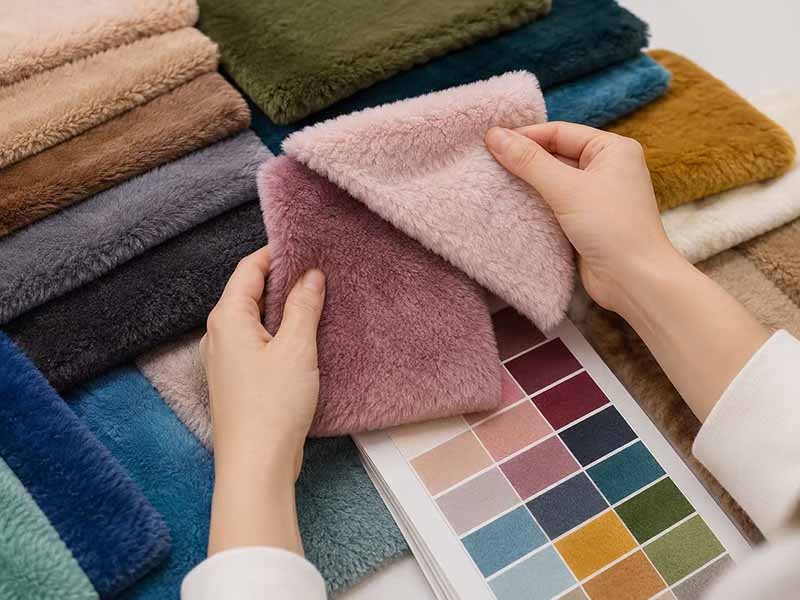
Skip to content

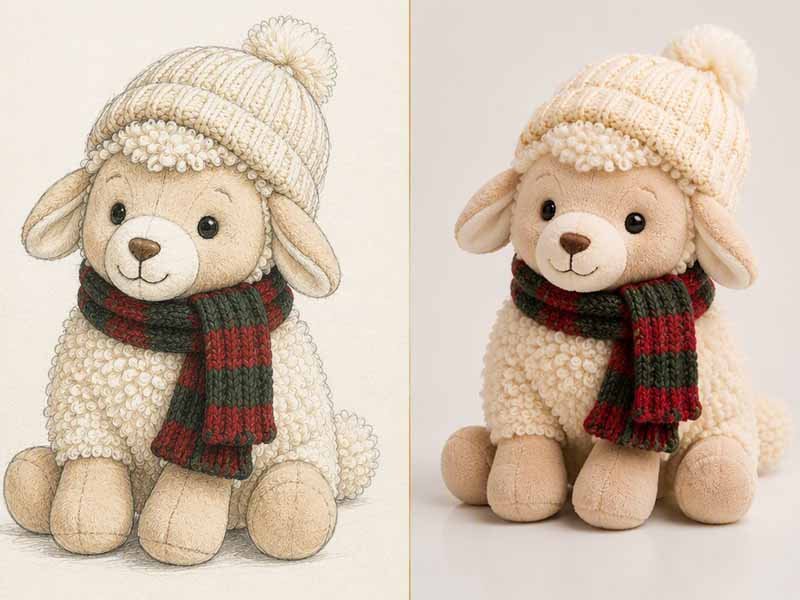
Jersey rarely attracts the same attention as minky, short plush, faux fur, or other fabrics that immediately look “plush.” Its surface is smoother, its structure is knitted, and its strongest feature is often something that cannot be judged accurately from a photograph: controlled stretch. Those characteristics make jersey useful in a very different group of plush applications, especially where a product needs flexible body areas, garment-like drape, smooth printed surfaces, or close-fitting character clothing.
Jersey works best in custom plush products when the design benefits from a smooth surface, soft flexibility, controlled stretch, garment-like drape, or printed detail. Common applications include soft dolls, simple stuffed animals, flexible limbs, inner panels, T-shirts, sports uniforms, removable clothing, and selected character components. Jersey is less suitable when the design requires strong pile texture, rigid dimensional control, or highly sculpted forms without careful pattern compensation.
The more important question is therefore not whether jersey is “good for plush toys.” The better question is where its physical behavior improves a design rather than making production harder. A jersey swatch may feel excellent in the hand, yet the same fabric can widen a character’s face after stuffing, distort embroidery, or change the fit of a miniature uniform. That difference between a promising swatch and a stable finished product is where material knowledge becomes real product development.
What Is Jersey Fabric?
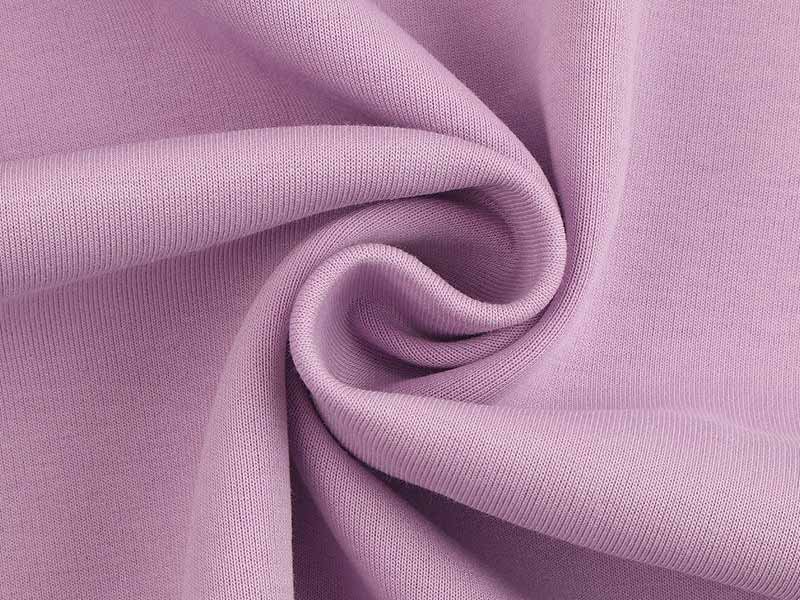
Jersey is a knitted fabric made from interlocking loops rather than the perpendicular yarn structure found in conventional woven materials. This construction usually gives it more flexibility and stretch, making it useful for soft bodies, fitted clothing, printed panels, and flexible plush components. However, fiber content, GSM, stretch direction, recovery, thickness, and backing stability vary substantially, so “jersey fabric” alone is not a complete production specification.
How Is Jersey Knitted?
Jersey is produced through a knitted loop structure. Instead of locking two sets of yarns together at right angles, the yarn forms interconnected loops that can open and compress when force is applied. This is the main reason many jersey fabrics stretch more easily than stable woven cotton, felt, or low-stretch plush materials. The exact behavior depends on yarn type, knitting density, fiber composition, finishing, and whether elastane or another stretch fiber is included.
For plush development, that stretch is not simply a comfort benefit. It changes geometry. A paper pattern represents a controlled two-dimensional shape, while the finished plush becomes three-dimensional after the seams are joined and filling pressure pushes outward. If the jersey expands more across the width than along the length, a head can become wider than expected even though every paper pattern piece was cut correctly.
Stretch direction therefore needs to be treated as part of the pattern information. A face panel cut across the direction of greatest stretch may behave differently from the same panel rotated ninety degrees. Paired ears, arms, legs, sleeves, and symmetrical facial pieces should follow the same orientation if the final product is expected to remain balanced in production.
Professional material control should therefore include more than color and fabric name. The uploaded material-management framework records specifications such as composition, GSM, usable width, elasticity, backing, color, availability, production suitability, limitations, and alternatives because these parameters affect sampling and repeat production.
Which Jersey Types Are Common?
Jersey describes the knit construction more than a single fiber composition. Cotton jersey, polyester jersey, cotton-spandex jersey, polyester-spandex jersey, and printed jersey may all fall under the same broad category, but their behavior after cutting and filling can differ considerably. A designer who selects jersey only by appearance may therefore approve a material that looks correct but stretches, shrinks, recovers, or prints differently from what the product requires.
Cotton-rich jersey is often selected when a softer, more natural textile appearance is wanted. It can work well in doll-like products and lifestyle-focused plush, although dimensional movement and cleaning behavior should be evaluated. Polyester jersey can offer different advantages in color consistency, printing, dimensional stability, and repeat sourcing. Blends containing elastane can improve recovery and close-fitting garment performance but may introduce greater distortion risk around embroidery and highly controlled body shapes.
The figures below are useful development ranges rather than universal purchasing standards. Actual supplier specifications and physical testing should always take priority over generic category descriptions.
| Jersey Type | Common Development GSM Range | Typical Behavior | Suitable Plush Uses |
|---|---|---|---|
| Lightweight cotton jersey | 120–180 GSM | Soft, flexible, moderate movement | Doll clothing, thin decorative panels |
| Medium cotton jersey | 180–240 GSM | Fuller hand, moderate stretch | Soft doll bodies, selected panels |
| Polyester jersey | 140–220 GSM | Varies from stable to moderately elastic | Printed apparel, graphic components |
| Cotton-spandex jersey | 180–260 GSM | Higher stretch and recovery | Fitted clothing, flexible bodies |
| Polyester-spandex jersey | 180–280 GSM | Strong stretch with good recovery | Sports uniforms, close-fitting outfits |
| Heavy jersey knit | 240–320+ GSM | More body, behavior depends on construction | Structured clothing, larger components |
- These ranges are industry-style development references, not fixed specifications. Actual GSM, stretch, shrinkage, and recovery depend on the selected fabric.
A reliable material record should connect the approved jersey to a fabric code, supplier reference, color, physical swatch, product SKU, and BOM. This becomes especially important for successful products that may need another production run six or twelve months later. A description such as “black stretch jersey” is rarely precise enough to reproduce the same result confidently.
Is Jersey a Plush Fabric?
Jersey can absolutely be used in a plush product, but it does not behave like a traditional pile fabric. Minky, short plush, velboa, sherpa, and faux fur have raised fibers that contribute softness, visual depth, and a recognizable stuffed-toy surface. Jersey usually presents a much smoother knitted face, so the finished product feels visually closer to fabric apparel, cloth dolls, or smooth character panels.
That distinction changes how construction quality is perceived. Pile can partially hide small seam irregularities because the fibers soften the stitching line. Jersey provides little camouflage. A wavy seam, uneven filling, puckered embroidery, or distorted printed graphic can remain visible under normal lighting and become even more obvious in product photography.
Its smoothness can also be an advantage. Fine graphics remain unobstructed by long fibers, garments look more realistic, and contrasting panels can help separate skin, clothing, accessories, and body textures. For certain character designs, jersey creates a cleaner result precisely because it does not look traditionally furry.
Material choice is therefore better made component by component. A character may use short plush on the head, minky on the body, jersey on a T-shirt, felt on a small emblem, and woven fabric on an accessory. The goal is not to prove that jersey can replace plush fabrics everywhere, but to place it where its visual and mechanical behavior adds real value.
Which Plush Products Suit Jersey Best?

Jersey works particularly well where flexibility, a smooth textile surface, soft drape, or close fit matters more than a furry appearance. Strong applications include cloth-style dolls, simple stuffed animals, selected character panels, inner ears, bellies, flexible limbs, sports uniforms, plush clothing, and printed accessories. Designs requiring sharply controlled anatomy, rigid shapes, deep pile, or very stable embroidery may need another material or more extensive pattern engineering.
Are Soft Dolls a Good Fit?
Soft dolls are one of the most natural uses of jersey because their appearance often depends on body proportion, embroidered faces, clothing, and smooth textile surfaces rather than fur texture. A well-chosen knit can produce soft arms, flexible legs, a comfortable torso, and a smoother face or body surface that feels visually closer to a cloth doll than to a conventional furry stuffed animal.
The main engineering concern is filling pressure. Once stuffing pushes outward, elastic jersey can expand in the directions where the knit offers the least resistance. A head that appears correctly proportioned before filling may become noticeably rounder afterward. Cheeks can widen, the forehead can spread, and eye spacing can look different even though the embroidery coordinates have not changed.
The effect becomes especially important on simple faces. If a facial panel is only 90 mm wide, a change of several millimeters can alter the relationship between the eyes, mouth, cheeks, and edge seams. The overall doll may still look attractive, but it may lose the expression established in the artwork or approved prototype.
For repeat production, development teams should therefore compare more than overall height. Head width, head height, eye spacing, torso circumference, arm thickness, leg thickness, and filling firmness provide much more useful information. Softness should remain part of the design, but it should not come at the cost of uncontrolled proportions.
Which Stuffed Animals Work Well?
Stylized animals with forgiving shapes are often better jersey candidates than highly anatomical animals. Rounded whales, simple bears, rabbits, cats, soft dogs, octopus-style toys, marine creatures, long-limbed animals, and simplified mascots can benefit from the material because their identity does not depend on precisely sculpted fur or rigid anatomical contours.
The relationship between shape and elasticity is important. A rounded body can tolerate modest expansion without immediately looking wrong. Long arms, tentacles, or floppy legs can even benefit from additional flexibility. A realistic animal muzzle or standing leg structure is less forgiving because small dimensional changes may affect the face profile, stance, paw size, or center of gravity.
The intended use should also influence the decision. A display plush sitting on a shelf experiences relatively little abrasion. A bag charm or keychain may rub against fabric, zippers, bags, desks, car interiors, and other surfaces every day. Some knitted materials are more prone to pilling under repeated friction, making durability more important than the appearance of the first sample.
This is why material-performance evaluation should extend beyond hand feel. The uploaded material framework specifically recognizes abrasion, pilling, shrinkage, printing compatibility, embroidery behavior, cleaning suitability, and batch stability as factors that affect whether a fabric remains appropriate after production and regular use.
Which Parts Can Use Jersey?
One of the most useful ways to work with jersey is not to make an entire plush product from it. Instead, designers can use it selectively wherever a smooth, flexible, printed, or garment-like component is needed. This approach lets the main body retain the familiar plush hand while jersey performs a more specialized function.
Inner ears, bellies, paw pads, flexible arms, fabric tails, socks, sleeves, shirts, scarves, sports uniforms, leggings, hats, and printed costume panels are all possible applications. A short-plush mascot, for example, may look much more convincing when its clothing uses jersey rather than the same pile fabric used on its body.
Selective material placement also reduces production risk. If elasticity is useful around clothing but unnecessary on a character face, limiting jersey to the outfit preserves dimensional stability where facial proportions matter most. Material zoning gives the pattern engineer more control over how each part behaves under stuffing and sewing pressure.
The broader material system described in the source document follows this same logic. Specialty knitted fabrics may be selected for clothing, ears, wings, accessories, brand decoration, and other specific areas instead of being treated as a default material for an entire product.
| Plush Application | Jersey Suitability | Main Advantage | Main Control Point |
|---|---|---|---|
| Soft doll body | High | Smooth and flexible | Stuffing expansion |
| Simple rounded animal | Medium–High | Comfortable soft geometry | Pattern compensation |
| Character face | Conditional | Clean surface for detail | Embroidery distortion |
| Inner ears | High | Smooth material contrast | Edge alignment |
| Belly panel | High | Good printed-surface option | Mixed-fabric tension |
| Flexible limbs | High | Soft movement | Circumference consistency |
| Sports uniform | High | Realistic garment behavior | Print and logo distortion |
| Mini keychain body | Conditional | Lightweight construction | Pilling and seam control |
| Sculpted animal muzzle | Low–Conditional | Smooth surface | Dimensional precision |
How Does Jersey Affect Plush Shape?

Jersey can alter the finished shape of a plush product because its knitted structure responds to tension from cutting, stitching, embroidery, and filling. Stretch direction, recovery, GSM, backing, seam placement, pattern orientation, and filling density all influence the final geometry. A pattern developed for a stable fabric should therefore not automatically be reused with elastic jersey without physical validation.
How Does Stretch Change Shape?
Plush construction converts flat fabric pieces into volume. With a relatively stable material, most of that volume is controlled by the curves of the pattern and the seams joining each panel. With jersey, the fabric itself can contribute additional expansion when filling pushes against the knitted loops.
A small numerical example shows how quickly this becomes important. Imagine a character head intended to finish at 120 mm wide. If the combination of fabric stretch and filling causes only 4 mm of additional width, the difference is roughly 3.3%. On a plain body panel this may be almost irrelevant. On a face, however, it can make the cheeks look noticeably broader and change the perceived eye spacing.
Small parts magnify the issue further. A limb designed to finish at 25 mm wide but expanding to 28 mm has changed by 12%. Total product height can remain correct even though the proportions of individual components no longer match the approved sample.
Cut direction is therefore a meaningful production variable. If one face or limb is cut along the direction of greatest stretch while another is rotated, their finished dimensions may differ under otherwise identical filling. Orientation notes should remain attached to pattern pieces rather than being left to operator memory.
Does Stuffing Stretch Jersey?
Stuffing creates internal pressure, and jersey responds to that pressure according to its elasticity and recovery. A lightly filled shell may remain close to the original paper-pattern dimensions, while the same shell filled more firmly can become rounder, wider, and more rigid. Two products cut and sewn correctly can therefore look different simply because their filling density is inconsistent.
The type of filling also changes the result. Standard polyester fiber, higher-rebound filling, foam, weighted particles, or mixed structures distribute internal pressure differently. A head may need enough firmness to hold its expression, while the torso of a cuddly toy may intentionally remain soft. Applying one filling approach across every component can produce an inconsistent silhouette.
For a product expected to be repeated at scale, an approved sample can be paired with a reference filling weight or controlled firmness range. The correct number must be established through physical development because product volume, material stretch, component structure, and desired hand differ from design to design.
The source fact library similarly treats filling as a factor affecting softness, fullness, rebound, weight, silhouette, and recovery after packing or transportation. It is therefore best considered together with the shell material rather than as a separate late-stage decision.
How Should Patterns Change?
Jersey patterns should be adjusted according to observed material behavior rather than through a universal rule such as “reduce every piece by five percent.” Different parts of the same character have different dimensional priorities. The front of a face may require tight control, while a rear head panel may tolerate more stretch without changing the character’s identity.
Pattern engineers should first identify where expansion is useful and where it creates risk. A shirt chest may intentionally use stretch for fit, while the area carrying a circular printed logo needs enough stability to prevent the image becoming oval. A soft doll limb can accept controlled elasticity, but eye positioning generally cannot.
Pattern notes commonly need to include material code, stretch direction, left-right orientation, seam allowance, embroidery coordinates, filling opening, notch position, quantity per unit, applicable SKU, and areas where operators should avoid pulling the material during sewing.
Different product sizes may also require different solutions. A four-inch keychain should not simply use a proportionally reduced version of the eighteen-inch character pattern. Smaller products have relatively larger seam allowances, less space for complex embroidery, and greater risk of bulk where several layers meet.
The documented plush pattern-engineering framework likewise connects each pattern component with material, color, direction, SKU, seam allowance, embroidery positioning, filling access, and production feasibility instead of treating paper patterns as isolated outlines.
How Is Jersey Used for Plush Clothing?

Jersey is particularly valuable for plush clothing because it can behave more like real apparel than thick pile materials. It suits T-shirts, sports jerseys, uniforms, pajamas, fitted tops, sleeves, leggings, dresses, and removable outfits. However, plush garments need their own patterns because stuffed bodies have irregular volume, and decoration, fastening, seam bulk, and stretch recovery must be evaluated on the fully filled product.
Is Jersey Good for Plush T-Shirts?
Jersey is a natural candidate for miniature T-shirts because moderate stretch helps the garment sit close to an irregular stuffed body without requiring excessive ease. Unlike human clothing, however, plush bodies do not have predictable shoulder slopes, chest shapes, armholes, or waistlines. A rounded torso may also change circumference depending on how firmly it is filled.
For that reason, the shirt should be developed around the approved filled sample rather than scaled down from a normal clothing block. Neck opening, chest circumference, sleeve position, armhole depth, hem length, and shoulder line all need to reflect the actual plush body.
Scale creates additional challenges. A seam allowance that is almost invisible on adult apparel can be very noticeable on a twelve-centimeter character. Several layers meeting around a shoulder or neckline can create a bulky ridge, while overly thick bindings can make the garment look stiff rather than soft.
Fixed clothing and removable clothing also behave differently. A fixed T-shirt can be incorporated into the product construction and controlled more tightly. A removable shirt needs enough stretch or a suitable opening to pass over the character’s head and arms without permanently stretching the neckline.
Can Jersey Make Sports Uniforms?
Sports-inspired plush is one of the strongest jersey applications because the fabric immediately supports the visual language of basketball, football, baseball, university sports, and esports apparel. A mascot wearing a garment that behaves like a real uniform can look more convincing than one wearing clothing made from thick pile fabric.
Miniaturization is usually the harder part. A full-size sports shirt may carry a crest, sponsor mark, number, stripes, name, league mark, and multiple lines of text. On a twenty-centimeter mascot, the entire usable chest may be only a few centimeters wide. Simply shrinking the original artwork can leave text unreadable and embroidery too dense.
The design should therefore protect the elements responsible for identity. A major team number may remain bold while tiny secondary lettering is simplified. A crest may need a new embroidery interpretation for the miniature scale rather than a direct reduction of the original vector file.
Stretch should also be evaluated after dressing the plush. If a 25 mm circular logo expands roughly eight percent across the chest, it may appear closer to 27 mm wide and visibly oval. Logo approval should therefore happen on the stuffed body, not only on a flat garment panel.
The uploaded product-development facts specifically include baseball uniforms, basketball jerseys, football jerseys, school uniforms, hoodies, dresses, and other character garments, with knitted fabrics included among the clothing material options used according to design and product requirements.
Is Jersey Good for Removable Clothes?
Jersey can work very well for removable outfits because elasticity allows garments to pass over plush heads, hands, feet, and rounded torsos while returning close to their intended shape. This can be useful for collectible characters, seasonal outfits, game-skin variations, premium products, and designs where clothing is part of the play or display experience.
Recovery matters as much as initial stretch. A neckline that expands easily but does not recover can become loose after repeated dressing. Sleeves may bag out, leggings may slide down, and printed graphics can remain permanently widened. Repeated removal is therefore a more demanding use condition than a garment that remains fixed for the life of the product.
Fastening choices also affect product design. Hook-and-loop tape, snaps, elastic openings, zippers, ties, or semi-fixed structures can each change appearance, thickness, durability, and suitability for the intended age group. The most decorative fastening is not automatically the most practical solution at miniature scale.
A removable garment should enhance the finished plush rather than hide weak body construction. The body underneath still needs controlled seams, filling, proportions, and surface quality because garments can shift during handling and may be removed entirely by the end user.
How Are Logos Added?
Jersey garments can carry embroidery, screen printing, heat transfers, sublimation, appliqué, or woven labels. Each method solves a different design problem. Embroidery creates a durable textile appearance, but dense stitches can make thin jersey stiff or pull the surrounding surface inward. Printing keeps the garment lighter and can reproduce large graphics, gradients, numbers, or repeating patterns with less added thickness.
Fiber composition strongly influences printing choices. Polyester content may suit certain sublimation applications, while other constructions may work better with screen printing, transfer processes, or digital methods. The chosen method should be tested on the production-intended fabric because stretch, surface finish, dye behavior, and heat exposure can all change the result.
Embroidery also deserves a full garment trial. A logo that looks perfectly flat on the embroidery frame can distort once the shirt is stretched over a rounded torso. Stabilizer, hoop tension, stitch density, stitch direction, and backing material all contribute to the final appearance.
The material-performance system in the uploaded facts explicitly notes that highly elastic fabrics can shift during embroidery and that printing performance can change according to stretch, surface texture, base color, and fabric structure.
| Decoration Method | Main Strength | Main Jersey Risk | Best Approval Condition |
|---|---|---|---|
| Embroidery | Durable textile look | Puckering and local stiffness | Finished garment on stuffed plush |
| Screen printing | Clean solid graphics | Distortion when garment stretches | Dressed sample |
| Heat transfer | Fine detail and flexibility | Edge lifting or stiff hand | Actual production jersey |
| Sublimation | Integrated graphic on suitable polyester | Fiber-content limitations | Production-intended fabric |
| Appliqué | Layered premium appearance | Added seam thickness | Miniature garment sample |
| Woven label | Sharp brand identification | Can look oversized on small outfits | Finished garment |
What Problems Can Jersey Cause?
The most common jersey-related problems in plush production are dimensional distortion, seam waviness, embroidery movement, pilling, shrinkage, weak recovery, graphic deformation, and differences between batches. These issues are manageable when the material, pattern, cutting direction, sewing setup, decoration method, and filling specification are developed together. Problems usually appear when jersey is introduced into a construction originally designed for a more stable fabric.
Does Jersey Distort Easily?
Jersey can distort before the product reaches the stuffing stage. Fabric may stretch while being spread on the cutting table, operators can pull it while positioning patterns, paired components may be cut in inconsistent directions, and one layer can feed faster than another during sewing. Each individual change may appear minor, but several small differences can accumulate into a visibly asymmetric finished character.
Faces are particularly sensitive. If one facial panel relaxes by only a couple of millimeters more than the opposite side, eye placement, cheek width, and seam symmetry may already be affected. The distortion can become more obvious after filling because internal pressure exaggerates the difference.
Preparation should therefore allow the material to lie naturally rather than being stretched during spreading or cutting. Directional references should remain clear on pattern pieces, especially for paired ears, arms, legs, wings, sleeves, and symmetrical face components.
Repeat production introduces another risk. A fabric can retain the same commercial name while changing slightly in yarn, finishing, GSM, backing, or elasticity between lots. Approved swatches, material codes, supplier references, BOM records, and retained production samples make those differences easier to identify before they appear across a large production run.
Can Jersey Pucker at Seams?
Seam puckering usually appears when sewing tension and material elasticity are not balanced. High thread tension, excessive presser-foot pressure, unsuitable needles, uneven feeding, or operator pulling can elongate jersey as stitches are formed. When the material relaxes after sewing, the seam does not recover at exactly the same rate, leaving waves along the stitching line.
The smooth surface makes the defect more visible than it would be on many pile materials. A shallow ripple partly hidden by long fibers may be almost impossible to notice, while the same ripple on a smooth jersey face or miniature T-shirt catches light immediately and can remain visible in product photography.
Seam review should therefore include appearance before filling and again after the plush reaches its approved firmness. Paired seams should mirror one another, printed graphics should remain aligned, and high-stress attachment areas should be evaluated separately from decorative seams.
Complex products can benefit from treating visual seams, structural seams, closure seams, reinforced seams, and hidden seams as different engineering categories. A seam that is acceptable on the back of a torso may be unacceptable across a visible face or logo area even when both meet the same basic strength requirement.
Can Embroidery Distort Jersey?
Embroidery can distort jersey because it creates a relatively stable stitched structure inside a flexible knitted surface. Dense stitching concentrates tension and may pull the surrounding fabric inward. If the panel is stretched during hooping, the material can relax after embroidery and leave the design puckered even though the stitch file itself is technically correct.
Small facial details make the effect especially noticeable. If an embroidered eye is only twelve millimeters wide, a one-millimeter positional change represents more than eight percent of that dimension. Such a shift may sound insignificant in a production report but can change the expression of a simple character face.
Stabilizer type, hoop tension, embroidery density, stitch direction, backing, and fabric stretch during setup all affect the result. Increasing stitch density is not always the solution because extra stitches can make the problem worse. Fine text and small logos may need artwork simplification rather than simply being stitched more densely.
The most reliable evaluation comes after the embroidered panel is sewn into the product and filled. The source material similarly notes that thin fabrics may deform under embroidery tension and highly elastic materials can allow embroidery positions to move.
Does Jersey Pill or Shrink?
Pilling and shrinkage cannot be predicted accurately from the word “jersey” alone. Fiber composition, yarn construction, finishing, surface treatment, rubbing, washing, and end use all influence performance. A material that looks almost unchanged on a display product may wear very differently when used on a frequently handled toy, keychain, or removable garment.
Pilling becomes more important in high-contact zones. Bag charms rub against clothing and handbags. Frequently hugged toys contact bedding and garments. Removable outfits can be stretched and rubbed every time they are changed. These situations place much more stress on the surface than a collectible that remains on a shelf.
Shrinkage matters particularly when cotton-rich materials are used and cleaning is expected. Mixed-material designs can create additional problems because one component may change dimensions while adjacent polyester plush remains stable. A fitted shirt may become difficult to put back on, while a body panel may pull against neighboring seams.
Care statements should therefore reflect the complete finished product. A washable fabric does not automatically make a complete plush machine washable when the construction also contains embroidery, filling, labels, accessories, adhesives, hard components, electronics, or several other materials.
How Do You Choose the Right Jersey?
The right jersey is selected by matching measurable material behavior to the finished design rather than choosing only by softness or color. Important factors include fiber content, GSM, thickness, stretch direction, stretch amount, recovery, backing, surface finish, shrinkage, pilling, embroidery stability, printing compatibility, supply continuity, and batch consistency. Final approval should come from a physical sample made with the intended fabric and construction.
Which Specifications Matter?
Descriptions such as “soft,” “premium,” or “stretchy” are useful for early conversation but too vague for repeat production. Two developers may describe the same swatch differently, while measurable information can be compared against an approved reference months later. The purpose of technical specification is not to make fabric selection unnecessarily complicated; it is to preserve the product that was actually approved.
For jersey, a useful material record can include fiber composition, supplier style, color, GSM, usable width, thickness, stretch direction, stretch percentage, recovery, backing structure, surface finish, printing behavior, embroidery behavior, shrinkage observations, pilling observations, minimum material purchase requirements, and current availability.
Stretch is particularly useful when expressed through a repeatable internal method. A team might mark a 100 mm section and compare its controlled extension under the same procedure each time. The resulting number is more useful than writing “very stretchy,” provided everyone follows the same test conditions.
This information should then connect with the approved pattern, BOM, sample record, and supplier reference. The objective is to make the material reproducible rather than dependent on one person’s memory. The uploaded Fabric Library framework follows the same principle by connecting material specifications to design evaluation, samples, BOM records, production, quality control, substitutions, and future repeat orders.
Jersey or Minky?
Jersey and minky serve different purposes rather than competing for the same job. Minky is usually chosen when the product needs familiar plush softness, pile depth, warmth, and a more obviously cuddly toy surface. Jersey becomes more attractive when the design needs smoother texture, controlled stretch, clothing-like drape, close fit, or a clean surface for printed graphics.
Consider a sports mascot. Using minky on the face and body can provide the softness consumers expect from a plush character, while jersey on the uniform creates a clearer visual separation between body and clothing. Making the entire product from the same plush fabric may cause the shirt to look unusually thick or make a lightweight athletic garment appear more like an extension of the toy’s body.
The reverse can also happen. Using jersey across an entire cuddly animal may remove the softness and pile effect that defines the intended product. Material should therefore follow the visual and functional role of each surface.
Mixed-material construction is often the strongest answer. A product may combine several fabrics without appearing complicated as long as the material transitions are deliberate and technically controlled.
Jersey or Fleece?
Fleece and jersey can both create softer, flatter surfaces than long-pile plush, yet their structure and use cases differ. Many fleece fabrics offer more body and less garment-like stretch, making them useful for simple plush bodies, pillows, basic clothing, and broad components where dimensional stability matters. Jersey is generally more attractive when stretch, close fit, or flexible movement is central to the design.
Thickness becomes increasingly important as product size decreases. Several layers joining around a miniature shoulder, neck, or underarm can create visible bulk. A difference of only a fraction of a millimeter in each fabric layer can become significant when four or six layers meet in the same small area.
Decoration also changes the choice. A smoother jersey can reproduce certain graphics cleanly but may distort when stretched. Fleece may remain more stable, yet its surface texture can soften the edges of fine printing or miniature embroidery.
The most useful comparison therefore comes from the actual swatches and intended product rather than the fabric names. Put both materials beside the pattern, decoration artwork, filling target, and finished-use conditions, then judge which one produces the more stable and convincing result.
Do You Need a Sample Test?
A physical sample is essential whenever jersey affects the body shape, face, clothing fit, embroidery, printing, or structural dimensions. A flat swatch can reveal color, hand, thickness, and approximate stretch, but it cannot show how the material behaves after it has been cut into curved panels, stitched, embroidered, filled, dressed, compressed, and handled.
Sample measurement should extend beyond overall product height. Depending on the character, useful checkpoints can include head width, head height, eye spacing, face width, torso circumference, limb circumference, neck opening, garment chest width, sleeve position, overall height, and reference filling weight.
A two-hundred-millimeter plush may still measure exactly two hundred millimeters tall after changing fabrics while becoming five millimeters wider in the head and several millimeters narrower through the torso. A simple height check would therefore miss a significant change in character proportions.
The approved result should connect to the production-intended jersey, pattern version, embroidery or print files, BOM, filling specification, and QC reference. The development process documented in the uploaded facts similarly treats material selection, pattern work, engineering, sampling, approval, and production preparation as connected stages rather than independent tasks.
Jersey is most valuable in custom plush development when its stretch and smoothness are used deliberately rather than simply because the fabric feels soft. It can help a cloth-style doll feel more natural, give a sports mascot a convincing miniature uniform, create flexible character limbs, support clean printed graphics, or add contrast to ears, bellies, and accessories. Those benefits come from the same knitted structure that can also create dimensional changes when it is not controlled.
The safest development process begins with the role the fabric needs to perform, then works backward through composition, GSM, stretch, recovery, pattern orientation, embroidery, printing, seam behavior, and stuffing. A sample made from the production-intended material should confirm both appearance and repeatability before the design becomes locked for volume production. When those decisions are handled early, jersey becomes a useful engineering option rather than an unpredictable substitute for conventional plush fabric.
For brands developing character collections, mascots, sports merchandise, cloth dolls, or multi-material plush programs, a material review at the artwork and sampling stage can prevent expensive changes later. Pufumi can evaluate the proposed product structure, material combination, decoration approach, and sampling requirements as part of a custom plush development project, particularly when jersey must work together with traditional plush fabrics, detailed clothing, printing, or embroidery.
Frequently Asked Questions
Is jersey fabric good for stuffed animals?
Jersey can be a good material for stuffed animals when the design benefits from a smooth textile surface, flexible body, or controlled stretch. It tends to work best for simplified or rounded animals rather than highly anatomical forms. Material elasticity must be considered during pattern development because filling pressure can change head width, body volume, limb thickness, and other dimensions that would remain more stable in a low-stretch fabric.
What is the best jersey fabric for plush toys?
There is no single jersey specification that is best for every plush product. Cotton jersey, polyester jersey, and stretch blends offer different hand feel, dimensional stability, recovery, shrinkage behavior, and decoration compatibility. A good selection process considers fiber composition, GSM, thickness, stretch direction, recovery, backing stability, pilling, printing, embroidery, supply availability, and how the fabric behaves in a completed stuffed sample.
Can jersey fabric be used for plush doll bodies?
Yes. Jersey is particularly suitable for many soft doll and cloth-doll bodies because it creates a smooth surface and allows comfortable flexibility through the arms, legs, head, and torso. Highly elastic jersey requires more careful pattern and filling control, however, because the face can widen or become rounder after stuffing. Embroidery placement should also be reviewed on the finished head rather than only on the flat fabric panel.
Is jersey better than minky for plush toys?
Jersey is not generally better or worse than minky because the two materials create different results. Minky provides pile, plush softness, and the familiar tactile character associated with stuffed toys, while jersey offers a smoother surface, more garment-like behavior, and potentially greater stretch. Many designs benefit from combining them, such as a minky character body with a jersey T-shirt, uniform, printed belly panel, or accessory.
Can jersey be embroidered on custom plush products?
Yes, jersey can be embroidered, but elastic and lightweight constructions require careful stabilization. Excessive hoop tension or dense stitching can pull the fabric inward and create puckering, while the surrounding knit may move after the embroidery is complete. Facial features, miniature logos, and small lettering should be tested on the actual material and evaluated again after sewing, stuffing, or dressing the finished plush.
Is jersey suitable for plush mascot uniforms?
Jersey is one of the most natural material options for many mascot uniforms because it resembles real sportswear and can fit rounded stuffed bodies more closely than thick plush fabric. It is useful for basketball jerseys, football shirts, baseball uniforms, university mascot clothing, and similar designs. Logo scale, garment stretch, embroidery or printing, neckline fit, sleeve placement, and the final appearance on the stuffed mascot should all be approved together.
Does jersey fabric stretch after a plush toy is stuffed?
Jersey can stretch after filling because the stuffing places outward pressure on the knitted structure. The amount depends on fabric construction, fiber composition, stretch direction, recovery, pattern shape, seam layout, and filling firmness. A face or limb can therefore finish wider than the original flat pattern suggests. Production-intended samples are the most reliable way to establish acceptable dimensions and filling levels before bulk manufacturing.