Skip to content


Choosing between China and Vietnam sounds simple until a real plush project reaches the sourcing table. One quotation may show a lower sewing rate, yet the product may also require custom-dyed short plush, three embroidery programs, miniature clothing, a metal bag clip, six packaging versions, third-party testing, and delivery before a fixed retail launch. At that point, the decision is no longer about wages. It is about whether the complete development and supply system can reproduce the approved character, control every SKU, and deliver the order without creating expensive surprises.
China is generally the stronger choice for complex custom plush programs that require fast sampling, broad material access, specialist processes, multi-SKU control, or frequent replenishment. Vietnam can be attractive for stable, sewing-intensive designs, larger repeat runs, and supply-chain diversification. The better country is the one that delivers the lowest risk-adjusted landed cost, not simply the lowest labor rate or the lowest first quotation.
That distinction matters because plush products are unusually sensitive to small changes. Moving an eye by a few millimeters can alter an expression. A different pile direction can change a character’s face. A substitute filling can affect posture, carton weight, and testing. Many sourcing teams save a few cents in one operation and then spend weeks rebuilding patterns, rematching materials, or correcting packaging. The most useful comparison starts with the product and works backward to the country, factory, and supply network that can manage it.
Is China or Vietnam Better for Plush Manufacturing?
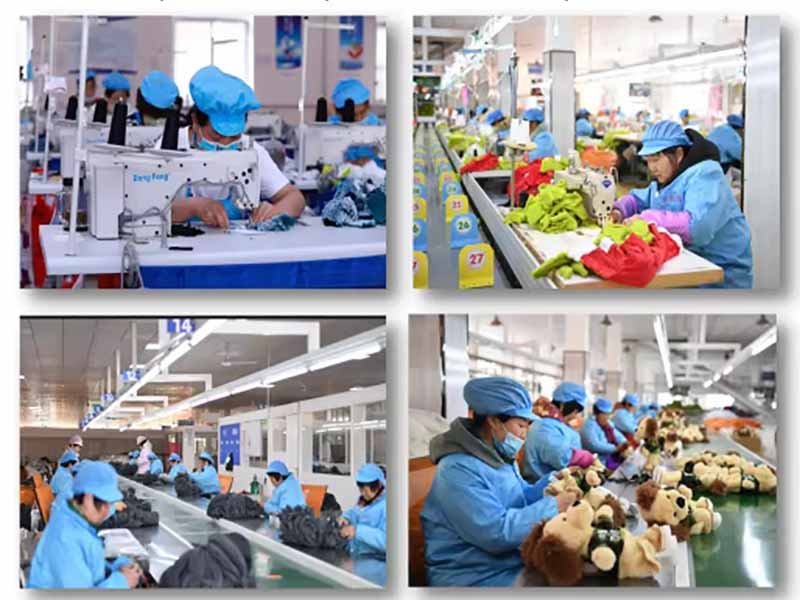
China is generally better suited to complex, development-heavy plush programs, while Vietnam can be competitive for stable, sewing-intensive products and supply-chain diversification. The right choice depends on design complexity, material access, order structure, quality requirements, packaging, launch timing, and replenishment needs. A capable factory in either country is more valuable than a location chosen only for labor cost or reputation.
China’s Core Strengths
China’s main advantage is the concentration of specialist capabilities around plush manufacturing. A character may require several pile lengths, custom colors, embroidery programming, printed panels, miniature clothing, metal hardware, molded components, labels, inserts, and retail packaging. When these resources are located within the same industrial network, the development team can test alternatives and correct problems without rebuilding the entire sourcing route. That density is particularly valuable during sampling, when small material or construction changes are common.
The strongest Chinese suppliers are not merely sewing factories. They combine pattern engineering, material sourcing, sample development, process planning, production control, packaging coordination, and export execution. This makes China especially useful for licensed characters, game and anime plush, collectible series, interactive products, bag charms, and multi-SKU launches. The advantage becomes smaller when the product is already mature, uses standard materials, and requires little engineering, but it remains important when the product line is expected to change frequently.
China’s scale does not guarantee a good result. Some factories have limited engineering depth, depend heavily on unreported subcontractors, or show samples that were developed by teams no longer assigned to new projects. A sourcing team still needs to verify who creates the pattern, which site will produce the bulk order, where specialist operations occur, and how the approved version will be protected. The country provides a large capability pool; the selected manufacturer must prove that it can manage that pool responsibly.
Vietnam’s Core Strengths
Vietnam has become an important export-manufacturing base with strong experience in textiles, garments, cut-and-sew production, and labor-intensive assembly. For plush programs with mature patterns, stable materials, limited accessories, and predictable repeat orders, a qualified Vietnamese factory may provide an effective production solution. The country can also be useful when a company wants a second manufacturing location, additional capacity, or a structured China+1 program rather than complete dependence on one geography.
Vietnam tends to be most competitive when sewing and assembly make up a large share of the product workload and the required materials are already available locally or can be planned well in advance. A standard stuffed animal with one main fabric, basic embroidery, conventional filling, and simple packaging presents a very different sourcing challenge from a collectible character with layered clothing, special hardware, and several retail packages. Vietnam’s suitability therefore rises as the design becomes more stable and the supply route becomes more predictable.
The main question is not whether a product can be labeled as made in Vietnam, but how many critical inputs must still travel across borders. Some factories may sew and fill locally while importing pile fabrics, special accessories, electronic modules, or printed packaging. Imported inputs are not automatically a problem, yet they add supplier lead time, cross-border transport, customs handling, and replacement risk. Each important material should be traced to its actual source before the timeline and cost model are accepted.
Project Fit
Project fit is more useful than a country ranking. A basic promotional plush and a licensed character collection may both be described as stuffed toys, but they require different levels of engineering, supply-chain coordination, quality control, and packaging management. The following comparison shows where each country often has an advantage, provided that the selected factory has verified experience with the exact product type and does not rely on unsupported marketing claims.
| Project Condition | China Often Has an Advantage | Vietnam Can Be a Strong Option |
|---|---|---|
| Concept-stage character development | Broad access to pattern, fabric, embroidery, accessory, and packaging specialists | Suitable when the factory has an experienced internal development team and confirmed material access |
| Complex licensed plush | Faster coordination of specialist processes and repeated revisions | Possible after character-development skill and supply depth are proven through sampling |
| Mature basic stuffed animal | Large supplier pool and flexible alternative sourcing | Strong fit for sewing-intensive repeat orders with stable specifications |
| Multi-SKU collectible series | Established support for coding, accessories, packaging versions, and assortment control | Practical after patterns, BOMs, and packing rules have been fully stabilized |
| Electronic or interactive plush | Deeper access to modules, molded parts, wires, battery cases, and technical partners | Viability depends on component sourcing and documented integration experience |
| Second-source strategy | Often retained for development, complex SKUs, and rapid updates | Useful for selected mature products and planned capacity diversification |
| Frequent design changes | More options for rapid material and process iteration | Best when changes are limited, consolidated, and scheduled early |
| Long-term replenishment | Replacement sourcing can be faster when engineering records are controlled | Effective when materials and production capacity are reserved consistently |
Factory Over Country
Country selection helps narrow the search, but factory-level evidence should decide the order. A factory that performs well on a large, simple animal may struggle with eight characters, four packaging versions, and a strict approval system. A supplier with attractive machinery may still lack experienced pattern makers. Another factory may use specialist partners successfully because it maintains clear ownership of schedules, files, samples, and quality decisions. These differences cannot be discovered from a country label or a generic factory tour alone.
A paid prototype made from the project’s real artwork is one of the most useful tests. It reveals how the team interprets missing views, identifies character-defining features, presents fabrics, records decisions, responds to comments, and explains production risks. The sourcing team should review the development process as carefully as the finished sample. A visually appealing prototype is valuable, but it becomes commercially useful only when the supplier can connect it to an approved pattern, BOM, embroidery files, packaging documents, and inspection criteria.
Pufumi’s project system is built around that connection. Its role is not limited to producing a physical sample; it coordinates character interpretation, pattern engineering, material selection, sample approval, production control, packaging, and long-term replenishment through company-managed manufacturing resources and qualified specialist partners. This is the type of evidence a brand should request from any supplier in either country: a visible path from artwork to a controlled, repeatable, retail-ready product rather than a collection of disconnected capabilities.
Which Country Has the Lower Total Cost?

Vietnam may offer a lower labor-cost structure for some plush products, but China can deliver a lower total cost when materials, development, productivity, quality correction, packaging, and replenishment are included. Companies should compare identical specifications using landed cost, transfer cost, and risk allowances. A cheaper sewing rate does not create a real saving when it leads to extra sampling, imported-material delays, rework, or missed retail dates.
Labor Versus Conversion Cost
Labor matters because many plush operations remain manual. Pattern pieces must be positioned, sewn, turned, filled, shaped, assembled, inspected, and packed. Small character parts and miniature garments can consume substantial operator time. Vietnam’s labor structure may therefore help products whose cost is driven mainly by repeat sewing and assembly. However, the factory does not sell labor hours in isolation. It sells accepted finished units, and the conversion cost per accepted unit depends on productivity, experience, supervision, rework, and line stability.
Two factories can use different amounts of time to make the same character. A team with experienced operators, clear sewing sequences, useful fixtures, and stable materials may complete the product faster and with fewer defects even when its hourly labor cost is higher. A lower hourly rate can be offset by slower alignment, repeated shaping, inconsistent filling, or more inspection failures. The difference becomes especially visible in detailed faces, asymmetrical bodies, removable clothing, weighted inserts, and small accessories that must be positioned accurately.
A meaningful quotation should identify the assumptions behind the conversion cost. The supplier should confirm the number of fabrics, embroidered areas, printed pieces, accessories, filling zones, turning difficulty, garment layers, packing operations, and quality checkpoints. It should also state whether the price assumes an approved production pattern or still includes unresolved development. When the same technical pack is quoted on the same basis, labor differences become useful. Without that control, the comparison mixes different products and creates a false sense of precision.
Material and Component Cost
Material cost often has more influence on the final price than the visible outer fabric suggests. A commercial plush item may include main pile fabric, secondary fabric, clothing fabric, lining, filling, foam, internal supports, embroidery thread, sewing thread, felt, printed panels, woven labels, metal hardware, plastic parts, magnets, sound modules, cards, bags, boxes, and shipping cartons. Each component has its own minimum order quantity, color options, lead time, wastage, and replacement risk.
China’s supplier density can make it easier to compare several fabric weights, pile heights, backings, softness levels, hardware finishes, and packaging structures before final approval. This flexibility is valuable when the first specification exceeds the target cost or cannot meet the minimum quantity. Vietnam can also source competitively, particularly where suitable textiles and conventional components are locally available. The cost advantage becomes less certain when critical materials must be imported in small quantities or reordered urgently after an inspection failure.
A supplier should disclose the source country, normal minimum, standard lead time, color-control method, and substitution policy for every critical material. A quotation based on an unconfirmed fabric is not comparable with a quotation based on a tested and reserved material. The same applies to electronic modules, metal clips, custom buttons, printed packaging, and labels. A low unit price can quickly disappear when the approved component has a higher minimum, a longer production cycle, or a different freight route than the quotation assumed.
True Cost Model
A practical cost model separates recurring unit cost from one-time project cost and makes risk visible instead of hiding it inside a single FOB number. The structure below can be completed with verified supplier quotations, laboratory plans, freight estimates, customs advice, and internal commercial assumptions. The percentages will vary by product, but the categories remain useful across most custom plush programs because they show where a seemingly inexpensive sourcing route can create additional expense later.
| Cost Category | Calculation Method | Commonly Missed Items |
|---|---|---|
| Product development | Pattern work + sample labor + trial materials + setup | Repeated revisions, embroidery trials, physical sample shipping |
| Main materials | Usage per unit × material price + cutting loss | Pile-direction loss, dye-lot minimums, fabric testing |
| Components | Quantity per unit × component price | Tooling, custom colors, spare parts, replacement minimums |
| Conversion | Cutting + sewing + filling + assembly | Line changeovers, difficult turning, shaping time, rework |
| Quality | Inspection labor + testing + expected correction | Pilot inspection, retained samples, third-party checks |
| Packaging | Printed items + packing labor + setup | Barcode verification, assortment packing, inserts, carton tests |
| Logistics | Inland freight + export costs + international freight | Volumetric weight, port storage, destination handling |
| Duty and tax | Customs value × confirmed rate | Classification changes and additional trade measures |
| Transfer cost | Redevelopment + audit + pilot + duplicate testing | New patterns, material rematching, transition inventory |
| Delay exposure | Commercial cost per week × estimated delay risk | Airfreight recovery, missed launch, retail penalties |
| Reorder exposure | Material rebooking + setup + revalidation | Shade drift, discontinued components, smaller repeat runs |
Tariffs and Transfer Cost
Tariffs can change the sourcing decision, but they should never be treated as one permanent percentage for every plush product from one country. The applicable duty depends on destination, customs classification, product construction, country of origin, and current trade measures. An electronic plush, a conventional stuffed animal, and a decorative adult collectible may not follow the same classification path. Importers should confirm the likely code, duty treatment, rules of origin, and documentation responsibilities before building a business case around tariff savings.
Transfer cost is easier to overlook. Moving an existing product may require new patterns, recreated embroidery files, rematched materials, new sample rounds, packaging proofs, audits, test samples, pilot production, and first-batch inspection. Even when the original technical pack is available, different fabric stretch, backing stiffness, sewing allowances, filling methods, and operator habits can change the final appearance. A mature product is therefore not transferred by simply emailing the old files to a new factory.
The commercial value of a transfer depends on the product’s remaining life and expected volume. A seasonal item with one short selling window may never recover the redevelopment cost, while an evergreen character with several years of demand may justify a second source. The correct comparison is the cost per accepted, compliant, correctly packed, and on-time unit over the expected product life. That figure is more useful than the first quotation because it includes the money and time required to make the supply route dependable.
How Do Development Capabilities Compare?

China generally offers greater depth in artwork interpretation, pattern engineering, material matching, specialist processes, and rapid revision. Vietnam can deliver strong development work when the selected factory has experienced pattern makers and reliable access to the required materials and processes. The comparison should focus on the people, files, sample controls, and production-transfer method behind development rather than the number of machines shown during a factory presentation.
Artwork to Structure
A flat character drawing does not contain enough information to manufacture a plush product. It may show the front view but not the side profile, back construction, body thickness, seam positions, filling distribution, internal support, or balance. The development team must interpret these missing dimensions while protecting the character’s strongest recognition points, which may include the face shape, eye spacing, mouth, silhouette, head-to-body ratio, color blocks, hairstyle, ears, clothing, or signature accessories.
Not every illustrated detail should become a separate sewn component. Small eyes, mouth lines, logos, gradients, and surface graphics may work better as embroidery or printing, while ears, wings, hats, shoes, tails, and bags often require three-dimensional construction. The decision changes with size. A four-inch keychain cannot carry the same number of small fabric pieces as an eighteen-inch display plush. An experienced team simplifies details deliberately, protects the character identity, and explains the trade-off before the pattern is finalized.
Pattern engineering converts the visual interpretation into individual pieces that can be cut, joined, turned, filled, shaped, and repeated. Each piece needs a material, color, quantity, direction, sewing relationship, and SKU assignment. The pattern maker must predict how the product will change after sewing and filling because soft materials do not behave like rigid 3D models. The quality of this engineering work often determines whether the approved sample can be reproduced consistently in bulk, regardless of whether the factory is located in China or Vietnam.
Sampling and Revision
The first sample is a physical interpretation, not a promise that the product is finished. It allows the customer and manufacturer to evaluate proportion, expression, structure, material, hand feel, balance, attachment methods, and manufacturability. A strong development team does not wait for a vague comment such as “the face looks wrong.” It separates the concern into causes: the head may be too narrow, the eye line too high, the muzzle too full, or the filling may be pulling the facial seams.
Revision control is important because one change can affect several other features. Increasing the head width changes eye spacing. Replacing the pile fabric can alter seam behavior. Adding more filling may improve posture but make the body too hard or increase carton weight. Comments should therefore be recorded by sample version, location, requested change, reason, responsible person, and approval status. Consolidated feedback from design, licensing, purchasing, and management also prevents contradictory instructions from extending the project unnecessarily.
Sampling speed should be judged by the complete approval path rather than the number of days used to sew one prototype. Material searching, custom dyeing, embroidery trials, accessory sourcing, customer review, physical sample shipping, packaging proofing, and test-sample preparation may sit outside the headline lead time. China often shortens revision cycles when alternatives are nearby. Vietnam can perform efficiently when the required inputs are stocked or planned early. In both countries, a realistic calendar should show every approval gate and the last date for design changes.
Complex Product Development
Complexity comes from the interaction of features, not from one dramatic component. A ten-inch mascot may appear simple until it includes a shaped muzzle, two pile lengths, dense embroidery, a lined jacket, a removable accessory, a tail that must hold a specific angle, and a clear-window retail box. A fabric change can alter the seam curve; heavy embroidery can stiffen the face; a metal clip can pull the product off balance. Development teams must understand how each decision affects structure, safety, cost, and appearance.
Small products can be more difficult than large ones. A four-inch bag charm may use tiny pattern pieces that are hard to turn and align, while seam allowances consume a larger proportion of the visible surface. Miniature clothing and tiny accessories also create higher variation during mass production. Weighted and electronic products introduce additional controls for internal bags, filling distribution, module position, battery access, function checking, and carton weight. These projects require engineering, not simply careful sewing.
China often has an advantage when the team must move quickly among embroidery, printing, hardware, foam, plastic, electronics, and packaging specialists. Vietnam can also manage complex designs when the factory has proven pattern capability and a reliable network for the required processes. Comparable samples should match the new project’s size, material count, facial detail, clothing, or function. The actual prototype is still the decisive test because a historical showroom sample may have been developed by a different team under different supply conditions.
Multi-SKU Control
A multi-SKU collection is an information-management project as much as a manufacturing project. Six characters may share a body size while using different faces, ears, outfits, accessories, labels, collector cards, and box artwork. A blind-box assortment may add hidden versions, packing ratios, restricted files, and carton-level requirements. One wrong card or accessory can make an otherwise well-sewn product commercially unusable, so SKU identity must follow the item from development through shipment.
Every SKU needs a unique code linked to its pattern, BOM, embroidery file, material reference, label, packaging artwork, packing ratio, and Golden Sample. Shared components should be identified clearly, while similar but different pieces must be protected against mixing. Physical separation, colored bundle cards, scan controls, line-clearance procedures, and version-controlled packaging files can all reduce risk. The exact method depends on scale, but the supplier should be able to explain the control logic before production begins.
Pufumi’s documented approach links pattern numbering with SKU codes and BOM records and extends inspection beyond sewing to labels, packaging, assortment, and shipment details. This type of control is especially important when a program contains mini plush, bag charms, blind boxes, limited editions, or several retail channels. When comparing manufacturers, ask each team to describe how it would prevent a correct plush from being paired with the wrong label, card, accessory, box, or carton. The answer reveals more than a general capacity claim.
How Do Quality and Compliance Compare?

Neither China nor Vietnam guarantees better quality or compliance. Results depend on approved specifications, material traceability, trained operators, process inspection, final verification, and market-specific testing. China offers a larger pool of specialist suppliers and laboratories, while qualified Vietnamese factories can also meet demanding requirements. The decision should be based on the actual control system, responsible parties, records, and current evidence rather than country stereotypes or certificate logos.
Quality Risk Points
Plush quality is judged emotionally and technically. Consumers recognize the expression first, while quality teams must also consider seams, filling, attachments, labels, cleanliness, function, and packaging. A product can meet a basic dimension and still look wrong because one eye is slightly high, the face pile runs in different directions, or the muzzle is filled unevenly. Licensed characters and collector products are particularly sensitive because small visual changes can affect approval and perceived value.
Common risks include fabric shade variation, different pile direction on adjacent panels, embroidery displacement, puckering, asymmetric sewing, weak closing seams, inconsistent filling, poorly secured garments, mixed accessories, incorrect labels, wrong barcodes, damaged boxes, and incorrect carton quantities. These problems do not all carry the same consequence. A slightly different hidden seam allowance is not equivalent to a loose safety-related component, an incorrect copyright label, or a character face that no longer matches the approved reference.
A useful quality plan separates critical, major, and minor issues and defines measurable tolerances where possible. Facial features, logos, safety-related attachments, electronic functions, SKU identity, and legal labels normally require tighter control than noncritical soft-body measurements. Plush remains a flexible product, so expectations should distinguish realistic soft-goods variation from areas that require near-exact alignment. Demanding zero variation everywhere is not practical, but accepting uncontrolled variation in character-defining features is equally inappropriate.
Production Control
Quality control begins before bulk production. The manufacturer should freeze the approved pattern, BOM, embroidery files, color references, packaging version, and inspection criteria. A pre-production meeting should identify the difficult operations, critical visual points, safety-related features, and full-check requirements. The Golden Sample should be protected as a physical reference and linked to the same document versions used by purchasing, production, quality, and packaging teams.
Incoming inspection should confirm important material characteristics such as color, pile height, weight, backing, hand feel, stretch, filling, accessory dimensions, label content, and package construction. Cutting checks should cover size, direction, quantity, and separation by SKU. Embroidery checks should cover position, thread color, density, puckering, and missing stitches. Sewing, filling, shaping, and final inspection should follow the product’s specific risks rather than rely on one generic checklist for every plush item.
The factory also needs a clear response when something fails. Affected material or products should be isolated, the cause investigated, rework or replacement defined, and corrected units reinspected. Final inspection alone cannot repair a system that used the wrong material or uncontrolled pattern from the beginning. Pufumi’s documented process includes checkpoints for incoming materials, cutting, embroidery, sewing, filling, shaping, packaging, and shipment, combining multi-stage inspection with key-point checking rather than promising an unrealistic absolute zero-defect result.
Market Compliance
Compliance depends on destination, intended age, materials, construction, packaging, and function. A standard stuffed animal, baby comfort product, adult collectible, weighted plush, and electronic talking toy may require different assessments. Common frameworks for relevant projects may include ASTM F963 and CPSIA-related requirements in the United States or EN 71 and associated European obligations. The applicable path should be confirmed for the actual product rather than copied from a previous item or a supplier’s generic certificate folder.
The compliance conversation should begin before the sample is finalized. Age grading, accessible components, seams, cords, fillings, battery access, small parts, labels, warnings, and packaging can all influence the product design. Waiting until bulk production to discuss testing can lead to expensive changes or unusable inventory. The customer, manufacturer, importer, authorized representative where relevant, and third-party laboratory should have clear responsibilities for documents, samples, declarations, testing, labeling, and corrective action.
A factory can support the process by organizing the BOM, material information, test samples, labels, packaging files, and communication with a qualified laboratory, but it should not claim that every product automatically passes every market. A report for another design, another age group, or another material does not automatically cover a new item. The safest approach is to define the market and product category early, identify applicable requirements with qualified specialists, and maintain traceable records for the materials and construction actually used in production.
Factory Verification
A factory audit and a product test answer different questions. An audit examines whether the supplier exists, operates as represented, controls processes, manages subcontractors, and follows documented quality or social systems. A product test evaluates selected samples against defined technical requirements. Neither document should be treated as permanent proof of every capability. Certificates and reports should be checked for company name, address, scope, standard, issue date, validity, and relationship to the proposed product.
Verification should cover the legal entity, factory address, ownership or management relationship, workforce, relevant equipment, sample room, production flow, inspection records, subcontracted operations, and record retention. It should also confirm where bulk production will occur. A polished sample room does not prove that the audited site will make the order, and an impressive factory may still send specialist or overflow work elsewhere. Transparent coordination is more useful than an unsupported claim that every process is completed inside one building.
Confidentiality deserves separate review for licensed characters and unreleased products. The supplier should control access to artwork, patterns, samples, packaging files, target prices, launch dates, and customer identity. It should explain how excess materials, defective pieces, rejected samples, and digital files are stored, restricted, returned, or destroyed. Pufumi distinguishes its core manufacturing resources, invested or managed capacity, and qualified specialist partners, while retaining responsibility for project coordination, quality, timing, and acceptance. That is the level of clarity a brand should expect from any serious supplier.
How Do Lead Times and Supply Risks Differ?
China often offers faster revision and replacement sourcing for complex plush because materials and specialist processes are concentrated nearby. Vietnam can provide stable lead times for suitable products, but schedules may lengthen when key fabrics, accessories, electronics, or packaging must be imported. A dependable calendar should be built from material readiness, approvals, testing, production, inspection, and shipping rather than one simplified factory lead-time claim.
Sampling Lead Time
A sample lead time is meaningful only when its starting point is defined. A supplier may count from the day all materials are available, while the customer assumes the clock begins when artwork is sent. Those are different schedules. Before sewing starts, the manufacturer may need to review files, confirm size, interpret unseen angles, select materials, prepare embroidery programs, source accessories, construct patterns, and clarify packaging or compliance requirements.
The first prototype does not complete development. The customer needs time to receive it, review it, collect comments, and approve changes. International sample shipping can add several days to every round. Custom-dyed fabric, special metal parts, electronic modules, or complex printing can add separate supplier cycles. China often reduces the search time for replacements because alternatives are closer. Vietnam can be equally reliable when materials are stocked, locally available, or reserved before the project begins.
A realistic sample plan should show technical review, material proposal, pattern development, first prototype, customer review, revision, production-ready approval, packaging proof, test-sample preparation, and Golden Sample release. The project should also identify a final date for structural changes. Late revisions can invalidate purchased materials, packaging, testing work, and production reservations. One consolidated customer feedback document is usually faster than several uncoordinated messages from design, licensing, purchasing, and senior management.
Production Lead Time
Bulk production begins only after several release conditions are complete. The sample may be approved while packaging artwork, barcodes, test requirements, deposits, materials, or assortment instructions remain unresolved. A reliable manufacturer separates sample approval from production release and does not reserve a final shipment date based on incomplete information. The production calendar should identify which approvals and payments are required before materials or formal capacity can be committed.
Material readiness is often the true critical path. Main fabric, custom colors, embroidered panels, printed pieces, metal accessories, labels, boxes, and cartons may have different supplier schedules. The manufacturing route then includes incoming inspection, cutting, embroidery or printing, sewing, turning, filling, shaping, accessory assembly, label attachment, inspection, packaging, carton packing, and shipment verification. Multi-SKU orders add changeovers, bundle separation, assortment checks, and version control.
Capacity should be discussed by process rather than represented by one monthly output number. A factory may have enough sewing operators but limited embroidery slots, filling stations, specialist supervisors, inspectors, or packing space. In China, nearby replacement sourcing can reduce recovery time when a component fails. In Vietnam, stable schedules are possible when imported inputs are confirmed early. The best evidence is a critical-path plan showing material completion, production stages, quality gates, packaging, testing, and shipment booking against the requested warehouse date.
Peak-Season Pressure
Both China and Vietnam experience periods when labor, materials, packaging, freight, and port capacity become tighter. Plush demand often concentrates before year-end holidays, Lunar New Year, back-to-school periods, theme-park seasons, retailer resets, and major entertainment releases. Custom-dyed fabric and printed packaging can become bottlenecks before sewing lines appear fully booked. The risk is greater when the project has several SKUs or requires approval from a licensing team with a fixed review calendar.
Late customer approval creates a second pressure. A factory cannot reserve production indefinitely when the design, deposit, packaging, testing, or materials remain unconfirmed. A late release may move the order into a less favorable production window or force expensive airfreight to recover the launch date. The project team should work backward from the required warehouse arrival, adding time for sample revisions, material production, testing, corrective action, inspection, freight booking, customs handling, and warehouse appointments.
Pufumi’s operating approach for busy periods includes earlier sample approval, material reservation, packaging confirmation, testing preparation, and shipment planning. Capacity allocation also considers documentation completeness, material readiness, payment status, order scale, launch date, and production risk. This discipline matters because an unapproved project cannot responsibly consume the same capacity as a fully released order. A schedule with no recovery window may look fast, but it transfers every delay directly to the retail launch.
Reorders and Transfers
A reorder is not automatically identical to the first production run. The original fabric may be discontinued, a new dye lot may look different, a hardware supplier may change a finish, or the factory may assign another production line. Stable replenishment requires archived patterns, BOMs, embroidery files, color references, packaging artwork, Golden Samples, inspection records, and approved change history. The new batch should be compared with retained references before formal production release.
Moving a product between China and Vietnam creates an even larger change. The receiving factory must interpret the pattern, match materials, reproduce embroidery, understand filling, and establish its own production controls. Different fabric behavior, seam allowance, machine tension, turning method, and operator technique may change the silhouette even when both factories use the same specification. A responsible transfer includes document review, material mapping, prototype development, side-by-side comparison, pilot production, compliance review, and first-batch inspection.
Diversification reduces geographic concentration but creates duplication: two patterns, two material streams, two approval samples, two quality teams, and two sets of records. The strongest China+1 programs transfer mature, stable SKUs first while keeping new, complex, or frequently revised products with the stronger development base. The original source should remain available until the second route has proven consistent performance. This gradual approach is less dramatic than a complete switch, but it usually protects product quality, inventory continuity, and commercial timing more effectively.
How Should Brands Choose Between China and Vietnam?
Brands should score the actual project rather than choose a country by reputation. China often fits complex, fast-changing, or component-heavy programs, while Vietnam may fit mature, sewing-intensive products and second-source plans. The decision should follow comparable quotations, prototypes, audits, material mapping, compliance review, and pilot production. The winning option is the one with the best risk-adjusted cost, reliable execution, and repeatable quality.
Start With the Product
Country selection should begin with a clear product brief. Without one, suppliers will make different assumptions and their quotations cannot be compared fairly. The brief should include front, side, and back artwork where available, product size, quantity per design and color, target market, intended age, materials, filling, embroidery, printing, clothing, accessories, electronic or weighted functions, labels, packaging, barcodes, testing expectations, destination, required warehouse date, and likely reorder pattern.
Complexity should be evaluated at SKU level. A total order of ten thousand units sounds substantial, but ten designs at one thousand units each create a different production structure from one design at ten thousand units. Each design may require separate patterns, embroidery programs, labels, packages, inspections, and line changeovers. The factory should quote the quantity per design, color, size, and packaging version rather than only the combined total.
The team should also separate mandatory features from negotiable ones. Character-defining facial details, licensed colors, required labels, and safety-related construction may be fixed. A hidden lining, internal support material, or packaging finish may have alternatives. This distinction allows the manufacturer to optimize cost without damaging the product’s identity or compliance path. Once the product is clearly defined, China and Vietnam can be evaluated against the same engineering, commercial, and delivery requirements rather than vague sourcing preferences.
Use a Weighted Scorecard
A weighted scorecard prevents one attractive number from dominating the decision. The weights should reflect the product and business model. A licensed collectible should place more weight on character development, confidentiality, version control, packaging, and quality. A mature basic stuffed animal can place more weight on unit cost, capacity, and repeat-order performance. Every score should be linked to evidence such as prototypes, records, schedules, process maps, inspection reports, or pilot results.
| Decision Area | Suggested Weight for a Complex Character Program | Evidence to Review |
|---|---|---|
| Character and pattern development | 20% | Comparable prototypes, named development team, revision records |
| Material and component access | 15% | Material map, minimums, lead times, local versus imported inputs |
| Quality control | 15% | Golden Sample system, in-process checks, defect response |
| Compliance support | 10% | Market experience, test planning, document responsibilities |
| Total landed cost | 15% | Comparable BOM-based quotation and logistics model |
| Lead-time reliability | 10% | Critical-path schedule, reservations, capacity window |
| Multi-SKU management | 5% | Coding, separation, assortment, packaging controls |
| Reorder capability | 5% | Pattern archive, BOM archive, retained references |
| Confidentiality and IP control | 5% | NDA process, file access, sample and material disposal |
| Total | 100% | Final decision supported by verified evidence |
Match the Sourcing Model
A company does not need to select one country for every product. A China-centered model often suits businesses with continuous development, complex characters, changing materials, and many specialist processes. A Vietnam-centered model can suit stable products, predictable volumes, confirmed material routes, and factories that have already demonstrated repeatable production. The decision should follow the product portfolio rather than a corporate slogan that every item must move to the same location.
A development-in-China and production-in-Vietnam model may work for selected mature products, but only when pattern ownership, file transfer, material sourcing, quality standards, and commercial permissions are clear. The Vietnamese factory still needs to build and prove its own production process. A parallel-source model can add flexibility, yet it requires duplicate samples, records, inspections, inventory, and material controls. Products from the two factories may also show acceptable but visible differences unless inputs and methods are tightly aligned.
A selective China+1 strategy is often the most practical. New, complex, or frequently revised products remain with the stronger development base, while mature and repeatable SKUs are qualified at a second location. This approach reduces concentration gradually and gives the second source time to prove its sample, pilot, quality, and delivery performance. It also prevents a brand from moving its entire product line before it understands the real transfer cost, upstream material dependence, and additional management workload.
Require Proof Before Commitment
The final decision should follow a sequence of evidence. First, compare quotations based on the same BOM, quantity per SKU, packaging, testing assumptions, delivery term, and timeline. Ask each supplier to identify exclusions, imported materials, and outsourced processes. Second, verify the legal company and production site. Confirm which team develops the product, where bulk production will occur, and who controls specialist partners, files, samples, quality decisions, and delivery commitments.
Third, develop a representative sample that includes the real project’s difficult materials, facial details, accessories, and packaging challenges. Review the development process as well as the final appearance. Fourth, run a pilot or tightly controlled first batch for an important program and inspect it against the Golden Sample and approved criteria. Fifth, confirm the compliance route with qualified specialists for the destination market and ensure that responsibilities for testing, documentation, labeling, importation, and corrective action are understood.
Pufumi can be assessed through the same framework. It operates as an enterprise-level plush product development and manufacturing brand under Shenzhen Oneier Technology Co., Ltd., serving projects that need character interpretation, structured sampling, controlled production, retail packaging, and long-term supply support. Its value should be judged through project files, prototypes, process controls, material records, production evidence, and delivery planning rather than promotional claims. The safest long-term partner in either country is usually the supplier that makes its evidence, limitations, responsibilities, and control methods easiest to verify.
Conclusion
China and Vietnam can both support custom plush manufacturing, but they do not create value in the same way for every project. China usually has the stronger advantage when a product is complex, still changing, dependent on specialist materials or components, or expected to expand into several SKUs and packaging formats. Vietnam can be a strong choice for stable, sewing-intensive designs, planned repeat volumes, and carefully managed diversification. Neither conclusion should be treated as a substitute for factory-level evidence.
The most reliable decision is made by comparing complete supply systems rather than hourly wages or first quotations. A useful review includes artwork interpretation, pattern capability, material origin, BOM discipline, sample revisions, production controls, compliance responsibilities, packaging accuracy, landed cost, transfer cost, lead time, and reorder stability. When these factors are evaluated against the real product, the apparent country debate becomes a clearer commercial decision about which partner can deliver approved products consistently over the life of the program.
For brands evaluating a China-based development and manufacturing route, Pufumi can review artwork, target size, quantity by SKU, destination market, packaging, testing needs, and launch timing before recommending a practical development path. The goal of an early review is not to force every project into one sourcing model. It is to identify the difficult decisions before patterns, materials, approvals, and production commitments make those decisions more expensive to change.
Frequently Asked Questions
Is Vietnam cheaper than China for custom plush toys?
Vietnam can be cheaper for some mature, sewing-intensive plush products, particularly when the main materials and components are available through a stable local or preplanned supply route. It is not automatically cheaper after development, imported inputs, quality correction, packaging, logistics, tariffs, and transfer work are included. The most useful comparison is the total cost per accepted and on-time unit based on the same approved specification, quantity per SKU, packaging, and delivery term.
Which country is better for complex character plush?
China is often the stronger option for complex character plush because it offers broader access to experienced pattern makers, specialist embroidery, varied pile fabrics, miniature clothing resources, hardware, electronics, and custom packaging. A qualified Vietnamese factory can also produce complex characters, but the development team and supply network must be verified through a real prototype. Character fidelity, version control, and bulk reproducibility matter more than the country name printed on the carton.
Can a plush design be developed in China and produced in Vietnam?
Yes, but the transfer should be treated as a controlled redevelopment project rather than a simple file handover. The receiving factory must validate patterns, materials, embroidery, filling, tolerances, packaging, compliance, and production repeatability. A side-by-side sample comparison and pilot run are normally advisable. The commercial agreement should also clarify pattern ownership, permitted file transfer, confidentiality, material sourcing, quality responsibility, and whether the original supplier will remain available during the transition.
What should be included in a China-versus-Vietnam RFQ?
A comparable RFQ should include artwork, size, quantity per design and color, intended market, age category, material preferences, filling, embroidery, printing, accessories, clothing, electronic or weighted functions, labels, packaging, barcodes, testing expectations, delivery destination, warehouse date, and expected reorder pattern. It should ask suppliers to identify excluded costs, imported materials, subcontracted processes, sample assumptions, minimums, lead times, payment terms, production location, and responsibility for inspection, testing, freight, and import documentation.
How should a brand verify a plush factory in either country?
Verification should combine legal-entity checks, a factory audit, review of comparable samples, a project-specific prototype, current quality records, material traceability, and a clear map of outsourced processes. Confirm the site that will produce the order, the team that will develop the pattern, and the system used to link the Golden Sample with patterns, BOMs, embroidery files, packaging, and inspection criteria. Certificates should be checked for company name, address, scope, validity, and relevance to the proposed project.
Is a China Plus One strategy practical for plush manufacturing?
A China+1 strategy can be practical when it is introduced gradually and assigned to suitable products. Mature, repeatable SKUs are usually better candidates for a second source than new characters, complex collectibles, or products with frequent design changes. The plan should include duplicate sampling, material mapping, pilot production, quality alignment, inventory buffers, compliance review, and clear rules for allocating orders. Diversification can reduce geographic concentration, but it also increases documentation, supervision, and cross-factory consistency work.
What is the most important factor when choosing between China and Vietnam?
The most important factor is the supplier’s ability to convert the approved design into consistent, compliant, correctly packed, and on-time production at an acceptable total cost. That ability depends on engineering, materials, people, quality systems, documentation, capacity, and supply-chain control. Country-level advantages help create a shortlist, but the final decision should be based on prototypes, records, transparent quotations, audits, pilot results, and the supplier’s ability to support reorders without uncontrolled product drift.