Skip to content

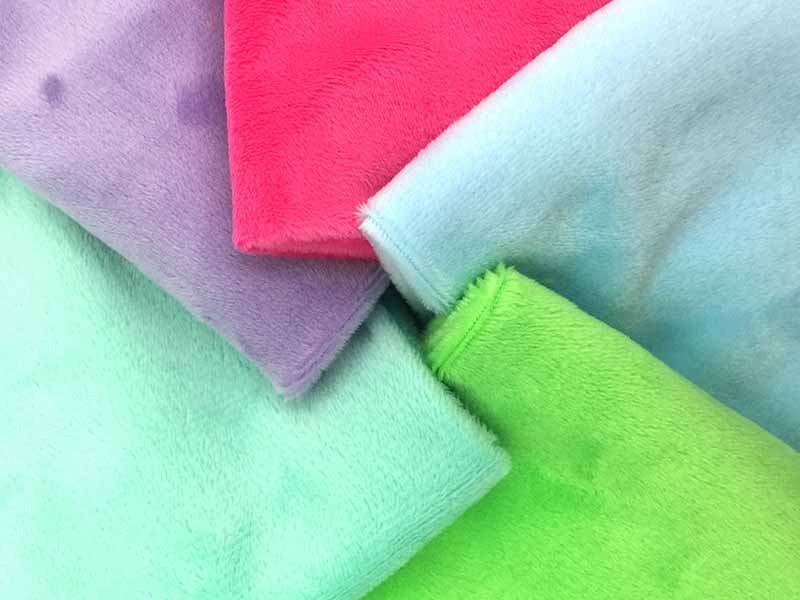
Boa fabric looks simple at first glance: a soft textile with a fluffy surface that appears in plush toys, blankets, jackets, cushions, dolls, and craft projects. Once a designer or product developer starts specifying it for manufacturing, however, the name becomes much less precise. Different suppliers may use “boa,” “soft boa,” or “poly boa” for materials with noticeably different pile heights, weights, densities, stretch levels, backing structures, and surface finishes. Two swatches carrying nearly identical names can behave very differently after they are cut into small pattern pieces, embroidered, sewn around tight curves, stuffed, brushed, compressed into packaging, and reproduced across a commercial production run.
Boa fabric is a soft raised-pile textile, commonly made from polyester yarn and produced through knitting, dyeing, brushing, and finishing processes. Depending on its construction, boa can have a short, smooth pile or a longer, fluffier surface. Because “boa” describes a broad fabric family rather than one fixed specification, pile height, weight, backing, stretch, density, color, and surface finish should always be confirmed before production.
That distinction is especially important in plush development. A fabric that feels luxurious in a hand-sized swatch may hide facial embroidery on a 10 cm collectible, visually enlarge the cheeks of a licensed character, or stretch enough during stuffing to alter the intended proportions. The most useful way to understand boa fabric is therefore not just to ask what it is, but to look at how its construction influences design, sewing, appearance, quality control, and repeat manufacturing. Once those relationships become clear, the name “boa” stops being a vague fabric label and becomes a practical material category that can be specified with much greater confidence.
What Is Boa Fabric?

Boa fabric is a knitted pile textile with a soft raised surface, most commonly produced from polyester. Its visible texture is created through pile formation and brushing or similar finishing processes. Boa can range from short and smooth to noticeably fluffy or fur-like, so the name should be treated as a fabric family rather than a single technical specification with one standard weight, pile height, or density.
What Is Boa Fabric Made Of?
Most boa used in modern plush products, apparel, blankets, and craft applications is based on polyester because polyester can be engineered into a wide range of soft pile structures while maintaining relatively predictable color, production availability, and dimensional behavior. Recycled-polyester versions are also commercially available, although recycled content should always be confirmed from supplier documentation rather than inferred from the appearance or marketing name of the fabric.
Fiber composition alone does not describe how the material will perform. Two fabrics can both be labeled 100% polyester while having very different pile heights, backing structures, yarn fineness, densities, stretch behavior, and surface recovery. One may have a compact short pile that holds an embroidered face clearly, while another may be much softer and more open, producing greater visual volume but allowing the knitted backing to become visible when stretched over a rounded stuffed form.
The backing is particularly important in plush manufacturing because it is the structural layer that is actually cut and sewn. The pile creates most of the visible and tactile experience, but the backing influences pattern stability, seam behavior, stretch, and dimensional control after filling. If a knit stretches significantly across one direction, a head, arm, or body panel can become longer or wider than expected after stuffing, even when the paper pattern itself is accurate.
For that reason, a useful production specification should record more than “polyester soft boa.” It should identify fiber content, supplier quality code, usable width, pile height, weight, backing construction, stretch direction, surface density, pile direction, color reference, and approved physical swatch. That level of detail becomes particularly valuable for repeat orders, where reproducing the same appearance months later depends on more than remembering the trade name used during the first sample.
How Is Boa Fabric Made?
Commercial boa is generally created by knitting synthetic yarn into a base structure and then developing a raised surface through brushing, pile finishing, or related processes. Dyeing can take place before or during later finishing stages depending on the production route. The brushing process lifts and separates surface fibers, creating the soft hand and fluffy appearance that people normally associate with boa fabrics.
The amount of pile, yarn construction, brushing intensity, and finishing method can produce noticeably different surfaces. Some boas feel sleek and compact, while others are airy and fur-like. A fabric can also be brushed primarily on one side or engineered with a soft surface on both sides. Those differences matter because a plush toy normally exposes only the outer face, while blankets, reversible textiles, or unlined accessories may place greater value on the reverse surface.
Weight should not be used as a shortcut for judging these differences. A higher GSM can come from a heavier backing, greater pile density, longer fibers, or a combination of all three. That means a 280 GSM boa is not automatically softer, fuller, or more suitable for plush production than a lighter quality. The way the weight is distributed through the fabric structure matters more than the number by itself.
Commercial Poly Boa ranges illustrate this variation. Examples around 5 mm, 8 mm, and 12 mm pile heights can be found in the market, along with different weights and brushing constructions. These figures are not universal standards, but they show why boa should be purchased by measurable specification rather than by name alone. The same material family can serve a detailed character face, a furry animal body, or a soft blanket depending on how the fabric is engineered.
What Does Boa Fabric Feel Like?
Boa is generally selected because it feels soft, warm, and tactile, but there is no single hand feel that defines every boa fabric. A short pile can feel smooth and controlled, almost velvety in the way it follows the backing, while a longer pile can feel more airy, fluffy, and fur-like. Density, yarn size, finishing, and backing stiffness all affect the final experience.
A flat swatch also does not tell the whole story. When the fabric is stretched over stuffing, the pile may separate slightly and the backing can become more visible. A material that feels thick while lying flat can therefore appear less dense around a tightly stuffed forehead, paw, or body curve. This is one reason plush developers often evaluate fabric both in flat form and on a sewn, filled trial panel.
A useful evaluation includes brushing the fabric in opposite directions, folding it sharply, compressing the pile, checking how quickly it recovers, and observing the surface under directional lighting. These simple actions reveal whether the fabric changes shade strongly with pile direction, whether backing becomes visible when curved, and whether compression marks disappear naturally after handling.
For consumer products, tactile consistency matters almost as much as initial softness. If a repeat production lot feels noticeably rougher, thinner, or less dense than the approved sample, the difference can be obvious even when the color is close. Hand feel should therefore be treated as a controlled product characteristic rather than a subjective description that ends once the first sample has been accepted.
Is Boa Fabric the Same as Faux Fur?
Boa and faux fur belong to overlapping areas of the synthetic pile-fabric market, but the terms should not automatically be treated as synonyms. Boa is often used for soft short-to-medium pile textiles, while faux fur can extend into much longer and more realistic constructions designed to imitate the depth, direction, color variation, and layered appearance of natural animal fur.
For plush products, that difference becomes practical very quickly. A short or medium boa can add softness while keeping a stylized character relatively clean and readable. Long faux fur may be far better for a wolf, fox tail, lion mane, shaggy monster, or realistic animal, but the additional fiber length can cover embroidery, blur seam boundaries, and make small pattern pieces more difficult to control.
Longer faux fur can also use mixed pile lengths, guard-hair effects, several fiber colors, tipped fibers, or highly directional surfaces. These features can create striking realism, but they increase the importance of cutting direction, grooming, trimming, packing, and final inspection. Using that complexity on a simple miniature character may add cost without improving the product.
Boa often occupies a useful middle ground between very short plush and dramatic long fur. It can provide a visibly soft surface without completely overwhelming shape and detail. The safest approach is always to compare physical swatches because supplier terminology varies. A fabric called “soft boa” by one mill may look similar to what another supplier calls short plush or short faux fur.
What Types of Boa Fabric Are Available?
Boa fabric comes in multiple pile heights, weights, densities, fiber options, colors, surface finishes, and brushing constructions. Common names include Soft Boa, Poly Boa, short-pile boa, longer-pile boa, and one-sided or two-sided brushed boa. These terms help identify the general category, but actual pile height, GSM, backing behavior, stretch, and supplier quality code are far more useful when specifying material for production.
What Is Soft Boa Fabric?
Soft Boa is primarily a descriptive market term rather than a tightly defined textile standard. It usually refers to a synthetic pile fabric designed to provide a particularly soft surface, and the term appears frequently in plush making, doll manufacturing, crafts, apparel, costumes, and home textiles. Different suppliers can use the same label for materials that differ considerably in construction.
The word “soft” is therefore not enough to make a production decision. One quality may have a compact short pile and relatively stable backing, while another may be more elastic and noticeably fluffier. Those differences change how the material behaves on small curved panels, around embroidery, and under stuffing pressure. A soft fabric that performs beautifully on a 30 cm animal may be too visually heavy for a miniature character.
Product scale should be considered early. A small collectible with narrow eyes, tiny paws, and compact facial features normally benefits from tighter surface control. A larger comfort-oriented animal can tolerate more pile volume because the individual fibers represent a much smaller proportion of the total product size.
Finishing also deserves attention because dyeing, brushing, heat treatment, printing, and other processes can change the hand slightly. When a project requires custom color, the final production-quality dyed swatch should be evaluated rather than assuming that an undyed or stock-color development fabric will feel exactly the same after the final finishing route.
What Is Poly Boa Fabric?
Poly Boa generally refers to polyester-based boa fabric. The name is useful because it identifies the dominant fiber family, but it still does not define the pile, density, weight, backing, or stretch. Commercial examples demonstrate that several noticeably different constructions can all sit comfortably inside the Poly Boa category.
| Specification | Commercial Example | Practical Effect in Plush |
|---|---|---|
| Shorter pile | Around 5 mm | Cleaner outlines and easier facial visibility |
| Medium pile | Around 8 mm | More surface softness and visible volume |
| Longer pile | Around 12 mm | Stronger fur effect and greater direction sensitivity |
| Lighter example | Around 209–210 GSM | Can suit soft, flexible constructions depending on density |
| Heavier example | Around 280 GSM | May provide more body, but backing and pile must still be checked |
| Surface structure | One-sided or two-sided | Changes reverse-side feel, thickness, and sewing behavior |
These figures should be treated as real-world examples rather than universal industry standards. Their value is that they show how misleading a request such as “please use Poly Boa” can be when no additional specification is provided. A mill or manufacturer still needs to know the target appearance, product size, color, pile level, tactile expectation, and engineering requirements before selecting an appropriate quality.
For repeat orders, a supplier article number or internal material code becomes extremely useful. The approved swatch can then be tied to the production BOM and Golden Sample so that future purchasing does not rely on someone visually matching “something similar.” That small step can prevent considerable inconsistency when a successful plush line continues for several production cycles.
What Is Short-Pile Boa Fabric?
Short-pile boa is often preferred when softness is required but the design still needs relatively clear edges, visible embroidery, and controlled shape. Because the fibers remain closer to the backing, the sewn structure of the product reads more directly, making short pile particularly practical for characters with small facial features or sharply defined color panels.
This becomes increasingly important as the finished product becomes smaller. On a 40 cm plush, an additional few millimeters of fiber may not drastically change the visual proportions. On a 9 cm bag charm or mini collectible, the same pile can make the face look wider, reduce the apparent separation between limbs, or partially cover the mouth and eye edges.
Short pile is also helpful where multiple colors meet at a seam. Longer fibers from one panel can cross into the neighboring color, softening what was designed as a crisp boundary. That may look natural on an animal but can create problems on licensed characters where approved color-blocking and facial geometry must remain recognizable.
Short pile does not eliminate all production challenges. Backing stretch, surface density, cutting direction, and seam behavior still need to be controlled. A highly elastic short plush can distort a small stuffed head even though the surface fibers themselves are easy to manage. Pile height is therefore one variable in a larger fabric-engineering decision.
How Do One-Sided and Two-Sided Boa Differ?
One-sided boa has the main raised pile or brushed finish on the visible face while the reverse primarily serves as the structural backing. Two-sided constructions provide a softer or raised finish on both faces. Neither construction is automatically superior because their value depends entirely on how the final product exposes and uses the fabric.
For a conventional stuffed toy, the reverse side usually sits inside the product and cannot be seen or touched after sewing. In that situation, paying for an elaborate second surface may offer little consumer benefit. A stable one-sided material can be fully appropriate if its visible pile, backing strength, stretch, and sewing behavior meet the product requirements.
Two-sided boa makes more sense when both surfaces contribute to the experience, such as certain blankets, reversible items, open accessories, or products where the reverse remains partially visible. It can also feel thicker during handling, although the extra surface structure may increase seam bulk on small pattern pieces.
Miniature ears, tails, fingers, and narrow accessories are particularly sensitive to thickness. When several seam allowances fold into a tiny space, an unnecessarily bulky fabric can make the component stiff or difficult to turn. The best construction is therefore the one that places material complexity where the consumer can actually see or feel its benefit.
How Does Boa Compare With Other Plush Fabrics?

Boa overlaps with minky, velboa, Sherpa, and faux fur, but these names describe different surface tendencies rather than interchangeable specifications. Short minky and velboa usually provide cleaner shape definition, Sherpa creates a more woolly or clustered surface, and long faux fur provides stronger realism. Boa often sits between these extremes, offering visible softness while retaining more control than very long artificial fur.
Is Boa Fabric the Same as Minky?
Boa and minky can look similar enough that the terms are sometimes confusing, particularly in international craft and plush communities. Minky is generally associated with soft knitted polyester plush, and widely used commercial minky products include short-pile constructions around 3 mm as well as much higher-pile versions. This variation makes it difficult to draw a universal dividing line based only on appearance.
A short boa can visually resemble certain minky fabrics, while a high-pile minky can look fuller than a lower-pile boa. The meaningful difference therefore comes from the actual specification: pile height, stretch, density, backing, weight, surface finish, and how the material behaves when sewn and stuffed.
For character plush, embroidery visibility is a useful comparison point. A smooth short minky often provides a clean field for facial embroidery, while a fuller boa can soften the appearance around the stitches. That softness may improve a cuddly animal design but reduce precision on a highly stylized face.
Sampling resolves the terminology issue better than debating names. Sew the smallest facial feature into both candidate fabrics, construct the tightest curve in the character, and fill the panels to realistic tension. The fabric that preserves the intended expression, hand feel, and shape is the better option regardless of what the supplier calls the category.
How Does Boa Compare With Velboa?
Velboa is generally associated with a short, controlled plush surface. It is commonly used for stuffed animals, basic character products, promotional plush, and applications where clear shape definition and efficient production are important. Boa usually provides more visible pile and can create a fuller, warmer, or more tactile appearance.
Imagine two identical 20 cm animal samples built from the same pattern. The velboa version is likely to show the underlying panel geometry more directly because the pile sits close to the backing. The boa version may appear rounder and softer because the surface fibers visually extend beyond the actual stitched outline.
That visual effect can be desirable. A soft bear or fantasy creature may gain personality from the additional surface volume. A compact licensed character with tightly controlled head proportions may instead benefit from the cleaner definition of short plush or velboa, especially around eyes, mouth, and color-blocked facial areas.
The choice should therefore be connected to the design language of the product. Velboa is not automatically a lower-grade fabric, and boa is not automatically more premium. A material becomes appropriate when its surface supports the intended appearance, manufacturing process, price position, and consumer experience.
How Does Boa Compare With Sherpa?
Sherpa typically has a more clustered, wool-like, or curly surface than boa. It is often associated with cozy winter products, lamb-like characters, teddy textures, lifestyle accessories, blankets, and warm visual themes. Boa generally presents a more directional and uniform pile, which can make it better suited to products that need visible softness without a distinctly fleece-like appearance.
Fine detail is another difference. Sherpa’s clustered texture can interfere with small embroidered lines or narrow appliqué edges because the surface naturally looks irregular. Boa can create similar issues when the pile becomes long, but shorter boa usually provides more room for clean character details.
The best way to compare the two is to look at the artwork rather than the fabric card. A sheep character, winter bear, or cozy lifestyle mascot may feel more authentic in Sherpa. A smooth fantasy creature, stylized pet, or character body may look cleaner in boa even when both fabrics feel equally soft.
Material selection works best when the designer stops asking which fabric is “better” and instead asks which surface language matches the character. Texture carries visual meaning. A woolly surface communicates something different from a smooth, fluffy pile, and that difference can be more important than a small variation in GSM or price.
How Does Boa Compare With Faux Fur?
Faux fur covers some of the longest and most visually complex synthetic pile structures used in plush production. It can include mixed fiber lengths, several colors, tipped fibers, dense underfur effects, and highly directional surfaces intended to create a realistic animal appearance. Boa is usually more controlled and often easier to use when realism is not the primary goal.
| Fabric | Typical Surface | Detail Control | Common Plush Use | Main Production Concern |
|---|---|---|---|---|
| Boa | Soft, fluffy pile | Medium to high depending on pile | Characters, animals, mascots | Pile may hide details |
| Minky | Smooth plush | High on shorter styles | Character and comfort plush | Stretch can alter shape |
| Velboa | Very short controlled pile | High | Basic animals and clean shapes | Lower visual loft |
| Sherpa | Woolly clustered texture | Medium | Cozy themes and lamb-like products | Fine details may disappear |
| Faux Fur | Medium to very long fur | Low to medium on long styles | Realistic animals, tails, manes | Direction, trimming, compression |
Long faux fur becomes valuable when visual realism matters. A wolf body, fox tail, lion mane, shaggy monster, or realistic animal may look far more convincing with longer fibers. Those fibers, however, require careful cutting direction, grooming, seam cleanup, and packing because they can become trapped, bent, or compressed.
Boa often works well for stylized products because it provides softness and texture without creating the same degree of visual complexity. It can support a recognizable character shape while giving the product more tactile presence than a very short plush.
No material in the table should be interpreted as universally better than another. A highly detailed collectible can lose its identity in excessive fur, while a realistic animal can look flat and inexpensive if the designer chooses a pile that is too short. The correct material is the one that supports the intended finished product rather than the most impressive swatch in isolation.
Is Boa Fabric Good for Plush Toys?

Boa fabric is well suited to many plush toys when its pile height, density, backing, stretch, and finish match the design. It can work particularly well for stuffed animals, character bodies, mascots, dolls, collectibles, and comfort-oriented products. Smaller characters or embroidery-heavy faces often benefit from shorter boa because longer fibers can obscure fine details and visually change the shape of small features.
Which Plush Products Use Boa Fabric?
Boa can appear in stuffed animals, character plush, mascots, dolls, collectible toys, cushions, comfort products, and selected plush accessories. Its strongest use cases are products where softness and visible pile contribute to the product experience rather than competing with the important design details.
A larger stuffed animal can benefit from medium pile because the fibers add visual depth without overwhelming the overall shape. Stylized animal characters can also work well in boa, especially when the design language is intentionally soft and rounded. Mini collectibles and keychains need more caution because pile becomes proportionally larger as the product becomes smaller.
The same character may require different materials across different sizes. A 30 cm core plush can use a fuller body fabric, while a 10 cm bag charm version may need a shorter pile to keep the eyes, mouth, arms, and clothing visually distinct. The overall color and tactile direction can remain consistent even when the exact pile height changes.
This approach is particularly useful for multi-SKU collections where a character expands into mini plush, standard plush, bag charms, keychains, and limited editions. Material consistency does not always mean using the identical fabric on every size. Sometimes consistency comes from preserving color and design intent while adjusting construction to keep each format visually balanced.
How Does Pile Length Affect Plush Design?
Pile length changes the way people perceive the actual sewn geometry. Longer fibers visually extend beyond the fabric backing, which can make a head look wider, limbs look thicker, and seam boundaries appear softer. This optical effect can be surprisingly significant on small characters where a few millimeters represent a meaningful percentage of the overall feature size.
A prototype that looks “too round” is therefore not always suffering from an inaccurate pattern. If the pile is adding visible volume around the cheeks or forehead, reducing the paper pattern without reconsidering the material can overcorrect the problem. Experienced plush development requires pattern, fabric, and stuffing to be evaluated together because all three determine the final silhouette.
Embroidery presents another interaction. Small eye outlines, mouths, eyebrows, or symbols may be technically stitched in the correct position but appear smaller or uneven when neighboring fibers lean across their edges. Increasing stitch density can help only to a point because excessive embroidery can stiffen or distort a knitted backing.
For compact products, the safest approach is to test the smallest critical feature early. If a character contains a narrow eyelid, tiny mouth, or small embroidered logo, that element should be sewn into the intended material at the final size before the team commits to the fabric. Discovering the problem during a simple embroidery trial is much cheaper than rebuilding a nearly completed prototype.
Which Plush Areas Suit Boa Best?
Boa does not need to cover an entire product. Some of the most successful plush constructions use different materials strategically across the character. A fuller boa may cover the body, back, ears, tail, or fur-like regions, while a shorter plush can be used around the muzzle, eyes, paws, or other areas where precise visual control is more important.
This material-mapping approach is useful for both appearance and production. Long fibers can be kept away from tiny seam intersections and narrow embroidered areas, while softer or fuller pile remains in the regions where consumers are most likely to touch the product. Clothing and accessories can use separate woven, knitted, velvet, felt, or specialty fabrics without forcing one surface across every part.
Licensed characters make this particularly important because certain features carry most of the recognition. Eye shape, cheek boundaries, mouth position, signature hair, color blocks, or a costume logo may have very little tolerance for visual change. Other areas, such as the back of the body or a furry tail, may allow far more material freedom.
A useful development review therefore treats the artwork as a material map. Mark which areas must remain sharp, which should feel fluffy, which contain embroidery, and which require printing or appliqué. Fabric then becomes part of character engineering instead of a single decorative choice made before the structure has been considered.
When Should Boa Fabric Be Avoided?
Boa is less suitable when a design depends heavily on extremely sharp surface detail. Very small printed graphics, tiny embroidery, miniature lettering, narrow color blocks, small fingers, or highly geometric faces can lose clarity when the pile becomes too long or irregular. In those situations, a shorter plush, minky, velboa, or another controlled textile can provide a cleaner result.
Raised pile can also complicate fine printing. Ink or transferred graphics interact with a three-dimensional surface differently from a smooth textile, so edges may appear less precise and the design can change when the fibers move. If a product depends on complex all-over patterns or tiny printed markings, printing trials should be performed on the exact fabric before committing to the construction.
Longer boa can increase finishing labor because fibers need to be released from seams, groomed in the correct direction, and protected from excessive packing pressure. That does not make the material impractical, but the visual benefit should justify the extra handling.
The most useful question is therefore not whether boa is a “good fabric.” It is whether the pile contributes something important to the specific product. If the design gains softness, warmth, realism, or tactile value from boa, the additional controls are worthwhile. If the pile contributes little while making the details harder to manufacture, a more controlled surface is usually the better choice.
How Should Boa Fabric Be Selected for Production?

Boa should be selected through measurable specifications and actual sample performance rather than hand feel alone. A reliable production specification normally records fiber content, pile height, GSM, usable width, backing, stretch direction, surface density, color, pile direction, finish, and supplier quality code. The final material should also be tested in sewn and stuffed form because flat swatches cannot fully predict product shape or seam behavior.
Which Boa Fabric Specifications Matter?
A development team should convert every approved boa into a defined material reference. Relying on a general name such as “cream soft boa” creates unnecessary ambiguity when sourcing, sampling, bulk production, and later reorders are handled by different people.
| Specification | What to Record | Production Value |
|---|---|---|
| Fiber content | Percentage and fiber type | Material identification and claims |
| Pile height | Millimeters | Controls visual volume and detail clarity |
| Fabric weight | GSM | Helps compare material structure |
| Usable width | Centimeters or inches | Affects consumption and cutting yield |
| Stretch | Direction and practical behavior | Influences pattern and stuffed dimensions |
| Pile direction | Cutting arrow or instruction | Controls shade and surface consistency |
| Color | Approved swatch or reference | Supports batch and reorder matching |
| Density | Physical approved reference | Helps control backing visibility |
| Finish | Brushed, printed, embossed, etc. | Determines final surface character |
| Quality code | Supplier article or internal code | Enables repeat purchasing |
Pile height and GSM need separate fields because they describe different characteristics. A longer fabric can still be relatively light and open, while a shorter fabric can be dense and heavy. Selecting purely by GSM can therefore produce a material with the wrong visual scale even when the number appears impressive.
Usable width has a direct commercial effect as well. The nominal width and truly usable width can differ once edge areas are removed, and that affects marker efficiency and fabric consumption. On a commercial order, even a modest difference in usable width can change the amount of material required.
Stretch deserves equal attention. Many pile fabrics stretch more strongly across one direction than another. If pattern pieces are rotated to improve cutting efficiency without considering grain and stretch, the finished product can behave differently after filling. Material specifications should therefore connect directly with pattern and cutting instructions rather than sitting separately in a purchasing file.
How Should Pile Height Be Chosen?
Product scale is one of the best starting points. As a plush becomes smaller, pile needs to be controlled more carefully because each fiber becomes larger relative to the character’s features. A medium pile that looks balanced on a 35 cm animal can visually overwhelm the face of a 10 cm collectible.
Facial design should come next. If the product contains several narrow embroidered lines, test them on the intended fabric at final size. The question is not simply whether the embroidery machine can produce the stitches, but whether those stitches remain visually readable after surrounding fibers are brushed, sewn, handled, and packed.
Curves are another useful test. Boa should be sewn around representative convex and concave shapes, then stuffed to approximately the intended firmness. This reveals whether the backing opens, stretches disproportionately, or changes the visual density of the pile around tight surfaces.
Finally, evaluate the material after compression. Plush products can spend days or weeks inside bags, cartons, retail boxes, or shipping containers. A material that looks excellent only after intensive hand grooming may be less practical for high-volume retail than one that recovers naturally. Pile height should therefore be chosen with the entire product journey in mind, not just the appearance of the first sample on the development table.
How Should Color Be Approved?
Pile textiles should be approved through physical color references whenever the character or brand color is important. Digital artwork, phone photos, and computer screens cannot fully reproduce the way raised fibers reflect directional light, so a color that looks correct on-screen may appear noticeably different on the actual fabric.
Pile direction can make this effect even stronger. Fibers brushed toward the viewer may reflect more light, while the same material viewed against the pile can appear deeper or darker. A production team that ignores direction can mistakenly interpret this visual shift as a dye-lot problem.
Pantone or another color system can provide a useful target, but the finished textile should become the real approval point. For custom dyeing, the approved lab dip or material swatch should be compared with the character artwork under appropriate lighting and then linked to the approved sample.
Shared colors across a collection need especially careful control. If six products use the same cream body fabric but one production lot is visibly warmer or cooler, the difference becomes much more obvious when the products sit together on a retail shelf. Color approval is therefore both a material issue and a product-line consistency issue.
How Should Pile Direction Be Controlled?
Pile direction needs to be defined during pattern engineering, not left for final inspection. When neighboring pieces are cut in opposite directions, the finished product can show different shade, gloss, texture, and hand feel even though every panel came from the same roll of fabric.
Longer materials make the problem especially visible, but short plush and minky can also show directional differences under strong photography or retail lighting. A single sample may look acceptable on a worktable while a group of 30 products displayed together makes inconsistent direction much easier to see.
The cutting plan should therefore include clear pile-direction arrows, and the BOM or production file should identify any areas where a different orientation is intentionally required. This is particularly important when several characters in one collection share a material because the same rule needs to be maintained across all relevant SKUs.
Pufumi’s documented production approach treats Fabric Grain and Pile Direction as engineering variables because they can affect color appearance, touch, silhouette, dimensions, and batch consistency. Recording direction in pattern files, cutting instructions, BOMs, and QC checkpoints turns what could look like a random visual defect into a controllable manufacturing variable.
What Quality Risks Should Be Checked With Boa Fabric?
The main boa-fabric risks include shedding, inconsistent pile, visible backing, stretch distortion, trapped fibers at seams, buried embroidery, directional shade differences, compression marks, and variation between fabric lots. These risks are generally manageable when they are identified during sampling and converted into material, cutting, sewing, grooming, packing, and inspection controls before bulk production begins.
Does Boa Fabric Shed?
Some loose fiber during cutting is normal for many pile textiles because the cutting blade passes through surface fibers as well as the knitted backing. Those loose cut fibers are different from ongoing shedding from the finished surface, so a small amount of debris at the cutting table should not automatically be interpreted as poor fabric quality.
The more useful assessment is whether the finished fabric continues releasing unacceptable fibers after normal brushing, sewing, handling, and use. Persistent shedding can be influenced by yarn anchoring, pile structure, finishing quality, cutting method, and the way the final product is groomed before packing.
Longer pile needs particular attention because loose fibers can remain hidden around seam lines or inside recessed areas of a plush toy. Panels and finished products should be cleaned appropriately during production so that the consumer does not open the packaging to find a visible layer of stray fibers.
Surface cleanliness is also part of perceived quality. Even a structurally stable fabric can create a poor first impression if loose cut pile remains on the face, clothing, or packaging. Incoming-material evaluation and pre-production trials should therefore include simple brushing, rubbing, and handling checks using the exact bulk-quality fabric.
How Does Boa Affect Seam Quality?
Pile fabric can make a technically sound seam look visually poor when fibers become trapped between the stitched panels. The result is often a visible groove or narrow line where the pile disappears into the seam allowance. Longer boa generally requires more post-sewing grooming so the fibers can be released and the surface appears continuous.
Small components create a different challenge. Ears, narrow tails, fingers, tiny shoes, or costume pieces can accumulate several layers of bulky seam allowance. If the fabric is too thick for the scale of the component, the finished piece may become stiff, difficult to turn, or visibly uneven.
Backing stretch can also make two panels feed differently during sewing. A small difference that looks insignificant before stuffing can produce twisting, asymmetry, or an uneven limb after the product is filled. Sewing trials therefore need to include representative straight seams, tight curves, and the smallest radius found in the final pattern.
The seam should be judged after stuffing rather than only while lying flat. Filling places tension on both the backing and stitch line, revealing whether the surface density remains acceptable and whether the seam holds the intended geometry. This is especially important for rounded character heads where very small seam differences can alter facial symmetry.
How Does Boa Affect Embroidery?
Embroidery sits on the structural backing while the pile rises around it, so the visible result depends on both stitch construction and fiber length. Small eye outlines, mouths, eyebrows, lettering, and logos are particularly vulnerable because surrounding fibers can partially cover the edges and make the finished artwork look thinner or less precise.
Simply increasing stitch density is not always a good solution. Dense embroidery can create stiffness, puckering, or distortion in a stretchy knitted backing. The face may become locally rigid while the rest of the product remains soft, creating a tactile difference that was not intended in the design.
A better approach can involve using appropriate stabilizers, adjusting stitch structure, controlling pile locally, selecting a shorter face material, or converting certain features into appliqué. The right solution depends on the scale of the design and the visual importance of the feature.
One of the most efficient prototype tests is to embroider the smallest critical detail before completing the full plush sample. If a 6 mm mouth or narrow eyelid cannot remain clear on the intended material, that information is valuable immediately. Solving the issue during a small embroidery trial is faster and less expensive than discovering it after several rounds of complete prototype development.
How Should Batch Consistency Be Checked?
Batch consistency should be evaluated against the approved material reference and finished sample rather than against the purchase-order description alone. A later material lot may still be described as the same color and quality while showing small differences in pile height, backing stretch, surface density, hand feel, weight, or brushing.
Color is usually the first characteristic people notice, but tactile and structural changes can have just as much impact. A fabric that is slightly more elastic can change stuffed dimensions, while a lower-density pile can reveal more backing around curved surfaces. These differences can make repeat production feel less consistent even when the general appearance remains similar.
This becomes particularly important for evergreen products, licensed characters, and collections that are replenished over several seasons. Consumers or retailers may place products from two production runs side by side, making subtle variation far more visible than it would be within a single batch.
Material substitutions should therefore be treated as controlled changes. When an original quality is discontinued or unavailable, the replacement should be compared in flat form and in a sewn sample. If the stretch, pile, density, or hand changes, the pattern, stuffing level, embroidery, or cutting direction may also need adjustment before the substitute can be considered equivalent.
For toys intended for regulated markets, material consistency is only one part of the overall quality system. The final product also needs to be evaluated according to its target market, intended age, construction, stuffing, accessories, labeling, packaging, and applicable testing requirements. A generic description such as “toy-grade fabric” should never replace a product-level review.
Conclusion
Boa fabric can be an excellent choice for plush toys because it offers a useful balance of softness, visible pile, color flexibility, and design versatility, but the name itself is never enough to make a responsible production decision. The successful projects are the ones that move from a general fabric category to a controlled specification: exact pile, weight, density, backing, stretch, color, direction, finish, approved swatch, and proven sample behavior. That process is especially important when a character will be reproduced across several sizes or returned to production months later.
For brands developing character plush, stuffed animals, mascots, collectible series, or plush accessories, fabric selection works best when it starts with the actual artwork and product scale rather than a generic material request. A development team can then determine where boa adds tactile value, where a shorter material will preserve facial detail, and where another textile is more appropriate. Pufumi can review these material decisions together with pattern development, sampling, and production requirements so that the chosen fabric works not only on the sample table, but also through bulk manufacturing and repeat production.
Frequently Asked Questions
Is boa fabric usually polyester?
Most commercially available boa used for plush, craft, apparel, and home-textile applications is polyester-based because polyester can be knitted and brushed into a wide range of soft pile structures. However, the word “boa” describes the fabric style rather than guaranteeing one particular fiber composition. Product developers should check the supplier specification instead of assuming that every fabric sold under the name has identical content, recycled percentage, backing, or finishing.
Is boa fabric suitable for stuffed animals?
Boa can be very suitable for stuffed animals when its pile height and construction match the design. Medium or longer pile can give animal bodies a warm, tactile appearance, while shorter boa can preserve more facial definition. The material should be tested on the intended product size because the same pile that looks balanced on a 30 cm animal may look disproportionately long on a 10 cm collectible.
What is the difference between boa and minky?
Boa and minky overlap in the soft polyester plush category, and short versions can sometimes look very similar. Minky is commonly associated with a smoother knitted plush surface, while boa often has a more visibly raised or fluffy pile, although supplier terminology varies. The more reliable comparison uses actual pile height, density, stretch, backing, weight, and sample performance rather than assuming the trade names always describe clearly separated textile constructions.
Is boa fabric better than velboa for plush toys?
Neither material is universally better. Boa generally provides more visible softness and volume, while velboa usually offers a shorter, cleaner surface that makes shapes and small details easier to control. A cuddly animal may benefit from boa, while a compact character with embroidery-heavy facial features may perform better in velboa or another short plush. The decision should be based on the visual requirements and product scale.
Does boa fabric shed easily?
Boa can release loose cut fibers during manufacturing because blades pass through the surface pile when the panels are cut. That is different from persistent shedding from the finished product. Actual shedding depends on pile construction, fiber anchoring, finishing, and material quality, so the exact production fabric should be brushed, handled, sewn, and evaluated before approval instead of assuming that all boa fabrics behave in the same way.
What pile height is best for plush toys?
There is no universal best pile height because the correct choice depends on product size and detail level. Commercial boa examples can range from around 5 mm to 8 mm, 12 mm, or beyond. Smaller collectibles and embroidery-heavy character faces generally benefit from shorter pile, while larger animals or fur-oriented designs can use longer fibers. Testing the final embroidery and smallest character details on the actual fabric is more reliable than following one fixed number.
Can boa fabric be custom dyed for character colors?
Boa can be produced or sourced in custom colors when the material supplier and project volume support custom dyeing, but color approval should use a physical textile reference. Raised pile reflects light differently depending on direction, so a digital value or Pantone reference alone cannot fully predict the finished appearance. The approved dyed swatch should be linked to the sample, material code, cutting direction, and production record to reduce color variation during bulk manufacturing and later reorders.