Skip to content

The phrase “custom plush” sounds precise until two manufacturers quote the same project in completely different ways. One may call a stock animal with a new hangtag a private label product. Another may use the same term for an original character developed from artwork. A third may label both routes OEM. The wording matters because it changes what you are paying for, how long development takes, what the factory can reuse, and whether the finished product can become a distinctive brand asset rather than a familiar shape carrying a different logo.
Private label plush manufacturing normally adapts an existing pattern or proven construction with brand-specific colors, embroidery, labels, accessories, or packaging. Fully custom manufacturing creates a new product around original artwork, proportions, materials, structure, and retail requirements. Private label is generally faster and simpler, while fully custom development offers stronger differentiation, design control, and long-term product ownership, provided that ownership terms are documented clearly.
The most expensive misunderstandings usually begin before the first sample is sewn. A team approves a “custom” bear, places a production order, and later discovers that another retailer can buy the same body shape from the same catalog. Nothing has technically failed; the project was never defined carefully enough. The sections below separate the sales terminology from the real manufacturing decisions so that your next sample begins with a clear scope instead of an expensive assumption.
What Is Private Label Plush Manufacturing?
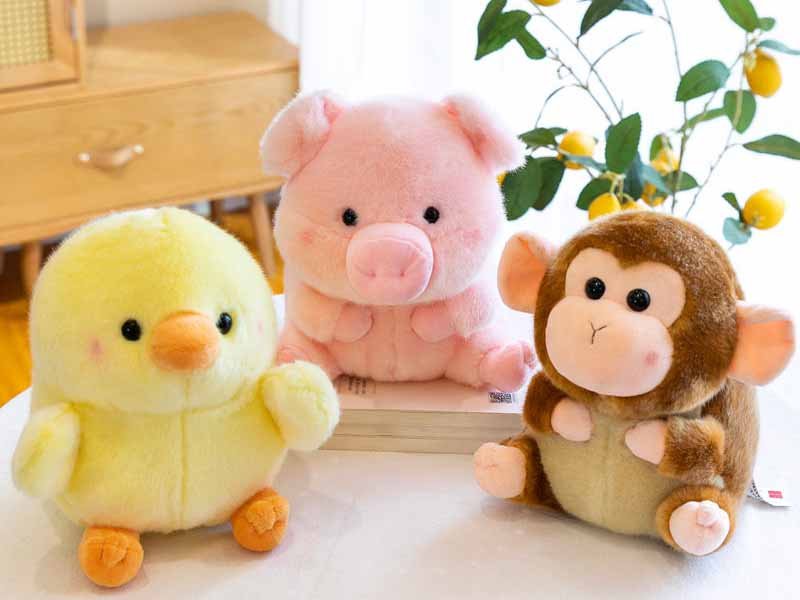
Private label plush manufacturing usually begins with an existing product shape, pattern, or established construction that is adapted through colors, embroidery, labels, accessories, and packaging. It reduces early engineering work and can shorten the route to market, but it does not automatically create exclusivity. The customization boundary, pattern ownership, material requirements, and reuse rights should be agreed before sampling starts.
How Private Label Starts
A private label project normally starts with a product that the manufacturer already knows how to make. It may be a sitting bear, a simple animal body, a pillow-style plush, a mini keychain shape, or another construction that has already been patterned, sewn, filled, and corrected. The customer selects the closest format and applies a branding layer instead of reopening every decision about panel shape, seam position, balance, stuffing distribution, and assembly method.
This established foundation can make early costing and scheduling more predictable because the factory has already seen how the body behaves after turning and filling. Even so, an existing pattern is not the same as ready-to-ship inventory. A new fabric color, custom logo, woven label, garment, metal clip, story card, or retail box may still require sourcing, approval, tooling, and supplier minimums. The safest starting document is a customization scope that lists the base model, requested changes, fixed elements, ownership terms, and any change likely to trigger new engineering.
What You Can Change
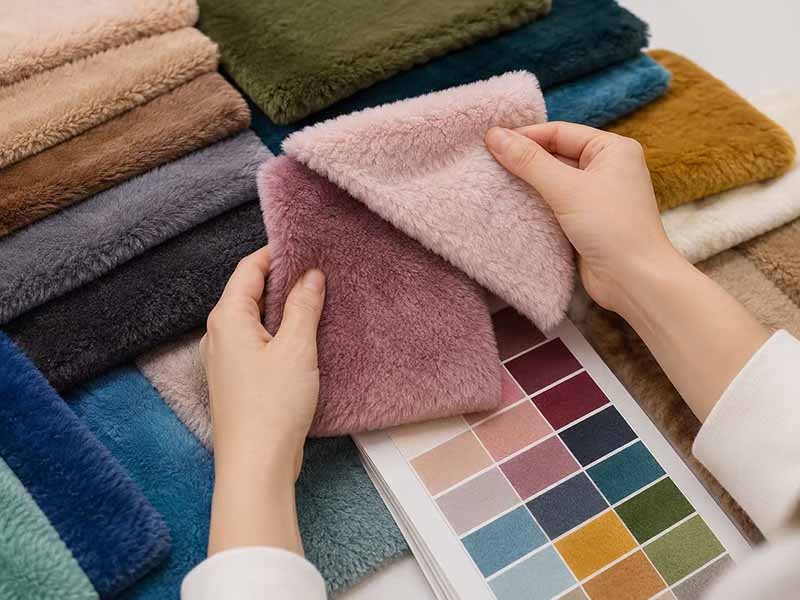
Private label programs are usually strongest in visible, brand-facing elements. Customers can often adjust the main fabric color, facial embroidery, logo treatment, woven labels, care labels, hangtags, story cards, simple clothing, removable accessories, keychain hardware, and packaging. These choices can produce a product that feels intentionally designed for a campaign or retail channel even when the underlying body pattern remains unchanged.
A visually small change can still have a large manufacturing effect. Replacing embroidered eyes with plastic eyes can change attachment testing and age-grade considerations. A custom-dyed long-pile fabric may require more material than the finished order consumes. A metal bag-charm clip introduces finish, strength, and supplier minimums. Each request should therefore be reviewed in four groups: visual branding, materials, structure, and packaging. Visual changes are often straightforward; material changes require sourcing; structural changes may require a new pattern; packaging changes can alter carton size, freight volume, assembly time, and warehouse acceptance.
| Product Element | Typical Private Label Flexibility | Possible Hidden Impact |
|---|---|---|
| Main fabric color | High when using available stock colors | Custom dyeing may create a separate material MOQ and longer lead time |
| Logo embroidery | High | Stitch count, size, backing, and placement affect cost and clarity |
| Facial details | Moderate | Major eye, muzzle, or expression changes may require pattern work |
| Woven and care labels | High | New tooling, approval, legal text, and label MOQ may apply |
| Clothing or accessories | Moderate | Adds sewing, fitting, attachment, inspection, and packing steps |
| Metal hardware | Moderate | Finish consistency, strength, plating, and supplier MOQ must be checked |
| Retail packaging | High | Can change unit cost, carton volume, freight, and production sequence |
| Body proportions | Low | Usually moves the project into partial or fully custom development |
What Usually Stays Fixed
The time and cost advantage of private label comes from preserving the core engineering. The original body pattern, overall proportions, seam map, filling approach, and basic posture normally remain unchanged. Once a customer asks to widen the head, shorten the torso, alter the sitting angle, enlarge the muzzle, reposition the limbs, or change the body depth, several connected pattern pieces may need to be rebuilt and tested through another physical sample.
Internal behavior matters as much as visible shape. A standard seated plush may become unstable when a heavy accessory is added to one side. A larger head may require a different filling balance. A longer tail may need reinforcement at the attachment point. The factory should identify which changes can be completed through decoration and which ones require engineering. That distinction influences the sample fee, revision time, production documentation, material consumption, and ownership of the modified pattern, so it should be clear before a purchase order or sample payment is issued.
Ownership and Exclusivity
Private label does not automatically mean exclusive. A customer normally owns its trademarks, packaging artwork, logo files, copyright text, and original brand assets, while the manufacturer may continue to own and offer the pre-existing body pattern. Another company may therefore purchase the same construction with a different color, label, or accessory unless the agreement specifically limits that use.
Exclusivity can be defined at several levels. A factory may reserve a particular color combination, promise not to reuse a newly developed face, restrict the product within a geographic market, or grant exclusivity for a specified channel and period. The agreement should address ownership of the base pattern, ownership of new modifications, use of customer artwork, rights to display samples or photographs, geographic limits, duration, and file retention. A branded product can succeed without full exclusivity, but problems arise when a customer assumes that logo ownership also includes a pattern that was never transferred.
What Is Fully Custom Plush Manufacturing?

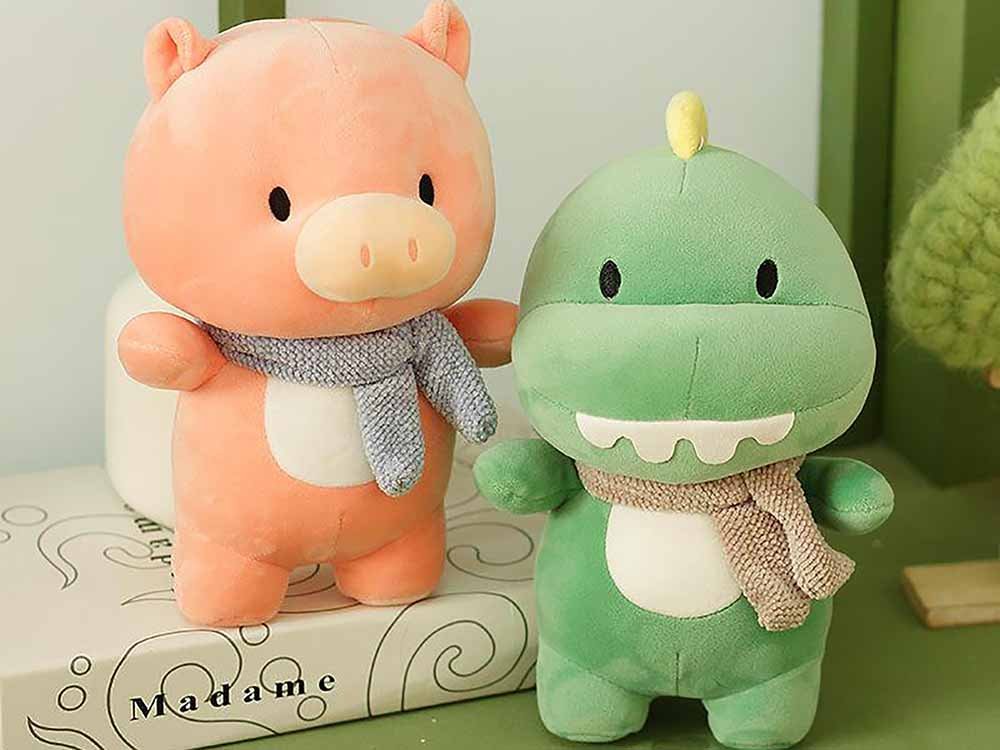
Fully custom plush manufacturing develops a new product from original artwork, character assets, photographs, 3D references, or a detailed concept brief. The process includes three-dimensional interpretation, pattern engineering, material selection, sampling, revisions, packaging, and production documentation. It is the stronger route when the product’s silhouette, expression, proportions, function, or character identity must be distinctive, repeatable, and suitable for future extensions.
From Artwork to Structure
A fully custom project starts by turning a visual idea into a soft object that can be cut, sewn, filled, balanced, and reproduced. A flat drawing does not reveal how thick the head should be, how far a muzzle should project, where the body should carry weight, or how a fabric will alter the outline after stuffing. These decisions must be resolved before the first pattern can represent the character reliably.
The development team usually protects the character’s primary recognition points first: face shape, eye position, mouth, head-to-body ratio, main color blocks, costume silhouette, and signature accessories. It then decides which details should become three-dimensional structures and which should be translated through embroidery, appliqué, printing, or layered fabric. Size also changes the solution. A four-inch keychain needs stronger simplification and cleaner embroidery than an eighteen-inch collector plush. A useful brief classifies features as non-negotiable, preferred, or flexible, allowing engineering changes without silently weakening the identity of the original design.
Sample Stages
Fully custom products rarely move directly from the first prototype into mass production. The first sample usually confirms the overall direction: silhouette, proportions, size, posture, material feel, and core character identity. It may reveal that the head is too narrow, the eyes sit too low, the body feels too firm, or the costume shifts after filling. These are normal development findings, not necessarily evidence that the project has failed.
Revision comments should be specific enough to execute and verify. “Make it cuter” cannot guide a sample maker, while “move the eyes upward by 3 mm,” “reduce the mouth width by 12 percent,” or “add more filling to the lower face” creates a measurable action. Structured programs may use an initial prototype, revision sample, engineering sample, material sample, packaging mockup, pre-production sample, Golden Sample, and retention sample. The number of rounds depends on design complexity, artwork quality, material availability, response speed, and whether the customer has one clearly authorized approval group.
Production Files
A sample that looks right is not enough to protect bulk quality. The approved physical product must be connected to production files that tell purchasing, cutting, embroidery, sewing, filling, assembly, packaging, and inspection teams exactly what was approved. Without those records, workers may rely on memory, informal notes, or a few photographs, increasing the risk that a successful sample turns into inconsistent production.
A production package normally includes the approved pattern version, Bill of Materials, fabric and color references, embroidery and printing files, seam map, measurement points, filling weight and distribution, accessory specifications, label positions, packaging artwork, carton configuration, quality checkpoints, approved photographs, and revision history. The Bill of Materials should cover secondary fabrics, clothing, lining, stuffing, foam, reinforcement, thread, hardware, electronics, labels, cards, retail packaging, and master cartons. This level of detail becomes especially valuable during a reorder months later, when the original material batch or project personnel may no longer be available.
Ownership and Confidentiality
Fully custom development creates several asset categories that should not be treated as one bundle. The customer may own the original character and trademarks. The manufacturer may create manufacturing patterns, seam layouts, filling instructions, and technical adaptations. Packaging may come from the customer, the factory, or a third-party agency. Ownership, exclusivity, access, and permitted use should be defined separately for each category.
An agreement should distinguish pre-existing customer intellectual property, new visual design work, project-specific patterns, technical files, general manufacturing know-how, and confidential commercial information. It should also state whether samples may be displayed, whether photographs may be published, which subcontractors can access files, and how unreleased artwork, order quantities, launch dates, and target costs are protected. For sensitive or licensed projects, signing an NDA before detailed files are shared and naming the authorized approvers can prevent both legal exposure and costly rounds of contradictory feedback.
Which Differences Matter Most?

The most important differences are design control, exclusivity, development cost, MOQ structure, lead time, and risk allocation. Private label preserves a known construction and reduces early engineering work. Fully custom development creates stronger product distinction but requires more decisions, samples, approvals, and technical records. A fair comparison must use the same size, materials, packaging, quality expectations, testing assumptions, and quantity per SKU.
Design Control
Private label gives the customer control over selected brand-facing details, while the manufacturer’s existing pattern continues to define the product’s basic personality. Fully custom manufacturing allows the customer to influence the silhouette, face, posture, proportions, material direction, filling distribution, accessories, and packaging as a coordinated system. The extra control matters most when recognition, storytelling, or proprietary form drives the product’s value.
A generic animal carrying a new label may be ideal for a promotional gift, but it may not suit a licensed character whose eye spacing, muzzle depth, costume shape, and body ratio are closely controlled. Design control should be evaluated in layers: visual, structural, material, functional, packaging, and ownership. A project does not need the highest level in every layer. It needs enough control in the areas that customers notice and value, while using established construction where it improves stability without making the product look interchangeable.
Cost and MOQ
Private label often has a lower development cost because the factory does not need to create a completely new construction. Fully custom development may include pattern engineering, trial materials, embroidery programming, sample labor, revision rounds, packaging mockups, and technical documentation. Unit cost then depends on size, fabric consumption, pile length, number of pattern pieces, sewing complexity, embroidery area, accessories, filling weight, packaging, inspection requirements, and quantity per SKU.
MOQ must be considered at several levels. The finished product has a minimum, but fabric, custom dyeing, hardware, printed boxes, electronic modules, and labels may each have separate supplier thresholds. As a practical project-screening reference rather than a universal industry rule, Pufumi commonly evaluates core plush programs from around 500 pieces per SKU, while mini plush, keychains, bag charms, and complex packaging programs are generally more stable around 1,000 pieces per SKU. Final feasibility still depends on structure, material usage, color count, packaging, and how quantity is divided across designs.
| Decision Factor | Private Label Plush | Fully Custom Plush |
|---|---|---|
| Starting point | Existing pattern or proven construction | Original artwork, character assets, or product brief |
| Shape control | Limited to moderate | Extensive control over silhouette, proportion, and posture |
| Pattern work | None or minor revision | New pattern engineering and physical validation |
| Development cost | Usually lower | Usually higher because more engineering and sampling are required |
| Exclusivity | Must be negotiated around the base design | Stronger potential, but still contract-dependent |
| MOQ drivers | Finished product, branding items, and packaging | Product, fabric, components, testing, and SKU allocation |
| Sample revisions | Often fewer if structure remains fixed | More likely when shape, expression, and accessories are original |
| Long-term value | Efficient for branded extensions | Stronger foundation for proprietary product families |
Lead Time
Private label is usually faster because fewer technical questions remain open. The manufacturer can work from a known body pattern and concentrate on colors, logos, labels, accessories, and packaging. Fully custom development must establish the product’s shape and construction before bulk planning becomes dependable. Even then, factory speed is only one part of the schedule; customer approvals and special materials often control the actual launch date.
A practical timeline separates brief review, material confirmation, pattern development, first sample, customer review, revision, pre-production approval, testing preparation, material purchasing, bulk production, packaging, final inspection, and freight. Delays frequently occur when the target size, age category, packaging, key materials, or approval authority has not been confirmed. A standard body using custom-dyed long-pile fabric may take longer than an original character made from available materials. The manufacturing model affects time, but the slowest dependency usually determines the final delivery date.
Risk Allocation
Private label lowers some engineering risk because the core construction is known, but it can increase strategic risk if the product looks familiar or offers limited exclusivity. Fully custom development can create a more defensible asset, yet early mistakes are more expensive. A weak brief may cause repeated sampling, a delicate accessory may become a defect point, and a late structural change may alter material use, packaging dimensions, testing, and freight.
Both models share operational risks: sample materials that differ from bulk materials, undocumented pattern changes, color variation, incorrect logo placement, inconsistent filling, weak attachment points, missing labels, mixed SKUs, wrong barcodes, and packaging that fails warehouse requirements. These risks are controlled through documentation rather than broad promises. The approved product should be linked to a released pattern, Bill of Materials, Golden Sample, packaging file, quality checklist, and written change history so that each department works from the same version.
Which Model Fits Your Product Strategy?

Private label works best when an established product structure can support the brand without weakening its market position. Fully custom development is more suitable when the character, silhouette, function, or collectible identity is central to demand. A hybrid route can be efficient when selected visible features must be proprietary, while proven construction is reused to control time, cost, or technical risk.
Faster Launches
Private label is often practical for campaign products, seasonal gifts, corporate merchandise, simple retail extensions, subscription programs, and promotional collections. In these situations, the plush supports a wider marketing idea rather than serving as the company’s main intellectual-property asset. A familiar animal shape can still feel carefully developed when color, clothing, story, labels, and packaging are consistent with the brand and channel.
The useful test is whether consumers must recognize the product without seeing its logo. When the answer is no, an established construction may provide enough differentiation. When the silhouette or face must be immediately identifiable, the compromise may be too great. Private label can also help test a category before a larger original program, but the agreement should state which files, materials, and modifications can be reused later. A quick first launch has more value when it creates usable learning for the next product instead of locking the brand into a generic shape.
Original IP
Fully custom manufacturing is usually the stronger route for licensed characters, original mascots, game characters, animation properties, designer plush, collectible products, and signature retail items. In these categories, the character is not printed onto the product; the character is the product. Accuracy depends on relationships between details, and a few millimeters of eye movement or an incorrect head depth can change the expression significantly.
Original development also creates a better foundation for extensions. One approved character can support entry-size keychains, mini collectibles, core retail plush, premium sizes, seasonal clothing, gift sets, blind-box series, channel-exclusive colors, and limited editions. The first project carries the heaviest engineering work, while later versions can reuse approved colors, face standards, brand files, and construction knowledge. That long-term value often justifies a more demanding sample process when the character will support several launches rather than one short campaign.
Multi-SKU Programs
A multi-SKU program requires more than multiplying one sample across several colors. Every new character, size, garment, accessory, or packaging version can create a separate approval and production-control requirement. A private label program may share one body across several versions, while a fully custom series may require separate patterns and embroidery files for every character even when fabrics, boxes, or hardware are shared.
Quantity should be calculated at the SKU level. An order of 5,000 pieces looks efficient, but ten designs at 500 pieces each create a very different production situation from one design at 5,000 pieces. Each design may require separate cutting, embroidery setup, work instructions, inspection, barcode control, and carton identification. Before selecting the manufacturing route, confirm quantity per design, color, size, shared and unique materials, packaging versions, assortment ratios, carton separation, launch sequence, and reorder priorities. The product line should remain distinctive without creating more variation than the order can support reliably.
Hybrid Development
A hybrid approach combines proven construction with selected original features. A customer may reuse an established sitting structure while developing an exclusive head, face, ears, costume, and tail. Another project may use a known internal support method but create a completely new outer silhouette. This route can reduce development waste when hidden engineering does not create customer value, while preserving originality in the features people actually notice.
The quotation and agreement should identify existing patterns or components, new pattern work, shared materials, exclusive visual features, customer-owned assets, factory-owned background know-how, MOQ per variation, reuse rights, and reorder records. The purpose is not to choose the most impressive manufacturing label. It is to invest in originality where it improves recognition and commercial value, while using reliable construction where it reduces avoidable risk. Co-development is often the most accurate description when the customer owns the character or brand and both sides define the product architecture together.
| Project Situation | Private Label | Hybrid Development | Fully Custom |
|---|---|---|---|
| Campaign gift using a familiar shape | Strong fit | Possible | Often unnecessary |
| Original brand mascot | Limited fit | Strong fit | Strong fit |
| Licensed character | Usually weak | Possible with approval | Usually strongest |
| Fast seasonal color update | Strong fit | Strong fit | Often unnecessary |
| Multi-character collectible line | Limited | Strong | Strong |
| Product requiring a unique function | Weak | Possible | Usually strongest |
| Category test with modest differentiation | Strong fit | Possible | Higher commitment |
| Long-term proprietary SKU | Limited unless exclusive | Strong | Strongest control |
How Do Quality and Compliance Differ?
Private label and fully custom plush products require the same basic quality and compliance discipline. Existing construction may reduce engineering uncertainty, but it does not automatically make a modified product compliant. The final market, age category, materials, attachments, electronics, labels, and packaging determine the testing and control requirements, regardless of the name used for the manufacturing model.
Testing Logic
Testing should follow the final product version. A previous report for a similar plush may not cover a new product with different fabric, eyes, hardware, printing, electronics, filling, or packaging. Adding a metal charm, plastic eye, sound module, printed coating, long cord, or custom filling can change the relevant assessment, even when the body pattern came from an existing private label model.
For the United States, a toy project may involve ASTM F963, CPSIA-related requirements, and documentation handled by the legally responsible manufacturer or importer. European projects may involve EN71 testing and CE-related technical documentation, while other markets have their own standards and responsible-party rules. The factory can prepare samples, Bill of Materials information, labels, packaging details, and corrective versions, but the laboratory and market operator retain their respective responsibilities. Any change to material, accessory, function, age grade, or sales market should trigger a fresh compliance review rather than an assumption that one old report covers everything.
Material Approval
Material approval is more than selecting a fabric that looks close to the artwork. The sample record should identify whether a fabric, filling, thread, hardware item, or printed component is the actual bulk material or a temporary substitute used to confirm shape. If the status is unclear, a customer can approve a pleasant sample and later receive production with a different hand feel, stretch, pile direction, color, or embroidery result.
A useful material record includes the material name, source, color reference, pile length or construction, intended product area, approval status, replacement restrictions, MOQ, lead time, and supporting documents where relevant. Replacements should not be accepted from photographs alone. They should be compared for color, texture, stretch, sewing behavior, pile direction, recovery, and finished appearance. For products expected to reorder, retaining fabric swatches and linking them to the Bill of Materials and Golden Sample creates a much stronger reference when the original batch is no longer available.
Bulk Consistency
Bulk production should be controlled against a complete approval package, not only a photograph of the sample. The Golden Sample provides the visual and tactile reference, while the released pattern, Bill of Materials, embroidery file, filling instructions, packaging file, and quality checklist define how the product should be reproduced. This approach reduces the risk that a skilled sample maker produces one excellent piece that the production line cannot repeat consistently.
Inspection should happen throughout production. Incoming materials are checked before cutting. Embroidery and printing are approved before full output. First pieces are reviewed before the sewing line continues. Semi-finished products are checked before problems become hidden by filling. Finished goods are inspected before packaging, and packaging is checked before shipment. Defects are commonly grouped as critical, major, and minor. Critical issues may involve safety, wrong labels, incorrect SKUs, contamination, or function failure; major issues affect appearance or structure; minor issues are limited cosmetic variations that do not prevent normal sale or use.
Packaging Control
Packaging can change the risk profile of an otherwise simple product. A private label plush sold through three channels may require different labels, barcodes, polybags, boxes, and carton marks. A fully custom product may need packaging designed around its final posture, ears, clothing, accessories, and recovery after compression. Packaging therefore belongs in product development, not as a final decoration added after production is complete.
The physical product should be tested inside the proposed package. A box that appears generous on screen may bend ears or increase freight volume. A tight bag may flatten the face. A hangtag may cover an important detail or damage long-pile fabric in transit. Amazon, third-party warehouses, retail distribution centers, and direct-to-consumer operations can also use different barcode, carton, warning, and labeling rules. Confirming these requirements before packaging production prevents relabeling, repacking, warehouse rejection, and avoidable delays after the plush itself has already passed inspection.
How Should You Choose a Manufacturing Partner?
Choose a manufacturing partner by examining how clearly it defines the project, manages samples, protects customer files, controls materials, supports compliance, documents production, and maintains reorder consistency. Do not rely on the words OEM, ODM, private label, or custom alone. A capable manufacturer should explain exactly what already exists, what must be developed, who owns each asset, and how the approved product will be reproduced.
Questions to Ask
Strong supplier questions produce specific, verifiable answers. Instead of asking only whether a factory can customize a product, ask whether the proposed model uses an existing pattern, which areas remain unchanged, which areas require new engineering, who owns the base construction, whether project-specific modifications are exclusive, and whether other customers can purchase a visibly similar shape. These questions reveal the real manufacturing route behind the sales terminology.
The same level of detail should cover sampling, materials, quantity, quality, and reorders. Ask what the sample fee includes, how revisions are recorded, whether bulk materials match the sample, how MOQ is calculated per design and packaging version, what must be approved before production, how the Golden Sample is stored, which inspections occur during manufacturing, and which records support future replenishment. “We inspect everything” is not a useful answer. A stronger response names the inspection stages, responsible teams, defect criteria, records, and corrective process.
- Is the proposed product based on an existing pattern or a new pattern?
- Which elements are exclusive, and which may be reused for other customers?
- What is included in the sample fee and revision process?
- How is MOQ calculated for each design, color, size, and packaging version?
- Which production files must be approved before bulk manufacturing?
- How are materials, Golden Samples, inspections, and reorders controlled?
Files to Prepare
The factory can provide a more reliable quotation and schedule when the request contains enough commercial and technical information. A single reference image does not reveal the intended size, quantity, market, age category, packaging, or complexity. At minimum, prepare character artwork or product references, target dimensions, estimated quantity, number of SKUs, target market, intended age group, material direction, accessories, packaging format, delivery target, sales channel, and the person authorized to approve samples.
It is also helpful to classify design features as mandatory, preferred, or flexible. A licensing team may consider the face, costume color, and copyright line mandatory while allowing the manufacturer to adjust hidden seam placement. A retailer may insist on a carton size and barcode structure while remaining flexible about filling weight within an approved hand-feel range. This priority system protects the details that create brand value while giving the engineering team enough room to solve practical issues involving seams, strength, cost, and production consistency.
Evidence to Request
Finished-product photographs show visual ability, but they do not prove that the supplier can manage a demanding project. Ask for evidence connected to the work your product requires, such as artwork-to-sample records, pattern-development examples, sample-revision documents, material specifications, Golden Sample procedures, Bill of Materials examples, inspection checklists, packaging controls, testing coordination, quality-correction cases, or anonymized multi-SKU delivery records.
Evidence should match the project’s complexity. A simple mascot does not require the same proof as a licensed blind-box collection with several characters and packaging ratios. A bag charm project should show small-size embroidery, hardware control, attachment strength, and compact retail packaging. Confidentiality also matters. An experienced supplier may be unable to reveal a customer name, exact character, quantity, or launch date. An anonymized case can still be valuable when it explains the product type, SKU range, sample path, packaging, inspection result, and delivery method without exposing protected information.
Quote Comparison
Quotes should be compared using the same assumptions. A low unit price may exclude development, packaging, testing coordination, special materials, inspection, or delivery responsibilities that another supplier has included. Before comparing totals, confirm that every quotation uses the same finished size, fabrics, filling, embroidery, accessories, quantity per SKU, packaging, labels, quality expectations, test assumptions, trade terms, and delivery point.
A clear quotation identifies included and excluded items, currency, validity period, payment stages, sample policy, packaging assumptions, testing assumptions, logistics boundary, and conditions that may change the price. The lowest-priced factory is not always the least expensive project. Repeated samples, unclear ownership, material substitutions, late packaging changes, failed warehouse labels, and inconsistent reorders can cost more than the original saving. The strongest partner is usually the one that defines the work clearly before accepting the order and can preserve the approved result across production and future replenishment.
Conclusion
Private label and fully custom plush manufacturing are not competing levels of quality; they are different ways to allocate originality, time, cost, and responsibility. Private label is efficient when a proven construction can support the brand through color, decoration, accessories, and packaging. Fully custom development is more appropriate when the character’s shape, expression, function, or collectible identity is itself the commercial asset. Hybrid development often provides the most balanced path when visible originality matters but some established engineering can be reused safely.
The decision becomes much easier once the project defines the base pattern, requested changes, ownership, exclusivity, MOQ per SKU, material requirements, sample stages, approval authority, compliance route, packaging, inspection records, and reorder files. Pufumi evaluates projects through this broader product-development lens, helping teams translate character or brand assets into samples and retail-ready programs rather than treating every inquiry as a simple logo application. A clearly controlled private label project is better than a poorly defined original project, and a properly engineered custom product is worth the effort when the character must remain distinctive for years.
Frequently Asked Questions
Is private label plush the same as fully custom plush?
No. Private label plush generally uses an existing pattern or established construction and changes selected brand-facing elements such as color, embroidery, labels, clothing, accessories, or packaging. Fully custom plush begins with original artwork or a product brief and develops a new pattern, structure, material plan, sample path, and production package. Because suppliers use these terms differently, the written development scope is more reliable than the service name alone.
Which option usually has a lower MOQ?
Private label may support a lower or more practical MOQ when the existing pattern uses available materials and standard packaging, but this is not guaranteed. MOQ can be driven by fabric, custom dyeing, hardware, labels, printed boxes, electronics, and quantity per design. Fully custom projects often need more preparation, yet a simple original plush made from stock materials may be easier to produce than a private label model requiring custom fabric and complex packaging.
Do I own the plush pattern after development?
Pattern ownership depends on the written agreement. Owning the original character, logo, or packaging does not automatically transfer ownership of manufacturing patterns and technical files. Some manufacturers retain the pattern while granting exclusive production rights; others transfer project-specific files after agreed fees are paid. The contract should distinguish customer IP, visual design work, manufacturing patterns, general factory know-how, exclusivity, file access, and what happens when the commercial relationship ends.
How many sample rounds does a fully custom plush need?
There is no fixed number that applies to every character. A simple mascot with complete front, side, and back views may reach approval after one or two focused revisions, while a licensed character with complex clothing, long-pile fabric, accessories, electronics, or several approval teams may require more stages. The most important factor is not the number of samples but whether every revision is measurable, documented, approved, and converted into production-ready files.
Can a private label plush product still be exclusive?
Yes, but exclusivity must be defined. A manufacturer may reserve a color combination, embroidered face, accessory, packaging system, market, sales channel, or modified pattern for one customer. The factory may still retain ownership of the original body construction. The agreement should state exactly what is exclusive, where the restriction applies, how long it lasts, whether minimum annual quantities are required, and whether the factory can offer similar products outside the protected scope.
What should I send to receive an accurate quotation?
Provide the best available artwork or reference, target size, estimated quantity, SKU count, color variants, target market, intended age group, preferred materials, accessories, functions, packaging, labels, delivery target, and sales channel. Also explain which visual features are mandatory and who will approve samples. A manufacturer can estimate responsibly only when it understands the product and commercial scope; one image without size, quantity, market, or packaging rarely supports a dependable final price.