Skip to content

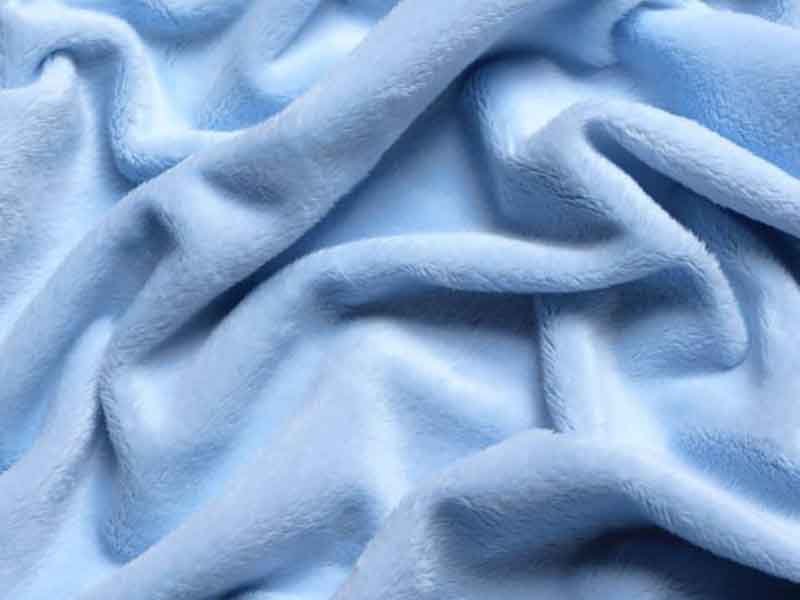
Touch two stuffed animals that appear almost identical in a product photo and the difference can become obvious within seconds. One may feel smooth, dense, and pleasantly soft when your hand moves across the surface, while another may feel thin, slippery, overly stretchy, or rough around the seams. The visual design may be nearly identical, yet the fabric changes how the entire product is perceived. Microfiber plush is one of the material families frequently selected when a product needs a fine, soft surface, but the name itself does not tell the whole story.
Microfiber plush fabric is a soft pile textile made with very fine fibers, commonly polyester, combined with a knitted or engineered backing and finished to create a smooth plush surface. The term does not define one fixed GSM, pile height, stretch level, density, or construction. Its real quality depends on fiber composition, pile structure, backing, finishing, color consistency, sewing behavior, stuffing response, durability, and batch stability.
This distinction becomes important as soon as a fabric moves from a swatch book into an actual plush product. A material may feel excellent when held flat but behave very differently after it is embroidered, cut into curved panels, sewn around narrow corners, turned inside out, stuffed, compressed inside a carton, and reproduced again months later. A development team can approve a beautiful fabric in the sample room and still discover that the pile hides a small embroidered mouth, the stretch widens the face, or the next dye lot looks noticeably different under retail lighting.
The better question is therefore not simply, “Is microfiber plush soft?” The more useful question is, “Which microfiber plush construction will still look, feel, and perform correctly after the design becomes a real manufactured product?”
What Is Microfiber Plush Fabric?
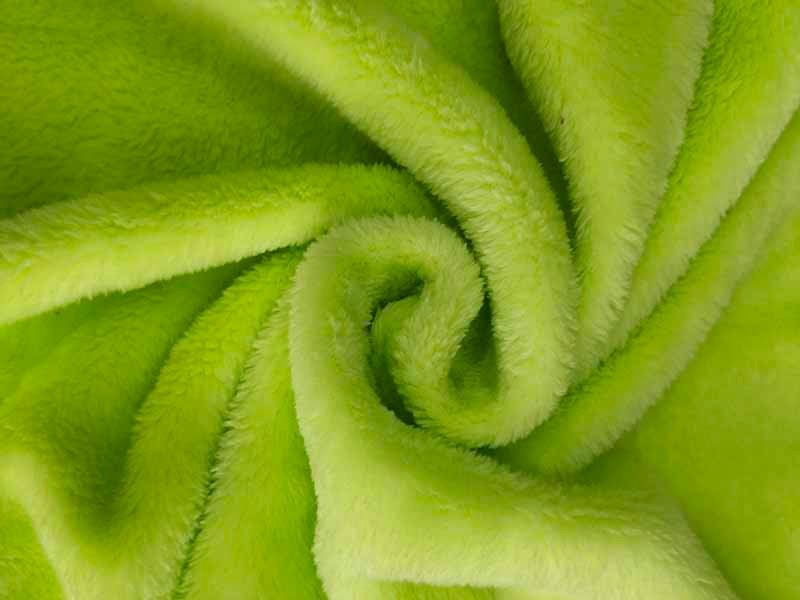
Microfiber plush fabric is a fine-fiber textile engineered to create a soft raised surface. Polyester is common, but the name does not describe one fixed fabric construction. Pile height, density, weight, stretch, backing, and finishing can differ considerably, which means two fabrics sold under the same general name may behave very differently during embroidery, sewing, stuffing, packaging, and repeat production.
What Does Microfiber Mean?
The word microfiber describes fiber fineness rather than a specific fabric appearance. Very fine manufactured fibers can create a smooth and soft surface because a large number of small filaments make contact with the skin at the same time. This helps explain the pleasant hand feel associated with many microfiber textiles, but fiber fineness alone does not guarantee that a plush fabric will feel luxurious or perform well in a stuffed product.
The final result depends on how those fibers are turned into yarn, how the backing is knitted, how dense the surface is, how the pile is raised or brushed, and how the fabric is finished. A very fine polyester fiber can be used to produce several completely different textile surfaces, including suede-like materials, cleaning cloths, bedding fabrics, apparel, and plush. The word “microfiber” therefore tells a product developer something about the fiber, but not enough about the complete material.
For plush manufacturing, composition, pile height, density, stretch direction, backing strength, fabric weight, thickness, and finishing all deserve attention. A fabric may feel exceptionally soft when held in the hand yet become unsuitable for a small character because the backing stretches too much or the pile hides fine facial details. Microfiber should therefore be treated as one part of the specification rather than as a complete specification by itself.
How Is Microfiber Plush Made?
Many microfiber plush fabrics used for stuffed products begin with a knitted backing. Fine synthetic yarns are formed into a textile base, after which the face of the fabric is processed to create a raised surface. Depending on the desired result, finishing may include brushing, raising, shearing, heat setting, embossing, or other treatments that influence pile direction, softness, thickness, sheen, and surface uniformity.
The visible pile receives most of the attention, but the backing plays an equally important role during manufacturing. A stable backing generally holds seams and embroidery more predictably, while a highly elastic backing can create a soft, flexible finished toy but also increase dimensional movement after stuffing. When the backing is too loose, it may become visible between fibers when the fabric is stretched around curved or firmly filled sections.
Finishing also affects the way the fabric responds to light. A smooth directional pile may appear darker when brushed one way and lighter when viewed from another direction. If pattern pieces are rotated during cutting without considering the nap, neighboring panels can look like different shades even when they were cut from the same roll. Cutting direction therefore becomes a production specification rather than a cosmetic preference.
A flat swatch can show softness, color, and basic texture, but only a sewn sample can reveal how the fabric behaves around a face, ear, paw, tail, or narrow opening. For serious development work, the material should move from swatch evaluation into a real prototype as early as possible.
Is Microfiber Plush Always Polyester?
Microfiber plush is not required to be polyester because the word microfiber refers to fiber fineness rather than one mandatory composition. In commercial stuffed products, however, polyester is extremely common because mills can engineer it into many different pile heights, textures, colors, stretch levels, densities, and surface finishes while maintaining relatively stable supply for repeat production.
Polyester is widely used across character plush, stuffed animals, mini collectibles, keychains, bag charms, cushions, and other soft products because it can support many different visual directions. The same broad fiber family can produce a matte short pile for facial details, a softer minky-like surface for cuddle products, or longer constructions where additional depth is needed. Pufumi’s material records similarly identify polyester as the dominant composition across several common plush-fabric families.
Some fabrics may include elastane or other fibers to create more stretch. Specialty materials can also use alternative compositions to achieve a particular hand feel, sustainability position, texture, or performance characteristic. Exact fiber content should therefore be confirmed through supplier specifications, material documentation, and the BOM rather than guessed from appearance.
Composition influences more than fabric selection. It can affect care labels, compliance documentation, environmental claims, processing behavior, pricing, and future sourcing. For a commercial product that may be reordered, “looks like polyester” is never a sufficiently reliable material record.
What Makes Microfiber Plush Feel Soft?
Softness is created by several variables working together. Fiber fineness matters, but so do surface density, pile height, backing flexibility, finishing, and stretch. A dense short pile can feel smooth and almost velvety, while a longer pile creates deeper movement under the hand. Two fabrics with the same nominal pile height can still feel noticeably different because one uses a denser surface or more flexible backing.
Density is particularly important because it determines how continuous the surface feels when the hand moves across it. A low-density fabric may initially feel soft, yet once stretched around a firmly stuffed head the backing can become more noticeable. A denser construction tends to maintain a fuller surface, although it may also increase material weight, sewing thickness, and cost.
Stuffing changes the tactile experience again. The same fabric feels different when stretched over a tightly filled character head than when used on a loosely filled comfort body. Firm stuffing increases surface tension and can make elastic fabrics feel tighter, while softer filling allows more movement but may reduce shape definition. That interaction is especially visible in rounded character products.
For this reason, softness should be judged on the finished prototype whenever possible. Fabric, pattern shape, seam placement, filling material, and stuffing density work together so closely that the customer ultimately experiences the complete product rather than the fabric swatch alone.
What Are the Key Properties of Microfiber Plush?

The most important properties of microfiber plush include pile height, fabric weight, density, stretch, backing strength, thickness, texture, sheen, pile direction, shedding, abrasion resistance, pilling behavior, colorfastness, compression recovery, and compatibility with embroidery or printing. These variables affect not only touch, but also product dimensions, facial clarity, sewing difficulty, packaging, durability, and repeat-order consistency.
Microfiber plush should not be ranked by softness alone. A material can feel wonderful and still create production problems if the pile is too long for embroidery, the backing expands too much under stuffing, the density is too low, or the surface remains crushed after shipping. Material performance has to be judged against the product it will become.
Pufumi’s fabric specification system treats pile length, GSM, width, density, elasticity, backing, sheen, thickness, texture, and pile direction as engineering variables because each one can influence appearance, pattern dimensions, manufacturing difficulty, cost, and consistency.
| Property | What It Influences | Common Risk | Useful Check |
|---|---|---|---|
| Pile height | Softness, visual depth, detail clarity | Embroidery becomes hidden | Sewn embroidery sample |
| GSM / fabric weight | Fullness, thickness, handling | Excess bulk or thin feel | Supplier specification |
| Surface density | Coverage and durability | Backing becomes visible | Bend and stretch inspection |
| Stretch | Shape after stuffing | Head or body widens | Directional stretch trial |
| Backing | Seam stability | Distortion or seam weakness | Sew-and-stuff test |
| Pile direction | Light reflection and color appearance | Panels look mismatched | Cutting-direction control |
| Abrasion behavior | Long-term surface appearance | Pilling or matting | Rub and wear evaluation |
| Compression recovery | Unboxing appearance | Flattening after shipment | Packing simulation |
| Color consistency | Character and brand accuracy | Lot-to-lot difference | Approved physical reference |
How Does Pile Length Affect the Fabric?
Pile length changes both appearance and product engineering. Short piles expose facial embroidery, printed elements, seam lines, and small shapes more clearly, while longer piles create additional softness, visual depth, and a fuller coat. The correct choice therefore depends on the relationship between pile length and the size of the product’s important details.
A 7–10 cm collectible character may contain very small eyes, eyebrows, mouth lines, embroidered logos, and narrow seam transitions. If the pile approaches the scale of those features, the fibers can cover the stitching and soften the expression. Long fibers may also need trimming around the eyes and mouth, which introduces extra work and additional production variability.
Larger stuffed animals provide more freedom. On a 30–50 cm body, a medium or longer pile can create a richer coat because the facial and structural details are proportionally larger. Long pile can also work well when the design intentionally requires shaggy hair, a mane, tail, or realistic fur effect.
Commercial plush fabrics exist across a broad range, from very short minky-style surfaces measuring only a few millimeters to constructions around 10–20 mm or longer. These ranges should not be treated as universal quality categories because different suppliers classify products differently. They simply illustrate why the word “microfiber plush” cannot replace a pile-height specification.
Pile direction must also remain consistent during cutting. Rotating pieces can change light reflection enough to make adjacent panels appear to be different colors even when they came from the same material lot.
How Does GSM Affect Microfiber Plush?
GSM means grams per square meter and describes fabric mass over a standardized area. It gives sourcing and development teams a more useful measurement than vague descriptions such as “light,” “medium,” or “heavy.” In plush manufacturing, GSM can influence perceived substance, density, cutting behavior, seam thickness, material cost, and finished hand feel.
A higher GSM often feels more substantial, particularly when the additional weight comes from greater pile density or a stronger backing. However, higher weight does not automatically mean higher quality. A heavy fabric can create bulky seam allowances, make narrow components difficult to turn, and reduce definition in mini plush products where several layers accumulate inside a very small area.
Lower-weight constructions may suit mini characters, keychains, garments, and products where lightweight construction is useful. If the material is too light or insufficiently dense, however, the backing may become visible after stuffing and the finished product can feel less substantial.
Pufumi’s fabric engineering rules treat GSM together with pile, density, stretch, thickness, and backing rather than as an isolated quality score. That matters because two fabrics with similar GSM values can have completely different surfaces and production behavior.
Units should always be checked carefully. Some suppliers quote GSM while others use grams per linear meter, grams per yard, or another weight format. Those values should not be compared directly without understanding fabric width and unit conversion.
How Does Stretch Affect Plush Shape?
Stretch can change a plush product’s finished geometry more than many teams expect. When filling pushes outward, knitted fabric expands. If the textile stretches more strongly across its width than along its length, a pattern designed to produce a round face can become wider, a body can appear shorter, or supposedly identical limbs can finish with noticeably different proportions.
The effect becomes especially important on licensed characters, mascots, anime plush, and collectible products where eye spacing, cheek width, head height, jaw shape, and body proportions contribute directly to character recognition. A few millimeters of dimensional change may not matter on a large generic pillow, but it can noticeably alter a small recognizable face.
Stretch should therefore be evaluated in the main fabric directions rather than described only as “stretchy” or “non-stretch.” Development teams should understand whether extension is low, moderate, or high and whether the material returns to its original shape after being pulled. Highly elastic mochi-style plush can create a soft, rounded product, but it usually requires more careful pattern compensation and stuffing control.
Pufumi’s material records connect elasticity directly with pattern dimensions, cutting direction, filling behavior, and production consistency. This is also why changing to a similar-looking replacement fabric may require another engineering sample instead of simply reusing the original paper pattern.
Is Microfiber Plush Durable and Washable?
Microfiber plush can be durable, but washability should never be assumed from the fabric name alone. Finished-product performance depends on the textile construction, seams, filling, embroidery, printing, accessories, internal structures, and intended use. A surface that performs well on a decorative collectible may experience completely different stress on a backpack charm or frequently handled comfort toy.
Products that receive repeated contact should be evaluated for abrasion, pilling, surface matting, shedding, color transfer, and seam stability. Bag charms and keychains often experience continuous rubbing against clothing and bags, while cuddle toys may undergo repeated squeezing, compression, and cleaning. Each use case creates a different wear pattern.
Pufumi’s material-performance framework therefore includes shedding, colorfastness, dimensional change, abrasion, pilling, compression recovery, printing compatibility, embroidery compatibility, cleaning behavior, and batch consistency. These factors offer a much more realistic view of quality than simply describing a material as soft or premium.
Machine washing is a finished-product decision rather than a fabric-only decision. A polyester outer surface might tolerate washing while a sound module, internal foam part, weighted insert, glued decoration, metal component, or specialty print does not. Care claims should therefore reflect the complete approved construction and applicable testing or supplier guidance.
Is Microfiber Plush the Same as Minky or Velboa?

Microfiber plush, minky, and velboa overlap in commercial terminology but should not automatically be treated as identical materials. Minky commonly describes a soft knitted polyester plush family, while velboa usually refers to a shorter, flatter pile. Because suppliers use these terms differently, reliable sourcing depends on composition, pile, weight, density, stretch, backing, finish, and approved physical samples.
International sourcing frequently creates confusion because textile names are not used identically in every market. A North American retailer, an Asian mill, and a plush factory may describe very similar textiles with different names. The opposite can happen as well: two suppliers may both quote “minky” while offering fabrics with noticeably different pile height, weight, stretch, density, and backing.
The safest approach is to use the trade name only to begin the search. Before the material is approved, the selected fabric should be converted into a controlled specification with a material code and physical sample.
| Commercial Name | Typical Description | Common Strength | Main Sourcing Risk |
|---|---|---|---|
| Microfiber plush | Fine, soft raised surface | Smooth touch and refined finish | Name covers many constructions |
| Minky | Soft knitted polyester plush | Cuddle products and characters | Pile and stretch vary widely |
| Velboa | Short, flatter plush | Clean shapes and printing | Density varies significantly |
| Mochi minky | Very soft, elastic short pile | Rounded soft characters | Stretch can distort shape |
| Short plush | General low-pile plush | Facial clarity and embroidery | Broad non-standard term |
Is Minky a Microfiber Plush Fabric?
Many minky fabrics can reasonably be described as microfiber plush because they use fine synthetic fibers in a soft knitted pile construction. The important limitation is that minky is a broad commercial family rather than one standardized technical specification. Fabrics marketed as minky can differ substantially in pile height, weight, texture, embossing, print, surface density, and elasticity.
One minky fabric may have a short, controlled pile that works well for detailed character faces. Another may be deeper and more suitable for large cuddle products. A highly elastic mochi-style version may behave differently again once it is stuffed. These materials may all sit under the same broad commercial label even though they require different pattern and production handling.
Confusion becomes more common when sourcing internationally. A product team might request “minky” based on a reference toy, while the supplier interprets the word differently and sends a smoother short plush or a more elastic material. Both sides may believe they are discussing the same fabric family.
The most reliable solution is physical approval. Keep the supplier name, internal material code, composition, pile, published weight, width, stretch, color, and approved swatch together with the BOM. During reorders, this information is far more useful than a note saying “use the same minky as last year.”
How Is Velboa Different?
Velboa is generally associated with a short, relatively controlled pile and a flatter surface than many soft minky or microfiber plush constructions. It has long been used for stuffed animals, printed animal patterns, promotional plush, and products where long fibers would interfere with visual details.
A shorter pile offers several engineering advantages. Embroidery is less likely to disappear beneath the surface, printed patterns remain clearer, and small character contours can appear more defined. The fabric can also be easier to use on mini products because lower pile depth reduces bulk around narrow seams and small components.
Compared with a dense premium microfiber plush, some velboa grades may feel flatter or less rich. That does not mean velboa is automatically a lower-quality choice. A well-made, high-density velboa can outperform a poorly constructed textile that carries a more premium-sounding name. Density, backing, surface uniformity, color consistency, and product suitability matter more than terminology.
Pufumi’s material records describe velboa as useful for animal plush, straightforward character products, and relatively flat surfaces, while microfiber plush is more strongly associated with fine, soft-touch applications.
Because some suppliers use names such as “microfiber velboa” or “short microfiber plush,” the dividing line is not absolute. The actual swatch and measurable specification should make the final decision.
What Is Mochi Minky?
Mochi minky is a commercial term commonly used for very soft, highly elastic short-pile plush associated with rounded, squishy character products. The tactile effect usually comes from combining a smooth surface with a flexible knitted backing and soft filling rather than from one single technical property.
Its elasticity is one of its strongest advantages and one of its main manufacturing challenges. A highly stretchable surface can flow smoothly around rounded shapes and create the soft feel popular in modern character plush, but it can also allow a face or body to expand more than expected when filling pressure increases.
Embroidery can introduce additional movement because dense stitches pull against the elastic backing. Small eye placements and facial details may shift if stabilizer, hoop tension, pattern direction, and stuffing level are not properly controlled. Thin limbs and ears can also finish differently when panels are cut in inconsistent directions.
For this reason, mochi-style fabric should be tested together with the intended filling material and fill weight. The approved sample should record cutting direction, stuffing quantity, and finished dimensions. “Mochi” itself is not a universal specification, so composition, pile, weight, stretch, backing, and actual physical behavior still need to be confirmed.
Which Fabric Name Matters?
The trade name is useful for locating a family of materials, but the specification is what makes the chosen material reproducible. Once sampling begins, composition, pile height, weight, width, backing, density, stretch, texture, sheen, pile direction, color, supplier code, MOQ, and lead time become more important than whether a supplier calls the fabric minky, velboa, microfiber plush, short plush, or mochi.
Pufumi’s Fabric Library follows this approach by documenting fabric type, composition, pile, GSM, width, elasticity, backing, color, supplier, inventory condition, MOQ, sampling availability, production availability, suitable applications, restrictions, and replacement options.
This level of detail becomes especially valuable when a successful product needs to be reordered months later. Staff may change, supplier stock may change, and the same commercial fabric name may refer to a slightly different construction. A coded material record and retained physical swatch provide a much stronger reference.
A description such as “very soft pink plush” cannot reliably support mass production. A controlled material specification linked to an approved sample converts an aesthetic preference into something a sourcing, engineering, production, and quality team can all interpret in the same way.
Which Products Use Microfiber Plush Fabric?

Microfiber plush works particularly well for products where a soft, refined hand feel and controlled pile are important. Common applications include character plush, stuffed animals, comfort toys, premium gifts, pillows, lifestyle products, and selected collectibles. The right construction depends on product size, embroidery detail, stretch, handling, packaging, target market, durability requirements, and the intended visual style.
Microfiber plush is particularly effective when the product is intended to be touched frequently. Its fine surface can create a smooth, pleasant tactile experience and help a relatively simple stuffed product feel more refined. However, different product categories require very different material priorities.
Mini collectibles place more importance on pile control and seam thickness. Large comfort products can tolerate greater pile depth and often prioritize hand feel. Bag charms require better abrasion performance, while premium gifts may demand tighter color consistency and packaging recovery. A single fabric should not automatically be treated as the best choice for every SKU in a collection.
Is Microfiber Plush Good for Stuffed Animals?
Microfiber plush can be an excellent choice for stuffed animals when the intended style is soft, smooth, comfortable, and visually controlled. It performs particularly well on stylized animals, premium gift plush, cuddle-oriented products, and designs where the material should feel soft without creating the dramatic hair length associated with faux fur.
Short-to-medium piles usually offer a good balance between touch and shape visibility. They can soften seam transitions while allowing the face, ears, paws, and body contours to remain readable. The exact pile should still be selected in relation to the product’s scale and decorative details.
Stuffing changes the result significantly. A firm body stretches the surface and creates sharper geometry, while lower fill density produces a more relaxed, squeezable feel. A large comfort animal may benefit from a softer filling system, whereas a smaller collectible might need firmer filling to preserve its proportions.
Realism is another factor. A stylized rabbit or bear can look excellent in microfiber plush, while a wildlife-oriented wolf, lion, or long-haired pet may require faux fur to achieve the intended coat effect. Material selection should follow the visual language of the design rather than a general rule that one plush fabric is always superior.
Which Plush Styles Benefit Most?
Microfiber plush performs especially well when softness is part of the product’s perceived value. Comfort plush, character merchandise, soft mascots, premium stuffed animals, lifestyle products, pillows, gift items, and many collectible products can benefit from a fine, dense surface.
Character products are a particularly strong application because short microfiber plush can create a soft toy-like appearance without introducing the visual complexity of long fur. Facial embroidery stays more visible, seams can remain controlled, and the silhouette can be kept relatively close to the original artwork.
Premium does not automatically mean longer pile. A short, dense, matte material paired with accurate embroidery and controlled filling can feel more refined than a visually dramatic long-pile textile that overwhelms the design. Surface density, color, hand feel, and consistency often matter more than pile length alone.
A shared base fabric can also help a multi-character collection feel connected. Different SKUs can use the same approved material family while changing colors, embroidery, costumes, and accessories. Pufumi’s product and material systems similarly connect material choice with product form, use case, decoration, size, and repeat-production needs rather than assigning one fabric universally.
Is Microfiber Plush Good for Small Details?
Microfiber plush can work very well for detailed characters when the pile is short, dense, and supported by a stable backing. The key relationship is between pile height and feature size. Tiny eyebrows, mouths, pupils, logos, and appliqué shapes need enough surface control to remain visible after sewing and stuffing.
Embroidery places additional stress on the fabric. If the backing is highly elastic, dense stitching can pull the surrounding material inward and slightly distort the face. Stabilizer choice, hoop tension, stitch density, thread direction, and fabric orientation therefore need to be tested on the real material rather than on a substitute.
Mini plush also magnifies seam-bulk problems. A fabric that works perfectly on a 30 cm character can become difficult at 7 cm because multiple seam allowances build up inside narrow ears, tails, hands, or feet. Thick backing and long pile can reduce the clarity of these small components.
Pufumi’s engineering guidelines similarly note that excessively thick textiles can reduce definition in Mini Plush, Keychain, and Blind Box products because seam allowances occupy a larger percentage of the available internal space.
The most useful evaluation is therefore not to ask whether the material can make the body. It is to test whether it can reproduce the smallest important feature in the design.
When Is Microfiber Plush Not Ideal?
Microfiber plush is not the best choice when the design depends on a surface effect that another fabric creates more naturally. Long-haired animals may require faux fur, sheep or winter characters may benefit from sherpa, simple clothing pieces may suit fleece, and fashion-led products may need velvet, boucle, metallic fabrics, or another specialty textile.
Highly elastic versions can also be unsuitable for characters that require extremely tight control of facial geometry. When eye spacing, cheek width, head height, or jaw shape are critical to recognition, excessive stretch can make consistency harder to maintain across a production run.
A long microfiber-style pile may hide embroidery and small components, while an extremely short pile may not provide enough tactile richness for a large comfort product. Neither condition means the material is poor quality. It simply means the specification does not match the design.
A useful material-review question is: What becomes harder if we use this fabric? Every option creates trade-offs involving softness, shape control, durability, printing, embroidery, cost, packing, or supply continuity. The most suitable textile is normally the one whose limitations occur in areas that matter least to the finished product.
How Does Microfiber Plush Compare With Other Plush Fabrics?
Microfiber plush usually offers a fine, soft surface; fleece is flatter and more functional; faux fur creates longer hair and greater realism; velboa tends to be shorter and more controlled; minky overlaps heavily with microfiber plush; and sherpa creates a curly, wool-like texture. The best choice depends on product size, decoration, stretch, wear, packaging, cost, visual style, and repeat-production requirements.
Comparing plush fabrics only by softness usually leads to weak decisions. A material may be softer but hide embroidery. Another may feel flatter yet maintain much cleaner facial geometry. A more expensive textile may look impressive in a swatch book but perform poorly after compression or create unnecessary sewing complexity.
The most useful comparison starts with the product’s priorities. A 12 cm anime character may need a short stable pile for eye and mouth embroidery. A 40 cm realistic wolf may require directional faux fur. A simple pillow may benefit from fleece, while a premium comfort character may rely heavily on a soft dense microfiber or minky construction.
| Fabric | Typical Surface | Strong Applications | Main Points to Watch |
|---|---|---|---|
| Microfiber plush | Fine, soft, smooth pile | Characters, gifts, comfort plush | Stretch and lot consistency |
| Minky | Soft knitted plush | Cuddle products and characters | Terminology and stretch variation |
| Velboa | Short, flatter pile | Printed animals and clean shapes | Density and hand feel |
| Fleece | Flat, warm texture | Simple plush, apparel, pillows | Pilling and limited pile depth |
| Faux fur | Long dimensional hair | Realistic animals and special effects | Shedding, trimming, grooming |
| Velvet | Smooth, directional sheen | Premium gifts and fashion plush | Pressure marks and nap |
| Sherpa | Curly wool-like texture | Winter, sheep, lifestyle styles | Fine embroidery visibility |
Which Is Better: Microfiber Plush or Minky?
In many cases, this is not a true either-or comparison because minky can itself fall within the broad commercial category of microfiber plush. The more useful comparison is between specific constructions rather than labels.
One minky may have a short smooth pile and relatively controlled stretch, making it suitable for character faces and embroidery. Another may use a deeper surface designed for large cuddle products. A highly elastic mochi-style material may behave differently again when cut and stuffed, even if all three are marketed under the minky family.
If a supplier offers one material as microfiber plush and another as minky, compare pile, density, backing, weight, stretch, sheen, color, and finished prototype performance. The fabric name alone does not reveal which one will preserve facial proportions or recover better after shipment.
Physical approval becomes especially important for repeat production. Catalog terminology can vary across mills and markets, while an internal material code linked to a retained swatch and specification gives production teams a stable reference.
When two materials feel similarly soft, the most useful test is to make the critical section of the product. Embroider the face, sew the head, apply the planned filling weight, and compare dimensions. The textile that produces the stronger finished product and can be sourced reliably is the better choice for that SKU.
Which Is Better: Microfiber Plush or Fleece?
Microfiber plush generally creates greater surface depth and a smoother plush sensation, while fleece presents a flatter, warmer, more functional texture. Both can work in stuffed products, but they communicate different visual and tactile qualities.
Fleece can be useful for simple shapes, clothing, pillows, accessories, and product areas where a raised plush pile is unnecessary. Its flatter surface can also support graphic embroidery or appliqué relatively well, although the exact fabric still needs to be evaluated for stretch and pilling.
Microfiber plush is more likely to be selected when the product relies on a refined soft-touch experience. A controlled short pile can maintain character details while giving the finished product a more obvious plush feel. Pufumi’s material records similarly position fleece toward soft, relatively flat applications and microfiber plush toward projects where a fine, delicate tactile surface is more important.
Price should not be assumed from the material category. Premium fleece can cost more than basic plush, while dense high-grade microfiber can be more expensive than both. Comparing actual specifications and finished prototypes gives a much more meaningful result than comparing names.
Which Is Better: Microfiber Plush or Faux Fur?
Microfiber plush usually performs better where the design needs a smooth, controlled surface and clearly visible details. Faux fur becomes stronger when realistic animal appearance, directional hair, long pile, or dramatic surface volume is a major part of the character.
Faux fur introduces more manufacturing variables. Pattern cutting must respect pile direction, fibers can become trapped inside seams, facial areas may need trimming, and loose fibers require additional handling. Longer hair can also occupy more packaging volume and may remain visibly compressed after transport if recovery is poor.
Pufumi’s material framework highlights shedding, pile direction, trimming, packaging compression, and recovery as important considerations for longer-pile and faux-fur projects.
Microfiber plush simplifies some of these issues but cannot reproduce every realistic coat. A smooth short-pile wolf may look clean and stylized, while a wildlife-focused version might require the visual depth of faux fur.
Many designs benefit from combining materials rather than selecting only one. Short microfiber plush can be used around the face, paws, and embroidery-heavy areas, while faux fur creates the body, mane, ears, or tail. This mixed-material approach often provides better design control.
How Do You Choose Between Plush Fabrics?
Start by defining the product requirements that cannot be compromised. A licensed character may prioritize facial accuracy, approved color, clear embroidery, retail appearance, and repeatability. A large comfort plush may place greater weight on hand feel, flexibility, and recovery. A bag charm needs abrasion resistance and stable attachment points.
Candidate fabrics can then be evaluated across hand feel, pile suitability, stretch, density, backing, embroidery, printing, abrasion, pilling, color availability, custom-dye feasibility, packaging recovery, MOQ, lead time, cost, and repeat-order stability.
Pufumi’s material-selection records follow a similar multidimensional approach, comparing tactile feel, color, pile, durability, GSM, stretch, MOQ, lead time, cost, certification documentation, supply stability, photography, packaging behavior, and reordering risk.
An average score should never hide a critical failure. A beautiful fabric that cannot achieve the licensed character’s primary color may still be unacceptable. A very soft material that consistently widens the character’s face may also be the wrong choice.
Clear priorities make supplier communication far more efficient. “We need a matte short pile that keeps small facial embroidery visible and has controlled stretch” gives a sourcing team much more useful information than “send us your best plush.”
How Do You Choose Quality Microfiber Plush?
Quality microfiber plush should be selected through measurable specifications and production testing rather than softness alone. Confirm composition, pile, weight, width, density, stretch, backing, thickness, texture, sheen, color, pile direction, shedding, abrasion, pilling, recovery, and decoration performance. Then validate the material through cutting, embroidery, sewing, stuffing, packing, and bulk-lot comparison before treating it as an approved production fabric.
There is an important difference between a high-quality fabric and the right fabric. A textile can have excellent surface density and hand feel yet still fail because it is too thick for a mini plush, too elastic for a precise character head, or unavailable in consistent quantities for future production.
Quality therefore needs to be considered at three levels: the fabric itself, its compatibility with the product, and the stability of its supply. A material that performs beautifully in one prototype but cannot be reproduced reliably is a weak choice for a long-term commercial SKU.
Which Specifications Should You Check?
A useful microfiber-plush specification should give another trained person enough information to identify, compare, purchase, and reproduce the material. “Very soft beige plush” is only a description. It does not tell a production team what should be reordered.
At minimum, record fiber composition, pile height, fabric weight, usable width, surface density, backing, stretch, thickness, texture, sheen, pile direction, supplier, material code, and physical color reference. Commercial projects should also record MOQ, lead time, stock condition, custom-dye requirements, and relevant lot information.
Pufumi’s Fabric Library records these kinds of variables, including composition, pile, GSM, width, elasticity, backing, supplier, color, MOQ, sample availability, mass-production availability, suitability, restrictions, and possible substitute materials.
Every measurement should include units. A fabric weight shown simply as “300” cannot be interpreted safely unless the team knows whether it means GSM, grams per linear meter, grams per yard, or another unit.
Visually similar fabrics should not automatically be treated as interchangeable. Pufumi’s material-management rules specifically note that fabrics with the same color but different GSM, pile, or stretch characteristics should be considered different materials.
How Do You Check Fabric Performance?
Begin with physical inspection before moving into a full prototype. Bend the fabric and examine whether the backing becomes visible. Rub the surface in multiple directions. Stretch it gently and observe how quickly it recovers. Cut a small piece and inspect loose fibers around the edge.
The next stage should reproduce real manufacturing operations. Embroider the actual eyes, mouth, logo, or graphic. Sew a tight curve, turn a narrow component, and fill the piece to the intended firmness. These steps reveal weaknesses that may never appear while the material is lying flat.
Products expected to receive repeated handling should be evaluated for abrasion, pilling, matting, and surface wear. Deep colors may require greater attention to rubbing or migration risk. Large comfort products and items shipped under compression should be checked for recovery after being boxed or compressed for a representative period.
Pufumi’s material-performance system covers shedding, colorfastness, dimensional change, abrasion, pilling, compression recovery, printing suitability, embroidery compatibility, cleaning behavior, and batch stability.
Testing depth should match the product’s use and risk profile. The goal is not to perform tests merely because they sound technical. The purpose is to identify realistic failure modes before they appear in mass production.
How Do You Control Color and Batch Consistency?
Color approval should move from digital reference to physical approval as early as possible. Screens are useful for communication but weak as final standards because display calibration, brightness, photography, compression, and lighting can all alter the apparent color.
For important brand colors or recognizable character tones, keep an approved fabric swatch, lab dip where custom dyeing is used, or completed prototype as the physical reference. This gives the material and quality teams something tangible to compare against during production and future reorders.
Pile direction creates another complication. Light interacts differently with fibers depending on their orientation, which means the same material can look darker or lighter when rotated. Pufumi’s documented color-control process specifically recognizes the influence of pile direction and sheen on apparent color and also notes that different dye lots can show small differences.
Repeat orders should therefore include lot comparison against retained material or an approved production sample. If the new fabric is visibly different in color, hand feel, stretch, or backing, the change should be reviewed before cutting.
Tolerance can also vary according to visual importance. The face or primary brand panel generally requires tighter control than a hidden or internal area. Material substitutions caused by shortage, discontinuation, cost change, or lead-time pressure should be approved before mass production rather than discovered after finished goods are assembled.
What Should You Confirm Before Production?
Before bulk cutting begins, material approval should exist as controlled project information rather than a verbal agreement. Confirm the supplier and material code, fiber composition, pile, weight, width, density, backing, stretch, color reference, pile direction, embroidery or printing result, cutting orientation, stuffing level, finished prototype measurements, and BOM revision.
The bulk fabric itself should be compared against the approved sample. A correct supplier name does not automatically guarantee identical performance if the new lot has a different hand feel, elasticity, backing, or color appearance.
The approved prototype provides another critical reference because it captures how the fabric, pattern, filling, embroidery, seams, and accessories behave together. Production should not attempt to reconstruct the product from artwork and memory alone.
Pufumi’s development system links material specifications with patterns, BOMs, sample versions, quality references, and production records so that later runs can be compared with documented standards rather than subjective recollection.
For a new microfiber plush project, useful starting information includes artwork, target size, expected quantity, destination market, desired hand feel, important colors, embroidery or printing requirements, packaging concept, and target launch date. Once those variables are clear, material selection becomes a structured development decision rather than a search for whichever swatch feels softest.
Final Thoughts
Microfiber plush is best understood as a broad family of fine-fiber plush textiles rather than a single fabric with one universal specification. The same name can cover materials with different pile heights, weights, densities, stretch levels, backings, surface finishes, and production behavior. That variety is useful because it allows the material to serve many types of stuffed products, but it also means that relying on the fabric name alone creates unnecessary sourcing and manufacturing risk.
A good material decision connects touch with engineering. The fabric should feel right, but it should also preserve the intended shape, keep embroidery visible, hold seams reliably, survive normal handling, recover after packaging, maintain color, and remain available when the product needs to be reordered. Those requirements become even more important for character merchandise, multi-SKU collections, premium gifts, and long-term retail programs where consistency matters across thousands of pieces rather than just one prototype.
The most dependable development process therefore moves from a commercial fabric name to a measurable material specification, then from a flat swatch to a real sewn prototype, and finally from the approved sample to controlled bulk production. When pile, weight, stretch, backing, color, decoration, filling, and lot consistency are all treated as connected variables, microfiber plush becomes much easier to evaluate and reproduce.
The softest swatch on the table is not always the best choice. The better material is the one that still looks and feels right after cutting, embroidery, sewing, stuffing, packing, shipping, and the next production run.
FAQ
Is microfiber plush fabric the same as minky?
Microfiber plush and minky often overlap, but the names are not universally interchangeable. Many minky fabrics are soft knitted polyester plush constructions that can reasonably fall within the broader microfiber-plush category. However, minky fabrics can vary greatly in pile height, surface texture, fabric weight, density, and stretch. For sourcing and manufacturing, the approved physical fabric and its measurable specification are more reliable than the commercial name alone.
Is microfiber plush fabric good for stuffed animals?
Microfiber plush is well suited to many stuffed animals, especially products that need a smooth, soft surface and controlled character shape. Short-to-medium pile constructions work well for stylized animals, character plush, comfort products, and premium gifts. The final result still depends on product size, pile height, stretch, backing, embroidery requirements, stuffing density, intended use, and packaging. Realistic long-haired animals may require faux fur instead.
What is the best pile height for microfiber plush toys?
There is no universal best pile height because the correct value depends on product size and visual detail. Very short piles are usually easier to use around small embroidered eyes, mouths, logos, and mini-plush details, while medium or longer piles can create greater softness and depth on larger animals and cuddle products. A pile that works well on a 40 cm animal may overwhelm the facial features of a 7 cm collectible.
What GSM is good for microfiber plush fabric?
There is no single GSM value that defines high-quality microfiber plush. Fabric weight should be evaluated together with pile length, density, backing, thickness, and stretch. Higher GSM can create a more substantial hand but may also increase seam bulk and manufacturing difficulty. Lower-weight constructions may work better for small plush components. Supplier specifications and actual sewn samples provide more useful guidance than choosing a fabric only because its GSM is higher.
Does microfiber plush fabric shed?
Well-constructed microfiber plush can have relatively controlled shedding, but shedding behavior varies by pile construction, density, backing, cutting method, and finishing. Loose fibers may appear around freshly cut edges even when the finished textile performs well. Longer pile and lower-density materials generally require more attention. For commercial plush products, evaluate shedding on both the raw fabric and the finished sewn sample rather than assuming performance from the fabric name.
Can microfiber plush fabric be machine washed?
Some microfiber plush fabrics can tolerate machine washing, but a finished plush product should not be declared machine washable based on outer fabric alone. Filling, embroidery, printing, foam, weighted inserts, electronics, metal components, glued decorations, and internal structures can all affect the appropriate care method. Care instructions should therefore be based on the complete product construction, supplier information, and relevant testing rather than a general assumption about polyester microfiber.
How can you tell if microfiber plush fabric is high quality?
High-quality microfiber plush usually combines a consistent surface, appropriate density, stable backing, controlled stretch, good color consistency, acceptable abrasion and pilling performance, and suitable recovery after compression. The material should also perform well during embroidery, sewing, stuffing, and packaging. The strongest evaluation uses measurable specifications, physical samples, actual prototypes, and retained material references so that the approved result can be reproduced reliably in later production.