Skip to content


Licensed plush is entering 2027 with an unusual combination of familiarity and reinvention. The basic emotional promise remains the same: people want to hold, display, gift, wear, or collect a character they already care about. What is changing is the form that relationship takes. A standard seated plush may still work, but it now competes with miniature bag charms, blind-box series, premium collector editions, sensory textures, interactive functions, retail exclusives, and carefully timed product drops. A popular license can open the door, yet it cannot compensate for a weak face, an unsuitable format, confused pricing, delayed approval, or packaging that does not feel worthy of the property.
Licensed plush trends for 2027 will be shaped by five connected forces: stronger demand for recognizable characters, continued growth in collectibles, adult participation in the toy market, portable and display-friendly formats, and more disciplined product planning. The winning programs will combine the right intellectual property with character fidelity, clear SKU roles, controlled approvals, retail-ready packaging, reliable production, and a realistic launch calendar.
Imagine two teams developing merchandise for the same character. One orders a familiar 25-centimeter plush and begins promotion after the sample is approved. The other studies how fans use the character, launches a small charm as the entry item, protects a core plush for reorders, reserves a premium costume version for collectors, and builds packaging around the release story. Both products are licensed, but only one has been designed as a commercial program. That difference will define much of the licensed plush market in 2027.
What Is Driving Licensed Plush in 2027?
Licensed plush demand in 2027 will be driven by the overlap of character fandom, collectible behavior, adult toy spending, social sharing, and more varied product formats. The strongest programs will not rely on a famous license alone. They will connect recognizable characters with clear price tiers, portable formats, limited releases, reliable quality, and a launch calendar tied to entertainment or community activity.
Are Licensed Toys Still Growing?
Licensed toys entered the 2027 planning cycle with stronger momentum than many general toy categories. Circana reported that global toy sales rose 7% in 2025, while collectibles grew 32% and represented nearly 19% of global toy dollar sales. The U.S. toy market also returned to growth in 2025, supported by higher unit demand and interest in licensed products. These figures do not guarantee success for every plush item, but they show that consumers continue to reward recognizable properties and products with collecting value.
The important point is concentration. Growth is not spread evenly across every stuffed toy, every character, or every price. A generic plush with a license attached may still underperform if the design feels ordinary or the retail offer is unclear. Consumers are comparing licensed products across toys, fashion accessories, home items, collectibles, and digital entertainment. A plush product therefore needs to justify its place in the range through emotional relevance, format, finish, or scarcity rather than relying on name recognition alone.
| Recent market signal | Reported data | Practical meaning for 2027 |
|---|---|---|
| Global toy sales growth in 2025 | 7% | Consumer demand recovered, but brands still compete intensely for attention |
| Global collectible growth in 2025 | 32% | Series, rarity, and repeat-purchase mechanics deserve serious planning |
| Collectibles’ share of global toy sales | Nearly 19% | Collecting is now a central toy-market behavior rather than a narrow niche |
| U.S. adult toy sales in Q1 2025 | $1.8 billion, up 12% | Adult fans should be considered in format, finish, packaging, and price |
| U.K. licensed share reported for 2025 | 38% of toy-market value | Licensing can materially influence category performance in developed markets |
How Does Fandom Shape Demand?
Fandom changes the reason a customer purchases plush. A young child may want a soft version of a favorite character for comfort and imaginative play. A teenager may attach a miniature version to a backpack. An adult may buy the same character as a desk object, nostalgic reminder, convention item, fashion detail, or symbol of belonging to a community. The product is no longer only a toy; it becomes a physical expression of a relationship with a story, game, creator, team, or fictional world.
That relationship makes character accuracy commercially important. Fans notice head proportions, eye spacing, mouth shape, signature colors, costumes, props, and tiny visual rules that a casual observer may miss. A product can be neatly sewn and still feel wrong if the expression changes the character’s personality. The most useful early question is not, “Can this artwork be turned into plush?” It is, “Which features make this character instantly recognizable, and how can those features survive the move from flat artwork to soft construction?”
Demand also moves around moments. A film release, game update, anime season, anniversary, tournament, creator event, or viral scene can create a concentrated sales window. Development teams that wait until attention peaks may arrive after interest has moved on because licensed plush must pass through interpretation, sampling, revision, approval, testing, packaging, production, and delivery. The more time-sensitive the property, the earlier the range architecture and critical approval path should be defined.
Is Plush Becoming an All-Ages Category?
Plush is increasingly serving children, teenagers, and adults at the same time, although not always through the same product. Circana reported that U.S. toy sales for adults aged 18 and older reached $1.8 billion in the first quarter of 2025, increasing 12% year over year and making adults the fastest-growing age group during that period. The Toy Association also described adults as one of the market’s fastest-growing segments, accounting for roughly one-quarter of U.S. toy sales.
Adult participation does not mean that brands should simply enlarge a children’s plush or put it in a premium box. Adult-oriented products often need better material selection, tighter facial control, cleaner embroidery, more restrained labeling, thoughtful display stability, and packaging that feels collectible rather than disposable. Some customers want a small charm they can use every day, while others prefer a premium piece that remains protected in its original box. The shared requirement is that the product must look intentional at its chosen price.
This creates room for a tiered program. One character can appear as a low-entry keychain, a core retail plush, a limited costume version, and a premium collector edition. Each format has a distinct role, and the customer does not need to choose between “for children” and “for adults.” The range can serve different age groups and use cases while keeping the character language consistent across size, expression, color, and packaging.
What Could Slow Growth?
The greatest risk is assuming that a strong license automatically guarantees sell-through. Licensing costs, approval delays, short entertainment windows, excessive SKU counts, unclear channel allocation, and optimistic inventory forecasts can reduce the commercial value of an attractive concept. A trend may also appear larger online than it is at checkout. High view counts and active discussion are useful signals, but they are not substitutes for merchandise history, audience geography, price tolerance, or evidence that followers purchase physical products.
Brands should assess four practical areas before committing. First, audience depth matters more than follower totals. Second, product fit matters because some characters translate naturally into plush while others depend on shapes or surfaces that are difficult to soften without losing recognition. Third, timing must account for approvals and delivery rather than only the public launch date. Fourth, repeat potential determines whether the property can support additional characters, sizes, costumes, channels, or seasons after the first release.
A more cautious plan does not mean a less creative plan. It means separating the core reorder range from content-linked editions and experimental products. Evergreen items can carry stable demand, seasonal items can support planned moments, and smaller test runs can explore uncertain ideas without placing the entire inventory budget at risk. In 2027, the strongest licensed plush teams will be those that preserve room for surprise while refusing to confuse excitement with evidence.
Which IP Categories Will Gain Demand?
Entertainment, gaming, anime, sports, and creator-led properties are all likely to produce licensed plush opportunities in 2027. The most attractive licenses will combine recognizable visual assets with active communities, recurring content, and multiple merchandising moments. Evergreen characters can reduce demand risk, while newer properties can grow quickly when their audiences are engaged and the product reaches the market at the right time.
Which Entertainment IPs Stay Strong?
Film, television, animation, and streaming properties remain important because they create shared cultural moments. A successful release can introduce a character to a large audience quickly and give retailers a clear merchandising story. The strongest plush candidates are not always the lead characters. Companions, creatures, mascots, and comic side characters often have simpler silhouettes, stronger emotional warmth, and a more natural relationship with softness than complex human designs.
Entertainment properties are more likely to support durable plush sales when the character is identifiable from a distance, creates emotional attachment, and can support variation. A distinctive head shape, costume, color block, or accessory improves shelf recognition. A caring, humorous, or protective story role strengthens emotional value. Seasonal outfits, alternate expressions, episode-specific props, and size changes provide room for later waves without losing the central design.
The franchise title alone is therefore not enough. Product teams should assess characters individually and ask whether the design will remain readable after seams, pile, filling, embroidery, and safety requirements are introduced. They should also separate the launch opportunity from the long-term opportunity. A character may be excellent for premiere merchandise but weak for reorders, while a quieter supporting character may become a lasting gift item because consumers form a deeper attachment over time.
How Are Games and Anime Expanding?
Game and anime audiences are attractive because their engagement often continues between major releases. Players can remain inside the same game world for years through updates, events, skins, expansions, and competitive communities. Anime fans may follow a property through episodes, manga, films, conventions, collaborations, and collector culture. This recurring contact gives brands more than one opportunity to release merchandise and makes multi-wave planning more realistic.
Game properties offer unusually broad variation. Character skins, seasonal costumes, pets, creatures, in-game objects, equipment, and alternate forms can all become physical products. The risk is uncontrolled expansion. A large digital universe may support dozens of ideas, but each physical SKU requires its own artwork interpretation, pattern, materials, approval, packaging, inventory, and quality controls. A better approach begins with the characters and objects that already have clear fan recognition and assigns each one a commercial role.
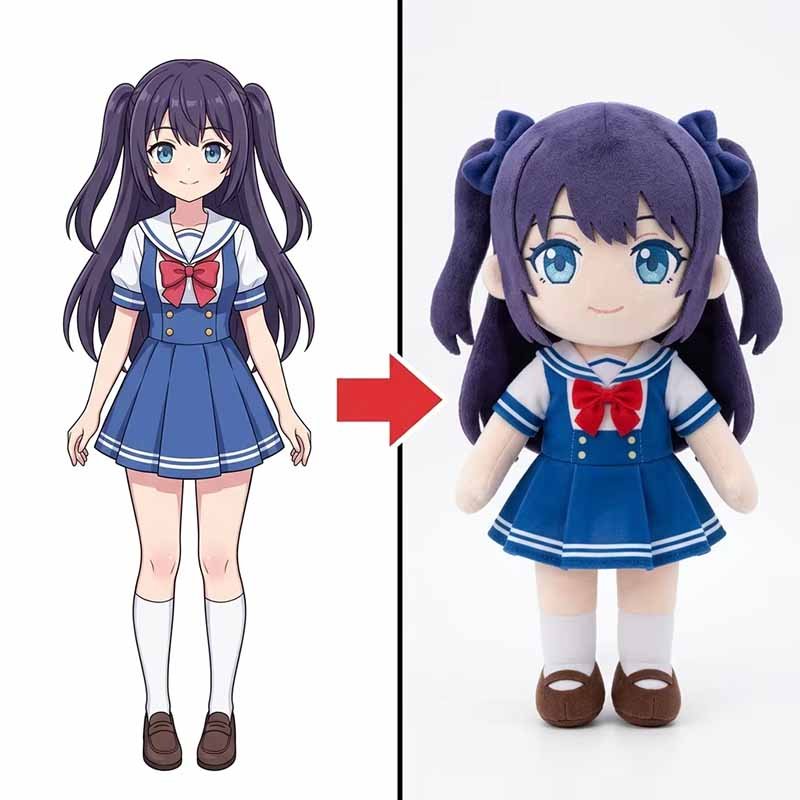
Anime designs demand disciplined visual translation. Small differences in eye shape, hairstyle, costume proportion, or expression can change the character’s perceived identity. Flat illustrated hair may need layered fabric, embroidery, printed panels, or controlled filling rather than literal three-dimensional copying. The right simplification protects the original impression while making mass production stable. The wrong simplification removes the feature fans care about most, even when the sample looks acceptable to someone unfamiliar with the property.
Are Sports and Creator IPs Growing?
Sports properties benefit from scheduled events, loyal communities, regional identity, and recurring uniform changes. Team mascots, tournament editions, jersey versions, anniversary products, and venue-exclusive items can support regular refreshes without rebuilding the entire character system. Their emotional value is strongly connected to place and participation. A mascot purchased at a stadium, club store, championship event, or alumni gathering can feel like a record of belonging rather than a general toy purchase.
Creator-owned properties offer a different opportunity. Illustrators, streamers, virtual creators, independent game makers, and character designers may reach smaller audiences than global studios, yet their followers can be highly responsive because the creator communicates directly with the community. Product sketches, sample reactions, launch countdowns, and behind-the-scenes updates can turn development into part of the content. This direct connection can improve launch energy when the audience already trusts the creator.
The risk is dependence on one person or one platform. Before building a wide plush range, teams should examine previous merchandise performance, audience location, average engagement, communication frequency, and the creator’s ability to support repeated launches. A creator property can be commercially strong without being globally famous, but the initial order, channel mix, and product count should reflect demonstrated purchase behavior rather than enthusiasm alone.
Which Evergreen Licenses Reduce Risk?
Evergreen licenses remain commercially active because new generations encounter them through fresh content, family influence, retail visibility, nostalgia, and collaboration. Their main advantage is not guaranteed sales. It is a longer decision window and a deeper pool of recognizable assets. Brands can develop more thoughtful products, establish reorder systems, and plan multiple channels without depending completely on one premiere or viral moment.
Evergreen properties can be refreshed through anniversary editions, retro artwork, seasonal costumes, archive colorways, new character combinations, premium materials, store-exclusive packaging, and cross-generational gift sets. These changes work best when they reveal another side of the property rather than covering the same base product with decorative novelty. A retro version, for example, should connect to a recognizable period in the property’s visual history, not merely use faded colors.
A balanced portfolio often combines evergreen and emerging licenses. Evergreen products provide a stable base, while newer properties create attention and learning. Relying only on established characters can make a range predictable and expose the business to expensive competition. Relying only on new properties can create volatile demand. The practical question is not whether an intellectual property is old or new; it is whether the property has enough visual identity, audience activity, content continuity, and product flexibility to justify the full development cycle.
Which Plush Formats Will Lead the Market?

Mini plush, bag charms, blind-box products, limited editions, and multi-size collections are likely to lead licensed plush development in 2027. These formats support self-expression, gifting, repeat purchases, and social sharing. Core-size plush will remain important, but many successful ranges will use smaller entry products and selected premium versions to create a broader price structure and a clearer collecting journey.
Are Mini Plush and Bag Charms Rising?
Mini plush and bag charms are gaining attention because they move the character from the bedroom shelf into everyday life. They can appear on handbags, backpacks, travel cases, key rings, workspaces, and social-media posts, turning a licensed character into a visible personal accessory. The Toy Association’s trend reporting has highlighted bag charms, clip-on miniatures, and wearable collectibles as forms of self-expression, while trade coverage from 2026 toy fairs noted plush keyring collections across many exhibitors.
Small formats offer useful commercial advantages. They can provide a lower entry price, support multi-character collecting, fit compact retail displays, and reduce the storage commitment required from consumers. They can also introduce a property to customers who are not ready to buy a larger plush. However, the manufacturing challenge increases as the format shrinks. Seam allowances occupy more of the face, thick fabric can hide embroidery, and layered clothing can make the body look bulky.
Attachment design deserves the same attention as the plush body. The fabric loop, cord, chain, clasp, or metal ring must suit the item’s weight and intended use. A bag charm experiences repeated pulling, movement, abrasion, and exposure that a shelf product does not. The final sample should therefore be reviewed while hanging, moving, and attached to a real bag, not only while resting on a table.
How Do Blind Boxes Drive Collecting?
Blind boxes change a single purchase into a selection event. The customer buys the product and the possibility of receiving a preferred, rare, or unexpected design. That uncertainty can encourage repeat purchases, community trading, reveal videos, and conversation around the series. It works best when every regular design is desirable. If most customers feel disappointed unless they receive the hidden version, the series may create transactions without building long-term affection.
A balanced series commonly includes several regular designs and one or more lower-frequency versions, with a packing ratio that can be controlled during production and explained accurately within the brand’s legal and marketing framework. The product team should decide whether the series is character-based, costume-based, expression-based, or theme-based. Mixing all four approaches in a small collection can make the range feel inconsistent, even when every individual design is attractive.
Operational discipline is essential because similar SKUs can be mixed during embroidery, cutting, sewing, accessory assembly, packing, and carton loading. Each design needs its own code, approved image, material set, embroidery file, accessory pack, packaging version, and carton rule. Pufumi’s documented multi-SKU process includes SKU coding, separated components, embroidery-version control, packaging labels, barcode checks, and carton-ratio verification for licensed series.
Do Limited Editions Increase Value?
Limited editions can increase urgency and perceived collectibility, but scarcity only works when customers believe the product deserves attention. Adding a numbered card to an ordinary item does not create meaningful value. A stronger limited edition has a visible reason to exist, such as a special costume, anniversary date, premium fabric, alternate expression, artist collaboration, location, event, or channel connection.
The meaning of “limited” should be defined before production. Internal teams need a confirmed total quantity, market region, sales channel, numbering method, replacement policy, and position on future reissues. Confusing claims can damage collector trust, especially when a product described as exclusive later appears in another channel without a clear distinction. A second edition can still be released, but changes in color, packaging, numbering, or accessories should make the relationship transparent.
Limited runs also require better quality and replacement planning. If numbered units are damaged during production, freight, or fulfillment, the brand needs to know whether replacement stock exists and how numbers will be assigned. Producing no replacements can create customer-service problems, while producing too many can weaken the scarcity claim. The right quantity depends on the channel, product complexity, inspection standard, and expected after-sales risk.
Which Sizes Support Multi-SKU Lines?
A multi-size range allows one character to serve several needs, but every size should have a distinct commercial role. Producing the same design in five sizes without a channel or price strategy can create unnecessary development work and inventory. The following figures are practical planning ranges rather than universal standards. Final dimensions depend on character proportions, target age, packaging, safety requirements, retail position, and the amount of detail that must remain visible.
| Format | Common finished-size range | Commercial role | Main engineering concern |
|---|---|---|---|
| Plush keychain or bag charm | 8-15 cm | Entry purchase, accessory, impulse item | Small facial details, body thickness, and attachment strength |
| Mini collectible plush | 10-18 cm | Series collecting, blind box, gifting | Shape control and clean detail at reduced scale |
| Core plush | 20-30 cm | Main retail SKU and broadest audience | Balance of fidelity, softness, cost, and packaging |
| Premium plush | 35-50 cm | Higher-value gift or collector item | Filling consistency, display stability, and shipping volume |
| Large statement plush | 60 cm and above | Event item, room display, premium promotion | Structural support, compression recovery, and freight cost |
A practical first range might contain one entry-size charm, one core plush, and one premium version rather than every possible size. Additional formats should be added when a distinct channel, customer behavior, or sales result justifies them. A successful core product can later extend into mini, costume, or gift-set versions, allowing the brand to reuse approved character decisions while still creating a meaningful new offer.
How Are Design and Materials Evolving?

Licensed plush design in 2027 will emphasize stronger character recognition, tactile variety, more precise material claims, and selective interactive functions. Brands will need to balance visual accuracy with softness, safety, cost, packaging, and mass-production stability. The most effective material or technology choice will support the character and user experience rather than merely making the product description sound more innovative.
What Defines Character Fidelity?
Character fidelity is the ability of a plush product to preserve the visual and emotional identity of the original design after it has been converted into fabric, seams, embroidery, filling, and production tolerances. It is not the same as copying every line literally. Artwork may show impossible angles, floating accessories, extremely thin limbs, or facial features that cannot be reproduced with normal sewing. The development team must identify which elements are essential and which can be simplified safely.
For many characters, the recognition hierarchy begins with the head silhouette, eye spacing, mouth shape, and head-to-body proportion. Clothing, hair, ears, tails, color blocking, and signature accessories usually follow. Small decorative details matter, but they should not be protected at the expense of the main expression. A perfectly printed symbol cannot rescue a face that feels older, angrier, flatter, or less energetic than the approved character.
Corrections need measurable language. “Make it cuter” is difficult to execute consistently, while “move the eyes upward by 3 millimeters,” “reduce the mouth width by 15%,” or “increase the head-to-body ratio” gives the pattern and sample teams a clear action. Pufumi’s documented revision method records sample versions, feedback, material or pattern changes, timing effects, and approval status, turning subjective comments into traceable production decisions.
Are Sensory Textures Gaining Ground?
Sensory appeal is becoming more important because customers judge plush through touch as well as appearance. HKTDC’s 2027 toy trend outlook highlights sensory and scented play alongside licensed characters and collectible products. Trade-show reporting has also described growing interest in tactile licensed toys and comfort-oriented plush. The opportunity is broader than adding novelty fabric. Texture can make a character feel calmer, more premium, more humorous, more realistic, or more emotionally inviting.
Short minky provides a smooth, controlled surface that works well for embroidery and clean color areas. Faux fur creates volume and animal character but can hide facial details or alter the silhouette. Sherpa feels warm and casual but may not suit precise features. Velvet-like materials can look refined yet may show pressure marks after packaging. Printed fabrics can reproduce complex graphics, although color, hand feel, abrasion, and alignment need careful review.
A product may use several textures, but each change should have a clear function. A softer belly can invite holding, contrasting ear panels can add tactile interest, and longer pile can support a tail or hairstyle. Every added fabric introduces another variable in stretch, shrinkage, pile direction, reflection, sewing behavior, and repeat availability. The goal is not to maximize material variety; it is to choose textures that improve the character without making production or reorders unstable.
How Do Sustainable Materials Fit?
Sustainable materials are moving from optional marketing language toward a more closely examined product claim. Customers increasingly ask what part of the plush is recycled, what documentation supports the claim, and whether the same material can be obtained again for reorders. A recycled outer fabric does not automatically make the whole product sustainable because filling, thread, labels, accessories, packaging, transport, and product durability still affect the overall result.
Claims should be precise. A brand can state that the outer fabric contains certified recycled polyester when documentation supports that component. It should avoid implying that the entire product is recycled if the filling, accessories, or packaging are conventional. The product file should connect the claim with the material code, supplier documentation, applicable transaction records, and approved marketing wording. This helps protect both consumer trust and internal compliance review.
Performance remains essential. A certified fabric that has inconsistent color, unsuitable pile length, weak sewing performance, or unreliable availability may create waste through rejected samples and unstable reorders. Pufumi’s documented material-review process compares candidate fabrics by composition, color, GSM, pile length, hand feel, MOQ, lead time, cost, certification, risk, and supply stability before the approved material enters the BOM and material-lot records.
Is Interactive Plush Ready to Scale?
Interactive plush can create stronger engagement, but it introduces failure points that do not exist in a traditional soft product. Sound, lights, sensors, buttons, recording functions, batteries, wiring, and access compartments must continue working after sewing, filling, final closure, packaging, and transport. The first question should be whether interactivity strengthens the character. A familiar phrase, game sound, reaction, or storytelling function can feel meaningful, while a generic module may only raise cost and complexity.
The second question is whether the function can be inspected reliably. Electronic modules may need testing before insertion, after sewing, after final closure, and after packaging. Placement must protect sound clarity and user access without creating an uncomfortable hard area. Filling can block speakers or buttons, and a working sample can fail after packaging if pressure changes the switch position. Functional testing should therefore reflect the final assembled and packed product rather than only the loose electronic component.
The third question concerns target age and market. Battery access, small parts, wiring, washability, warnings, and shipping declarations can change the compliance path and customer-service burden. Interactive plush is ready to scale when the function is simple enough to reproduce, valuable enough to justify its cost, and supported by clear inspection, replacement, labeling, and after-sales procedures.
How Are Kidults Changing Licensed Plush?

Kidult consumers are changing licensed plush by treating it as fandom merchandise, decor, fashion, comfort, and self-expression rather than only as a children’s toy. They respond to character accuracy, premium materials, nostalgia, exclusivity, and shareable packaging. This creates demand for wearable miniatures, refined collector editions, and planned product drops, while making weak design choices more visible to knowledgeable fan communities.
How Do Adults Choose Licensed Plush?
Adults often begin with emotional relevance. They may buy a character connected to childhood, a favorite game, a current series, a community, or a shared memory. After that emotional trigger, they can be more critical of execution than brands expect. They examine whether the face resembles the approved artwork, whether the fabric looks inexpensive under normal lighting, whether the product sits correctly, and whether the packaging protects and explains the item.
Adult purchasing is not limited to premium products. Entry-price charms and mini collectibles can perform well because they allow frequent collecting, daily use, and compact display. The difference is that even a small product must feel intentional. A miniature with crowded embroidery, a weak hanging point, or a misshapen face will not be excused simply because it is inexpensive. The customer may own several products from the same property and compare them closely.
Adults also purchase plush as gifts for other adults. That increases the value of packaging, authenticity, story cards, and a clear connection to the property. Circana’s 2025 data showed that adults were the fastest-growing U.S. toy age group in the first quarter, and 2026 industry reporting continued to describe adults as a major structural force in the market rather than a temporary novelty.
What Makes Plush Shareable?
Shareable plush is visually understandable within seconds. The face reads clearly on a phone screen, the silhouette remains recognizable at a small image size, and the product offers a scene, reveal, scale, or use that people want to show. Clear color blocking and one or two memorable features often perform better in photographs than excessive detail. Poor filling, crooked embroidery, loose clothing, or an unstable pose also become more visible in close-up content.
Format influences the type of content customers create. A bag charm appears naturally in outfit posts, travel photographs, and “what’s in my bag” videos. A blind-box plush supports unboxing and trading content. A large statement plush creates humor and scale. A seasonal edition fits a limited calendar moment, while a premium boxed piece supports collection-room and display content. The product’s social role should be considered when selecting size, pose, packaging, and accessories.
Shareability should be tested during sampling rather than discussed after production. Teams can photograph the sample in daylight, indoor light, packaging, a bag, and a likely display setting. A fabric that looks attractive in hand may reflect too much light on camera. A face that appears balanced from the front may look distorted from the three-quarter angle commonly used in consumer posts. These tests are inexpensive compared with correcting a finished production run.
How Do Product Drops Create Scarcity?
A product drop concentrates attention into a defined moment and gives fans a reason to purchase now rather than postpone. It works best when the brand already has a direct communication channel, such as a membership program, creator audience, game community, event calendar, convention presence, or retailer loyalty base. Without an audience expecting the release, scarcity can look like poor availability rather than excitement.
A strong drop has a clear story. It may celebrate an anniversary, a character transformation, a new season, a location, an event, or a collaboration. The plush, packaging, quantity, and release message should support the same idea. A limited winter costume released without a seasonal story may feel arbitrary, while a version linked to a familiar episode or event gives collectors a reason to remember it.
Operational planning is as important as marketing. Inventory must be allocated by channel, exclusive versions must be packed correctly, and warehouses need accurate SKU, barcode, and carton data. Brands should also decide whether restocking is possible. A visually distinct second edition can meet continued demand without pretending that the first limited release was not limited. The promise made at launch should remain understandable after the product sells out.
How Can Brands Balance Viral and Evergreen?
Viral and evergreen products serve different purposes. Viral products create rapid attention, while evergreen products create continuity, reorders, and a stable base for the range. The safest approach is not to choose one. It is to build a portfolio in which proven characters and formats support selective experiments. A core character can remain available in a standard size while a trending expression, costume, or content-linked version appears as a shorter release.
A practical range can be divided into three levels. The first is the core reorder group, built around stable recognition and repeat demand. The second is the seasonal or content-linked group, timed around releases, holidays, events, or updates. The third is the test group, using controlled quantities, faster feedback, and clear exit rules. Each level should have a different inventory expectation and approval priority.
A viral design should not consume the same inventory budget as a proven core SKU. At the same time, a range built only around old bestsellers may gradually lose relevance. The goal is to protect the commercial base while creating enough novelty to keep the community watching. Sales data, waiting lists, repeat purchase, and channel feedback should guide the next wave more strongly than social discussion alone.
How Should Brands Plan 2027 Programs?
Brands should plan 2027 licensed plush programs backward from the required warehouse or launch date. The process should cover rights confirmation, character priorities, SKU roles, sample revisions, licensor approvals, materials, testing, packaging, production, and freight. Multi-SKU ranges need one controlled source of truth so that approved artwork, samples, BOMs, labels, barcodes, and packing rules remain aligned.
What Should a 2027 Range Include?
A strong range gives each SKU a commercial role. Not every character needs every size, and not every product should remain available permanently. A hero SKU communicates the property immediately and receives the strongest visual support. An entry SKU, such as a charm or miniature, lowers the purchase barrier. A core SKU serves broad retail and reorders. A premium or limited SKU creates higher perceived value, while a seasonal item supports a specific content or calendar moment.
Character selection should consider more than popularity rankings. Some characters are naturally suited to small formats because their faces and silhouettes remain readable at reduced scale. Others require enough size to preserve clothing, hair, props, or facial detail. Some deserve a permanent core product, while others work better as part of a complete series. The range plan should identify which characters attract new customers, which support collecting, and which are likely to generate repeat demand.
Pufumi’s documented product-line model separates Hero, Entry, Premium, Limited, Blind Box, Bag Charm, Gift Set, Seasonal, and Reorder roles. It also connects successful reorders with Golden Samples, BOMs, version control, quality records, and retained material information. This approach treats the plush range as a connected product system rather than a group of unrelated items.
How Early Should Development Start?
Licensed plush should begin earlier than ordinary promotional merchandise because the factory is not the only approval party. The brand, licensee, licensor, design team, compliance team, packaging team, retailer, and logistics team may all influence the final result. The following schedule is a planning range rather than a fixed production promise. Complex characters, multiple regions, electronic functions, laboratory work, and slow approval rounds can extend it significantly.
| Stage | Suggested window before launch | Key output |
|---|---|---|
| Rights, brief, and SKU definition | 9-12 months | Confirmed category, territories, characters, channels, and commercial roles |
| Engineering review and first samples | 7-10 months | First physical samples, material options, and structural notes |
| Revisions and licensor approval | 5-8 months | Approved appearance, colors, clothing, accessories, and branding |
| Packaging and compliance preparation | 4-7 months | Copyright lines, labels, BOM, test samples, and packaging artwork |
| Pre-production sample and setup | 3-5 months | Production baseline, inspection criteria, and final packing rules |
| Bulk production and inspection | 2-4 months | Finished goods, inspection records, and approved shipment |
| Freight and warehouse receipt | 1-3 months | Customs, distribution-center, or fulfillment arrival buffer |
Some stages can overlap, but overlap creates risk when decisions are not stable. Beginning packaging before the product size is confirmed can force dieline changes. Ordering fabric before color approval can create unusable stock. Printing copyright information before the market version is final can make packaging noncompliant. The critical path should therefore identify which activities may proceed conditionally and which must wait for written approval.
How Should Approvals Be Managed?
Approval management is one of the least visible but most important parts of licensed plush development. A project can fail even when the product looks attractive if the factory uses an outdated file, the package carries the wrong copyright line, or a late comment is applied to only some SKUs. Every approval should identify the item, version, date, approver, market, and status, and comments should be consolidated rather than scattered across unrelated messages.
A controlled path normally covers character interpretation, materials, colors, embroidery, printing, first samples, revision samples, clothing, accessories, logos, copyright lines, packaging artwork, pre-production samples, and final shipment standards. The approved sample must be connected to the production file. A photograph alone is not enough because the BOM, pattern version, embroidery program, color reference, filling specification, labels, and packing instructions must all correspond to the same baseline.
Pufumi’s documented controls require a current production baseline, a pre-production sample as the main quality reference, separated SKU management, first-piece confirmation for core IP projects, inspection points across embroidery, printing, cutting, sewing, filling, shaping, and packing, plus final product inspection before shipment. These controls reduce the risk of a good sample becoming an inconsistent production order.
How Can Reorders Stay Consistent?
A reorder is not simply a repetition of the first purchase order. Fabrics may come from a new dye lot, thread colors may shift, a component supplier may change, and production teams may interpret filling or shaping differently. Consistency begins with records from the original run. The approved sample, BOM, pattern version, embroidery files, material codes, filling weight, accessories, labels, packaging dimensions, and inspection findings should remain connected.
Before a reorder begins, new materials should be compared with the approved baseline. Even when the supplier and code are unchanged, color, pile direction, density, stretch, or hand feel can vary. The first pieces of the reorder should be compared with both the Golden Sample and a retained production sample. Reviewing the new batch alone may hide gradual drift because each small change can appear acceptable without a stable reference.
Reorders also provide useful commercial information. Brands can increase successful characters, reduce weak ones, adjust carton ratios, change channel allocation, or create a new market version without rebuilding the full range. A reliable development partner should preserve the original decisions while identifying which parts of the program can change safely. The real success of a 2027 launch is not only that the first shipment arrives; it is that the product can be replenished and expanded without losing the qualities that earned customer demand.
Conclusion
Licensed plush in 2027 will reward teams that connect cultural relevance with disciplined product development. The license creates recognition, but the product still has to earn its place through the right format, accurate character interpretation, satisfying materials, sensible price architecture, thoughtful packaging, and dependable execution. Miniatures, bag charms, blind boxes, limited editions, premium collector pieces, sensory surfaces, and selective interactive features will all have opportunities, although none should be adopted simply because they are visible in trend reports.
The practical advantage comes from treating the range as a system. A hero SKU attracts attention, an entry item expands access, a core plush supports reorders, and a limited product creates a reason to return. Approval files, Golden Samples, BOMs, packaging versions, barcodes, and production records keep that system stable when several characters, markets, and launch dates are involved. Brands preparing a licensed plush program can use an early engineering review to test whether the proposed characters, formats, materials, and timeline support one another before committing to a larger production plan.
Frequently Asked Questions
What licensed plush formats are likely to be popular in 2027?
Mini plush, bag charms, blind-box collections, core-size character plush, limited costume editions, and selected premium display pieces are likely to remain important. Their strength comes from serving different customer behaviors rather than from format alone. A bag charm supports daily use, a blind box supports collecting, a core plush provides broad gift appeal, and a premium edition supports display and scarcity. Brands should choose formats according to audience, channel, character detail, and price rather than attempting every format at once.
Are adult collectors important to licensed plush sales?
Yes. Adults are now a structural part of the toy and collectibles market, not a temporary side audience. Recent Circana reporting showed strong adult spending and faster growth among adult toy customers, while industry research has connected adult purchases with nostalgia, fandom, self-expression, and collecting. Adult customers often evaluate facial accuracy, materials, packaging, display stability, and authenticity closely, although they also purchase affordable charms and miniatures when those products feel well designed and connected to the property.
How early should a licensed plush project start before launch?
A multi-SKU licensed plush program often benefits from beginning nine to twelve months before the required launch, particularly when licensor approval, custom materials, testing, retail packaging, and ocean freight are involved. Simpler projects may move faster, while complex characters, electronics, several market versions, or repeated approval rounds can require more time. The schedule should be planned backward from warehouse receipt rather than from the factory completion date, leaving realistic buffers for revision, inspection, customs, and retail distribution.
What makes a licensed plush sample look accurate?
Accuracy begins with a recognition hierarchy rather than equal attention to every detail. The development team should identify the head silhouette, facial spacing, expression, body proportion, costume, colors, and signature elements that fans notice first. Sample comments should then be converted into measurable actions, such as changing eye position, mouth width, head size, filling density, or costume length. Accurate records across sample versions help preserve approved decisions when the product moves into production.
Are sustainable materials suitable for licensed plush?
They can be suitable when documentation, appearance, supply stability, and production performance are reviewed together. Recycled polyester fabric or filling may support a more responsible product direction, but claims should identify the specific component rather than describing the entire plush as recycled without evidence. The approved material should also meet color, pile, sewing, embroidery, hand-feel, target-age, and reorder requirements. A well-documented, durable material can provide more value than a broad environmental claim attached to an unstable supply option.
How can brands prevent SKU mixing in blind-box plush programs?
Prevention requires controls at every production stage, not only during final packing. Each design should have a unique SKU code, approved image, material set, embroidery file, accessory pack, packaging version, barcode, carton rule, and packing ratio. Similar fabrics and components should be physically separated and clearly labeled. First-piece confirmation, in-process checks, barcode scanning, carton reconciliation, and retained packing records help identify errors before mixed products reach the warehouse or customer.
What information should a brand prepare before contacting a plush manufacturer?
A useful starting brief includes proof of rights or authorization, character artwork or a style guide, target dimensions, estimated quantities, SKU count, intended market, target age, launch date, sales channel, packaging expectations, and an initial cost range. The brief does not need to answer every engineering question, but it should make the commercial goal clear. With that information, a manufacturer can evaluate character complexity, likely materials, sampling path, approval risks, testing needs, production feasibility, and a realistic schedule.