 Skip to content

Weighted Plush Manufacturer | OEM & ODM Plush Toys
Create weighted plush toys with balanced pressure, secure inner filling compartments, and consistent weight control for a comfortable, premium user experience.
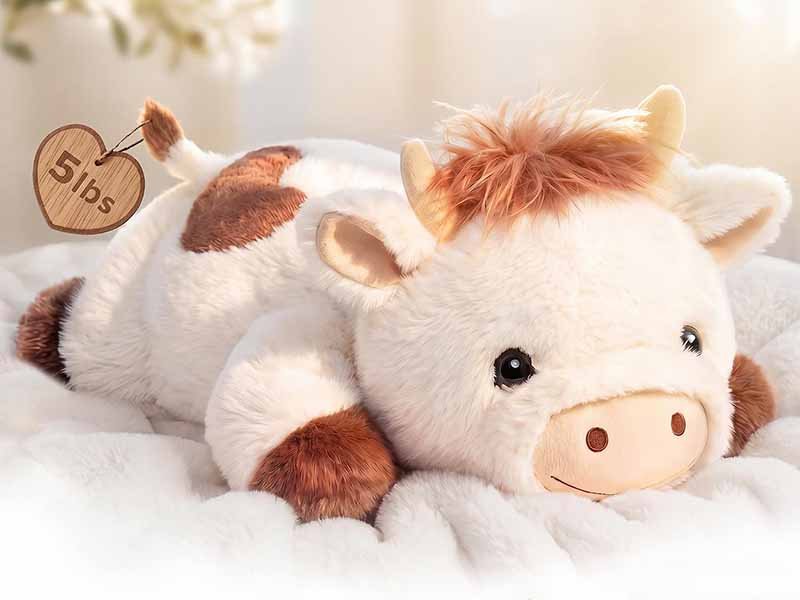
Pufumi provides OEM/ODM weighted plush manufacturing for brands, retailers, and wellness-focused product programs. We support custom weight, size, fabric, filling structure, embroidery, removable or fixed inner pouches, and retail packaging. Standard prototypes can be completed in 7–12 working days, with weight distribution and construction checked before bulk production.
Why Weighted Plush Requires Specialized Manufacturing
Weight Moves Internally
Pellets Become Exposed
Bulk Weight Drifts
Compliance Starts Late
Weighted Plush Products Built Around Real Use

Character Weighted Plush

Weighted Animal Plush

Lap Weighted Plush

Shoulder Weighted Plush

Removable Insert Plush

Retail Weighted Collections
Built for Established Plush and Retail Programs
Pufumi supports organizations that need structured product development, controlled approvals, documented manufacturing, and dependable repeat production rather than basic stock-item sourcing.
Plush Toy Brands
Sensory Product Brands
Licensed IP Programs
Lifestyle Brands
Major Retail Programs
Multi-SKU Collections
Define Every Weighted Plush Specification Clearly
Accurate quotations and reliable production begin with measurable product inputs. Pufumi converts design expectations into dimensions, materials, internal construction, tolerances, packaging, and inspection requirements.
| Specification | Options or Inputs | Engineering Focus |
|---|---|---|
| Finished Size | Seated height, body length, width, depth | Shape capacity, insert space, packaging volume |
| Finished Net Weight | Defined per approved SKU | Experience, freight, carton handling, tolerance |
| Insert Weight | One insert or several compartment weights | Distribution, count, identification, inspection |
| Weight Location | Abdomen, lower body, limbs, shoulder zones | Center of gravity, pose, body contact |
| Weighted Media | Project-approved pellets or beads | Source, particle size, traceability, containment |
| Outer Fabric | Minky, short plush, velboa, fleece, specialty fabric | Touch, stretch, pile, seam behavior |
| Soft Filling | Lofted fiber, support filling, mixed density | Shape, softness, recovery, facial definition |
| Insert Structure | Single chamber, multi-chamber, removable insert | Movement, closing, fixing, care method |
| Surface Details | Embroidery, applique, printing, woven elements | Durability, distortion, character fidelity |
| Target Age | Defined before final structure approval | Accessible parts, warnings, test planning |
| Sales Market | United States, EU, UK, Canada, or others | Documentation, labels, applicable requirements |
| Care Method | Surface clean, removable shell, validated wash route | Materials, opening design, label wording |
| Unit Packaging | Polybag, paper wrap, retail box, gift box | Product protection, barcode, display |
| Order Quantity | Quantity per SKU and market version | Material planning, packaging, line arrangement |
| Delivery Requirement | Warehouse, 3PL, retail DC, or other route | Carton data, labels, timing, transport review |
A weighted plush quotation normally requires artwork or references, target dimensions, finished weight, quantity per SKU, target age, sales market, fabric direction, packaging, and required delivery date. Projects with licensed assets, removable inserts, custom-dyed fabric, specialty packaging, or multiple market versions require additional review.
Engineering Balanced Weight Distribution
Weight Planning Begins With Intended Use
Distribution Must Be Repeatable in Production
A balanced prototype has limited value if the production team cannot reproduce the same insert position and filling zones. Pufumi therefore connects the weight plan to pattern marks, attachment points, insert IDs, work instructions, filling order, closing procedures, and inspection checkpoints. Insert location may be controlled with internal fabric tabs, shaped pockets, compartment seams, or defined assembly positions. The selected method depends on product size, intended movement, care method, target age, and whether the insert should be removable. Internal fixation should reduce uncontrolled movement without creating external puckering or a hard attachment line. Soft filling is planned around the insert rather than added randomly. Head, face, body, limbs, and lower support zones may use different amounts or densities. Filling order matters because an insert loaded too early can obstruct turning or sewing, while an insert loaded too late may be difficult to position correctly. Production instructions identify when the insert is weighed, loaded, fixed, and rechecked. Bulk inspection compares more than the final scale reading. A product can have the correct net weight while the insert sits too high, one compartment is underfilled, or excess soft fiber changes the center of gravity. Pufumi combines weight records with pose review, dimensional checks, handfeel comparison, and Golden Sample reference. Repeat orders use archived insert specifications, filling codes, approved materials, and retention samples to reduce batch drift.
Secure Weighted Insert Bag Systems
Insert Construction Reduces Movement and Leakage
Containment Extends Beyond the Insert
Filling Systems for Shape, Softness, and Weight

Soft Fiber Filling

High-Rebound Filling

Shape Support Materials

Weighted Media

Compartment Materials

Hybrid Filling Structure
Fabrics Chosen for Feel, Shape, and Strength

Minky Fabric

Short-Pile Plush

Velboa and Smooth Plush

Specialty Textured Fabrics
Sewing Structures Designed Around Added Weight
Pattern Engineering Creates Internal Space
Sewing Sequence Protects Shape and Containment
Final Closing Is a Controlled Operation
Weighted Plush Sample Development Process
Engineering Samples Answer Structural Questions
Feedback Is Converted Into Measurable Revisions
Comments such as “make it softer,” “the belly feels wrong,” or “the character looks less friendly” need to become production actions. Pufumi organizes feedback by face, body proportion, pattern, fabric, filling, insert, weight location, embroidery, accessories, labeling, packaging, cost, and timing.
A revision brief may state that the insert should move 20 mm lower, the central pouch should become three compartments, soft filling should increase around the side walls, the eye line should move upward, the abdomen should widen, or the finished net weight should be adjusted. Measurements and annotated images reduce interpretation differences between the brand team and sample room.
Every sample receives an ID and version. Records include the date, materials, insert version, weight, dimensions, photos, review notes, actions, and approval status. A material or structure change after the first sample may affect quotation, timeline, testing preparation, or packaging. The project manager identifies the impact before the change becomes a production instruction.
Approval should occur in the intended use state and with the correct product configuration. A removable insert must be reviewed installed and removed. A shoulder product must be evaluated on the shoulder. A seated character must support itself without hidden assistance if independent sitting is an approved claim. Final approval leads into PPS, Golden Sample, and production file release.
From Approved Sample to Production Standard
Golden Sample and Production Files Work Together
Change Control Protects the Approved Result
Designs often continue evolving after sample approval. A new fabric, lighter finished weight, revised warning, packaging change, or different market can affect the product more widely than expected. Pufumi records significant changes through a structured change process. The record identifies the requested change, affected SKU, previous version, new requirement, reason, cost impact, lead-time impact, compliance impact, approval responsibility, and effective batch. Engineering determines whether a new sample, revised PPS, updated testing sample, or packaging proof is required. Production does not rely on an informal chat message to replace an approved specification. Material substitutions receive special review. Two fabrics with a similar color may differ in GSM, pile, stretch, density, touch, embroidery performance, availability, and certificate scope. A different insert material may change pouch dimensions or seam requirements. A different particle density may produce the same total weight with a different volume and feel. Repeat orders return to the approved files and previous retention samples. Current material lots, inserts, labels, and packaging are checked against the archived version. Where an approved alternative is used, the effective batch and affected SKUs are recorded. The goal is not to claim that every unit is visually identical, but to keep reasonable production variation within a defined and approved quality boundary.
Compliance Begins Before Final Sampling
Target Age First
Market Route Defined
Product Risks Reviewed
Testing Files Prepared
Quality Checks Designed for Weighted Plush
Material Verification
Insert Weight Check
Insert Count Check
Insert Position Check
Seam and Closure Check
Leakage Inspection
Finished Weight Check
Shape and Use Review
Controlling Weight Across Bulk Production
Pufumi separates insert, filling, finished weight, shape, and packaging controls so a correct scale reading does not hide an incorrect internal build.
| Control Item | What Is Checked | Production Record |
|---|---|---|
| Weighted Media | Approved material and batch | Material code and receiving record |
| Insert Weight | Weight before installation | Insert weighing record |
| Compartment Fill | Distribution between chambers | Insert specification check |
| Insert Quantity | Number required per SKU | Assembly count record |
| Insert Position | Location and orientation | In-process position check |
| Insert Attachment | Tabs, pocket, or approved fixing | Assembly inspection |
| Soft Filling | Material code and filling amount | Filling record |
| Zoned Filling | Face, body, limbs, support areas | Work instruction and handfeel check |
| Finished Net Weight | Complete unpacked product | Finished weighing record |
| Finished Dimensions | Approved measuring method | Dimensional inspection |
| Product Pose | Seated, lying, shoulder, or lap state | Visual and use-state record |
| Seam Condition | Insert, outer shell, final closing | In-process and final inspection |
| Packaging Weight | Unit pack and carton information | Pack-out and carton record |
| Batch Traceability | SKU, batch, inspection, shipment | Project and batch code |
Weight tolerances are established from the approved product, measurement method, material behavior, structural risk, and commercial requirements. A general tolerance should not be copied across every size and design. Products with concentrated weight, several inserts, removable components, or strict logistics requirements may need tighter control and a different checking frequency.
Retail Packaging for Heavy Plush Products

Product Identification

Age and Warning Information

Care Instructions

Unit Packaging

Barcode and SKU Control

Master Carton Planning
How Your Weighted Plush Program Moves Forward
Submit Project Brief
Feasibility Review
Weight Architecture
Engineering Sample
Revision and Approval
PPS and Testing
Bulk Production and QC
Packaging and Delivery
Plush Development Resources Behind Every Program
Experienced Development Team
Structured Project Management
Sample-to-Production Control
Confidential Development
Weighted Plush Development Case
A realistic program model shows how appearance, insert design, weight control, sampling, packaging, and bulk records work together before a weighted plush reaches retail.
Project Brief and Initial Risk Review
A North American comfort-product brand planned a 24 cm seated weighted animal for specialty retail and e-commerce. The initial program contained one core SKU with an order quantity of 2,400 pieces. The target finished net weight was 1.20 kg, packed in an open-front retail box with a barcode label, care information, and market-specific product markings.
The original concept used one large central pouch positioned inside the abdomen. During the structural review, several risks were identified. The pouch dimensions occupied most of the lower body, leaving insufficient soft filling around the sides. The rounded body shape allowed the pouch to tilt forward. The proposed closing end rested close to the final outer filling seam. Vertical box storage could also pull the pouch downward and create a visible hard edge.
Pufumi proposed a three-compartment insert with a wider lower profile. The internal pattern included two attachment points and a shaped fabric pocket to stabilize orientation. Soft filling was divided between the head, upper body, side walls, limbs, and base. The face remained lightly filled for expression control, while the side walls received enough fiber to soften the insert outline.
Project data was organized before sample cutting:
| Project Item | Approved Planning Value |
| Finished Size | 24 cm seated height |
| Order Quantity | 2,400 pieces |
| Finished Net Weight | 1.20 kg target |
| Insert Structure | Three-compartment lower-body insert |
| Weight Location | Abdomen and seated base |
| Outer Material | Short-pile soft plush |
| Face Details | Embroidered eyes, nose, and mouth |
| Packaging | Open-front retail box |
| Market Direction | North American retail and e-commerce |
| Sample Route | Engineering sample, revision sample, PPS |

Engineering Sample and Revision
Bulk Control and Delivery Preparation
Production controls separated weighted and non-weighted values. Insert bags were weighed before installation and identified by SKU. Operators confirmed three compartments, correct orientation, two attachment points, and the approved lower-body position. Soft filling followed the zoned work instruction rather than a single total weight target. Finished inspection included net weight, seated pose, face, symmetry, handfeel, insert edge visibility, outer seams, final closing, leakage signs, label match, barcode match, and packaging condition. Carton quantity was selected after reviewing gross weight and manual handling rather than maximizing the number of units per carton. A production deviation was found during an in-process check when several inserts sat slightly higher than the approved position. The affected pieces were isolated before final closing. The assembly instruction was revised with a clearer internal placement mark, and the following production units were checked against the corrected location. The case demonstrates the core manufacturing lesson: a weighted plush program cannot be controlled by one finished-weight number. Insert construction, position, filling zones, posture, external feel, packaging, and batch records must remain connected from engineering sample through delivery.
Trust, Compliance & Production Assurance
Confidence for global brands and complex plush programs
Pufumi evaluates each project according to its target market, age grade, materials, construction, labeling, and packaging requirements. Depending on the assigned production site and project scope, our team can support ISO 9001 quality-management documentation and coordinate testing to EN71, ASTM F963, CPSIA, REACH, and other applicable standards. Factory audits, certifications, and test reports are verified by issuing body, validity period, facility, and product scope, giving brands greater transparency from sample development through controlled production and delivery.















Frequently Asked Questions
A weighted plush combines a soft exterior with one or more controlled weighted inserts. The inserts may be positioned in the body, lower base, limbs, or shoulder zones according to the intended use. Soft fiber filling remains necessary for shape and comfort. A properly developed product manages finished weight, distribution, containment, seams, posture, materials, care instructions, and applicable market requirements as one system.
Yes. Finished weight is developed according to product size, intended use, target age, structure, packaging, and project requirements. Pufumi separates insert weight, soft filling, accessories, and complete product weight during development. A requested number is reviewed for engineering feasibility rather than accepted without considering body dimensions, insert capacity, external feel, seam loading, logistics, and compliance preparation.
Weighted media is normally placed inside an independent insert bag rather than mixed freely with soft filling. Insert material, compartment layout, closing method, identification, and attachment are defined during engineering. Single-chamber, multi-chamber, and removable systems are evaluated according to product shape and use. Outer seams and access openings provide additional containment layers around the finished insert.
Yes. Weight may be concentrated in a lower body area or divided across the abdomen, base, limbs, or shoulder zones. The appropriate layout depends on posture, body contact, shape, desired drape, and stability. Multiple compartments can reduce particle movement but require more sewing and inspection. Sample approval should take place in the product’s intended use position.
Material selection is project-specific. The chosen media should have a defined source, particle specification, batch information, and compatibility with the insert construction. Particle density affects insert volume and feel. Pufumi reviews approved media together with insert fabric, seams, product age grading, market route, sound, cost, and testing preparation. Unidentified filler or informal substitutes are not used.
Removable inserts can be evaluated when the product concept, target age, care method, and market requirements support the structure. Development covers opening location, zipper or closure, backing, internal separation, insert dimensions, marking, orientation, and instructions. A removable system may support easier shell care but creates additional access, durability, and small-component considerations that require early review.
Pufumi controls approved weighted media, insert weight, insert count, compartment layout, position, attachment, soft filling, finished net weight, dimensions, posture, and handfeel. Insert bags can be weighed before loading, while finished products are checked according to the quality plan. Scale calibration, Golden Sample comparison, production records, and batch traceability support consistent repeat orders.
Weighted plush, licensed character products, electronic plush, and retail-packaged projects are normally evaluated from 500 pieces per SKU. Final MOQ depends on design, size, color, materials, insert structure, packaging, market version, and production planning. Different weights, colors, dimensions, characters, packaging formats, or barcodes may be treated as separate SKUs rather than combined automatically.
Standard plush samples generally require 7–10 business days after complete project information, sample payment, and key materials are confirmed. Complex weighted engineering samples normally require 10–15 business days. Material development, removable inserts, custom-dyed fabric, several SKUs, packaging prototypes, approval rounds, and compliance preparation can extend the schedule. A project-specific timeline is issued after review.
Provide artwork or reference photos, finished dimensions, target weight, preferred weight location, quantity per SKU, target age, sales market, material preference, logo details, packaging, testing requirements, and required delivery date. Licensed projects should confirm authorization status. Unreleased assets can be protected through an NDA review before complete confidential files are submitted.

Start Your Weighted Plush Development Program
- Artwork, front-side-back views, 3D files, or reference samples
- Finished dimensions and target weight
- Weight location and intended use position
- Quantity, SKU count, colors, and market versions
- Target age and sales countries
- Fabric, embroidery, applique, and label requirements
- Unit packaging, barcode, carton, and warehouse needs
- Required sample date and delivery date
- IP authorization status and NDA requirements
- Special quality, testing, or documentation requests


