Skip to content

Custom Realistic Animal Plush Manufacturer In China
Turn real animals, wildlife references, or branded animal concepts into production-ready plush with controlled proportions, fur direction, color placement, and facial details.
Pufumi provides OEM/ODM realistic animal plush manufacturing from pattern development and material matching to sampling, production, and QC. Standard prototypes typically take 7–12 working days, with photos and videos used to review body shape, markings, embroidery, and finishing before bulk production.
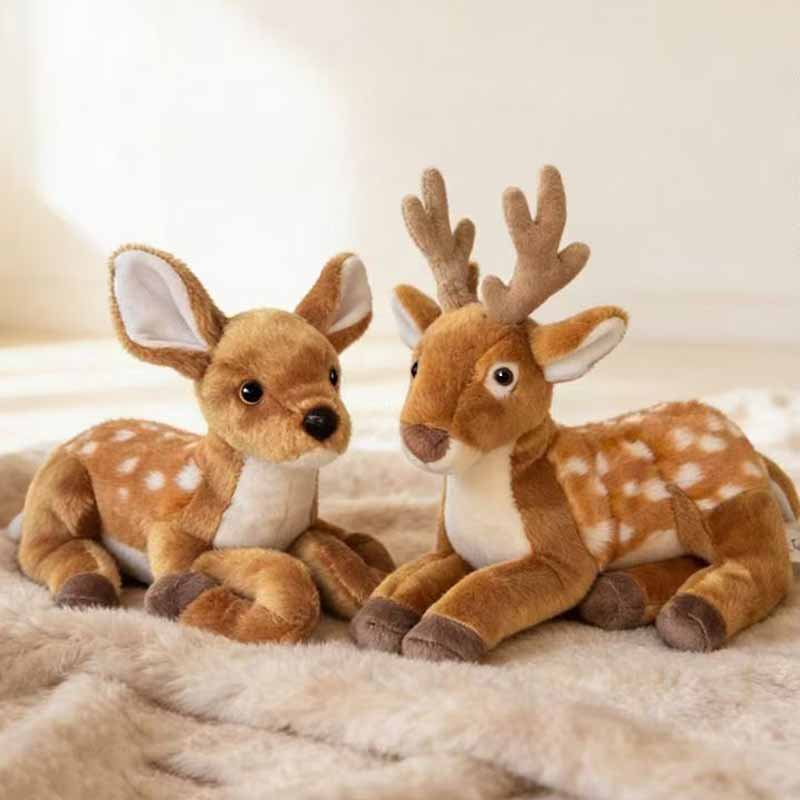
Why Brands Choose Pufumi for Realistic Animal Plush
Species Recognition Control
- Key landmarks remain visible after softening the design.
- Difficult details receive manufacturable alternatives.
- Species-sensitive decisions are reviewed before sampling.
- Approved interpretations become part of the project file.
Pattern And Pose Engineering
- Sitting, standing and resting poses follow different structures.
- Weight distribution is reviewed under display conditions.
- Side and front profiles are measured during sampling.
- Packaging pressure is considered before production release.
Fur And Color Mapping
- Face and body fabrics can use different pile heights.
- Direction arrows are added to pattern and cutting files.
- Important markings are aligned with seams and features.
- Physical swatches replace screen-only color approval.
Sample-To-Production Control
- Released files replace informal chat instructions.
- First articles are checked before full production.
- Changes require version confirmation.
- Repeat orders are compared against archived standards.
Retail Program Support
Realistic animal plush often belongs to a wider educational, conservation or destination merchandise range. Pufumi supports size architecture, SKU coding, hang tags, story cards, retail boxes, barcodes, carton marks and replenishment records.
- Entry, core and premium sizes can share one visual language.
- Packaging versions remain linked to the correct SKU.
- Educational copy can be supplied by the brand or institution.
- Reorders include material, label and specification review.

Built for Wildlife, Education and Retail Programs
Toy Brands
Zoos And Parks
Aquariums And Marine Centers
Museums And Education
Conservation Organizations
Destination Retailers
Realistic Animal Plush Collections We Can Develop

Wildlife Mammals

Marine Animals

Birds And Raptors

Farm Animals

Pet Breed Plush

Reptiles And Amphibians

Endangered Species

Regional Species
Where Realistic Animal Plush Projects Commonly Fail
Species Becomes Generic
- Define non-negotiable landmarks before sampling.
- Review front, side and three-quarter views.
- Separate necessary simplification from accidental distortion.
- Record the approved interpretation for production.
Stuffing Changes Proportions
- Specify regional filling density.
- Measure the filled prototype, not only the pattern.
- Compare both sides for symmetry.
- Confirm the final pose before material release.
Coat Patterns Drift
- Map important graphics to individual panels.
- Align printing with seam allowance and pile direction.
- Review sewn and stuffed trials.
- Set acceptable placement variation before production.
Bulk Loses The Sample
- Freeze the Golden Sample and BOM.
- Release approved patterns and workmanship notes.
- Check first articles before full output.
- Use in-line and final visual comparisons.
What Makes an Animal Plush Recognizably Realistic
Choose the Right Level of Realism
- Intended audience and retail setting
- Required species landmarks
- Preferred softness and expression
- Pose and display expectations
- Acceptable design simplifications
- Reference photographs approved for development
Balance Recognition with Plush Product Performance
A museum model and a soft retail plush serve different purposes. A realistic plush animal still needs enough softness for handling, sufficient seam strength for its intended use and a structure that survives packing, transport and display. Long legs may require wider joint areas. Narrow muzzles may need internal shape control. Large tails can move the center of gravity. Natural horn or claw forms may need softer, rounded interpretations. Very fine coat markings may require printing rather than separate fabric pieces, while dense facial fur may need trimming or a shorter contrast fabric. Decisions are therefore evaluated across four connected outcomes:
- Visual recognition: the animal reads correctly from normal viewing angles.
- Physical stability: the intended sitting, standing or resting pose remains credible.
- Production repeatability: trained operators can reproduce the approved form.
- Market suitability: materials, components, labels and packaging match the intended age and destination market.
From Species References to Production Standards
Reference Collection
- Confirm the exact species or breed.
- Select approved visual sources.
- Separate fixed landmarks from natural variation.
- Record the desired age and body condition.
Landmark Definition
- Mark front and side measurements.
- Highlight features that cannot be removed.
- Identify areas suitable for controlled softening.
- Confirm any expert review requirement.
Fur Mapping
- Define pile direction for each panel.
- Map color transitions and markings.
- Identify trimming zones.
- Attach physical material codes.
Pose Planning
- Set the primary viewing angle.
- Confirm base contact points.
- Review tail and limb interference.
- Test shelf stability after packing.
Approved Interpretation
- Client or specialist review is documented.
- Changes receive a version number.
- Approved data moves into sampling.
- Obsolete files remain blocked from production.

Engineering Silhouette, Proportion and Natural Animal Pose
Silhouette and Proportion Begin with Measurable Relationships
- Overall nose-to-tail length
- Standing or sitting height
- Head width and length
- Muzzle projection
- Chest and body depth
- Front and rear limb length
- Ear height and spread
- Tail length and base position
Pose Engineering Must Survive Handling, Packaging and Display
A believable pose is not achieved by shaping the sample only for photography. The product should recover after packing, remain balanced on the intended surface and retain the agreed posture through normal retail handling. For sitting animals, the base, rear legs and tail may form the main support zone. Standing animals need controlled foot placement, limb stiffness and body weight distribution. Long-necked or large-headed animals may require stronger internal shaping in selected areas while preserving a soft external feel. Marine animals need symmetry and controlled curves so fins or tails do not rotate after filling. Pose approval should include:
- Flat surface stability
- Front and side balance
- Recovery after temporary compression
- Handheld appearance
- Packaging fit
- Carton orientation
- Display after unpacking
Any internal support must be selected according to product use, age grading and market requirements. The most complex structure is not automatically the best; the preferred solution is the simplest construction that holds the approved form reliably.
Recreating Eyes, Muzzles, Ears and Animal Paws

Eyes And Expression
- Eye positions are measured from fixed seams.
- Long pile is trimmed or replaced around the face.
- Physical samples confirm shine, scale and color.
- Production checks compare both symmetry and expression.

Muzzle And Nose
- Side profile is reviewed after stuffing.
- Nose size is matched to muzzle volume.
- Mouth lines follow the approved expression.
- Face filling receives a defined regional range.

Ears, Horns And Crests
- Base angle is recorded in the pattern.
- Left and right placement uses common references.
- Internal layers are tested for recovery.
- Packaging is designed to limit permanent bending.

Paws, Hooves And Claws
- Paw-pad scale follows the animal style.
- Toe lines remain clear after filling.
- High-stress seams receive reinforcement.
- Finished feet are checked against pose requirements.
Matching Fur Length, Texture and Direction by Species

Short Dense Plush
- Strong definition for small features
- Good embroidery compatibility
- Lower visual tolerance for uneven seams
- Physical stretch and density checks required

Medium Pile Fur
- Balanced texture and shape definition
- Suitable for mixed retail price levels
- Direction-sensitive cutting
- Grooming needed around facial details

Long Faux Fur
- High visual richness
- Greater trimming labor
- Higher packing volume
- Compression recovery must be tested

Printed Fur
- Suitable for complex coat graphics
- Requires physical print proofs
- Position control varies by method
- Reorders need print and color references

Custom-Dyed Fur
- Strong series color control
- Material lead time must be planned
- Dye-lot consistency needs review
- Replenishment may require reserve material

Mixed Surface Construction
Some animals look more convincing with different surfaces across the face, chest, belly, paws or tail. Mixed construction can improve recognition and touch, but each added material increases sewing, inventory and inspection complexity.
- Materials serve defined visual zones
- Stretch differences are tested
- Seam transitions remain controlled
- Added texture must justify added complexity
Reproducing Stripes, Spots and Natural Color Gradients
Panel Color Blocking
- Suitable for clear color regions
- Strong repeat production control
- Adds pattern and sewing complexity
- Best reviewed on a filled prototype
Position Printing
- Print files link to panel orientation.
- Seam allowance is included in mapping.
- Distortion compensation may be required.
- Sewn and filled approval is essential.
All-Over Printed Fur
- Efficient for repeated surface patterns
- Allows natural individual variation
- Less precise landmark placement
- Cut orientation remains important
Gradient And Mixed Pile
- Printed gradients offer stronger placement.
- Fiber gradients create softer organic change.
- Panel gradients improve structural control.
- Physical trials confirm touch and repeatability.
Prototype Development and Controlled Sample Revisions
V1 Establishes the Main Animal Direction
A useful V1 review asks:
- Does the animal read correctly from front and side views?
- Are the head, muzzle, body and limb relationships convincing?
- Does the selected pose remain stable?
- Are the main fabrics appropriate for the intended texture?
- Are critical markings positioned correctly?
- Which details require engineering rather than cosmetic revision?
Revisions can affect more than one system. Shortening a muzzle may require new face panels, adjusted nose size, changed filling and revised print placement. Changing long fur to short fur can expose seams and alter finished dimensions. Each significant change is therefore reviewed for pattern, cost, material, packaging and schedule impact.
PPS and Golden Sample Prepare the Product for Production
A revision sample resolves appearance and construction. A pre-production sample then uses materials and methods close to the intended bulk specification, allowing final review of workmanship, labels, accessories and packaging interaction.
The Golden Sample becomes the production and inspection reference only after the required elements are approved:
- Final pattern version
- Confirmed fabric codes and colors
- Approved eyes, nose and other components
- Filling type and regional distribution
- Embroidery, print and applique files
- Trimming and grooming standard
- Product labels and packaging
- Key measurements and appearance views
Approval does not mean every soft product will be mathematically identical. It establishes the controlled characteristics, tolerances and visual limits needed to keep production aligned with the accepted design.
Pattern, Sewing and Zoned Stuffing Shape Every Animal

Panel Engineering
- Panel count follows structural need.
- Symmetry points are marked.
- Stretch direction is considered.
- Finished dimensions are checked after filling.

Fur Direction Marking
- Left and right panels remain coordinated.
- Face direction supports expression.
- Reversed pieces are isolated before sewing.
- Material yield is balanced against visual requirements.

Strategic Seam Placement
- Visual and structural seams are separated.
- Stress areas receive suitable reinforcement.
- Closing seams remain accessible and controlled.
- QC checks use defined seam locations.

Zoned Filling
- Filling type enters the BOM.
- Weight range is recorded.
- Regional density follows the Golden Sample.
- Filling order is included in work instructions.

Pose Stabilization
- Balance is checked on a flat surface.
- Tail and limbs are tested after packing.
- Internal support remains hidden.
- Age and market suitability guide material selection.

Final Closing And Shaping
- Closing points remain visually discreet.
- Loose fibers and threads are removed.
- Face and body symmetry are reviewed.
- Final pose is reset before packing.
Trimming, Grooming and Final Animal Shape Control
Trimming Is Designed Before Bulk Production
- Around the eyes to preserve visibility
- Across the muzzle to reveal shape
- Along the cheeks to control width
- Around paws and hooves for clean outlines
- Between contrasting pile lengths
- At seam areas where trapped fur affects appearance
Grooming and Cleaning Complete the Approved Presentation
Sewing traps fur inside seams, filling changes the coat direction and packaging can flatten selected areas. Final grooming restores the intended surface and makes products from different operators look more consistent. A controlled finishing sequence can include:
- Pulling trapped pile from seams
- Brushing according to the approved fur direction
- Blending trimmed and untrimmed zones
- Removing loose fibers
- Cleaning thread ends and surface debris
- Resetting ears, tails and limbs
- Comparing the silhouette against standard photographs
Packing trials are also important. Long coats, crests, tails and ears may need protective positioning, tissue support or a larger packaging allowance. Compression recovery is checked before the packaging method is approved. The finishing standard becomes part of the production file and final inspection checklist. Photographs should show how the animal must look immediately before bagging or placement into retail packaging.
From Approved Sample to Scalable Plush Production

Reference Review

Pattern Engineering

Material Approval

Prototype Development

Production Release

Cutting And Sewing

Filling And Grooming

Quality Inspection

Packaging And Delivery
Build a Multi-SKU Wildlife Plush Collection
Entry Format
Core Retail Plush
Premium Large Plush
Educational Edition
Limited Edition
Bulk Quality Control Against the Approved Golden Sample
Material Verification
- Compare against approved swatches.
- Record dye or print batch where needed.
- Check pile direction and backing condition.
- Isolate unapproved material before cutting.
First-Article Approval
- Measure key dimensions.
- Review front and side profiles.
- Confirm facial placement.
- Approve corrective action before continuation.
Sewing Inspection
- Check muzzle, limbs and tail roots.
- Review trapped fur and seam visibility.
- Verify reinforcement where specified.
- Remove defective work from the line.
Filling And Pose Checks
- Check head and body support.
- Compare left and right limbs.
- Test base stability.
- Review recovery after temporary compression.
Appearance Inspection
- Use controlled lighting.
- Compare critical species landmarks.
- Check print or marking placement.
- Remove loose fibers and surface debris.
Packaging Verification
- Scan barcodes where required.
- Verify market and language versions.
- Confirm carton assortment.
- Review packing recovery samples.
Safety and Compliance by Market and Target Age
Define the Product Before Selecting Requirements
- Target countries or regions
- Intended age grading
- Toy, collectible or decorative positioning
- Eyes, noses and other attached components
- Wires, internal supports or rigid structures
- Long cords, loops or accessories
- Printed, coated or specialty materials
- Packaging and label format
Coordinate Product Preparation with Independent Testing
For United States programs, applicable requirements may involve toy safety provisions, chemical restrictions, mechanical and physical testing, tracking information and documentation associated with the intended product classification. European and other markets follow their own applicable frameworks and labeling responsibilities. Pufumi can support:
- Product and feature risk review
- BOM and material information preparation
- Representative test sample coordination
- Label and packaging data preparation
- Communication with independent laboratories
- Corrective action after test findings
- Updated files and sample resubmission
Independent laboratories conduct the requested testing and issue the relevant reports. The responsible manufacturer, importer, brand or other designated legal party manages its statutory obligations according to the destination market. Factory audit documents, management-system certifications and material reports are reviewed separately from finished-product testing. A factory certificate does not replace a test report for a specific SKU, and a fabric document does not automatically establish compliance of the completed plush.
MOQ, Sampling and Production Timeline Planning
| Project Item | Typical Planning Range | Main Conditions |
|---|---|---|
| Core realistic animal plush | Usually evaluated from 500 pcs per SKU | Existing or commercially available materials, standard construction and stable packaging |
| Mini plush or compact formats | Often more stable from 1,000 pcs per SKU | Small components, sewing efficiency, embroidery and packing configuration |
| Multi-species collection | Evaluated per SKU and total program | Separate patterns, samples, material allocation, labels and packaging versions |
| Standard prototype | About 7–12 working days | Complete references, sample payment and key material confirmation |
| Complex long-fur prototype | Project-based | Custom fur, printing, trimming, structural pose and additional revision work |
| Sample revisions | Based on change scope | Pattern changes require more time than color or minor embroidery adjustments |
| Material preparation | Project-based | Stock fabric, custom dyeing, printing and special components follow different lead times |
| Bulk production | Confirmed after sample approval | Quantity, SKU count, season, material readiness and packaging complexity |
| Peak-season planning | Production planning recommended 8–12 weeks ahead | Capacity, materials, outsourced processes, testing and warehouse delivery dates |
| International delivery | Based on destination and shipping mode | Air, courier, sea, rail, warehouse appointment and customs requirements |
Realistic Animal Plush Development Program
A 2,400-Piece Snow Leopard Retail Collection
- 1,000 pieces of 24 cm core plush
- 600 pieces of 15 cm mini plush
- 500 pieces of 10 cm keychain plush
- 300 pieces of 38 cm premium plush
Production, Quality and Retail Delivery Controls
The collection uses separate SKU codes for product size, packaging and barcode version. Materials shared across the four items are linked under common approved codes, while each size has its own pattern, filling range, print scale and carton configuration. Quality checks focus on:
- Head-to-body proportion
- Muzzle profile
- Eye position and symmetry
- Ear angle
- Rosette placement around the face
- Tail length and curve
- Sitting balance
- Pile direction
- Trimming around the eyes and mouth
- Product and barcode matching
The first production articles from each SKU are compared with their corresponding Golden Sample before continued output. In-line checks monitor sewing, regional filling and print orientation. Final inspection reviews appearance, quantity, packaging, carton assortment and shipment marks. The retail system includes a hang tag with the species name, approved habitat information and the organization’s conservation message. Mini and keychain formats use compact tags, while the core and premium items carry larger story cards. Educational copy is supplied and approved by the responsible organization before printing. A program of this size requires synchronized sample approval, material allocation, packaging release and production planning. It also creates an organized foundation for later expansion into cub versions, seasonal packaging or additional mountain species.
Frequently Asked Questions

Trust, Compliance & Production Assurance
Confidence for global brands and complex plush programs
Pufumi evaluates each project according to its target market, age grade, materials, construction, labeling, and packaging requirements. Depending on the assigned production site and project scope, our team can support ISO 9001 quality-management documentation and coordinate testing to EN71, ASTM F963, CPSIA, REACH, and other applicable standards. Factory audits, certifications, and test reports are verified by issuing body, validity period, facility, and product scope, giving brands greater transparency from sample development through controlled production and delivery.















Start Your Realistic Animal Plush Program
- Animal species or breed
- Approved photographs or design files
- Realistic or semi-realistic direction
- Sitting, standing, resting or swimming pose
- Target dimensions
- Number of SKUs
- Quantity per SKU
- Intended age range
- Destination markets
- Retail, educational or conservation use
- Hang tag, story card or box requirements
- Required delivery or launch date