...
A reliable plush product development and manufacturing partner For brands Since 2007!

Your Trusted Custom Stuffed Animal Manufacturer and supplier

Create distinctive stuffed animals built for brands, collections, and retail growth.

Pufumi transforms animal concepts, mascots, and reference images into commercially viable products prepared for sampling, retail presentation, international distribution, and long-term replenishment.

  • 58+ specialists refine anatomy, posture, expression, and species-defining details.
  • Six sample lines accelerate prototype comparisons and revision approvals.
  • Fur, fleece, velboa, and filling are matched to intended handfeel.
  • Golden Samples lock silhouette, softness, and construction before production.
  • 35+ quality specialists inspect seams, stuffing, attachments, and finishing.
  • Multi-SKU planning supports animals across sizes, poses, and collections.

Built for Serious Stuffed Animal Programs

Pufumi works with organizations requiring dependable development, controlled manufacturing, documented approvals, and products prepared for defined retail, licensing, promotional, or destination channels.

Toy and Plush Brands

Established toy and plush brands need more than an attractive first sample. Product dimensions, fabric codes, filling levels, embroidery files, packaging versions, and inspection criteria must remain controlled throughout production and repeat orders. Pufumi organizes these elements into a production file package, helping product teams develop core stuffed animals, premium editions, seasonal animals, and coordinated size ranges without relying on verbal instructions or individual memory.

IP and Entertainment Companies

Animal characters linked to entertainment, publishing, games, animation, or licensed properties require controlled asset handling and structured approval. Pufumi reviews character references, identifies non-negotiable visual features, records file versions, manages sample comments, and prepares copyright or trademark placement according to approved information. Confidential artwork and unreleased product details remain separated from public marketing materials unless written permission allows publication.

Retail and Lifestyle Brands

Retail programs require products capable of moving through merchandising, labeling, packaging, warehouse receiving, and replenishment systems. Pufumi connects stuffed animal development with hangtags, care labels, barcodes, retail boxes, case packs, carton markings, and SKU records. Material selection and construction decisions are evaluated against shelf presentation, handling, packaging volume, target price position, and expected repeat-order requirements.

Attractions and Institutions

Zoos, aquariums, museums, theme parks, universities, sports organizations, hotels, and destination retailers often need exclusive animals connected to a species, location, story, or mascot. Pufumi develops cartoon, semi-realistic, and realistic directions while considering educational content, gift-shop display, visitor portability, seasonal demand, assortment planning, and later replenishment. Products can extend from compact entry items to standard retail and premium display sizes.

Custom Stuffed Animals Across Key Product Categories
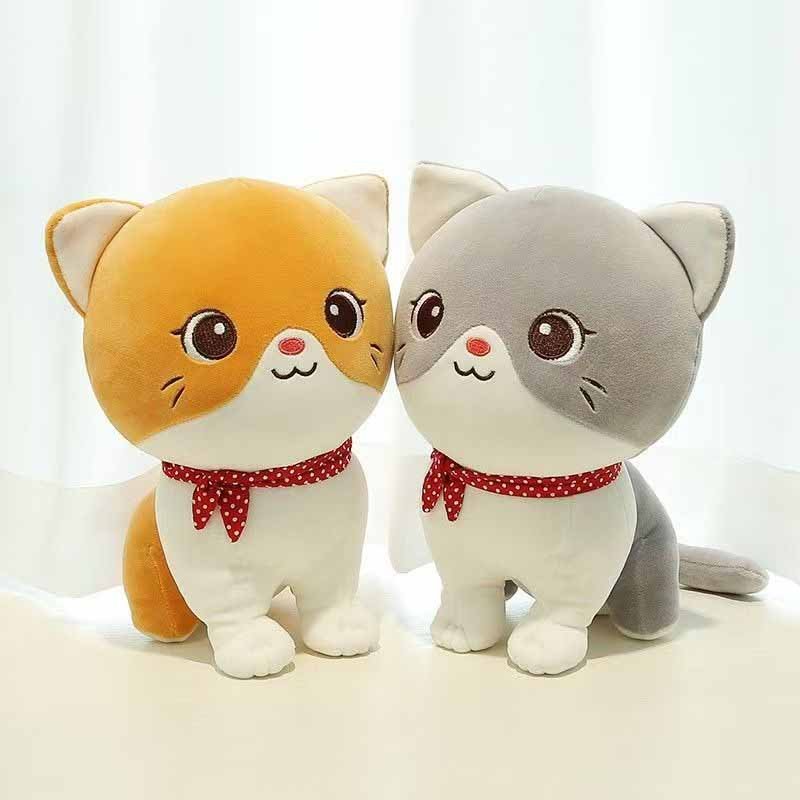
Animal type, visual style, final use, size, surface treatment, and packaging all influence the engineering and manufacturing path selected for each program.

Cartoon Animal Plush

Cartoon animals prioritize personality, clear silhouettes, expressive faces, and simplified proportions. Development may enlarge the head, shorten limbs, round the body, or exaggerate ears while preserving recognizable design features. Short-pile fabrics, embroidered facial details, controlled filling, and stable sitting poses are often suitable for branded collections, entertainment merchandise, family retail ranges, and character-led promotional programs.

Realistic Wildlife Plush

Realistic wildlife products depend on species recognition rather than generic animal shapes. Muzzle length, ear placement, eye position, limb proportions, tail structure, coat direction, and natural posture require careful review. Faux fur, printed surfaces, directional cutting, local trimming, and layered materials can reproduce markings while retaining a soft, approachable form suitable for zoos, museums, nature organizations, and premium retailers.

Pet-Inspired Plush

Pet-inspired collections may represent specific breeds, recognizable coat patterns, or a branded pet character rather than one individual household pet. Pattern engineers evaluate head shape, muzzle profile, ear type, leg length, chest depth, tail carriage, and sitting or standing posture. Embroidery, printing, material transitions, and selective trimming help preserve breed identity while supporting repeatable production across hundreds or thousands of units.

Zoo Animal Collections

Zoo collections often combine well-known species with less common animals connected to conservation, regional habitats, or current exhibitions. A coordinated range can share material families, label formats, educational cards, packaging dimensions, and visual language while keeping each species distinct. Pufumi supports assortment planning for entry sizes, core retail animals, premium pieces, seasonal editions, and long-term gift-shop replenishment.

Aquarium and Marine Plush

Marine animals present special structural challenges because fins, flippers, tentacles, shells, long bodies, and unusual silhouettes may not follow conventional four-legged construction. Pattern development must balance shape recognition, softness, seam placement, stuffing distribution, and carton efficiency. Printed gradients, appliqué, embroidery, specialty textures, and internal reinforcement can help express marine anatomy without creating unnecessary hard or detachable components.

Mascot Animals

Animal mascots must preserve the brand’s unique expression, colors, clothing, symbols, and personality. Pufumi separates generic animal anatomy from protected mascot features, then records facial landmarks, head-to-body ratio, outfit placement, accessories, and logo applications. Development can support standard plush, mini versions, event merchandise, corporate gifts, university programs, sports merchandise, and retail-ready mascot collections.

Dinosaur and Fantasy Animals

Dinosaurs, dragons, mythical creatures, and fantasy animals often combine recognizable anatomy with imaginative surface treatments. Horns, wings, plates, claws, scales, tails, and unusual proportions must be translated into soft structures that can be sewn, filled, packaged, and inspected consistently. Embroidery, appliqué, layered panels, printing, and contrasting textures can deliver visual complexity without relying on excessive detachable decoration.

Baby-Oriented Animals

Animal products intended for younger age groups require early decisions about facial construction, accessible components, seams, labels, surface texture, and cleaning expectations. Embroidered eyes and noses may be evaluated in place of selected hard components. Product age grading, intended market, and construction features must be defined before final materials and testing preparation are confirmed.

Choose the Right Animal Design Direction

A successful stuffed animal starts with a clear visual direction. Cartoon, semi-realistic, and realistic products require different proportions, materials, patterns, details, and inspection priorities.

Cartoon Style

Cartoon styling converts animal anatomy into a simplified and expressive product language. Larger eyes, rounded cheeks, shorter limbs, oversized heads, and compact bodies can improve shelf appeal, but each adjustment affects balance, seam position, filling, and packaging. Pufumi identifies the features carrying the animal’s identity, then builds a sewing structure capable of preserving the approved silhouette through production. Cartoon programs work especially well for mascots, entertainment properties, family brands, gift ranges, and collectible series.

Semi-Realistic Style

Semi-realistic stuffed animals combine recognizable species traits with a softer, more appealing retail form. Natural muzzle, ear, leg, and body relationships remain visible, while sharp anatomical features may be rounded or simplified. Material selection becomes especially important because coat length and direction can either clarify or hide the intended structure. Semi-realistic styling is often suitable for zoo stores, museums, educational programs, nature brands, destination shops, and premium animal collections requiring accuracy without rigid realism.

Realistic Style

Realistic products demand disciplined control over species silhouette, posture, coat color, eye location, muzzle volume, limb angle, and grooming. Long-pile materials may require mapped cutting directions and controlled trimming around the eyes, nose, cheeks, feet, or chest. Printed markings must remain aligned after cutting, sewing, and filling. Pufumi develops realistic animals as soft manufactured products rather than sculptures, balancing visual accuracy with seam strength, repeatability, packaging protection, and safe handling.

From Animal Artwork to Production-Ready Plush

Every animal design moves through defined engineering and approval stages before bulk production, reducing interpretation errors, uncontrolled changes, and preventable manufacturing risk.

Brief and Asset Review

Development begins with available front, side, back, detail, color, size, packaging, market, and quantity information. Missing views do not automatically stop a project, but assumptions must be identified and approved. Pufumi records intended animal type, visual direction, target pose, non-negotiable features, approximate dimensions, material expectations, target market, age positioning, order quantity, packaging format, and required arrival date before pattern development begins.

Engineering Interpretation

Artwork cannot be transferred directly into a filled product without defining thickness, volume, seams, panels, filling zones, fur direction, and structural support. Pufumi converts visual references into an interpretation covering the head, muzzle, body depth, limbs, ears, tail, feet, accessories, and final pose. Unsewable or unstable details receive alternative recommendations through embroidery, appliqué, printing, simplified panels, or adjusted proportions.

Prototype and Revision

The first sample verifies the main direction, including silhouette, proportions, expression, pose, fabric, and construction. Comments are converted into measurable actions such as moving an eye position, reducing muzzle length, changing ear angle, adjusting body depth, or redistributing filling. Each revision receives a version number and review record, preventing conflicting comments or outdated files from entering later sampling and production.

Production Release

Bulk manufacturing begins only after the approved sample, BOM, pattern, embroidery or printing files, labels, packaging, and quality requirements reach released status. The Golden Sample provides a physical reference for production and inspection. Superseded files remain archived but cannot be used for new cutting, sewing, embroidery, packaging, or repeat orders without formal reapproval.

Animal Structure Engineered Beyond Surface Appearance

Reliable stuffed animal development depends on proportion, balance, panel geometry, filling behavior, support points, and stress distribution—not only fabric color and facial decoration.

Head and Muzzle Geometry

The muzzle controls species identity, expression, side profile, and facial balance. A muzzle that is too long can make a cartoon animal look aggressive, while insufficient depth can flatten a realistic dog, bear, or wildlife design. Pattern engineers define muzzle width, projection, nose placement, cheek transition, lower jaw, and stuffing quantity before facial embroidery or hard components are finalized.

Ears and Tail Construction

Ears and tails vary greatly in thickness, stiffness, movement, attachment angle, and load. Long ears may require controlled internal support, while short upright ears depend on base geometry and seam direction. Heavy tails can pull the body backward or twist after packing. Attachment points are integrated into surrounding panels, reinforced where required, and checked after filling rather than evaluated only as flat sewn parts.

Four-Leg Proportions

Four-legged animals require coordinated relationships between shoulder height, chest depth, back length, hip position, leg diameter, and foot area. A small error in one area may cause a standing product to lean or a sitting animal to look anatomically incorrect. Separate patterns are developed for sitting, standing, lying, and upright interpretations because changing pose is not a simple adjustment to one master pattern.

Pose and Center of Gravity

Head size, muzzle projection, tail weight, rear accessories, leg placement, and filling distribution determine whether an animal sits, stands, lies, or hangs correctly. Pufumi reviews the expected display condition during sampling, including shelf placement, packaging position, or suspended use. Filling zones, contact area, foot shape, tail placement, and internal support can then be adjusted to stabilize the intended pose.

Paws and Foot Details

Feet influence stance, species recognition, balance, and consumer perception. Paw pads may use embroidery, appliqué, printing, or contrasting fabric, depending on size and positioning. Narrow feet can reduce stability, while overly wide feet may weaken the design language. Seam placement and stuffing access must allow the foot to retain an approved profile without becoming distorted during closing or final shaping.

Internal Reinforcement Points

High-stress areas include limb attachments, long tails, hanging loops, heavy accessories, removable garments, and narrow necks supporting oversized heads. Reinforcement may involve stronger seam construction, additional fabric layers, enclosed tapes, internal anchors, or localized filling control. Every reinforcement method must remain compatible with the product’s softness, target age, inspection method, and final packaging rather than being added after a failure appears.

Plan Stuffed Animal Sizes by Commercial Role

Size influences visible detail, material consumption, filling, unit cost, packaging volume, freight efficiency, shelf space, and the product’s position inside a coordinated assortment.

Size RangeTypical Commercial RoleEngineering PrioritiesPackaging Considerations
8–12 cmMini collectibles, compact gifts, hanging productsSimplified panels, enlarged facial details, stronger small attachments, controlled embroidery scaleSmall polybags, header cards, compact display trays, accurate barcode placement
15–25 cmCore retail stuffed animals and primary collection sizesBalanced detail, stable sitting or standing pose, clear expression, efficient material usePolybag, belly band, hangtag, open display, or standard retail box
30–45 cmPremium gifts, hero products, higher-value retail piecesZoned filling, larger panel control, stronger neck and limb areas, packaging recoveryLarger cartons, protective inserts, reduced compression, display-oriented packaging
50 cm and aboveDisplay animals, event pieces, premium lifestyle productsInternal support, weight distribution, handling strength, dimensional consistencyOversize cartons, freight-volume planning, compression testing, warehouse handling

Final dimensions should specify standing height, sitting height, length, width, and depth where relevant. A 20 cm sitting bear cannot be compared directly with a 20 cm standing dog without a defined measurement method.

Fabrics Selected for Form, Touch, and Repeatability

Material choice is evaluated through pile, GSM, density, stretch, backing, direction, color availability, craft compatibility, supply stability, and performance after filling.

Minky Fabric

Minky provides a soft, fine surface suitable for approachable animal characters, premium gifts, selected younger-age products, and smooth retail designs. Its stretch and backing construction must be considered during pattern development because elastic movement can change final dimensions and facial positioning. Pufumi records material codes, direction, color, pile, availability, and approved project use so sampling and repeat production refer to a defined specification rather than a general material name.

Short Plush

Short plush supports clear silhouettes, controlled seams, embroidery, appliqué, and facial expression. It is often selected for cartoon animals, mascots, compact sizes, branded products, and designs with small visual details. Short pile reduces the risk of eyes, mouths, markings, and panel transitions being hidden. Density, fiber fineness, backing stability, and color consistency remain important because equal pile height does not guarantee equal appearance or performance.

Velboa Fabric

Velboa offers a short, structured surface suitable for many animal programs requiring clear shape, efficient cutting, repeatable sewing, and controlled cost. It can perform well for standard retail animals, promotional ranges, simple wildlife products, and large programs. Material evaluation covers surface texture, backing strength, direction, stretch, print compatibility, and recovery after packaging. Premium positioning may require comparison against finer or denser alternatives before approval.

Faux Fur

Faux fur can produce realistic coat depth, premium visual impact, and strong species character for wildlife, pets, fantasy animals, and destination collections. Longer pile requires directional cutting, careful seam allowance handling, grooming, trimming, suction cleaning, and packaging protection. Pufumi defines where fur should remain long, transition, or be trimmed so facial landmarks and body contours stay visible during production rather than depending entirely on individual operator judgment.

Printed and Dyed Fabrics

Printed fabric supports spots, stripes, gradients, scales, feathers, complex coat patterns, and branded surfaces. Custom-dyed fabric may be used for controlled brand or character colors when supply quantity and timeline support it. Both options require approval of color references, substrate, handfeel, repeat size, panel position, batch tolerance, and replenishment risk. Printed flat material is also reviewed after sewing and filling because curvature can alter the final pattern position.

Specialty Textures

Sherpa, fleece, velvet, microfiber plush, recycled polyester options, layered textures, and selected natural or blended materials may support specific product positioning. Material additions must serve a clear visual, tactile, or functional purpose. Each additional texture increases sourcing, cutting, sewing, inspection, and repeat-order complexity. Pufumi compares primary surfaces, contrast areas, accents, and structural limitations before approving a multi-material animal design.

Filling Systems Designed Around Shape and Experience

Filling selection and distribution determine softness, volume, pose, balance, recovery, weight, seam pressure, carton efficiency, and how closely bulk production follows the approved sample.

Standard Fiber Filling

Polyester fiber filling is widely used because softness and volume can be adjusted across different animal forms. Fiber type alone does not define the final feel; opening quality, fill weight, distribution, panel dimensions, and shaping all influence the result. Pufumi establishes approved handfeel and weight references so production does not depend on an operator’s unrestricted interpretation of “soft” or “firm.”

Zoned Filling Control

Many animals require different fill levels across the head, muzzle, body, limbs, ears, and tail. A full head may protect facial shape, while softer limbs improve comfort. Excess muzzle filling can change expression, and uneven body filling can cause leaning. Production instructions can define filling sequence, target zones, weight ranges, and shaping references to maintain both visual accuracy and intended handling experience.

Bean and Weighted Inserts

Bean bags or weighted inserts may support sitting stability, tactile experience, or a defined product concept. Pellets should be enclosed within a secure internal bag rather than poured loosely into the outer shell. Insert position, weight distribution, seam reinforcement, target age, inspection method, carton weight, and regulatory review must be evaluated before approval. Weighted construction is treated as an engineered feature rather than a simple filling substitution.

Support and Containment

Large heads, long necks, upright ears, standing legs, long tails, or bulky accessories may require internal support or localized containment. Solutions can include additional fabric zones, enclosed tapes, shaped internal pieces, reinforcement panels, or carefully controlled filling. Support components must remain stable through handling and foreseeable use while preserving softness and avoiding unintended hard points or exposed internal parts.

Surface Crafts Matched to Each Design Task

Embroidery, printing, appliqué, trimming, accessories, and branding are selected according to detail type, product size, material behavior, durability expectations, and visual priority.

Facial Embroidery

Embroidery is often suitable for eyes, mouths, eyebrows, noses, paw marks, and line-based details. Files are developed at actual size and tested on the intended material because stitch density can distort stretch fabrics or flatten pile. Facial embroidery is checked again after sewing and filling, when panel tension may change eye distance, expression, symmetry, and the relationship between the face and muzzle.

Appliqué Details

Appliqué can create larger color areas, patches, bellies, wings, scales, markings, and layered facial elements without the stiffness of dense full-area embroidery. Edge treatment, fabric compatibility, shape accuracy, orientation, and seam allowance require control. Appliqué may also reduce printing dependence where tactile definition is valuable, but small or overly complex pieces can add sewing risk and inconsistent edge appearance.

Printed Patterns

Printing can reproduce detailed coat patterns, gradients, illustrations, textures, and multi-color surfaces that would be inefficient through embroidery or appliqué. Artwork is mapped to actual panels so critical spots, stripes, or facial markings do not disappear into seams. Printed appearance is reviewed on flat material and on the completed stuffed shape to account for stretching, curvature, pile direction, and seam interruption.

Fur Trimming

Local trimming reveals eyes, noses, mouths, cheeks, paws, and anatomical transitions on medium- or long-pile materials. A trimming map can identify target zones and visual references for production. Excessive trimming risks exposing the backing, while insufficient trimming can hide expression. Finished animals also require brushing, loose-fiber removal, and visual grooming before packaging.

Clothing and Accessories

Scarves, collars, hats, capes, harnesses, wings, bags, bows, and other accessories influence body proportion, weight, seams, packaging, and intended age positioning. Fixed and removable accessories follow different attachment and inspection paths. Heavy or projecting pieces may require internal anchors, while clothing thickness may require a revised body pattern rather than being added to an already approved naked body.

Labels and Branding

Branding may include woven labels, printed labels, care labels, copyright lines, embroidery, patches, hangtags, and packaging graphics. Placement should be decided during development, not after production starts. Label size, edge position, seam insertion, text version, market language, barcode, and legal information remain linked to the correct SKU and packaging version through controlled files.

Sewing Details That Protect Shape and Durability

Panel accuracy, pile direction, seam location, stitch control, reinforcement, closing, and grooming work together to preserve both structural performance and approved animal appearance.

Accurate Panel Alignment

Animal products often include mirrored facial pieces, paired ears, matching limbs, patterned panels, belly sections, and multi-material transitions. Small alignment errors can alter symmetry, posture, and markings. Cut pieces are bundled and identified by SKU, orientation, and position. Alignment points, notches, panel direction, and reference lines help operators connect the intended parts without mixing left, right, front, back, or color versions.

Controlled Seam Placement

Seams affect appearance as well as strength. Unnecessary lines across the face or primary display surface can weaken visual quality, while hidden seams placed in weak structural areas can fail under stress. Pattern engineers balance visual concealment, sewing access, turning, filling, panel geometry, and load direction. Critical seam locations become part of the pattern and production instructions rather than informal sample-room knowledge.

Stitch and Tension Control

Stitch length, seam allowance, thread, needle, machine setting, and tension must suit the chosen material and stress level. Stretch fabric, dense short plush, faux fur, fleece, and layered appliqué do not behave identically. Excessive tension can pucker surfaces or distort panels, while insufficient control may create gaps. Production starts with approved first pieces and continues with in-process monitoring.

Reinforced Stress Areas

Limb bases, tails, hanging loops, necks, ears, horns, heavy accessories, clothing attachments, and internal inserts may require extra reinforcement. Methods can include repeated stitching, stronger seams, backing pieces, enclosed tapes, or larger load-bearing areas. Reinforcement is planned before bulk production so strength does not depend on visible emergency repairs or inconsistent operator decisions.

Secure Closing Seams

The final filling opening must close securely while maintaining shape and minimizing visible distortion. Closing position affects accessibility, appearance, seam load, and grooming. The approved sample establishes closure location, seam method, finish, and surrounding fill level. Inspectors check for open stitches, trapped fibers, puckering, uneven tension, exposed thread ends, and shape changes around the closure.

Grooming and Finishing

Sewing completion does not mean the animal is ready for packaging. Pile trapped in seams must be released, long fur brushed, trimmed areas reviewed, loose fibers removed, and the body reshaped against the approved reference. Ears, limbs, tails, clothing, tags, and accessories are positioned before final inspection. Packaging trials confirm whether the finished appearance recovers after compression and transit.

Sample Development With Controlled Decisions

Sampling moves from visual direction to production readiness through defined versions, measurable comments, approved materials, and written release conditions rather than one uncontrolled prototype.

First Sample

The first sample establishes overall direction: size, silhouette, pose, head-to-body ratio, expression, main materials, construction, and general handfeel. A complex animal is not judged only by whether the first version looks attractive. The review identifies what works, what requires adjustment, which assumptions need clarification, and whether cost, safety, packaging, or manufacturing concerns require a design change before further refinement.

Revision Samples

Revision feedback is converted into specific actions rather than broad requests such as “make it cuter.” Changes may include moving the eyes, shortening the muzzle, widening the face, reducing body filling, adjusting ear angle, changing pile length, enlarging the feet, or strengthening a tail attachment. A typical complex program may include one or two focused revision rounds before the production-oriented sample stage.

Pre-Production Sample

The pre-production sample should represent the intended bulk materials, construction, crafts, labels, and packaging as closely as possible. Its role is different from an early prototype that may use substitute materials to verify shape. The PPS confirms whether the approved design can move into controlled manufacturing and whether final documentation, testing samples, packaging files, and quality references are ready.

Golden Sample

The Golden Sample becomes the physical benchmark for bulk production and quality inspection. It is linked to the approved BOM, pattern version, embroidery or printing files, label information, packaging version, and written approvals. Golden Samples and retention samples are archived to support production checks, repeat orders, material comparisons, quality investigations, and later version updates.

Controlled Production From Materials to Packed Goods

Bulk production follows approved files and defined checkpoints across material preparation, cutting, surface processes, sewing, filling, finishing, inspection, packaging, and release.

Project Kickoff

Sales, project management, design, engineering, purchasing, production planning, quality, packaging, and logistics review the released requirements. The team confirms SKU codes, order quantities, approved files, material status, packaging versions, required inspections, testing arrangements, production milestones, and target cargo date before the order moves forward.

Material Booking

Main fabrics, contrast materials, filling, thread, embroidery supplies, printed panels, labels, accessories, and packaging are ordered against the released BOM. Supplier, color, batch, quantity, arrival date, and inspection status are recorded. Alternative materials cannot replace approved specifications without review and written approval.

Cutting Preparation

Patterns, material direction, layer quantity, color, panel identity, and cutting layout are checked before cutting begins. Directional fur and printed markings require special mapping. Cut panels are bundled by SKU and production lot, helping prevent mixed colors, mirrored-part errors, missing components, and cross-contamination between similar animal designs.

Embroidery and Printing

Approved files, thread codes, print references, panel positions, and material versions are confirmed through first-off samples. Bulk embroidery and printing are monitored for position, clarity, color, edge quality, distortion, missing elements, and panel identity. Flat pieces are later reviewed after sewing and filling.

Sewing and Assembly

Operators follow the approved pattern, sewing sequence, seam allowance, component placement, and reinforcement requirements. Inline checks focus on symmetry, matching panels, seam security, ears, limbs, tails, accessories, labels, and openings. Defects are corrected before filling whenever possible because later repair may distort the finished shape.

Filling and Shaping

Filling weight, sequence, zone distribution, softness, body volume, pose, and balance are controlled against approved references. Filled animals are shaped so the face, muzzle, limbs, body, ears, and tail match the Golden Sample. Weight and handfeel checks can be combined where visual inspection alone cannot confirm filling consistency.

Final Inspection

Finished products are checked for appearance, measurements, weight, symmetry, embroidery or printing, seams, attachments, cleanliness, labels, accessories, and approved packaging requirements. Nonconforming goods are separated, recorded, reviewed, and either reworked or rejected according to defect type and project criteria.

Packaging and Release

Approved products move through polybagging, tagging, boxing, labeling, barcode checks, case packing, carton marking, and shipment inspection. Quantities, assortment ratios, packaging versions, carton counts, and shipment documents are reconciled before cargo release. Production files and samples remain archived for replenishment.

Quality Control Across Every Manufacturing Stage

Pufumi’s documented quality structure includes 18 incoming, 30 in-process, 25 finished-goods, 15 packaging and shipment, and 8 quality-improvement roles, supported by additional factory QC resources.

Incoming Material Inspection

Main fabrics, filling, threads, labels, accessories, printed components, packaging, and selected external processes are checked before use. Inspection can cover material identity, color, pile, surface condition, backing, dimensions, quantity, documentation, and batch information. Material acceptance is linked to the approved specification and BOM rather than a visual guess based on similarity.

First-Off Process Approval

Embroidery, printing, cutting, sewing, filling, assembly, and packaging begin with representative first pieces. Inspectors confirm file version, position, dimensions, color, seam construction, shape, and related requirements before full output continues. A correct machine program alone is insufficient if the completed animal shows shifted eyes, distorted markings, or an incorrect expression.

Inline Sewing Inspection

Process inspection identifies missing components, incorrect orientation, weak seams, open stitches, mixed panels, trapped pile, label mistakes, poor symmetry, and attachment problems while corrective action remains possible. Findings are recorded by production stage and defect type. Repeated defects trigger review of patterns, instructions, materials, equipment, or operator training rather than repeated repair alone.

Filling and Shape Inspection

Stuffing is checked for target weight, handfeel, zone distribution, lumps, empty areas, posture, balance, and facial change. Overfilling can alter eye position, muzzle shape, and seam load, while underfilling may reduce form and shelf appeal. Finished pieces are compared with the Golden Sample under consistent viewing conditions.

Finished Product Inspection

Final inspection reviews overall appearance, measurements, weight, expression, embroidery, printing, seams, accessories, cleanliness, labels, and packaging readiness. Inspection scope can combine defined sampling with selected full checks for critical features, functional parts, barcodes, assortment, or project-specific risks. Defect classifications and acceptance criteria should be agreed before production completion.

Packaging and Shipment Inspection

Packaging checks confirm the correct product, label, barcode, card, box, insert, polybag, warning text, carton mark, quantity, and assortment ratio. Carton dimensions, gross weight, sealing, and case counts are reconciled with shipment records. Selected projects may also require scanning verification, metal detection, loading checks, third-party inspection, or retention samples.

Safety and Compliance Planned Before Production

Target market, age grading, material choices, product structure, accessible components, labels, packaging, and testing responsibilities must be established before final manufacturing decisions are released.

Age and Market Definition

A stuffed animal cannot receive one universal compliance route without identifying where it will be sold and who will use it. The United States, European Union, United Kingdom, Canada, Australia, Japan, and other markets may require different documents, labels, warnings, and test considerations. Pufumi collects target age, markets, product features, materials, accessories, and packaging information during development.

Design Risk Review

Risk reduction begins with construction. Reviews may consider small components, accessible filling, seams, sharp or rigid elements, cords, loops, detachable accessories, internal inserts, hard eyes or noses, printed surfaces, and foreseeable handling. Embroidery may be evaluated for selected facial details, but no single construction method automatically makes every product compliant.

Test Preparation Support

Pufumi can prepare BOM information, material details, product samples, packaging information, label files, technical records, and related manufacturing documentation required for third-party laboratory coordination. Programs for the United States may involve applicable ASTM F963 and CPSIA requirements, while European programs may involve relevant EN71 requirements and supporting CE documentation.

Responsibility and Records

Testing and legal responsibilities remain project-specific. Pufumi does not claim every design automatically passes every market requirement and does not replace the responsibilities of the applicable manufacturer, importer, brand owner, laboratory, or certification body. Final reports, product certificates, approved labels, production records, and test-linked samples should remain connected to the relevant SKU and market version.

Packaging Prepared for Retail and Distribution

Packaging must protect the animal, communicate product information, preserve presentation, support scanning, fit the chosen channel, and remain manageable during production and replenishment.

Protective Polybags

Polybags can protect products from dust and handling while keeping material and labor requirements controlled. Bag dimensions, thickness, closure, ventilation considerations, warnings, suffocation statements, and barcode placement depend on market and channel. Compression should not permanently flatten the animal or distort long fur, ears, tails, accessories, and facial presentation.

Hangtags and Labels

Hangtags, woven labels, printed labels, care labels, copyright information, story cards, species information, and brand elements are linked to the correct SKU. Text, language, size, material, attachment method, placement, barcode, and version require approval before printing. Labels inserted into seams must be confirmed before bulk sewing begins.

Retail Boxes

Open boxes, window boxes, closed cartons, belly bands, sleeves, gift boxes, and display-ready formats can support different merchandising goals. Packaging engineering considers product restraint, visibility, movement, recovery, insert design, shelf footprint, material strength, print finish, assembly time, and carton efficiency. A visually attractive box must also survive packing, transport, handling, and warehouse storage.

Barcode and SKU Control

Each independent role, size, color, expression, package, or market version may require a separate SKU and barcode. Pufumi connects packaging files, labels, carton marks, and packing records to approved SKU codes. Scan checks can be added where incorrect barcode application would create receiving, inventory, or retail errors.

Master Carton Planning

Case pack quantity, carton size, product orientation, inner protection, gross weight, markings, assortment ratio, sealing, and pallet requirements affect logistics and receiving. Large stuffed animals may require reduced compression, while compact animals may need dividers or packing patterns to prevent distortion. Carton planning is reviewed together with product and retail packaging dimensions.

Channel-Specific Preparation

Amazon, DTC fulfillment, 3PL warehouses, retail distribution centers, attractions, and direct store deliveries may require different labels, cartons, case packs, documents, and appointment processes. Pufumi prepares manufacturing and packaging information around the confirmed destination rather than assuming one generic format will fit every channel.

MOQ, Cost, Sampling, and Production Planning

Commercial planning is based on the individual SKU, materials, structure, packaging, testing, approvals, and required delivery path rather than one universal price or lead-time promise.

Project ConditionEvaluation Starting PointMain Cost or Schedule DriversPlanning Notes
Standard core stuffed animalFrom 500 pieces per SKUSize, material, panel count, embroidery, filling, packagingSuitable for clearly defined animal structures using commercially available materials
Complex animal or retail-box programPreferably from 1,000 pieces per SKULong fur, printed patterns, clothing, accessories, custom colors, packaging, testingHigher quantities may improve material sourcing and process stability
Multi-SKU collectionEvaluated per independent SKURole count, shared materials, packaging versions, assortment ratiosTotal order quantity cannot automatically replace the operating MOQ of each SKU
Sample developmentV1 plus focused revisions and production-oriented approval stagesArtwork completeness, pattern complexity, material sourcing, crafts, packagingSchedule begins after project information, sample payment, and key material direction are confirmed
Bulk productionConfirmed after Golden Sample and production releaseMaterial readiness, packaging arrival, order volume, process load, inspection, seasonProduction time is issued after the released specification and supply path are reviewed
Global deliveryPlanned from required in-warehouse dateFreight mode, origin handling, customs, warehouse appointment, seasonal capacityFactory completion date and warehouse availability date must be treated as separate milestones

Quotation inputs should include animal artwork, dimensions, quantity by SKU, target market, target age, material direction, accessories, packaging, testing needs, delivery location, and required arrival date.

Multi-SKU Collections Managed as One Program

Coordinated collections require shared design language, controlled differences, clear codes, manufacturing separation, packaging accuracy, and replenishment records across every animal, size, and version.

SKU Architecture

A collection may include a hero animal, core species, supporting animals, premium editions, seasonal variants, or different sizes. Each role should have a defined commercial purpose rather than dividing quantity evenly across many products. Pufumi helps identify which elements can remain common and which features must be unique for species recognition, price position, and channel use.

Shared Material Strategy

Using coordinated fabric families, filling standards, label formats, packaging structures, and selected common components can improve consistency and purchasing efficiency. Shared materials do not mean making every animal visually identical. Color, pile, markings, expression, anatomy, and signature details remain controlled by SKU while supply planning identifies where responsible standardization is possible.

Production Separation

Similar animal designs create risks involving mixed panels, incorrect embroidery, wrong tails, swapped labels, mixed packaging, and incorrect carton ratios. Pufumi uses project codes, SKU codes, bundled components, file versions, work instructions, production clearances, packaging checks, and carton reconciliation to reduce mix-ups throughout cutting, sewing, assembly, inspection, and packing.

Replenishment Records

Long-term supply depends on preserved Golden Samples, retention samples, BOM versions, fabric codes, color references, packaging files, barcode records, quality findings, and shipment history. Before a repeat order, current materials and files are compared with archived references. Changes caused by discontinued materials, updated regulations, packaging revisions, or product improvements require controlled approval.

3,200-Piece Wildlife Collection Example

A representative mid-volume scenario shows how a four-SKU animal range can move from species references through sampling, controlled production, retail packing, and shipment preparation.

Project Brief

The program contained four wildlife animals at 22 cm sitting height, with 800 pieces per SKU and 3,200 pieces in total. Requirements included semi-realistic species recognition, embroidered eyes, mixed short plush and faux fur surfaces, printed markings on two animals, custom woven labels, educational hangtags, individual polybags, and 50-piece master-carton packing. Products were planned for a specialty retail environment in the United States.

Development Decisions

Engineering focused on muzzle proportion, ear position, leg angle, sitting balance, tail attachment, and species-specific coat direction. Two animals used mapped printed panels, while longer fur around selected faces required controlled trimming. The first sample round established silhouette and material direction. Two focused revision rounds adjusted eye position, muzzle volume, ear angle, body filling, and marking placement before production-oriented samples and packaging were approved.

Production Controls

Each SKU received separate pattern, embroidery, print, label, and packing references. Cut panels were bundled by animal and orientation; first-off embroidery and printing received approval before bulk processing. Inline inspections covered seams, ears, tails, labels, filling, and pose. Final checks reviewed species appearance, measurements, weight, cleanliness, packaging, barcode data, assortment, and carton quantity before shipment release.

Manufacturing Resources Supporting Complex Animal Programs

Pufumi combines Shenzhen-based project management with a core Dongguan plush factory, invested and managed production resources, and specialist partners for defined materials and processes.

Shenzhen Project Management

The Shenzhen operation supports inquiry review, commercial communication, quotation, project coordination, document control, artwork handling, sample shipping, packaging communication, and cross-functional planning. Complex programs connect design, pattern engineering, purchasing, production, quality, packaging, and logistics through assigned responsibilities rather than passing information informally from sales to the factory.

Dongguan Core Factory

Pufumi’s core Dongguan plush manufacturing facility was established in 2007. It supports pattern development, sample making, cutting, sewing, filling, shaping, quality inspection, packaging, and bulk manufacturing. The factory history is presented separately from the newer Pufumi brand identity, preserving an accurate distinction between manufacturing foundation and brand development.

Development and Production Teams

More than 58 plush designers and pattern makers support the core factory, with approximately half bringing more than 15 years of plush research, design, and pattern-development experience. Broader coordinated resources include design, sample engineering, production planning, purchasing, quality, packaging, logistics, and more than 1,200 adjustable production personnel across managed manufacturing resources.

Specialist Supply Network

Not every process is represented as being completed inside one building. Pufumi coordinates qualified partners for fabric dyeing, printing, embroidery, hardware, electronic modules, packaging, third-party testing, and logistics where specialized support is required. Files, samples, first-off approvals, material batches, quality requirements, and delivery milestones remain managed through the project structure.

Frequently Asked Questions

Standard core stuffed animal programs are generally evaluated from 500 pieces per SKU. Complex characters, custom-dyed materials, special accessories, retail boxes, weighted structures, and products with additional compliance requirements are more stable from approximately 1,000 pieces per SKU. Final MOQ depends on material, structure, process, packaging, and the number of independent versions.
Useful inputs include front, side, and back views; close-ups; dimensions; color references; target pose; material preferences; accessories; packaging; quantity by SKU; sales market; age positioning; delivery destination; and required arrival date. A single front view can begin discussion, but missing information must be interpreted and approved before sampling.
Yes, selected projects can begin from one front view. Pufumi will identify missing side, back, thickness, posture, tail, ear, and construction information, then prepare an engineering interpretation for approval. More complete artwork usually reduces assumptions, revisions, cost changes, and development time.
A straightforward design may move from the first sample through one focused revision and a production-oriented approval sample. Complex animals may require two or more revision rounds. The correct path depends on anatomy, material, markings, clothing, accessories, packaging, and approval structure. Each version should answer defined questions before the next stage begins.
Fabric is selected according to style, animal species, pile length, density, GSM, stretch, backing, color, touch, embroidery or printing compatibility, supply stability, packaging, and target price. Short plush may support clear facial details, while faux fur can create realistic coat depth. Samples and swatches confirm the final direction.
Yes. Realistic development focuses on species silhouette, muzzle, eye location, ears, limbs, tail, coat direction, markings, posture, and grooming. Options may include faux fur, printed panels, directional cutting, layered materials, embroidery, trimming, and zoned filling. Final realism remains balanced with softness, repeatability, strength, packaging, and intended use.
Control begins with incoming materials and continues through first-off approvals, cutting, embroidery, printing, sewing, filling, shaping, finished-product inspection, packaging, and shipment checks. Golden Samples, released files, BOMs, material codes, inspection criteria, defect records, and retention samples help maintain consistency and support future replenishment.
Pufumi can support design-risk review, BOM preparation, material records, label and packaging files, test samples, and third-party laboratory coordination. US projects may involve applicable ASTM F963, CPSIA, and CPC requirements; European projects may involve relevant EN71 requirements and CE documentation. Applicability and legal responsibility remain product- and market-specific.
Yes. Options may include polybags, hangtags, belly bands, sleeves, open boxes, window boxes, gift boxes, story cards, educational cards, labels, barcodes, FNSKU labels, master cartons, and display-ready packaging. Packaging is evaluated for protection, presentation, scanning, assembly, warehouse handling, freight volume, and replenishment.
Provide artwork, animal type, style, dimensions, quantity by SKU, target market, age positioning, preferred materials, embroidery or printing, accessories, packaging, testing requirements, delivery location, and required arrival date. Clear information allows the quotation to separate product, packaging, testing, and logistics assumptions rather than hiding them inside one unclear unit price.

Trust, Compliance & Production Assurance

Confidence for global brands and complex plush programs

Pufumi evaluates each project according to its target market, age grade, materials, construction, labeling, and packaging requirements. Depending on the assigned production site and project scope, our team can support ISO 9001 quality-management documentation and coordinate testing to EN71, ASTM F963, CPSIA, REACH, and other applicable standards. Factory audits, certifications, and test reports are verified by issuing body, validity period, facility, and product scope, giving brands greater transparency from sample development through controlled production and delivery.


Start Your Custom Stuffed Animal Program

Send available artwork and commercial requirements for an initial project review. Pufumi will evaluate animal structure, visual direction, material options, sample path, manufacturing feasibility, MOQ, packaging, compliance preparation, and delivery planning before issuing a detailed quotation.

For a more accurate review, please include:

  • Front, side, back, and detail artwork when available
  • Animal type and cartoon, semi-realistic, or realistic direction
  • Target dimensions and preferred sitting, standing, lying, or hanging pose
  • Quantity required for every animal, size, color, and package version
  • Preferred fabrics, filling, embroidery, printing, clothing, or accessories
  • Target market, intended age group, and testing requirements
  • Hangtags, labels, barcodes, retail boxes, and master-carton requirements
  • Delivery country, warehouse type, and required in-warehouse date
  • Features that must not change during plush interpretation

Confidential artwork can be reviewed under an NDA. Formal sample development, material trials, prototype work, and shipping are quoted according to the approved sample plan.

Start Your Custom Plush Project

Plush Product Development & Manufacturing Support for Global Brands

Share your character artwork, product concept, target size, estimated quantity, destination market, launch timeline, packaging requirements, and any special functions or compliance needs.

Our project team will review your request and recommend a tailored development and manufacturing approach based on character complexity, materials, construction, sample requirements, production planning, packaging, and delivery schedule.

From Character Artwork to Retail-Ready Plush Products

Pufumi supports IP owners, entertainment companies, toy and collectible brands, lifestyle brands, and major retailers with structured plush product development and manufacturing.

Your artwork, unreleased characters, packaging files, target costs, and commercial information are handled as confidential project materials and are not used for other customer projects or public marketing without authorization.

Need Direct Assistance?

Seraphinite AcceleratorOptimized by Seraphinite Accelerator
Turns on site high speed to be attractive for people and search engines.