Skip to content

Plush Toys Safety and Compliance
Build safer plush products for regulated global markets.
Pufumi integrates safety considerations into design, sampling, production, labeling, testing coordination, and retail packaging before products reach children, retailers, or distribution centers.
- ASTM F963, CPSIA, EN71, and CE pathways evaluated by market.
- 35+quality team supports multi-stage production and packaging inspections.
- 58+ development specialists identify structural risks before sample approval.
- Golden Samples and controlled BOMs protect compliant bulk-production consistency.
- Testing samples, material details, and labeling files prepared systematically.
- Multi-SKU traceability reduces packaging, barcode, and compliance-version errors.
Plush Safety and Compliance at a Glance
Define Product Scope
Prepare Test Evidence
Control Production Release
Preserve Batch Traceability
Where Plush Compliance Programs Commonly Break Down
Testing Starts Too Late
- Confirm intended age and use.
- Identify target markets.
- Review detachable components.
- Assess filling and electronics.
- Record unresolved risks.
Reports Mismatch Production
- Match report to SKU.
- Record sample version.
- Freeze approved materials.
- Isolate obsolete files.
- Review every substitution.
Markets Are Treated Alike
- Separate market codes.
- Confirm local responsibility.
- Map label differences.
- Track standard versions.
- Approve each pack variant.
Changes Escape Reassessment
- Open a change request.
- Compare old and new versions.
- assess testing impact.
- Update BOM and artwork.
- Obtain release approval.
Clear Responsibilities Keep Compliance Programs Under Control
Brand and Importer
- Confirm legal entity.
- Approve age classification.
- Select target markets.
- Authorize final labeling.
- Sign required declarations.
Pufumi Manufacturing Support
- Review product structure.
- Prepare sample data.
- Control approved materials.
- execute labels accurately.
- retain manufacturing records.
Accredited Testing Laboratory
- Verify laboratory scope.
- Confirm sample quantity.
- approve test quotation.
- review failed items.
- archive final reports.
Compliance Starts With Four Product Decisions
Intended User and Age
Target Sales Markets
Product Configuration
Retail Presentation
Global Plush Toy Compliance Market Map
The same plush SKU can require different testing, declarations, markings, warnings, importer details, and technical records when sold through multiple international markets.
| Market | Primary Compliance Focus | Typical Product Evidence | Responsible Market Party | Pufumi Manufacturing Support |
|---|---|---|---|---|
| United States | Product classification, applicable ASTM F963 sections, CPSIA rules, third-party testing, CPC, tracking information, current import filing | Test reports, CPC data pack, tracking details, BOM, production and batch records | U.S. domestic manufacturer or importer | Risk review, test-ready samples, BOM, labels, QC, change control |
| European Union | Safety assessment, applicable standards, conformity assessment, CE marking, technical documentation, economic-operator data | Test reports, safety assessment, EU Declaration of Conformity, technical file, labels | Manufacturer, importer, authorized representative, or other applicable economic operator | Engineering records, samples, BOM, packaging and technical-file support |
| Great Britain | Toys Regulations route, current marking arrangements, importer information, warnings, technical documentation | Test evidence, declaration, market-specific artwork and records | Manufacturer or importer placing goods on the GB market | Market-coded packaging, label execution, document preparation |
| Northern Ireland | EU-aligned route with specific NI arrangements | CE-related evidence, declaration, importer or responsible-party information | Applicable NI or EU economic operator | Separate NI market code and packaging version |
| Canada | CCPSA, Toys Regulations, plush-specific mechanical, material, filling, and flammability requirements | Test reports, bilingual information where applicable, production and importer records | Manufacturer or importer | Sample configuration, material records, labeling and test coordination |
| Australia and New Zealand | Applicable mandatory standards, product classification, warnings, supplier records | Market-specific test evidence, labels, warnings, importer records | Supplier or importer | Product review, sample preparation, production documentation |
| Japan | Product category, intended age, local labeling, materials, and applicable market rules | Local-language labels, test evidence, importer documentation | Japanese importer or responsible operator | Manufacturing files, labels, packaging and sample preparation |
U.S. Plush Toy Compliance From Design to Import
Determine the Product and Applicable Rules

Connect Testing, Certification, and Production
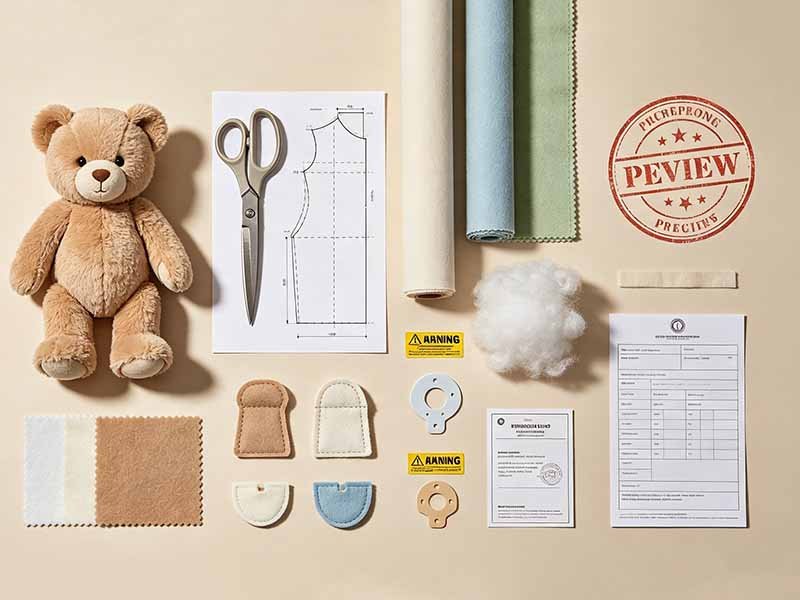
The test submission should represent the intended production version. Pufumi aligns the sample ID, released BOM, fabrics, filling, trims, embroidery, print, components, electronics, sewn labels, warnings, and packaging with the laboratory request. After testing, the brand or importer receives the report information needed to prepare the CPC and related import records. A CPC is not the laboratory report itself. It identifies the product, applicable regulations, certifying party, production location, test dates and locations, CPSC-accepted laboratory, and responsible contact information. Beginning July 8, 2026, importers of most regulated consumer products are required to electronically file certificate information through the applicable U.S. import process. Production control remains essential after certification. Pufumi releases only approved material and component versions, checks tracking information on product and packaging, records batch and manufacturing data, isolates unapproved substitutions, and preserves inspection evidence. A new plastic eye, fabric coating, metal clasp, print ink, battery module, filling material, or manufacturing change can trigger a reassessment before the revised goods are shipped.
ASTM F963 Applicability for Different Plush Configurations
A product-driven matrix helps engineering and compliance teams identify relevant ASTM F963 areas without assuming every plush toy follows an identical test package.
| Product Feature or Risk | Possible Requirement Area | When Review Becomes Important | Pufumi Project Input |
|---|---|---|---|
| General toy construction | Generally applicable requirements | Most toys within the standard’s scope | Intended age, dimensions, use, materials |
| Small detachable parts | Small-parts and mechanical requirements | Eyes, noses, buttons, charms, accessories, clothing parts | Component drawings, attachment method, age grade |
| Stuffed or bean-filled construction | Stuffed and beanbag-type requirements | Fiber filling, pellets, beads, internal bags | Filling specification, containment structure |
| Mechanical and physical hazards | Torque, tension, impact, sharp points, sharp edges | Sewn attachments, hard parts, clips, bells, zippers | Load direction, reinforcement and inspection plan |
| Flammability | Fabric and applicable product flammability provisions | Exterior fabric, yarn surface, filling and trims | Fiber content, pile, coating, material supplier |
| Cords, loops, and elastics | Entanglement and strangulation-related provisions | Hanging loops, elastic straps, drawstrings, accessory cords | Finished length, elasticity, intended use |
| Sound output | Acoustic requirements | Talking, musical, squeaking, or alarm products | Speaker specification, distance, activation method |
| Battery-operated function | Battery and electrical provisions | Lights, recording, movement, sensors, replaceable batteries | Battery chemistry, compartment, wiring, access |
| Warnings and instructions | Product-specific warning and labeling rules | Hazards not fully eliminated by design | Packaging artwork, sewn labels, online listing text |
CPSIA, CPC, Testing, and Tracking Information
Restricted Material Risks
- Record material composition.
- identify accessible components.
- obtain supplier documents.
- review coatings and inks.
- control substitutions.
Third-Party Testing
- Verify acceptance scope.
- approve test plan.
- submit final materials.
- record sample identity.
- close failed items.
CPC Data Package
- Match exact SKU.
- list applicable sections.
- identify production location.
- connect report references.
- preserve English records.
Tracking and eFiling
- Plan permanent markings.
- connect batch codes.
- verify packaging consistency.
- archive shipping records.
- support importer data.
EU Toy Safety, EN 71, and 2030 Readiness
Follow the Current EU Market Route
Prepare for the New Regulation
Additional Market Requirements Beyond the U.S. and EU
Global programs need separate market codes and review paths because local laws, warnings, importer duties, labels, and evidence cannot be assumed from one report.
| Market | Key Review Points | Common Packaging or Document Difference | Recommended Project Action |
|---|---|---|---|
| Great Britain | Toys Regulations, current CE or UK marking arrangements, importer details, warnings | GB-specific economic operator and market artwork | Reconfirm government guidance before final printing |
| Northern Ireland | EU-aligned toy route and NI-specific arrangements | Separate NI market code and responsible-party information | Do not automatically reuse GB packaging |
| Canada | CCPSA, Toys Regulations, plush mechanical, filling and flammability provisions | Canadian records and bilingual information where required | Build a Canadian checklist rather than relying only on ASTM reports |
| Australia | Applicable mandatory standards, warning requirements, supplier and importer duties | Local warning and importer information | Confirm product classification before packaging release |
| New Zealand | Applicable local consumer-product and toy requirements | Market-specific warnings and importer data | Review together with, but not identical to, Australia |
| Japan | Product category, age, local standards, labels and importer route | Japanese-language packaging and responsible-party details | Approve local artwork before mass printing |
Safety Priorities Across Major Plush Product Categories

Baby and Young Children
- Review every accessible part.
- minimize removable accessories.
- strengthen internal containment.
- avoid unnecessary long loops.
- plan wash and care information.

Licensed Character Plush
- protect recognition features.
- document approved alternatives.
- control asset versions.
- verify copyright markings.
- manage multi-SKU consistency.

Collectible and Blind Box
- evaluate actual audience.
- control edition ratios.
- separate market packaging.
- scan SKU codes.
- preserve sealed samples.

Plush Keychains and Charms
- reinforce load paths.
- review metal finishes.
- control hanging-loop length.
- inspect every connector.
- verify accessory labeling.

Weighted and Sensory Plush
- specify filling by weight.
- use controlled inner bags.
- verify weight distribution.
- inspect containment seams.
- separate unsupported claims.

Electronic and Interactive Plush
- freeze module specification.
- protect wiring routes.
- control battery access.
- perform functional checks.
- reassess any module change.
Eight Safety Risk Categories in Plush Manufacturing
Small Parts
Seam Failure
Cords and Loops
Flammability
Chemical Exposure
Filling Leakage
Electronic Hazards
Packaging Hazards
Design Safety Into the Plush Before Sampling
Feasibility Review
Pufumi reviews artwork, dimensions, intended age, target markets, quantity, materials, accessories, functions, packaging, and required delivery timing before the first pattern starts. Engineers identify details that may be difficult to sew, fill, inspect, test, or reproduce consistently. Project outputs can be classified as ready for sampling, requiring clarification, requiring simplification, or not recommended in the proposed form.
- Identify critical character details.
- mark detachable components.
- review electronic functions.
- assess material availability.
- list unresolved compliance questions.
Risk Reduction
Risk reduction aims to preserve commercial and visual intent while removing unnecessary hazards. A hard detail may become embroidery, a long decorative cord may become a stitched appliqué, a loose clothing item may become partially fixed, a pellet area may receive an inner bag, or a metal accessory may connect to a hidden load-bearing tape. Every proposal is documented for brand approval before sample construction.
- Compare safer alternatives.
- protect character recognition.
- calculate production impact.
- update artwork notes.
- obtain written approval.
Prototype Validation
The first prototype tests volume, shape, balance, detail placement, material behavior, accessory attachment, filling distribution, and user interaction. It is not automatically a test-ready or production-approved sample. Pufumi photographs front, side, back, close-up, and measurement views, then converts review comments into specific actions such as moving the eyes, shortening a loop, changing seam placement, reinforcing a clasp, or adjusting internal filling zones.
- Record sample version.
- mark measurement points.
- document open issues.
- evaluate real handling.
- prepare revision brief.
Production Release
Bulk production begins only after pattern, approved sample, BOM, materials, embroidery or print files, structure, electronics, labels, packaging, quality checkpoints, and applicable testing path are sufficiently aligned. Released files carry SKU, version, date, and approval status. Obsolete patterns and artwork are removed from active work areas so production does not accidentally follow an earlier sample or outdated compliance decision.
- Freeze approved configuration.
- issue production package.
- confirm material lots.
- brief quality inspectors.
- control subsequent changes.
Fabrics and Filling Materials Controlled for Safety

Minky and Short Pile
- Verify physical swatch.
- map pile direction.
- test embroidery distortion.
- record dye lot.
- retain approved material.

Long Pile and Fur
- Confirm pile length.
- review shedding behavior.
- plan trimming zones.
- protect embroidered features.
- inspect grooming consistency.

Fleece and Sherpa
- compare thickness.
- assess seam bulk.
- test embroidery backing.
- monitor compression.
- review supply continuity.

Printed Plush Fabrics
- approve printed strike-off.
- define pattern scale.
- mark cutting direction.
- test color transfer.
- record ink system.

Polyester Fiberfill
- approve handfeel.
- define filling weight.
- separate body zones.
- monitor batch resilience.
- check closure pressure.

Pellets and Weighting
- specify exact medium.
- use controlled inner bag.
- record target weight.
- inspect leakage points.
- verify final balance.
Surface Crafts and Components Require Separate Controls

Facial Embroidery
- approve thread codes.
- review stitch direction.
- control backing material.
- inspect loose threads.
- verify finished placement.

Printed Details
- approve printed sample.
- verify material documents.
- test curved distortion.
- control print orientation.
- record final process.

Appliqué Construction
- secure perimeter stitching.
- control cut edges.
- review adhesive chemistry.
- inspect small corners.
- approve finished thickness.

Plastic Components
- define resin type.
- approve component drawing.
- verify attachment system.
- inspect insertion quality.
- prohibit unapproved substitutes.

Metal Hardware
- confirm base metal.
- approve plating.
- check edge finish.
- test attachment load.
- inspect every connector.

Electronic Modules
- lock module version.
- protect internal cavity.
- secure battery access.
- inspect wiring.
- perform final function check.
Pattern and Structure Engineering Protects Product Safety
Pattern Piece Engineering
- label every pattern piece.
- record seam allowances.
- mark notches and direction.
- define assembly order.
- release one approved set.
Grain and Pile Direction
- map stretch direction.
- pair mirrored pieces.
- control nap orientation.
- separate color lots.
- inspect first cutting.
Internal Containment
- define internal materials.
- position containment seams.
- secure modules.
- inspect before insertion.
- verify after filling.
Balance and Posture
- establish reference posture.
- record weight zones.
- compare left and right.
- evaluate hanging angle.
- inspect packed recovery.
Sewing and Attachment Details That Prevent Safety Failures

Seam Construction
- follow approved seam map.
- control stitch formation.
- reinforce stress points.
- inspect before filling.
- repair outside approved zones.

Decorative Attachments
- define attachment type.
- identify load direction.
- add hidden reinforcement.
- inspect all anchors.
- evaluate detached condition.

Load-Bearing Hardware
- build internal load path.
- specify tape width.
- secure metal connector.
- inspect insertion seam.
- test finished orientation.

Cords and Elastic
- measure finished exposure.
- record stretch behavior.
- prevent sliding knots.
- control cut ends.
- verify every production lot.

Needle and Metal Control
- register needle issuance.
- stop affected work.
- recover broken fragments.
- isolate suspect goods.
- document final release.

Final Closing Seam
- control opening size.
- match approved closure.
- inspect under pressure.
- trim thread ends.
- brush pile cleanly.
Sample Development and Test-Ready Configuration
Plan Sample Timing by Product Complexity
Multi-SKU sample groups are commonly evaluated within 15–30 working days, depending on shared bodies, fabrics, components, and approval sequence. Electronic samples with sound, light, recording, touch, movement, battery compartments, or sensors commonly require 20–35 working days. Packaging samples commonly require 7–15 working days, with special print, molds, inserts, or structures assessed separately.
Timelines can change through incomplete artwork, delayed feedback, custom-dyed fabrics, printing, embroidery, electronic sourcing, packaging development, laboratory questions, authorization approvals, holiday periods, and production scheduling. Pufumi identifies the critical path rather than promising one universal sample time for every plush configuration.
Convert Review Comments Into Controlled Revisions
Each sample receives a project code, SKU, version, date, material status, and open-issue list. Photos include front, side, back, close-ups, measurements, and relevant function views. Approved changes are transferred into patterns, embroidery or print files, BOM, workmanship notes, and packaging artwork. A visual approval that is not reflected in production files cannot reliably control mass production.
The pre-production sample or Golden Sample becomes the principal visual and workmanship reference after critical issues are closed. Laboratory samples, production samples, retention samples, and shipment goods should all remain traceable to the released configuration.
Build a Test-Ready Sample
A test-ready sample should represent the final intended product as closely as required by the agreed test plan. Final fabrics, filling, plastic parts, metal accessories, embroidery, printing, internal bags, electronic modules, sewn labels, warnings, and packaging should replace temporary sample-room substitutes.
Before submission, Pufumi confirms product identification, intended age, target markets, SKU, sample version, dimensions, materials, functions, label artwork, packaging, and laboratory request. Sample quantity is confirmed with the selected laboratory because destructive mechanical, chemical, flammability, electrical, and packaging assessments may require multiple units.
A sealed reference sample and submission record help resolve later questions. If the laboratory identifies a failure, Pufumi traces the issue to design, material, component, construction, or labeling, prepares a corrective-action record, updates the affected files, and develops a controlled retest sample. Bulk production should not continue against an unresolved test-relevant configuration.
Laboratory Coordination and Technical File Control
Classification Record
- identify intended user.
- describe foreseeable use.
- record market channel.
- list product features.
- obtain responsible approval.
Test Plan
- list applicable requirements.
- identify sample configuration.
- confirm test quantity.
- note conditional items.
- approve before submission.
Laboratory Selection
- verify relevant scope.
- compare quotations.
- confirm turnaround.
- identify subcontracted tests.
- approve reporting format.
Submission Control
- mark every sample.
- attach product description.
- include market details.
- photograph configuration.
- record dispatch date.
Bill of Materials
- structure by component.
- identify accessible materials.
- record supplier source.
- link material evidence.
- control revision status.
Technical Documentation
- organize by SKU.
- separate market versions.
- connect report references.
- preserve approvals.
- control access rights.
Version Management
- assign version codes.
- show effective date.
- remove obsolete files.
- record approval owner.
- notify affected teams.
Change Reassessment
- describe proposed change.
- compare affected risks.
- consult laboratory.
- update documents.
- release approved revision.

Multi-Stage Quality Control Protects Approved Compliance

Incoming Material Inspection
- compare approved swatch.
- verify quantity.
- record lot number.
- inspect visible defects.
- isolate nonconforming material.

Cutting Inspection
- verify released pattern.
- check first cut.
- mark bundle identity.
- control mixed colors.
- count critical pieces.

Embroidery and Printing
- compare physical standard.
- measure key landmarks.
- inspect reverse side.
- separate defects.
- record correction action.

Sewing Process Control
- approve first piece.
- inspect critical seams.
- monitor operator method.
- control rework.
- record repeated defects.
Filling and Shaping
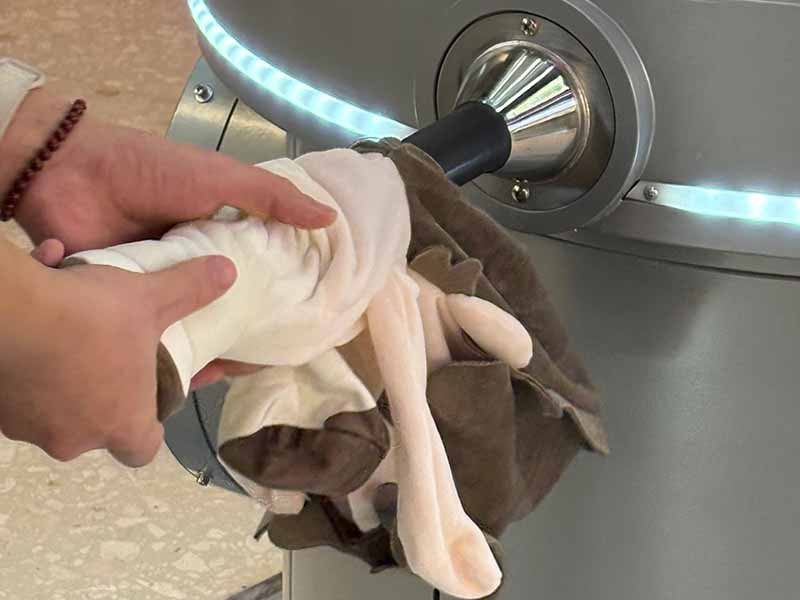
- weigh defined zones.
- compare Golden Sample.
- inspect pellet bags.
- check final posture.
- prevent overfilling.

Functional Inspection
- confirm module version.
- test every function.
- check after filling.
- record failures.
- verify repaired units.

Packaging Inspection
- scan product code.
- match market artwork.
- count accessories.
- verify carton quantity.
- isolate mixed versions.

Final Shipment Inspection
- inspect against standards.
- record defect categories.
- verify corrective action.
- approve shipment release.
- retain reference samples.
Labels, Packaging, and Traceability for Retail Programs
Sewn Product Labels
- approve exact artwork
- confirm language
- define stitch position
- verify batch code
- inspect readability
Age and Warnings
- match classification
- use approved wording
- verify minimum visibility
- separate market versions
- archive final artwork
Brand and Copyright Marks
- use approved asset version
- verify legal line
- control trademark position
- restrict confidential files
- record licensor approval
Barcode and SKU Control
- maintain code master
- verify scan result
- prevent duplicate codes
- separate editions
- reconcile packed quantities
Retail Packaging
- validate product fit
- inspect sharp features
- verify warning placement
- test barcode access
- approve packed appearance
Carton and Batch Records
- approve carton marks
- number cartons
- record packed quantity
- link production batch
- preserve packing list
North American Multi-SKU Compliance Program
Six SKUs Developed Through Controlled Sample Approval
A North American DTC brand developed a six-SKU character plush series within a production range of 1,000–5,000 units. The commercial objective required consistent character proportions, clear embroidered facial features, retail-ready labeling, and shipment to a U.S. 3PL. Client identity, character assets, pricing, and full report data remain confidential.
Initial review identified different facial landmarks, fabric directions, accessory details, and packaging data across the six designs. Pufumi organized the work through shared material references, separate SKU files, sample codes, revision records, and an approval matrix. Two revision rounds were completed before the production configuration was frozen.
The released package included approved sample references, pattern files, embroidery files, material and component BOMs, measurement notes, sewn-label artwork, packaging information, QC checkpoints, and version status. Test samples were prepared from the final intended configuration rather than earlier development substitutes.
Production teams separated bundles and packaging by SKU. Inspection covered fabric, embroidery, sewing, filling, shape, labels, packaging, codes, and final quantities. Project evidence included risk-review notes, approval records, QC photos, updated BOM information, final inspection records, and shipment documentation.
Compliance Risks Resolved Before Final Delivery
The most important outcome was not a generic “passed quality” statement. Each identified risk was converted into a manufacturing action and evidence record. Facial placement concerns became measurable landmark notes. Material and accessory versions were frozen in the BOM. Label and packaging files received SKU-specific approval. Production inspection used approved samples and released documents rather than memory or chat messages.
A second documented quality pattern involved an electronic plush in which sound output was acceptable before closing but became weak after filling and final assembly. Pufumi adjusted module location and filling zones, then added unit-level functional inspection after packing. The example demonstrates why electronic function must be checked in the finished configuration rather than only as an isolated module.
For the multi-SKU program, packing records connected each unit, barcode, label version, carton, and 3PL requirement. The final project archive supported repeat production by preserving approved materials, files, sample references, inspection points, and previous issue resolutions.
The result was a retail-ready program delivered through a controlled sample-to-production path, with evidence suitable for future replenishment review. Anonymous project presentation protects commercial and IP confidentiality while showing the depth of the manufacturing system.
Trust, Compliance & Production Assurance
Confidence for global brands and complex plush programs
Pufumi evaluates each project according to its target market, age grade, materials, construction, labeling, and packaging requirements. Depending on the assigned production site and project scope, our team can support ISO 9001 quality-management documentation and coordinate testing to EN71, ASTM F963, CPSIA, REACH, and other applicable standards. Factory audits, certifications, and test reports are verified by issuing body, validity period, facility, and product scope, giving brands greater transparency from sample development through controlled production and delivery.














Frequently Asked Questions
Applicable requirements depend on intended age, product classification, target market, materials, structure, filling, detachable parts, cords, electronics, packaging, and marketing. A conventional U.S. children’s plush, an EU collector item, a Canadian weighted product, and an electronic talking character may follow different routes. Pufumi begins with a product and market review instead of applying one universal certificate package.
No. ASTM F963 contains generally applicable and product-specific sections. Relevant areas are selected according to age, stuffed construction, small parts, mechanical hazards, sound, batteries, warnings, and other features. CPSC guidance states that firms must identify which sections apply to the specific toy.
For imported children’s products, the U.S. importer generally acts as the certifying party and issues the CPC based on compliant test results from a CPSC-accepted laboratory. The laboratory supplies testing and reports but does not replace the certifying party. Pufumi can prepare product, factory, report, batch, and contact information for the CPC data package.
Possibly, but never automatically. Coverage depends on whether the SKUs share materials, construction, functions, age grade, market, and relevant risk characteristics. Differences in colors, prints, plastic parts, metal hardware, filling, electronics, labels, or product structure may require additional evaluation or testing. The laboratory and responsible compliance team should approve any grouping plan before submission.
Planning should begin before pattern development and material ordering. Early review can identify unsuitable detachable parts, long loops, inaccessible batteries, uncontained pellets, unsupported claims, missing supplier information, or market-specific packaging requirements. Waiting until a finished sample reaches the laboratory can create redesign, resampling, repackaging, retesting, and launch delays.
A change may be possible only after its impact is assessed. Fabric, dye, ink, coating, plastic resin, metal plating, filling, adhesive, electronic module, label, supplier, or manufacturing process can affect the original evidence. Pufumi records the proposed change, compares the previous and revised configuration, updates the BOM, and consults the responsible laboratory or compliance specialist when needed.
Pufumi’s internal planning basis is commonly 7–12 working days for standard plush, 12–20 working days for complex plush, 15–30 working days for multi-SKU sample groups, and 20–35 working days for electronic-function samples. Timing begins after usable files, sample scope, payment conditions, and key material direction are confirmed.
A standard replenishment planning basis includes approximately 7–35 days for material procurement, 3–10 days for production scheduling, and 25–45 days for bulk manufacturing. Final inspection and shipment preparation commonly add several days. Exact timing depends on SKU count, materials, custom dyeing, printing, electronics, packaging, testing, approvals, factory loading, and destination.
No. EN 71 reports can support relevant parts of the EU conformity route, but market placement can also require classification, safety assessment, technical documentation, a Declaration of Conformity, CE marking, economic-operator information, warnings, labeling, and continued production control. Applicable EN 71 parts depend on the finished product and its risks.
Provide product type, intended age, target markets, dimensions, artwork, front-side-back references, materials, filling, accessories, electronic functions, SKU count, expected quantity, packaging concept, sales channel, required delivery date, current test reports, retailer requirements, and available IP authorization. Unknown items can be marked for evaluation rather than guessed.

Review Your Plush Safety and Compliance Program
Share enough product information for Pufumi to evaluate engineering feasibility, material risks, sample scope, market requirements, test preparation, production timing, packaging, and document needs. Useful inputs include:
- Company name, legal entity, and project contact
- Product category and intended age
- Target countries and retail channels
- Artwork, 3D files, photos, or existing samples
- Finished dimensions and number of SKUs
- Fabrics, filling, plastic parts, metal accessories, and electronics
- Expected quantity per SKU
- Packaging, labels, warnings, barcodes, and warehouse requirements
- Existing reports, certificates, or retailer specifications
- Required arrival date and planned launch schedule