...
A reliable plush product development and manufacturing partner For brands Since 2007!

Sustainability in Plush Toy Factory

Smarter Materials, Leaner Production, More Responsible Plush Programs

Pufumi helps brands reduce avoidable waste through better material choices, engineering decisions, production control, packaging planning and repeat-order consistency.

  • 58+ Development Specialists:Engineering decisions are reviewed before waste reaches production.
  • 15+ Years of Expertise:Experienced pattern makers improve structure and material yield.
  • Material Fit Review:Fabrics are matched to function, finish and durability.
  • Design-for-Yield Planning:Patterns are refined to reduce avoidable cutting loss.
  • Controlled Reorder Files:Approved specifications help prevent repeated development waste.
  • Packaging Right-Sizing:Retail protection is balanced with packing and shipping efficiency.

What Sustainability Means in Plush Manufacturing

Sustainable plush manufacturing combines responsible material selection, durable engineering, controlled production, reduced packaging, efficient logistics, transparent sourcing, and evidence that supports every environmental statement.

Material Selection

Lower-impact materials may include recycled polyester fabric, recycled filling, organic textile components, certified paper, and carefully selected conventional materials with stable performance. Selection begins with fiber composition, pile length, GSM, density, elasticity, color availability, handfeel, supply continuity, and applicable documentation rather than a broad “green material” label.

Product Longevity

A plush product that tears, loses shape, sheds heavily, or cannot withstand normal handling creates avoidable replacement and disposal. Longer product life depends on suitable fabric density, balanced filling, reinforced stress points, secure accessories, accurate seam construction, washable or maintainable surfaces, and a design that remains commercially relevant beyond one short selling season.

Factory Control

Lower material impact also comes from reducing mistakes. Approved patterns, controlled embroidery files, fabric-lot identification, first-piece confirmation, line inspection, defect isolation, and version-controlled production files reduce recutting, resewing, rejected components, packaging errors, and unnecessary remanufacturing during a bulk order.

Packaging Reduction

Packaging should protect the product, display the brand, carry legally required information, and survive transport without excessive material. Polybags, windows, inserts, sleeves, trays, boxes, cards, and outer cartons are reviewed by function. Unnecessary layers can then be removed without exposing the plush to moisture, crushing, staining, or retail damage.

Shipping Efficiency

A lightweight product can still consume excessive transport space when the body, packaging, or carton configuration is poorly planned. Product posture, filling density, retail-box dimensions, carton size, pack quantity, compression recovery, and warehouse requirements are evaluated together to improve cubic efficiency without permanently deforming faces, ears, clothing, or accessories.

Social Responsibility

Sustainability also covers how products are made. Legal employment, voluntary labor, reasonable working hours, health and safety controls, anti-discrimination policies, business integrity, confidential handling of IP files, and responsible supplier management form part of a credible manufacturing program.

Sustainable Plush Products We Can Develop
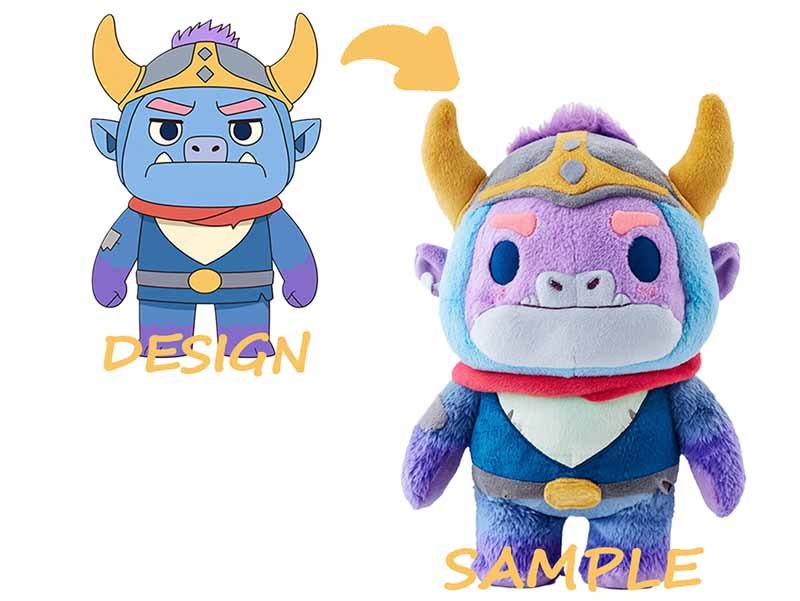
Pufumi applies project-specific material, structure, packaging, and traceability planning across character merchandise, collectibles, accessories, retail programs, and branded plush product lines.

Core Character Plush

Core character plush commonly ranges from approximately 18 to 35 cm, giving enough space for recognizable facial embroidery, dimensional muzzles, layered clothing, shaped limbs, and clear brand details. Recycled short plush, minky, velboa, or selected conventional fabric can be compared according to softness, definition, stretch, shedding, and repeat-order availability.

Mini Collectible Plush

Mini collectibles commonly range from 8 to 15 cm and demand tighter engineering control because a 2 mm eye-position shift can noticeably change expression. Sustainable development focuses on simplified pattern construction, shared materials, durable embroidery, controlled filling, compact packaging, SKU coding, and efficient production allocation across regular, limited, or hidden editions.

Plush Bag Charms

Plush bag charms and keychains commonly range from 8 to 13 cm. Weight, hanging balance, attachment position, metal hardware, loop strength, small-part risk, embroidery clarity, and fabric thickness require coordinated development. Compact products can support efficient carton loading, but every size still requires an independent pattern, embroidery file, BOM, and packaging specification.

Large Display Plush

Display plush and lifestyle products commonly range from 35 to 60 cm or larger. Larger bodies require sectional filling, wider seam allowances, reinforced attachments, controlled posture, and packaging recovery evaluation. Material consumption, carton dimensions, volumetric freight, and storage conditions become major sustainability factors, especially for event, theme-park, hospitality, and retail-display programs.

Build a Project-Specific Sustainability Strategy

Every project begins with commercial goals, product requirements, evidence expectations, and manufacturing realities rather than a fixed package of recycled materials and environmental slogans.

Establish the Baseline

The existing product, packaging, material mix, manufacturing route, order quantity, SKU structure, and shipping method form the comparison baseline. Without a measurable starting point, terms such as reduced packaging, lower material use, improved carton efficiency, or increased recycled content cannot be supported accurately.

Set Clear Priorities

A project may prioritize recycled content, organic textile components, reduced plastic, improved product life, responsible sourcing, social audit requirements, lower shipping volume, or stronger claim documentation. Ranking the priorities prevents cost and development time from being spread across changes that deliver little commercial or environmental value.

Screen Available Options

Pufumi compares available materials, standard colors, custom-dyed routes, filling choices, decoration methods, packaging structures, carton formats, and qualified suppliers. Each option is reviewed against product size, target market, target age, order quantity, MOQ, appearance, lead time, compliance implications, and long-term sourcing continuity.

Review Performance Impact

A material change can affect facial definition, seam strength, pile direction, embroidery clarity, filling recovery, final dimensions, color consistency, product weight, and packaging size. Engineering and sample validation are completed before an option becomes part of the approved sustainability specification.

Define the Evidence

Every planned claim is matched with supporting documents. Evidence may include fiber composition, supplier declarations, certificate scope, Material Lot records, test reports, packaging specifications, packaging weights, carton dimensions, shipping data, comparison baselines, calculation methods, and approved marketing wording.

Approve Measurable Targets

Final targets must be project-specific and achievable. Approved targets may cover identified recycled components, removal of a packaging layer, smaller carton volume, shared materials across a collection, extended seam durability, traceable supplier records, or clearly limited environmental wording for one SKU or shipment.

Compare Sustainable Plush Material Pathways

No single material suits every character, age group, price point, decoration process, or retail channel. Compare performance, evidence, supply, and manufacturing impact before approval.

Material RouteSuitable ApplicationsMain AdvantagesEngineering ConsiderationsEvidence to Review
Recycled Polyester PlushMain bodies, clothing, accessoriesFamiliar plush handfeel, broad pile options, recycled-content positioningDensity, stretch, shedding, colorfastness, dye-lot consistencyFiber composition, recycled percentage, supplier, certificate scope, Material Lot
Recycled Polyester FillingInternal stuffing, cushions, large bodiesReduces virgin-polyester use while retaining conventional processing methodsLoft, cleanliness, rebound, compression recovery, filling weightFilling specification, recycled percentage, supplier declaration, batch record
Organic Cotton TextileClothing, selected outer areas, soft accessoriesNatural-fiber positioning and organic supply-chain potentialShrinkage, lower stretch, structure, color range, embroidery supportCertification scope, supplier documents, applicable component, transaction records
Certified Paper PackagingSleeves, boxes, inserts, story cardsSupports plastic reduction and retail presentationCoatings, lamination, moisture resistance, strength, recycling conditionsPaper specification, chain-of-custody status, printer documentation
Optimized Conventional MaterialComplex faces, high-definition parts, stable repeat programsReliable performance, stable color, wider availabilityLower recycled-content story but potentially longer product lifeMaterial specification, performance tests, supplier continuity, approved rationale

Recycled Fabric Filling and Organic Textile Options

Material proposals are built around product performance, applicable evidence, approved claims, stable sourcing, and the manufacturing behavior of each fabric or filling batch.

Recycled Plush Fabric

Recycled polyester fabric may be used for plush bodies, clothing, ears, tails, or decorative panels. Approval covers fiber composition, recycled percentage, pre-consumer or post-consumer source, pile length, GSM, density, stretch, sheen, handfeel, shedding, colorfastness, and embroidery compatibility.
  • Match the claim to the named component.
  • Verify the certificate holder and scope.
  • Record the approved supplier and Material Code.
  • Recheck color and handfeel for each production lot.

Recycled Filling

Recycled filling must deliver stable loft, cleanliness, softness, rebound, and compression recovery. A filling proposal is reviewed at fiber level and inside the completed plush because the same gram weight may create different firmness across compact bodies, large heads, narrow limbs, or weighted structures.
  • Confirm filling weight by product zone.
  • Evaluate recovery after compressed shipping.
  • Check handfeel across production batches.
  • Link the Filling Lot to every applicable SKU.

Organic Textile Components

Organic cotton may suit clothing, scarves, external panels, liners, or selected soft-bodied designs. Organic fiber content, certified textile processing, and eligibility for a finished-product label are different claims and must not be combined without supporting scope.

  • Confirm shrinkage and dimensional behavior.
  • Review color and wash performance.
  • Check seam construction and edge fraying.
  • Identify exactly which component carries the organic claim.

Sample Development Before Sustainable Bulk Production

Material and packaging changes are verified through engineered samples before bulk release, protecting character fidelity, handfeel, durability, compliance preparation, and claim accuracy.

From Material Swatches to Golden Sample Approval

Development begins after the design files, intended size, quantity, target market, sample payment, and critical material conditions are confirmed. Standard plush samples commonly require 7–12 working days. Complex characters, layered clothing, unusual fabric, custom dyeing, special packaging, or structural experimentation commonly require 12–20 working days. Multi-SKU sets are scheduled according to shared materials, pattern complexity, approval sequence, and sample-room capacity.

The first sample is not only an appearance model. It tests silhouette, face proportion, pile direction, embroidery mapping, seam placement, filling distribution, posture, accessory attachment, packaging fit, and the behavior of the proposed lower-impact materials.

Sample review follows a controlled version process:

  • Material Review: Compare swatches for softness, GSM, density, stretch, shedding, color, and available evidence.
  • V1 Prototype: Confirm general volume, face, body structure, and manufacturing feasibility.
  • Revision Sample: Translate feedback into measurable changes, such as eye position, muzzle depth, ear angle, body width, filling level, or packaging clearance.
  • PPS: Use production-intent materials, approved decoration files, labels, and packaging direction.
  • Golden Sample: Freeze the approved appearance, structure, BOM, workmanship, packaging, and inspection reference.

No sustainable material route moves directly from a supplier certificate into bulk production without product-level validation.

Structural Engineering for Durable Sustainable Plush

Lower-impact materials must be supported by a structure that maintains shape, survives handling, protects accessories, and remains repeatable during production and replenishment.

Engineer Every Size for Its Actual Use

Plush products cannot be scaled by enlarging or reducing one pattern file. An 8 cm charm, 20 cm core plush, and 45 cm display plush place different demands on fabric thickness, embroidery limits, seam curvature, limb width, filling flow, center of gravity, attachment strength, and packaging recovery.

Pufumi develops size-specific engineering around:

  • Silhouette: The outer contour must remain recognizable after seam allowance, turning, stuffing, and finishing.
  • Pattern Segmentation: Panels are divided to control curves, color blocks, pile direction, facial volume, and sewing access.
  • Seam Placement: Lines are positioned away from critical facial areas where possible and aligned with natural color or clothing boundaries.
  • Filling Zones: Head, muzzle, body, limbs, ears, and tails receive different filling levels to control expression and posture.
  • Stress Points: Hanging loops, arms, legs, ears, tails, wings, removable clothing, and hardware positions receive suitable reinforcement.
  • Accessory Integration: Metal parts, plastic parts, patches, electronics, internal bags, and decorative items are evaluated for secure fixing and age-related risk.
  • Tolerance Planning: Overall height, eye position, product weight, accessory angle, and packaging dimensions receive separate measurement methods.

A durable design often reduces future replacement, returns, repairs, and production rework more effectively than an unverified material substitution.

Sewing Details That Protect Product Life

Seam planning, stitch control, reinforcement, turning openings, and closing methods directly influence durability, appearance, repair risk, and material waste during production.

Seam Allowance Control

Seam allowance is defined according to fabric construction, pile, stretch, curve radius, product size, and stress level. Narrow allowances may save little material while increasing burst risk and sewing variation. Excessive allowances can create internal bulk, distorted curves, poor turning, and visible ridges beneath short-pile fabrics.

Reinforced Stress Points

Hanging loops, arms, legs, wings, tails, ears, pockets, clothing attachments, and hardware anchors receive additional review. Reinforcement may use repeated stitching, wider seam engagement, internal tape, backing fabric, larger attachment bases, or revised pattern geometry rather than relying on surface glue alone.

Clean Closing Seams

Filling openings must support controlled stuffing and a clean final closure. Opening length, location, thread, stitch density, seam shape, and pile recovery affect both strength and appearance. Closing seams are positioned away from prominent facial areas and inspected for gaps, loose thread, puckering, or trapped pile.

Multi-SKU Sewing Control

Collections require separation of pattern bundles, embroidery versions, component kits, thread colors, labels, and accessories. Bundle codes, work instructions, first-piece confirmation, changeover clearance, and line records reduce mixed characters, incorrect components, outdated sewing instructions, and avoidable rework.

Decoration Processes Selected for Better Performance

Embroidery, appliqué, printing, patches, sculpting, and trimming are chosen according to visual accuracy, durability, material compatibility, production stability, and product age requirements.

Facial Embroidery

Embroidery supports stable eyes, mouths, noses, brows, and small logos without detachable hard parts. Thread color, stitch direction, density, underlay, fabric stretch, pile length, and hooping influence clarity. A test panel is recommended before full-face embroidery is approved on recycled or unfamiliar fabrics.

Applique Construction

Applique creates clean color blocks, clothing details, eye whites, badges, and large graphic areas without covering an entire panel with print. Edge control, backing, fabric thickness, seam position, fraying behavior, and repeated washing or handling must be reviewed during sample development.

Printed Details

Sublimation, screen printing, heat transfer, and digital printing suit different fibers, image sizes, quantities, gradients, and color requirements. Selection considers ink compatibility, pretreatment, handfeel, cracking, migration, wash resistance, edge accuracy, reject rate, and supporting chemical or material documentation.

Patches and Labels

Woven labels, embroidered patches, printed labels, rubber patches, and brand marks can communicate logos, copyright information, limited-edition status, and product identity. Material, backing, edge finish, attachment method, position, small-part risk, and packaging visibility determine the suitable solution.

Trimming and Shaping

Long-pile faces, animal muzzles, hairstyles, ears, tails, and layered fur may require controlled trimming, brushing, steaming, or hand shaping. Work standards use approved photos, sample references, trimming boundaries, and inspection points to reduce appearance variation across the production lot.

Improve Material Efficiency During Plush Production

Better pattern engineering, material planning, shared components, defect prevention, and consumption records reduce unnecessary waste without weakening seams or changing approved character proportions.

Pattern Efficiency

Pattern pieces are reviewed for contour accuracy, seam allowance, grain or stretch direction, pile direction, mirrored parts, printed placement, and nesting opportunities. Material efficiency never justifies reducing critical seam engagement, placing visible defects inside finished products, or changing approved body proportions.

Marker Planning

Cutting layouts consider fabric width, usable edge, pile direction, one-way print, stretch direction, defect zones, color shade, and size mix. Large pieces, narrow limbs, clothing parts, and small accessories may be grouped separately to improve cutting control and reduce mixed bundles.

Shared Material Pools

A coordinated collection may share approved base fabric, filling, thread, backing, labels, or packaging structure. Shared materials can improve purchasing efficiency and series consistency, but each SKU still retains its own BOM, color references, usage quantity, pattern, embroidery file, and traceability record.

First-Pass Quality

Preventing inaccurate embroidery, reversed pile, wrong components, weak seams, overfilling, or incorrect labels reduces the largest avoidable sources of production waste. First-piece approval, in-process inspection, defect isolation, and immediate correction protect both material use and delivery stability.

Consumption Records

Theoretical consumption, booked quantity, incoming quantity, issued quantity, good output, rejected parts, remaining stock, and retained materials are recorded by project where required. Data supports future quotation, reorder planning, packaging review, and measurable improvement without publishing unsupported waste-reduction claims.

Reduce Packaging Without Losing Product Protection

Packaging reduction begins by identifying the function of every bag, card, insert, tray, sleeve, box, label, and outer carton before removing or replacing material.

Remove Duplicate Layers

A plush product may receive a protective bag, inner tray, display box, sleeve, hangtag, information card, shipping carton, and additional warehouse label. Pufumi reviews whether two layers perform the same function and whether consolidation can occur without increasing dust, moisture, abrasion, theft, or handling risk.

Optimize Retail Boxes

Retail boxes are sized around the approved product posture, recovery space, required graphics, barcode location, opening experience, shelf presentation, and transportation strength. Smaller packaging can improve carton loading, but overly tight structures may flatten faces, bend ears, crease clothing, or damage decorative accessories.

Evaluate Paper Structures

Paper sleeves, belly bands, folding cartons, inserts, and molded-paper components may replace selected plastic structures. Paper color alone does not prove recycled content, responsible sourcing, or recyclability. Coatings, windows, lamination, adhesive, printing, moisture resistance, and local recycling conditions require separate evaluation.

Validate Pack Performance

Every reduced structure is checked against real handling needs. Mockups, product-fit reviews, compression checks, carton trials, barcode scans, drop testing where required, and warehouse specifications confirm whether the revised packaging can protect the approved plush through packing, transport, storage, and retail display.

Plan Cartons Compression and Global Delivery

Shipping efficiency depends on product recovery, packaging dimensions, carton strength, pack quantity, route, warehouse rules, and required arrival dates rather than one universal freight method.

Planning ItemData to ConfirmManufacturing DecisionRisk to Control
Product RecoveryFace shape, pile, filling rebound, clothing, accessoriesDecide whether loose packing or controlled compression is suitablePermanent flattening, creases, bent parts
Retail Pack SizeProduct dimensions, display direction, protection spaceReduce unused space while preserving presentationProduct pressure, damaged box, poor shelf appearance
Master CartonInner pack, carton dimensions, gross weight, quantityCompare several pack configurations before approvalExcessive weight, weak stacking, poor warehouse handling
Shipping VolumeCarton count, CBM, route, transport modeEvaluate sea, air, or split-shipment optionsHigh landed cost, missed launch window
Delivery ScheduleFactory-ready date, booking, transit, customs, receivingWork backward from required in-warehouse dateArrival after launch, warehouse appointment failure
Shipment RecordsShipment Lot, carton marks, quantity, destinationLink packed goods to production and material recordsIncomplete traceability during claims or recalls

Responsible Labor and Ethical Factory Management

Credible sustainability includes legal employment, safe workplaces, voluntary labor, honest records, confidential project handling, and clear responsibility across factories and specialist suppliers.

Legal Employment

Employment practices should follow applicable legal requirements covering age, contracts, wages, working hours, rest days, and benefits. Worker identity and employment records require proper management, while recruitment must avoid misleading terms, illegal fees, or conditions that create involuntary dependence.

Voluntary Labor

Pufumi does not accept forced labor, document retention, restricted personal movement, debt bondage, compulsory overtime, or coercive employment practices. Voluntary work and the right to leave employment under lawful conditions form a baseline requirement for managed manufacturing and supply relationships.

Workplace Safety

Production areas require clear walkways, suitable lighting, machine safeguards, fire controls, emergency access, safe material storage, needle management, personal protective equipment where needed, and regular attention to cutting, sewing, filling, finishing, packaging, and warehouse risks.

Fair Treatment

Discrimination, harassment, intimidation, and abusive discipline have no place in responsible manufacturing. Management expectations should cover respectful communication, fair access to work opportunities, complaint channels, corrective action, and protection against retaliation for raising legitimate workplace concerns.

Business Integrity

Projects must not be won through false certificates, fabricated test reports, hidden defects, misleading quotations, commercial bribery, or inaccurate production records. Sustainability evidence, factory information, pricing, quality status, and shipment documents must reflect the actual project and responsible entity.

IP Confidentiality

Unreleased characters, artwork, packaging, sample photographs, pricing, launch dates, authorization files, and supply-chain data require controlled access. Restricted projects are separated from public marketing materials, search-accessible media libraries, unrelated programs, and unauthorized third-party use.

How to Verify Sustainability Certificates Correctly

A certificate logo alone does not prove that a named factory, selected material, finished SKU, or specific production order qualifies for the advertised environmental claim.

Verify GRS Scope

GRS can support recycled-content traceability and includes additional processing requirements, but eligibility depends on the certified entity, facility, product category, material, scope, validity, and transaction documentation.
  • Check the certificate holder.
  • Confirm the production or supply-chain stage.
  • Match the material to the approved scope.
  • Request order-related transaction evidence where applicable.

Understand RCS Evidence

RCS focuses on verifying recycled input and chain of custody. An RCS-certified material does not automatically make every product from the supplier an RCS-certified finished good.
  • Identify the certified component.
  • Confirm recycled-content wording.
  • Record supplier and Material Lot.
  • Avoid extending one material claim to the entire plush.

Separate GOTS Claims

Organic fiber, GOTS-certified fabric, certified processing, and a finished product eligible for GOTS labeling are different levels. The exact component, percentage, supplier, transaction record, processing scope, and labeling permission must be reviewed before organic wording appears on packaging or marketing materials.

Check OEKO-TEX and FSC

OEKO-TEX STANDARD 100 addresses tested textile materials and harmful substances within the certified scope; it is not a complete sustainability certification for an entire factory. FSC documentation applies to qualifying forest-based materials and chain-of-custody conditions, not automatically to every paper-colored box, card, or insert.

Trace Every Claim to the Actual Order

Pufumi connects material, production, packaging, shipment, and approved wording so environmental statements remain limited to the components, SKUs, lots, and markets supported by evidence.

Traceability FieldRecord PurposeExample Project Link
Project CodeIdentifies the full commercial programBrand, launch, market, approval scope
SKU CodeSeparates character, size, color, packaging, and market versions18 cm character A, US retail pack
BOM VersionLists every approved material and componentFabric, filling, thread, labels, packaging
Material CodeDefines specification and approved sourceRecycled short plush, navy, 320 GSM
Material LotRecords the batch actually received and usedSupplier batch, dye lot, incoming inspection
Production LotConnects materials to a manufacturing runCutting, embroidery, sewing, filling, finishing
Packaging LotConnects printed and protective materialsBox version, barcode, copyright line, carton
Shipment LotIdentifies delivered quantity and destinationCarton range, warehouse, route, documents
Claim FileLinks wording to supporting evidenceComponent claim, limitation, approval, expiry
Claim Levels
  • Component Level:Identifies a specific fabric, filling, paper, label, or packaging element.
  • SKU Level:Describes the approved material or packaging configuration of one product version.
  • Order Level:Confirms what was used in a named production and shipment lot.
  • Supply-Chain Level:Describes documented sourcing, supplier management, audits, or responsibility controls without overstating product certification.

Multi-Stage Quality Control for Sustainable Plush

Pufumi’s quality system includes 18 incoming inspectors, 30 process inspectors, 25 finished-product inspectors, 15 packaging and outbound inspectors, and 8 quality engineering roles.

Incoming Materials

Fabric color, pile length, GSM, density, handfeel, stretch, shedding, filling, thread, accessories, labels, and packaging materials are checked against approved specifications. Material Codes and lot records prevent unapproved substitutions and help isolate affected SKUs when variation is found.

Cutting Control

Cut panels are checked for size, pile direction, stretch direction, shade variation, mirrored orientation, print placement, component quantity, defects, and bundle identification. Multi-SKU projects use separated bundles and codes to reduce mixed characters, missing parts, and cross-lot fabric use.

Embroidery Inspection

Eyes, mouths, noses, brows, logos, symbols, clothing graphics, thread colors, stitch density, orientation, and position are reviewed against approved files and references. Test panels and first-piece checks are especially important when recycled fabrics differ in stretch, surface texture, or pile behavior.

Sewing Inspection

Inspectors monitor seam security, skipped stitches, open seams, puckering, trapped pile, symmetry, reversed components, clothing construction, stress-point reinforcement, turning openings, and closing seams. Problems are corrected during production rather than hidden inside final inspection statistics.

Filling Control

Filling weight, softness, rebound, body proportion, muzzle depth, head shape, limb firmness, posture, and internal component position are checked. Recycled filling is managed by specification and lot because loft or compression recovery changes can alter appearance and carton performance.

Finishing Review

Brushing, trimming, steaming, shaping, facial expression, ear angle, standing or sitting balance, clothing position, loose thread, surface marks, and character recognition are checked against the Golden Sample and approved photographs.

Packaging Verification

Hangtags, woven labels, care labels, copyright lines, barcodes, FNSKU, retail boxes, inserts, bags, carton marks, SKU codes, quantity, and market versions receive controlled checks. Critical label or SKU errors may require full inspection and corrective containment.

Final Shipment Check

Finished quantities, assortment, carton configuration, gross weight, dimensions, documents, inspection status, Shipment Lot, destination labels, and special warehouse requirements are reviewed before cargo release. Key appearance, labeling, packaging, SKU distinction, and outbound items receive full or focused checking alongside process control and final sampling.

Safety Compliance Remains a Separate Requirement

Recycled, organic, paper-based, or responsibly sourced materials still require product-specific safety review based on intended age, sales market, construction, accessories, and functional features.

Define Age and Market

Safety planning begins with intended age, sales country, use environment, product classification, and distribution channel. A decorative collectible, children’s toy, infant product, bag charm, weighted plush, electronic plush, and promotional item may follow different safety, labeling, testing, and documentation paths.
  • Confirm intended age.
  • Identify each destination market.
  • Record importer or responsible-party needs.
  • Review channel-specific packaging requirements.

Review Structural Risks

Small parts, plastic eyes, metal hardware, zipper pulls, magnets, batteries, internal weights, accessible filling, seam openings, cords, loops, and detachable clothing require targeted review. Lower-impact materials do not remove choking, ingestion, strangulation, pull-strength, flammability, chemical, or mechanical risks.

Prepare Testing Files

Pufumi can support BOM preparation, material files, sample selection, label information, packaging data, production references, and coordination with qualified third-party laboratories. For US children’s products, applicable requirements may include ASTM F963, CPSIA provisions, third-party testing, CPC preparation, and tracking information according to legal responsibility.

Control Production Changes

A tested sample only supports the configuration represented by the approved materials, structure, accessories, process, and labeling. Supplier changes, dye changes, coatings, printed graphics, plastic parts, filling, packaging, or electronic modules may require technical review and possible retesting before release.

Sustainable Plush Program Example

A representative multi-SKU program shows how measurable material, packaging, quality, and traceability controls can be organized without exposing protected artwork or making unsupported environmental claims.

Eight SKUs Planned for a Retail Collectible Launch

The program model covers eight character SKUs: six regular editions, one hidden edition, and one channel-exclusive edition. Each SKU uses an 18 cm seated structure with independent facial embroidery, character-specific colors, and shared base filling. Planned volume is 8,000 pieces, allocated at 1,000 pieces per SKU before final assortment ratios are confirmed.

Material review compares two recycled short-plush fabrics in the 300–340 GSM range and one conventional benchmark fabric. Evaluation covers pile density, stretch recovery, embroidery definition, colorfastness, shedding, handfeel, sewing behavior, and certificate scope. Recycled filling is tested at three weight settings to determine the approved balance between softness, posture, compression recovery, and carton efficiency.

The development schedule allows 18 working days for coordinated material testing and V1 samples after complete artwork, color references, sample payment, and key swatches are available. Revision records separate face, body, material, accessory, and packaging changes. Each approved SKU receives an independent pattern, embroidery file, BOM, measurement specification, and Golden Sample.

Packaging development compares a full retail box with a compact printed sleeve and protective inner support. The approved structure targets a unit pack below 190 × 150 × 120 mm while preserving ear shape and facial recovery. Carton trials compare 24-piece and 32-piece configurations before final transport and warehouse approval.

SKU coding, hidden-edition packing rules, barcode scanning, Packaging Lot records, Material Lots, Production Lots, and Shipment Lots support assortment control and evidence-backed component claims.

Why Global Brands Work With Pufumi

Pufumi combines product development, factory execution, specialist supply coordination, quality records, and project governance for complex sustainable plush programs and long-term replenishment.

Managed Development System

Pufumi converts artwork, character guides, 3D files, photos, or samples into patterns, embroidery files, material specifications, prototypes, PPS references, Golden Samples, BOMs, workmanship notes, packaging specifications, and inspection plans. Every release uses controlled versions rather than scattered messages or unapproved workshop instructions.

Core Manufacturing Resources

Shenzhen Oneier manages Pufumi projects through a Shenzhen coordination office, a core Dongguan plush factory, managed production resources in Foshan, and qualified partners for dyeing, embroidery, printing, hardware, packaging, testing coordination, and global delivery. Responsibility and production location remain identified within project records.

Enterprise Project Control

Dedicated project roles connect commercial requirements, engineering, samples, materials, production, quality, packaging, logistics, approvals, and replenishment. Timelines identify dependencies, material-release gates, sample versions, production-release conditions, inspection points, shipment dates, and changes that may affect cost or compliance.

Evidence Before Promotion

Pufumi does not treat words such as recycled, organic, reduced plastic, recyclable, responsible, low carbon, or certified as decorative marketing language. Claims are reviewed against component scope, supplier evidence, material lot, production use, calculation method, limitations, approval version, and validity period before formal release.

Frequently Asked Questions

A sustainable plush factory manages more than material selection. Key areas include durable engineering, material efficiency, controlled cutting, defect prevention, responsible labor, packaging reduction, shipping volume, supplier traceability, product safety, and evidence-backed claims. The strongest program sets project-specific priorities and measures approved changes against a documented baseline.

Recycled polyester plush can achieve soft handfeel and attractive surface quality, but performance depends on fiber, yarn, pile, GSM, density, finishing, stretch, and supplier consistency. Pufumi compares swatches and finished samples rather than approving fabric from a certificate alone. Facial definition, embroidery, shedding, sewing behavior, and batch consistency must also meet the project standard.

No. RPET describes recycled polyester material. GRS certification depends on certified entities, chain of custody, applicable processing stages, approved scope, and supporting transaction records. A plush using RPET fabric should not automatically be described as a GRS-certified finished product. The correct wording must match the documented component and supply-chain scope.

Suitable recycled filling can provide good softness, loft, and recovery when the fiber specification and filling process are controlled. Performance is tested inside the actual plush because compact heads, narrow limbs, large bodies, and compressed shipping create different demands. Approved filling weight and distribution are recorded by product zone.

No. Organic cotton textiles may work well for clothing, external panels, accessories, and selected soft-bodied products. Lower stretch, shrinkage, edge fraying, structure, color range, and embroidery behavior may limit use on highly shaped character faces or complex bodies. Material scope and finished-product labeling eligibility also require separate verification.

Verification may include supplier information, fiber composition, recycled percentage, certificate holder, certification scope, transaction documentation, Material Code, Material Lot, incoming inspection, production lot linkage, and shipment records. Evidence must show both that a qualified material exists and that the identified batch was used in the applicable SKU and order.

Sustainable materials can be used in products for the US market, but environmental attributes do not replace safety compliance. Intended age, product classification, structure, small parts, chemical requirements, flammability, labeling, and tracking information still require review. Pufumi supports documentation and third-party test coordination based on the approved product configuration.

Begin by identifying the function of each bag, tray, window, insert, sleeve, and box. Duplicate layers may be removed, plastic windows reduced, paper structures introduced, or dimensions tightened. Every change should still protect the plush from moisture, crushing, dirt, abrasion, deformation, theft, and warehouse handling.

They can. Material MOQ, color availability, custom dyeing, certificate scope, supplier location, special packaging, and sample testing may affect quantity and schedule. Core plush projects commonly begin evaluation from 500 pieces per SKU, while mini plush, keychains, bag charms, complex characters, and retail packs are commonly more stable from 1,000 pieces per SKU.

Project files may include material proposals, supplier details, component specifications, BOM versions, certificate records, Material Lots, packaging structures, weight and dimension records, production lots, shipment lots, inspection records, comparison baselines, claim limitations, and approved wording. Availability depends on the selected materials, suppliers, order scope, and requested claim.

Trust, Compliance & Production Assurance

Confidence for global brands and complex plush programs

Pufumi evaluates each project according to its target market, age grade, materials, construction, labeling, and packaging requirements. Depending on the assigned production site and project scope, our team can support ISO 9001 quality-management documentation and coordinate testing to EN71, ASTM F963, CPSIA, REACH, and other applicable standards. Factory audits, certifications, and test reports are verified by issuing body, validity period, facility, and product scope, giving brands greater transparency from sample development through controlled production and delivery.


Build Your Next Sustainable Plush Program

Send Pufumi a clear project brief so our development, engineering, material, packaging, quality, and compliance teams can evaluate the most suitable route. Include your company information, product category, artwork or reference sample, required sizes, SKU count, estimated quantity, target market, intended age, packaging direction, launch schedule, and sustainability priorities.

Helpful project details include:

  • Preferred recycled, organic, conventional, or mixed material direction
  • Required fiber composition or environmental certification
  • Component-level or finished-product claim expectations
  • Product sizes, postures, clothing, accessories, and functions
  • Initial quantity and expected annual replenishment
  • Retail, e-commerce, theme-park, licensing, or promotional channel
  • Plastic-reduction and packaging-volume objectives
  • Social audit, factory documentation, or supplier-code requirements
  • Third-party testing and market-specific labeling needs
  • Required in-warehouse date and preferred shipping route

Start Your Custom Plush Project

Plush Product Development & Manufacturing Support for Global Brands

Share your character artwork, product concept, target size, estimated quantity, destination market, launch timeline, packaging requirements, and any special functions or compliance needs.

Our project team will review your request and recommend a tailored development and manufacturing approach based on character complexity, materials, construction, sample requirements, production planning, packaging, and delivery schedule.

From Character Artwork to Retail-Ready Plush Products

Pufumi supports IP owners, entertainment companies, toy and collectible brands, lifestyle brands, and major retailers with structured plush product development and manufacturing.

Your artwork, unreleased characters, packaging files, target costs, and commercial information are handled as confidential project materials and are not used for other customer projects or public marketing without authorization.

Need Direct Assistance?

Seraphinite AcceleratorOptimized by Seraphinite Accelerator
Turns on site high speed to be attractive for people and search engines.