Skip to content

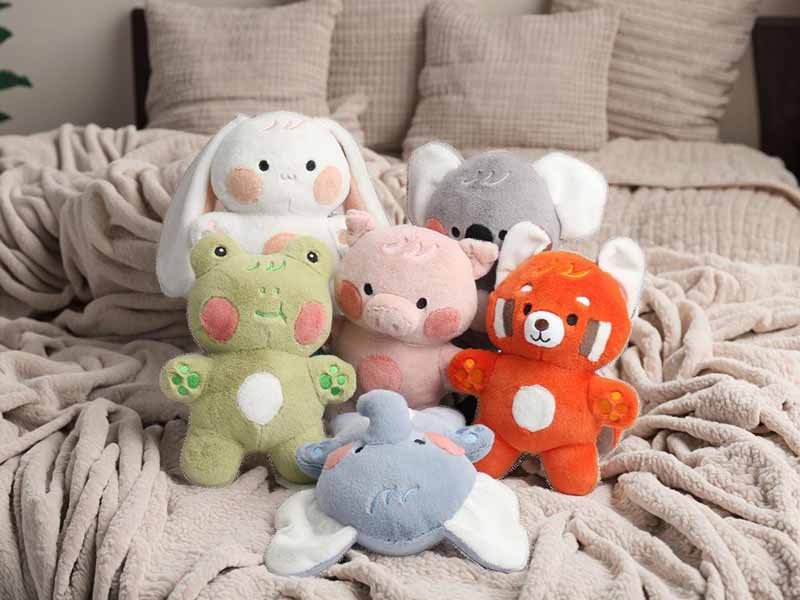
Choosing fabric for a custom plush project can look deceptively simple when everything is still on a screen. A designer sees a soft-looking swatch, a sourcing team sees a price and color reference, and everyone assumes the material decision is nearly finished. The real test begins after the fabric has been embroidered, cut, sewn, turned, filled, shaped, photographed, packed, and compared against the original character. A material that looked perfect as a flat swatch can suddenly make a face wider, hide a mouth, change the apparent color of one cheek, or make a miniature character feel visually crowded.
Velour is valuable because it occupies a useful middle ground. It can deliver a soft, tactile surface without creating the strong fur effect associated with long-pile plush. The relatively controlled surface can also make character outlines, embroidery, facial details, costumes, contrast panels, and small decorative elements easier to read.
Velour works best in custom plush products that need softness together with controlled surface detail. It can suit character plush, mascots, mini collectibles, keychains, bag charms, faces, muzzles, ears, paw pads, clothing, and decorative panels. Its suitability depends on the actual fabric construction, stretch direction, pile orientation, embroidery, pattern geometry, stuffing pressure, product size, and whether a smooth or furry appearance better represents the character.
The most useful question is therefore not simply whether velour is a “good” plush fabric. The better question is where it solves a specific design problem better than another textile. A five-inch collectible with narrow embroidered eyes may benefit from velour for completely different reasons than a twelve-inch mascot with a smooth graphic body. Understanding those differences before sampling can save several rounds of development later.
What Is Velour and How Does It Perform in Plush Products?
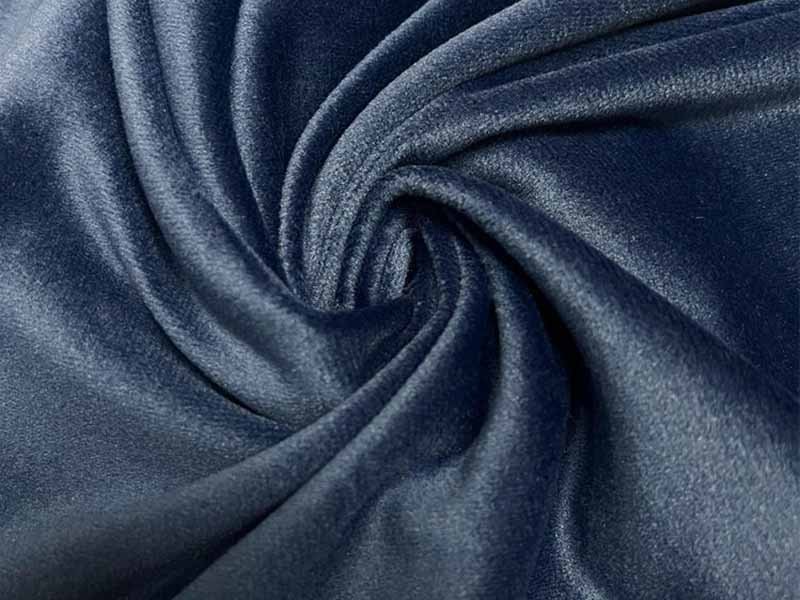
Velour is a soft pile fabric whose relatively controlled surface can help maintain visible contours and decorative detail in plush products. In real product development, performance depends less on the material name than on the exact construction, density, stretch, recovery, pile direction, color, and interaction with stuffing. A suitable velour should therefore be evaluated as part of the finished three-dimensional product rather than approved only from a swatch.
What Makes Velour Different?
Velour is often recognized first by its soft hand and velvet-like appearance, but those surface characteristics tell only part of the story. In custom plush development, its biggest advantage is the balance between tactile softness and visual control. The pile normally sits close enough to the base fabric that the underlying pattern shape, embroidery, appliqué, seam lines, and color blocks remain easier to read than they would on a heavily furry surface.
That balance can be useful for cartoon characters, mascots, stylized animals, small collectibles, character dolls, bag charms, and designs where embroidery carries much of the facial expression. A smooth-looking face with a narrow embroidered mouth may lose its personality under long fibers, while a controlled velour surface gives that feature more visual space. The same principle applies to logos, small markings, costume lines, paw graphics, and contrasting decorative panels.
The name “velour,” however, should never be treated as a complete material specification. Two suppliers can provide fabrics under the same commercial description while the actual textiles differ in fiber content, knitting construction, weight, density, stretch direction, recovery, pile height, backing stability, surface sheen, and dye response. These differences can change both the feel of the plush and the geometry of the finished product.
For that reason, material approval should identify the exact submitted fabric. In a controlled development system, the fabric reference is connected to the sample version, color approval, pattern revision, intended product area, BOM, production instructions, quality checks, and future reorder record. Pufumi’s documented Fabric Library follows this broader principle by linking material information with sampling, production, QC, reorders, and possible substitutes rather than treating swatches as isolated design choices.
How Does Velour Affect Shape?
A plush pattern begins as a collection of flat pieces, but those pieces become three-dimensional once they are stitched and filled. The fabric therefore participates in shaping the product. A velour that stretches noticeably across its width can create a rounder head or broader body than a more stable fabric cut from the same paper pattern. A different stretch direction can also influence limb length, cheek volume, ear shape, or the apparent width of a muzzle.
These changes are especially important for characters with recognizable geometric features. A narrow head, short cylindrical arms, flat cheeks, sharp triangular ears, or a rectangular body may react strongly to textile stretch. A few millimeters can make little difference on a large pillow, but the same change can alter the expression of a six-inch collectible or push embroidery closer to a seam.
Stuffing pressure adds another variable. More filling stretches the fabric and increases internal tension, while softer filling may reduce the definition of curves or facial planes. Pattern geometry, material elasticity, seam construction, and filling therefore need to be developed together. A fabric that feels excellent may still be wrong for a design if it consistently makes critical areas too wide or too soft.
Pufumi treats fabric grain, elasticity direction, and pile direction as engineering variables because inconsistent orientation can affect dimensions, contours, hand feel, color appearance, and production consistency. The practical lesson is that a plush pattern should not be considered fully approved independently of its fabric. The approved result is really a relationship between material, pattern, sewing, filling, and shaping.
Is Velour Good for Fine Details?
Velour can be a strong material for characters that rely on small embroidered details because its surface normally creates less visual interference than long-pile plush. Eyes, mouths, brows, eyelashes, freckles, lettering, logos, symbols, appliqué outlines, and facial markings can remain easier to see when the surrounding fibers are short and controlled.
The benefit becomes more noticeable as the product gets smaller. On a twelve-inch character, a five-millimeter feature occupies a relatively small part of the face. On a four-inch keychain, the same feature can represent a substantial portion of the expression. Seam allowances, embroidery borders, and panel joins also take up more space as the overall product shrinks.
Pufumi’s project-risk records identify detail loss as a recurring issue in Keychain, Mini Plush, Blind Box, and Bag Charm development. Smaller products cannot always preserve every piece, line, accessory, and embroidered feature from the original artwork because the available sewing and decoration space becomes limited. A controlled short-pile fabric can help, but it cannot replace thoughtful simplification.
Embroidery also needs to be reviewed after the panel is sewn and stuffed. Dense stitching can pull a flexible fabric inward, narrow lines can close up, and filling pressure can change the apparent spacing between facial features. A flat embroidery test may look perfect while the final head still feels wrong. The finished sample, viewed at normal retail distance, remains the most meaningful reference.
How Does Pile Direction Matter?
Velour has a directional surface, and that direction can change how light reflects from the fabric. Brush the material one way and it may look darker; brush it in the opposite direction and it may look lighter or more reflective. On a small swatch the difference may seem subtle, but on a completed plush it can become obvious when adjacent panels point in different directions.
This can easily be mistaken for a dye-lot problem. If the left and right sides of a face appear slightly different in color, the first check should include the orientation of the pile. Two panels taken from the same fabric roll can still appear different when one is cut in the opposite direction.
The head and face deserve the strictest control because people are particularly sensitive to facial symmetry. Arms, legs, ears, tails, clothing, and accessories should also have a defined direction where the surface difference is visible. Multi-SKU collections need the same discipline because shared colors should photograph consistently when several characters appear together.
Pufumi’s engineering documentation requires grain and pile information to enter pattern files, cutting instructions, BOM records, and QC checks rather than leaving the decision to informal operator preference. Intentional reversed pile can still be used creatively, but it should be specified deliberately. Controlled variation becomes design; uncontrolled variation looks like inconsistency.
| Velour Variable | What to Check During Sampling | Typical Problem if Ignored |
|---|---|---|
| Stretch direction | Widthwise and lengthwise response | Wider heads, longer limbs, uneven proportions |
| Pile direction | Head, body, limbs, clothing, accessories | Apparent shade changes and asymmetry |
| Surface density | Coverage around embroidery and seams | Uneven appearance or exposed backing |
| Stuffing response | Shape under normal fill pressure | Sample-to-production shape drift |
| Color reference | Swatch, approved sample and production lot | Visible shade mismatch |
| Pattern orientation | Grain and pile arrows on cutting files | Different behavior between matching panels |
Which Custom Plush Products Are Best for Velour?

Velour is especially useful for plush products where clean shapes, visible embroidery, controlled texture, and moderate softness matter more than a strongly furry appearance. Character plush, mascots, mini collectibles, keychains, bag charms, dolls, and some retail collectibles can all benefit. The best fit depends on product size, character style, surface expectations, decoration method, retail positioning, packaging, and the importance of repeatable appearance across production runs.
Are Character Plush Toys a Good Fit?
Character plush is one of the clearest applications for velour because recognition often depends on precise relationships rather than dramatic surface texture. The distance between the eyes, curvature of the mouth, width of the cheeks, angle of the ears, shape of the forehead, position of costume elements, and overall silhouette can matter far more than having the longest or fluffiest pile.
A controlled surface allows those features to remain readable. Embroidery can sit more clearly on the face, color blocks retain sharper boundaries, and the product team can judge the underlying structure without heavy fibers hiding the seam lines. For stylized characters, food mascots, cartoon animals, robots, simple humanoids, game companions, and brand characters, this can be a meaningful advantage.
Material choice should still follow the character rather than a general preference for velour. A monster designed with shaggy hair, a realistic fox, or a bear whose fluffy coat is a central part of the artwork may need faux fur or another longer-pile fabric. Using velour across the entire body could preserve the outline but remove a defining visual feature.
For licensed and entertainment properties, the strongest development question is whether the material supports character fidelity. Pufumi’s documented approach places particular emphasis on face shape, eye position, mouth shape, body proportion, clothing, color, and recognizable character elements. When the material makes these details clearer instead of covering them, velour becomes a strong candidate.
Is Velour Suitable for Mini Plush?
Mini plush magnifies every material and construction decision because each seam, embroidery element, and panel consumes a larger percentage of the product. A detail that looks effortless on a twelve-inch plush may become difficult to sew or even visually confusing when reduced to five inches.
A practical size framework helps explain the challenge. Pufumi commonly organizes development into Keychain, Mini, Core, Large, and Display size levels. Working ranges are approximately 3–5 inches for Keychain products, 4–7 inches for Mini products, 8–14 inches for Core products, 15–24 inches for Large products, and above 24 inches for Display projects. Exact sizes still depend on character proportions and structure.
Velour can work particularly well in the smaller levels because excessive pile can visually crowd tiny facial areas. Narrow eyes, short mouths, embroidered paws, costume details, and panel boundaries remain easier to see when the surrounding fibers are controlled. This is useful for blind-box plush, mini character series, souvenir characters, keychains, fashion bag charms, and small desktop collectibles.
However, a larger plush cannot simply be reduced proportionally. The mini version may require fewer pattern pieces, larger embroidery relative to the face, simplified costume elements, reduced accessories, or redesigned seams. Material choice is only one part of miniaturization. Good mini plush protects the most recognizable features first and simplifies details that no longer work at scale.
| Product Level | Typical Working Range | Where Velour Can Help | Main Development Concern |
|---|---|---|---|
| Keychain | 3–5 in | Keeps tiny facial details visually readable | Seam bulk, embroidery size, hardware balance |
| Mini | 4–7 in | Supports clean collectible character surfaces | Pattern simplification and detail loss |
| Core | 8–14 in | Balances softness, shape and decoration | Material-to-structure matching |
| Large | 15–24 in | Creates clean graphic surfaces over larger areas | Stuffing, shading and surface consistency |
| Display | 24+ in | Supports smooth branded mascot surfaces | Internal support, transport and presentation |
Does Velour Work for Mascot Plush?
Mascot plush often needs to perform two roles at once. It should feel like a soft, approachable object, but it must also function as a physical representation of a brand, organization, game, school, food concept, sports identity, or entertainment property. Strong visual recognition is therefore central to the product.
Many mascots use bold graphic shapes rather than realistic fur. They may have large eyes, a prominent smile, a company color, a chest symbol, simple clothing, or a highly recognizable head silhouette. Velour can support these designs because it retains softness without adding excessive surface movement around important graphics.
The fabric does not have to cover the entire product. A fluffy animal mascot may still benefit from velour on the muzzle, hands, shoes, belly, inner ears, costume panels, or logo area. Using different textures selectively can make the design more readable while preserving the overall character.
Repeatability also matters because mascots are often reordered for events, retail, campaigns, corporate gifting, or seasonal programs. Once an audience recognizes the character, small changes in face width, eye position, color, or fabric sheen become more noticeable. The material therefore needs to work not only on the first prototype but also as part of a stable production record that can support future runs.
Is Velour Suitable for Collectibles?
Collectible plush is often judged visually before anyone touches it. Consumers may first see the product in an e-commerce photograph, blind-box display, social media video, collector shelf, promotional image, or retail package. That makes surface consistency, color, pose, face clarity, and series uniformity particularly important.
Velour can work well for collectible characters that use clean faces, simple graphic bodies, stylized costumes, embroidered expressions, or clearly separated color zones. Mini Plush, Blind Box Plush, Bag Charms, Keychains, Limited Editions, and multi-character collections are all areas where a controlled short surface may support the intended visual language.
A collection should be evaluated as a group rather than one character at a time. One SKU may have a broad head, another long ears, another a hat, and another several clothing panels. The same fabric can behave differently across those structures. Color may also look slightly different when the pile sits at different angles or when one character has large uninterrupted panels.
Pufumi’s documented product strategy includes Mini Plush, Blind Box, Bag Charm, Keychain, Limited Edition, and multi-SKU collections, where material consistency, packaging, version control, and repeat production all matter. For collectible programs, velour should therefore be approved at both individual-SKU and series level.
Which Plush Parts Benefit Most from Velour?

Velour often delivers the most value when used selectively rather than automatically covering the entire plush. Faces, muzzles, inner ears, paw pads, foot soles, bellies, noses, clothing, hats, shoes, collars, and decorative panels can benefit from a smoother surface. Localized use creates texture contrast, protects small details, and allows the main body fabric to retain a different tactile character when the design requires it.
Is Velour Good for Faces?
The face is usually the least forgiving part of a character plush because people recognize expression very quickly. A product can have accurate clothing, attractive packaging, and correct colors yet still feel wrong if the eyes sit too far apart, the mouth changes angle, the cheeks become too wide, or the fabric hides part of the expression.
Velour can provide a cleaner background for facial decoration. Shorter fibers are less likely to obscure narrow embroidery around eyes, lashes, mouths, brows, freckles, whisker points, scars, or logos. A character can use velour across the entire head, or only on selected panels such as the muzzle, cheek patches, eye surrounds, or nose bridge.
The fabric still interacts with the structure. Dense embroidery can shrink or distort the panel before sewing. Filling pressure can widen the face and change the apparent spacing between features. Seam placement can move visual landmarks. Stretch differences between left and right panels can produce asymmetry even when the embroidery files are identical.
Pufumi’s documented project-risk analysis notes that the wrong material can change the apparent outline and embroidery performance of a plush and that excessive pile can hide facial details. The final face should therefore be evaluated on the stuffed sample from front, side, and three-quarter views rather than approved only from flat embroidery.
Does Velour Work for Ears and Paws?
Inner ears and paw pads are natural contrast zones because consumers already expect them to look or feel slightly different from the main body. Velour can introduce that difference without adding much visual bulk, making it useful for animal characters, mascots, stylized pets, bears, fantasy creatures, and other products with clearly defined ear and foot details.
A fluffy body, for example, can use smoother inner ears so the ear shape remains visible. Paw pads can use velour when embroidery, printed markings, stitched shapes, or a contrasting color needs a cleaner surface. Bellies and foot soles can be handled in the same way when the design benefits from a subtle tactile change.
The main technical issue is compatibility between the two fabrics being joined. If one side of an ear stretches much more than the other, the ear can twist after turning. A paw pad attached to a more elastic outer foot may pull the shape off-center after filling. Differences in thickness also change how seam allowances behave inside small components.
These details are difficult to judge from swatches alone. The assembled component should be reviewed after sewing and stuffing. If the texture contrast improves the look while the shape remains stable, velour is doing useful work. If the component twists or puckers, the pattern or fabric combination needs adjustment.
Can Velour Be Used for Clothing?
Velour can work well for plush clothing when the intended garment should feel soft, slightly rich, and visually integrated with the character. Jackets, hats, collars, cuffs, shoes, capes, dresses, fantasy costumes, decorative bands, and built-in clothing panels are all possible applications.
The first design decision is whether the clothing will be integrated into the body pattern, sewn as a permanent separate garment, or designed to be removable. Integrated clothing generally stays neat on mini plush but increases the number of pattern pieces and alignment points. Separate garments add realism and dimensionality but also increase sewing time, fitting work, layers, fasteners, and quality-control requirements.
Pufumi’s engineering records note that clothing and accessory pieces can improve character accuracy and visual depth while increasing pattern complexity, labor, dimensional variation, and QC pressure. Small products are especially sensitive because several seam allowances can meet within a very limited area.
The visual language of the garment should still guide material choice. Velour may suit a soft theatrical costume, fantasy coat, plush shoe, or winter-style garment. A denim jacket, satin dress, technical sports top, metallic armor, transparent raincoat, or faux-leather boot normally requires another textile. Good plush clothing should look intentional at miniature scale rather than simply using whichever fabric is easiest to sew.
How Can Velour Be Mixed with Other Fabrics?
Some of the most convincing plush products use several materials because real characters often contain different visual surfaces. A product might use minky or short plush on the body, velour on the face, faux fur on the tail, fleece on a costume, felt on a badge, and embroidery for small graphic details.
The strongest combinations have a hierarchy. One material defines the main tactile experience, another protects important facial information, and a third provides a specific texture that matters to character recognition. Problems begin when every panel uses a different fabric simply to create variety. Too many textiles can make the product visually noisy and much harder to reproduce consistently.
Each added material also introduces another color reference, stretch behavior, supplier record, thickness transition, cutting direction, lead-time consideration, and possible substitution risk. A shared Pantone target may still appear different on velour, embroidery thread, faux fur, printed fabric, and woven clothing because each surface reflects light differently.
A practical material map should therefore ask which fabric is essential on each area and which textures could be simplified without changing the character. The approved physical sample then becomes the best reference for how all those materials are supposed to look together, because separate swatches cannot fully show the final visual relationship.
How Does Velour Affect Character Detail and Production?

Velour can support clear decoration, but reliable production depends on embroidery settings, fabric stretch, pile direction, cutting orientation, pattern compensation, stuffing, version control, BOM records, and approved samples. The fabric should be treated as part of the product’s engineering rather than a decorative skin. Once the correct combination is approved, the material, pattern, decoration files, and production instructions need to remain connected throughout manufacturing.
How Does Velour Affect Embroidery?
Embroidery is one of the strongest reasons to consider a controlled short-pile surface. When the fibers sit relatively close to the fabric base, stitches remain more exposed and the edges of eyes, mouths, eyebrows, symbols, logos, lettering, and decorative lines can look cleaner.
The material still affects the embroidery process. Dense stitching places tension into the panel, and a flexible knit may pull inward around heavily stitched areas. A face panel can therefore become slightly smaller or distorted before it reaches the sewing stage. Backing material, stitch density, thread thickness, embroidery sequence, panel size, and distance from the seam all influence the result.
A useful embroidery review happens at three levels. The flat test checks thread color, stitch execution, and graphic accuracy. The cut panel shows whether embroidery has changed the dimensions or created puckering. The completed stuffed sample reveals whether filling pressure changes the spacing, curvature, or expression of the features.
Facial embroidery deserves particular care because a very small positional change can alter the personality of a character. The embroidery program should therefore remain linked to the approved pattern revision and material reference. Recreating a familiar face by eye during a later reorder introduces unnecessary variation.
How Does Stretch Affect Patterns?
Stretch can help create smooth stuffed curves, but it can also change proportions. A head pattern that produces the intended shape in one fabric may become wider when cut in another velour with greater crosswise elasticity. A long narrow arm can extend differently after filling, while a flat muzzle can become rounder or more projected.
The effect is most important when a design already has tight geometric tolerances. Broad heads, tiny cylindrical limbs, long ears, flat faces, stuffed shoes, tails, or body panels joined to another textile can all react noticeably to different stretch behavior.
Pufumi’s production records specifically treat grain and stretch direction as engineering variables because inconsistent orientation can cause dimensional instability after stuffing. This is why a material change should not be approved only because the new fabric looks similar when flat.
A replacement velour should be sampled in the most sensitive product area. If the head is critical, make the head. If an ear combines two fabrics, test the complete ear. If embroidery covers a large area of the face, evaluate the decorated and stuffed panel. Testing the actual structure provides more useful information than comparing two loose swatches side by side.
How Do Grain and Pile Affect Appearance?
Grain direction affects how the material stretches, while pile direction affects both physical behavior and visual appearance. On velour, the second issue can be especially noticeable under strong lighting because the surface reflects differently when the fibers point in different directions.
Fabric-yield optimization should therefore not automatically override appearance. Rotating a panel by 180 degrees may save material during marker planning, but the finished product can show a visible difference in shade or sheen. On a face, this may make the two sides look mismatched even though they came from the same dye lot.
Head, cheek, muzzle, ear, body, limb, tail, and clothing pieces should have intentional cutting directions whenever the surface difference is visible. If several characters share the same velour within a collection, common orientation rules help the products appear more consistent in photography and on retail displays.
Pufumi’s engineering approach places pile-direction information into pattern, cutting, BOM, and quality-control records rather than leaving it as an unwritten workshop habit. Reverse pile can still be used deliberately for visual contrast, but the effect should be approved and documented so later production does not accidentally change it.
How Is Bulk Consistency Controlled?
A strong first prototype shows that a product can be made correctly once. Bulk production asks whether the same appearance can be reproduced hundreds or thousands of times without losing the character that was approved.
Pufumi’s documented development system can use First Sample, Revision Sample, Engineering Sample, Pre-Production Sample, and Golden Sample stages depending on project complexity. Each stage progressively confirms appearance, proportions, materials, workmanship, packaging, and manufacturing feasibility rather than treating every physical sample as the same type of approval.
Once a Golden Sample is approved, the corresponding specifications become production-ready references. Pufumi’s internal system requires later changes to dimensions, materials, processes, packaging, labels, and other specifications to go through controlled revision rather than entering production as informal instructions.
For a velour product, production information may need to identify the exact fabric code, approved color, product panels, grain direction, pile orientation, pattern revision, embroidery program, stuffing reference, finished dimensions, accessories, and packaging. Bulk consistency is created before final inspection by making sure production receives one clear approved version.
| Development Stage | Main Purpose | Key Velour Check |
|---|---|---|
| First Sample | Test the 2D-to-3D concept | Overall surface, color and basic stuffed shape |
| Revision Sample | Correct design and material issues | Face, pile direction, stretch response |
| Engineering Sample | Confirm repeatable construction | Pattern, embroidery, seams and stuffing |
| Pre-Production Sample | Verify final production setup | Final material specification and workmanship |
| Golden Sample | Establish approved bulk reference | Complete appearance, dimensions and material execution |
How Does Velour Compare With Other Plush Fabrics?
Velour is not automatically better than minky, velboa, velvet, short plush, faux fur, or long-pile materials. It is strongest when a design needs softness together with a relatively controlled surface. Other fabrics may provide greater fluffiness, different stretch, stronger fur character, more structured sewing behavior, or a more specialized visual effect. The correct material is the one that best supports the character and remains controllable in production.
Velour vs Minky: Which Is Better?
Velour and minky can both create soft plush products, but the better choice depends on the actual project rather than the category name. Minky is often associated with a particularly cuddly hand and can work well for soft character bodies, comfort products, baby-oriented plush, and designs where touch is a central part of the experience.
Velour becomes especially attractive when the character needs a cleaner visual surface. A five-inch collectible with narrow embroidery, multiple facial markings, or small color blocks may benefit from a material that does not visually crowd those features. A larger huggable character with simple facial graphics may instead prioritize the softer hand and fuller texture of a particular minky quality.
Stretch should be compared using real swatches. Some minky fabrics are highly elastic, while particular velour constructions may be more or less stable. Commercial names do not guarantee identical behavior across suppliers. The most meaningful comparison is therefore made using the exact candidate fabrics in the intended product structure.
Teams should compare finished shape, surface appearance, embroidery clarity, hand feel, seam behavior, color, packaging recovery, and expected reorder stability. Sometimes two sample heads made from different fabrics answer the question more effectively than a long specification discussion. Material selection is easiest to change before the product architecture is frozen.
Velour vs Velboa: What Is Different?
Velour and velboa can appear very similar in a material library because both may have a short, relatively controlled surface. That visual similarity sometimes encourages teams to treat them as easy substitutes, but actual performance can differ considerably.
Specific qualities may vary in backing construction, stretch, surface density, pile character, sheen, weight, hand feel, recovery, sewing behavior, and color response. Those differences may seem small on a swatch but become significant when several curved panels are sewn together and filled.
Mini plush is particularly sensitive. A slightly thicker fabric can increase seam bulk around a small head, while greater stretch can make the finished face broader. A material with different recovery may also change how ears, feet, or narrow limbs hold their shapes.
The useful question is therefore not whether velour and velboa are theoretically similar. The better question is whether a particular candidate material can replace the approved fabric without changing the product’s appearance, dimensions, hand feel, embroidery, or production behavior. When the material influences a critical face or body structure, the replacement should be sampled before bulk use.
Velour vs Velvet: Are They the Same?
Velour and velvet can produce a similar visual impression because both may have a soft directional surface that creates light-and-dark changes. They should not automatically be treated as the same textile construction, and the difference can matter in plush manufacturing.
A woven velvet and a knitted velour can behave differently when cut, sewn, turned, stretched, and filled. One may provide a formal, structured appearance that suits a miniature costume, while another may offer enough flexibility to follow a curved character body.
When a design brief says “velvet,” the product team should clarify the visual and functional intention behind the request. The priority might be deep color, soft touch, a luxury appearance, surface sheen, stretch, smooth curves, or clean embroidery. Once the intended effect is clear, the technical textile can be selected more intelligently.
This is especially relevant for premium collectibles and character clothing. The material used on a velvet-style jacket does not necessarily need to be the same material used on the body. Approving the specific swatch and finished sample is more reliable than relying on material terminology alone, particularly when different suppliers and markets use similar textile names differently.
Velour vs Long-Pile Plush: Which Should You Use?
Velour and long-pile plush solve almost opposite visual problems. Velour keeps the surface close to the pattern, making the constructed shape and decoration more visible. Long pile adds volume, movement, softness, and a strong fur impression.
A realistic or stylized animal may depend on long fibers for identity. A shaggy dog, lion, furry monster, fox tail, mane, or fantasy creature can lose much of its character if the entire design is converted to a smooth short surface. In these cases, long-pile plush or faux fur may be essential rather than decorative.
The reverse is true for small graphic characters. Long fibers can cover narrow eyes, mouths, logos, and facial seams. A shorter surface can protect these features and produce a more accurate interpretation of the artwork.
Pufumi’s material-risk documentation recognizes this tradeoff: long pile can obscure important details, while a short surface may sometimes fail to create the premium or fluffy effect expected from the concept. Strong designs often use both. A long-pile tail can sit beside a velour face, or a furry body can use smoother paw pads and muzzle panels.
The material map should follow the character’s visual hierarchy. Texture should be placed where it tells the story rather than spread uniformly across every component.
How Do You Decide If Velour Is Right for Your Plush Project?
Velour should be selected by matching the actual fabric to the character, size, texture target, embroidery, shape, use scenario, packaging, and production requirements. A swatch is only the starting point. The material should be tested in the real product and judged for appearance, hand feel, stretch, pile direction, stuffed geometry, decoration performance, manufacturing repeatability, and suitability for future production before final approval.
Which Design Requirements Matter Most?
The material decision should begin with the product rather than the fabric catalogue. A fashion bag charm, licensed game character, soft mascot, blind-box collectible, corporate gift, children’s plush, realistic animal, and large retail display all place different demands on the textile.
The first step is to identify what the product cannot afford to lose. For one character, facial accuracy may be the highest priority. Another may depend on an extremely soft hand. A third may need a shaggy silhouette, a precise brand color, a visible embroidered logo, or a costume that resembles a real garment.
Size also changes the decision. Pufumi’s working development ranges illustrate the difference: approximately 3–5 inches for Keychain, 4–7 inches for Mini, 8–14 inches for Core, 15–24 inches for Large, and over 24 inches for Display projects. A fabric that works comfortably on a twelve-inch character may create too much visual texture or seam bulk on a four-inch version.
A stronger design brief ranks requirements rather than describing the fabric first. Character fidelity, surface feel, embroidery clarity, silhouette, target retail position, packaging, durability expectations, and reorder stability can be discussed in order of importance. Velour should be selected because it performs well against those requirements, not simply because someone described it as soft.
What Should Be Checked During Sampling?
A material swatch reveals surface appearance and basic hand feel, but the finished sample reveals whether the fabric actually works. Embroidery, cutting, sewing, turning, stuffing, shaping, accessory attachment, and packaging all change how the material behaves.
Visual review should look at color under more than one lighting direction, pile shading, facial clarity, and overall character style. Engineering review should measure the finished head, body, limbs, and other sensitive areas while checking symmetry, seam smoothness, and shape stability. Touch review should assess whether the surface supports the intended product positioning rather than simply asking whether it feels soft.
The team should also brush the pile in different directions and compare the appearance. If facial panels show strong shading differences, pile orientation must be tightly controlled. Embroidery should be examined after stuffing because curved surfaces can change the apparent spacing and alignment of the stitched elements.
Pufumi’s structured sample process can move through First Sample, Revision, Engineering, Pre-Production, and Golden Sample stages as needed, allowing material, proportions, decoration, workmanship, packaging, and production feasibility to be confirmed progressively. A useful sample process produces not only a good-looking prototype but also enough approved information to reproduce it.
When Is Velour Not the Best Choice?
Velour is not the right material when its controlled surface removes an important part of the character’s identity. A realistic sheep, shaggy dog, lion, long-haired pet, furry monster, or fantasy creature may depend on obvious pile length and movement. A smooth fabric could preserve the geometry while losing the emotional or visual character.
Some products also place hand feel above detail visibility. If the core commercial promise is a very fluffy or cloud-like tactile experience, another plush construction may perform better. The same applies to certain baby, comfort, pillow, and oversized products where the touch experience dominates the design.
Costume authenticity can create another reason to avoid velour. A denim jacket, satin gown, metallic armor, technical sports uniform, transparent raincoat, faux-leather boot, or mesh garment should generally use a material that visually supports the intended garment rather than one textile repeated everywhere.
Production behavior matters too. Excessive stretch, difficult surface marking, unwanted sheen variation, twisting against another fabric, unstable embroidery, or poor material availability can all make a visually attractive velour unsuitable for a serious production program. Rejecting a material after sampling is not a failure. It is exactly what sampling is supposed to reveal.
What Should Be Confirmed Before Production?
Before bulk production, the velour choice should become a controlled specification rather than a preference described in an email or meeting. The production team needs to know exactly which material is approved, where it belongs, how it should be oriented, which sample represents the expected result, and which pattern and decoration files belong to the final version.
A complete production package may include the fabric reference, approved color, assigned panels, grain direction, pile orientation, pattern revision, embroidery program, decoration positions, stuffing reference, finished dimensions, clothing details, accessory information, labels, and packaging configuration.
Pufumi’s documented control approach connects Golden Samples with BOM information, production files, quality plans, process checks, packaging records, and retention samples so that the first order and later reorders can be compared against the same approved reference.
Reorders deserve the same discipline as first production. A familiar SKU can still drift when the material lot, embroidery settings, stuffing level, accessory source, or packaging changes. Pulling the previous Golden Sample, BOM, retained product, approved fabric information, and production files before releasing a new batch helps reduce those changes.
Velour is therefore best understood as a design and engineering tool rather than simply a soft fabric category. When its controlled texture, pile behavior, hand feel, and stretch align with the character, it can work exceptionally well for faces, mascots, mini collectibles, keychains, bag charms, clothing, contrast panels, and even complete bodies. When a different textile protects the character more effectively, the better material decision is to use that textile instead.
A strong custom plush product rarely comes from selecting the most expensive or most fashionable fabric. It comes from understanding how artwork, scale, material, embroidery, patterns, filling, sewing, packaging, and production all interact. Velour earns its place when it makes those relationships easier to control while supporting the intended emotional and visual character of the product. For teams developing a new plush collection, evaluating the actual artwork, target size, quantity, intended market, and surface expectations together provides a much more reliable starting point than selecting fabric from a name alone.
Frequently Asked Questions
Is velour a good fabric for plush toys?
Velour can be an excellent fabric for plush toys when the design needs a soft surface without a pronounced long-fur effect. It is particularly useful for graphic characters, mascots, faces, mini collectibles, dolls, paw pads, inner ears, clothing, and products that use embroidery for important details. Its performance still depends on the exact construction, stretch, density, pile direction, stuffing level, and pattern design, so a finished sample should always be evaluated before bulk production.
What is the difference between velour and velvet for plush products?
Velour and velvet can look similar because both may have a soft, directional pile with visible light-and-dark shading, but they are not automatically the same textile construction. A knitted velour may offer different stretch and stuffed-shape behavior from a woven velvet. For plush development, the more important comparison is how the actual fabrics sew, stretch, recover, accept embroidery, and behave under filling pressure rather than relying only on the material names.
Is velour better than minky for custom plush?
Neither fabric is universally better. Minky may be preferred when a very soft, cuddly hand is the main goal, while velour can be useful when a design needs a smoother appearance, clear embroidery, or more controlled visual detail. A small collectible and a large comfort plush may therefore require different answers. Comparing actual candidate fabrics in the finished product is more reliable than choosing between velour and minky from category descriptions alone.
Can velour be embroidered?
Yes, velour can work well with embroidery, particularly when its surface is short enough to keep stitch edges visible. Eyes, mouths, logos, facial markings, lettering, and decorative shapes can benefit from the relatively controlled pile. However, dense embroidery can distort flexible fabric, so stitch density, backing, panel dimensions, embroidery location, and stuffing pressure should be tested. Final approval should be based on the completed stuffed sample rather than the flat embroidery test alone.
Is velour suitable for mini plush and keychains?
Velour can be particularly useful for mini plush and keychains because shorter surface texture leaves more visual space around small embroidered features and panel details. Products in the roughly 3–7 inch range often require simplified patterns, larger relative embroidery, fewer accessories, and careful control of seam bulk. The fabric helps with visual clarity, but a larger plush pattern should still be redesigned rather than simply scaled down to miniature size.
Does velour change color when brushed in different directions?
Velour can appear lighter or darker when the pile is brushed or viewed from different directions because the fibers reflect light differently. This does not necessarily mean the fabric has a dye problem. On finished plush products, mismatched pile orientation between adjacent panels can create visible shading differences. Pattern and cutting files should therefore define pile direction for important areas such as the face, body, limbs, ears, and clothing.
When should you avoid velour in a custom plush design?
Velour should be avoided when the character depends on long fur, shaggy texture, a highly fluffy tactile experience, or a garment surface that another textile represents more accurately. Realistic animals, furry monsters, long-haired characters, faux-leather accessories, satin clothing, metallic costumes, and technical garments may require other materials. A fabric should also be rejected if sampling reveals unstable stretch, poor embroidery behavior, difficult pile control, unwanted shine, or unreliable production availability.