Skip to content

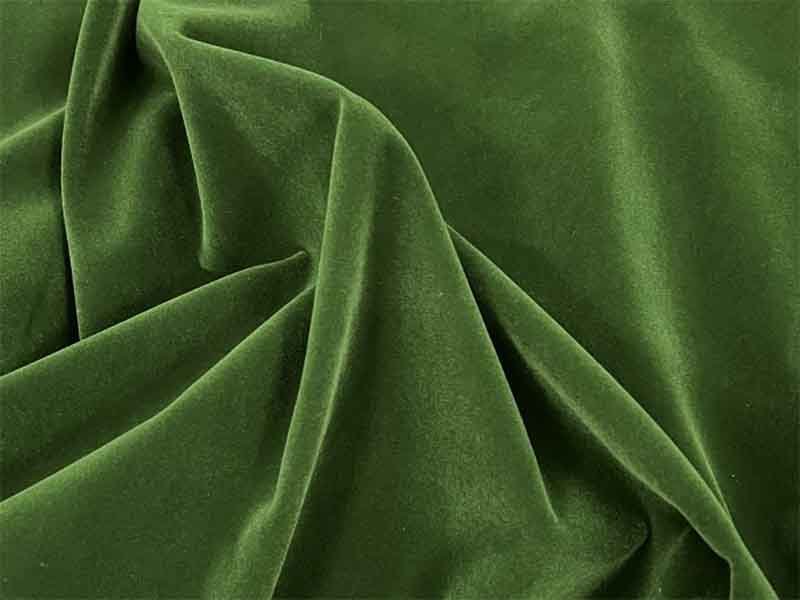
Velour can make a plush product feel richer, smoother, and more visually refined than many ordinary short-pile fabrics. Yet the same surface that gives Velour its appeal also creates some of its most difficult manufacturing problems. Brush the fabric in another direction and the apparent color can change. Stretch a panel differently and the finished head may lose symmetry. Compress the surface during embroidery or packaging and a premium-looking material can suddenly develop visible marks.
The main production risks when using Velour in plush products include inconsistent nap direction, apparent shade variation, rubbing-related color transfer, shedding or pilling, pile crushing, cutting movement, seam distortion, embroidery compression, stretch-related shape changes, and unstable appearance after stuffing. Most of these risks can be controlled when fabric specifications, cutting direction, sample standards, production records, and in-process inspection are established before bulk manufacturing begins.
The difficult part is that many Velour problems do not look serious when the material is still lying flat on a table. They become obvious only after the fabric has been cut into dozens of panels, embroidered, sewn around curved surfaces, filled, shaped, brushed, packed, and compared across hundreds or thousands of finished pieces. A fabric swatch can look perfect while the finished production tells a very different story.
What Are the Main Velour Production Risks?
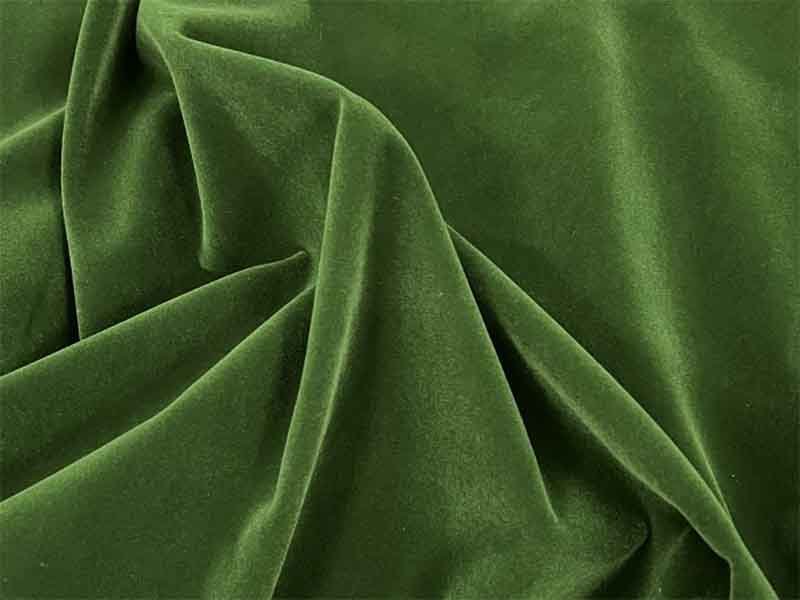
Velour production risks mainly come from directional pile, stretch behavior, backing stability, surface sensitivity, dye performance, and the way the material reacts to cutting, sewing, embroidery, filling, and compression. The most costly problems are often not isolated fabric defects. They are small material or process variations that become visually obvious after the plush product takes its final three-dimensional shape.
Which Velour Properties Create Risk?
The word “Velour” alone does not tell a production team enough about how a fabric will behave. Two Velour fabrics that look almost identical in a material book can perform very differently once they are cut and transformed into a stuffed product. Important differences include pile length, fabric weight, pile density, backing construction, stretch direction, usable width, surface gloss, thickness, finishing method, and the consistency of different production lots.
A fabric with a dense, heavier surface may feel luxurious and provide excellent coverage when wrapped around a stuffed body, but additional thickness can create bulky seams around small ears, hands, tails, or miniature clothing. A lighter Velour may produce cleaner narrow seams but can become visually thin when stretched over a firmly filled head. High stretch may help create soft rounded forms, yet uncontrolled stretch can cause two supposedly identical products to finish at different dimensions.
Material selection therefore needs to be connected to product size and construction. A 30 cm sitting animal with large, simple body panels does not place the same demands on Velour as an 8 cm collectible character with several facial seams, tiny embroidered eyes, narrow limbs, layered clothing, and a small retail package.
| Velour Parameter | Useful Measurement or Record | Main Production Impact |
|---|---|---|
| Pile length | mm | Detail visibility, grooming, shedding risk |
| Fabric weight | g/m² (GSM) | Handfeel, thickness, seam bulk |
| Usable width | cm | Marker efficiency and material consumption |
| Stretch | Direction and % where measured | Pattern size and stuffed dimensions |
| Pile density | Supplier/sample reference | Surface coverage and embroidery support |
| Backing | Construction and stability | Sewing and seam strength |
| Color | Approved swatch / color reference | Visual consistency |
| Material lot | Lot and roll identification | Repeatability between batches |
| Nap direction | Directional arrow | Shading, gloss and symmetry |
| Surface finish | Approved material sample | Compression and visual recovery |
The key is not finding the “best Velour” in general. The goal is finding a Velour whose measurable behavior matches the product being developed and whose supply can remain sufficiently stable when the order moves from prototype to production.
Why Does Pile Structure Matter?
Velour has a raised surface rather than the flat appearance of a basic woven fabric. Those raised fibers change how light reaches and leaves the surface. When the pile lies toward the viewer, the fabric can appear deeper or lighter than the same material viewed from the opposite direction. This is one reason a piece of Velour often seems to change color when someone runs a hand across it.
On a plush product, pile direction becomes more complicated because fabric panels are no longer flat. A forehead curves backward, cheeks curve outward, a belly turns away from the viewer, and a tail may rotate through several angles. Light therefore interacts with both the three-dimensional form and the orientation of the surface pile.
The result can be surprisingly strong. Two facial panels cut from the same roll can look like two different shades after stuffing when one panel is oriented differently. A body front and an arm can also appear mismatched even though their actual dyed color is identical.
Pile affects touch as well as appearance. Rubbing with the pile may feel smoother than rubbing against it. When large adjacent components are cut without a planned direction, the product can feel inconsistent when handled. For character plush, where visual symmetry and facial recognition matter, pile direction should be considered while the pattern is being engineered rather than after cutting begins.
Is Velour Harder to Control in Bulk?
Velour can be manufactured successfully in large volumes, but it does not respond well to undocumented decisions. A sample maker producing one prototype can manually brush the fabric, adjust a seam, rotate a panel, reduce filling in one area, or reshape a cheek until the sample looks right. Once production reaches several thousand pieces, those personal corrections need to become clear production instructions.
Bulk production introduces more variation naturally. Multiple rolls may be consumed. Cutting can take place over several batches. Embroidery work may run at different times. Several sewing operators may assemble the same component. Filling density may vary slightly by operator, while finished products may remain under packaging pressure for different periods before shipment.
The best control is therefore not simply “inspect more products.” It is to reduce the number of uncontrolled decisions earlier in the process. Material codes, roll identification, pile arrows, approved patterns, cutting markers, embroidery files, filling instructions, dimensions, photographs, and the Golden Sample should all point toward the same finished appearance.
Multi-SKU programs need even stronger discipline. If four characters use the same navy Velour, reversing the body pile of only one SKU can make it look like a different material when all four products appear together in product photography or on a retail display.
Which Defects Affect Finished Plush Most?
Not every defect creates the same commercial risk. A minor irregularity hidden behind clothing may have little influence on how the product is judged, while a subtle tonal difference between the left and right sides of a character’s face can make an otherwise well-made plush look immediately wrong.
Velour defects that deserve the most attention usually fall into four groups. Visual defects include reversed nap, apparent shade variation, pile crushing, pressure marks, or irregular gloss. Structural defects include stretched seams, distorted panels, and unstable shapes after filling. Surface-performance problems include continued shedding, pilling, abrasion, and rubbing-related color transfer. Process-related defects include embroidery flattening the pile or packaging permanently changing the surface.
One useful distinction is whether a defect is random or systematic. A stain on one finished unit may be removed during inspection. A cutting marker that reverses every left cheek panel could affect hundreds or thousands of units before someone identifies the root cause.
Manufacturing risk should therefore be judged by both severity and spread. A modest-looking issue becomes commercially serious when the same problem can pass through several production batches before being detected.
How Does Nap Direction Affect Velour?

Nap direction affects how Velour reflects light, how neighboring panels appear beside each other, and how the surface feels when touched. Mixed orientation can make the same fabric look noticeably lighter or darker across a plush product. Direction therefore needs to be planned during pattern development, maintained through marker making and cutting, and evaluated again after the product has been sewn and stuffed.
What Causes Nap Shading?
Nap shading is usually an optical difference rather than an actual dye difference. The raised fibers on the surface reflect light according to their orientation. When two areas face opposite directions, their apparent brightness, depth, and gloss can change even when both were cut from the same fabric roll.
The effect is often easier to see on rich, darker colors such as navy, black, burgundy, deep green, purple, or brown, especially when the surface has noticeable sheen. Strong side lighting and studio photography can make directional differences more visible than ordinary ambient factory lighting.
This creates an important diagnostic rule: never assume two Velour panels have different dye shades until the nap has been aligned and compared under the same lighting. A production team can waste time replacing perfectly usable fabric if a directional problem is incorrectly diagnosed as a dye problem.
The face deserves particularly careful inspection. Consumers recognize symmetry quickly, so a darker-looking left cheek or forehead can change the perceived expression of a character. Curved facial construction also means that natural light-and-shadow effects are already present. Reversed pile can exaggerate those differences enough to make an otherwise accurate sample look unbalanced.
Nap should therefore be assessed on both flat material and the fully stuffed sample. The finished three-dimensional shape gives a more realistic picture of how the fabric will behave in retail photographs and normal handling.
How Does Cutting Direction Change Color?
Cutting direction does not alter the actual dye in the fabric, but rotating a directional piece can alter the way its surface reflects light. This is why a pattern piece rotated 180 degrees may appear to be another shade once it is sewn beside a correctly oriented panel.
With many non-directional fabrics, pattern pieces can be freely rotated to improve marker efficiency. That reduces fabric waste. Velour often requires more controlled one-way cutting, particularly on large body panels and areas that need symmetry. Material utilization may therefore be slightly less efficient than it would be with a non-directional textile.
Trying to recover every small unused area by rotating critical pieces can be a false economy. The value of a few percent of fabric savings may be far lower than the cost of reworking or rejecting finished products with visibly inconsistent surfaces.
Replacement pieces are another overlooked source of problems. A facial panel damaged after embroidery may need to be cut again days after the original cutting batch. If the operator follows only the pattern outline and ignores the directional arrow, a single reversed piece can enter an otherwise correct product.
For that reason, nap information should survive every stage where a component can be cut or recut. The pattern, marker, work instruction, bundle identification, and first-piece approval should all communicate the same orientation.
Which Plush Areas Need Direction Control?
The areas requiring the strictest nap control are usually the areas people instinctively compare. Faces are at the top of the list, followed by paired ears, arms, legs, wings, large body panels, tails, and visually prominent clothing or accessories made from the same Velour.
A head can be particularly complicated because several panels may meet within a small area. The forehead, cheek, muzzle, chin, side-head, and back-head pieces may all have different shapes, yet they still need to create one coherent surface when assembled. If their pile directions are chosen only according to marker convenience, the face can develop visible tonal blocks.
Intentional directional differences are not necessarily wrong. A realistic animal may need hair to flow differently across the back, chest, muzzle, limbs, and tail. Some stylized characters may also use direction deliberately to create contrast. The important point is that the difference should be designed rather than accidental.
Direction should also be reconsidered when a design is resized. A large core plush and a small keychain version may require different pattern pieces, but the visual logic of the character should remain recognizable. A material direction that works on a broad 25 cm face may need adjustment when transferred to a much smaller version with fewer panels.
How Can Mixed Nap Appear in Bulk?
Mixed nap usually enters bulk production through routine workflow gaps rather than dramatic errors. A cutter rotates one component to use an empty part of the marker. A replacement panel is cut separately. Another roll is laid in the opposite direction. A marker is recreated for another cutting batch without carrying over the original pile rule. Two component bundles become mixed after embroidery.
The strongest controls are usually simple and visible. Directional arrows should be large enough to understand quickly. Paired or facial components should remain clearly identified. First-cut pieces should be approved before the full marker is processed, and inspectors should compare products coming from different cutting bundles rather than repeatedly checking units from the same group.
Lighting should also be part of inspection. A mixed-nap problem may look minor directly under overhead factory lamps but become striking under angled light. Rotating the finished plush or viewing it from several angles often reveals directional differences more clearly.
Repeat orders need the same discipline. A product manufactured correctly six months earlier can drift if the new team receives the paper pattern but not the original directional information. Long-term consistency depends on preserving hidden engineering decisions, not merely preserving the outline of the product.
Which Color and Surface Defects Matter Most?

The most important Velour color and surface risks include rubbing-related color transfer, true lot-to-lot shade differences, shedding, pilling, pile crushing, compression marks, and changes in gloss. Their seriousness depends on the fiber and dye system, surface finish, color depth, adjacent materials, expected handling, and packaging. A realistic evaluation therefore needs to reproduce how the fabric will actually be used.
How Does Color Crocking Occur?
Crocking occurs when color is physically transferred from a textile surface through rubbing. It is different from nap shading. With directional shading, the material only appears darker or lighter. With crocking, pigment or dye is transferred onto another surface.
The risk deserves extra attention when dark Velour touches light-colored components. Examples include a black body beside a white muzzle, a burgundy arm rubbing against cream-colored clothing, dark Velour around pale embroidery, or a strongly colored plush packaged against a light inner liner.
Wet and dry conditions can behave differently. Moisture can change the amount of transfer depending on the fiber, dyeing system, and finish, which is why controlled textile testing often evaluates more than one rubbing condition. The correct acceptance requirement should come from the product specification, target market, retailer requirements, or agreed quality plan instead of a number borrowed from an unrelated product.
Testing the actual approved material is more meaningful than relying only on a generic fabric statement. Dyeing, washing, surface finishing, heat treatment, or later production handling can influence the final result.
The risk should also be considered according to contact area. A dark Velour component that rarely touches another material presents a different exposure than a movable arm that continuously rubs against a light costume during transport and handling.
Why Does Velour Shed or Pill?
Shedding and pilling are often discussed together, but they describe different problems. Shedding means fibers come away from the surface. Pilling means loose or migrating fibers become tangled into small balls that remain attached to the fabric.
Freshly cut Velour may release some loose fibers simply because the cutting operation has severed pile along the edges. That does not automatically mean the fabric has poor durability. The more useful question is whether fiber release continues after normal cleaning, brushing, sewing, and handling.
Pile density, fiber characteristics, backing stability, finishing, abrasion, and product construction all influence surface behavior. If the pile is sparse, the backing may become visible when the fabric stretches around a firm head. If pile anchoring or backing stability is weak, repeated friction can make the surface deteriorate more quickly.
Lint control matters even when the fabric itself remains acceptable. Loose fibers can settle on white embroidery, pale face panels, transparent polybags, retail boxes, or clothing details. A product can therefore look dirty or poorly finished without suffering a serious structural material failure.
Development samples should be handled, brushed, rubbed, sewn, and packed rather than kept pristine. The goal is to see how the surface behaves after realistic manufacturing contact instead of approving a swatch that has never been stressed.
What Causes Batch Shade Variation?
True batch shade variation can occur between dye lots, finishing batches, fabric production lots, or sometimes separate rolls. It should first be distinguished from the far more common visual effect caused by different nap directions.
A controlled comparison begins by placing both samples in the same orientation. The pile should be brushed consistently and inspected under the same lighting. Roll and lot information should then be checked. Only after those variables are removed should the production team decide that a real color difference exists.
| Diagnostic Step | What to Check | Result It Helps Separate |
|---|---|---|
| Align pile | Same nap direction | Optical shading vs color difference |
| Confirm material code | Same approved fabric | Wrong material substitution |
| Check lot | Dye/production lot ID | Batch-related variation |
| Record roll | Individual roll number | Isolated roll difference |
| Use same lighting | Controlled viewing condition | Lighting-related false judgment |
| Compare reference | Approved swatch or Golden Sample | Acceptable vs unacceptable change |
| Review after stuffing | Finished three-dimensional product | Swatch issue vs product-level issue |
Lot control becomes particularly important in multi-SKU collections. Individual differences that appear modest on one product can become much more obvious when several characters using the same color stand next to each other on a shelf or appear together in campaign photography.
Material descriptions such as “dark blue Velour” are not enough for long production programs. Approved references, material codes, lot records, and retained samples provide a much stronger basis for repeat-order evaluation.
How Does Pile Crushing Affect Appearance?
Pile crushing occurs when raised fibers are flattened, bent, or held under pressure. Depending on the fabric and the cause, the affected area may recover naturally, improve after brushing, or remain visible as a permanent mark.
The shape of the mark often provides useful clues. Broad flattened areas can result from stacking or carton pressure. Straight lines may come from folds or packaging. Local rectangular or circular areas around embroidery can come from clamping. A shiny or polished-looking zone can suggest strong pressure or heat rather than ordinary compression.
Packaging is one of the most underestimated sources of surface change. A plush can look excellent when it leaves the finishing table and still arrive with a noticeably different face after several weeks inside a tight polybag or compressed carton. High transportation efficiency does not help if the unpacked retail product loses the intended appearance.
A packaging trial should therefore look at three moments: before packing, immediately after unpacking, and after an agreed recovery period under normal conditions. The important question is whether the product can return to the approved appearance without extraordinary treatment.
Face areas should receive the greatest caution. Flattening one cheek or forehead can alter how light reflects from the surface and create apparent asymmetry even when the underlying structure remains correct.
How Do Cutting, Sewing, and Embroidery Affect Velour?

Cutting, sewing, and embroidery expose the mechanical behavior of Velour more than an untouched swatch ever can. Stretch, backing stability, thickness, pile direction, and surface compression can lead to panel movement, distorted curves, trapped pile, bulky seams, embroidery sink-in, or inaccurate facial placement. Process settings therefore need to be confirmed using the actual approved production material.
How Does Velour Shift During Cutting?
Cutting accuracy depends on more than whether the blade follows the correct outline. Elastic or soft-backed Velour can move during spreading and cutting, particularly when multiple fabric layers are stacked. Upper and lower layers may not remain perfectly aligned, so apparently identical pieces can gradually develop dimensional differences.
This matters most around small or high-precision components. A few millimeters of movement on a broad body panel may be absorbed during sewing, while the same movement around a cheek, muzzle, eye reference, or small ear can noticeably change the finished expression.
Pattern notches, center marks, embroidery references, and left-right identification help operators detect differences before they become hidden inside an assembled shell. Sensitive facial pieces may also require more conservative cutting conditions than simple large body components.
Fabric stretch direction deserves equal attention. If two matching panels are cut in different orientations, their flat dimensions may look correct while their behavior under stuffing becomes different. One side can stretch farther and produce an asymmetric head or body.
The cutting plan should therefore balance material utilization, pile consistency, and dimensional stability. The marker with the lowest theoretical waste is not necessarily the lowest-cost production solution if it creates higher defect or rework risk later.
What Causes Seam Distortion?
Seam distortion usually comes from several small variables acting together rather than one obvious mistake. Fabric stretch, thread tension, feeding pressure, stitch settings, backing stability, seam allowance, fabric thickness, and operator handling can all affect the finished seam.
Velour pile adds another issue because fibers can become trapped between two pieces during sewing. Some trapped pile can be released through careful grooming after the seam is turned, but severe trapping may make a seam look unusually deep, flat, or irregular.
Curved areas are especially sensitive. Head seams, cheeks, narrow limbs, ear bases, crotch intersections, and small-radius turns require continuous operator control. If one panel is stretched more than the other while it is being sewn, the difference can remain hidden until stuffing pushes outward against the shell.
Once filled, a distorted seam can twist the head, flatten one cheek, shift the center line, or change the apparent proportion of the product. That is why an empty sewn shell should be checked before filling whenever the design contains high-risk shapes.
The goal is not simply a strong seam. It is a seam that preserves the engineered shape repeatedly across production. Pattern registration, clear allowances, stable machine settings, first-piece approval, and frequent comparison with the approved reference are more reliable than depending on final inspection alone.
How Can Stretch Change Plush Shape?
Stretch can help Velour form smooth curves and produce a comfortable soft feel, so elasticity is not automatically undesirable. Problems appear when the stretch behavior of the material is not considered during pattern engineering.
A paper pattern has fixed dimensions, while fabric does not. If Velour stretches strongly across the width but only slightly along the length, rotating a panel can change how far it expands after filling. The effect becomes stronger when the product is filled more firmly.
A useful development record can include flat panel dimensions, sewn-shell dimensions, finished height and width, head circumference, limb length, total product weight, filling weight, and symmetry between paired features. These measurements provide a clearer basis for comparing samples and production than subjective comments alone.
Tolerances should also reflect the product. A few millimeters can be visually important on the mouth or eye position of a small collectible plush while being irrelevant on the back of a large soft pillow. One universal tolerance does not make sense for every feature.
Material substitution should therefore be treated carefully. Replacing one Velour with another that has similar color and GSM does not guarantee identical finished dimensions. Different backing or stretch behavior can require pattern adjustment even when the two fabrics look very similar in a flat swatch comparison.
Does Embroidery Damage the Pile?
Embroidery does not automatically damage Velour, but the process places concentrated mechanical stress on the surface. The fabric is stabilized, held in position, penetrated repeatedly with needles, and covered with thread in selected areas.
Pile height and density influence how clearly embroidery remains visible. Very small details may sink between fibers, while dense designs can compress the pile around the stitched area. On a character face, this can affect fine outlines, eyelashes, eyebrows, highlights, mouths, or small logos.
Embroidery approval should therefore use the actual intended Velour rather than a substitute fabric that happens to have a similar color. The production test should evaluate stitch density, stabilizer choice, thread tension, pile recovery, outline clarity, fabric puckering, and the appearance of the surrounding surface after hooping or clamping.
Placement also needs to be checked after the panel becomes three-dimensional. An eye that looks perfectly centered on a flat piece can appear higher, lower, or closer to a seam after the head is sewn and filled.
When the face carries important character identity, material selection and embroidery engineering should be reviewed together. A beautiful embroidery file cannot compensate for a pile surface that hides the design, while an excellent Velour can still look poor if the embroidery process permanently marks the surrounding face.
How Does Stuffing Change Velour Appearance?
Stuffing transforms Velour from flat fabric into a tensioned, curved surface. This can expose nap differences, stretch variation, inaccurate cutting, seam imbalance, and uneven panel dimensions that were difficult to notice earlier. Filling weight and distribution also change the angle at which the surface reflects light, making stuffing control an important part of both shape accuracy and visual consistency.
How Can Stuffing Expose Panel Differences?
An unfilled shell can hide surprisingly large differences. Once filling creates outward pressure, panels stretch, curved seams open into their final shape, and the pile changes angle relative to the light. A problem that appeared insignificant during sewing can suddenly become easy to see.
Consider a head made from two side panels. If one piece was cut along a slightly different stretch direction, both pieces may look identical before assembly. After filling, one cheek may expand more. The surface then sits at a different angle, and its Velour pile reflects light differently. What first appears to be a color problem can actually begin with grain direction or cutting.
Stuffing can also amplify small seam differences. Several tiny deviations distributed around a face may accumulate into a visibly different head shape. The exact significance depends on product size, pattern complexity, and firmness, which is why dimensional evaluation should be tied to the approved sample instead of relying on one universal number.
Finished plush should be reviewed from several angles. Front, side, three-quarter, top, and back views can reveal different issues. A face may appear symmetrical from the front but show unequal cheek volume when viewed from above.
Approval of Velour therefore should not stop at the fabric swatch or unfilled embroidered panel. The stuffed product is the point where material behavior, pattern engineering, sewing, and filling finally meet.
Why Do Curved Areas Show More Shading?
Curved surfaces naturally create light and dark zones because different parts of the product face different directions relative to the light source. Velour adds a second directional effect because the pile itself also changes reflection.
A round cheek can therefore appear darker along the outer edge even when everything is correct. The challenge is recognizing when the difference is normal geometry and when it indicates reversed pile, uneven stuffing, incorrect seams, or genuine shade variation.
A useful troubleshooting order begins with the simplest variables. Confirm nap direction first. Then compare the amount and distribution of filling. Examine seam position and panel geometry. Finally, compare the actual material lot if the difference remains.
This sequence prevents unnecessary material replacement and directs the production team toward the real cause.
Faces show the effect most clearly, but bellies, domed heads, paws, rounded tails, wings, and soft accessories behave in the same way. Studio photography can also intensify the contrast, which is why a sample that looks uniform under diffuse room lighting may appear different under directional campaign lighting.
For appearance-critical products, the fully finished Golden Sample is a better visual reference than an isolated fabric cutting because it captures how the approved material is expected to behave on the actual three-dimensional form.
How Does Filling Pressure Affect Seams?
Filling creates internal pressure against the fabric shell. If the product is overfilled, the body can become wider than intended, seams can become more visible, curves can flatten, and the backing may begin to show along high-tension areas. If filling is too light, the product may develop wrinkles, hollow cheeks, weak limbs, or inconsistent posture.
Total filling weight is useful, but it is not the complete specification. Two plush products containing the same amount of filling can still look different when the distribution changes. One operator may concentrate more filling in the front of the head while another places more behind the face.
The best filling instructions therefore identify important regions rather than only a total number. The head may need enough support to preserve facial geometry. The torso may need softer distribution. Ears or tails may require less material, while the base of a sitting product may need stronger support.
For Velour, stable filling also improves surface consistency because similar tension creates more comparable pile presentation. When one product is substantially firmer than another, its surface can catch light differently even though the material and cutting direction are correct.
A reference sample, product weight, filling weight where appropriate, dimensional checks, and visual comparison work together much better than relying only on the operator’s handfeel.
Which Facial Areas Are Most Sensitive?
The forehead, cheeks, eye surrounds, muzzle, mouth area, and central facial seams are usually the most sensitive zones because several manufacturing variables meet in a very small space.
Pile direction can influence apparent color around an eye. Embroidery can compress surrounding fibers. A slightly stretched cheek panel can alter the face width. Extra filling in the muzzle can move the mouth visually downward. A small seam difference can make one side appear fuller than the other.
For this reason, vague comments such as “make it cuter” or “make the face more premium” are difficult to reproduce. Development feedback becomes more useful when it is translated into measurable actions such as moving an eye several millimeters, changing the width of a muzzle, adjusting the mouth proportion, reducing filling in one zone, or changing a specific panel.
Measurement does not remove aesthetics from plush development. It gives the production team a reliable way to reproduce an aesthetic decision after the sample has been approved.
Before releasing a Velour face into bulk production, four references should agree: the approved pattern, the planned pile direction, the embroidery location, and the completed stuffed appearance. When those four elements are stable, repeatability improves dramatically.
How Are Velour Risks Controlled in Bulk Production?
Reliable Velour production depends on controlling decisions before defects reach final inspection. Material specifications, lot identity, nap direction, patterns, production-intent samples, embroidery files, filling references, Golden Sample approval, inline inspection, packaging trials, and retained records should form one connected control chain. Bulk consistency comes from repeating known conditions rather than trying to remove problems after thousands of pieces have already been completed.
What Should Be Checked Before Sampling?
The most effective Velour risk control begins before the first prototype is sewn. A material review should establish whether the proposed fabric matches the size, construction, decoration, handfeel, packaging, expected production volume, and target quality level of the product.
Useful information includes documented composition, GSM, pile length, usable width, density, backing stability, stretch direction, surface gloss, nap direction, color reference, production lot, embroidery compatibility, shedding behavior, packaging recovery, supplier consistency, and repeat-order availability.
Product scale matters. A thick, dense Velour may work beautifully on a 25–30 cm character while creating too much seam bulk on an 8 cm keychain. A highly elastic material may help a pillow-style plush develop smooth curves but create more dimensional variation on a small collectible product with closely controlled facial proportions.
Material approval should also reproduce important processes. If the final product contains dense facial embroidery, layered clothing, attached accessories, weighted components, or tight compression packaging, the sample should include those conditions.
A material that performs well only when it remains untouched is not a useful production material. The purpose of sampling is to understand what happens after the fabric goes through the same operations it will experience during bulk manufacturing.
Which Velour Details Should the Golden Sample Lock?
A Golden Sample should preserve more than the overall appearance of the character. It should represent the visible result of many smaller decisions that would otherwise be easy to forget once development moves into production.
For Velour, important locked information includes the final material code, approved surface and color reference, pile direction for critical panels, pattern version, embroidery file, thread colors, seam structure, filling level, finished dimensions, grooming direction, accessories, labels, and packaging condition.
The physical sample alone cannot communicate all of those hidden decisions. Someone looking at the finished plush may not know whether the face pile was deliberately cut downward, whether the body uses a different orientation, or whether a certain level of firmness is necessary to maintain the approved cheek shape.
The best production reference combines the Golden Sample with clear production files. The sample shows the target appearance while the files explain how to reproduce it.
Revision control becomes important when several prototypes have been made. If the second sample changes only the eye position and the third changes filling firmness, the production team should not accidentally return to an earlier fabric direction or embroidery file.
Long-running SKUs benefit most from this discipline because team members, operators, material lots, and production dates may change while the product is expected to remain visually familiar to consumers.
How Are Fabric Lots and Nap Direction Controlled?
Material control should begin as soon as Velour arrives. Each usable fabric supply should remain identifiable by material code, color, roll, and production or dye lot where that information is available.
Visual comparison against the approved reference should be performed with pile orientation aligned. This prevents an ordinary directional effect from being incorrectly recorded as a color problem. When several rolls are required, early comparison can also reveal whether some rolls should be separated or allocated carefully before they enter cutting.
| Production Stage | Key Velour Check | Useful Record |
|---|---|---|
| Incoming fabric | Material, color, lot, surface | Incoming material record |
| Pattern release | Grain and pile direction | Approved pattern |
| Marker making | Direction maintained | Marker version |
| Cutting | Dimension and nap | First-cut approval |
| Bundling | Matched components traceable | Bundle ID |
| Embroidery | Placement and surface recovery | First-piece embroidery approval |
| Sewing | Seam shape and trapped pile | Inline inspection |
| Stuffing | Shape, firmness, dimensions | Golden Sample comparison |
| Packaging | Compression and recovery | Pack trial record |
| Final inspection | Shade, nap, surface, dimensions | Final QC record |
| Repeat order | Lot and version reconfirmation | Retained sample and BOM |
Direction should not exist only in the memory of an experienced cutter. The information needs to remain visible wherever a panel might be positioned, cut, replaced, checked, or reproduced.
Repeat orders deserve a fresh material check as well. The supplier and fabric code may remain unchanged while a new manufacturing lot behaves slightly differently in gloss, elasticity, density, or shade. Comparing the new material with a retained approved reference is far safer than assuming the material name guarantees identical performance.
What Should QC Check Before Shipment?
Final inspection should focus on the problems that can appear only after every major production step has acted on the Velour. A fabric that looked acceptable during receiving can behave differently after cutting, embroidery, sewing, filling, grooming, packing, and storage.
Important checks include left-right nap consistency, facial shading, real color differences, trapped pile at seams, loose surface fibers, visible pilling, abrasion, flattened areas, embroidery clarity, seam distortion, filling balance, finished dimensions, product symmetry, and pressure marks caused by packaging.
Inspection should include units from different cutting, sewing, or production bundles rather than repeatedly examining consecutive pieces from one batch. Ten units from the same bundle can appear perfectly consistent even when another batch has been cut differently.
Lighting and viewing angle also matter. Rotating a Velour product can reveal shading that is not visible from a single inspection angle. Face panels and other large continuous surfaces deserve particularly careful comparison.
Final inspection should never be the first serious quality gate. If every body front has been cut in the wrong direction, finished inspection can only confirm that the problem is widespread. Incoming checks, first-cut approval, embroidery approval, sewing inspection, and stuffed-shape comparison are intended to detect systematic issues when correction is still manageable.
Final Thoughts
Velour is not a material that should be avoided simply because it requires more production control. When its surface is matched correctly to the product, it can provide a refined handfeel, rich visual depth, clean character silhouettes, and a distinctive appearance that works well for character plush, mascots, collectible products, fashion-oriented plush accessories, gift programs, and selected premium lines.
The important change in thinking is to stop treating Velour as nothing more than a color and texture choice. Its pile direction influences perceived shade. Its backing and stretch influence shape. Cutting determines whether paired components remain visually consistent. Embroidery changes the surface locally. Stuffing changes tension and reflection, while packaging determines whether the final appearance survives transportation.
A strong development process connects all of those variables before bulk production begins. Material samples establish the physical baseline, engineered patterns define direction and geometry, production-intent prototypes reveal interactions, the Golden Sample establishes the finished standard, and process records carry those decisions into manufacturing and later repeat orders.
For brands considering Velour for a new custom plush program, sharing the intended artwork, product size, material reference, embroidery details, quantity, packaging expectations, and target market early makes the material discussion far more useful. Pufumi can evaluate these inputs during product development and help identify potential Velour risks before they become expensive bulk-production problems.
Frequently Asked Questions
Is Velour a good fabric for plush toys?
Velour can be an excellent fabric for selected plush products because its short, smooth pile creates a soft handfeel and a visually rich surface without the long fibers associated with faux fur. It can work particularly well for character plush, mascots, collectible products, fashion-oriented accessories, and designs where clean contours remain important. Suitability still depends on pile density, backing stability, stretch, embroidery requirements, product size, packaging, and the expected quality level.
Does Velour change color depending on direction?
Velour can appear lighter or darker when viewed from different directions because its raised pile reflects light differently according to orientation. The actual dyed color may remain identical. This effect is often called directional shading or nap shading and becomes especially noticeable when neighboring panels are cut in opposite directions. Matching pile direction on faces, paired limbs, and large body sections is therefore an important part of maintaining consistent appearance.
How do you prevent nap direction problems in Velour production?
Nap problems are best prevented before cutting begins. Critical pattern pieces should have clear directional arrows, and the marker should maintain the approved orientation. First-cut pieces should be checked before full production proceeds, while replacement pieces need to follow the same directional rule. During assembly and final inspection, paired areas such as cheeks, ears, arms, and legs should be compared under suitable lighting so reversed pile can be detected early.
Does Velour shed when used for stuffed animals?
Some loose fibers can appear after Velour is cut because the cutting process severs pile along the edges. Limited cutting lint is different from continued shedding during handling or use. The real concern is whether fiber release continues after cleaning, sewing, rubbing, and normal manipulation. Pile density, backing construction, fiber characteristics, finishing, abrasion, and material quality all influence shedding performance, so the actual production fabric should be evaluated during development.
Can Velour be embroidered?
Velour can support attractive embroidery, including character eyes, mouths, logos, markings, and decorative details, but pile length and surface density affect how clearly the stitches remain visible. Very fine details may sink into the pile, while dense embroidery or excessive clamping can flatten the surrounding surface. A production-intent embroidery test using the approved Velour, stabilizer, thread, stitch file, and expected process conditions is much more reliable than testing on a substitute fabric.
Why can a Velour sample look good but bulk production look different?
A prototype involves only a small amount of material and is often handled closely by experienced sample makers. Bulk production introduces additional rolls, cutting batches, operators, embroidery runs, filling variations, packaging pressure, and production dates. If nap direction, material lots, patterns, filling, embroidery files, and visual standards are not formally recorded, small variations can spread across production. The Golden Sample and production documentation exist to convert successful sample-making decisions into repeatable manufacturing instructions.
How should Velour be inspected before mass production?
Before mass production, Velour should be evaluated for pile direction, color, GSM, pile length, density, backing stability, stretch, usable width, surface gloss, shedding behavior, embroidery compatibility, and lot consistency. The material should also be tested in the actual plush construction because flat fabric inspection cannot predict everything that happens after sewing and stuffing. A production-intent sample, approved Golden Sample, directional cutting rule, material record, and packaging trial provide a much stronger basis for bulk release.