
Amazon FBA Preparation for Custom Plush Products
From production-ready plush and verified unit packaging to accurate carton data and coordinated Amazon inventory delivery.
- Structured control for collections containing 10–30 product SKUs.
- Commercial programs commonly planned around 20,000–80,000 total pieces.
- Product formats can range from 5 cm bag charms to 100 cm+ core retail plush.
- Prototype development commonly requires 7–15 working days after complete files, payment, and material confirmation.
- Bulk manufacturing is planned around the approved design, quantity, packaging, barcode route, destination, and required arrival schedule.
FBA Preparation Across The Complete Plush Program
Product Engineering
Unit Packaging
Barcode Application
SKU Verification
Carton Preparation
Delivery Coordination
Amazon Programs Pufumi Is Built To Support
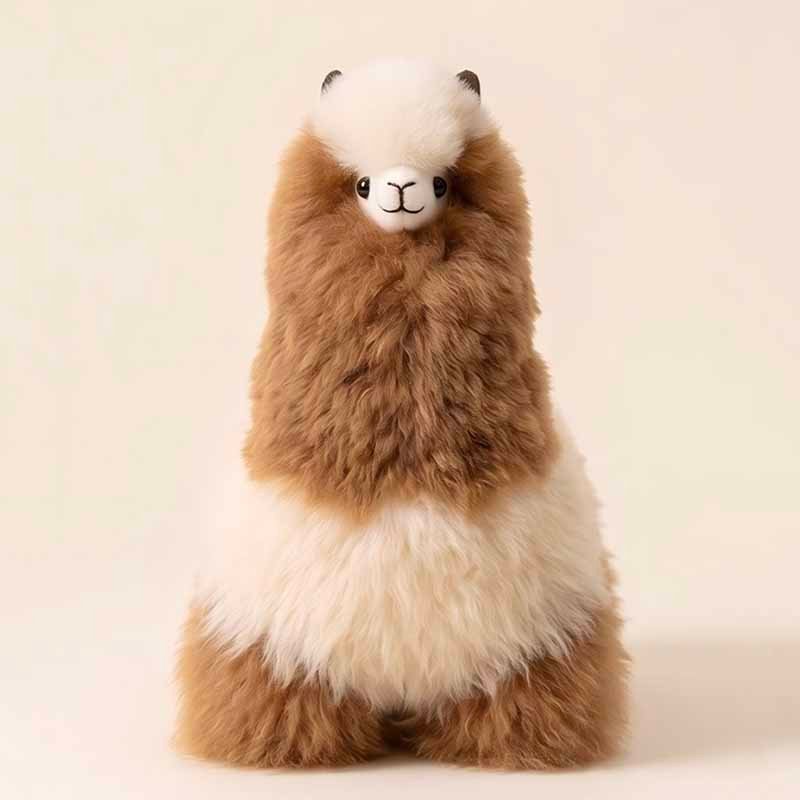
Private Label Programs

Licensed Merchandise
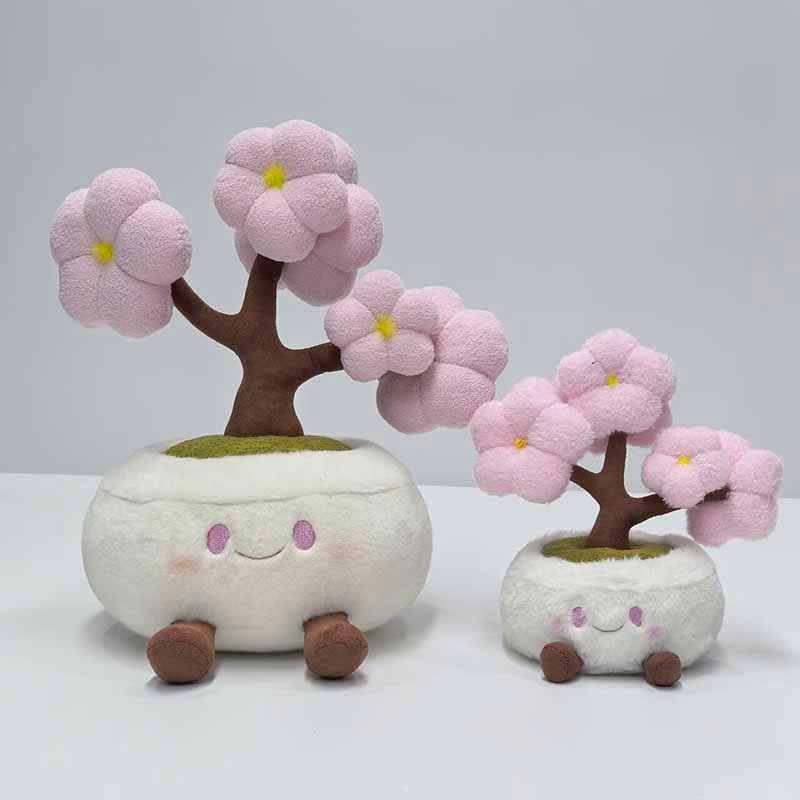
Collectible Brands

Multi-SKU Sellers
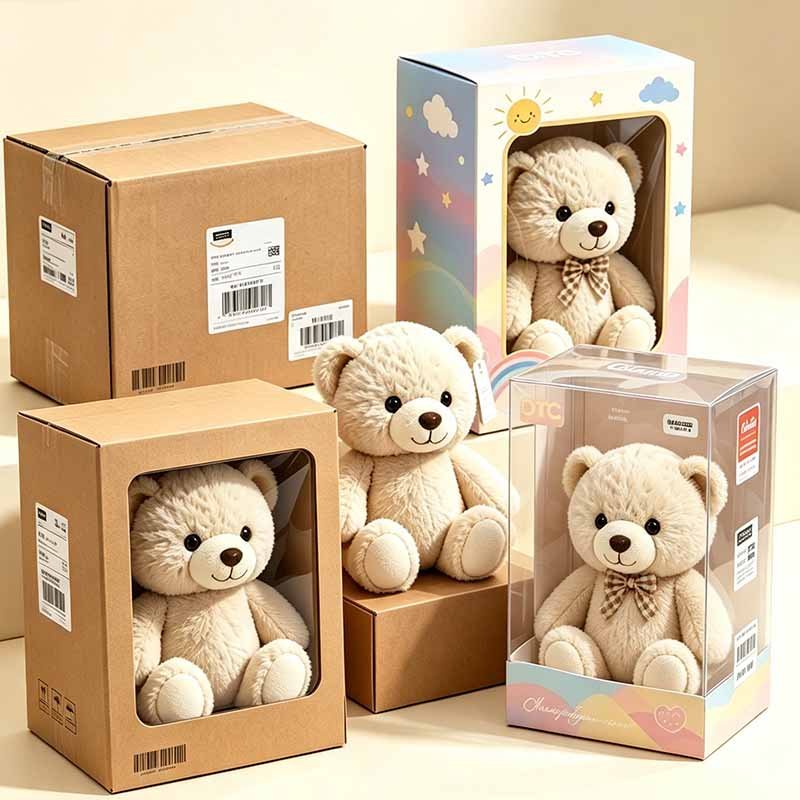
Multi-Channel Brands
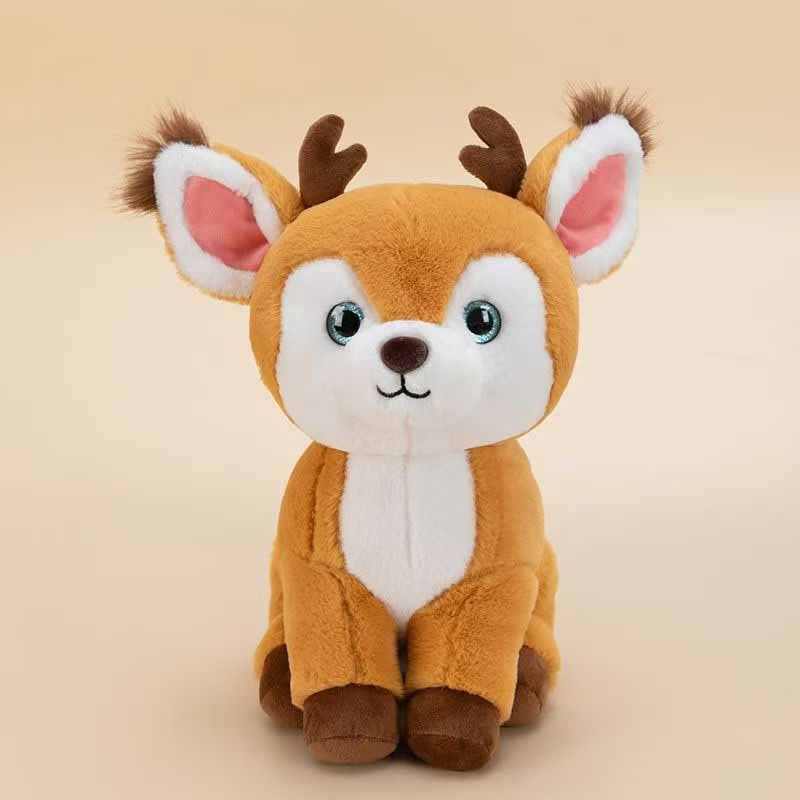
Agency-Managed Launches
Information Required Before FBA Preparation Begins
Marketplace Details
Listing Information
Product Structure
Barcode Files
Shipment Information
Required Dates
Clear Responsibilities Before Inventory Enters Production
Pufumi handles physical manufacturing and preparation activities, while the Amazon account owner controls listings, shipment creation, platform decisions, fees, and account-level responsibilities.
| Project Area | Pufumi Can Handle | Seller Or Account Team Controls |
|---|---|---|
| Product Development | Artwork review, pattern engineering, materials, samples, revisions, production files, Golden Sample control | Product positioning, listing strategy, commercial approval, final artwork approval |
| Product Manufacturing | Cutting, embroidery, printing coordination, sewing, filling, shaping, accessories, labels, inspection | Purchase decision, order approval, payment, authorized IP confirmation |
| Unit Packaging | Polybag, sleeve, retail box, blind box, gift box, inserts, set packing, warning application from approved files | Final packaging copy, marketplace instructions, listing claims, legal review |
| Product Barcode | Printing, application, placement approval, barcode scanning, SKU matching | Barcode route, Seller SKU, ASIN, final barcode files, account eligibility |
| FBA Shipment | Carton packing, carton data, box-label application, packing-list reconciliation | Shipment creation, warehouse assignment, final box-label download, account settings |
| Compliance | BOM support, production samples, label preparation, third-party testing coordination | Applicable-market determination, importer duties, certification responsibility, account submission |
| Freight | Forwarder coordination, pickup preparation, FBA, AWD, 3PL, or split-route support | Importer arrangement, tax obligations, destination account access, Amazon fees |
| Inventory Management | Repeat-order files, product versions, packaging records, carton history | Forecasting, account inventory limits, replenishment decisions, sales performance |
| Claims And Returns | Manufacturing investigation, retained-sample review, production corrective action | Amazon account cases, consumer communication, listing suspension, platform appeals |
Pufumi provides manufacturing, packaging, labeling, data, and delivery preparation support. Amazon warehouse acceptance depends on the actual marketplace, account settings, current platform instructions, shipment data, physical inventory, carrier performance, and receiving conditions.
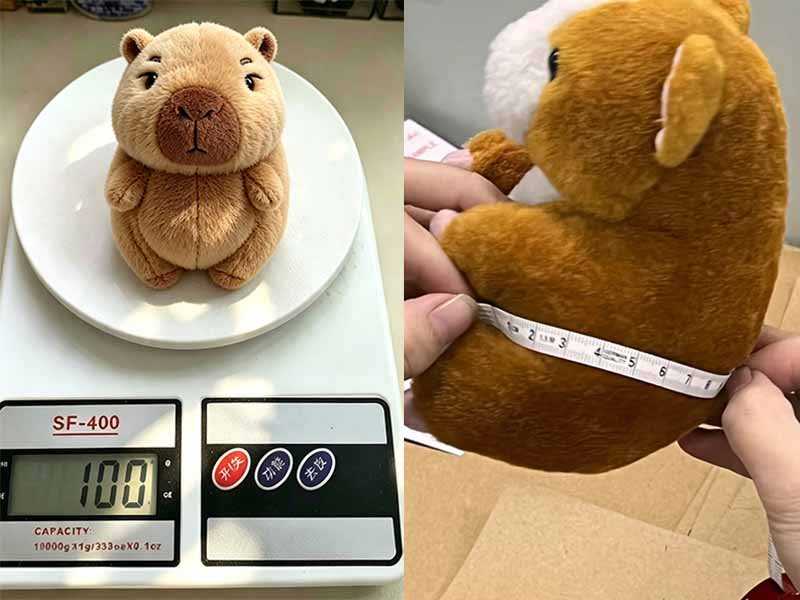
Engineer Plush Size And Weight Before Production
Packed dimensions and weight begin with product engineering. Waiting until finished inventory is packed removes many opportunities to improve shape, protection, carton use, and fulfillment economics.
Evaluate The Finished Product And Sellable Package Together
A plush product may appear compact on a sample table yet occupy far more space after ears, tails, hair, clothing, hooks, retail packaging, and protective inserts are included. Pufumi therefore reviews both the finished product and the final sellable unit.
Relevant measurements include:
- Finished plush height: Measured in the approved presentation position.
- Maximum width: Includes arms, wings, ears, clothing, and fixed accessories.
- Maximum depth: Includes noses, tails, backpacks, hats, and dimensional details.
- Product weight: Includes filling, clothing, hardware, modules, and permanent labels.
- Packaged dimensions: Based on the sealed sellable unit rather than the unpacked sample.
- Packaged weight: Includes the unit package, inserts, cards, labels, and protective materials.
Several design choices can change the packed result:
- Long ears may fold safely or may require support.
- A projecting nose can create unused package volume.
- Rigid accessories can prevent compression.
- Dense filling can preserve shape but increase packed volume.
- A large gift box can shift the product into a different fulfillment-cost range.
- A bag charm packed inside a compact sleeve may require less space than a rigid display box.
Pufumi can compare product and packaging options during sample development. The goal is not aggressive volume reduction at the expense of character recognition, handfeel, durability, or unboxing quality. A well-engineered solution balances appearance, recovery, package protection, carton utilization, and channel economics.
Protect Every Plush Unit During FBA Handling
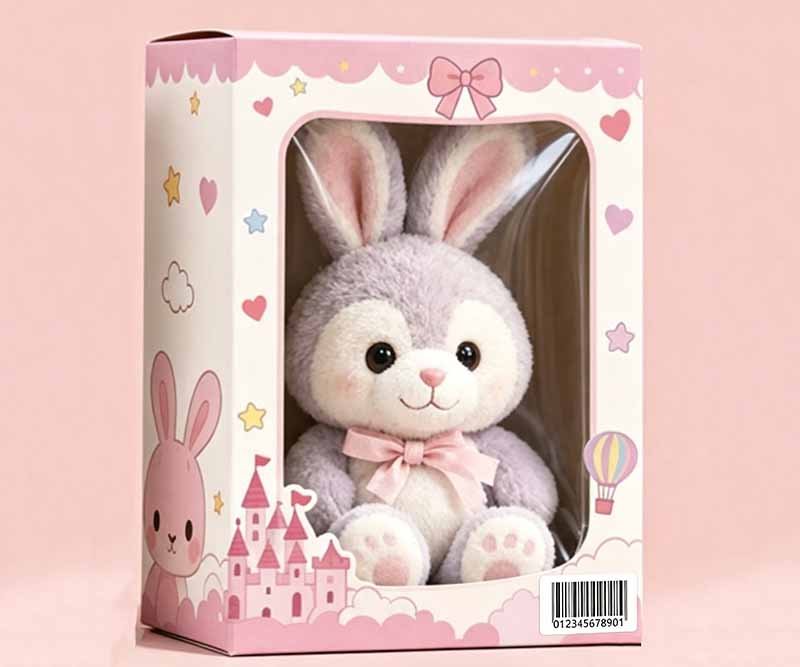
The unit package must keep the plush clean, contained, identifiable, scannable, and ready for warehouse movement without damaging the intended retail presentation.
Match Packaging To Product Structure And Sales Format
Pufumi selects packaging around the physical design, listing unit, target market, presentation level, handling risk, and logistics route.
Common options include:
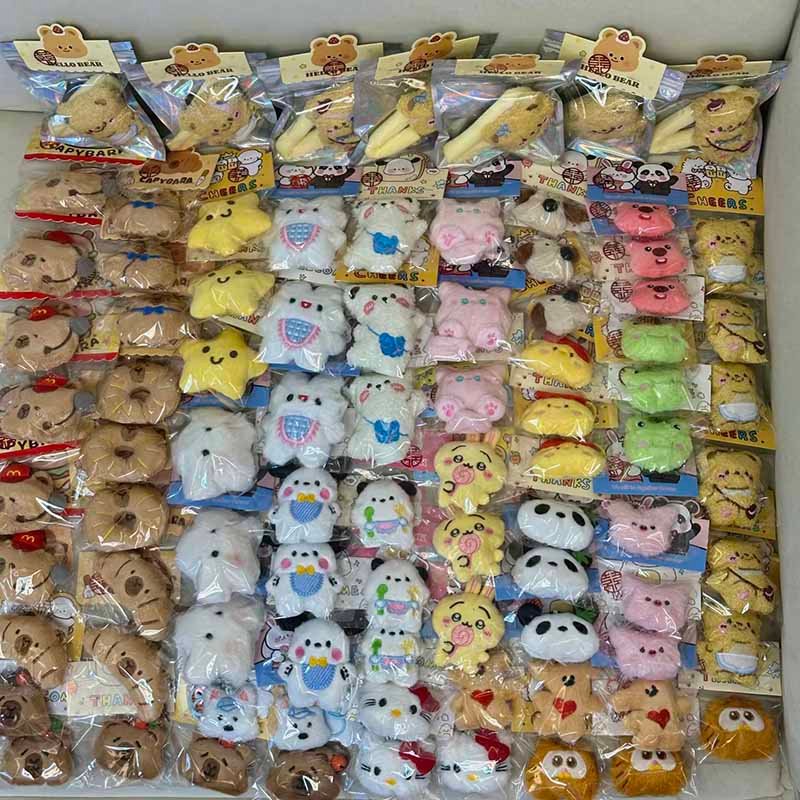
- Transparent polybag:Suitable for many soft products where visibility, dust protection, and compact volume are priorities.
- Paper sleeve:Adds branding while leaving much of the plush visible.
- Sealed retail box:Protects structured products, accessories, or higher-value presentations.
- Blind box:Supports mystery collections and controlled external identity.
- Gift box:Suits premium sets, licensed editions, and presentation-led programs.
- Protective insert:Holds accessories, shaped details, or bundled components in place.
- Set packaging:Combines several components into one sellable unit.
- Compression packaging:Considered only after shape-recovery testing and approval.
Packaging development should confirm:
- The sellable unit contains every promised component.
- Loose accessories cannot escape during handling.
- The plush remains protected from dust, moisture, stains, snagging, and abrasion.
- The package does not permanently distort the face, body, clothing, or retail box.
- Required labels and warnings remain visible.
- The external barcode is readable without opening the unit.
- Internal barcodes are covered when required by the selected workflow.
- Package dimensions match the information used for listing and logistics planning.
A packaging sample should be reviewed before bulk printing and procurement. Pufumi can prepare packed-sample photographs, measurements, barcode-position references, compression observations, and carton trials for approval.
Control Polybag Details Before Bulk Packing
Bag dimensions, opening size, seal, warning, transparency, excess material, and barcode placement require approval before thousands of finished units enter the packing area.
Build A Defined Polybag Specification
A polybag should not be treated as an unspecified clear wrapper. Pufumi records the bag dimensions, material, closure, printing, warning, label position, and applicable SKU before bulk packing.
Important control points include:
- Bag width and length: Must accommodate the finished plush without excessive loose material.
- Opening measurement: Used to evaluate applicable warning requirements.
- Material thickness: Selected for handling, seal strength, clarity, and product protection.
- Transparency: The product and barcode should remain visible where required.
- Closure method: Self-adhesive sealing, heat sealing, or another approved closure must remain secure.
- Ventilation: Vent holes may be reviewed where compression, trapped air, and product form require them.
- Suffocation warning: Printed or applied according to the relevant marketplace and final approved packaging route.
- Barcode position: Placed on a flat, accessible, visible area.
- Excess film: Controlled to reduce snagging, folding over the barcode, and warehouse handling problems.
- Product presentation: The bag should not force the face, ears, limbs, clothing, or accessories into an unacceptable position.
For Amazon US, current official guidance requires a suffocation warning on bags with an opening of five inches or larger when measured flat. Marketplace requirements can change, so the active Seller Central instructions should be confirmed before bag printing or label application.
Pufumi recommends approving one complete packed sample per package version. Approval should include bag specification, warning content, warning position, barcode file, barcode position, product orientation, closure, packed dimensions, and appearance after storage.
Select The Correct Barcode Workflow
Manufacturer Barcode
Amazon Barcode
Account-Approved Route
Apply The Correct FNSKU To Every SKU
Build A Product And Label Matrix Before Packing
- Internal product code
- Seller SKU
- ASIN
- Product name
- Character or variant
- Size
- Color
- Sellable-unit type
- Packaging version
- Barcode file
- Label dimensions
- Label position
- Applicable marketplace
- Production quantity
- Carton configuration
Control Printing And Application
- Print clarity and contrast
- Complete barcode bars
- Human-readable information
- Label dimensions
- Adhesive strength
- Wrinkles and bubbles
- Curved or textured placement
- Package seams and folds
- Coverage of competing barcodes
- Visibility after packing
- Orientation during scanning
Verify Finished Sellable Units
Scanning is performed after the product has entered its final sellable package. Verification confirms that the code remains readable and matches the assigned SKU. Multi-SKU programs receive focused checks during packing and before shipment release. Photographic evidence can include:
- Product and front package
- Barcode close-up
- Scan result
- SKU code
- Package version
- Carton allocation
Pufumi does not promise platform acceptance solely because a barcode scans inside the factory. Final acceptance also depends on listing status, shipment data, account settings, warehouse handling, and current Amazon requirements.
Prevent Mixed Products Labels And Cartons
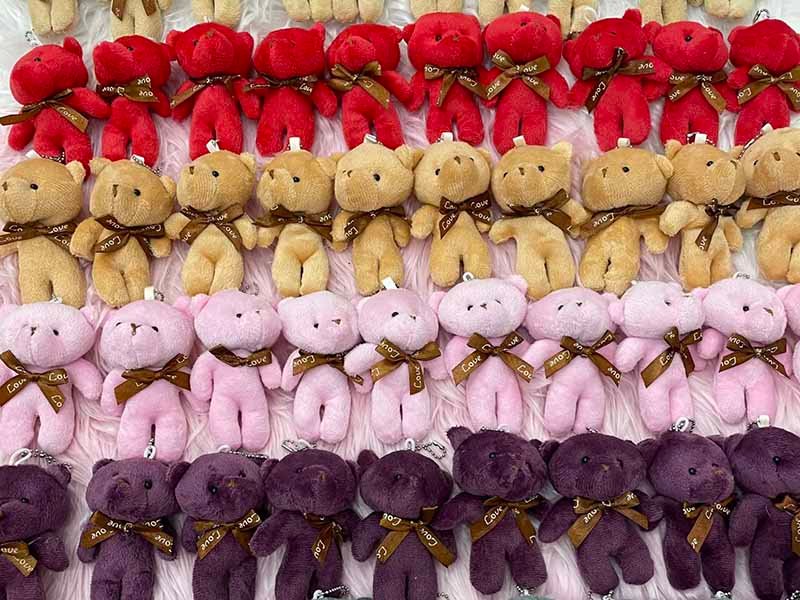
Separate SKU Identity From Production Through Shipment
- Project codes: Connect the collection with its commercial and technical records.
- Product codes: Distinguish every design, size, color, and functional version.
- Material records: Identify shared and unique fabrics, threads, accessories, labels, and packaging.
- Pattern versions: Prevent old structures from entering current production.
- Embroidery files: Link each face, logo, badge, or decoration with the correct product.
- Packaging codes: Separate polybags, sleeves, retail boxes, inserts, and market versions.
- Barcode matrix: Connect each final sellable unit with the assigned listing code.
- Carton plans: Define quantity, SKU, and destination per master carton.
- Shipment records: Reconcile physical cartons with the final shipment workflow.
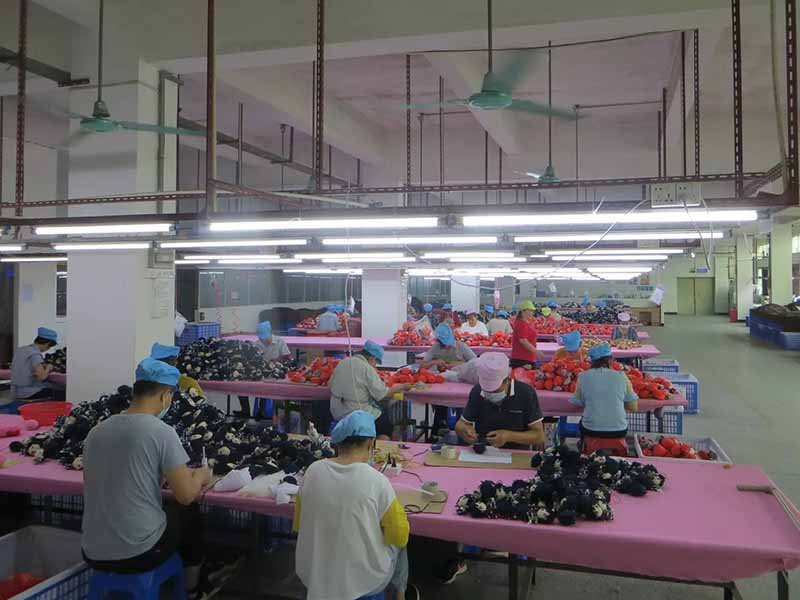
Use Controlled Packing Stations
- SKU-specific work areas
- Color-coded internal cards
- Printed packing instructions
- Limited label quantities released per batch
- First-unit confirmation
- Periodic scan checks
- Completed-quantity records
- Sealed-carton status
- Nonconforming isolation
- Final carton reconciliation
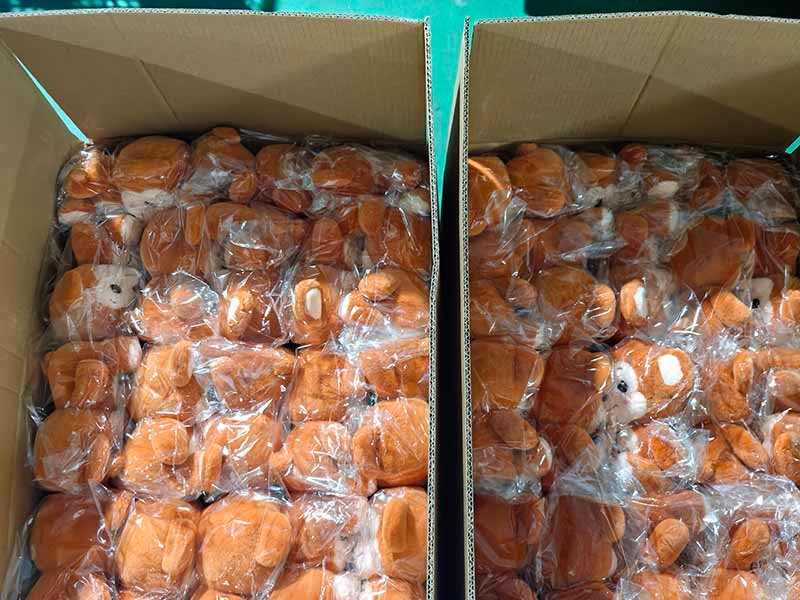
Reconcile Quantity At Every Level
Total production quantity alone is not enough. Pufumi confirms:
- Units produced per SKU
- Units accepted per SKU
- Units packed per SKU
- Units per carton
- Cartons per SKU
- Mixed-carton content where approved
- Destination allocation
- Final shipment quantity
- Retained or replacement units
Accurate reconciliation reduces shortages hidden by excess units from another design and supports clearer inventory receipt and future replenishment.
Prepare Sets As One Sellable Unit
Multipacks, gift sets, assorted boxes, and bundled plush require a defined external sales unit, component count, barcode route, packaging method, and omission check.
Physical Multipacks
Gift And Character Sets
Assorted Collections
Assorted character sets require written confirmation of which designs appear together and in what quantity. Pufumi does not create an assortment from available inventory without approval. The final set structure must match the listing, packaging artwork, barcode, carton plan, and shipment information.
Key controls include:
- “Sold as set” identification where required
- One external sellable-unit barcode
- Internal barcode treatment
- Component count
- Product orientation
- Protective inserts
- Package closure
- Set weight and dimensions
- Missing-component inspection
- Carton quantity
Optimize Cartons Without Distorting The Plush
Determine A Safe Packing Density
- Finished plush dimensions
- Unit-package dimensions
- Product filling and rebound
- Pile length
- Facial structure
- Protruding ears, tails, noses, and accessories
- Rigid components
- Retail-box strength
- Carton internal dimensions
- Required storage duration
- Transportation method
- Destination handling
Conduct Compression And Recovery Review
- Approved product before packing
- Product inside the proposed unit package
- Units arranged inside the master carton
- Product immediately after unpacking
- Product after an agreed recovery period
- Final face, body, clothing, accessory, and packaging condition
Record Complete Carton Data
Every approved carton configuration should record:
- SKU or approved mixed contents
- Pieces per carton
- Carton dimensions
- Net weight
- Gross weight
- Total cartons
- Total CBM
- Carton mark
- Shipment destination
- Applicable package version
- Pallet or loose-carton arrangement
For standard US FBA shipments, Amazon currently publishes general carton limits of 36 inches in length, 25 inches in width, 25 inches in height, and 50 pounds, with exceptions for qualifying oversized single units. Marketplace and shipment-specific instructions must be reconfirmed before carton release.
Match Physical Cartons With Shipment Records
Finalize Cartons Before Applying Shipment Labels
- The account team creates or updates the shipment.
- Final warehouse and box-label files are supplied.
- Pufumi checks carton count and carton allocation.
- Every unique box label is matched with one physical carton.
- Box contents, weight, and dimensions are reconciled.
- Final photographs and shipment records are retained.
Protect Label Accuracy
- Correct shipment identifier
- Correct destination
- Unique label for each carton
- Clear printing
- Complete barcode
- Flat label placement
- No placement across carton seams
- No damage from tape or strapping
- Old labels removed or covered
- Carton number and packing list agreement
- Correct SKU or mixed-content record
- Correct quantity
Supply Accurate Box Content Data
Amazon’s official FBA guidance identifies SKU quantity per box, carton weight, and carton dimensions among key box-content information. Inaccurate records can increase receiving work and delay inventory processing. Pufumi can prepare carton-level records from actual packing results. The seller or authorized account operator remains responsible for entering, uploading, or approving the information within the Amazon account.
Inspect Product And FBA Preparation Separately
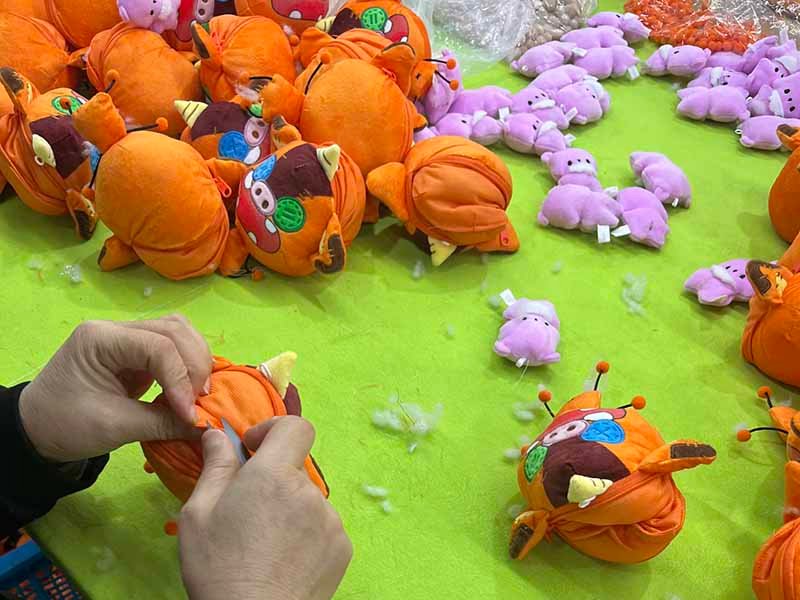
Product Quality Inspection
- Overall appearance
- Character silhouette
- Facial expression
- Finished dimensions
- Product weight
- Fabric and color
- Pile direction
- Embroidery
- Printed details
- Seams and closures
- Filling distribution
- Clothing and accessories
- Labels and copyright information
- Electronic functions where applicable
- Stains, holes, loose threads, or odors
- Comparison with the approved Golden Sample
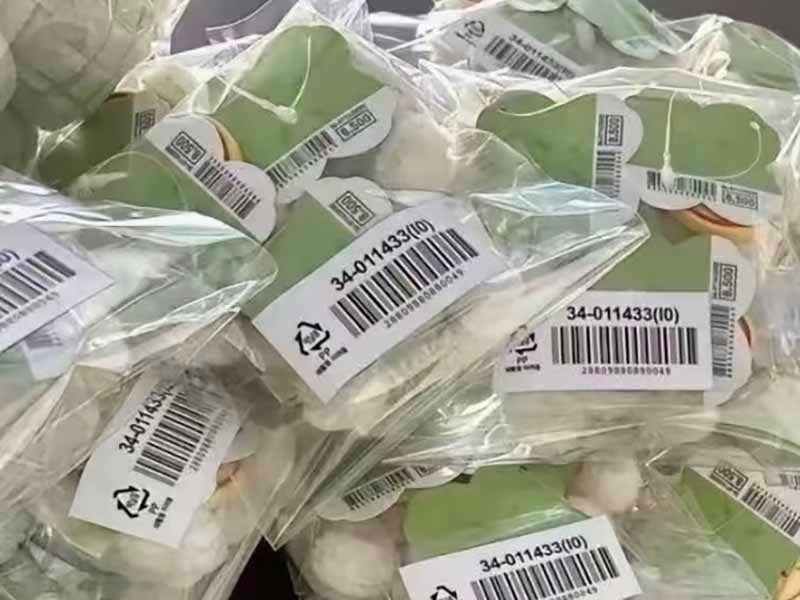
Unit Packaging Inspection
- Correct product inside the package
- Correct package version
- Complete accessories and inserts
- Correct warning
- Correct barcode
- Barcode visibility
- Barcode scan result
- Package closure
- Product presentation
- Packed size and weight
- Internal barcode treatment
- Set completeness

Master Carton Inspection
- Correct SKU
- Correct pieces per carton
- Correct mixed-carton contents
- Carton dimensions
- Gross and net weight
- Carton strength
- Internal protection
- Shipping marks
- FBA box label
- Carton number
- Destination
- Packing-list consistency
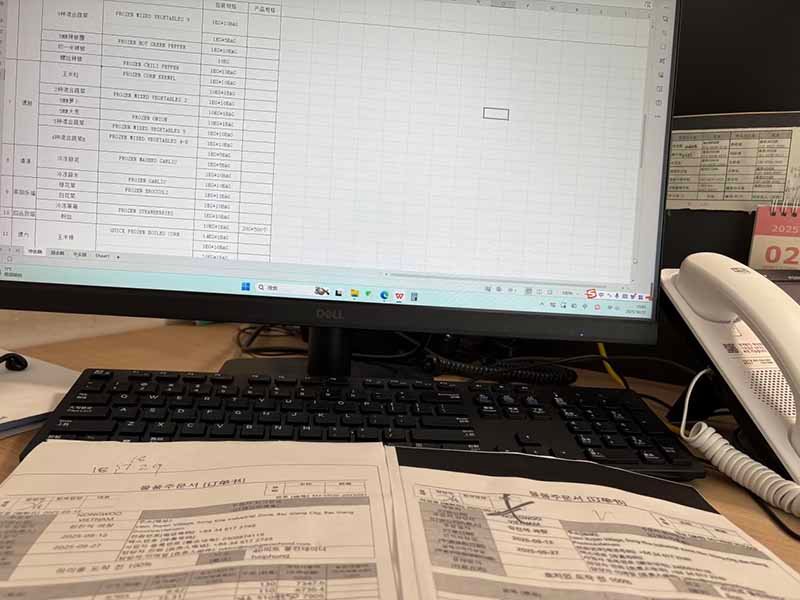
Release Records
- Inspection records
- Barcode scan records
- Product photographs
- Packed-unit photographs
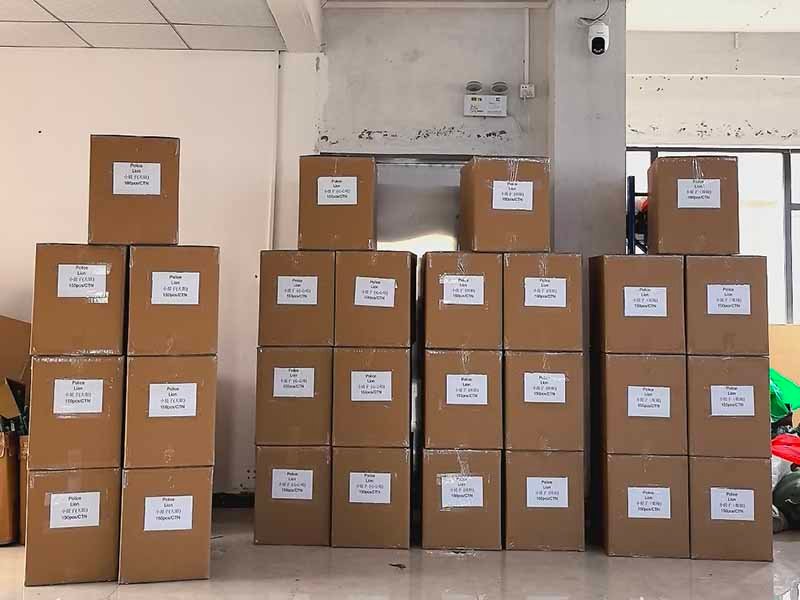
- Carton photographs
- Weight and dimension records
- Packing list
- Shipment label record
- Nonconformance and corrective-action records
- Retained sample references
Choose The Right Inventory Delivery Route
Direct To FBA
Factory To 3PL
Factory To AWD
Split Inventory
Representative Twenty-Eight SKU FBA Program
The program contained 28 plush SKUs developed for an established entertainment merchandise brand. Product formats included mini collectible plush, standard character plush, and fashion-led bag charms. Individual quantities ranged from 1,500 to 3,500 pieces per SKU, producing 64,000 finished units.
The collection required two sellable packaging routes:
- Transparent sealed polybags for mini and standard plush
- Printed retail boxes for selected premium products
The brand supplied final Seller SKU, ASIN, barcode, FNSKU, listing, and shipment information. Pufumi built a 28-SKU product, package, barcode, and carton matrix before label production.
| Program Item | Recorded Plan |
|---|---|
| Total SKUs | 28 |
| Total Quantity | 64,000 pieces |
| Quantity Per SKU | 1,500–3,500 pieces |
| Product Formats | Mini plush, standard plush, bag charms |
| Product Size Range | Approximately 10–26 cm |
| Unit Packaging | Sealed polybags and printed retail boxes |
| Barcode Records | 28 controlled SKU-to-barcode relationships |
| First Prototype Benchmark | Approximately 12 working days |
| Revision Benchmark | Approximately 8 working days |
| Bulk Manufacturing Benchmark | Approximately 42 working days |
| Units Per Carton | 24–80 pieces, depending on product and package |
| Estimated Master Cartons | Approximately 1,100 before final reconciliation |
| Delivery Route | Split between US FBA and nominated 3PL |
| Final Controls | Product, barcode, package, carton, shipment-label, and quantity checks |
Pufumi separated packing work by SKU and package version. Labels were released in controlled batches. First packed units were photographed and scanned before full application. Carton quantities varied because bag charms, mini plush, standard plush, and boxed products occupied different volumes.
Final shipment preparation included:
- SKU-level quantity reconciliation
- Barcode scan confirmation
- Polybag and retail-box checks
- Carton measurement and weighing
- FBA box-label application
- 3PL destination-label application
- Split packing lists
- Carton photographs
- Freight-forwarder handover records
The example demonstrates a controlled operating model rather than a guaranteed schedule or universal packing formula. Artwork complexity, approvals, materials, packaging, testing, shipment creation, freight, and destination requirements influence actual results.
Keep Reorders Consistent Across FBA Cycles
Retain Product Standards
Retain Packaging Records
Retain Carton History
Carton records may include pieces per carton, internal arrangement, carton dimensions, net weight, gross weight, CBM, carton marks, shipment destination, compression observations, and earlier logistics results.
Reconfirm Amazon Files
Before every replenishment run, the account team should confirm:
- Listing remains active
- Seller SKU remains unchanged
- ASIN remains correct
- Barcode route remains eligible
- FNSKU file remains current
- Marketplace remains the same
- Unit packaging remains approved
- Box instructions remain current
- Shipment labels are newly generated
- Destination allocation is confirmed
Pufumi compares the new order against retained records and highlights differences before releasing production or packing
Trust, Compliance & Production Assurance
Confidence for global brands and complex plush programs
Pufumi evaluates each project according to its target market, age grade, materials, construction, labeling, and packaging requirements. Depending on the assigned production site and project scope, our team can support ISO 9001 quality-management documentation and coordinate testing to EN71, ASTM F963, CPSIA, REACH, and other applicable standards. Factory audits, certifications, and test reports are verified by issuing body, validity period, facility, and product scope, giving brands greater transparency from sample development through controlled production and delivery.













Frequently Asked Questions
Yes, Pufumi can coordinate direct delivery when the shipment plan, destination, labels, importer arrangement, freight route, carton data, and account instructions are confirmed. Direct delivery is not suitable for every program. Some inventory may benefit from AWD or 3PL storage before FBA replenishment. Final acceptance depends on the active marketplace, account, shipment, carrier, customs, and warehouse receiving conditions.
No universal rule applies to every listing. Amazon barcode requirements changed on March 31, 2026, and eligible brand owners may continue using manufacturer barcodes. The account owner must confirm the approved barcode route for each listing and provide final files. Pufumi prints, applies, and verifies the supplied barcode according to the approved SKU matrix.
The seller or authorized Amazon account operator downloads and supplies final FNSKU files from the active account workflow. Pufumi does not independently create account identifiers. Files should include a clear SKU, ASIN, product, package, and marketplace relationship. Any listing or barcode change must be communicated before printing and packing begin.
Yes. Pufumi can print and apply approved UPC, EAN, GTIN, FNSKU, SKU, box, and warehouse labels. A first packed unit is checked for placement, adhesion, visibility, and scan performance before full application. Multi-SKU programs use a product-to-label matrix and final reconciliation to reduce mixed labeling.
Packaging depends on the physical product, marketplace, listing, and current Amazon instructions. Many plush products use sealed transparent polybags for cleanliness and containment, while blind boxes, retail boxes, gift sets, or other structures may use different packaging. The final sellable unit must protect the product and display a scannable approved barcode.
Yes. Pufumi can pack physical multipacks, gift sets, and approved assorted collections. The brand must define the sellable unit, component list, external barcode, internal barcode treatment, packaging artwork, and listing relationship. Pufumi verifies component count, package closure, barcode, packed dimensions, and carton allocation before shipment.
Pufumi uses product codes, controlled technical files, SKU-specific packaging, barcode matrices, separated packing stations, limited label release, first-unit checks, scan verification, quantity records, carton plans, and final reconciliation. Similar characters, sizes, colors, and package versions receive additional identification controls throughout production and packing.
Yes. Carton optimization considers unit packaging, product size, filling, recovery, rigid parts, retail boxes, pieces per carton, weight, CBM, warehouse rules, and freight route. Pufumi can conduct packing and recovery trials. The selected carton should reduce unnecessary volume without deforming the plush or damaging retail packaging.
The seller or authorized account operator creates the shipment, confirms the warehouse, submits box content information, and downloads final box labels. Pufumi supplies actual carton counts, dimensions, weights, and contents, then applies the provided labels to matching physical cartons. Pufumi does not require full account access to perform factory preparation.
No manufacturer or preparation provider can control every factor involved in warehouse receipt. Pufumi manufactures, packages, labels, scans, checks, documents, and releases inventory according to confirmed files and supplied requirements. Acceptance can also depend on listing status, shipment data, account settings, carrier handling, customs, appointments, platform updates, and warehouse operations.
Review Your Amazon FBA Plush Program
Send enough information for Pufumi to evaluate the product, packaging, barcode, carton, inspection, and delivery path before issuing a manufacturing and preparation proposal. A complete brief reduces later changes caused by missing listing data, package versions, shipment labels, or destination instructions.
Please include:
- Company and brand name
- Amazon marketplace
- Brand Registry status where relevant
- Product artwork and reference files
- Number of SKUs
- Quantity per SKU
- Total order quantity
- Target product sizes
- Intended age group
- ASIN and listing status
- Seller SKU list
- Approved barcode route
- FNSKU or manufacturer barcode files
- Unit packaging requirements
- Set or multipack structure
- Pieces per carton where already defined
- FBA, AWD, 3PL, or split-delivery plan
- Destination country
- Required arrival date
- Testing and compliance requirements
- Importer and freight arrangement
Do not submit Amazon passwords, payment credentials, or unrestricted account access through the inquiry form. Final identifiers, shipment labels, and sensitive listing files can be transferred through a controlled project channel after review.